






Connect with us

Business

New era of trade volatility: What the court’s decision and Trump’s tariff pivot mean for commodities

Published

on

New era of trade volatility: What the court’s decision and Trump’s tariff pivot mean for commodities
The recent U.S. Supreme Court ruling striking down President Donald Trump’s broad tariff measures has reshaped the global trade landscape, bringing both clarity and fresh uncertainty. The U.S. Supreme Court ruled that the International Emergency Economic Powers Act (IEEPA) does not give authority to the president to impose sweeping import tariffs, effectively blocking one of Trump’s key trade tools.

However, within a day of the verdict, Trump signalled that he would continue pursuing new tariffs. He invoked a temporary global tariff—first 10%, then raised to 15%, the maximum allowed under the US trade law.

Global response

The Supreme Court’s decision to strike down Trump’s earlier tariff framework prompted varied global reactions. The European Commission immediately rejected any increase in tariffs and said that existing agreements must be honoured. India postponed a planned trade visit to Washington to reassess the implications of the ruling, reflecting broader uncertainty among U.S. trading partners. This shifting tariff landscape may create instability in global trade flows, as businesses and governments reassess supply chains and tariff exposures. Existing trade deals face renewed strain: some partners may reconsider agreements struck at higher tariff rates, while others may challenge the legality or longevity of the new levies.

Advertisement

Impact on the US dollar

The U.S. dollar showed a mixed response following the Supreme Court’s ruling against Trump’s earlier tariffs. It initially rose, reflecting a brief boost in confidence, but later fell, as investors reassessed the ruling’s implications and shifted toward safe-haven assets like gold and silver. Trump’s swift introduction of a 15% global tariff added fresh uncertainty, further pressuring the dollar as markets priced in potential trade disruptions and weaker economic sentiment.

Renewed interest in bullion

Gold and silver surged following the U.S. Supreme Court’s decision, as investors sought safe-haven assets amid sudden policy uncertainty. Gold futures jumped past $5,200, while silver rose nearly 9% on the day of the ruling. When Trump quickly responded with a new 15% global tariff, safe-haven demand strengthened further, supported by a weaker dollar and renewed trade concerns. Overall, both metals gained sharply as uncertainty over U.S. trade policy drove investors toward bullion.
Against this backdrop, bullion is likely to remain supported in the coming days. Periods of policy instability and fluctuating trade frameworks often weaken sentiment toward the U.S. dollar, prompting investors to shift towards assets perceived as more stable.

Impact on energy commodities

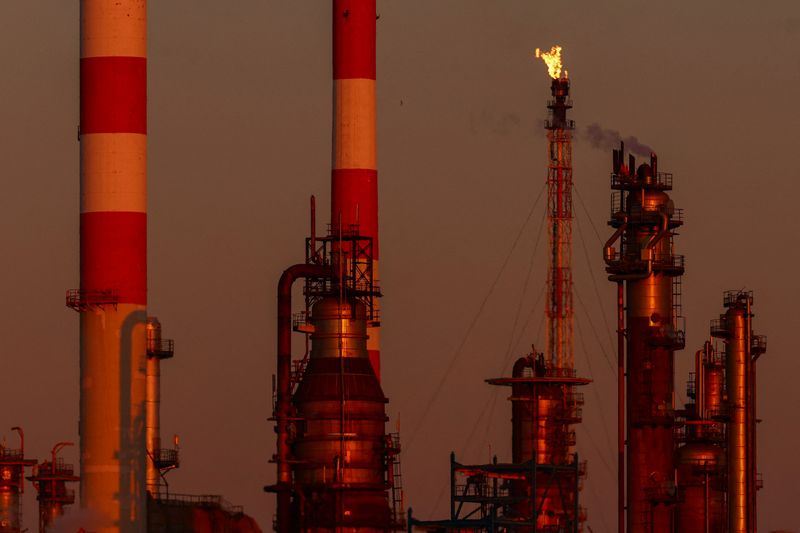
For energy commodities, the impact is likely to be felt through two key channels: currency volatility and trade-flow uncertainty. Any pressure on the U.S. dollar—caused by legal ambiguity, shifting tariff frameworks, or perceived political risk—tends to influence crude oil prices, since oil is globally priced in dollars. A weaker dollar typically supports higher energy prices, while a stronger one may exert downward pressure.

However, the shifting tariff landscape could indirectly influence global purchasing behaviour. If tariff related uncertainty disrupts trade flows or prompts buyers to diversify away from higher-tariff sources, Russian exporters may see changes in market dynamics. In this backdrop, countries like India—already a major buyer of discounted Russian crude, could further lean towards Russian supplies as a cost-effective alternative, especially if U.S. tariff actions make other import routes more expensive or less predictable.

Advertisement

Renewed volatility in base metals

For base metals such as copper and aluminium, the near-term outlook is likely to be shaped by dynamics like policy instability, currency fluctuations, and shifting supply-chain expectations. Copper, closely tied to global manufacturing and investment sentiment, tends to react sharply to uncertainty in trade policy. If tariff-driven instability pressures the U.S. dollar or clouds the outlook for industrial demand, copper may experience renewed volatility as markets reassess consumption prospects.

Aluminium, meanwhile, remains highly sensitive to trade flows and cost structures. Any tariff-related disruption to cross-border metal movement, or shifts in demand from sectors like autos and construction, could temper price gains and keep volatility elevated. Overall, with tariff pathways still unsettled and markets awaiting clarity, base metals are poised for cautious, choppy trading in the days ahead.

This shifting trade landscape has already generated “huge uncertainty” for companies and U.S. trading partners, heightening concerns over rising costs, supply-chain realignments, and the resilience of existing trade agreements. Ultimately, the Supreme Court ruling has not concluded the debate over U.S. tariff policy; it has opened a new and unpredictable chapter. With the administration pursuing alternative legal pathways, such as the newly imposed 15% global tariff, the long-term direction of U.S. trade strategy remains unclear. Until greater clarity emerges, commodity markets are likely to remain on uneven footing, shaped by caution, exchange-rate fluctuations, and evolving global policy risks.

(The author Hareesh V is Head of Commodity Research, Geojit Investments)

(Disclaimer: Recommendations, suggestions, views, and opinions given by experts are their own. These do not represent the views of the Economic Times)

Advertisement
Continue Reading
Click to comment

Leave a Reply

Your email address will not be published. Required fields are marked *

Business

China Moves to Tame Yuan Rally by Slashing Shorting Costs

Published

on

China Moves to Tame Yuan Rally by Slashing Shorting Costs

China’s central bank has started taking steps to check the yuan’s recent advance, dusting off an old playbook that would reduce the cost of betting against the currency.

The People’s Bank of China announced it would slash the risk reserve requirement ratio for financial institutions conducting foreign-exchange forward trading to zero from 20%, a move that effectively makes purchasing the dollar cheaper.

Copyright ©2026 Dow Jones & Company, Inc. All Rights Reserved. 87990cbe856818d5eddac44c7b1cdeb8

Advertisement
Continue Reading

Business

Trump says US carrying out ’major combat operations’ in Iran

Published

on

Trump says US carrying out ’major combat operations’ in Iran


Trump says US carrying out ’major combat operations’ in Iran

Continue Reading

Business

JPMorgan upgrades Coles Group stock rating on valuation gap

Published

on


JPMorgan upgrades Coles Group stock rating on valuation gap

Continue Reading

Business

Shipping Corporation fined: NSE, BSE impose Rs 5.42 lakh penalty each for Sebi norm violation

Published

on

Shipping Corporation fined: NSE, BSE impose Rs 5.42 lakh penalty each for Sebi norm violation
Leading stock exchanges BSE and NSE have slapped a fine of Rs 5.42 lakh each on state-run Shipping Corporation of India (SCI) for non-compliance with the Securities and Exchange Board of India’s (Sebi’s) listing regulations.

The Navratna PSU informed about the development via a filing to the exchanges on Saturday. It said that the action will not have any significant impact on the company’s financial, operational, or other activities.

On Friday, February 27, 2026, the company received an email from BSE and a notice from the National Stock Exchange levying a total fine of Rs 5,42,800, each for non-compliance with Regulation 17(1) of Sebi Listing Regulations regarding the composition of the Board of Directors.

Shares of Shipping Corporation ended 1.8% lower on the NSE at Rs 263.47.

Advertisement

SCI operates oil tankers and product carriers that move crude oil from overseas suppliers to Indian refineries, making it strategically important for energy security. Its stock has rewarded investors with returns of 76% in the past 12 months, significantly outperforming the Indian benchmarks Nifty and the BSE Sensex, whose returns in the same period stand at 12% and 9%, respectively, according to Trendlyne.


The stock is currently trading above its 50-day and 200-day simple moving averages of Rs 233 and Rs 226, respectively, the Trendlyne data said.
The company reported a staggering 440% jump in net profit for the third quarter of FY26. Net profit for the quarter rose to Rs 405 crore, sharply higher than the Rs 75.52 crore reported in the corresponding quarter last year.Revenue from operations stood at Rs 1,612 crore, marking a 22.5% increase from Rs 1,316 crore in the year-ago period, the company said in an exchange filing.

The tanker segment led the performance, with revenue rising 34% to Rs 1,097 crore, while operating profit (earnings before interest and taxes, or EBIT) surged 389% year-on-year. The bulk carrier segment also posted strong growth, with revenue climbing to Rs 237.51 crore from Rs 147 crore in the corresponding quarter of the previous financial year.

(Disclaimer: The recommendations, suggestions, views, and opinions given by the experts are their own. These do not represent the views of The Economic Times.)

Advertisement
Continue Reading

Business

Bybit Introduces Fixed-Rate UTA Loans Offering Up to 10x Leverage and Up to 180-Day Borrowing

Published

on


Bybit Introduces Fixed-Rate UTA Loans Offering Up to 10x Leverage and Up to 180-Day Borrowing

Continue Reading

Business

Bharat Electronics announces record date for interim dividend of Rs 1.95 per share

Published

on

Bharat Electronics announces record date for interim dividend of Rs 1.95 per share
State-run defence company Bharat Electronics Limited (BEL) on Friday declared an interim dividend of Rs 1.95 per share for the financial year 2025-26 and set the record date on Thursday, March 5 for determining the eligible shareholders. The interim dividend will be paid within 30 days from the date of declaration, the company said in its filing to the exchanges.

The record date of a dividend is the cut-off date set by a company to determine which shareholders are eligible to receive the declared dividend.

BEL dividend history / dividend yield

The PSU company has declared 51 dividends since August 29, 2003. In the past 12 months, Bharat Electronics has declared an equity dividend amounting to ₹2.40 per share, according to Trendlyne. At the current share price of Rs 444.70, Bharat Electronics’s dividend yield is 0.54%.

Advertisement

BEL share price performance

BEL shares ended at Rs 444.70 on the NSE on Friday, declining by 4.35 or 1% over the Thursday closing price.


The Nifty stock has had a stellar run on the D-Street, delivering 74% returns in the past 12 months. It is the second best performer n the frontline index and only behind Shriram Finace whose returns of 78%, remain ahead.
Meanwhile, Nifty and the BSE Sensex have yielded 12% and 9% in the same period.BEL shares are currently trading above their 50-day and 200-day simple moving averages of Rs 422 and Rs 405, respectively, according to Trendlyne.

The defence electronics major reported a decent set of numbers for the December quarter. The company’s consolidated net profit rose to Rs 1,580 crore, compared with Rs 1,312 crore in the same period last year. This translates into a year-on-year (YoY) growth of 21%. Revenue from operations for the quarter rose 24% YoY to Rs 7,154 crore.

Sequentially, profit was higher than the Rs 1,287 crore reported in the September quarter. Compared with the previous quarter, revenue also rose from Rs 5,946 crore.

Including other income of Rs 139 crore, BEL’s total income for the quarter came in at Rs 7,292 crore, compared with Rs 5,957 crore in the year-ago period.

Advertisement

(Disclaimer: The recommendations, suggestions, views, and opinions given by the experts are their own. These do not represent the views of The Economic Times.)

Continue Reading

Business

Melrose Industries Stock: Sell-Off Looks Overdone After Strong Results (MLSPF)

Published

on

Melrose Industries Stock: Sell-Off Looks Overdone After Strong Results (MLSPF)

This article was written by

Dhierin-Perkash Bechai is an aerospace, defense and airline analyst.
Dhierin runs the investing group The Aerospace Forum, whose goal is to discover investment opportunities in the aerospace, defense and airline industry. With a background in aerospace engineering, he provides analysis of a complex industry with significant growth prospects, and offers context to developments as they occur, describing how they might affect investment theses. His investing ideas are driven by data informed analysis. The investing group also provides direct access to data analytics monitors.
Learn more.

Analyst’s Disclosure: I/we have no stock, option or similar derivative position in any of the companies mentioned, and no plans to initiate any such positions within the next 72 hours. I wrote this article myself, and it expresses my own opinions. I am not receiving compensation for it (other than from Seeking Alpha). I have no business relationship with any company whose stock is mentioned in this article.

Seeking Alpha’s Disclosure: Past performance is no guarantee of future results. No recommendation or advice is being given as to whether any investment is suitable for a particular investor. Any views or opinions expressed above may not reflect those of Seeking Alpha as a whole. Seeking Alpha is not a licensed securities dealer, broker or US investment adviser or investment bank. Our analysts are third party authors that include both professional investors and individual investors who may not be licensed or certified by any institute or regulatory body.

Advertisement
Continue Reading

Business

Crypto trend-following trade finds relief after sharp selloff

Published

on

Crypto trend-following trade finds relief after sharp selloff
Choppy crypto markets punished trend-following funds in 2025, with violent swings erasing months of positioning. This year’s decisive selloff has offered a reprieve.

Digital-asset investment firm XBTO’s trend fund rose 13.3% last month, its second-best since launching in February 2024, as Bitcoin fell more than 10% and Ether dropped 18%. The gain was driven by a timely flip to short positions as crypto markets broke lower in the final week of January, with more than seven percentage points of the return coming in those last few days, according to Karl Naim, the firm’s chief commercial officer.

One month doesn’t change a challenging trading landscape. But for a strategy that struggled last year, recent gains offer a well needed boost — and a reminder that trend-following can still pay when markets finally pick a direction.

Crypto trend fund performanceBloomberg

Bitcoin peaked near $126,000 in early October and has since fallen sharply, with the broader crypto market losing $2 trillion in crypto market value along the way, according to CoinGecko. Trend models that rode momentum higher got whipsawed by the fast reversal. The fund lost money in five of the previous six months and finished 2025 down 7.8%. Industry-wide, quant trend funds returned 0.44% last year, down from 65% in 2024, according to Crypto Insights Group. Market-neutral strategies, which don’t rely on directional bets, gained 14.7%.

Those that caught the downturn, though, are now benefiting.
“We have been net short in February, have taken some risk off the table, and continue to see potential downside pressure on Bitcoin,” Naim said.
XBTO’s trend fund trades crypto perpetual futures and focuses on the most liquid tokens, typically the top-50 by market value. Perpetual futures are derivatives that track an asset’s price without an expiry date. Positions are driven by a systematic momentum model that scans market and blockchain data.
XBTO was founded in 2015 by Philippe Bekhazi, a former SAC Capital trader, and is regulated in Bermuda and Abu Dhabi.

Trend-following is a well-established strategy in traditional markets, where large quant firms manage billions of dollars. In crypto, the approach can win big in one-way markets like in 2021, 2023 and 2024. But it remains largely unproven at scale — funds are far smaller, track records are short, and the market’s tendency toward sudden, violent reversals makes sustained momentum difficult to capture.

Advertisement

XBTO manages about $100 million across its funds and is targeting to raise another $100 million this year.

Continue Reading

Business

Israel and US launch strikes on Iran

Published

on

Israel and US launch strikes on Iran


Israel and US launch strikes on Iran

Continue Reading

Business

U.S. Earnings Season Ends On Strong Note

Published

on

U.S. Earnings Season Ends On Strong Note

U.S. Earnings Season Ends On Strong Note

Continue Reading

Trending

Copyright © 2025