
Business
New Hope Corporation Limited (NHPEF) Q2 2026 Earnings Call Transcript


Robert Bishop
Chief Executive Officer
Good morning, everyone. Thank you for joining us today for today’s presentation. I’m Rob Bishop, Chief Executive Officer of the New Hope Group. I’m joined by Rebecca Rinaldi, our CFO; and Dominic O’Brien, Executive General Manager and Company Secretary.
Before we begin, I would like to touch upon the escalating conflict in Iran and across the Middle East. The loss of civilian life and the scale of displacement are deeply distressing. The conflict has hardened concerns around global energy security, contributing to increased volatility across the energy markets, including upward pressure on coal price. The company is closely monitoring the situation and assessing how these developments may impact our operations, markets and broader business outlook, ensuring we respond in a measured and responsible manner. Further updates will be provided in future reporting.
This morning, we released our half year results for the 2026 financial year. Hopefully, you’ve had a chance to go through the presentation. But in any case, I’ll step you through our key highlights before we open up the lines for the Q&A session.
Over the last 6 months, we have seen an unfavorable movement in our 12-month moving average TRIFR, which has increased from 3.22 to 3.8. The safety of our people remains our highest priority, and we are implementing targeted measures to address this trend. Despite a period of recovery at Bengalla Mine, the group maintains saleable coal production volumes compared to the previous period, thanks to the continued ramp-up of operations at New Acland Mine. The

Deep Dive into the Numbers
Karan Taurani, EVP, Elara Securities in an interview to ET Now highlighted the scale of India’s food service industry. “We have got almost four million F&B outlets. Out of this, 15% is the organised outlets and 85% is the unorganised outlets. It is all over India basically. The unorganised part covers all your dhabas and the roadside food and so on and so forth. Now, within this four million outlets, 80% of the outlets are LPG dependent and 20% are dependent on electric and hybrid and all those kinds of things.”
He elaborated on demand specifics: “For other companies, they would need about 5 to 10 cylinders per month. Then, you go to standalone restaurants, they would need three to four cylinders per month based on the cuisine and the category that they cater to. Generally, on a thumb rule, these 32 million outlets require five cylinders of 19 kg per month. So, the demand for the cylinders for the F&B industry is about 1.7 crore.”
The supply side, however, is constrained. “If we include weddings, parties, and corporate canteens, the demand actually is closer to two odd crores per month for the cylinders, and the supply is almost about 1.6-1.7 crore. So, there is a deficit of 15-20% as of now,” Taurani said.
Impact on Restaurants and Food Tech
Despite the shortfall, Taurani said the immediate closures are limited. “Very clearly, less than 5% of restaurants are shut today as per NRAI. QSR chains are operating, business as usual, because most of them are dependent on electric and not on LPG. Some are trying to go hybrid, some are rationalising menu, some are reducing work hours. But QSRs are not seeing any big negative impact.”

Smaller standalone players, however, are bearing the brunt. “Assuming a worst-case scenario that 10-15% of restaurants eventually shut down in the next one month, you could see a 7% to 8% EBITDA downgrade for the food business for Zomato,” Taurani added.
He also clarified the potential effect on annual performance: “So, this 7% to 8% EBITDA downgrade is quarterly EBITDA. Annualised basis, this impact is around two odd percent. Assuming that the food business is 55% of SOTP, you tend to get a number of almost about 1.5% to 2%. So, as of now, this impact is very small. But if the number of restaurants shutting down moves ahead from 15% to 25%, these numbers can swing miserably. And if the situation prolongs for two or three months, these numbers could change massively in a negative manner.”QSRs and Electric Advantage
Taurani emphasised that QSRs are better positioned to adapt. “For QSR perspective, they are more dynamic in nature. The first thing is rationalise the menu, try and have menus with lower dependence on LPG. Second is reduce the number of work hours. Third, most QSR companies are trying to get electrical equipment inside the stores. For example, in the case of fried chicken, they have got 60% dependence on electric equipment, 40% LPG. So somewhere they are trying to increase the dependence on electric equipment going ahead.”
He also noted a potential shift in consumer orders: “For someone who was ordering a dosa or a pav bhaji which is LPG dependent, they could now opt for a burger if it is not available in that area. So, QSR could see a positive bias in terms of order traffic.”
On pricing, Taurani said: “I do not think so. There has been no change on pricing as of now.” He further explained that QSRs represent only 10-12% of order volumes, with 80% dependence on standalone restaurants.
Food Tech and Quick Commerce Concerns
While the food business impact is modest, Taurani highlighted concerns in quick commerce (Qcom). “Obviously, there are worries on the food side, but as I mentioned, it does not translate to numbers in a big manner. The bigger worry is Qcom valuations have come off sharply. One reason is fear about management change—Albinder coming in, Deepinder going away—which investors fear could bring strategic changes, which we do not believe. A second fear is competitive intensity from Zepto and Ecom players. Amazon and Flipkart are entering Qcom, scaling up dark stores and assortment. But Ecom and Qcom will coexist; Ecom is top-down, Qcom is bottom-up. We do not believe Ecom will scale up in a very big manner.”
Taurani concluded on a reassuring note for Blinkit: “If Flipkart, Amazon, and others together account for less than 10% of Qcom market share, there is enough for Blinkit. They may not lose market share in a big manner. So Blinkit is quite safeguarded here as the Qcom business is concerned.”
While LPG supply challenges may temporarily affect smaller F&B players, large QSRs and well-positioned food tech companies are likely to weather the storm. Adaptability, menu rationalisation, and the shift towards electric equipment are helping them navigate the crisis, keeping overall impact limited.
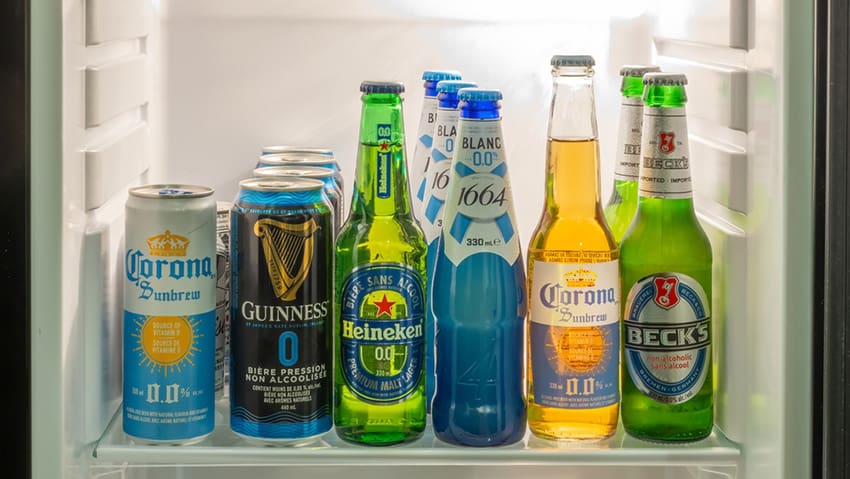
Alcohol-free beer has been added to the UK’s official inflation basket, in a move that underlines changing consumer habits and the growing shift towards healthier lifestyles.
The Office for National Statistics (ONS) confirmed that the product will join more than 760 goods and services used to calculate key inflation measures, including the Consumer Prices Index (CPI), the Retail Prices Index (RPI) and CPIH — its preferred gauge of price growth.
The inclusion reflects a marked rise in demand for low- and no-alcohol alternatives, with the ONS citing increased sales volumes, wider product ranges and greater shelf space dedicated to alcohol-free options across UK retailers. The move is widely seen as recognition of a broader cultural shift, particularly among younger consumers and professionals prioritising wellbeing.
Alongside alcohol-free beer, hummus and pet grooming have also been added to the basket, highlighting how evolving lifestyle choices are reshaping the cost-of-living calculation. The ONS said hummus had gained prominence due to its growing popularity among health-conscious consumers, with UK spending on the product estimated to have reached around £170 million in 2024.
Pet grooming, meanwhile, reflects the continued boom in pet ownership, particularly among smaller, high-maintenance breeds, and the increasing willingness of households to spend on services rather than just goods. Analysts note that services inflation has become a key driver of overall price pressures in recent years, making its accurate representation in the basket increasingly important.
The annual update to the basket is designed to ensure inflation data remains aligned with real-world spending patterns. Items that decline in relevance are removed to make room for emerging trends. This year, bottled premium lager purchased in pubs and restaurants has been dropped, alongside traditional sheets of wrapping paper, which are being replaced by rolls that better reflect modern purchasing behaviour.
Other additions include dashboard cameras and motorhomes, both of which have seen rising demand. Dashcams have grown in popularity as motorists seek to reduce insurance costs and improve security, while motorhomes have benefited from lifestyle shifts following the pandemic and a rise in early retirement trends.
The updated basket will be used in the next set of inflation figures, due to be published on 25 March, and comes at a time of heightened sensitivity around the cost of living. While inflation eased to 3 per cent in January, down from 3.4 per cent in December, economists expect renewed upward pressure in the coming months, driven in part by surging global energy prices linked to the ongoing Middle East conflict.
The Bank of England, which targets inflation at 2 per cent, is widely expected to hold interest rates at 3.75 per cent at its next meeting, as policymakers weigh the risk of rising fuel and transport costs feeding through into broader price increases.
In parallel with the basket update, the ONS is also modernising how inflation is measured. A new system will draw on vast datasets from retailers, analysing around 300 million price points across more than one billion products each month. This marks a significant shift away from traditional in-store price collection, which relied on around 25,000 manually gathered data points.
The move towards real-time, high-volume data is expected to improve the accuracy and responsiveness of inflation reporting, particularly in fast-moving sectors such as groceries, energy and consumer goods.
For households, however, the underlying message remains unchanged. Despite some easing in headline inflation, rising energy costs and global uncertainty mean the pressure on everyday spending is unlikely to disappear any time soon. The inclusion of alcohol-free beer, hummus and pet grooming may signal changing lifestyles, but it also reflects the broader reality that the cost of modern living continues to evolve.

Jamie Young
Jamie is Senior Reporter at Business Matters, bringing over a decade of experience in UK SME business reporting.
Jamie holds a degree in Business Administration and regularly participates in industry conferences and workshops.
When not reporting on the latest business developments, Jamie is passionate about mentoring up-and-coming journalists and entrepreneurs to inspire the next generation of business leaders.

Nationwide, a Fortune 100 company based in Columbus, Ohio, is one of the largest and strongest diversified insurance and financial services organizations in the United States and is rated A+ by both A.M. Best and Standard & Poor’s. Nationwide provides a full range of insurance and financial services products including life insurance, public and private sector retirement plans, annuities, and mutual funds available through Nationwide Financial.
Nationwide Financial makes simplicity a priority by providing Financial Professionals with straightforward, client-ready materials, easy-to-use tools, and products and services that are transparent, so they can spend less time dealing with time-consuming tasks and more time helping clients. Note: This account is not managed or monitored by Nationwide, and any messages sent via Seeking Alpha will not receive a response. For inquiries or communication, please use Nationwide’s official channels.
Ella Loneragan and Claire Tyrrell discuss Business News’ South West edition.

Samsung showcases HBM4 chips for Nvidia’s Vera Rubin platform
Business
Alkyl Amines shares plunge 4% as ammonia shortage from Iran war forces production halt at 3 sites
The company said the disruption stems from the ongoing geopolitical conflict in the Middle East, which has affected global logistics networks as well as international crude oil and petrochemicals supply chains. The situation has also impacted the availability of liquefied natural gas (LNG), a critical input used in ammonia production.
As a result, several ammonia manufacturers have invoked force majeure and indicated their inability to supply the product during this period. Due to the shortage of ammonia, Alkyl Amines said this situation also constitutes a force majeure event arising from the ongoing geopolitical conflict.
Also read: IDBI Bank sale may stall as bids trail reserve price
However, the manufacture of other products at these sites that do not require ammonia will continue.
The company said the financial and operational impact of the ongoing force majeure event cannot be estimated at this stage. It added that it is closely monitoring developments and exploring alternative sourcing arrangements for ammonia, and will inform stock exchanges of any material updates.
Alkyl Amines share price performance
The stock has been a market laggard, plunging 19% in the last one month. The share price has fallen nearly 40% in the last six months and is down over 20% since the beginning of the year.
Alkyl Amines Q3 snapshot
Net profit for the quarter stood at Rs 43 crore, marking a 1.4% decline from Rs 43.6 crore reported in the same period last year.
Revenue fell 4.6% year-on-year to Rs 354 crore, compared with Rs 371.2 crore in the corresponding quarter of the previous financial year.
EBITDA slipped 0.8% to Rs 67 crore from Rs 70.4 crore a year earlier, indicating some pressure on operating performance. As a result, EBITDA margin eased slightly to 18.9% from 19% in Q3 last year.
Sensex, Nifty today: Catch all the LIVE stock market action here
(Disclaimer: Recommendations, suggestions, views and opinions given by the experts are their own. These do not represent the views of The Economic Times.)

Infrastructure Capital Advisors (“Infrastructure Capital”) is a leading provider of investment management solutions designed to meet the needs of income-focused investors. Jay Hatfield is CEO and CIO of the investment team. Mr. Hatfield is the lead portfolio manager of the InfraCap Small Cap Income ETF (NYSE: SCAP), InfraCap Equity Income Fund ETF (NYSE: ICAP), InfraCap MLP ETF (NYSE: AMZA), Virtus InfraCap U.S. Preferred Stock ETF (NYSE: PFFA), InfraCap REIT Preferred ETF (NYSE: PFFR), and a series of private accounts. Infrastructure Capital frequently appears on or is quoted in Fox Business, CNBC, Barron’s, The Wall Street Journal, Yahoo Finance, TD Ameritrade Network, and Bloomberg Radio/TV. The team at Infrastructure Capital publishes a monthly market and economic report, quarterly commentaries, investing primers, and asset class and strategy research. In addition, Infrastructure Capital hosts a monthly webinar and attends industry conferences in an effort to provide educational investing resources.
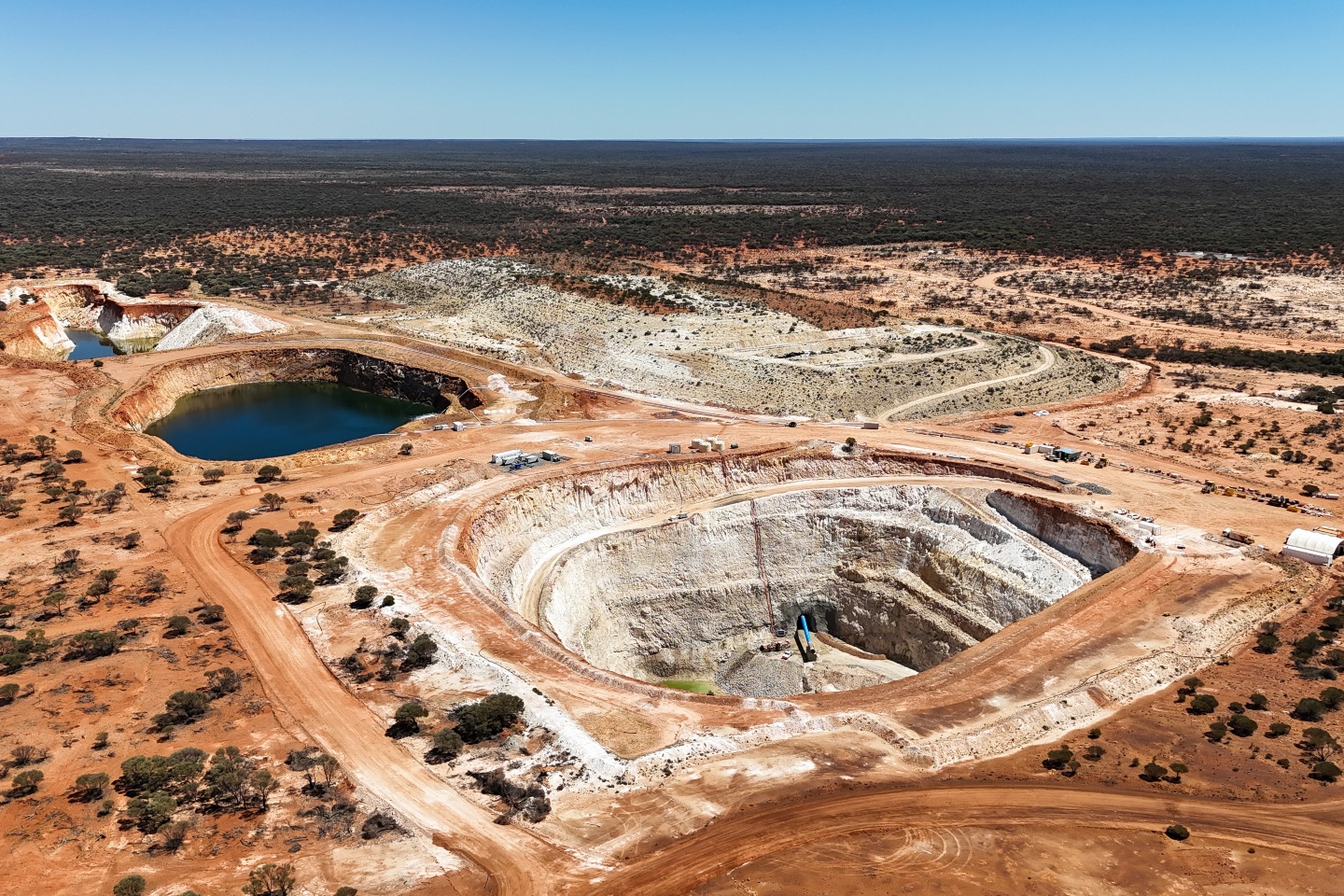
Rox Resources has pulled the $245 million investment trigger on its Youanmi gold project near Sandstone, with a view to producing gold at the brownfields site next year.
Business
Divestment jolt hits IDBI Bank as shares extend decline to 30% in a month. Buy, sell or hold?
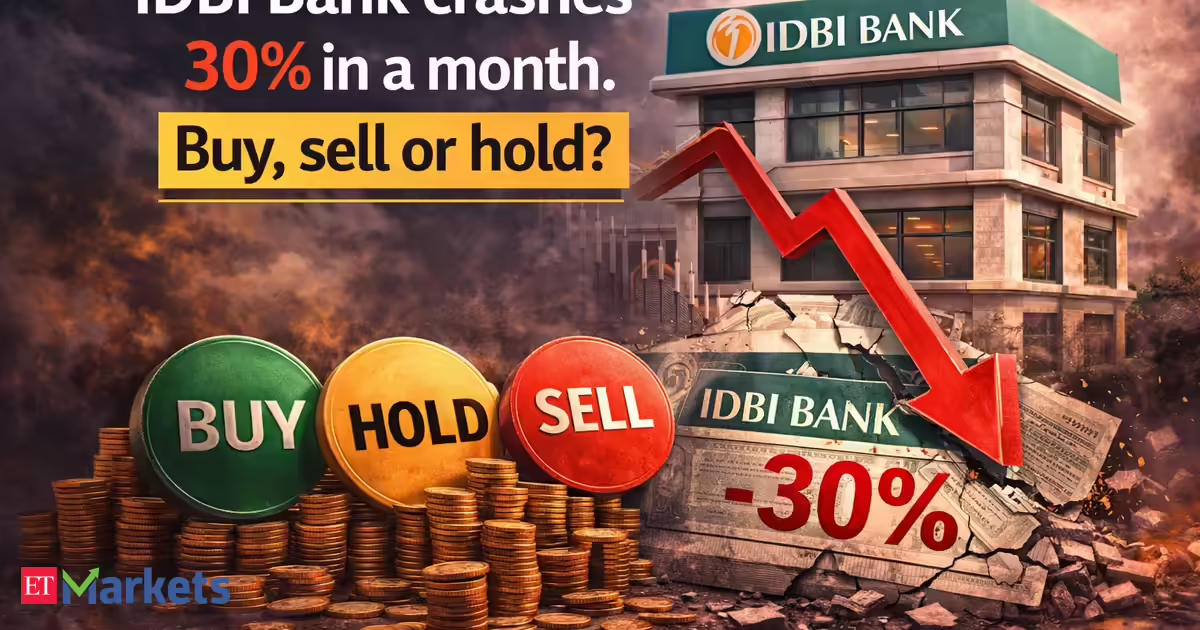
The news of the disinvestment process likely stalling dealt a fresh blow to investors, with the stock already down 17% over the past month going into Monday’s session. They hurried to offload IDBI Bank’s shares soon after the market opened and over 12.5 crore shares traded on the exchange during the session, the NSE data revealed.
Citing a source, the report further said if the government still intends to pursue the strategic sale, it will have to start the bidding process afresh, which will take time.
Also read: IDBI Bank sale may stall as bids trail reserve price
Meanwhile, IDBI Bank issued a statement, clarifying that the proposed divestment is a confidential process being undertaken by the Government of India (GOI) and the lender is not in a position to either confirm or deny media reports.
The government’s equity in IDBI Bank as of December 31, 2025 stood at 45.48% while state-run Life Insurance Corporation of India (LIC) held 49.24% as on this date. Together, they held a 94.71% stake and aim to offload a 60.72% stake—30.48% by the government and 30.24% by LIC.
Kranthi Bathini, Director-Equity Strategy at WealthMills Securities said that the news was a big sentiment dampener for investors who have been waiting a long time to get the process through. “It has really tested their patience, failing to meet the set timelines,” he said. Moreover, the overall weak market sentiments and selling pressure in bank stocks have dented investors’ confidence, he added.
Nifty Bank is down 11% in a month, with stocks falling as much as 25% in this period.
IDBI Bank disinvestment timeline
The proposed strategic disinvestment is being undertaken through a competitive bidding process and not through negotiations, keeping the lender out of the process, the company filing said.
On May 5, 2021, IDBI Bank received an in-principle approval from the Cabinet Committee on Economic Affairs (CCEA) for its strategic disinvestment along with the transfer of management control in IDBI Bank.
The government appointed KPMG India as the transaction advisor and Link legal as the legal advisors on October 7, 2022 for providing advisory services and managing the transaction.
Market regulator Securities and Exchange Board of India (Sebi) approved the reclassification of GOI as public shareholder upon completion of the sale on January 5, 2023. It later allowed the reclassification of LIC as a public shareholder upon completion of the sale.
What should investors do?
Shares of IDBI Bank are trading below their 50-day and 200-day simple moving averages of Rs 105 and Rs 98, respectively, according to Trendlyne data.
Experts hold a divergent view on what to do with the stock.
Sunny Agrawal, Head – Retail Fundamental Desk at SBI Securities advised investors to buy on dips, expecting the price to stabilise around the Rs 65-70 band (at FY26E 1.0x – 1.1x PBV multiple).
Bathini of WealthMills said that the fundamentals of the lender remain intact, notwithstanding the correction. He recommends investors hold the counter while saying no to fresh additions.
Lender’s December quarter standalone net profit stood at Rs 1,935 crore compared to Rs 1,908 crore reported in the year-ago period, rising by 1.4% year-on-year. However, the profit after tax was down 47% on a sequential basis compared to Rs 3,627 crore in Q2 of FY26.
The lender earned an interest income of Rs 7,074 crore in the quarter under review, which was down 9% versus Rs 7,816 crore in the year-ago period. It was marginally down by 0.4% versus Rs 7,104 crore in Q2FY26.
Decoding the charts, Nilesh Jain, Vice President – Head of Technical and Derivative Research at Centrum Finverse said he sees weakness, going forward. His suggestion to investors is to ‘Sell’ on rise.
(Disclaimer: The recommendations, suggestions, views, and opinions given by the experts are their own. These do not represent the views of The Economic Times.)

A couple is forced to pay more than double after being left without enough fuel to heat their home.

Meningitis B confirmed as strain behind outbreak that has left two dead
QSR chains stay resilient amid LPG shortage: Karan Taurani

DeFi Education Fund and Beba drop airdrop lawsuit against U.S. SEC


-
 Tech6 days ago
A 1,300-Pound NASA Spacecraft To Re-Enter Earth’s Atmosphere
-
 Crypto World3 days ago
HYPE Token Enters Net Deflation as HyperCore Buybacks Outpace Staking Rewards
-

 Business7 days ago
ExxonMobil seeks to move corporate registration from New Jersey to Texas
-

 Fashion4 days ago
Weekend Open Thread: Addict Lip Glow
-

 Tech7 days ago
ChatGPT will now generate interactive visuals to help you with math and science concepts
-
Sports3 days ago
Why Duke and Michigan Are Dead Even Entering Selection Sunday
-

 NewsBeat6 days ago
Residents reaction as Shildon murder probe enters second day
-

 Business2 days ago
Search for Savannah Guthrie’s Mother Enters Seventh Week with No Arrests
-

 Business6 days ago
Search Enters Sixth Week With New Leads in Tucson Abduction Case
-

 Business3 days ago
US Airports Launch Donation Drives for Unpaid TSA Workers as Partial Government Shutdown Enters Fifth Week
-
Crypto World3 days ago
Coinbase and Bybit in Investment Talks: Could Bybit Finally Enter the US Crypto Market?
-

 NewsBeat6 days ago
I Entered The Manosphere. Nothing Could Prepare Me For What I Found.
-

 Sports6 days ago
PWHL, Senators discussing plan to keep Charge in Ottawa
-

 Business3 days ago
Country star Brantley Gilbert enters growing non-alcoholic beer market
-

 Business22 hours ago
Australian shares drop as Iran war enters third week
-

 Sports4 days ago
College Basketball Best Bets: Conference Tournament Semifinal Picks
-

 Crypto World22 hours ago
Crypto Lender BlockFills Enters Chapter 11 with Up to $500M in Liabilities
-
 Crypto World7 days ago
Will Chainlink price reclaim $10 amid volatility squeeze?
-

 Politics6 days ago
Trump Says Middle East Is ‘Very Lucky’ That He’s President
-

 Tech6 days ago
Clarity as strategy


You must be logged in to post a comment Login