
Business
New opportunities for plant based, cultivated products




Business
Trump administration files emergency motion to resume ballroom work, citing security issues


Trump administration files emergency motion to resume ballroom work, citing security issues
ConAgra Is A Buy Because Of Its Dividend
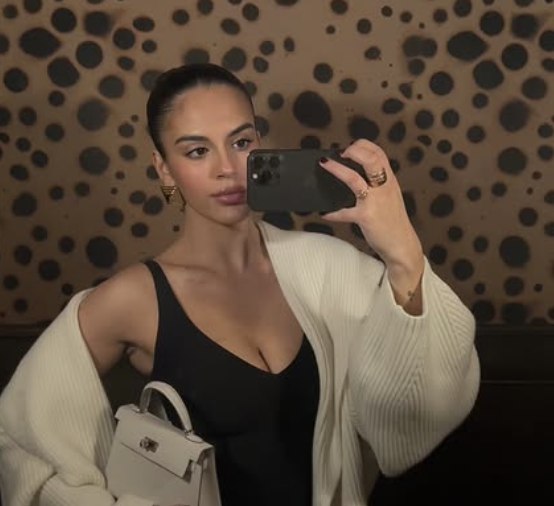
Maria Guardiola, the eldest daughter of Manchester City manager Pep Guardiola, has stepped into the spotlight in recent years as a fashion influencer while maintaining a close bond with her famous father, most recently captured in an emotional embrace on the Wembley pitch after City’s Carabao Cup final victory in March 2026.
As of April 2026, Maria, 25, continues to draw attention for her stylish social media presence, her career moves in the fashion world and her supportive role within the Guardiola family amid personal changes. Here are five essential things to know about Pep Guardiola’s daughter.
1. She is Pep Guardiola’s eldest child and has two younger siblings
Maria Guardiola was born on Dec. 28, 2000, in Manresa, Catalonia, Spain, making her 25 years old in 2026. She is the oldest of three children Pep Guardiola shares with his former wife, Cristina Serra. Her younger brother, Marius (sometimes spelled Màrius), is 22, and her sister, Valentina, is 17. The family has navigated significant changes since Pep and Cristina announced their separation in January 2025 after more than 30 years together. Cristina has since returned to Barcelona to focus on her business, while the children maintain strong relationships with both parents.
Maria has often spoken warmly about her family dynamics in interviews. In her first public comments following the split, she joked about inheriting her father’s “stubbornness” and her mother’s “confidence and sense of independence.” The siblings grew up moving between cities as Pep’s coaching career took the family from Barcelona to Rome, New York, Munich and eventually Manchester. Despite the nomadic lifestyle, Maria has described a close-knit bond that persists today.
2. She has built a successful career as a fashion influencer and content creator
With nearly 900,000 followers on Instagram under the handle @maria.guardiola, Maria has established herself as a rising style icon and influencer. She frequently shares fashion looks, travel moments, restaurant visits and glimpses of her glamorous lifestyle, including appearances at events such as the Brit Awards. Her content often features high-end outfits, mirror selfies and stylish outings that resonate with her audience.
Maria previously worked in fashion retail and licensing, including a role as a retail and licensing coordinator at Manchester City. She has also been employed by Victoria Beckham’s brand, adding high-profile experience to her resume. Her growing platform has led to brand collaborations and modeling opportunities, positioning her as more than simply “Pep Guardiola’s daughter.” In early 2026, she continued posting photo dumps from luxury settings and stylish events, showcasing her independent identity in the fashion world.
3. She had a brief romance with former England footballer Dele Alli
Maria’s personal life has occasionally made headlines due to her past relationship with former Tottenham and England midfielder Dele Alli. The brief romance drew media interest given the intersection of football and celebrity circles. While details remained private, the connection added another layer to her public profile in the sports-adjacent world.
She has generally kept romantic matters low-key, focusing instead on her career and family. As of 2026, there have been no widely reported new relationships, with Maria appearing to prioritize her professional growth and family ties.
4. She shares touching family moments with her father, including recent emotional embraces
One of the most heartwarming recent stories involving Maria came after Manchester City’s 2-0 victory over Arsenal in the Carabao Cup final on March 23, 2026. Following the win — which marked Pep Guardiola’s record fifth triumph in the competition — cameras captured an emotional father-daughter moment on the Wembley pitch. Maria joined her father for a warm, lingering embrace away from the main celebrations, with images and video quickly going viral.
Fans and commentators described the scene as touching, especially given the family’s recent challenges following the parental separation. Maria has been a visible supporter at City matches and events, providing a glimpse of the softer side of the often intensely focused manager. Similar moments over the years, including celebrations with trophies, have shown the strong bond between father and daughter despite the demands of Pep’s high-pressure job.
5. She maintains privacy while navigating life in the public eye
Despite her growing influencer status and her father’s global fame, Maria has largely avoided deep dives into personal or family controversies. She has spoken sparingly in interviews but has emphasized family unity and resilience. Living primarily in London while her father resides in Manchester, she balances her independent life with frequent visits and support for her dad’s career.
Maria’s social media presence remains curated and positive, focusing on fashion, travel and lifestyle rather than football drama or family matters. She has been praised for handling public attention gracefully, especially during the period surrounding her parents’ split. Her approach reflects a desire to carve out her own path while cherishing her connection to the Guardiola name.
As Pep Guardiola weighs his future at Manchester City amid speculation about his tenure, moments like the Wembley embrace with Maria highlight the personal stakes behind the tactical genius. The family continues to support one another across cities and life changes, with Maria serving as a visible link between Pep’s professional world and their private lives.
In 2026, Maria Guardiola stands out as a young woman successfully blending fashion ambition with family loyalty. Her story offers a humanizing glimpse into the life of one of football’s most successful managers, reminding fans that even the most intense figures on the touchline share tender moments with loved ones off the pitch.
Whether sharing stylish Instagram posts or celebrating her father’s achievements, Maria continues to navigate fame on her own terms. As both her influencer career and her family’s story evolve, she remains one of the more intriguing figures connected to the Premier League spotlight.

An individual investor analyzing equities based on cash flow potential, relative value and economic moat. I also write articles on ETFs with a focus on sustainable long-term total returns. I bring years of public accounting experience, economics and quantitative background to my research. In my idea generation process, I back up story-telling with quantitative analysis to pin down the upside/downside potential. Focus is on both the long/short side, although I enjoy short stories more.I am proficient in Python and use algorithms to comb through the stock market to uncover companies that the market either overhypes or ignores. While the focus is on fundamental analysis, I am also incorporating technical analysis to maximize the success rate of my ideas. I also write educational articles on different financial and accounting issues that affect companies’ valuations and help investors make better and informed decisions. I am a former certified public accountant (CPA) with years of public accounting experience. My educational background is in accounting and economics. I also pursued a PhD in economics program researching sovereign debt defaults in monetary unions. After obtaining an all but dissertation status, I left the program to pursue other professional interests. My current focus is on writing on Seeking Alpha, investing and my YouTube channel (Andriy Blokhin) where I create educational videos on investing and peronsal finance topics.
Analyst’s Disclosure: I/we have no stock, option or similar derivative position in any of the companies mentioned, and no plans to initiate any such positions within the next 72 hours. I wrote this article myself, and it expresses my own opinions. I am not receiving compensation for it (other than from Seeking Alpha). I have no business relationship with any company whose stock is mentioned in this article.
Seeking Alpha’s Disclosure: Past performance is no guarantee of future results. No recommendation or advice is being given as to whether any investment is suitable for a particular investor. Any views or opinions expressed above may not reflect those of Seeking Alpha as a whole. Seeking Alpha is not a licensed securities dealer, broker or US investment adviser or investment bank. Our analysts are third party authors that include both professional investors and individual investors who may not be licensed or certified by any institute or regulatory body.

AMC Networks: Stabilizing Revenue Has Me Bullish Again (Rating Upgrade)


I have more than 35 years of experience in the investment field, having worked as a sell & buy side analyst and portfolio manager for debt and equity funds. I am currently managing a high-yield Latam bond fund.My goal, as a Seeking Alpha contributor, is to provide a fundamental view and analysis of companies and funds in a streamlined version of institutional research. The operating and financial forecast, whether my own or based on consensus, drives the valuation and ultimate rating. I like numbers (financial statements) and use words to explain their meaning and potential consequences.For the most part, my selection choices reflect what I believe can offer long-term potential, and I frequently take positions in many ideas for my personal account.
Analyst’s Disclosure: I/we have no stock, option or similar derivative position in any of the companies mentioned, and no plans to initiate any such positions within the next 72 hours. I wrote this article myself, and it expresses my own opinions. I am not receiving compensation for it (other than from Seeking Alpha). I have no business relationship with any company whose stock is mentioned in this article.
Seeking Alpha’s Disclosure: Past performance is no guarantee of future results. No recommendation or advice is being given as to whether any investment is suitable for a particular investor. Any views or opinions expressed above may not reflect those of Seeking Alpha as a whole. Seeking Alpha is not a licensed securities dealer, broker or US investment adviser or investment bank. Our analysts are third party authors that include both professional investors and individual investors who may not be licensed or certified by any institute or regulatory body.
Business
Taylor Swift Travis Kelce Wedding Rumors Swirl Around June 13 2026 Date and Rhode Island Venue
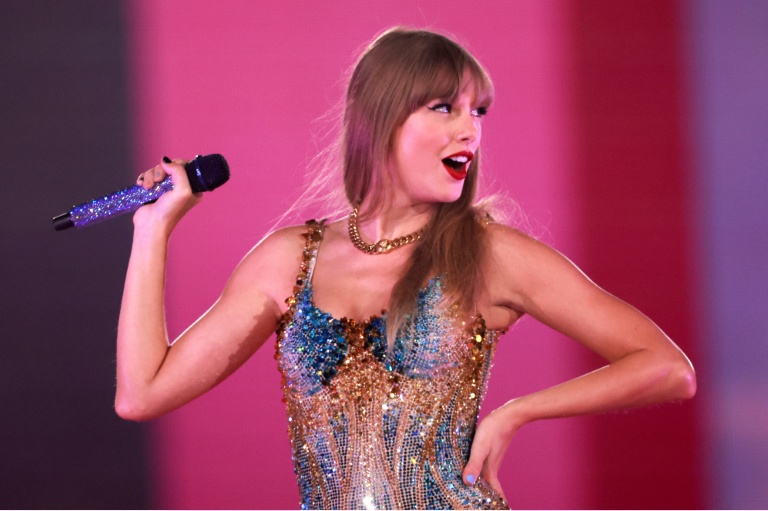
Rumors about Taylor Swift and Travis Kelce’s wedding have intensified in early April 2026, with multiple entertainment outlets pointing to June 13, 2026, as the likely date for the pop superstar and NFL tight end’s nuptials. The date holds special significance for Swift, whose longtime affinity for the number 13 has become a signature element of her public persona and career.
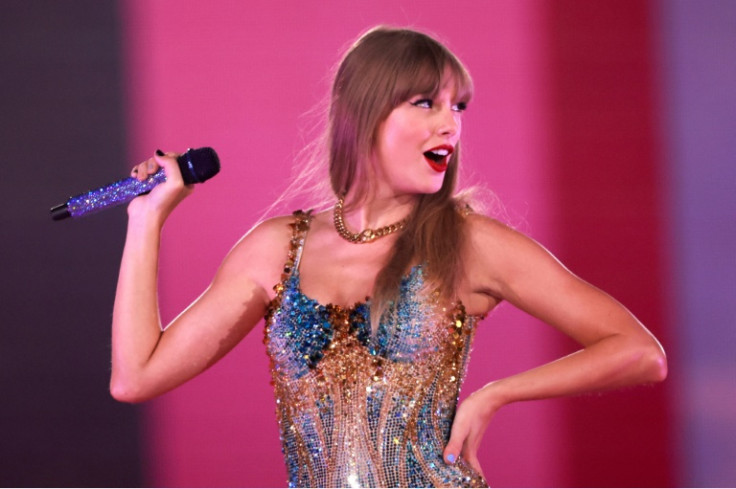
The couple, who announced their engagement in August 2025, have maintained a relatively private approach to wedding planning despite intense public interest. Insiders told Us Weekly and the Daily Mail that the ceremony is expected this summer before the Kansas City Chiefs’ training camp begins, typically in mid-to-late July. June 13 falls on a Saturday in 2026 and aligns neatly with the NFL offseason, allowing Kelce to focus on the event without immediate football obligations.
Reports consistently highlight Rhode Island as the probable location, specifically near Swift’s oceanfront property in Watch Hill, known as “Holiday House.” The luxurious Ocean House resort, perched on bluffs overlooking the Atlantic, has emerged as a frequently mentioned venue in tabloid and entertainment coverage. Earlier speculation suggested Swift or her team might have secured the date by negotiating with another booked couple, but the venue denied any such arrangement occurred, and sources close to Swift emphasized she would never displace another wedding.
The June 13 timing has thrilled Swifties, who view the number as deeply symbolic. Swift was born on Dec. 13, 1989, frequently incorporates 13 into album releases, social media posts and stage performances, and has described it as her lucky number. Fans quickly noted that the date offers a perfect blend of personal meaning and practical scheduling for a high-profile summer celebration.
Details about the event remain limited and largely unconfirmed by the couple. Sources describe plans for an intimate yet star-studded gathering, with the guest list reportedly scaled back to around 150 people after discussions about a larger affair. Expected attendees include close friends such as Emma Stone, Selena Gomez, Gigi Hadid and Miles Teller, along with NFL figures like Patrick Mahomes and members of the Kelce family. British television host Graham Norton has publicly joked about signing nondisclosure agreements related to a potential invitation, adding to the buzz without confirming specifics.
Recent comments from family members underscore the couple’s desire for privacy. Kylie Kelce, wife of Travis’s brother Jason, publicly pushed back against persistent media questions directed at Donna Kelce, their mother-in-law, calling out intrusive airport inquiries and stressing that wedding details are private family matters she would not share even if informed.
Planning appears collaborative, with both Swift and Kelce actively involved. Insiders portray Swift as embracing the process after previously not focusing heavily on wedding ideas until meeting “her person” in Kelce. Reports suggest a possible 1950s-inspired aesthetic for parts of the celebration, evoking classic Hollywood glamour that aligns with Swift’s recent creative output, including her “Elizabeth Taylor” video tribute.
The couple’s relationship has captivated fans since it became public in 2023, blending Swift’s global music empire with Kelce’s NFL stardom. Their engagement announcement generated millions of likes and widespread media coverage, positioning the wedding as one of the most anticipated celebrity events of 2026. A three-week honeymoon spanning the Caribbean, Europe and Asia has also been floated in some reports, though no official confirmation exists.
Swift’s recent public appearances, including her dominant showing at the iHeartRadio Music Awards in late March where she collected multiple honors alongside Kelce, have fueled further speculation. The couple’s coordinated presence at high-profile events signals comfort with selective visibility while keeping core personal milestones guarded.
Challenges to planning include balancing Swift’s demanding creative schedule and Kelce’s football commitments. Kelce has spoken about motivation drawn from Swift’s work ethic, and reports indicate he intends to participate fully in the upcoming NFL season, making the pre-training camp window critical. Chiefs insiders have hinted at the couple aiming to wed before the team’s preparations intensify.
Media coverage has mixed confirmed details with speculation. While the summer 2026 timeline before football season appears consistent across sources, the exact date and venue remain unverified by Swift or Kelce’s representatives. Earlier rumors of an even sooner ceremony have largely given way to the June consensus, though some outlets note the couple has gone back and forth on scale and specifics.
The wedding conversation fits into broader discussions about Swift’s career phase. Following the conclusion of her record-breaking Eras Tour and the continued promotion of her latest album “The Life of a Showgirl,” she appears to be carving out space for personal milestones. Fans and analysts speculate that any wedding could inspire future music, though Swift has shown a pattern of maintaining separation between private life and artistic output when desired.
Public reaction remains enthusiastic yet respectful of boundaries. Social media platforms buzz with theories about dresses, themes and potential musical performances, but many Swifties echo calls for privacy seen in family statements. The couple’s history of handling fame with a mix of openness and discretion suggests the event will prioritize their vision over spectacle.
As April 2026 progresses, anticipation builds for any official updates. With roughly two months until the rumored date, logistics such as security, guest travel and media management will likely intensify behind the scenes. Rhode Island’s scenic coastal setting offers a romantic backdrop that aligns with the couple’s shared appreciation for meaningful locations.
Whether June 13 materializes or another summer date emerges, the union represents a significant chapter for two prominent figures whose relationship has bridged music and sports in unprecedented ways. For now, the rumors serve as a reminder of the public fascination surrounding Swift and Kelce, even as they navigate planning with characteristic privacy.
Insiders emphasize the couple’s focus on a joyful, low-drama celebration surrounded by loved ones. As details trickle out through indirect channels, fans continue to mark calendars and speculate lightly while respecting the boundaries the pair and their families have requested.
The coming weeks may bring clearer signals or continued silence, both consistent with how Swift and Kelce have handled their high-profile romance since its earliest days. In an era of constant scrutiny, their approach to this milestone underscores a desire to celebrate on their own terms amid the inevitable spotlight.
Business
Dalal Street Week Ahead: All eyes on 21,700 make-or-break zone as Nifty braces for volatility
Volatility cooled off, with India VIX dropping by ~4.78% on a weekly basis, reflecting increased nervousness amid global uncertainties. Nifty ended the week with a minor net loss of 106.50 points (-0.47%)
From a structural standpoint, the index has violated an important support zone and slipped below its recent consolidation base, indicating a short-term deterioration in trend. The price continues to trade below the 50-week and the 100+week moving average and is now approaching a critical confluence support zone near 21,700, which coincides with the 200-week moving average and a major pattern support. This makes the current setup technically crucial.
While the broader trend remains relatively stable for now and a technical rebound cannot be ruled out with the slightest trigger, the ongoing weakness suggests that any further breach below 21,700 may trigger an extended corrective phase. External factors such as persistent geopolitical tensions in the Middle East and rising crude oil prices continue to pose risks and may keep sentiment fragile, even though relative outperformance by Indian equities may persist.
 ETMarkets.com

For the coming week, markets are likely to begin on a cautious note with a negative undertone. Immediate resistance levels are placed at 23,000 and 23,250, while supports come in at 22,480 and 22,000. A sustained move below 22,000 will increase the probability of testing the 21,700 zone sooner rather than later.
The weekly RSI stands at 26.49, placing it in the oversold territory. It has formed a new 14- period low; however, it stays neutral and does not show any divergence against the price. The MACD remains below its signal line and continues to stay in negative territory, reinforcing the prevailing bearish momentum.
Pattern analysis shows that Nifty has continued drifting lower but is attempting to show resilience at lower levels on relative terms. The price is currently tracking the lower Bollinger band. The index is now testing lower supports while staying below key moving averages like the 50-week MA and the 100-week MA. The long-term structure remains intact as long as the 200-week MA (~21,700) is protected, but the near-term technical damage is evident.
Given the current setup, the approach for the coming week should remain cautious and defence-oriented. Traders should avoid aggressive fresh buying until signs of stabilisation emerge near key support zones. Emphasis should be placed on protecting existing gains and adopting a highly selective, stock-specific approach.
Any pullbacks toward resistance levels should be used to lighten positions rather than initiate fresh exposure. Overall, a guarded and risk-managed strategy is recommended while closely monitoring the behaviour around the 21,700 support zone.
ETMarkets.comThe Relative Rotation Graph (RRG) shows that the Nifty Pharma, PSE, Infrastructure, Metal, and Energy groups are inside the leading quadrant. The Nifty Midcap 100 Index has also rolled inside the leading quadrant. The Metal Index is sharply losing its relative momentum; however, these groups are likely to relatively outperform the broader Nifty 500 Index.
The Nifty 500 Index has rolled inside the weakening quadrant. The Nifty Auto, PSU Banks, and Nifty Bank Index are also inside this quadrant. These groups will see a continued slowdown in their relative performance.
ETMarkets.comThe Nifty Services Sector and the IT Index are seen languishing inside the lagging quadrant; they may see themselves underperforming the broader markets relatively. The Realty Index is also inside the lagging quadrant. However, it is seen as improving on its relative momentum.
The Nifty FMCG Index and the Media Index are inside the improving quadrant. We may see these sectors slightly improving their relative performance against the broader markets. Important Note: RRGTM charts show the relative strength and momentum of a group of stocks. In the above Chart, they show relative performance against NIFTY500 Index (Broader Markets) and should not be used directly as buy or sell signals.
Milan Vaishnav, CMT, MSTA, is a Consulting Technical Analyst and founder of EquityResearch.asia and ChartWizard.ae and is based in Vadodara. He can be reached at milan.vaishnav@equityresearch.asia

Iran says new air defence system used to target US fighter jet
The bank’s period-end advances under management were approximately Rs 30.58 lakh crore as of March 31, 2026, up 10.2% from Rs 27.73 lakh crore a year ago. Meanwhile, period-end gross advances aggregated to about Rs 29.60 lakh crore, reflecting a growth of 12.0% over Rs 26.44 lakh crore as of March 31, 2025.
On the liabilities side, the bank’s average deposits stood at Rs 28.51 lakh crore in the March 2026 quarter, registering a growth of 12.8% compared to Rs 25.28 lakh crore in the year-ago period.
Within this, average CASA deposits were Rs 9.18 lakh crore, up 10.8% from Rs 8.29 lakh crore, while average time deposits came in at Rs 19.33 lakh crore, growing 13.7% from Rs 16.99 lakh crore.
The bank’s period-end total deposits were approximately Rs 31.06 lakh crore as of March 31, 2026, rising 14.4% from Rs 27.15 lakh crore a year earlier.
Period-end CASA deposits stood at around Rs 10.61 lakh crore, up 12.3% from Rs 9.45 lakh crore, while period-end time deposits were approximately Rs 20.45 lakh crore, registering a growth of 15.5% over Rs 17.70 lakh crore as of March 31, 2025.
Also read: Sobha Q4 biz update: Sales rise 11% YoY to Rs 2,039 crore as company closes FY26 with record figures
Shares of HDFC Bank have remained in focus following a leadership change at the top. Last month, the bank’s part-time Chairman and independent director, Atanu Chakraborty, resigned, citing that certain developments and practices within the bank over the past two years did not align with his personal values and ethics. “This is the basis of my aforementioned decision,” he said. Following the development, the stock has come under pressure, declining nearly 25% since the start of the year.
(Disclaimer: Recommendations, suggestions, views and opinions given by the experts are their own. These do not represent the views of The Economic Times)

Kylie Kelce tells fans to stop asking about Swift-Kelce wedding
5 Costco Tool Finds To Add To Your Garage This Spring

Money Cutting Magic : Real or Fake ?


-

 NewsBeat2 days ago
Steven Gerrard disagrees with Gary Neville over ‘shock’ Chelsea and Arsenal claim | Football
-

 Business2 days ago
No Jackpot Winner and $194 Million Prize Rolls Over
-

 Fashion20 hours ago
Weekend Open Thread: Spanx – Corporette.com
-
Entertainment5 days ago
Fans slam 'heartbreaking' Barbie Dream Fest convention debacle with 'cardboard cutout' experience
-

 Crypto World3 days ago
Gold Price Prediction: Worst Month in 17 Years fo Save Haven Rock
-

 Tech6 days ago
The Pixel 10a doesn’t have a camera bump, and it’s great
-
Crypto World4 days ago
Dems press CFTC, ethics board on prediction-market insider trades
-
 Entertainment7 days ago
Lana Del Rey Celebrates Her Husband’s 51st Birthday In New Post
-

 Tech5 days ago
Avatar Legends: The Fighting Game comes out in July and it looks pretty slick
-

 Tech4 days ago
EE TV is using AI to help you find something to watch
-

 Sports4 days ago
Tallest college basketball player ever, standing at 7-foot-9, entering transfer portal
-

 Business2 days ago
Login and Checkout Issues Spark Merchant Frustration
-

 Fashion6 days ago
Amazon Sundays: Soft Spring Layers
-

 Tech6 days ago
Elon Musk’s last co-founder reportedly leaves xAI
-

 Fashion5 days ago
The Best Spring Trends of 2026
-

 Tech4 days ago
How to back up your iPhone & iPad to your Mac before something goes wrong
-

 Politics5 days ago
Should Trump Be Scared Strait?
-

 Tech5 days ago
Apple will hide your email address from apps and websites, but not cops
-

 Crypto World5 days ago
U.S. rule change may open trillions in 401(k) funds to crypto
-

 Tech4 days ago
Flipsnack and the shift toward motion-first business content with living visuals
You must be logged in to post a comment Login