




Connect with us
DAPA Banner

Business

Newsom criticizes CA billionaire wealth tax, warns it would cut core services

Published

on

Newsom criticizes CA billionaire wealth tax, warns it would cut core services

California Gov. Gavin Newsom is forcefully pushing back against a proposed billionaire wealth tax, warning that the plan could cut funding for schools, public safety and other core services rather than fix the state’s budget challenges.

“California has the most progressive tax structure in the United States of America. We do… That said, I fear the way this has been drafted,” Newsom said at a Bloomberg News event in San Francisco on Thursday evening.

Advertisement

“I was burdened by the facts. The fact is, it actually will reduce investments in education. It will reduce investment in teachers and librarians, childcare. It will reduce investments in firefighting and police,” he continued. “The impact of a one-time tax does not solve an ongoing structural challenge that has been exacerbated by the impacts of H.R. 1.”

The governor spoke in depth about the potential consequences of the proposed billionaire tax and answered questions about his conversations with those reportedly leaving California.

FLORIDA WINS AGAIN: QUANTUM COMPUTING COMPANY JOINS EXODUS FROM HIGH-TAX CALIFORNIA

While the initiative has not yet qualified for the November 2026 ballot, the proposal — backed by the Service Employees International Union–United Healthcare Workers West — would impose a one-time 5% tax on the net worth of California residents worth more than $1 billion. The tax would be due in 2027, and taxpayers could spread payments over five years, with additional costs, according to the Legislative Analyst’s Office.

Advertisement
Gavin Newsom crosses hands to make 'X' gesture

Gavin Newsom, governor of California, during an interview in San Francisco, California on Thursday. (Getty Images)

If voters approve the measure, anyone who was a California resident on Jan. 1, 2026, would owe the tax, according to the proposal.

Doubling down on previous comments opposing the tax, Newsom said new data from the Legislative Analyst’s Office show the proposed wealth tax would bring a “one-time” windfall, then “over the years, you would see a significant reduction in taxes because taxpayers will move. And that is what I fear at a state level.”

“There’s impact as it relates to the flow of capital, the impacts on the market, which are not inconsequential,” the governor added. “You’ve got to democratize our economy if you’re gonna save democracy, absolutely. But this proposal by one local [SEIU–United Healthcare Workers West], I do not believe is the answer.”

“California’s billionaires pay much lower tax rates than what working families pay out of every paycheck. And soon, massive federal health care funding cuts in 2026 will collapse key parts of the California healthcare system,” Trevor Foreman, an SEIU member and hospital security officer in Sacramento, told Fox News Digital on Wednesday.

Advertisement

“Local hospitals and emergency rooms will shut their doors forever because billionaires insist on paying less than the rest of us. In addition, more than 4 million businesses will face steep increases in health insurance premiums, leading to widespread layoffs across multiple industries as employers absorb the higher costs of coverage,” Foreman continued.

Newsom said he doesn’t doubt the union has the willpower and resources to get its measure on the November ballot.

“They have the money… we’ll see,” he said. “There’s a lot of leverage in this… By the way, someone said to me, ‘You need to veto this.’ I said, well, I can’t, because it’s not legislative. And by the way, the legislature’s not promoting this.”

Advertisement

“It’s just become a story, even though, for me, it was an issue we’ve been tackling for five or six months,” Newsom expanded. “I’ve engaged with the proponent of it directly, indirectly, my staff consistently is working with the person that’s championing this. I’ve met with people that feel they’re being attacked because of it, people that have no problem paying more income tax. People that literally are giving away all of their money but want to do it on the timeline that their family has approved… People that are concerned about losing control of their company because of the unique characteristics of their cash situation. Yes, I’ve met with all of them, and they’re all in different stages of their lives, careers and their abundance. And some will never give a penny away, some I respect, some I don’t.”

GET FOX BUSINESS ON THE GO BY CLICKING HERE

When asked about how he approaches this conversation with California’s 200 billionaires, Newsom said that “there’s some extraordinarily enlightened people in that category, and there’s some that they put a mask on.”

Advertisement

“I think they’re disappointed in some respect as well. I mean, it’s just a lot of anxiety out there,” Newsom noted. “That’s why we’re doing more in health care, the largest health care expansion in the country that is also putting pressure on our Medicaid budget – there’s no question about that – to absorb and offset that anxiety and stress. But I do think this is unfortunate, and we’ll continue to make a case for alternative[s].”

READ MORE FROM FOX BUSINESS

Continue Reading
Click to comment

You must be logged in to post a comment Login

Leave a Reply

Business

What employers need to know

Published

on

What employers need to know

In a recent Acas survey, employers and employees were asked which three changes in the Employment Rights Act 2025 would have the biggest impact in their workplace.

Surprisingly, the new rights on Statutory Sick Pay (SSP) topped the list for both groups, named by 43% of employers and 36% of employees. The reduction in the unfair dismissal qualifying period from two years to six months was the second most significant change (31% of employers and 30% of employees). Employers ranked the new paternity leave day-one rights as the third-largest reform, whereas employees said it was easier access to flexible working arrangements.

The SSP reforms take effect from 6 April 2026, aiming to improve financial security, particularly for part-time employees and those in low-paid jobs. While more employees will qualify for SSP, employers will face increased costs and compliance requirements, particularly for small and medium-sized enterprises.

Before looking at the reforms and what employers can do to prepare for them, let’s consider the current arrangements.

What is the current SSP framework?

An employee must be an “eligible employee” and earn at least the Lower Earnings Limit (LEL), which is currently £125 per week. Even if employees are eligible, SSP is payable only from the fourth consecutive day of sickness, as the first three days are unpaid waiting days.

Advertisement

It is estimated that around 1.3 million employees receive no SSP at all, and many lose pay for only short periods when unwell. Some face the choice of working while ill or losing income. This can spread illness in the workplace and reduce productivity.

What is changing from 6 April 2026?

Approximately 25% of employees only receive SSP (rather than contractual sick pay), and the SSP changes below will have a significant impact.

  • Removal of the Lower Earnings Limit, and employees will no longer need to meet the LEL to qualify for SSP.
  • A new earnings‑linked calculation and SSP will be paid at 80% of normal weekly earnings (NWE) unless the SSP flat rate is lower.
  • SSP will be payable from day one of sickness absence, as the Employment Rights Act 2025 abolishes the three unpaid waiting days.
  • SSP will increase from £118.75 to £123.25 a week on 6 April 2026.

It is important to mention atypical workers, such as zero-hours and agency workers, as well as seasonal and irregular-hours staff. Establishing NWE is not always straightforward because of their fluctuating pay and variable working patterns. Employers can determine NWE, for example, by averaging pay over the previous 8-12 weeks or by following the relevant contractual arrangements to ensure SSP reflects actual earning patterns.

What do the SSP changes mean for employers?

The scope of SSP entitlements is significantly widened. As well as administrative adjustments to update policies and payroll processes, the reforms carry a cost implication for organisations of all sizes.

The Government estimates that removing waiting days and abolishing the LEL, combined with introducing the 80% earnings‑linked calculation, will increase employer SSP costs by around £450 million a year. Although a significant sum, it equates to roughly £15 more per employee according to the Government’s impact assessment. Crucially, earlier access to SSP may boost productivity by allowing employees to stay home when unwell without feeling compelled to attend work.

Advertisement

Employer concerns about increased sickness absence could be mitigated through strengthened sickness management. This includes conducting return‑to‑work interviews promptly, even after short periods of illness, which can help to identify underlying issues early and reduce avoidable absences. It can also include structured return-to-work planning, phased returns, and temporary adjustments.

How can employers prepare for the changes?

  • Update payroll systems for earnings‑linked SSP and day‑one entitlement.
  • Review and update sickness absence policies, contracts and employee handbooks and communicate these changes to employees.
  • Budget for increased SSP.
  • Identify roles or departments most affected by the wider eligibility rules.
  • Train managers and HR on the new regime.
  • Strengthen sickness absence management processes.
  • Establish the number of atypical workers and how their normal weekly earnings are calculated.

Conclusion

The April 2026 SSP reforms represent a major shift in the UK’s approach to sick pay, expanding access and enhancing financial protection for employees. While these changes introduce additional costs and compliance requirements for employers, early preparation will support a compliant and well‑managed transition.

By reviewing systems and policies now, organisations can ensure they are ready for the new SSP regime and are equipped to support staff and manage sickness absence effectively.


Hannah Waterworth

Hannah Waterworth

Hannah Waterworth is an employment solicitor in Blake Morgan’s Employment, Pensions, Benefits and Immigration team.

Advertisement

Continue Reading

Business

United Airlines ditches more economy seats for bigger premium cabins

Published

on

United Airlines ditches more economy seats for bigger premium cabins

United Airlines aircraft at Denver International Airport, Aug. 4, 2023.

Antonio Perez | Chicago Tribune | Tribune News Service | Getty Images

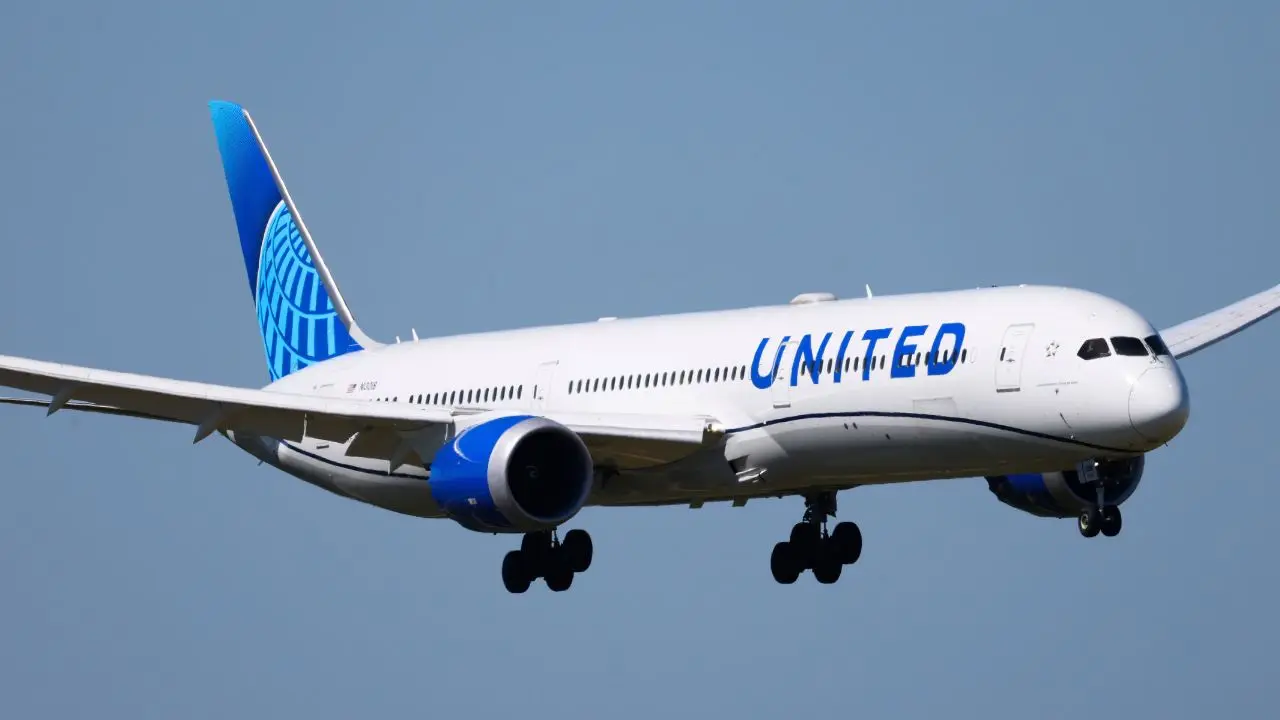
LOS ANGELES — United Airlines‘ formula for higher profits: fewer but better seats.

Advertisement

The country’s second-most profitable carrier after Delta Air Lines on Tuesday unveiled new cabin designs, including on some of its smallest planes, that feature more premium seating options and fewer in standard coach.

The differences in airfare for those seats can be vast. For example, a flight between United’s hub at Newark Liberty International Airport in New Jersey and San Francisco in the first week of May is going for $423 in standard coach and $5,556 in the carrier’s top-tier Polaris class on a Boeing 757.

Even with the spike in fuel prices, United’s executives have said in recent weeks that demand remains strong, noting that premium-travel demand has outshined the main cabin.

“The main cabin is also improving, and we’ve seen very strong demand across the board for United in Q1, but premium did lead the way yet again in the quarter, and continues to do so,” Andrew Nocella, United’s chief commercial officer, told reporters last week.

Advertisement

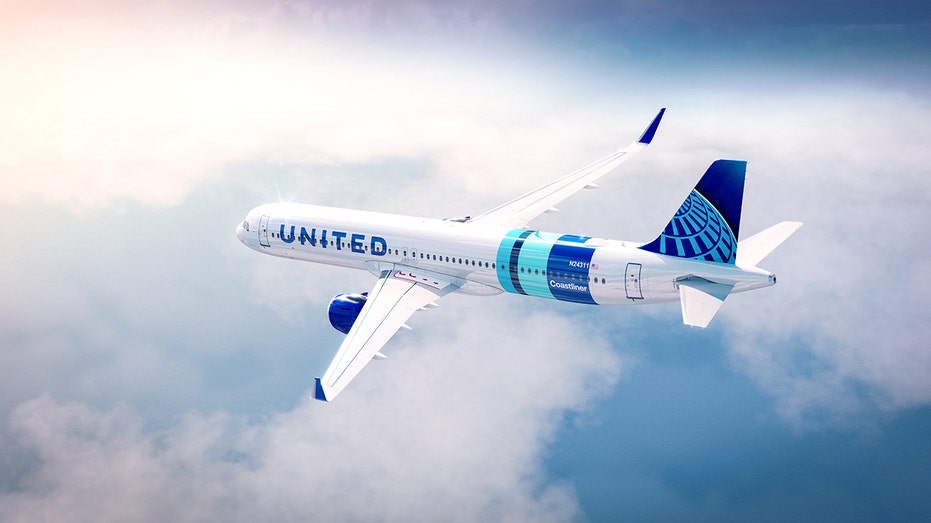
United plans to introduce a subfleet of narrow-body Airbus A321neo jets dubbed the “Coastliner” for transcontinental flights that will have 20 Polaris seats, which can recline into beds. Each Polaris seat will have aisle access.

Those jets will also have 12 premium economy seats and 36 extra-legroom seats on board, with the rest regular economy. United said it removed three seats from the plane’s standard configuration to install a snack bar at the back of the plane.

Current layouts of the plane don’t have premium economy, but they do have 57 extra-legroom seats and 123 seats in standard economy, along with 20 that are first-class recliners, not the lie-flat Polaris seats.

United said the first Coastliners will begin flying this summer and it will have 40 of them by the start of 2028.

Advertisement

The airline also announced its configuration for its longer-range Airbus A321XLR aircraft, which will replace some older Boeing 757s. That layout also includes the 20 Polaris suites, 12 premium economy seats and 34 in extra-legroom. The plane will debut this summer, and United said it could operate on some of its existing routes to Spain, France, Portugal and Brazil.

Read more about airlines’ race to win over big spenders

United will also add a seven-seat first-class cabin to its Bombardier CRJ-200 jets for a total of 41 seats on board, compared with the current 51-seat layout, which has only one cabin.

The changes are part of an ongoing trend for airlines, which are dedicating more of the scarce real estate on planes to premium seats, as the growth from those higher-end options outpaces sales from regular economy.

Last year, United unveiled an upgraded Polaris suite for long-haul flights on its Boeing 787 Dreamliners that includes the “Polaris Studio,” which is larger than previous models and has 27-inch 4K screens as well as an ottoman for guests.

Advertisement

United’s chief rival, Delta, has said it expects premium revenue to overtake main cabin sales this year. That carrier said last month that starting in May, the first of seven of its new Airbus A321neo jets will have 44 seats in first class, more than double the 20 it usually has.

The demand has been so high for plush new suites and other premium seats that the supply chain can’t keep up. The bottlenecks have even delayed delivery of aircraft, CNBC has reported.

Why airlines demand for first-class seats delayed Boeing and Airbus production

Delta said the big first-class cabin on the A321neo is a medium-term measure, “intended to be in service for a limited time as Delta awaits delivery of flatbed suites that will ultimately be installed on these aircraft.” 

Meanwhile, United has been eyeing lie-flat seats for some of its newer narrow-body jets for years.

CEO Scott Kirby told reporters in August 2018 that the carrier was planning to offer lie-flat seats on new Boeing 737 Max 10 aircraft, though that plane still hasn’t been certified and is years behind schedule.

Advertisement

Other airlines are also adding higher-end seats.

JetBlue Airways, which was a pioneer in offering lie-flat seats and suites on its narrow-body Airbus fleet, plans to offer a less elaborate domestic first-class cabin later this year. Southwest Airlines recently debuted extra-legroom seats on its fleet of Boeing 737s, ending its decades of standard seating throughout its cabin.

Budget carriers Spirit Airlines and Frontier Airlines are also planning to add roomier seats.

Choose CNBC as your preferred source on Google and never miss a moment from the most trusted name in business news.
Advertisement
Continue Reading

Business

Mike Lynch estate faces $1.24bn payout to HPE after High Court ruling

Published

on

Mike Lynch, the British tech entrepreneur recently acquitted in a high-stakes £8bn fraud case, is missing after his yacht sank off the coast of Sicily.

The estate of late tech entrepreneur Mike Lynch is facing the prospect of being effectively wiped out after the High Court ordered it to pay $1.24 billion in damages and interest to Hewlett Packard Enterprise (HPE).

The ruling marks the latest development in one of the UK’s most high-profile corporate fraud cases, stemming from HPE’s $11.7 billion acquisition of Autonomy in 2011.

The court had already awarded HPE approximately £700 million in damages last year. However, the addition of interest, calculated at around $236 million, has pushed the total liability to $1.24 billion.

Mr Justice Hildyard confirmed the additional sum and rejected an application by Lynch’s estate for permission to appeal, although a further appeal could still be sought through the Court of Appeal.

The case dates back more than a decade, with HPE first alleging fraud in 2012. The company argued that Autonomy’s financial position had been misrepresented ahead of the acquisition, a claim upheld by the High Court in 2022.

Advertisement

The judge found that Lynch and his former chief financial officer Sushovan Hussain had misled HPE, although he also concluded that the US firm would likely have proceeded with the deal regardless due to Autonomy’s perceived strategic value.

Hussain, who was convicted in the US and served a prison sentence, reached a separate £77 million settlement with HPE last year.

The scale of the damages raises serious questions about the viability of Lynch’s estate, which is estimated to be worth around £500 million, significantly less than the amount awarded.

However, the ultimate impact may depend on the structure of family assets. Many holdings, including property and investments, are reportedly in the name of his widow, Angela Bacares. These include Loudham Hall in Suffolk and shares in cybersecurity firm Darktrace, which were sold for more than $300 million in 2024.

Advertisement

Legal experts suggest that HPE may seek to pursue those assets if it can demonstrate they were effectively controlled by Lynch, potentially extending the scope of recovery.

The ruling comes in the wake of Lynch’s death in August 2024, when he drowned alongside his daughter and others after a yacht accident off the coast of Sicily. The incident occurred shortly after his acquittal in a US criminal trial related to the same case.

Despite the scale of the damages award, the judge was critical of aspects of HPE’s approach, describing the company’s claimed losses as “exaggerated” and the litigation process as unnecessarily prolonged.

HPE welcomed the decision, stating it brings the company “another step closer to resolution” of the dispute.

Advertisement

For the Lynch estate, however, the focus now shifts to whether an appeal can be mounted, and how much of the remaining assets can be protected.

The case stands as a landmark in UK corporate litigation, not only for the scale of the damages but also for its long-running nature and the complex intersection of civil and criminal proceedings across multiple jurisdictions.


Jamie Young

Jamie Young

Jamie is Senior Reporter at Business Matters, bringing over a decade of experience in UK SME business reporting.
Jamie holds a degree in Business Administration and regularly participates in industry conferences and workshops.

When not reporting on the latest business developments, Jamie is passionate about mentoring up-and-coming journalists and entrepreneurs to inspire the next generation of business leaders.

Advertisement

Continue Reading

Business

Bellway produces more homes but warns of uncertainty over Iran conflict

Published

on

Business Live

The developer said demand had been stunted amid uncertainty in the lead up to November’s Budget

Bellway’s previous development in Lydney, Archer’s Walk. The housebuilder has been granted consent to build 200 homes at Forest Walk, to the east of the A48

A Bellway development in Gloucestershire.(Image: Bellway)

Housebuilder Bellway says it has grown half-year operating profits and the number of houses it has completed.

In an update to shareholders, it said total housing completions had grown 2.7% to 4,702 homes, up from 4,577 in the same period last year. Meanwhile underlying operating profit, before exceptional items and £10.7m legacy building safety issues costs, grew 1.5% to £159m.

Advertisement

Demand for Bellway’s homes was said to have been impacted by pre-Budget uncertainty in the run up to the Chancellor’s speech in late November. Chief executive Jason Honeyman said the firm had not experienced its typical pick-up in reservations during the autumn, but there had been increases in January.

The Newcastle-based firm, which is celebrating its 80th anniversary this year, said trading over the last six weeks had seen its private reservation rate per outlet per week, including bulk sales, fall slightly to 0.70 from 0.76. However, volume output in 2026 is expected to be ahead of previous expectations – at between 9,300 to 9,500 homes.

Average selling price is now expected to be about £325,000 – an increase owing, bosses said, to a change in the type of houses and expected conversions of completions from the firm’s bulk sales. Speaking to BusinessLive, Bellway’s chief commercial officer Simon Scougall said the firm was on track to deliver growth housing volume and profits this year.

Mr Scougall said the firm had not seen any marked deterioration in the market since the outbreak of war in Iran, with footfall to sites good and cancellation rates “steady”. He said: “It’s so far so good, but obviously it’s not lost upon us what’s happening out there and the troubles in the Middle East may have an impact in the next few months.

Advertisement

“It’s difficult to call that because you’ve got customers who’ve been coming out who will have made up their minds to buy a house from us about two months ago and have the benefit of a mortgage offer – and a pretty good mortgage offer further to that.

“So, we’re looking at recent history to a degree and we’re still in a comfortable position for year end, and we’re pretty well sold for year end. So we’ll see what the next few weeks bring – we’ll know more in April – and next weekend is probably when we’re going to see any impact, if at all.”

Jason Honeyman, chief executive, said: “Bellway has delivered a robust first half performance in a challenging market. While our industry continues to face several headwinds, we have seen an improvement in customer demand and reservations since the start of the new calendar year.

“At this stage, the situation in the Middle East has not had a material impact on trading and, supported by our forward order book, we are on track to deliver FY26 underlying operating profit within the range of £320m-£330m.

Advertisement

“The ongoing conflict in the Middle East heightens the risk of both inflationary cost pressures and an impact to customer demand, and we have already seen volatility return to the mortgage market. Notwithstanding this, I am confident that our self-help and drive for capital efficiency will help mitigate the impact on our strategy to increase cash generation and shareholder returns.

“Bellway has a strong balance sheet and land bank, and under stable market conditions, the Group is well-positioned to continue delivering volume growth and much needed high-quality new homes in the years ahead.”

Continue Reading

Business

Luxury Cornwall hotel visited by Queen Victoria and the Beatles sold off

Published

on

Business Live

The four-star property has been under the same family ownership for the last 40 years

The Atlantic Hotel, Cornwall

The Atlantic Hotel, Cornwall(Image: Christie & Co)

An historic Cornwall hotel whose visitors have included Queen Victoria and the Beatles has been sold off for an undisclosed sum. The Atlantic, in Newquay, was established in 1892 and commands a dramatic clifftop position with panoramic views of the ocean and Cornish coastline.

The four‑star venue, which has been owned by the Cobley family for the last 40 years, was acquired by the Cornwall Hotel Collection. The group already owns three hotels in the Duchy: The Greenbank, The Alverton, and The Falmouth, the most recent of which was acquired in 2024.

Advertisement

Ben Young, managing director of Cornwall Hotel Collection, said: “We are delighted to bring The Atlantic Hotel, Newquay, into our family of Cornish hotels. This landmark property perfectly complements the Cornwall Hotel Collection, strengthening our commitment to exceptional Cornish hospitality, heritage, and guest experience across our portfolio spanning Cornwall.

“We’d like to thank the previous owners for their stewardship over the past 40 years and we look forward to preserving and maintaining their legacy.”

The Atlantic is set in some eight acres of landscaped grounds and private headland. The hotel comprises 57 ensuite bedrooms and suites, two apartments, a large three-bedroom owner’s apartment, and dining, events and entertainment facilities, accommodating 1,200 guests. The property also has leisure and spa facilities including two pools.

The Atlantic Hotel’s former owner, Lorraine Stones, said: “After many successful years of trading, our family are so pleased to be able to pass on our iconic hotel to the Cornwall Hotel Collection in the knowledge its legacy will be safe in their hands. We wish them all the very best for the future.”

Advertisement

Stephen Champion, director at property firm Christie & Co, which managed the sale process, added: “We are delighted to confirm the sale of The Atlantic Hotel, one of Cornwall’s most iconic hotels.

“The hotel generated significant buyer interest when it launched to the market, attracting competitive bidding from multiple parties. We are proud to have acted in this landmark transaction and look forward to seeing the next chapter of The Atlantic Hotel under the Cornwall Hotel Collection’s ownership.”

Continue Reading

Business

Chobani doubling down on La Colombe’s growth

Published

on

Chobani doubling down on La Colombe’s growth

Company investing $567 million into La Colombe’s Michigan plant.

Continue Reading

Business

United doubles down on premium travel as fuel costs surge amid Iran conflict

Published

on

United Airlines cuts about 5% of flights as Iran war spikes fuel costs

United Airlines is accelerating its sweeping push into premium travel as surging fuel costs driven by the conflict with Iran drive oil prices higher and put downward pressure on profits.

The carrier warned oil could remain above $100 a barrel through 2027 and reach as high as $175, a scenario that would increase its annual fuel bill by roughly $11 billion — more than double its best-ever profit, CEO Scott Kirby said.

Advertisement

United plans to cut about five percentage points of capacity this year while expanding higher-margin premium seating, betting wealthier travelers and corporate customers will continue paying elevated fares.

Passengers on a United Airlines flight.

Passengers in United’s Elevated Premium Plus seating. (United Airlines)

The airline also expects to take delivery of more than 250 aircraft by April 2028 – the most by any airline over a two-year period – as it builds out premium offerings across its network.

A STATE-BY-STATE LOOK AT GAS PRICES AS IRAN CONFLICT PUSHES OIL HIGHER

“We’ve positioned ourselves to get through these storms that are inevitable, stay focused on the long term and keep investing for the long term,” Kirby said.

Advertisement

New Airbus A321neo “Coastliner” and A321XLR aircraft will feature lie-flat Polaris seats and larger premium cabins, significantly increasing high-end capacity. The A321XLR alone will double premium seating compared with the older Boeing 757 jets it is replacing.

United Airlines "Coastliner."

A United Airlines Airbus A321 “Coastliner” jet. (United Airlines)

United said the expansion will leave it with nearly twice as many lie-flat seats as its closest competitor, reflecting a broader industry shift toward higher-paying customers who are less sensitive to rising prices.

Andrew Nocella, United’s chief commercial officer, said demand remains strong.

“I can tell you that the environment is strong,” Nocella said. “We’ve been able to pass through many of the price increases necessary to cover” rising fuel costs.

Advertisement
A woman on a United Airlines flight.

A passenger in United Airlines’ XLR Polaris Studio seating. (United Airlines)

United has already increased premium seats per North American departure by about 40% since 2021 while hiring more than 60,000 employees and overhauling much of its fleet.

CLICK HERE TO GET FOX BUSINESS ON THE GO

By cutting less profitable flying and expanding premium capacity, United is aiming to protect margins and offset billions in higher fuel costs without significantly weakening demand.

Reuters contributed to this report. 

Advertisement
Continue Reading

Business

Fortnite-maker Epic Games lays off 1,000 more staff

Published

on

Fortnite-maker Epic Games lays off 1,000 more staff

It is the second time in recent years the company has announced lays offs due to struggles with its blockbuster online game.

Continue Reading

Business

Iran war makes Middle East peace prospects better long-term

Published

on

Iran war makes Middle East peace prospects better long-term

Jamie Dimon, chief executive officer of JPMorgan Chase & Co., during the 2025 IIF annual membership meeting in Washington, DC, US, on Thursday, Oct. 16, 2025.

Samuel Corum | Bloomberg | Getty Images

JPMorgan Chase CEO Jamie Dimon said Tuesday that while the war in Iran poses near-term risks, it may ultimately improve the prospects for lasting peace in the Middle East.

Advertisement

“I think the Iran war makes it a better chance in the long run — it’s probably riskier in the short run, because we don’t know the outcome of it,” Dimon told Palantir executive Mike Gallagher at a conference held in Washington, D.C.

The key shift, according to Dimon, is a convergence of interests among regional powers. Saudi Arabia, the United Arab Emirates, Qatar, the U.S. and Israel all want permanent peace, he said, adding that Gulf states in particular have shown a willingness to move in that direction.

“The attitude is not what the attitude was 20 years ago,” Dimon said. “They all want it.”

Dimon, who leads the world’s largest bank by market cap, also tied his analysis directly to economics, arguing that foreign direct investment — which had been flowing into the region for years — will dry up without stability.

Advertisement

“They can’t have neighbors lobbing ballistic missiles into their data centers,” he said.

This story is developing. Please check back for updates.

Choose CNBC as your preferred source on Google and never miss a moment from the most trusted name in business news.
Continue Reading

Business

Can Iran’s Low-Cost Drone Fleet Actually Sink a US Supercarrier?

Published

on

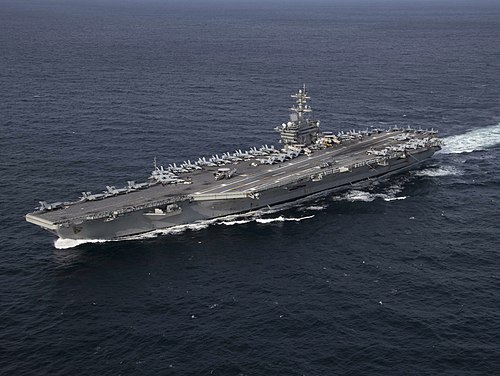
USS Abraham Lincoln (CVN-72) underway in the Atlantic Ocean on

As the USS Abraham Lincoln carrier strike group steams through the Arabian Sea, military planners are confronting a low-tech challenge with potentially high stakes: waves of inexpensive Iranian drones that could overwhelm billion-dollar defenses through sheer numbers.

USS Abraham Lincoln (CVN-72) underway in the Atlantic Ocean on
USS Abraham Lincoln (CVN-72) underway in the Atlantic Ocean on 30 January 2019

Iran has invested heavily in its Shahed-series “kamikaze” drones, small unmanned aircraft that cost as little as $20,000 to $35,000 apiece yet carry enough explosives to damage ships or aircraft. Defense analysts say Tehran’s strategy of launching hundreds or even thousands at once — a “saturation attack” — poses a credible threat to high-value targets like U.S. supercarriers, even if sinking one outright remains improbable.

The debate has intensified in recent months amid escalating tensions. In February, an F-35C fighter jet launched from the Abraham Lincoln shot down an Iranian Shahed-139 drone that approached the carrier “aggressively” in the Arabian Sea, U.S. Central Command said. Iran later claimed its naval drones struck the Lincoln, forcing it to withdraw — assertions Washington dismissed as false while confirming U.S. strikes on Iranian assets, including the drone-carrying vessel Shahid Bagheri.

Iran’s drone fleet forms the core of its asymmetric naval doctrine, designed to counter America’s conventional superiority in the Persian Gulf and Strait of Hormuz. The Shahed-136, the most widely known model, has a range of roughly 1,000 miles, a top speed of about 114 mph and a warhead of 66 to 123 pounds. Newer variants, including jet-powered Shahed-238 models, are faster and harder to intercept. Iran can produce them rapidly in underground facilities using commercial components, allowing mass deployment at a fraction of the cost of Western munitions.

Cameron Chell, CEO of Canadian drone manufacturer Draganfly, warned in January that Iran’s low-cost unmanned systems enable “saturation attacks” against vessels like the Abraham Lincoln. “If hundreds are launched in a short period of time, some are almost certain to get through,” Chell told Fox News Digital. “Modern defense systems were not originally designed to counter that kind of saturation attack.”

Advertisement

A single Shahed drone is no match for a carrier strike group. But swarm tactics exploit economics: each U.S. SM-2 interceptor missile costs more than $2 million, while Iran can expend dozens of drones for the price of one. “These drones give Iran a very credible way to threaten surface vessels,” Chell said. U.S. assets are “large, slow-moving and easily identifiable on radar.”

The Lincoln, a Nimitz-class carrier commissioned in 1989 and recently modernized, displaces about 100,000 tons and carries more than 5,000 sailors and up to 90 aircraft. Its strike group includes guided-missile destroyers and cruisers equipped with the Aegis combat system, which can track and engage hundreds of targets simultaneously. Layered defenses include:

– Fighter jets on combat air patrol for early intercepts.
– Standard Missile-2 and SM-6 interceptors for mid-range threats.
– Close-in weapon systems like the Phalanx CIWS Gatling gun and Rolling Airframe Missiles for last-second defense.
– Electronic warfare jammers and decoys to confuse incoming drones.

The Navy is also fielding new counter-swarm tools. High-energy lasers such as the 60-kilowatt HELIOS and ODIN systems can burn through drone components using the ship’s own electricity — effectively unlimited ammunition. High-power microwave weapons like Epirus’ Leonidas can fry electronics across multiple drones at once. Loitering interceptors such as Raytheon’s Coyote and Anduril’s Roadrunner-M are designed to hunt drones in the sky before they reach the carrier.

Advertisement

Even so, analysts acknowledge vulnerabilities. A 2026 Gulf News analysis noted that a “1,000-strong” swarm could exhaust kinetic interceptors, forcing reliance on emerging directed-energy systems whose performance in real combat remains unproven at scale.

Robert Farley, a senior lecturer at the University of Kentucky’s Patterson School of Diplomacy and International Commerce, argued that actually sinking a modern supercarrier is extraordinarily difficult. “Modern aircraft carriers are far larger and more resilient than their World War II kin,” he said. A Ford-class carrier like the Gerald R. Ford is 150% the size of the largest WWII-era flattop and features sophisticated internal compartmentalization. “It’s a very tough hill to climb.”

Historical tests back his point. In 2005, the decommissioned USS America endured weeks of live-fire attacks before being scuttled by internal charges — with damage-control teams deliberately withheld. Real-world fires aboard carriers such as the USS Forrestal in 1967 caused heavy casualties but did not sink the ships.

A more realistic Iranian goal, experts say, would be a “mission kill” — damaging flight decks, catapults or hangar bays enough to sideline the carrier for repairs. Even a near-miss or symbolic hit could carry political weight in Washington, where public reaction to American casualties or visible damage can influence policy.

Advertisement

Iran’s approach draws lessons from its proxies. Houthi rebels in Yemen, armed with Iranian-supplied Shahed drones and missiles, harassed Red Sea shipping for months in 2024-2025 without sinking a U.S. warship. The experience highlighted both the persistence of drone threats and the effectiveness of layered carrier-group defenses. U.S. destroyers routinely downed incoming drones and missiles, but the operations underscored the cost imbalance.

Iran has also experimented with “drone carriers” — converted merchant vessels like the Shahid Bagheri capable of launching up to 60 Shaheds at once — alongside fast-attack boats and anti-ship ballistic missiles. The Islamic Revolutionary Guard Corps Navy views these as tools to saturate sensors and deplete magazines before a decisive strike.

U.S. officials maintain that no American carrier has been lost to enemy action since World War II and that current capabilities keep the advantage firmly with American forces. Yet the Navy is accelerating investment in drone countermeasures, including AI-driven targeting and autonomous interceptors, precisely because the threat is evolving faster than traditional systems anticipated.

For now, the Abraham Lincoln and its escorts continue operations in waters where Iranian drones have already probed defenses. Whether Tehran can translate its low-cost swarm doctrine into a carrier-killing capability remains an open question — one that defense planners on both sides are watching closely as tensions persist.

Advertisement

The economic asymmetry is undeniable: Iran can lose hundreds of drones and still launch more the next day. The United States can lose none. That calculus, experts say, is reshaping naval warfare in the 21st century, even if the world’s most powerful warships remain afloat.

Continue Reading

Trending

Copyright © 2025