
Business
Nifty bulls foot Rs 19 lakh crore bill for Iran war, Sensex down 3,300 points in 5 days. Bear market coming?

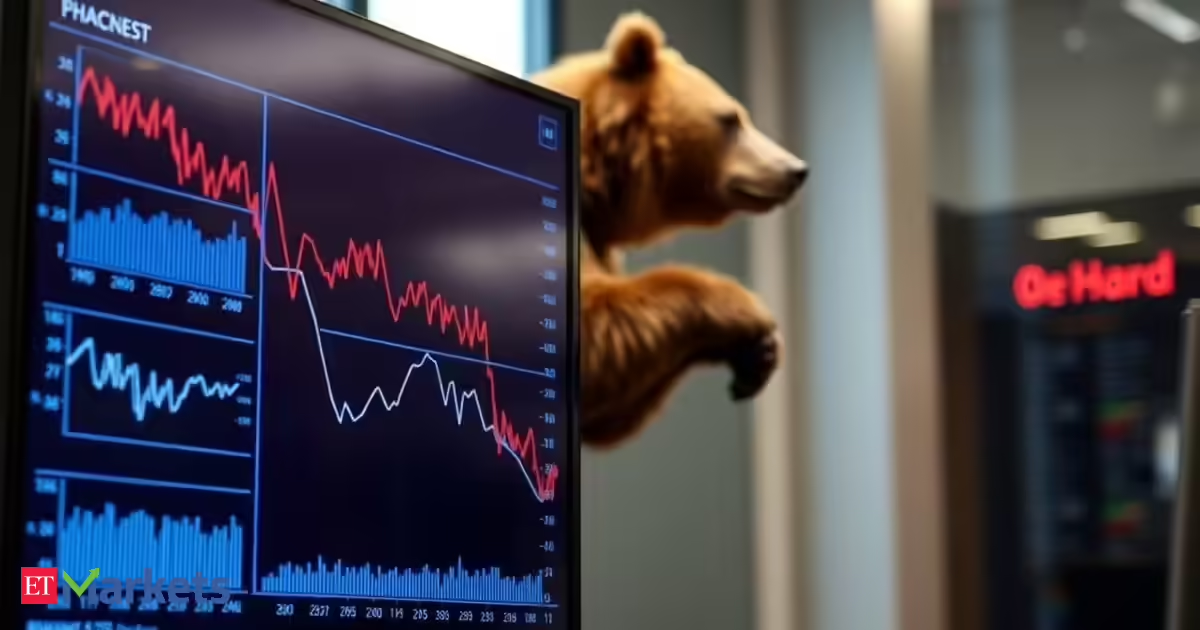
The Sensex has plunged 3,330 points in the brutal selloff, raising questions about whether this is merely a correction or the start of a full-blown bear market.
The carnage has been broad-based and merciless. PSU banks, tourism and airline stocks, real estate, banking and auto sectors have led the decline as escalating Middle Eastern tensions disrupted key oil and gas supplies, driving crude prices higher and threatening India’s fragile twin deficits. Defence stocks emerged as the only major winners, with Mazagon Dock, Solar Industries and Paras Defence surging amid the war.
“Persistent FII outflows, totaling over Rs 23,000 crore this week, reflect a broader de-risking strategy as geopolitical tensions in the Middle East and a surge in Brent crude toward $86 weigh heavily on emerging market sentiment,” said Vinit Bolinjkar, Head of Research at Ventura Securities.
The pain runs deeper than headline indices suggest. Around 80% of listed stocks with a market capitalization of at least Rs 1,000 crore have already fallen 20% from their all-time highs, technically a bear market in the broader market even as the Nifty is down only 7% from its peak.

Also Read | Iran war shock for Nifty bulls: How to tweak your portfolio for peace of mind
Technical indicators are flashing red across the board. The market is trading well below short-term and medium-term averages and is forming a lower top on daily charts. A bearish candle on weekly charts is also indicating further weakness from current levels.
Bolinjkar warned that the short-term outlook remains cautious due to rupee volatility and inflationary crude spikes. He expects high volatility to persist, favoring domestically-insulated sectors like capital goods and consumer durables, while globally-exposed pockets may face continued headwinds until macro-uncertainty subsides.
However, he noted that the structural narrative remains intact due to the “DII cushion”, domestic institutions bolstered by unwavering SIP inflows have absorbed selling pressure and prevented a deeper breakdown below the critical 24,300 Nifty support level.
Vinod Nair, Head of Research at Geojit Investments, painted an equally grim picture. “A sustained rise in oil prices could weigh on investor sentiment and adversely affect India’s twin deficits, inflation trajectory, and the RBI’s monetary stance. An uptick in U.S. 10-year bond yield and a stronger dollar have prompted FIIs to adopt a risk-off approach toward domestic equities,” he said, though he noted that “selective value-buying opportunities are expected to emerge, offering long-term investors attractive entry points.”
The question on every investor’s mind: is this the beginning of a prolonged downturn or a buying opportunity?
Also Read | 80% of Indian stocks are in bear market. Is it time to be greedy or fearful?
Fund managers are divided. Vinay Paharia, CIO at PGIM India Mutual Fund, acknowledged the crosscurrents. “At this juncture, we are seeing a mix of positives and a slew of uncertainties,” he said, pointing to healthy GDP prints, prospective trade deals, low interest rates and indirect tax cuts as positives, while flagging “global geopolitical uncertainty and its consequent impact on trade routes, rising crude and possibly other commodity prices, and AI-related disruption across sectors.”
Paharia warned that “many of the geopolitics-related impacts could be transitory in nature, while AI-related impacts are more long-term and would necessitate changes in business models, faster pivots, and greater agility by impacted companies and not all may be able to adapt.” He urged investors to “look through short-term volatility and focus on areas of self-sustaining growth.”
ArunaGiri N, Founder CEO & Fund Manager at TrustLine Holdings, struck a more opportunistic tone. “Historically, such phases are painful, but they are also when long-term opportunity quietly begins to build,” he said. “At the same time, it may be unwise to expect an immediate recovery. It may linger for a while. The prudent thing to do in such a sell-off is to grab the opportunities when the valuation is attractive instead of trying to time the bottom.”
ASK Investment Managers maintained that while rising trade and geopolitical uncertainty is expected to keep markets volatile, the investment case for India remains strong. “The relative macro stability, improving trade competitiveness and earnings recovery put India on a strong footing.”
The asset manager recommended a decisive tilt toward large caps, where valuations are relatively attractive and earnings visibility remains strong, complemented by selective exposure to micro-caps for investors with a long-term horizon of 5–7 years, given their illiquidity and higher risk. The firm stressed that “disciplined stock selection—focused on high-quality businesses and a concentrated approach—will be the key driver of outperformance as markets become increasingly selective and dispersion in returns widens.”
As geopolitical tensions simmer and oil prices threaten to spike further, Indian markets appear to be entering what Bolinjkar calls a phase of “rational consolidation”, a period where the DII cushion may prevent capitulation, but where volatility and sector rotation will separate winners from losers. Whether this consolidation morphs into a deeper bear market depends largely on factors beyond India’s control: the trajectory of the Iran conflict, crude oil’s next move, and global risk appetite.
For now, the bulls are nursing heavy wounds, and the bears are circling.


Midcap stocks saw sharp declines in March as rising crude prices, geopolitical tensions and continued FII outflows dragged markets lower, with the Nifty falling over 11%. This list highlights 10 worst-performing midcaps, with losses of up to 29%, reflecting broad-based selling pressure across sectors during a volatile period.

Oselote/iStock via Getty Images
COMEX (US) silver’s registered inventory has fallen to 13-14% coverage of outstanding open interest, while March 2026 delivery was unusually high and SHFE (Shanghai) futures now trade at a 12% premium to COMEX, together signaling extreme tightness that creates upside pressure on silver
FX markets muted as traders watch Iran war updates, wait for jobs data


A freight forwarding professional with over 20 years in the industry, I am an enthusiastic market participant with a flair for picking gems from the general rubble. My industry experience has given me insights into human behavior, investment psychology, and the need to make money work for you instead of against you. My ideas on investing are often contrarian, and the level of due diligence I apply to each of my research projects give my audience the right information at the right time.
Analyst’s Disclosure: I/we have no stock, option or similar derivative position in any of the companies mentioned, and no plans to initiate any such positions within the next 72 hours. I wrote this article myself, and it expresses my own opinions. I am not receiving compensation for it (other than from Seeking Alpha). I have no business relationship with any company whose stock is mentioned in this article.
Seeking Alpha’s Disclosure: Past performance is no guarantee of future results. No recommendation or advice is being given as to whether any investment is suitable for a particular investor. Any views or opinions expressed above may not reflect those of Seeking Alpha as a whole. Seeking Alpha is not a licensed securities dealer, broker or US investment adviser or investment bank. Our analysts are third party authors that include both professional investors and individual investors who may not be licensed or certified by any institute or regulatory body.
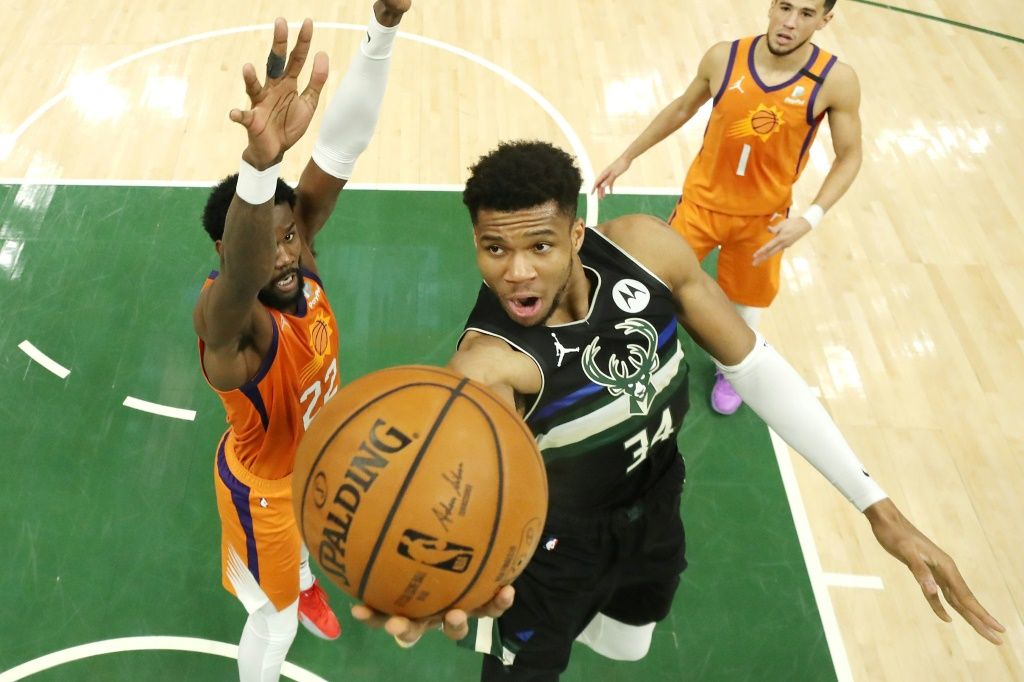
The NBA has launched an investigation into the Milwaukee Bucks for their handling of superstar Giannis Antetokounmpo’s injury status and potential violations of the league’s player participation policy, after the two-time MVP publicly stated he is healthy and wants to play while the team continues to hold him out.
ESPN’s Shams Charania reported Friday that the league is examining inconsistent statements regarding Antetokounmpo’s health. The Bucks have listed the 31-year-old forward as out for the past 10 games with a left knee hyperextension and bone bruise suffered March 15 against the Indiana Pacers. Antetokounmpo, however, has told investigators he is ready to return and the team will not medically clear him, sources said.
Antetokounmpo addressed the situation directly before Friday’s game against the Boston Celtics, expressing frustration and questioning his relationship with the organization. “You know who you are dealing with,” he told reporters. He added that he has never seen a player of his caliber publicly state he wants to play while being sidelined, and welcomed the NBA’s probe. “There should be” an investigation, he said, according to multiple accounts.
The conflict comes as the Bucks, already eliminated from playoff contention and headed for their first missed postseason since 2016, sit near the bottom of the Eastern Conference. Antetokounmpo has appeared in only 36 games this season due to multiple injuries, including a lengthy calf issue earlier in the year.
The National Basketball Players Association previously criticized the Bucks in late March, asserting that Antetokounmpo is healthy and ready to play. The union suggested the team might be engaging in tanking to improve lottery odds, stating the player participation policy exists to ensure stars like Antetokounmpo are on the court when able. “Anti-tanking policies are only as effective as their enforcement,” the NBPA said.
Bucks coach Doc Rivers had maintained that Antetokounmpo is “progressing” but “just not healthy,” pushing back against the union’s claims in late March. Team officials have told league investigators they do not believe he is ready and that he actually wants to play, creating the conflicting narratives now under review.
The NBA has interviewed Antetokounmpo’s representatives, the Bucks and team doctors as part of the probe, sources told Charania and The Athletic. The investigation focuses on whether the franchise violated rules requiring teams to make healthy players available, particularly as the season winds down with no playoff implications.
Antetokounmpo’s public comments Friday marked a notable escalation. He described the situation as feeling like “a slap in the face” and suggested uncertainty about the future of his relationship with the Bucks. “I just don’t want to be part of it,” he said in one account, raising questions about his long-term commitment to the franchise amid ongoing injury concerns and the team’s direction.
The Greek Freak has averaged 27.6 points, 9.8 rebounds and 5.4 assists in his limited action this season while shooting a career-high 62.4% from the field. His absence has contributed to Milwaukee’s struggles, though the team has leaned on other veterans in recent games.
League rules prohibit teams from resting healthy players for non-injury reasons, especially in the context of the new collective bargaining agreement’s emphasis on player availability. Similar investigations have targeted other franchises in recent years over load management and tanking concerns.
The Bucks have not issued a detailed public response to the latest reports beyond standard injury updates listing Antetokounmpo as out. The organization has emphasized caution with the star’s health after a season marked by multiple lower-body setbacks, including groin, calf and now knee issues.
Antetokounmpo’s desire to play contrasts with the team’s apparent preference to shut him down for the remainder of the regular season, which ends in mid-April. With the Bucks out of contention, some observers speculate the front office prioritizes preserving his long-term health and potentially positioning for a higher draft pick or future roster moves.
The situation has drawn widespread attention across the NBA. Fans, analysts and former players have weighed in on social media, with many expressing surprise at the public rift between a franchise cornerstone and his team. Antetokounmpo signed a contract extension in recent years and has been the face of the Bucks since being drafted in 2013, leading them to the 2021 NBA championship.
The timing of the investigation adds pressure as the league office seeks to enforce participation rules uniformly. Outcomes of similar probes in the past have included fines, though more severe penalties are rare unless clear violations are proven.
As of Saturday, April 4, Antetokounmpo remained sidelined for upcoming games, with no updated timetable for his return. The NBA has not commented publicly on the investigation’s progress or potential timeline for resolution.
The episode highlights broader tensions in the modern NBA between player health, competitive integrity and strategic decision-making in a 82-game season. Stars often battle through injuries, but teams increasingly err on the side of caution, sometimes creating friction when a player feels ready.
For the Bucks, the drama unfolds against a backdrop of a disappointing season and questions about the roster’s future direction. Whether Antetokounmpo returns before the season ends — or at all — remains uncertain amid the ongoing probe.
The Greek Freak’s comments Friday suggested he is eager to contribute while he can, emphasizing his competitive drive even in a lost season. “I want to f—ing play,” he said, underscoring the disconnect with the team’s medical and organizational stance.
League officials are expected to continue gathering information in the coming days. Any findings could influence not only the Bucks but also set precedents for how teams manage star players down the stretch of disappointing campaigns.
Antetokounmpo has not elaborated further since his pregame remarks, focusing instead on his personal preparation. The situation adds another layer of uncertainty to what has already been a challenging year for the franchise and its franchise player.
As the regular season concludes, all eyes remain on Milwaukee to see how the investigation unfolds and whether Antetokounmpo makes a late appearance. For now, the public disagreement and league scrutiny have thrust the Bucks into the spotlight for reasons far removed from on-court performance.

IMF backs gradual BOJ rate hikes as Iran war and weak Yen fuel inflation risks
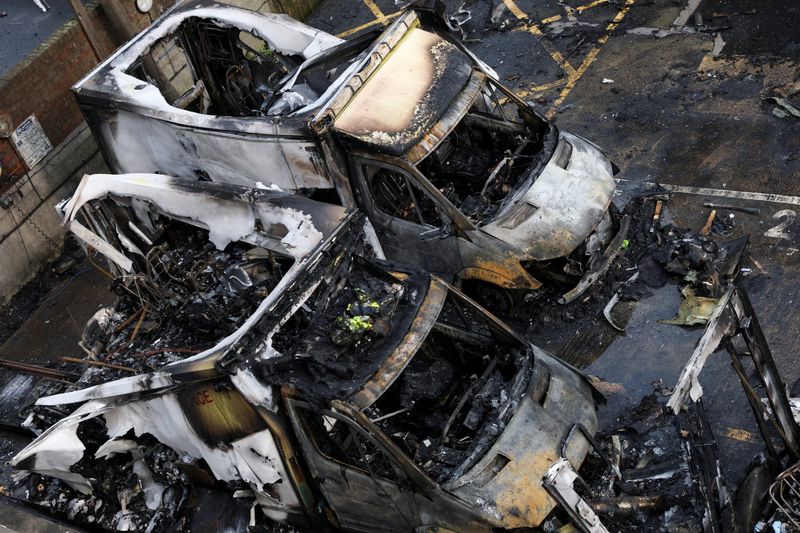

UK charges three men with arson over attack on Jewish community ambulances
Commodity ETFs declined up to 15% in March, led by sharp losses in silver ETFs amid rising oil prices, geopolitical tensions and tightening liquidity. Gold ETFs also fell as stronger dollar dynamics weighed on prices. The outlook now hinges on inflation trends, liquidity conditions and central bank actions globally.

Barclays sees limited steel impact from Iran strikes, flags China reliance
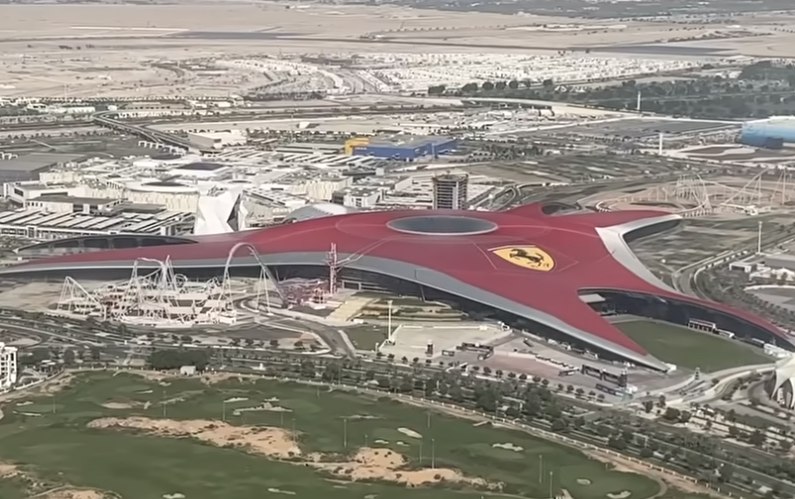
Zayed International Airport (AUH) in Abu Dhabi is open and handling flights on Saturday, April 4, 2026, operating on a reduced schedule as the facility continues its phased recovery from weeks of disruptions caused by regional geopolitical tensions and airspace restrictions across the Middle East.

Real-time flight trackers show dozens of arrivals and departures throughout the day, including Etihad Airways services to destinations such as London, Cochin and Addis Ababa, alongside codeshare and partner flights from carriers like Air India Express and Ethiopian Airlines. While activity remains well below pre-crisis levels, with very low delay status reported in early morning hours, the airport is functioning without new major interruptions as of mid-afternoon local time.
The status offers cautious optimism for travelers after a turbulent period that began in late February 2026, when U.S. and Israeli strikes on Iran triggered widespread airspace closures, temporary full suspensions at Gulf hubs and cascading cancellations affecting tens of thousands of passengers. Abu Dhabi’s Zayed International Airport, the capital’s primary gateway and home to national carrier Etihad Airways, saw complete halts in operations at times, followed by gradual resumption starting in early March.
Airport authorities and Etihad continue to stress caution. Passengers are urged not to travel to the terminal without a confirmed booking and explicit airline approval. “Check your flight status directly with your airline before heading to the airport,” officials reiterated in recent advisories. Entry remains restricted primarily to ticketed passengers amid ongoing security protocols.
Etihad Airways, which anchors operations at AUH, is currently flying to around 80 destinations worldwide on a limited commercial schedule. The airline has expanded services progressively since March 6, when it resumed connections to about 70 key points across the Middle East, Africa, Asia, Australia, Europe and North America. Not all routes operate daily, and frequencies remain constrained as the carrier repositions aircraft and crews while coordinating with regulators.
Other carriers, including Air Arabia Abu Dhabi, IndiGo and select international partners, are running ad-hoc or reduced services, focusing on essential links particularly to South Asia and the broader region. Live departure boards on April 4 listed flights to Ahmedabad, Kozhikode and other Indian cities, some operating on time while others faced minor adjustments.
The disruptions stemmed from escalating conflict that led to multiple rounds of airspace closures over Iran, parts of the Gulf and neighboring areas. In the UAE, both Abu Dhabi and nearby Dubai airports experienced brief total shutdowns, drone-related incidents and precautionary halts. A mid-March drone strike near Dubai facilities briefly impacted regional movements, prompting safety-driven rerouting and temporary restrictions that rippled into Abu Dhabi operations.
By early April, recovery has advanced but remains partial. Flight volumes at AUH are estimated at 40-60% of normal capacity in recent weeks, with the airport handling hundreds of movements over multi-day periods rather than the usual peak traffic. International carriers such as British Airways, Lufthansa and others have extended suspensions to Abu Dhabi and other Gulf destinations through late April or May, citing safety assessments and operational challenges.
UAE airspace itself is partially open with tightly controlled entry and exit points, forcing many long-haul routes onto longer detours that increase fuel costs and flight times. European regulators extended conflict-zone advisories covering large swaths of the Middle East through early April, further limiting foreign carrier participation.
Despite the constraints, positive signals have emerged. Etihad reported steady expansion of its network, with tickets available for sale on operating routes. The General Civil Aviation Authority has supported “special flights” and exceptional services to assist stranded passengers, prioritizing repatriation and essential travel in the initial recovery phase.
Zayed International Airport’s modern infrastructure — featuring the expansive Terminal A as the main facility — has helped manage the reduced load efficiently. The airport, designed for significant future growth, maintains 24/7 operations when conditions allow, with two parallel runways capable of handling wide-body aircraft even in constrained schedules.
For passengers, flexibility remains essential. Major carriers including Etihad have implemented rebooking waivers and refund options for affected travel through mid-May or later. Travelers with upcoming bookings are advised to monitor airline apps, websites and direct communications for updates, as schedules can shift with short notice based on airspace availability.
The broader economic ripple effects have touched Abu Dhabi’s tourism and business sectors. As a key connector for international visitors and a hub for oil, finance and culture, the capital has seen slower visitor inflows amid uncertainty. Yet officials project a rebound as operations stabilize, leveraging the airport’s strategic location between Europe, Asia and Africa.
Aviation experts attribute the airport’s resilience to strong coordination among Etihad, airport operators and UAE authorities. Special assistance services for passengers with disabilities or requiring support continue uninterrupted for operating flights.
Looking forward, full normalization hinges on further de-escalation and airspace stabilization. Analysts estimate it could take additional weeks or months to restore pre-February schedules, given the need for aircraft repositioning, crew recertification and negotiated routing agreements. Some routes may see adjusted frequencies or higher fares in the near term due to detours and capacity limits.
In the current environment, AUH serves as a vital but scaled-back lifeline. On April 4, morning and early afternoon flights showed manageable delays overall, with weather conditions favorable and no reported major incidents. Live trackers indicated steady, if limited, activity into the evening hours.
Travelers planning journeys to or through Abu Dhabi should:
- Verify flight status directly with their airline rather than relying solely on general airport information.
- Allow additional time for check-in, security and potential processing amid adjusted staffing.
- Review airline policies on rebooking, refunds and travel credits for disrupted services.
- Refrain from visiting the airport without confirmed travel details.
The official Zayed International Airport website and Etihad’s flight status tools provide real-time updates on departures, arrivals, gates and any advisories. The airport authority also offers guidance on special services and connections to other UAE destinations, including road or rail links to Dubai.
This chapter tests the adaptability of one of the region’s premier aviation facilities. From full suspensions in late February and early March to the current limited but active operations, Zayed International Airport has shown incremental progress. No significant new disruptions were reported overnight leading into April 4, presenting a stable — though not yet fully restored — picture for those with essential travel needs.
As conditions evolve rapidly, reliance on official airline and airport channels offers the most reliable guidance. Etihad leads the phased return, supported by partner carriers, but the pace of broader international recovery will shape when Abu Dhabi reclaims its position as a seamless global transit point.
For now, the clear answer for many inquiring travelers is yes: Abu Dhabi International Airport, also known as Zayed International Airport, is open today. It continues operations with care and coordination, as the hub and the region navigate a path toward greater stability.

Midcap mayhem! 10 stocks that plunged up to 29% in March. How many do you own?

Naoris Launches First NIST-Approved Quantum-Resistant BC

Charlton Athletic: The WSL 2 club defying odds in promotion race


-

 NewsBeat2 days ago
Steven Gerrard disagrees with Gary Neville over ‘shock’ Chelsea and Arsenal claim | Football
-

 Business1 day ago
No Jackpot Winner and $194 Million Prize Rolls Over
-
Entertainment5 days ago
Fans slam 'heartbreaking' Barbie Dream Fest convention debacle with 'cardboard cutout' experience
-

 Fashion15 hours ago
Weekend Open Thread: Spanx – Corporette.com
-

 Crypto World3 days ago
Gold Price Prediction: Worst Month in 17 Years fo Save Haven Rock
-

 Tech5 days ago
The Pixel 10a doesn’t have a camera bump, and it’s great
-
 Entertainment6 days ago
Lana Del Rey Celebrates Her Husband’s 51st Birthday In New Post
-
Crypto World4 days ago
Dems press CFTC, ethics board on prediction-market insider trades
-

 Tech5 days ago
Avatar Legends: The Fighting Game comes out in July and it looks pretty slick
-

 Sports4 days ago
Tallest college basketball player ever, standing at 7-foot-9, entering transfer portal
-

 Fashion6 days ago
Amazon Sundays: Soft Spring Layers
-

 Tech4 days ago
EE TV is using AI to help you find something to watch
-

 Business2 days ago
Login and Checkout Issues Spark Merchant Frustration
-

 Tech6 days ago
Elon Musk’s last co-founder reportedly leaves xAI
-

 Tech4 days ago
How to back up your iPhone & iPad to your Mac before something goes wrong
-

 Politics5 days ago
Should Trump Be Scared Strait?
-

 Crypto World4 days ago
U.S. rule change may open trillions in 401(k) funds to crypto
-

 Tech5 days ago
Apple will hide your email address from apps and websites, but not cops
-

 Fashion5 days ago
The Best Spring Trends of 2026
-

 Tech4 days ago
Flipsnack and the shift toward motion-first business content with living visuals
You must be logged in to post a comment Login