Connect with us
DAPA Banner

Business

Northumberland bookmaker Chisholm falls to a loss in ‘disappointing’ year

Published

on

Business Live

The Ashington-based business runs 34 shops across the North East as well as online betting services

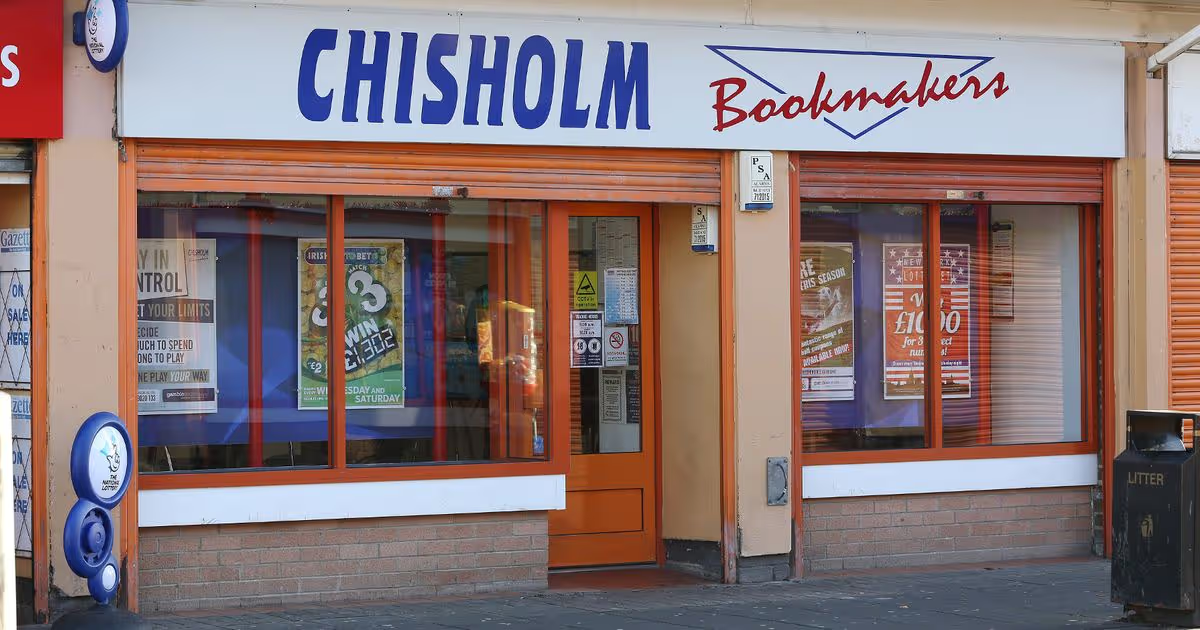
A Chisholm bookmakers in South Tyneside

A Chisholm bookmakers in South Tyneside(Image: Newcastle Chronicle)

Directors at Northumberland bookmaker Chisholm have described a “disappointing” year after falling to a loss amid increased costs and a need to update its gaming machines. The Ashington-based business, which runs 34 shops across the North East as well as online betting services, has published accounts for the year ended April 2025, citing “out of date” gaming machines which were seeing customers fall away in search of newer models, as one factor for the fall in finances.

Since then, it said investments had been made in newer machines, but turnover for the year fell from £29.99m to £27.1m, while the previous year’s operating profit of £542,773 was converted to a loss of £257,553. The company highlighted how increases in employers’ National Insurance contributions, introduced in April 2025, had impacted the business, adding that “further increases in taxes present an ongoing risk to the business”.

Directors said they would continue to focus on careful cost control, and that shops it operated would be “kept under constant review regarding future viability”.

A report within the accounts said: “The directors are disappointed with the results for the year, the poor performance being due to a number of factors. During the year became clear that the performance of the gaming machines in the shops was declining.

Advertisement

“The reason for the decline was found to be that over time the model of machines installed had become out of date and customers were leaving to use newer models in competing locations. Post year end all gaming machines have been replaced with newer models and performance has improved substantially.

“Media rights costs during 2024 and 2025 increased by a total of 30%. This, together with an above inflation increase in the National Minimum Wage increased costs across the business. Throughout the year it was noticed that many ordinary customers baulked at providing ‘know your customer’ information and were lost to the business.

“This is surprising as often the information requested is no more onerous than that required to register with a supermarket loyalty card. The hope is that these customers will return when they find KYC requests are now universally implemented among retail betting operators.

“Recruitment continues to be problematic for all high street businesses and the betting industry is no different. The focus of the business continues to be high volume, low stake turnover which is appropriate for the geographical locations that the business operates in.”

Advertisement

During the year, Chisholm made contributions totalling £100 to a national charity focused primarily on research and education programmes in order to combat problem gambling in the UK.

It added that changes to legislation and regulation continues to present a risk to the business, saying: “A balance must be in place between regulations intended to protect the small minority of individuals who experience problems with gambling and the rights of the ordinary gambler to conveniently place a bet via legal means.

“The company has a strong focus on encouraging responsible gambling by its customers and ensures all staff are aware of their responsibilities. We continue to be concerned that there is a risk that regulatory action designed to improve standards online goes further and unnecessarily impacts the retail industry.”

Advertisement
Continue Reading
Click to comment

You must be logged in to post a comment Login

Leave a Reply

Business

Instagram Works on Offline Reels Streaming with Automatic Downloads, According to New Leak

Published

on

Apple Logo on a Glass Window
US-INTERNET-COMPUTERS-LIFESTYLE-INSTAGRAM

A new leak has claimed that Meta’s Instagram is working on a feature that will allow offline streaming of Reels content after the app automatically downloads the videos available on the social media platform.

Instagram Leak: Offline Reels Streaming Reportedly In the Works

App researcher and insider Alessandro Paluzzi shared his latest discovery on X, which showcased a new feature that may be coming to Instagram that will allow offline Reels streaming on the platform.

The latest discovery shows how it will work on the Instagram app, particularly how to control the feature.

Here, users may see a “Manage offline downloads” feature on Instagram’s Reels, where they could choose to “Enable downloads” of content on the platform and download videos “on WiFi only.”

This specific settings page discovered by the app researcher also show the “Downloads status” display, which will detail the progress of Reels content downloads on the platform, showing the finished downloads and those still in progress.

Advertisement

Automatic Downloads of Reels

The Instagram app’s new settings page for Reels offline streaming brings massive information about how automatic downloads will work, and it is expected to arrive soon on the app.

As mentioned earlier, users may choose to turn on the automatic downloads of Reels content, especially when there is no available internet connection or cellular data.

Users may also set the number of Reels to be automatically downloaded by the app, which ranges from 10, 30, or 50 videos to save offline.

Next, users may view the downloaded Reels on their devices, but it remains unconfirmed if they get the option to manage these videos, like deleting a few at a time.

Advertisement

Lastly, there is the Surface mode, where users can choose from “Feed” or “Downloads.”

Originally published on Tech Times

Continue Reading

Business

Apple Claims Lockdown Mode Has Prevented Spyware Attacks on iPhone, iPad, Mac

Published

on

Apple Logo on a Glass Window

The security feature called “Lockdown Mode” is almost four years old, and Apple has recently claimed that it has prevented all kinds of spyware attacks on devices where it is enabled.

This specific feature is an opt-in one found in the device’s settings, and it switches off certain features that bad actors mostly use to get into devices, helping stop the threat before it even gains access.

Apple’s Lockdown Mode Prevented All Kinds of Spyware Attacks

According to a report by TechCrunch, Apple spokesperson Sarah O’Rourke told the publication that Apple’s Lockdown Mode has prevented all kinds of spyware attacks on devices that have it turned on.

O’Rourke said that the company was not able to detect and record any kind of “mercenary spyware attacks” against devices that have Lockdown Mode enabled.

Advertisement

The Cupertino tech giant reaffirmed how effective and powerful their Lockdown Mode is, and according to TechCrunch, this is the company’s second time claiming the usefulness of the feature since it was launched.

The report shared that Amnesty International’s head of security lab, Donncha Ó Cearbhaill, also backed Apple’s claims, saying that he and his colleagues did not see any evidence that Lockdown Mode-enabled devices were compromised by this kind of attack.

Lockdown Mode Is Available on the iPhone, iPad, and Mac

It was revealed that Apple has accepted the fact that their devices can be hacked, and the company has been notifying affected or targeted customers over the years. With this, Lockdown Mode was born, specifically as the company prioritizes privacy and security for their devices, something which they have prided themselves on over the years.

The security feature was made available to the iPhone, iPad, and Mac devices, and this feature could be turned on in the Settings app. Lockdown Mode will turn off several device features that may be exploited or hacked, taking down potential points of entry before bad actors get a chance to attack.

Advertisement

Apple previously claimed that it can also protect users from government spyware made by the likes of Intellexa, NSO Group, and Paragon Solutions.

Originally published on Tech Times

Continue Reading

Business

Italian market watchdog deems all MPS board slates fully legitimate, source says

Published

on

Italian market watchdog deems all MPS board slates fully legitimate, source says


Italian market watchdog deems all MPS board slates fully legitimate, source says

Continue Reading

Business

Nike Earnings Preview: The Company Really Needs To Return To Mid-Single-Digit Revenue Growth

Published

on

Nike Earnings Preview: The Company Really Needs To Return To Mid-Single-Digit Revenue Growth

Nike Earnings Preview: The Company Really Needs To Return To Mid-Single-Digit Revenue Growth

Continue Reading

Business

Ajanta Pharma, Sun Pharma poised to tap GLP-1 opportunity amid market shift: Siddhartha Khemka

Published

on

Ajanta Pharma, Sun Pharma poised to tap GLP-1 opportunity amid market shift: Siddhartha Khemka
India’s metabolic therapy landscape is undergoing a structural shift following the patent expiry of semaglutide, triggering a rapid transition from a premium, innovator-led market to a highly competitive, volume-driven segment. Historically constrained by high prices and limited access, the category is now witnessing a sharp inflection in demand, supported by significant price erosion of nearly 85–90% and a surge in product launches.

The addressable opportunity remains substantial. With an estimated 75–80 million obese individuals and a large proportion suffering from co-morbid conditions, the need for structured obesity management is becoming increasingly evident. GLP-1 penetration, which remained low due to patent protection, is now expected to rise meaningfully as affordability improves and distribution expands. Over the next 3–5 years, the market could scale to INR34–67 billion, driven by rising patient adoption and chronic therapy demand.

A key growth driver is the expanding prescriber base. While endocrinologists and diabetologists remain primary stakeholders, adoption is increasingly being supported by cardiologists, gastroenterologists, gynaecologists, and other specialists due to the multi-system impact of obesity and metabolic disorders. This broadening ecosystem is expected to accelerate awareness, referrals, and prescription volumes, reinforcing long-term demand visibility.

However, the sector faces structural challenges. The entry of over 10–15 players has intensified competition, leading to rapid market fragmentation and pricing pressures. Despite a large volume opportunity, individual revenue gains are likely to remain modest, with low single-digit contribution to overall sales for most participants. Limited prescription bandwidth—where physicians typically engage with only a handful of brands—further constrains market share potential, increasing the need for aggressive marketing and elevating promotional costs.

Advertisement

Pricing dynamics also reflect a clear stratification, with premium, mid-tier, and mass-market strategies co-existing. While this enhances accessibility, it accelerates commoditisation, weighing on margins across the value chain. Additionally, companies risk diverting focus from established portfolios amid heightened competition in this segment.


An emerging structural trend is the rising preference for next-generation therapies. Even as semaglutide drives awareness and category expansion, newer molecules with superior efficacy are witnessing faster uptake and stronger physician preference, indicating a potential shift in long-term market leadership.
Overall, the GLP-1 segment in India presents a compelling volume-led growth opportunity underpinned by strong demand fundamentals. However, the combination of pricing pressure, intense competition, and limited differentiation suggests that value capture may remain constrained, making scale and execution critical in navigating this evolving landscape.

Ajanta Pharma: Buy| Target Rs 3400

Ajanta Pharma is preparing to launch generic semaglutide post patent expiry of Novo Nordisk’s Ozempic/Wegovy in India, while continuing to expand its portfolio in high-growth segments such as dermatology, pain management, and nephrology. Ajanta Pharma’s long-term growth is driven by its expanding presence in branded generics across India, US, Africa, and Asia, with a focus on chronic therapies and new launches supporting sustained demand and deeper penetration in high-growth markets. Management expects mid-teens revenue growth with EBITDA margins around 27%, supported by expansion in Asia and Africa, a strong US product pipeline, and strategic addition of medical representatives to drive execution.

Sun Pharma: Buy| Target Rs 1940

Sun Pharma’s Innovation momentum remains a key growth pillar, with specialty and novel therapies scaling up meaningfully. USD1b+ innovative sales (ex-milestones) provide resilience against US pricing pressure, while strong domestic formulation execution, consistent market share gains, and ROW/EM stability underpin diversified, sustainable growth drivers. In 3QFY26, SUNP delivered in-line adjusted revenues and EBITDA 6% ahead of estimates, supported by robust DF growth and favorable mix. Margin expansion reflected execution strength, partly offset by continued weakness in US generics due to regulatory headwinds at select sites. We estimate EM+ROW revenues to reach INR230b over FY25-28 at 12% CAGR, while specialty sales grow 11% CAGR to USD1.7b. Sustained DF outperformance, rising innovative R&D intensity, and steady pipeline launches support earnings visibility.

(The author is Siddhartha Khemka, Head of Research – Wealth Management, Motilal Oswal Financial Services)

Advertisement

(Disclaimer: Recommendations, suggestions, views, and opinions given by experts are their own. These do not represent the views of the Economic Times)

Continue Reading

Business

Silver lining to market crash? Analysts say Nifty now at fair valuations after 9% March selloff; what lies ahead

Published

on

Silver lining to market crash? Analysts say Nifty now at fair valuations after 9% March selloff; what lies ahead
Dalal Street has seen massive downswings but not equally sharp upwings as conflict erupted in the oil-rich Middle East and pushed oil prices as high as $110 per barrel. Analysts sounded alarms over what impact the prolonged rally in oil prices may have on India’s macroeconomics.

However, as bears reigned over markets and wiped out significant amounts from investors’ portfolios, valuations may have quietly improved. The market correction since the beginning of the war has brought Nifty’s valuations down to fair levels, said VK Vijayakumar, Chief Investment Strategist at Geojit Investments. He added that Nifty is now trading at about 19 times, which is lower than the last 10-year average of 22.4 times.

Aakash Shah, Technical Research Analyst at Choice Equity Broking, also said that the ongoing correction in Nifty 50, largely triggered by geopolitical tensions and a spike in crude oil prices, has indeed cooled off valuations from previously elevated levels.

Advertisement

Has Nifty hit its bottom?

Aakash Shah however noted that it is premature to conclude right now that the market has hit a durable bottom. “The Nifty has corrected approximately 12-14% from its recent highs…The index continues to trade below its short-term moving averages, indicating that the trend remains fragile and lacks strong bullish confirmation,” he said.

Ajit Mishra, SVP Research at Religare Broking, also said that it would be premature to conclude that the Nifty has formed a durable bottom or is at a “perfect buying level”. “The lack of meaningful cooling in volatility also indicates that the market has not yet transitioned into a stable phase,” he added.

Why caution is warranted


Vijayakumar from Geojit Investments cautioned that in case India’s macros take a hit due to this energy crisis, valuations may again decline, factoring-in the feared hit to earnings growth in FY27. “The Indian economy is strong enough to absorb the shock if the war ends, crude cools down and gas availability becomes normal. But if the war prolongs, crude remains elevated for months together, and gas availability constraints continue, the stress on India’s macros will be significant and the market will discount that. In brief, everything boils down to how long the war will last,” he said.“While valuations have turned fair, it is still premature to call a definitive bottom. Technically, the market is in a corrective phase with intermittent pullbacks. Strategy-wise, investors should avoid aggressive buying and adopt a staggered or wait-and-watch approach, as the current phase appears to be consolidation rather than a confirmed bottom formation,” said Shah from Choice Equity Broking.

Stock markets crashed on Friday, with the Sensex plunging nearly 1,700 points and Nifty closing below 22,850. The decline followed a strong two-day rally of over 3.5% in the benchmarks. A record-low rupee, along with fading hopes of a de-escalation in the Iran–US conflict, weighed on sentiment and brought bears back to Dalal Street.

Advertisement

(Disclaimer: Recommendations, suggestions, views and opinions given by the experts are their own. These do not represent the views of The Economic Times)

Continue Reading

Business

Israeli military says it identified a launch of a missile from Yemen

Published

on


Israeli military says it identified a launch of a missile from Yemen

Continue Reading

Business

Investors in Private Credit Funds Are Fretting About One Type of Loan Payment

Published

on

Investors in Private Credit Funds Are Fretting About One Type of Loan Payment

Investors in Private Credit Funds Are Fretting About One Type of Loan Payment

Continue Reading

Business

Rubio sees US action in Iran completed in weeks as airstrikes rumble on

Published

on

Rubio sees US action in Iran completed in weeks as airstrikes rumble on


Rubio sees US action in Iran completed in weeks as airstrikes rumble on

Continue Reading

Business

Let A Thousand Scenarios Bloom

Published

on

6 Years Since Covid Crash Low

Let A Thousand Scenarios Bloom

Continue Reading

Trending

Copyright © 2025