
Connect with us

Business

Novo Nordisk rebrands to ‘Novo’ under CEO Mike Doustdar

Published

on

Novo Nordisk releases earnings and guidance
Novo CEO talks about rebrand, corporate changes amid fight for obesity market share

Novo Nordisk on Monday said it is rebranding its name to “Novo” and updating its corporate culture, as the company works to win back market share in the obesity drug space. 

The Danish drugmaker called the changes the beginning of a new chapter, as it has been grappling with stiff competition from chief rival Eli Lilly and investor pressure to deliver new blockbuster products and chart a path toward long-term growth. Novo is preparing to detail its business strategy changes during its Capital Markets Day event on Sept. 21. 

In an exclusive interview with CNBC, Novo CEO Mike Doustdar said the rebrand and culture shift are “part of the same package” for the company to evolve its strategy as it tries to win back customers from Lilly.

“I think there’s no secret that over the last four or five years, the external environment and what has happened to Novo Nordisk has really made us reflect how we need to readjust and rethink about the next decade to come and what shifts are needed in our strategic direction,” he told CNBC.

Doustdar said the “work is cut out for us,” adding that Novo needs to improve several aspects – from research and development and manufacturing to sales and marketing – to be able to compete in the obesity drug market.

Advertisement

Shares of Novo have dropped about 15% this year despite the successful launch of the oral version of Wegovy, which surpassed 3 million prescriptions as of June. The company recently scrapped three trials on an experimental cardiovascular drug. That challenge came as it continues to lag in the obesity space with 38.8% market share compared to Lilly’s 60.9% in the second quarter, according to a Lilly earnings presentation citing IQVIA data.

In a release, Novo also announced a broader company rebrand focused around the phrase “Lasting Health Starts Now,” which promotes the idea that patients should make progress toward long-term well-being immediately rather than later. The company said the marketing is a bid to build relevance and trust with the public and other stakeholders, and bring “breakthrough science closer to people’s daily lives.”

When asked whether the rebrand and cultural overhaul were driven by Novo’s recent market share losses in obesity, Doustdar said the changes were less about competitive setbacks and more about adapting to a dramatically different operating environment.

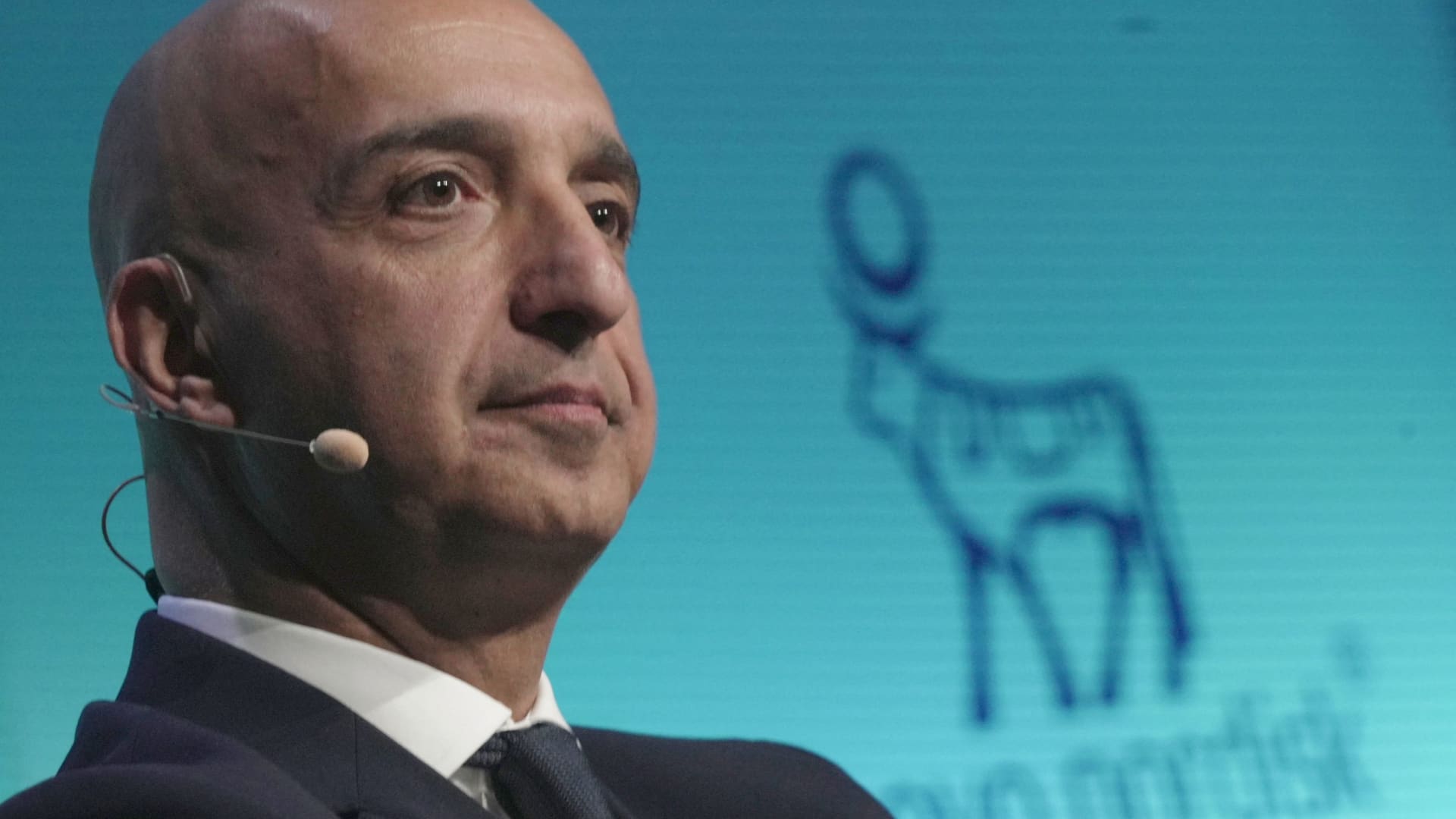
Novo Nordisk CEO Maziar Mike Doustdar waits for the start of the pharmaceutical company’s annual general meeting in Copenhagen, Denmark, March 26, 2026.

Advertisement

Tom Little | Reuters

He said the rapid growth of obesity treatments has transformed Novo’s patient base and shifted the market toward a more consumer-oriented model, where patients move on and off therapies more frequently than in traditional diabetes care. As a result, Doustdar said Novo needs to become more focused on meeting patients where they are, while increasing the speed and clarity of its decision-making to keep pace with the evolving market.

“Our operating environment phenomenally changed compared to just 10 years ago,” he told CNBC.

Novo Nordisk will remain the legal name for the company, according to the release. That original name dates back to the 1989 merger of two competing Danish pharmaceutical companies: Novo Terapeutisk Laboratorium and Nordisk Insulinlaboratorium. 

Advertisement

The drugmaker said its corporate culture will be based on a new set of four principles that will help it gain advantages in an increasingly competitive market where more of its products have gone direct-to-consumer.

Those tenets are innovating with patients as the primary focus, raising the company’s performance to “create greater value for all stakeholders,” setting clearer priorities and simpler workflows and never compromising on patient safety and ethics. 

“When you think about strategy, that’s really the the journey you’re taking and the direction you’re setting the company to go forward with,” Doustdar said. “But you also need behaviors. You need a cultural element that allows your colleagues and yourself to really make sure that a strategy gets executed.”

Despite its challenges, Novo has had one significant tailwind this year in the launch of the oral version of Wegovy. On top of its explosive launch, the pill had a head start over a rival weight loss pill from Lilly called Foundayo.

Advertisement

Doustdar said Novo has maintained “a lion’s share” of the oral market even with competition, noting that physicians find the Wegovy pill to be more effective than Lilly’s, with around 17% of weight loss.

Continue Reading
Click to comment

You must be logged in to post a comment Login

Leave a Reply

Business

New B&G Foods CEO digging into brand strategy

Published

on

New B&G Foods CEO digging into brand strategy

BOSTON — Robert Mills will go “brand by brand” to develop strategies as he takes over leadership at B&G Foods, Inc.

“We have to go brand by brand and understand, is it structural or is it a moment in time?” he said Sept. 9 at the Barclays Global Consumer Staples Conference in Boston. “Is it macro? More importantly, what’s driving (the brand)? What’s the household penetration? What are the trends in the brand? What are the trends in the category? Are we priced correctly? Is there innovation?”

Mills became president and chief executive officer of B&G Foods, Parsippany, NJ, on Aug. 10, succeeding Casey Keller, who retired. Mills has been on the board of directors for B&G Foods since March 2018.

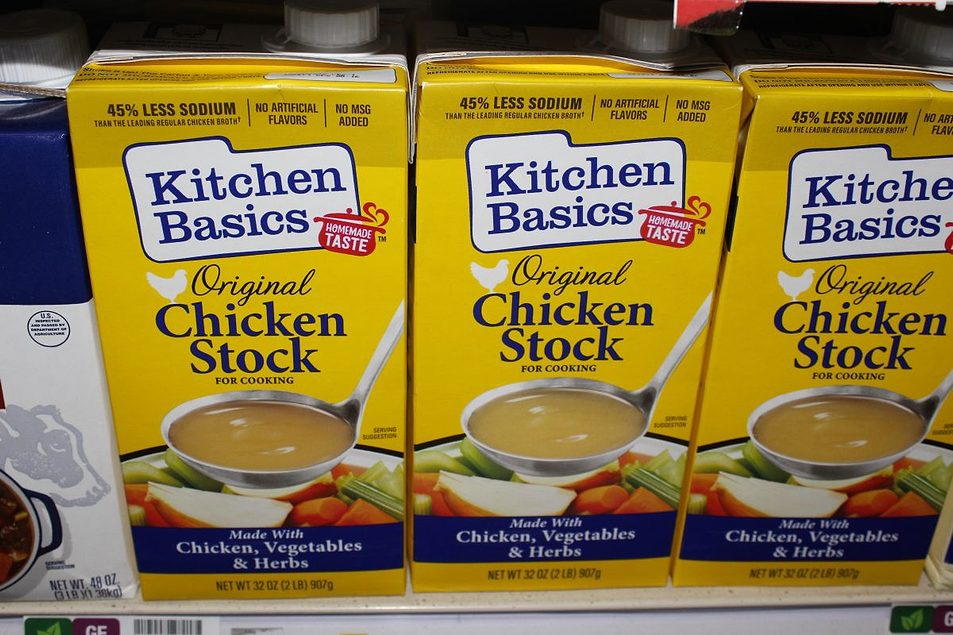
Two newly acquired brands will receive attention. B&G Foods in March completed its acquisition of the broth and stock business of Del Monte Foods Corp. and its affiliates, including the College Inn and Kitchen Basics brands, for approximately $110 million in cash.

Advertisement

“This is a great example where I think we’ve leveraged and made a smart investment,” Mills said. “We’ve brought in two brands at a lower multiple that’s able to be accretive on day one to our overall margin structure, and it is an on-trend demand with that consumer.”

B&G Foods needs to maintain College Inn’s position as a top brand among broths and stocks in the Northeast, Mills said, and Kitchen Basics is a premium brand in broths and stocks.

“It has grown under our watch over the last few months,” Mills said of Kitchen Basics. “We also see a tremendous opportunity to expand that and potentially take the brand into other categories.”

He noted that B&G Foods has found success outside of traditional measured channels in places like club stores, dollar stores, online and private label.

Advertisement

“This is an area that the team has focused on over the last couple of years, and it’s a key part of our strategy, and it will continue to be a key part of our strategy, especially when you look at plant utilization and where we can continue to take market share.

“With that being said, retail is the core of what our brands exist for, and we have underperformed there. We have to have a greater sense of urgency.”

Continue Reading

Business

LARRY KUDLOW: The AI armageddon, like the climate hoax, is an election-year Democratic ruse

Published

on

LARRY KUDLOW: Unconditional deadlines should be the next Iranian step

When it comes to the frontiers of Artificial Intelligence, I’m surely not your run-of-the-mill expert. I have some sense of models, agents, and bots. And I think I understand concerns that rogue AI agents can break free of their human instructions, or what the industry sometimes calls “misalignment.”

Yes, humans need to be able to keep control of the machines. Yet I also know something about election year ruses, including political hoaxes, such as we’ve seen in the past. Now that Democrats, led by Senator Bernie Sanders, want the government to completely stop the AI industry, including agents, data centers, and the whole nine yards. Well, this has the feel of the Democrats’ hysteria, make that existential hysteria, during the Biden years over climate change.  Do you remember that?

It would have led to our complete economic ruination, were it not for President Trump’s re-election, and his revival of “drill, baby, drill,” which to a large extent has saved us from Iran and their friends in Communist China. Did I say China? Nobody in China is pulling back on AI. That’s part of the stupidity of the Bernie Sanders Democrats, and their apparent fellow travelers, at places like Anthropic and OpenAI.

Advertisement

If we just let free enterprise work its magic on this new technology, we will leave China and everybody else in the dust, as we create millions of new jobs at higher wages, leading to exponential prosperity, and even lower taxes. Plus, we will harness the technology, that is, if we stop government from running it. That’s the real Bernie Sanders agenda.

The White House technology advisor, David Sacks, in his recent tweet, has the story completely right. He’s basically saying if you want to slow down your models, fine, slow down your models. 

Then, in a hard hitting statement, Mr. Sacks adds: “But stop pretending you need anyone else’s permission. Stop pretending antitrust law has to be suspended so you can form a cartel. Stop pretending you need a regulatory approval process that supersedes product liability.” He urges: “stop pretending METR,” the non-profit Model Evaluation and Threat Research, “is independent when it is intertwined with Anthropic’s investors and staff.”

Advertisement

Mr. Sack asserts: “most of all, stop pretending the motivation to slow down is purely altruistic. You face massive product-liability exposure if your products enable a truly damaging cyberattack… So go ahead and pace the frontier. You are the ones setting it.” In Mr. Sack’s appraisal, “the easiest way not to build superintelligence is for you to agree not to build it. Demanding your preferred regulatory framework as the price of that will look like blackmail of the public and the political system. So just do it.”

Then he concludes “If you do, you’ll buy goodwill for the next conversation. If you don’t, we’ll know this was just another bid for regulatory capture — or an election-season psy-op.” That psy-op part is very important. Anthropic and others are left-leaning companies. And when they talk about world government, it’s time for everyone to flinch. I’m not for world anything. And you can be sure China, Russia, North Korea, Iran, and plenty of other American enemies and adversaries, won’t abide by world anything.

And then there’s Mr. Trump correctly raising the issue of a hoax no different from Russia, Russia, Russia. He asks why anybody would want to stop the greatest economic development engine in history. And he is right to ask that. But then our friend the ace New York Post columnist, Miranda Devine, provides some important research that the people behind Bernie Sanders and Anthropic, are CIA veterans of the Russia, Russia, Russia hoax that tried to stop Mr. Trump.

Advertisement

And unsurprisingly, this crowd is also tied in with President Obama, Congressman Hakeem Jeffries, and Senator Chuck Schumer. All this AI armageddon, is indeed “election season psy-op.” And even Nvidia’s chief executive, Jensen Huang, has dismissed the AI fearmongering as “complete nonsense,” at a recent Goldman Sachs conference. You know what? Luddites are bad enough, but left-wing election-year luddites are even worse. Ignore them.

Continue Reading

Business

General Mills execs say lowering base prices a priority

Published

on

General Mills execs say lowering base prices a priority


Advertisement


General Mills execs say lowering base prices a priority | Food Business News

Advertisement

Advertisement


Skip To Content

Advertisement

Continue Reading

Business

Law firm Devonshires launches its first office in Wales

Published

on

Business Live

Its new Cardiff office is headed by Liz Gibbons

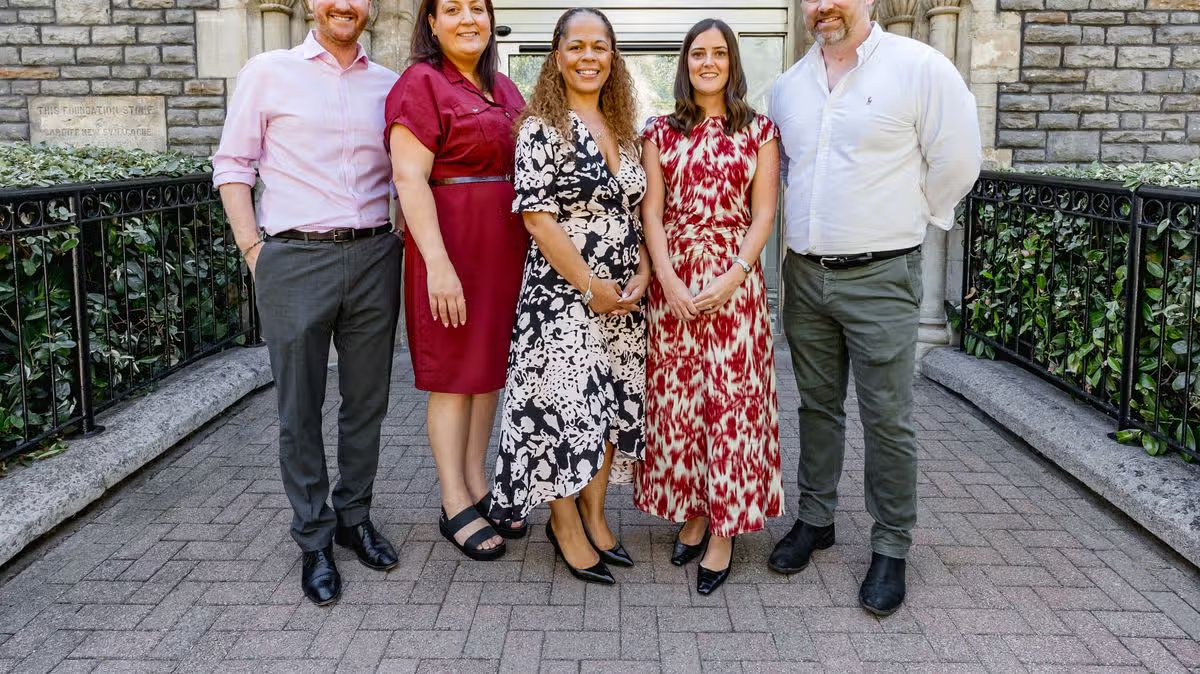
Devonshires partners Lee Russell, Gemma Bell, Liz Gibbons, Victoria Smith, Jonathan Corris at the firm’s new Cardiff office.

Law firm Devonshires has launched its first office in Wales.

The new office in Cardiff builds on Devonshires’ longstanding track record in Wales, including acting on all major mergers in the housing association sector over the last five years.

Advertisement

It also acted for landlord parties in Beacon Cymru Group Limited & Ors v Mitchell & Ors, the landmark High Court test case on the practical and legal implications of the Renting Homes (Wales) Act 2016, widely regarded as one of the most significant housing law cases in Wales in recent years.

Devonshires also has offices in Birmingham, Colchester, Leeds and London with a workforce of nearly 300.

The Cardiff office is headed by real estate and social housing lawyer Liz Gibbons who has joins from Acuity Law.

Ms Gibbons said: “The firm is the preeminent national social and affordable housing specialist and already has an impressive track record working for clients across Wales, be it on major mergers or sector-defining test cases.

Advertisement

“This new office is a sign of our commitment to clients and prospects in Wales, which is an important market and one we want to help shape the growth of in the years ahead. Being physically located and embedded in the business community is essential to achieving this.”

She added: “It’s an exciting time to be working in Wales. With significant government funding available, there are new investment opportunities across the length and breadth of the country.

“With further legislative and regulatory change on the horizon, affordable and social housing providers will need access to the very best full-service legal advice to realise these growth ambitions.

“Devonshires is well placed to support with our deep understanding of both registered social landlords and the broader property market, and I look forward to bringing my experience to bear.”

Advertisement

Mark London, senior partner at Devonshires, said:“The opening of our Cardiff office is a significant milestone for Devonshires and reflects both the strength of our existing Welsh practice and our long-term commitment to the market.

“Wales is entering a period of significant opportunity, with ambitious plans for housing delivery, regeneration and infrastructure investment creating momentum across the built environment.

“Initiatives such as Unnos (Welsh Government planned at arm’s length housebuilding agency) have the potential to unlock new opportunities for collaboration and accelerate delivery, but organisations will need to navigate an increasingly complex legal, regulatory and commercial landscape to realise that ambition. Our role is to help clients do exactly that.

“Devonshires has a strong track record of supporting clients on many of the most significant matters affecting the Welsh housing and property sectors. With Liz leading our Cardiff office, we are exceptionally well placed to support organisations across housing, real estate, development and regeneration as they seize those opportunities.”

Advertisement

The firm’s Cardiff office is at Temple Court on Cathedral Road.

Continue Reading

Business

QQQI: A Dull Market Is The One Regime This Strategy Can’t Monetize (NASDAQ:QQQI)

Published

on

QQQI: A Dull Market Is The One Regime This Strategy Can't Monetize (NASDAQ:QQQI)

This article was written by

I am a stock analyst with over 20 years of experience in quantitative research, financial modeling, and risk management. My focus is on equity valuation, market trends, and portfolio optimization to uncover high-growth investment opportunities. As a former Vice President at Barclays, I led teams in model validation, stress testing, and regulatory finance, developing a deep expertise in both fundamental and technical analysis. Alongside my research partner (also my wife), I co-author investment research, combining our complementary strengths to deliver high-quality, data-driven insights. Our approach blends rigorous risk management with a long-term perspective on value creation. We have a particular interest in macroeconomic trends, corporate earnings, and financial statement analysis, aiming to provide actionable ideas for investors seeking to outperform the market.

Analyst’s Disclosure: I/we have no stock, option or similar derivative position in any of the companies mentioned, and no plans to initiate any such positions within the next 72 hours. I wrote this article myself, and it expresses my own opinions. I am not receiving compensation for it (other than from Seeking Alpha). I have no business relationship with any company whose stock is mentioned in this article.

Seeking Alpha’s Disclosure: Past performance is no guarantee of future results. No recommendation or advice is being given as to whether any investment is suitable for a particular investor. Any views or opinions expressed above may not reflect those of Seeking Alpha as a whole. Seeking Alpha is not a licensed securities dealer, broker or US investment adviser or investment bank. Our analysts are third party authors that include both professional investors and individual investors who may not be licensed or certified by any institute or regulatory body.

Advertisement
Continue Reading

Business

9.15% Dividend Yield From AGNC Gets Closer To A Buy (NASDAQ:AGNCN)

Published

on

9.15% Dividend Yield From AGNC Gets Closer To A Buy (NASDAQ:AGNCN)

Joyful beagle jumping on green grass with ears flapping and mouth open, looking excited and playful during outdoor activity

StockSeller_ukr/iStock via Getty Images

AGNC Investment Corp. (AGNC) has several preferred shares we’ve covered over the years. Just recently, we wrote an article explaining why we thought every preferred share from AGNC was overpriced.

They were.

Today, we’re taking a look at one of those preferred shares: AGNCN (AGNCN).

Advertisement

We’re not upgrading AGNCN to a buy, but we did upgrade it from overpriced to hold. The price has declined enough (adjusted for dividend accrual) that investors looking for a relatively low-risk preferred share with a yield over 9% should keep an eye on this one.

We don’t believe AGNCN is cheap enough yet, but it is getting close enough to be interesting.

AGNCN Gets Closer To A Buy

When we wrote our prior article on the AGNC preferred shares about a month ago, AGNCN was trading around 102.7% of our buy target. The valuation looks better today:

Image

The REIT Forum

Advertisement

AGNCN recently traded around $25.83.

Our price targets (using $.45 of dividend accrual) are:

  • Strong Buy under $24.39

  • Buy under $25.42

  • Overpriced above $25.86

AGNCN is at roughly 101.6% of our buy target.

It’s still a hold. However, that’s a material difference compared to saying “this preferred share is overpriced”.

Advertisement

We’re not going to move the target to a buy because the market price is getting closer to our buy range. That’s not how price targets work. We are going to keep an eye on it.

Things To Like About AGNCN

There are a couple things we like about AGNCN.

  • It carries a risk rating of 2 out of 5. That makes it one of the lower-risk preferred shares we cover.

  • The stripped yield is currently around 9.15%. That’s a nice yield for a preferred share carrying a risk rating of 2.

We’ve recently covered some other preferred shares to demonstrate just how important it is to look at more than the dividend yield.

For instance, we recently covered CHMI-A (CHMI.PR.A). CHMI-A offered a high yield while carrying significant risk. We also covered NLY-I (NLY.PR.I) recently. NLY-I is an example of a relatively low-risk preferred share we cover that is also worth keeping an eye on.

Advertisement

We don’t just sort our preferred shares by dividend yield and buy whatever suddenly appears at the top.

That would make this job much easier.

It would also make us worse investors.

Floating Rate

AGNCN has already gone to a floating rate:

Advertisement

Image

The REIT Forum

The floating spread is 5.111%.

At recent rates, that produces a stripped yield around 9.15%. That’s pretty attractive, especially given the risk rating. In fact, that 5.111% spread is one of the characteristics we really like about AGNCN. In our prior AGNC preferred share article linked earlier, we pointed out that AGNCN had the best floating spread among all the preferred shares issued by AGNC. The problem wasn’t the size of the floating spread. It was the price. That’s a distinction we want investors to understand. A great preferred share can be a bad investment if purchased at the wrong price. On that note, a preferred share can become attractive if the price drops low enough. That’s why we have price targets.

Call Risk

There’s one significant issue. AGNCN is callable. Shares are trading above the $25.00 call value and have an annualized yield to call of negative 12.7%. Keep in mind there is some dividend accrual. You can subtract the dividend accrual from the recent price to get the stripped price which is a materially better measurement for how much you’re paying over the call value.

Advertisement

If we’re paying more than $25.00 for a preferred share that can be called at $25.00, we need to account for that risk.

This was one of the major reasons we preferred AGNCO over AGNCN in our prior article. At the time, AGNCN had the better stripped yield and the better floating spread. However, it also had significantly more call risk. Today, the lower stripped price gives us a better annualized yield to call.

Still not good enough for a buy.

But better.

Advertisement

Relative Valuation

We spend a great deal of time comparing preferred shares at The REIT Forum. We recently wrote a guide on swapping preferred shares. If readers are interested, we also had a post on our most recent 100 trades in the preferred share and baby bond space. This goes to show that it is quite common for there to be an opportunity in the preferred shares of mortgage REITs. Investors don’t need to take on significant risk by investing in the common stocks.

That’s also why we’re happy to write about a preferred share that is still in our hold range.

At $25.83, AGNCN is only $0.41 above our buy-under target. If the price continues to drop without a material change in the fundamentals, AGNCN could suddenly drop into our buy range.

Final Thoughts

AGNCN is moving on our radar. Shares offer:

Advertisement
  • A stripped yield around 9.15%

  • A floating spread of 5.111%

  • A risk rating of only 2 out of 5 (that’s good, lower is better)

Those are attractive characteristics. The valuation is the last piece of the puzzle.

Consequently, we’re not pounding the table and telling investors to buy AGNCN today.

We’re telling them to watch it.

There’s a difference.

Advertisement

A month ago, AGNC’s preferred shares were easy for us to ignore because they were in our overpriced range. AGNCN has now declined enough to be on our radar.

Continue Reading

Business

Hayden Panettiere Died After One Oxycodone Pill Believed Laced With Fentanyl, Sources Say

Published

on

Blake Lively and Ryan Reynolds

GREENVILLE, S.C. — Investigators believe Hayden Panettiere died after taking a single oxycodone pill that may have been laced with fentanyl, law-enforcement sources told TMZ, as officials stressed that toxicology results and an official cause of death have not been released.

Panettiere, 36, was found unresponsive and in cardiac arrest on Aug. 16 at an apartment complex on Easley Bridge Road where she had been staying temporarily. A 911 call reporting cardiac arrest came in about 1:51 p.m. Medics used advanced cardiac life support. She was pronounced dead at the scene at 2:32 p.m., the Greenville County Coroner’s Office said. An autopsy the next day found “no signs of trauma were discovered that would have contributed to the death.” “The cause and manner of death remain pending further investigation and the completion of additional studies,” the office said. Results can take weeks, sometimes up to 12 weeks.

TMZ, citing multiple sources connected to the case, reported that Panettiere obtained black-market prescription pills in Los Angeles, including oxycodone, from a longtime supplier, took some on a flight to South Carolina the day before she died, and took one pill the morning of Aug. 16 that investigators believe contained fentanyl. The Drug Enforcement Administration is involved in Los Angeles and South Carolina, TMZ and ABC News reported. Officials have not named a dealer or filed public charges tied to the pills. Further steps, TMZ said, depend on the lab work.

Brian Hickerson, her on-and-off partner, and his brother Zach were at the residence. A Greenville police report said Brian showed officers “the bag of medication Hayden is currently on.” Zach later told TMZ that he woke Brian, they tried to rouse Panettiere for lunch and found her unconscious. Brian administered naloxone, Zach said. It did not revive her. Police have said a preliminary review found no evidence of foul play.

Advertisement

Dispatch audio from that afternoon referenced a possible overdose and CPR in progress. The coroner has not confirmed an overdose as the official manner of death.

Panettiere was known for “Heroes,” “Nashville” and “Ice Princess.” She had spoken publicly for years about addiction and postpartum depression. Her father announced her death the night of Aug. 16. Her body was released to a funeral home chosen by the family.

Fentanyl is a synthetic opioid far more potent than morphine. Counterfeit pills that look like oxycodone have driven overdose deaths across the United States. The Centers for Disease Control and Prevention has warned that a single counterfeit tablet can be fatal. That public-health fact is why investigators treat one pill as a plausible mechanism even before the lab returns.

What is established is the scene: cardiac arrest, no trauma, pending tox, a federal drug inquiry spanning two states. What is not established is the coroner’s line on the death certificate. Until that paper is signed, the fentanyl-laced oxycodone account remains a source-based working theory, not a completed finding.

Advertisement
Continue Reading

Business

BofA turns bullish on Nifty after 2 years, cautious on small, midcaps. Here’s what it expects now

Published

on

BofA turns bullish on Nifty after 2 years, cautious on small, midcaps. Here's what it expects now
After two years of remaining cautious on the Indian stock market, Bank of America (BofA) Securities has turned constructive on Nifty and sees 12% upside potential in the benchmark index to rally to 26,200 by the end of the year.

In its latest note, BofA Securities highlighted that its earlier cautious stance that markets may stay volatile was driven by eight risks, out of which five have already played out or been priced in. The remaining three risks could pose a 7% downside risk for Nifty in its bear case but in its base case scenario, it sees potential for Nifty at 26,200 by December 2026.

5 out of 8 risks have played out for Nifty

The first five risks that BofA Securities believes have already played out include soaring crude prices, rupee depreciation, weak monsoon, commodities and RBI rate hikes. The Wall Street bank unit sees a pattern of crude reversing from $100 per barrel, seven times in the past seven months or since the start of the West Asia conflict. Additionally, if feels the recent inflows of $136 billion should help the rupee, with the bias set for appreciation.

Advertisement

BofA expects no further acceleration in aluminum and copper prices, and its economist expects the RBI to hike its policy repo rate by 25 bps by Dec 2026, lower than the 45 bps hikes already priced in by the swap markets. Regarding weak monsoon expectations, current deficits at 13% are already close to worst case weather forecast of 15% deficits.

Also read | FIIs sell Indian shares worth Rs 14,475 crore in Sept; analyst warns soaring bond yields may deepen selloff

Nifty still faces 3 risks

While these five risks have already been priced in or played out, big primary offerings, Fed rate hike expectations and AI disruption were listed as the other three risks that may still have the ability to spook investors. BofA Securities expects lumpy issuances totaling $30 billion over the rest of the year, as against $36 billion raised in 2026 so far, to likely hit its peak in October.
BofA expects the US Federal Reserve to announce a 75 bps rate hike over September-December, higher than the 35 bps hike market is pricing in. Additionally, AI disruption and its impact on India’s employment continues to be a structural risk, according to the analysts.

BofA turns cautious on smallcaps, midcaps

With mid and small cap indices outperforming Nifty by 13-20% this year so far, their valuation premium is now at 43% vs 53% at peak, BofA Securities said. Although it continues to see select opportunities within the broader markets, the Wall Street giant reverses its preference for small and mid caps, and suggests switching to large caps, in line with its view that investors would have to stay nimble to generate outperformance.

Advertisement

“Across market caps, the stocks that we prefer are either those that offer value or high earnings growth or visibility,” it concluded.

Also read |Jefferies says Sebi’s proposed CAS changes will remove uncertainty, but still remains negative on BSE. Here’s why

Disclaimer: The views/recommendations mentioned in this article, wherever applicable, are those of the respective SEBI-registered Research Analyst/brokerage and have been reproduced/reported with due attribution. They should not be construed as the views or recommendations of The Economic Times Digital or the journalist. Readers are advised to consider the original research report and make their investment decisions based on their own assessment. Brokerage disclaimers here

Advertisement
Continue Reading

Business

Salesforce Shares Jump 3.73% as New AI Agent Blitz Builds Momentum Ahead of Its Flagship Dreamforce 2026

Published

on

Caterpillar Stock Drops Nearly 5% Friday as Investors Take Profits

SAN FRANCISCO — Shares of Salesforce Inc. rose 3.73% to $256.95 in Monday trading, adding $9.23, as investor anticipation built ahead of the company’s flagship Dreamforce conference, which opens Tuesday in San Francisco and is expected to showcase the next wave of the company’s artificial intelligence agent strategy.

Dreamforce 2026 runs from Tuesday through Thursday at the Moscone Convention Center, with Salesforce planning more than 1,600 breakout sessions, over 50 product and visionary keynotes, more than 150 hands-on trainings and demos, and over 240 community roundtables, according to event materials. Chief Executive Officer Marc Benioff is scheduled to deliver the conference’s opening keynote, with a free virtual program available through Salesforce+ running one day beyond the in-person event.

Monday’s rally builds on momentum Salesforce generated last week when the company unveiled seven named “job-ready” Agentforce AI agents on September 11, each built for a specific business function, ahead of the conference. The announcement also introduced what Salesforce calls the Trusted Enterprise AI Harness, a governance layer designed for companies already running multiple AI agent platforms simultaneously. Salesforce said its Agentforce platform and Slack have collectively delivered 7 billion “Agentic Work Units” to date, including 3.2 billion in the most recent quarter alone, framing the new agents as a shift from generic AI assistants toward defined AI workers with specific roles and measurable output.

That platform has scaled rapidly since its debut. Salesforce’s Agentforce business has reached $1.5 billion in annual recurring revenue, up 240% year-over-year, a growth rate the company has pointed to as validation of its broader strategic bet on autonomous AI agents as the next phase of enterprise software.

Advertisement

One of the most closely watched moments of this year’s conference is expected to be a keynote conversation between Benioff and Anthropic Co-Founder and Chief Executive Officer Dario Amodei, following the companies’ announcement of a partnership known as Claudeforce, which integrates Anthropic’s Claude AI models more deeply into Salesforce’s platform. Salesforce has said its “Salesforce in Claude” offering is already available to select pilot customers and is expected to enter open beta this month, though the company has cautioned that pricing, packaging, regional availability and the timeline for additional capabilities remain subject to change. The partnership builds on an earlier integration announced in June, when Salesforce and Anthropic introduced a feature allowing Slack users to tag Claude directly into workplace channels.

Salesforce will also hold its Investor Day during the conference, scheduled for Wednesday afternoon at the St. Regis San Francisco, where the company is expected to provide additional detail on its financial targets and long-term strategy. A separate dedicated keynote on the company’s MuleSoft Agent Fabric product, focused on orchestration and monitoring across multiple AI agents, is scheduled for Wednesday afternoon as well.

The lead-up to Dreamforce has coincided with a string of corporate development activity at Salesforce. The company closed its acquisition of Fin, the customer agent platform formerly associated with Intercom, on September 10, adding Fin’s technology and technical AI team to Salesforce’s broader agent offerings. Separately, people familiar with the matter told reporters that Salesforce has held discussions to acquire Listen Labs for roughly $2 billion, though no deal has been confirmed. Those moves come alongside a substantial capital return program, with Salesforce spending a record $27.1 billion on share buybacks in a single recent quarter, alongside a quarterly cash dividend of 44 cents per share.

Wall Street’s reception to Salesforce’s AI-driven transformation has remained mixed even as anticipation builds for this week’s announcements. Some analysts have flagged high expectations heading into the conference, with RBC among the firms noting the bar Salesforce will need to clear to justify continued investor enthusiasm. Coverage in recent days has described Salesforce’s AI push as tempting to Wall Street even amid persistent analyst caution about execution risk and competitive pressure in the broader enterprise software market. Even so, the stock carries a consensus Buy rating among a large group of covering analysts, with a 12-month price target above $270, implying continued upside from current trading levels according to analyst estimates.

Advertisement

Some prominent value-oriented investors have taken an even more bullish stance. A portfolio manager at the Oakmark Select Fund identified Salesforce as the fund’s top holding earlier this month, describing the stock as still “dramatically undervalued” despite its recent gains, a view that stands in contrast to some of the more cautious commentary from sell-side analysts covering the stock.

Salesforce shares remain well below their all-time closing high of $363.22, reached in December 2024, even after Monday’s advance. The stock’s 52-week range spans from $146.32 to $269.11, meaning Monday’s gain pushes shares closer to, though still below, their highest levels of the past year.

For fiscal year 2026, Salesforce reported revenue of $41.53 billion, an increase of roughly 9.6% from the prior year, alongside earnings of $7.46 billion, up more than 20%. Those results have helped underpin investor confidence in the company’s ability to grow profitably even as it invests heavily in its AI agent strategy and pursues an active acquisition pipeline.

With Dreamforce set to open Tuesday and additional product announcements, customer case studies and the closely watched Benioff-Amodei keynote conversation still to come, investors are likely to continue parsing this week’s developments for signs of whether Salesforce’s aggressive bet on autonomous AI agents can translate into sustained revenue growth, or whether the substantial expectations already built into the stock’s recent rally will prove difficult for the company to fully meet.

Advertisement
Continue Reading

Business

AI ‘kill switch’ may need to be mandatory, Anthropic co-founder says

Published

on

Food, including hash browns and pizza, being served to students waiting with their trays

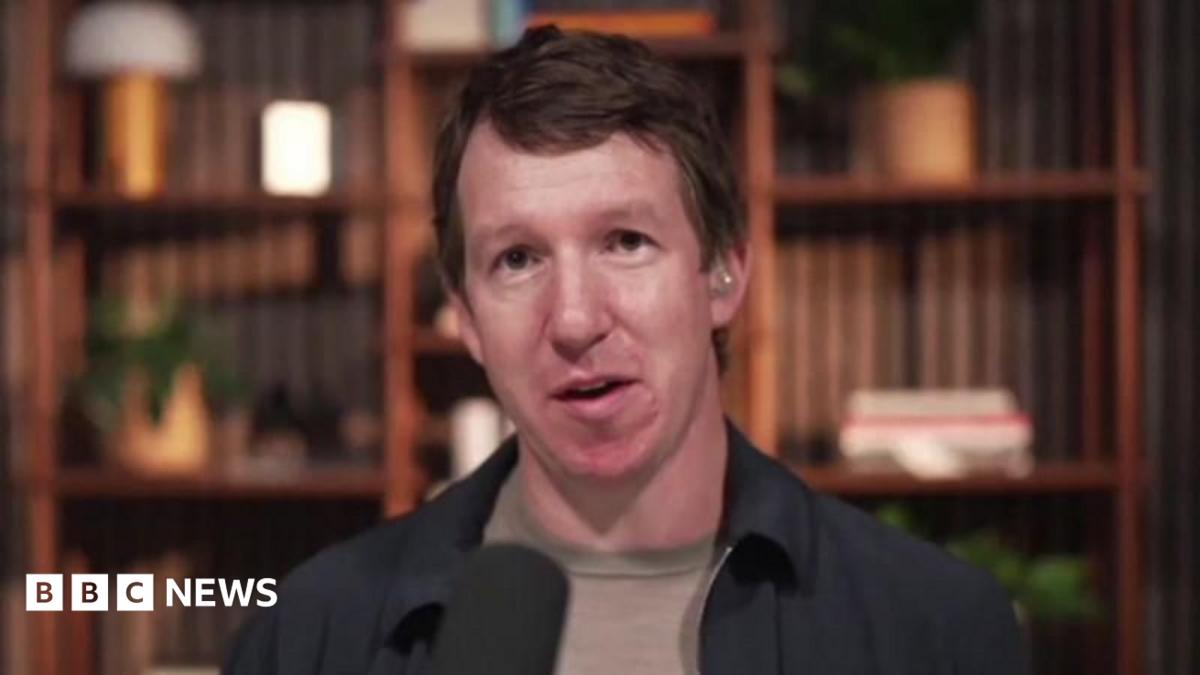
An artificial intelligence “kill switch” which can be checked by a third-party may need to be mandatory for companies, a co-founder of one of the world’s largest AI firms has said.

Jack Clark, one of seven founders of Anthropic, said a way of shutting off AI software completely if it gets too dangerous was something society “might want to eventually pass rules around”.

Clark said “most labs have different ways of being able to pull the plug”, including Anthropic, but said lawmakers may need to enforce having one.

AI’s rapid developemtn and fears over the risks it poses to humanity have been thrust into the spotlight by a series of warnings from executives and staff at AI firms.

Advertisement

Some have said publicly there is a chance the technology could, if unchecked, kill all humans.

Anthropic head Dario Amodei over the weekend called for the pace of AI development to slow and be more closely monitored, as the company has done before, though some have questioned the motivations behind this.

Amodei added that any action to reign in AI development should be done “without sacrificing commercial advantage”.

Clark told the BBC that specifics around “kill switch” requirements and verification should be part of “the larger policy conversation” taking place around AI.

Advertisement

“Should you mandate for companies to definitely have a kill switch? Is that kill switch verifiable by a third party?” he asked.

“I think that’s the kind of thing society is going to want to know and might want to eventually pass rules around.”

Anthropic, which was formed in 2021 by a group of former employees of its rival OpenAI, is currently at the centre of a debate around AI safety.

Last week, a post from an artificial intelligence researcher who quit Anthropic over concerns AI could wipe out humanity went viral.

Advertisement

In response, Anthropic scientist Evan Hubinger said he personally thought the possibility of human extinction from AI was “>10% within the next decade”.

Computer scientist and Nobel Prize winner Geoffrey Hinton, known as the “Godfather of AI”, told the BBC on Friday that a 10% chance of AI killing all humans was “not unreasonable”, external.

He and others with similar concerns have suggested AI could do so by taking control of important systems connected to the internet and turning them on humans.

However, some in the AI industry have suggested the fears around it destroying humanity are overstated or may be designed to generate hype.

Advertisement

Clement Delangue, leader of the developer platform Hugging Face which was hacked by OpenAI bots, said last week that such claims are lacking “perspective.”

George Arison, the leader of Grindr, said the fears going around AI tools were being used by the companies to support their business plans.

“The only way to justify these valuations is to actually claim: ‘I’m going to take over every industry and I’m going to take over every job, and my AI is going to be doing all that work,’” Arison said.

Asked what percentage he would put on all humans being killed by AI, Clark said: “I don’t think these statistics are that useful”, but added that allowing AI to continue as a “totally unregulated industry” was a bad idea.

Advertisement

“We are rolling dice with immense risks,” Clark said. “And the point is, we have to change the course of this industry.”

Continue Reading

Trending

Copyright © 2025