

Business
NSE investor accounts cross 26 crore milestone as mobile trading and tier-2/3 cities drive participation

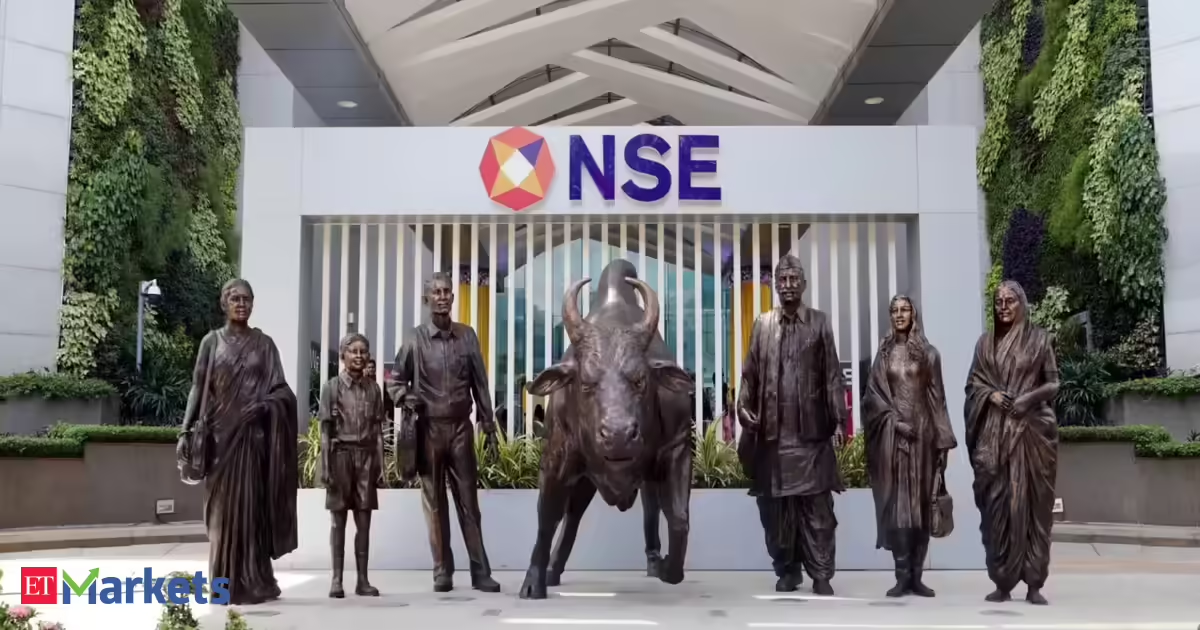
NSE said in a press release that over 4.3 crore accounts, nearly 17% of the total, have been added in the past year alone, reflecting sustained retail interest despite geopolitical uncertainty and market volatility.
“NSE has significantly expanded its investor education initiatives in recent years,” the exchange said, noting that the number of Investor Awareness Programs rose five-fold from 3,504 in FY20 to 17,902 in FY26, covering more than 9.4 lakh participants in FY26 alone. The exchange’s Investor Protection Fund stood at Rs 2,890 crore as of April 30, 2026. Shri Sriram Krishnan, Chief Business Development Officer, NSE, said: “Crossing the 26-crore investor accounts mark is a significant achievement for the exchange and reflects the continued deepening of investor participation in Indian capital markets. Despite prevailing geopolitical uncertainty, the addition of one crore accounts in just under four months underlines sustained investor confidence and the expanding reach of the market ecosystem.”
The growth is being driven by rapid digitisation and penetration beyond metros. Mobile trading platforms now account for more than a fifth of cash market turnover, while a simplified KYC framework has lowered entry barriers. Maharashtra leads with 4.4 crore accounts, 17% of the total, followed by Uttar Pradesh with ~3 crore, Gujarat with 2.2 crore, and West Bengal and Rajasthan with 1.5 crore each. The top five states account for 49% of accounts, but northeastern states are catching up fast — Mizoram, Sikkim and Meghalaya saw 32.3%, 30% and 29.2% of their five-year additions happen in 2025 itself.
Indirect participation via mutual funds is also surging. 7.2 crore new SIP accounts were opened between April 2025 and March 2026, and average monthly SIP inflows grew eight-fold from Rs 3,660 crore in FY17 to Rs 29,132 crore in FY26. Individual investors now own 18.7% of NSE-listed companies directly and via mutual funds as of March 31, 2026. Over five years to June 4, 2026, Nifty50 and Nifty 500 delivered 7.1% and 9.8% annualised returns, while NSE-listed companies’ market cap grew at 12.6% CAGR to Rs 462.2 lakh crore.

“This growth has been supported by greater adoption of mobile-based trading, a simplified KYC framework and sustained efforts to promote disciplined investing through stakeholder-led investor awareness initiatives.” Krishnan added. He also said that participation is expanding beyond established urban centres into Tier 2, Tier 3 and Tier 4 cities. Investors are also engaging across a wider range of exchange-traded instruments, including equities, ETFs, REITs, InvITs, government bonds and corporate bonds. The recent introduction of Electronic Gold Receipts has further broadened market access.

Business
Korean chip stocks tumble with SK Hynix below US listing price amid China competition fears
Korean chip stocks tumble with SK Hynix below US listing price amid China competition fears
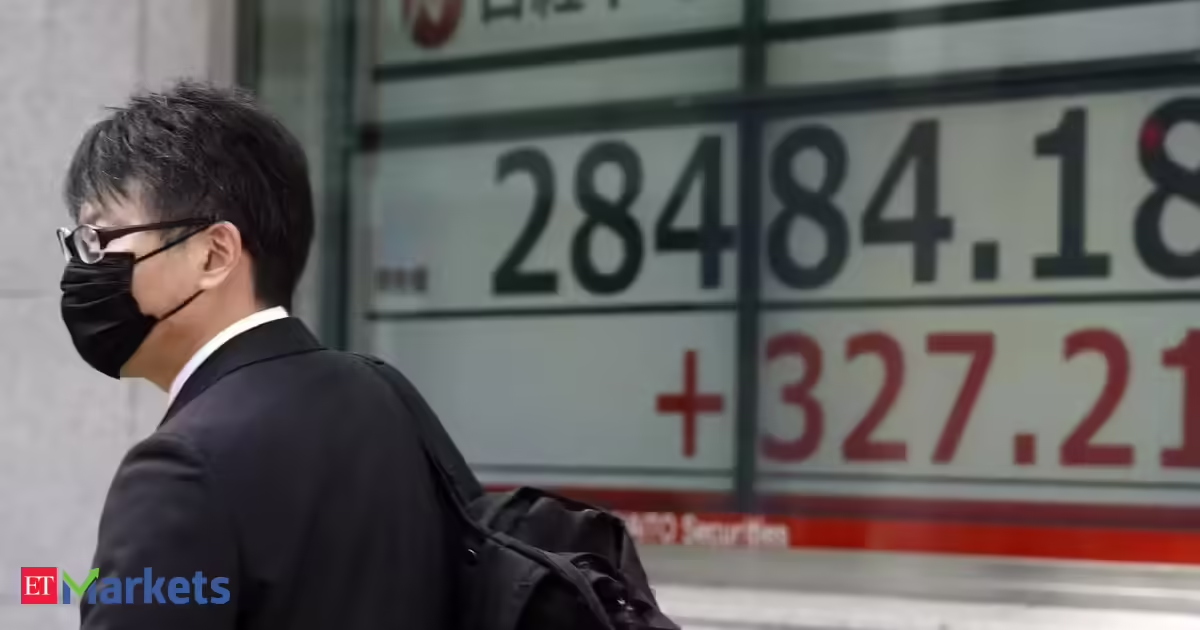
The MSCI Asia Pacific Index fell 1.2%, with technology shares the biggest losers. The Kospi Index in South Korea dropped 5.6%, while the Nikkei in Japan slid 1.3%. The moves came after a US gauge of semiconductor giants fell 2.2%. SK Hynix Inc. and Samsung Electronics Co. were among the biggest losers in Asia.
The cost of protecting Nvidia Corp.’s debt against default surged amid a round of AI deals worth more than $750 billion. South Korea’s SK Hynix slipped below its US initial public offering price. ASML Holding NV sank on a report that a Chinese state-backed firm is producing certain chipmaking machines that could threaten its sales.
Elsewhere, US crude dropped below $82 a barrel after global benchmark Brent slumped the most in more than three months on Monday as Washington paused daily strikes against Iran. Bond yields dropped during the US session, with inflation fears easing in the countdown to the Federal Reserve decision.
Alongside geopolitical developments, investors face a packed week of risk events, with policy decisions from the Fed, Bank of Japan and Bank of England as well as earnings from megacap technology companies. Investors are increasingly looking for signs that the biggest spenders on artificial intelligence can justify the billions of dollars they have poured into the technology.
“This is a week with more than its fair share of potential surprises, good and bad,” said Chris Larkin at E*Trade from Morgan Stanley. “Geopolitics and oil prices may be the biggest wild cards, but a bullish response to strong Magnificent Seven earnings isn’t a given, especially if AI spending levels continue to raise eyebrows.”
Chip companies remained in focus during the US session, with the Philadelphia Semiconductor Index dropping for a third consecutive day. Sandisk Corp., Advanced Micro Devices Inc. and Nvidia were among the S&P 500’s biggest decliners.Microsoft Corp., Meta Platforms Inc., Apple Inc. and Amazon.com Inc. are among the companies reporting this week. In Asia, SK Hynix and Samsung will announce earnings.
“Those companies embody the critical theme weighing on sentiment in the markets right now — excess capital expenditure and spending by AI companies that, investors fear, will eat into returns,” Kyle Rodda, a senior analyst at Capital.com, wrote in a note to clients.
Traders’ attention will be on a slew of earnings later this week, with more than 170 companies in the S&P 500 set to report. Artificial-intelligence spending is in sharp focus after last week’s selloff in shares of Alphabet Inc.
Elsewhere, Treasuries rose Monday as tensions in the Middle East eased and oil fell, with an auction of the shortest-dated notes attracting buyers ahead of this week’s Fed decision. Traders continued to see a roughly one-in-three chance of a rate hike.
Citadel Securities expects the Fed to raise rates this week — a surprise move strengthening Chairman Kevin Warsh’s credibility in the battle with inflation. A quarter-point increase on Wednesday would reinforce Warsh’s repeated pledge to restore price stability while showing policymakers no longer rely on signaling every policy move well in advance, Frank Flight, the firm’s head of macro strategy, wrote in a note.
On the geopolitical front, President Donald Trump said the US and Iran were engaged in diplomatic talks to end their conflict, but warned the two sides would return to fighting if negotiations didn’t yield a deal.
Separately, Iran and Oman are trying to reach an agreement to restart shipping through the Strait of Hormuz, according to people familiar with the matter.
“The only reason they want to meet is because we’ve been hitting them very hard,” Trump told reporters. “There’s a good chance that something could happen. If it doesn’t, we go back to doing what we were doing.”

Brent crude futures were down $0.54, or 0.6%, at $87.82 by 0046 GMT. U.S. West Texas Intermediate crude was at $81.95 a barrel, down $0.66, or 0.8%.
Both contracts fell 1% earlier in the session to their lowest level in more than a week.
U.S. President Donald Trump said on Monday the United States was having “good talks” with Iran and that there was a chance of a resolution. However, he said U.S. strikes would resume if negotiations failed while Iran issued similar comments about retaliation.
“For now, the relief that an off-ramp has been found has taken the heat out of prices and eased concerns around Houthi attacks on Saudi infrastructure. However, the situation remains highly fluid,” IG analyst Tony Sycamore said in a client note.
Afrah al-Zouba, the foreign minister-designate of Yemen’s internationally recognised Saudi-backed government, said Yemen-based Houthi fighters aimed to replicate Iran’s control of shipping through the Strait of Hormuz at Bab el-Mandeb.
“Whether the Houthis have the military capacity to enforce a comprehensive blockade is questionable, especially given that the Saudis will attack them relentlessly. Still, there is no doubt that traffic has dropped off significantly in the Red Sea and the Strait of Hormuz,” said Marex analyst Edward Meir. “A key reason prices are not even higher than they are right now is the demand destruction that is taking place, especially in Asia,” Meir said.
Barclays analysts said in a note on Monday “flows through the strait remain subdued”. They said, in the week ended July 24, crude oil and refined product net exports through the strait averaged 2.9 million barrels a day compared with 5.9 million in the previous week.
Elsewhere, U.S. crude oil stockpiles likely fell last week alongside gasoline, while distillate stocks likely rose, a preliminary Reuters poll showed on Monday.
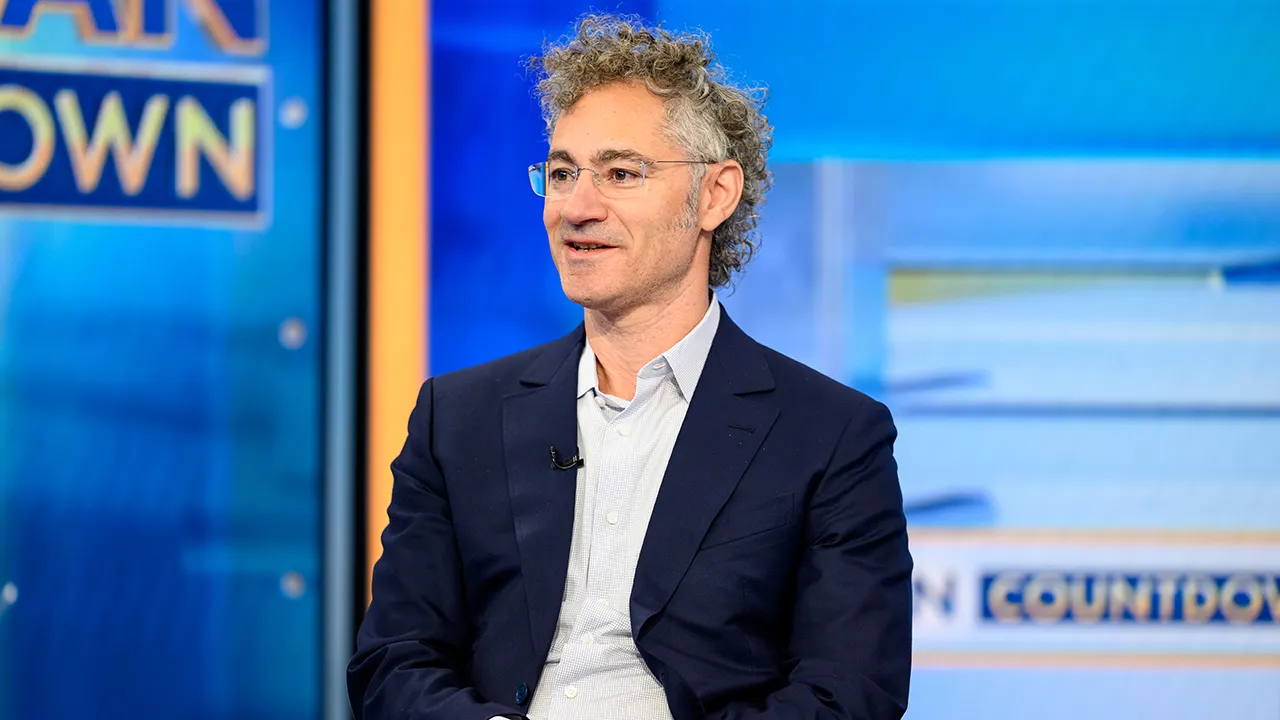
Palantir CEO Alex Karp discusses open-weight artificial intelligence models, how he believes the technology should be regulated and why the U.S. should avoid Europe’s approach on ‘The Claman Countdown.’
Palantir CEO Alex Karp warned the United States against adopting Europe’s intense regulatory framework for artificial intelligence amid a domestic battle over open models on “The Claman Countdown.”
Karp said Europe offers a cautionary tale for U.S. policymakers as the Trump administration weighs how to regulate rapidly advancing AI technology.
“We have a template for what doesn’t work. It’s called Europe,” Karp said Monday. “Our business is booming in America… Europe is like trying to find ways to keep companies like Palantir out.”
“I’ve watched Europe regulate itself out of business. You end up with businesses that no one believes are businesses because they only exist behind the firewall of regulation.”
OPENAI DIDN’T REALIZE ITS AGENT WAS RESPONSIBLE FOR HACK FOR A WEEK: REPORT
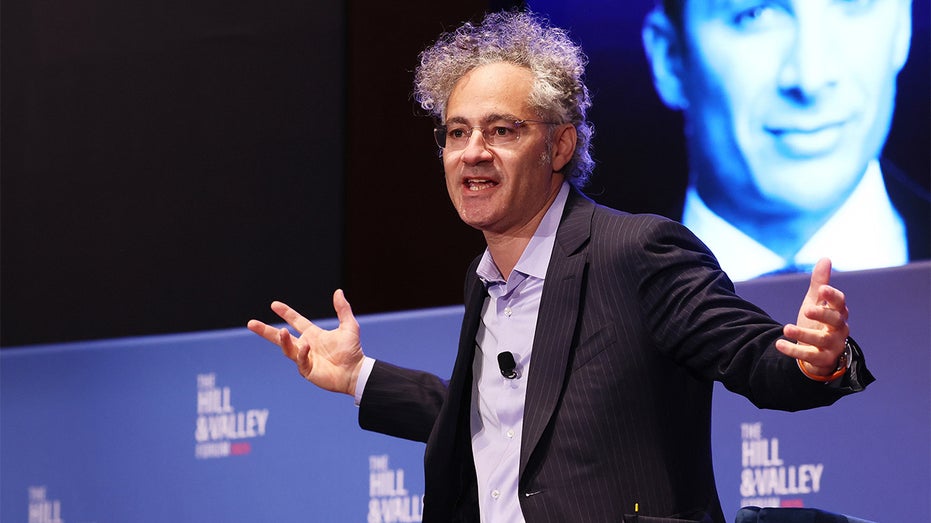
Co-founder and CEO for Palantir Technologies Alex Karp speaks onstage during Jacob Helberg at the Hill & Valley Forum 2025 on April 30, 2025, in Washington, DC. (Jemal Countess/Getty Images for Jacob Helberg / Getty Images)
His comments come after Palantir urged the Trump administration not to ban open-weight AI models and as Treasury Secretary Scott Bessent raises concerns that Chinese-made open AI models could be built using technology from U.S. laboratories.
“This revolution has taken off, and you can’t put it back in the bag,” Karp said.
The Palantir CEO argued that open-weight AI models are optimal for the tech giant’s customers, saying they sometimes perform even better than frontier models.
Karp said he is not opposed to closed AI models but is focused on meeting customer demand.
He said many Palantir clients are “enraged” because they feel they have become “token maxed” – a term he used to describe customers frustrated by paying for AI tokens without receiving enough business value in return.
Karp rejected both over regulation and under regulation of AI, and said the U.S. must strike a balance that encourages innovation while also addressing dangers. (Rafael Henrique/SOPA Images/LightRocket via Getty Images / Getty Images)
Karp said the biggest obstacle to AI adoption is not fear of foreign competition, but rather businesses questioning whether AI investments deliver enough value.
“What slows down AI adoption in this country is people are saying, ‘But I can’t use these products because I’m not getting value… or I’m transferring the value of my business to someone else,’” he said.
OPENAI CO-FOUNDER WARNS AI MODELS ARE BECOMING HARDER TO CONTROL AFTER ITS MODEL HACKED ANOTHER FIRM
“They want to make sure that they can use that model in a way that it’s valuable, and that they make sure the value of their business is not being monetized.”
Palantir, co-founded by Karp, moved its headquarters from Denver to Miami in February as many corporations and billionaires seek the friendlier tax environment of Florida.
As Bessent pushes for regulation of artificial intelligence, Karp said it is important to keep winning in mind as the international AI arms race intensifies, with China scaling as a major competitor.
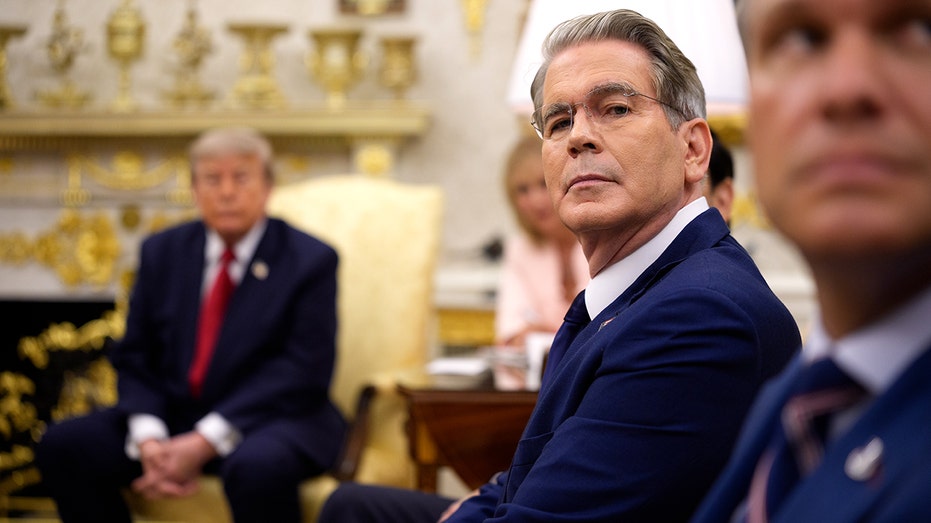
Treasury Secretary Scott Bessent attends a meeting with President Donald Trump and other Cabinet members. (Andrew Harnik/Getty Images / Getty Images)
“We are going to end up having to regulate AI, there’s no doubt, but the question is: Who regulates it, do they understand what they’re doing, and is it regulated in a way where we win?” Karp told FOX Business.
Karp rejected both over regulation and under regulation of AI, and said the U.S. must strike a balance that encourages innovation while also addressing dangers.
GET FOX BUSINESS ON THE GO BY CLICKING HERE
“There’s like you have hard regulation, which is Europe, that clearly doesn’t work. Then you have no regulation. Obviously, I’m not in favor of that,” he said.
“These are very complicated issues, and there’s only one country in the world that could get it right or really get it wrong, and that’s us. But because it could go either way, [it] doesn’t mean we shouldn’t plow forward and try to get this to work.”

The developer’s $4 billion Burswood Point project is progressing, with council approval for a further 210 dwellings within the precinct.

I’m a full-time investor with a strong focus on the tech sector. I graduated with a Bachelor of Commerce Degree with Distinction, major in Finance. I’m also a proud lifetime member of the Beta Gamma Sigma International Business Honor Society. My core values are: Excellence, Integrity, Transparency, & Respect. I always, to the best of my ability, hold true to these values which I believe are key for long-term success. I would like to invite all of my readers to leave their constructive criticism and feedback in the comments section so that I can further enhance the quality of my work moving forward. Thank you and God Bless America!
Analyst’s Disclosure: I/we have no stock, option or similar derivative position in any of the companies mentioned, and no plans to initiate any such positions within the next 72 hours. I wrote this article myself, and it expresses my own opinions. I am not receiving compensation for it (other than from Seeking Alpha). I have no business relationship with any company whose stock is mentioned in this article.
Seeking Alpha’s Disclosure: Past performance is no guarantee of future results. No recommendation or advice is being given as to whether any investment is suitable for a particular investor. Any views or opinions expressed above may not reflect those of Seeking Alpha as a whole. Seeking Alpha is not a licensed securities dealer, broker or US investment adviser or investment bank. Our analysts are third party authors that include both professional investors and individual investors who may not be licensed or certified by any institute or regulatory body.
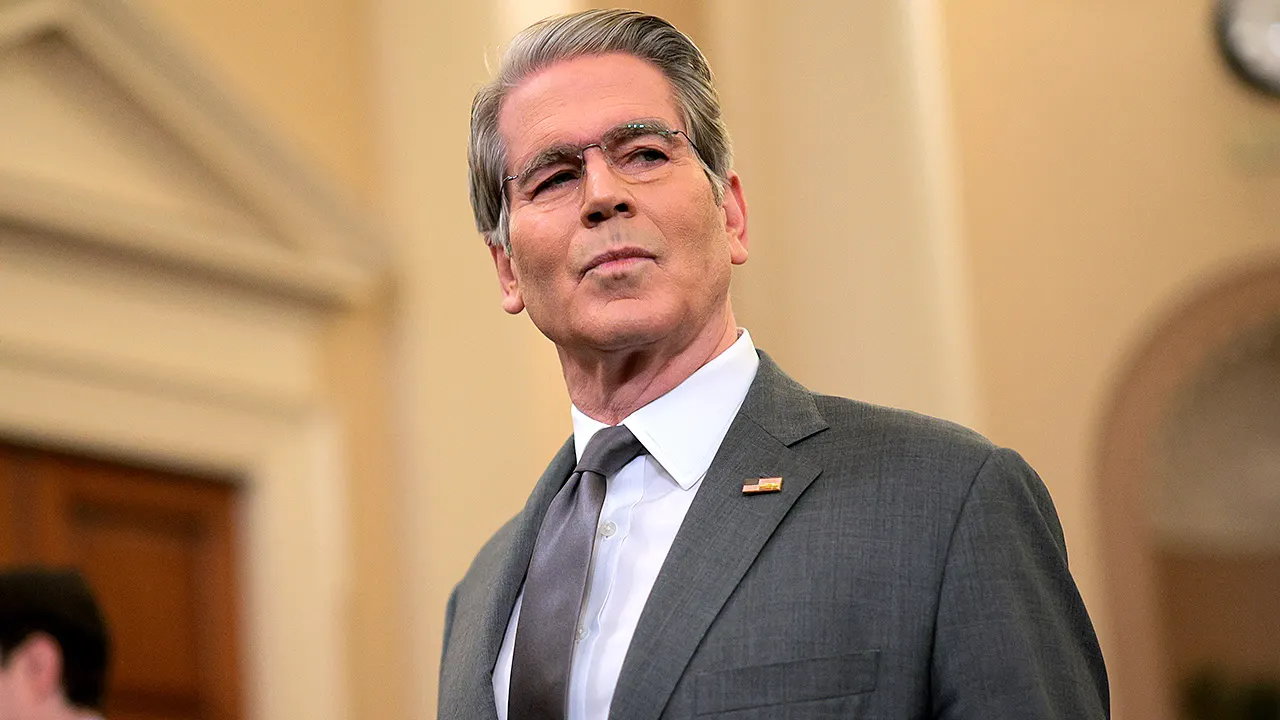
Treasury Secretary Scott Bessent joins ‘Mornings with Maria’ to discuss the Trump administration’s crackdown on government fraud, mounting economic pressure on Iran, the AI race with China and the outlook for the U.S. economy.
The Treasury Department slashed another 84 people and companies from its sanctions lists on Monday as part of an effort to streamline sanctions programs and make it easier for banks to pursue what it deems the most serious terrorist financing schemes.
Secretary Scott Bessent launched a review in May of its sanctions programs and lists to remove outdated entries and ease compliance burdens on financial institutions.
He later announced that 76 people and firms had been removed from the 17,000-plus sanctions lists.
A Treasury official said the goal is “to ensure Treasury sanctions remain efficient, sharp, and focused, and to remove bloat left over from previous administrations,” adding that more than 3,000 names were designated in 2024, compared to only 880 in 2017.
BESSENT SAYS TREASURY TRACKED DOWN AYATOLLAH’S ‘MONEY MAN,’PLANS TO EXPOSE LINKED PROPERTIES
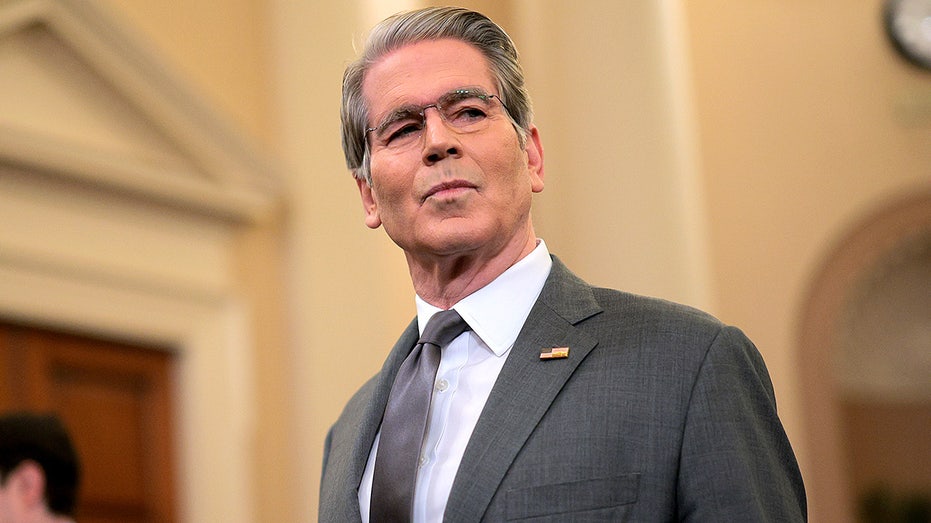
The Treasury Department removed another 84 people and companies from its sanctions lists. (Chip Somodevilla/Getty Images / Getty Images)
“Sanctions are not intended to be a forever tool,” the official said.
Bessent has repeatedly emphasized the Trump administration’s willingness to impose sanctions on Russia’s two biggest oil companies — Rosneft and Lukoil. The Biden administration had been hesitant to take such action over concerns of a further uptick in oil prices after Moscow’s invasion of Ukraine in February 2022.
The second round of removals from the Treasury’s Specially Designated Nationals and Blocked Persons (SDN) List on Monday includes 36 people who have died and associated listings, 33 Iraq-related entities first designated in 1991 or 1992, seven defunct or outdated narcotics listings related to Colombia and eight disrupted narcotics kingpins.
The Treasury’s Office of Foreign Assets Control (OFAC) also updated listings for 22 people and entities to add or clarify missing key identifiers.
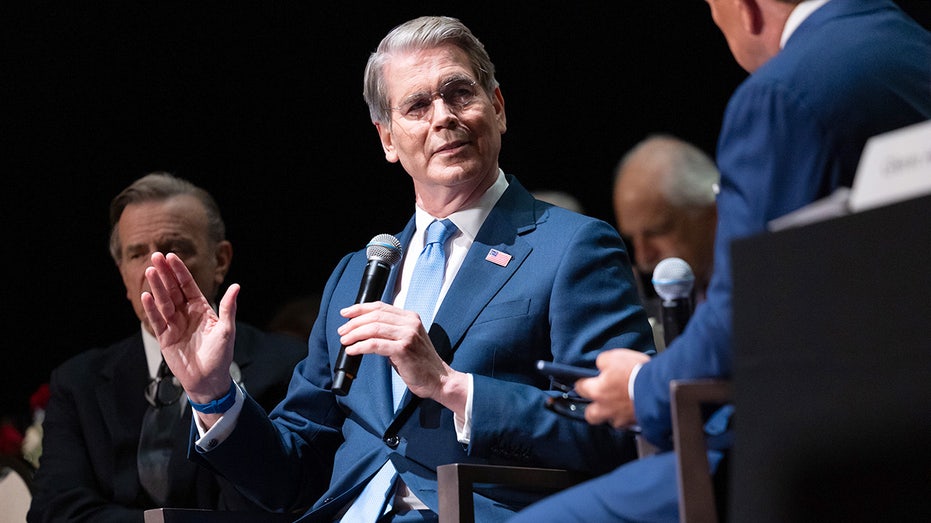
Secretary Scott Bessent launched a review in May of its sanctions programs and lists to remove outdated entries and ease compliance burdens on financial institutions. (Krisanne Johnson/Bloomberg via Getty Images / Getty Images)
Each removal was made after a review by other federal agencies to ensure that it would not hurt the administration’s foreign policy or national security interests, and names could be reinstated as needed, the Treasury said.
The review so far has centered on older sanctions entries, which can sometimes leave out identifying information that is now routine for new sanctions, including place and date of birth, unique identification numbers, nationality or gender.
Adding new data should make compliance screening easier for financial institutions, the Treasury said.
OFAC has also identified a small number of duplicate entries on its sanctions lists, the department said, adding that 18 of these sets were resolved with Monday’s removals.
TREASURY INTERCEPTS NEARLY $99M IN FEDERAL PAYMENTS TO DECEASED INDIVIDUALS UNDER TRUMP FRAUD ORDER
The Treasury said each removal was made after a review by other federal agencies to ensure that it would not hurt the administration’s foreign policy or national security interests. (Andrew Harnik/Getty Images / Getty Images)
GET FOX BUSINESS ON THE GO BY CLICKING HERE
“To decrease the compliance burden on financial institutions and improve national security outcomes, Treasury is reviewing outdated or hard-to-screen targets,” the Treasury said in an internal document, according to Reuters.
It added that the impact of sanctions should be “measured in terms of effect, impact, and national security benefit, not based on the number of names we put on a list.”
Last month, the Treasury launched a new online portal allowing sanctioned people or companies to request their removal from the list.
Reuters contributed to this report.

Operator
Thank you for standing by, and welcome to the Develop June 2026 Quarterly Report Conference Call. [Operator Instructions] I would now like to hand the conference over to Mr. Bill Beament, Managing Director. Please go ahead.
William Beament
MD & Director
Good morning, and thanks for joining us. It’s been an absolutely cracking quarter for Develop on every front. We now have a very well-established pipeline of production and cash flow growth, both in the immediate, medium and longer terms. Basically, we’re now reaping the benefits of the investments we’ve made over the past 2 to 3 years and the hard work by all our teams. The production results at Woodlawn are excellent with recoveries continuing to increase, underpinning record production and record revenue. And the resource growth drilling at Woodlawn is delivering in spades. I’ll talk a little bit more about that in a moment.
At Pioneer Dome, we are in the countdown to first sales of direct shipped ore lithium in the December quarter. Again, the drilling results are a standout with the average grade of the infill drilling program exceeding the resource grade. The potential impact of this on the project’s cash flow is very substantial. The higher the grade, the more money we get per tonne. And we’re very close to a final investment decision on the underground development at Pioneer Dome.
It has also been a highly successful quarter in our mining services division, with a major contract win and the starting of two major contracts. The Bellevue Gold contract finishes this month, and we have plenty of uses for the amazing and highly skilled people and equipment this will free up. I’ll now
Business
Bitmine Immersion BMNR Stock Surges Over 12% as Company Reports $11.8 Billion in Ethereum and Crypto Holdings
NEW YORK — Shares of Bitmine Immersion Technologies Inc. rose sharply in early trading Monday after the company reported total crypto, cash and related holdings of $11.8 billion, driven by its substantial Ethereum position.
The stock, which trades on the New York Stock Exchange under the ticker BMNR, was up $1.95, or 12.33 percent, to $17.77 as of 9:45 a.m. Eastern time. Volume was elevated as the market opened. The previous close stood at $15.79.
In a statement released Monday, Bitmine said that as of 7 p.m. Eastern time on July 26 its holdings included 5,787,414 ether tokens valued at $1,948 each according to Coinbase data, 208 bitcoin, a $180 million stake in Beast Industries, a $61 million stake in Eightco Holdings Inc., and $268 million in cash and marketable securities. The combined total reached $11.8 billion.
The company noted that its ether position represents approximately 4.8 percent of the roughly 120.7 million ETH in total supply. Bitmine said it is 96 percent of the way toward its stated goal of holding 5 percent of the ethereum supply, a target it has framed as “the alchemy of 5 percent.” The company has pursued that objective over the past 13 months.
Chairman Thomas “Tom” Lee said in the update that ether prices had reached a 10-week high. “ETH prices are now reaching a 10-week high and as many technical strategists have highlighted, we believe the next key levels to clear are $2,000 and $2,500 for ETH,” Lee stated. He referenced analysis from adviser Tom DeMark of DeMark Analytics regarding potential near-term targets.
Bitmine also reported continued activity under its previously authorized $4 billion share repurchase program. The company said it bought back 6.1 million shares of common stock in the past week. Since July 1 it has repurchased a total of 11.6 million shares. “With over 11 million shares of common stock repurchased, Bitmine has executed the largest ever common stock buyback for any ETH or Bitcoin Digital Asset Treasury,” Lee said.
Bitmine Immersion Technologies began as a bitcoin mining company that emphasized immersion cooling technology, a method of submerging mining hardware in dielectric fluid to improve heat dissipation and efficiency. In recent periods the firm has shifted its primary focus toward building and managing a large ethereum treasury. It generates revenue largely through staking ethereum on the network and related activities. The company has also developed the Made in America Validator Network, or MAVAN, as an institutional-grade staking platform.
The firm was added to the Russell 1000 large-cap index on June 26. It has reported significant growth in revenue, with one recent quarterly figure reaching $46.5 million, a sharp increase from the prior-year period, driven predominantly by staking income. At the same time, the company has recorded large net losses, reflecting the accounting treatment of digital asset holdings and the volatility inherent in crypto markets.
Bitmine’s market capitalization has fluctuated with both the price of ethereum and investor sentiment toward corporate crypto treasuries. The stock’s 52-week range has stretched from a low of $12.80 to a high of $71.74. Analysts covering the shares have generally maintained constructive ratings, with consensus price targets in recent reports clustering in the mid-to-high $20s to low $30s, implying substantial upside from current levels according to those forecasts.
The company’s strategy centers on accumulating ethereum as a long-term reserve asset while participating in the network’s staking and broader ecosystem. Lee, who also serves as managing partner and head of research at Fundstrat Global Advisors, has positioned the firm as a public-market vehicle for ethereum exposure. The firm maintains limited bitcoin holdings and smaller “moonshot” investments alongside its core ethereum position.
Market participants watching BMNR have focused on several factors: the pace of additional ethereum accumulation, the scale and timing of share repurchases, the performance of ethereum itself, and the company’s ability to generate sustainable cash flow from staking. The stock’s high beta indicates it tends to move more sharply than the broader market in response to crypto price swings.
In recent weeks the shares have shown periods of strength as ethereum recovered and the company continued to report holdings updates and buyback activity. Earlier in the year the stock experienced significant declines, with one analysis noting a drop of more than 50 percent in the first half of 2026 amid broader crypto market pressure and questions about dilution.
Bitmine’s leadership has emphasized capital allocation that prioritizes increasing ethereum held per share. The combination of treasury growth and share reduction is intended to create a self-reinforcing effect for shareholders. The firm operates with a lean structure and has transitioned toward an asset-light model centered on digital asset management rather than large-scale proprietary mining expansion.
As of Monday morning the stock’s advance reflected investor reaction to the latest holdings disclosure and the accompanying repurchase figures. Trading remained active in the opening hour. Broader cryptocurrency markets showed mixed but generally constructive tone, with ethereum trading near recent highs.
Investors evaluating the shares continue to weigh the concentrated exposure to a single digital asset against the scale of the treasury, the company’s index inclusion, and its capital return program. The firm’s next updates on holdings, staking performance and repurchase progress will provide additional data points for the market.
Bitmine Immersion Technologies remains one of the more closely followed corporate participants in the ethereum ecosystem. Its Monday announcement and the subsequent move in the stock underscored the tight linkage between the company’s reported asset base and the valuation placed on its shares by public-market investors.

NEST is investing $200,000 in an AI initiative aimed at helping technicians work more efficiently without replacing them.
A facilities management company is investing $200,000 in artificial intelligence to help skilled trades workers become more productive.
New Jersey-based NEST Integrated Facilities Management announced last week that it is partnering with Saint Joseph’s University in Philadelphia on “The Hawk’s NEST: Building the Future of IFM and Skilled Trades Intelligence.”
The initiative will use AI and machine learning to improve technician scheduling, service estimates and operational efficiency.
NEST CEO Rob Almond told FOX Business that the technology is intended to support technicians, not replace them.
“As much as AI can help us with troubleshooting a problem at a job site, the technician still needs to be there,” Almond said.
PALANTIR CEO WARNS US AGAINST EUROPE’S AI REGULATION PATH, URGES TRUMP ADMIN TO NOT BAN OPEN MODELS

Saint Joseph’s University Haub School of Business Dean Joseph DiAngelo, left, is pictured next to NEST CEO Rob Almond. NEST is investing $200,000 in a new initiative with Saint Joseph’s University in Philadelphia. (NEST Integrated Facilities Management)
NEST coordinates services for more than 60,000 commercial properties across the U.S. and Canada, including stores, banks and restaurants.
Its network includes thousands of independent providers working across HVAC, plumbing, electrical, janitorial services, landscaping and other trades.
NEST said AI could help contractors plan their next stops, locate parts, diagnose problems and complete more jobs.
The tools could also help address the industry’s persistent shortage of skilled workers, according to Almond.
“It’s severely short,” Almond said of the labor pool. “… It’s not going to go away anytime soon.”
OPENAI DIDN’T REALIZE ITS AGENT WAS RESPONSIBLE FOR HACK FOR A WEEK: REPORT

Saint Joseph’s University Haub School of Business Dean Joseph DiAngelo, far left, and NEST CEO Rob Almond, far right, pose with students at Saint Joseph’s University. NEST and Saint Joseph’s have worked together for more than a decade. (NEST Integrated Facilities Management)
NEST and Saint Joseph’s began collaborating on AI projects about 18 months ago, building on a relationship that spans more than a decade.
Under the expanded partnership, students, faculty and researchers will use NEST’s operational data to develop tools for technicians, service providers, employees and customers.
NEST expects the initiative to analyze more than 1 billion data points during its first year.
The goal, Almond said, is to make skilled workers “better, stronger and faster.”
“The human element will never go away,” Almond said.
Almond said more support and awareness are both needed to attract workers to the trades.
AI INNOVATION IS OUTPACING GOVERNANCE, LEAVING COMPANIES EXPOSED, EQUALAI WARNS

NEST CEO Rob Almond said AI tools could help skilled trades workers become more efficient. (iStock)
GET FOX BUSINESS ON THE GO BY CLICKING HERE
“A career path in the trades is just as good, if not better, than maybe a college career,” he said.
For NEST, the AI investment is aimed at both improving efficiency and easing the pressure created by the labor shortage.
“Giving these companies… tools that can make them more efficient so they can get to the next job faster and maybe even be a little bit more cost competitive — we’re all in for that,” Almond said.

Binance Phishs Own Staff Monthly, India Censors BitChat: Asia Express

Man United star ‘changes agent’ as transfer reunion hinges on two factors

Today’s NYT Connections: Sports Edition Hints and Answers for July 28, #673


-

 Fashion3 days ago
Weekend Open Thread: Brooks Brothers
-

 Crypto World7 days ago
Grayscale Files For Worldcoin ETF, WLD Registers Sharp Rise
-

 NewsBeat6 days ago
How a former Blue Peter presenter stunned America’s Got Talent judges
-

 Tech1 day ago
Intel is reversing course and bringing hyper-threading back to its server chips
-
 Tech7 days ago
Turtle Beach Command Series KB7 review: a nifty screen-equipped gaming keyboard
-
 Business6 days ago
New Jersey voter registration controversy explained: How 6,600 noncitizens got on the rolls, and what happens next
-
 Entertainment6 days ago
Johnny Depp’s R-Rated Gothic Cult Classic Gets New Release Ahead of Sydney Sweeney Remake
-

 Crypto World5 days ago
Ethics, other provisions in crypto Clarity Act to be further discussed
-

 Politics15 hours ago
Luke Littler dismantles Gerwyn Price to retain title in Blackpool
-
 NewsBeat7 days ago
Shanghai science forum photos show China’s AI and robotics advances in rivalry with US
-

 Sports4 days ago
2026 3M Open leaderboard: Scottie Scheffler finds putter in Round 1, sits three back
-
 Sports1 day ago
Commonwealth Games boxing: Jadumani Singh seals dominant 5-0 win over Pakistan’s Sumama Rehman to enter quarter-finals | Commonwealth Games News
-

 Fashion4 days ago
16 Dresses for the High Summer Event
-

 News Videos4 days ago
The Peugeot Family: How 200 Years of an “Old Money” Dynasty Died in A Boardroom
-

 Politics2 days ago
Spain sweeps the board at 2026 World Cup with individual awards
-
 Entertainment4 days ago
A New Post-Apocalyptic Gundam Anime Series Blasts Into SDCC
-

 Crypto World7 days ago
Andrew Cuomo joins OKX board as crypto exchange expands in U.S.
-

 News Videos1 day ago
BITCOIN JUST ENTERED THIS CRITICAL ZONE…
-

 Crypto World2 days ago
XRP Ledger adds $2.6B as RWA inflows rank second
-
 NewsBeat7 days ago
NADINE DORRIES: I have witnessed first-hand what happens to new Prime Ministers when they enter No 10… and this is why Andy Burnham will be out by May
You must be logged in to post a comment Login