





Connect with us
DAPA Banner

Business

Nvidia adds Hyundai, BYD, other automakers to AV business

Published

on

Nvidia adds Hyundai, BYD, other automakers to AV business

Nvidia CEO Jensen Hwang gives the keynote address at the company’s annual GTC developers conference at the SAP Center in San Jose, California, on March 16, 2026.

Josh Edelson | Afp | Getty Images

Nvidia is expanding deals for its autonomous vehicle development business to Hyundai Motor, Nissan Motor and Isuzu, as well as Chinese automakers BYD and Geely, the software and chip giant announced Monday.

Advertisement

The new tie-ups are for Nvidia’s Drive Hyperion platform for AVs. The system helps companies develop and deploy driver-assist and autonomous driving capabilities for Level 4 AVs, which are capable of driving without human intervention under predefined areas or circumstances.

“We’ve been working on self-driving cars for a long time. The ChatGPT moment of self-driving cars has arrived,” Nvidia CEO Jensen Huang said Monday during the company’s GTC conference. “We now know we could successfully autonomously drive cars, and today, we are announcing four new partners for Nvidia’s robotaxi-ready platform. … The number of robotaxi-ready cars in the future are going to be incredible.”

No vehicles on sale to consumers today are capable of driving themselves without human monitoring or intervention, but some companies, such as Alphabet’s Waymo, offer ride-hailing fleets with Level 4 self-driving vehicles, also known as robotaxis. Most vehicles on sale today are considered Level 2, with drivers needing to continually monitor the systems.

Drive Hyperion is part of what Nvidia calls its “end-to-end” AV platform that includes data center training, large-scale simulations and in-vehicle computing. The company does not produce or sell AVs or many of the components needed to operate such vehicles.

Advertisement

Current Nvidia customers for Drive Hyperion include many self-driving companies such as Aurora and Nuro, as well as other more consumer-facing businesses such as Sony Group, Uber Technologies, Jeep parent Stellantis and electric vehicle maker Lucid Group.

AVs are important to Nvidia, as self-driving cars remain one of the primary areas where the chipmaker can show growth outside of artificial intelligence.

Many believe AI could be key to the proliferation of AVs, which Wall Street analysts and automotive executives have targeted as a multitrillion-dollar growth industry.

The new companies add to a growing list of such tie-ups for Nvidia, as the chipmaker and the automotive and technology industries try to capitalize on and proliferate AVs after years of failed ventures for robotaxis.

Advertisement
2025: The year that the robotaxi went mainstream with Waymo leading the pack

Waymo has led the AV industry for years, while others such as Tesla, Uber and Amazon’s Zoox attempt to catch up.

General Motors-backed Cruise, which was previously viewed as a leader alongside Waymo, disbanded amid controversies after a pedestrian was dragged by one of its vehicles in San Francisco. GM spent more than $10 billion on Cruise before ending the robotaxi operations in 2024.

— CNBC’s Katie Tarasov contributed to this report.

Choose CNBC as your preferred source on Google and never miss a moment from the most trusted name in business news.
Continue Reading
Click to comment

You must be logged in to post a comment Login

Leave a Reply

Business

Wall Street Breakfast Podcast: PepsiCo Exits Kanye Fest

Published

on

Wall Street Breakfast Podcast: PepsiCo Exits Kanye Fest

Big Red Pepsi-Cola Sign a in long Island in Queens

Getty Images

Listen below or on the go via Apple Podcasts and Spotify

PepsiCo (PEP) exits London festival sponsorship after Kanye West named headliner. (00:14) UK tries to woo Anthropic to expand in London amid US clash: report. (01:05) Soleno Therapeutics (SNO) rallies on report of $2.5B Neurocrine (NBIX) buyout talks. (02:20)

This is an abridged transcript.

Advertisement

PepsiCo (PEP) has withdrawn its backing from a major London music festival following backlash over the decision to feature Kanye West as the top-billed performer.

West, who now goes by Ye, was recently announced as the headline act for the Wireless Festival, set to take place in July at Finsbury Park. Organizers had promoted the event under the branding “Pepsi Max Presents Wireless,” but the beverage giant confirmed it would no longer be involved.

The artist is scheduled to perform across all three days of the festival as part of a broader effort to reestablish his career after years of controversy.

The booking has also drawn political scrutiny in the U.K. Prime Minister Keir Starmer described the decision as troubling in comments to a British tabloid, adding to pressure surrounding the event.

Advertisement

The U.K. is reportedly trying to charm Anthropic to ​expand its presence in the country.

It comes as a fight continues to brew between the AI startup ​and the U.S. Department of War.

The ​Financial Times reported that staff at the U.K.’s Department for Science, Innovation and Technology have written proposals for Anthropic, which include an office expansion in London and a dual listing.

Anthropic and the Department for Science, Innovation and Technology did not immediately respond to a request for comment from Seeking Alpha.

Advertisement

Anthropic’s CEO Dario Amodei is set to visit Britain in late May as part of a trip to meet European customers and policymakers.

Anthropic currently employs about 200 people in the U.K., 60 of them researchers, and last year appointed former prime minister Rishi Sunak as a senior adviser. Last month, competitor OpenAI (OPENAI) committed to expanding in London, making the city its biggest research hub outside the U.S.

The U.S. government and Anthropic have been in a legal tussle since the Trump administration banned the use of the company’s technology after designating it as a supply chain risk.

Anthropic PBC reportedly is also weighing an IPO as soon as October.

Advertisement

Soleno Therapeutics (SLNO) is up 30% in premarket action.

This follows a Financial Times report that Neurocrine Biosciences (NBIX) is in advanced talks to buy the biotech firm in a $2.5B-plus deal.

The deal could value Soleno in the low-to-mid $50s per share, or in excess of $2.5B.

According to the report, discussions between Neurocrine (NBIX) and Soleno (SLNO) are progressing rapidly, and a deal could come together as soon as today.

Advertisement

Soleno (SLNO) is focused on the development and commercialization of novel therapeutics for the treatment of rare diseases.

What’s Trending on Seeking Alpha

S&P 500 “up 80% of the time” in April over 20 years

SA Asks: What’s next for Tesla following a tepid EV deliveries report?

Advertisement

Writers Guild, studios strike tentative deal to avert another Hollywood shutdown

Catalyst watch:

  • Powell Industries (POWL) will begin trading on a split-adjusted basis following the three-for-one stock split.

  • The HumanX AI Conference in San Francisco will include participation from Amazon Web Services (AMZN), Anthropic, Canva, Conviction, CoreWeave (CRWV), Databricks, DeepLearning.AI, Google (GOOGL), Khosla Ventures, Mercedes-Benz (MBGAF), Microsoft (MSFT), NVIDIA (NVDA), OpenAI (OPENAI), and Perplexity.

  • UiPath (PATH) will host a live product webinar highlighting its latest agentic business orchestration capabilities, product strategy, and real-world customer outcomes.

Stock index futures are higher as traders remain focused on developments in the Middle East, including the status of the Strait of Hormuz.

President Trump has given Iran until 8 p.m. Eastern time Tuesday to reopen the Strait of Hormuz, warning that failure to comply could trigger U.S. attacks on key infrastructure across the country.

Advertisement

Axios reported that the U.S., Iran, and regional mediators are negotiating a potential 45-day ceasefire that could pave the way for ending the war.

Bitcoin is up 1.2% at $69,000. Gold is up 0.2% at $4,688.

The markets in China, Hong Kong and Australia closed for a holiday. Markets in London, Germany and France are also closed for a holiday.

The biggest movers for the day premarket: Netflix (NFLX) +2% – Shares rose after Goldman Sachs upgraded the stock to Buy from Neutral and raised its price target to $120, citing improved risk/reward following recent underperformance.

Advertisement

Economic calendar:

Continue Reading

Business

Why SMEs Should Treat Music as Part of the Customer Experience

Published

on

The UK has long been a leader in artificial intelligence (AI) research, pioneering breakthroughs in areas like healthcare, financial modelling and cybersecurity. The Government’s AI Action Plan and recent investments highlight a clear ambition to establish the UK as a global AI superpower. However, ambition alone is not enough.

For many SMEs, music is still treated as an afterthought. It gets handed to whoever opens up in the morning, left to a personal playlist, or patched together through a consumer app that was never built for commercial use.

That might seem harmless, but in customer-facing businesses, what people hear shapes how a space feels, how long they stay, and how coherent the brand appears.

For retailers, cafés, hotels, salons, gyms and restaurants, music is not just filler. It is part of the operating environment. It helps set pace, supports atmosphere, and influences whether a space feels polished, chaotic, energetic or forgettable.

Why Music Deserves More Attention From SME Owners

Business owners often spend time refining visual identity, staff training, merchandising and lighting, yet sound is left unmanaged. That creates a gap between how a brand wants to be perceived and how it is actually experienced in person.

A boutique retailer, for example, may invest heavily in store design only to undermine the atmosphere with inconsistent, badly timed, or poorly matched music. A hotel may think carefully about interiors and service standards but fail to create a coherent guest experience from lobby to bar to breakfast area. In both cases, the issue is not simply taste. It is operational inconsistency.

Advertisement

That is why more operators are starting to view background music for business as a practical commercial decision rather than a casual one. When audio is treated properly, it becomes part of the wider brand experience, alongside layout, service, lighting and customer flow.

The Real Commercial Value Is Consistency

One of the biggest differences between amateur and professional use of music in business is consistency. If each manager chooses their own soundtrack, customer experience starts to drift. One location feels lively, another feels flat, and another sounds like someone’s personal gym playlist.

That inconsistency matters more than many businesses realise. Customers do not always articulate it, but they notice when a place feels off. The music is too loud for conversation, too slow for peak trading hours, too aggressive for the audience, or simply disconnected from the setting.

A better approach is to think in terms of sound standards. What should the business feel like at 8am, at lunchtime, during the evening rush, or in slower periods? What kind of pace supports browsing, dining, waiting, or relaxation? What should remain consistent across every site, and where is there room for local variation? These are practical business questions, not artistic ones.

Advertisement

For hospitality operators especially, the soundtrack should support the setting rather than compete with it. A more intentional approach to music for hotels can help create a smoother and more coherent guest experience across reception spaces, lounges, bars and shared areas.

It Also Has Operational Benefits Behind the Scenes

There is a staff-side benefit too. In busy environments, poor music choices can create friction just as easily as they can create energy. A soundtrack that clashes with the setting, repeats too often, or changes randomly through the day affects both employee experience and customer perception.

By contrast, a managed system allows businesses to schedule music by daypart, maintain appropriate volume and tone, and avoid leaving the decision entirely to whichever team member has access to the speaker. For multi-site SMEs in particular, centralised control makes a real difference. It reduces guesswork, improves consistency and helps ensure the soundtrack fits both the brand and the trading environment.

Compliance Is Where Many Businesses Still Get Caught Out

This is the part many SMEs underestimate. Playing music in a commercial setting is not the same as listening privately. Businesses need to think about music licensing for business, not just what playlist they want on during trading hours.

Advertisement

This is where many operators run into problems. A familiar consumer platform may feel convenient, but that does not automatically make it suitable for commercial use. Businesses need to be confident that the way they play music in-store, in reception areas, in dining spaces or in shared environments is properly aligned with licensing requirements.

For SMEs, that means the cheapest-looking option is not always the cheapest in practice. The more sensible question is whether the setup has actually been designed for commercial use, with the right controls and permissions in place.

Smart Operators Think Beyond the Playlist

The strongest customer-facing businesses tend to be deliberate about every layer of the experience. They do not leave lighting, signage or scent entirely to chance, and increasingly they should not do that with audio either.

For small and medium-sized businesses, music does not need to become a major strategy project. But it should be intentional. It should reflect the brand, suit the customer, support the setting, and work consistently across the day. Most importantly, it should be managed like part of the business rather than treated like background noise.

Advertisement

That shift in mindset is what separates music that quietly strengthens a commercial space from music that simply fills silence.

Advertisement
Continue Reading

Business

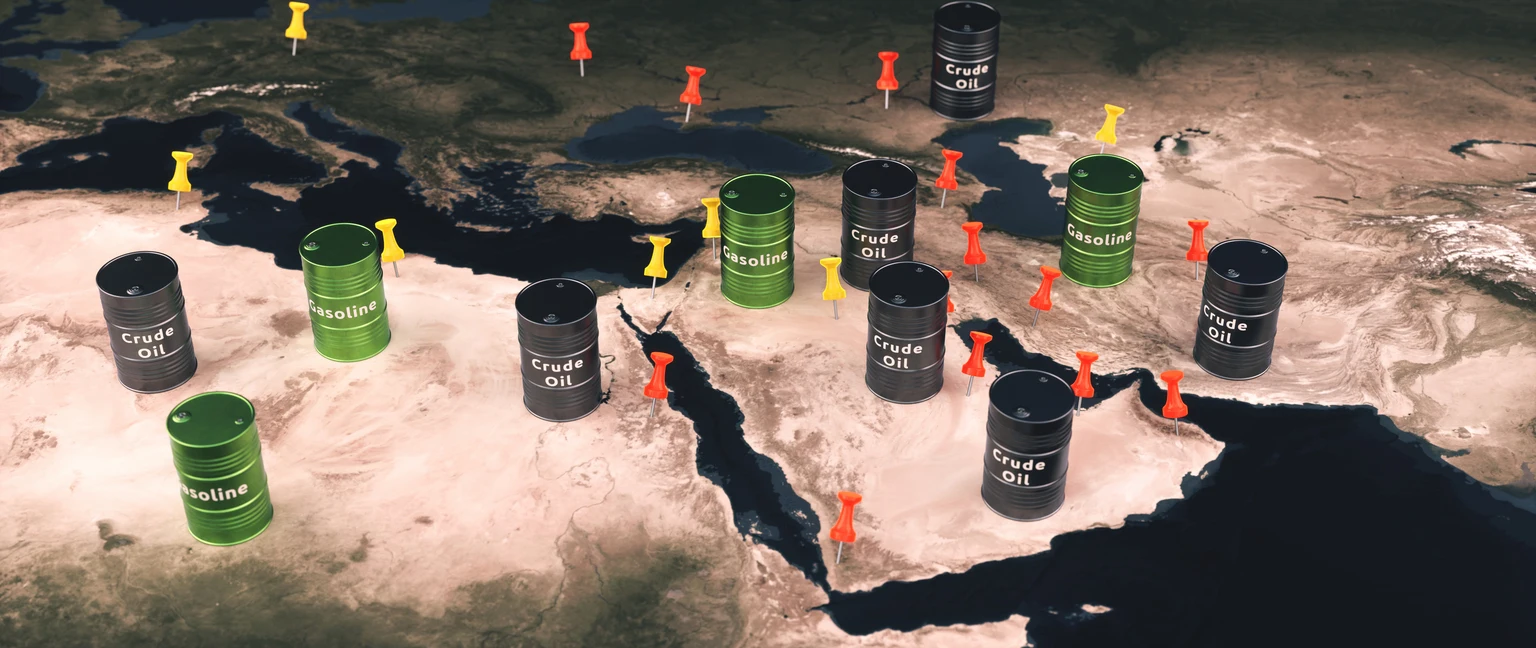
Oil, War And The Global Economy: The Market's Narrative In March 2026

Published

on

Oil, War And The Global Economy: The Market's Narrative In March 2026

Oil, War And The Global Economy: The Market's Narrative In March 2026

Continue Reading

Business

We need a new Welsh Development Agency and a radical approach to business support

Published

on

Business Live

Wil Williams argues that Wales needs a business support system that is transparent, honest, radical, decisive and bold; everything that it has not been since 2006.

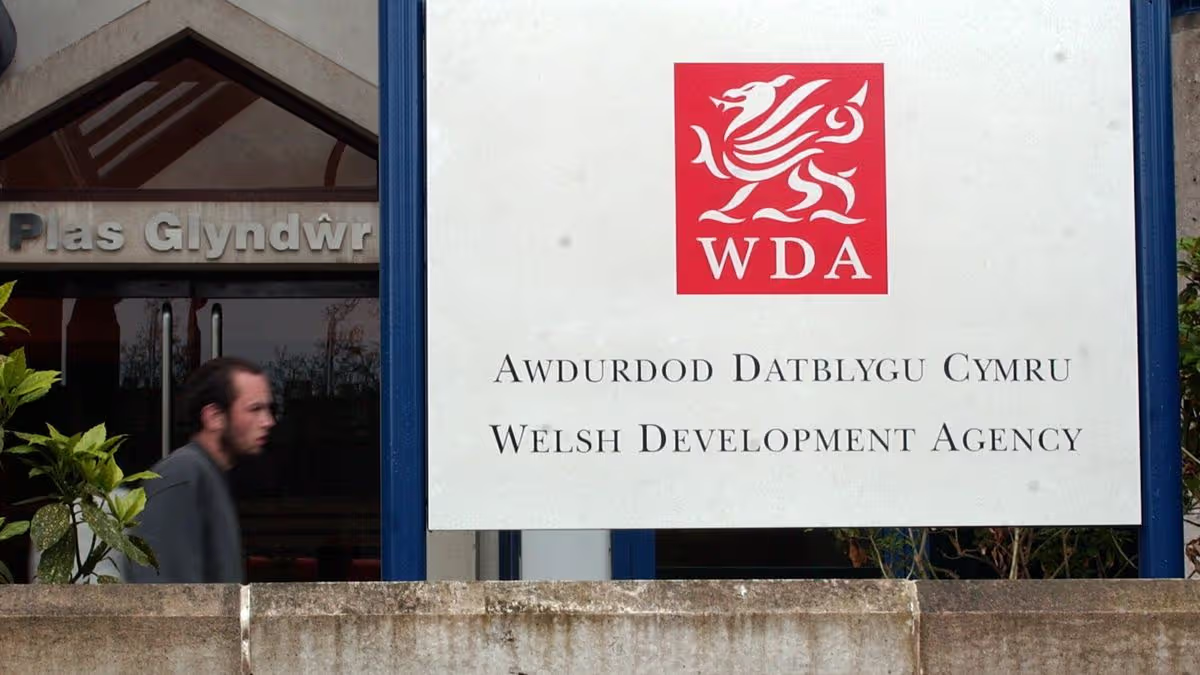
The WDA was abolished in 2006.

When the Welsh Development Agency was scrapped in 2006, it was presented as modernisation. The language was sound; alignment, accountability and efficiency. However, in reality, the removal of the WDA was driven by ideology and dogma, with outcome far less impressive than the original rhetoric.

The organisation that understood how to build firms and sectors was dismantled and folded into a structure designed to manage risk rather than create value; namely the Welsh Government.

Advertisement

Nearly twenty years on, the results are hard to ignore. Wales has constructed a business support landscape that is active, visible and permanently engaged in something. What it has not done is consistently help firms to grow. The system looks busy because it is busy. That is not the same as being effective.

The failure of the business support system is not abstract. The absence of medium -sized firms is not an abstract concern; it sits at the heart of Wales’ productivity problem. Too many businesses remain small, under capitalised and structurally fragile. The system that was supposed to support the Mittelstand has, at best, provided guidance. At worst, it has absorbed significant public funding while producing very little in the way of sustained economic transformation.

READ MORE: The expected final cost of the South Wales Metro soars to £1.3bnREAD MORE: First Minister rules out new WDA but wants to empower the Development Bank of Wales

The contrast with what came before is instructive. The WDA was far from perfect, but it understood something fundamental; economic development is an operational discipline. It is a cultural mindset. It requires judgement, pace and a willingness to act. It had a clear line of sight from policy to delivery, a strong regional presence and the authority to make decisions. It behaved like an organisation expected to produce outcomes, not reports.

Advertisement

When those functions were absorbed into government, the character of the system changed. Decision making slowed. Authority dispersed. Activity increased, but coherence declined.

Over time, the culture shifted from commercial delivery to programme management. This is not a criticism of individuals; it is simply what happens when an operational function is placed inside a system designed around compliance, procurement and control; in other words, government.

The modern landscape reflects that shift. There is no shortage of provision. Business Wales offers advice. The Development Bank of Wales provides finance. City Deals and local authorities run their own initiatives. UK wide schemes sit alongside them. Innovation bodies, export support and sector programmes all play their part. On paper, it is comprehensive. In practice, it is fragmented.

Firms do not experience this as a system. They experience it as a maze. Multiple entry points. Repeated diagnostics. Different priorities depending on who they happen to speak to. Occasional support, rarely continuity. Plenty of conversation, not enough follow through.

Advertisement

This is why satisfaction scores, often self-reported, can look respectable while outcomes remain stubbornly weak. Advice is relatively easy to provide and generally well-received. Scaling a business is not. It requires capital, capability, leadership and sustained joined-up engagement over time. That is where the current model struggles.

The deeper issue is cultural rather than structural. The post 2006 environment rewards careful administration. Success is often measured by activity; programmes delivered, funds allocated, targets met. What matters to the economy is different; firms that grow, export, invest and employ. The two are not the same, and the gap between them has widened.

The consequences are visible across the economy. Wales continues to produce fewer medium sized firms than comparable regions. Productivity remains low. That is a function of the paucity of Wales’ Mittelstand. Regional disparities persist, particularly between Cardiff and the rest of the country. There is a growing tendency to accept this as normal, even to dress it up as progress – see the last review Welsh Government Business Support Review, November 2025 – a few tweaks to the system will fix any issues.

The upcoming Senedd Election presents an opportunity, although not a guaranteed one. A new administration will arrive with the usual choice; adjust around the edges or address the problem properly, radically and innovatively. The system will naturally advocate for incremental change. It always does. Incremental change is comfortable. It is also how a failing model is preserved.

Advertisement

A more serious response would start from first principles. Businesses do not need more programmes. They need a coherent system. One front door, not many. A single relationship that follows the firm as it grows. That relationship must be transparent.

Regional teams with enough authority to act, rather than constantly referring decisions back to Cardiff. Finance that aligns with the realities of scaling, not just early-stage support or asset backed lending. Export, innovation and capability development integrated into a single growth pathway rather than treated as separate activities.

None of this is especially novel. That is precisely the point. These are the basics of economic development; understood decades ago and quietly set aside in favour of something more administratively convenient.

Recreating a delivery focused system, call it WDA 2.0 if you like, would not require reinvention. It though would require: discipline; fewer programmes; clearer missions; harder measures of success; and a willingness to stop doing things that do not work. Most of all, it would require a shift in mindset; from managing activity to driving outcomes.

Advertisement

That is the uncomfortable part. Structural reform is relatively straightforward. Cultural change is not. It demands political will and a tolerance for decisions that may not please everyone, particularly those invested in the current arrangements.

If the next administration chooses caution, the system will continue as it is; busy, well-intentioned and fundamentally ineffective. If it chooses to act, it will need to do so with clarity and conviction.

At first glance, there appears to be some tension in this argument. On the one hand, there is a clear case for stronger regional and local delivery, including through bodies such as CJCs (corporate joint committees that includes the Cardiff Capital Region). That is essential. But it must sit within a disciplined national framework; one that is relentlessly focused on what actually matters; business creation, survival and growth.

The same applies to consistency. The system does need greater coherence and stability in how support is offered. However, that does not mean rigidity. A practical shift is required; one that allows for structured experimentation (innovation within a 100% commercial framework) in the design and delivery of economic support programmes. This means learning from what has worked elsewhere; testing different approaches in live economic conditions; and reporting outcomes honestly and in real time, including where things fail.

Advertisement

That approach demands a different type of organisation. One with the imagination and confidence to act; open to new ideas; prepared to challenge its own assumptions; and grounded in commercial reality rather than administrative comfort. In that context, experimentation is not a contradiction of consistency; it is the mechanism through which genuinely consistent and effective programmes are built over time.

The name of the organisation matters less than its function, although I believe there remains value in the WDA brand some twenty years on. A single entity should be established as an operational agency; separate from government, but clearly accountable to it. It must hold authority over the principal levers of economic value creation; including Business Wales, the Development Bank of Wales the £547m Local Growth Fund for Wales, strategic land and property assets, and export and inward investment functions.

At the same time, it must remain connected to place; transparent and accountable to the Senedd; working in close alignment with local authorities, through the CJCs, a regional tier of sufficient scale to act strategically while remaining grounded in local economic realities.

Let us hope that a new administration does not default to what the system will inevitably recommend; incremental change, the status quo. The new business support system must be transparent, honest, radical, decisive and bold; everything that it has not been since 2006.

Advertisement
  • Wil Williams is co-founder of LearnerMetrics and a former chief executive of the Alacrity Foundation.

Continue Reading

Business

Red Cat’s Blue Ops partners with HADDY for USV production

Published

on


Red Cat’s Blue Ops partners with HADDY for USV production

Continue Reading

Business

Goldman Sachs BDC: Deepest Discount Still Doesn’t Justify A Buy (NYSE:GSBD)

Published

on

Goldman Sachs BDC: Deepest Discount Still Doesn't Justify A Buy (NYSE:GSBD)

This article was written by

Financial analyst by day and a seasoned investor by passion, I’ve been involved in the world of investing for over 15 years and honed my skills in analyzing lucrative opportunities within the market.I specialize in uncovering high quality dividend stocks and other assets that offer potential for long term-growth that pack a serious punch for bill-paying potential. I use myself as an example that with a solid base of classic dividend growth stocks, sprinkling in some Business Development Companies, REITs, and Closed End Funds can be a highly efficient way to boost your investment income while still capturing a total return that follows traditional index funds. I created a hybrid system between growth and income and manage to still capture a total return that is on par with the S&P.

Analyst’s Disclosure: I/we have no stock, option or similar derivative position in any of the companies mentioned, and no plans to initiate any such positions within the next 72 hours. I wrote this article myself, and it expresses my own opinions. I am not receiving compensation for it (other than from Seeking Alpha). I have no business relationship with any company whose stock is mentioned in this article.

Seeking Alpha’s Disclosure: Past performance is no guarantee of future results. No recommendation or advice is being given as to whether any investment is suitable for a particular investor. Any views or opinions expressed above may not reflect those of Seeking Alpha as a whole. Seeking Alpha is not a licensed securities dealer, broker or US investment adviser or investment bank. Our analysts are third party authors that include both professional investors and individual investors who may not be licensed or certified by any institute or regulatory body.

Advertisement
Continue Reading

Business

Novo Nordisk: Downgrading To 'Sell' As GLP-1 Pipeline Faces Many Risks

Published

on

Novo Nordisk: Downgrading To 'Sell' As GLP-1 Pipeline Faces Many Risks

Novo Nordisk: Downgrading To 'Sell' As GLP-1 Pipeline Faces Many Risks

Continue Reading

Business

Spanish PM’s party gains on anti-war stance, support for far right stalls in polls

Published

on

Spanish PM’s party gains on anti-war stance, support for far right stalls in polls


Spanish PM’s party gains on anti-war stance, support for far right stalls in polls

Continue Reading

Business

Wix: The Unprofitable ‘Deep Value’ Company (NASDAQ:WIX)

Published

on

Wix: The Unprofitable 'Deep Value' Company (NASDAQ:WIX)

This article was written by

I aim to invest in companies with perfect qualitative attributes, buy them at an attractive price based on fundamentals, and hold them forever. I hope to publish articles covering such companies approximately 3 times per week, with extensive quarterly follow-ups and constant updates.I manage a concentrated portfolio targeted at avoiding losers and maximizing exposure to big winners. This means that often I’ll rate great companies at a ‘Hold’ because their growth opportunity is below my threshold, or their downside risk is too high.

Analyst’s Disclosure: I/we have no stock, option or similar derivative position in any of the companies mentioned, and no plans to initiate any such positions within the next 72 hours. I wrote this article myself, and it expresses my own opinions. I am not receiving compensation for it (other than from Seeking Alpha). I have no business relationship with any company whose stock is mentioned in this article.

Seeking Alpha’s Disclosure: Past performance is no guarantee of future results. No recommendation or advice is being given as to whether any investment is suitable for a particular investor. Any views or opinions expressed above may not reflect those of Seeking Alpha as a whole. Seeking Alpha is not a licensed securities dealer, broker or US investment adviser or investment bank. Our analysts are third party authors that include both professional investors and individual investors who may not be licensed or certified by any institute or regulatory body.

Advertisement
Continue Reading

Business

Airlines Cancel Thousands of Flights Amid Jet Fuel Shortages, Price Surge From Iran War

Published

on

United Airlines And Air Travel

Major airlines around the world have begun canceling thousands of flights and raising fares as jet fuel prices have more than doubled and physical supplies have tightened in the wake of the ongoing war in Iran and the effective closure of the Strait of Hormuz.

United Airlines became the first major U.S. carrier to announce capacity cuts, trimming about 5% of planned flights on less profitable routes. International carriers have moved more aggressively, with Scandinavian Airlines canceling around 1,000 flights in April, Air New Zealand axing 1,100 services through early May, and carriers in Vietnam and elsewhere suspending domestic routes due to fuel constraints.

United Airlines And Air Travel

The disruptions stem from the conflict that escalated in late February when U.S. and Israeli strikes targeted Iran, prompting Iranian retaliation that effectively halted most commercial shipping through the Strait of Hormuz. The narrow waterway, which normally carries about one-fifth of global seaborne oil trade, has seen traffic reduced to a trickle amid attacks on vessels, soaring insurance costs and safety fears.

Jet fuel prices, which averaged around $2.17 per gallon in the United States before the escalation, surged past $4.57 per gallon by late March, according to the Argus U.S. Jet Fuel Index. In some Asian and European markets, prices have doubled or more, reaching record levels near $200 per barrel or higher in spot trading. The crack spread — the premium for refining jet fuel from crude — has exploded, reflecting acute shortages of the refined product rather than just higher crude costs.

“Jet fuel prices have more than doubled in the last three weeks,” United CEO Scott Kirby said in a recent statement. “If prices stayed at this level, it would mean an extra $11 billion in annual expense just for jet fuel.” Kirby noted the carrier is “tactically pruning flying that’s temporarily unprofitable” while warning of broader impacts if the situation persists.

Advertisement

Ryanair CEO Michael O’Leary warned that if the Hormuz disruption continues into May and beyond, European airlines could face shortages of 10% to 20% of normal fuel supply by June, potentially forcing cancellation of 5% to 10% of summer flights. He said cuts would target the most constrained airports with little advance notice from suppliers.

The crisis has hit regions differently. Middle Eastern carriers such as Emirates, Qatar Airways and Etihad have canceled tens of thousands of flights due to airspace closures and safety concerns in addition to fuel issues. Asian airlines, heavily reliant on Middle Eastern crude refined in South Korea, China and elsewhere, have faced export restrictions and local shortages. Vietnam Airlines has suspended multiple domestic routes, while Korean Air has entered “emergency management mode.”

In Europe, the last major jet fuel shipments from the Middle East to the U.K. were expected to arrive this week, leaving airlines with limited reserves. Some Italian airports have already imposed refueling restrictions for certain operators. Lufthansa has prepared contingency plans that could include grounding portions of its fleet.

U.S. carriers benefit from greater domestic refining capacity and have so far relied more on fare increases and baggage fee hikes than widespread cancellations. JetBlue and others have raised checked baggage fees, while carriers across the board have introduced or increased fuel surcharges on international routes. Air France-KLM added €50 ($58) to long-haul tickets, and several Asian carriers have followed suit.

Advertisement

Aviation analytics firm Cirium reported that on one recent Monday, more than 7,000 flights — nearly 7% of the global schedule — were canceled, far above typical rates. North American departures saw cancellation rates spike to 14.6% on that day.

The International Air Transport Association had forecast a record $41 billion in net profits for the global airline industry in 2026 before the conflict. That outlook is now at serious risk as higher fuel costs coincide with potential weakening in travel demand from elevated gasoline prices and broader economic uncertainty.

Analysts describe the situation as a “perfect storm.” Longer reroutes to avoid Middle Eastern airspace burn extra fuel, compounding costs. Refineries in Asia have cut jet fuel production due to feedstock shortages, while strategic reserves are being drawn down in some countries.

Travelers are already feeling the pinch. Airfares on many routes have risen sharply, with some long-haul examples nearly tripling in price in extreme cases. Industry experts advise passengers to monitor bookings closely, consider flexible tickets and expect potential disruptions through the summer if the conflict drags on.

Advertisement

The war has also disrupted related supply chains. Cargo operators face higher costs and delays, while the broader energy shock has lifted diesel and gasoline prices, adding pressure on household budgets and potentially curbing discretionary travel.

Governments are responding variably. Some Asian nations have redirected fuel stocks domestically or sought emergency assistance. In the U.S., domestic production provides a buffer, but analysts warn that prolonged global tightness could still affect American carriers through higher prices and knock-on effects on international partners.

Billionaire aviation figures have sounded alarms. One Dubai-based jet tycoon warned that if the crisis lasts more than a month, the first airline bankruptcies could emerge as weaker carriers struggle with unsustainable costs.

The situation remains fluid. Diplomatic efforts continue, with some reports of signals from involved parties about willingness to de-escalate, but the Strait of Hormuz remains largely closed to routine tanker traffic. Any resolution could ease pressures quickly, as shipping resumes and refineries ramp up, but a prolonged standoff risks deeper economic pain.

Advertisement

For now, airlines are prioritizing cash preservation. Many have shifted to shorter-haul or more fuel-efficient operations where possible and are reviewing summer schedules. Low-cost carriers, with thinner margins, face particular strain despite hedging strategies that have partially mitigated the spike for some.

Passengers planning travel are urged to check airline updates frequently, as last-minute cancellations tied to fuel availability at specific airports could occur with minimal notice. Travel insurance that covers trip interruptions is recommended.

The crisis highlights the vulnerability of global aviation to energy chokepoints. Jet fuel, derived from kerosene, requires specific refining processes, and there is limited spare capacity worldwide to quickly replace lost volumes from the Gulf.

As April unfolds, more carriers are expected to announce adjustments. United’s early move may foreshadow broader U.S. capacity reductions if prices remain elevated. Delta has indicated it could trim schedules, while others watch inventory levels closely.

Advertisement

The human impact extends beyond higher ticket prices. Flight crews face schedule changes, airports deal with irregular operations, and tourism-dependent economies — from Europe to Southeast Asia and Australia — brace for reduced visitor numbers.

Environmental goals may also take a backseat temporarily, as airlines prioritize operational survival over sustainability initiatives that rely on costly sustainable aviation fuel.

Industry groups like IATA have called for strengthened jet fuel resilience, including dedicated reserves and diversified sourcing. The current events underscore how concentrated supply routes create systemic risks.

With no immediate end to the conflict in sight, the aviation sector faces one of its most challenging periods in years. What began as a geopolitical confrontation has rapidly translated into higher costs and fewer flights for travelers worldwide, serving as a stark reminder of interconnected global energy markets.

Advertisement
Continue Reading

Trending

Copyright © 2025