Goldman Sachs Group Inc., Blackstone Inc. and Apollo Global Management Inc. had been working tirelessly for months to draw up debt deals that would help developers of artificial intelligence systems pay for chips from Nvidia Corp.
With slow progress on the complex deals, Nvidia’s chief executive officer, Jensen Huang, decided to change tack: He went public this week with the effort, saying the group is aiming to collectively finance AI computing deals totaling $500 billion — a round figure with no obvious provenance.
In doing so, he was seeking to assure Nvidia’s investors that there are plenty of deep-pocketed firms ready to finance his clients, particularly AI startups such as Anthropic PBC and OpenAI that are key to Nvidia’s future demand. While he’s bullish on AI spending overall, his company has been seeking to broaden its customer base beyond hyperscalers including Microsoft Corp. and Amazon.com Inc., many of which are trying to create their own components.
Huang wanted something else, too. After months of working with the trio of financiers, his $5.5 trillion firm called the original group up just days before the announcement to say that three other lenders — KKR & Co., BlackRock Inc. and Brookfield — were joining the pack and committing to financing a chunk of the debt.
Advertisement
With the partnership out in the open, some of the largest firms on Wall Street are standing by to arrange hundreds of billions of dollars in financing for chip deals, while Nvidia itself will backstop a portion of those deals with guarantees. No deals were signed by the time of the announcement, which was left deliberately vague, according to people familiar with the matter who asked not to be identified discussing private talks.
Live Events
Investors have been concerned that Santa Clara, California-based Nvidia, whose chips are crucial in many of the data centers powering the global AI surge, and other companies have been stoking a bubble in the industry through circular financing. That’s been fueled by deals where Nvidia has invested in some of its clients such as CoreWeave Inc. Initially, the financing venture’s framing unnerved debt investors, concerned about how exposed it left the chipmaker to more leverage. But that eased as Huang clarified that Nvidia’s support would be for as much as 25% of an opportunity and the firm would assess each project on a case-by-case basis.
Agencies
“The announcement reflects the financing need as we look to build out digital and AI related infrastructure in the coming years,” Alan Synnott, global head of real assets at advisory firm Mercer, said in an interview. “With these partnerships, you’ll actually see a range of strategies developing likely across infrastructure, real estate credit, and maybe even private equity that will offer investors a lot more access paths.”
Representatives for Goldman, Apollo, Blackstone, KKR and BlackRock declined to comment. A Nvidia spokesperson had no immediate response, while a representative for Brookfield didn’t respond to a request for comment.
Earlier this week, when Huang appeared with executives from the six firms on CNBC to talk up the deal, the segment lasted more than 30 minutes and included few additional details. Goldman CEO David Solomon, Blackstone President Jon Gray, Apollo President Jim Zelter and Brookfield CEO Bruce Flatt appeared in studio with Huang, while KKR’s Waldemar Szlezak, who leads its digital infrastructure business globally, also joined. BlackRock CEO Larry Fink was on video while traveling.
Now, those executives are turning to their clients, including sovereign wealth funds, pension funds and insurance firms, to gauge their appetite for buying up the debt. Executives in the television discussion indicated that some of the money could come from retail investors.
Advertisement
The $500 billion commitment has no set time frame and is a combination of deals that have been discussed, as well as forecasts of demand in the near future, according to people familiar with the matter. Each lender will be able to vet individual customers for creditworthiness before committing.
While much of the total amount will be raised through private credit markets, the scale is so large that public markets will need to be tapped. That’s expected to come in the form of bonds — many set to be tens of billions of dollars each — issued by special vehicles that would lease chips to Nvidia clients.
One person involved in the announcement described Huang’s intention as setting up a debt shopfront as an advertisement to customers and concerned investors. If the deals don’t happen as announced or go awry, that could pose a risk to the reputation of the financing partners and Nvidia, the person said.
For some of the financing partners, the venture promises that the companies will be in line to collect fees from the deals. While Goldman is the only firm with a dedicated banking arm, Apollo could also unlock more fees as it expands its trading operation, selling larger chunks of the loans it originates to other investors and making markets for clients.
Advertisement
For Goldman, it’s the culmination of years of building up close ties to the chipmaker. Jung Min, who was named Goldman’s co-head of its technology, media and telecom practice last year after two decades at the firm, has covered Nvidia for years from his San Francisco base. Toshiya Hari, the former Goldman analyst who covered Nvidia, joined Nvidia last year to work in investor relations.
The splashy affair contrasts with a similar announcement from Broadcom Inc. just weeks earlier. The chipmaker tapped Apollo and Blackstone as anchor investors for plans to finance more than 20 gigawatts of compute capacity for frontier AI labs including Anthropic and OpenAI through 2028 — potentially requiring hundreds of billions of dollars.
Broadcom, however, already had $35 billion of financing in hand through a deal with Apollo and Blackstone when it unveiled the partnership.
Broadcom backstopped most of the debt on that first deal to help attract investors, while Apollo structured the deal to keep the borrowing off Broadcom’s balance sheet. Blackstone has already sounded out investors for another transaction of more than $30 billion, Bloomberg reported.
Advertisement
The Nvidia debt deals will vary according to the type of customer and the owner of the data centers that will house the chips. The collateral that backs the loans is expected to be some combination of the underlying chips and the offtake agreements, said some of the people.
If a deal goes awry and Nvidia clients can’t afford the chips, the chips can be rented by others, helping to reduce the risk of individual Nvidia customers defaulting on the debt, according to some of the people.
Skeptics say that valuations of the underlying chips is currently inflated by record demand, driven by the hype around AI. One of the worries is that the intense buildup of AI infrastructure might fuel an oversupply of computing power years in the future.
For all the questions, there’s no doubt other banks and investment firms still want in. JPMorgan Chase & Co.’s asset management arm, for one, is discussing how it can be involved as well, according to a person familiar with the matter. A spokesperson for the bank declined to comment.
Advertisement
And just minutes after Monday’s announcement, Morgan Stanley, long a significant lender to AI infrastructure, put out a release saying it was launching a framework to facilitate $1.5 trillion of funds in US innovation and national security. Top of its list: AI and advanced computing.
Over the past decade, more than half of Latin America’s nations have voted socialists out. From large countries like Argentina to tiny ones like El Salvador, socialists have been replaced with conservative leaders who’ve made significant progress turning their economies around.
Advertisement
That list could grow as Cuba and Nicaragua are on the cusp of collapse after their oil lifelines from Venezuela were cut following the arrest of Nicolás Maduro.
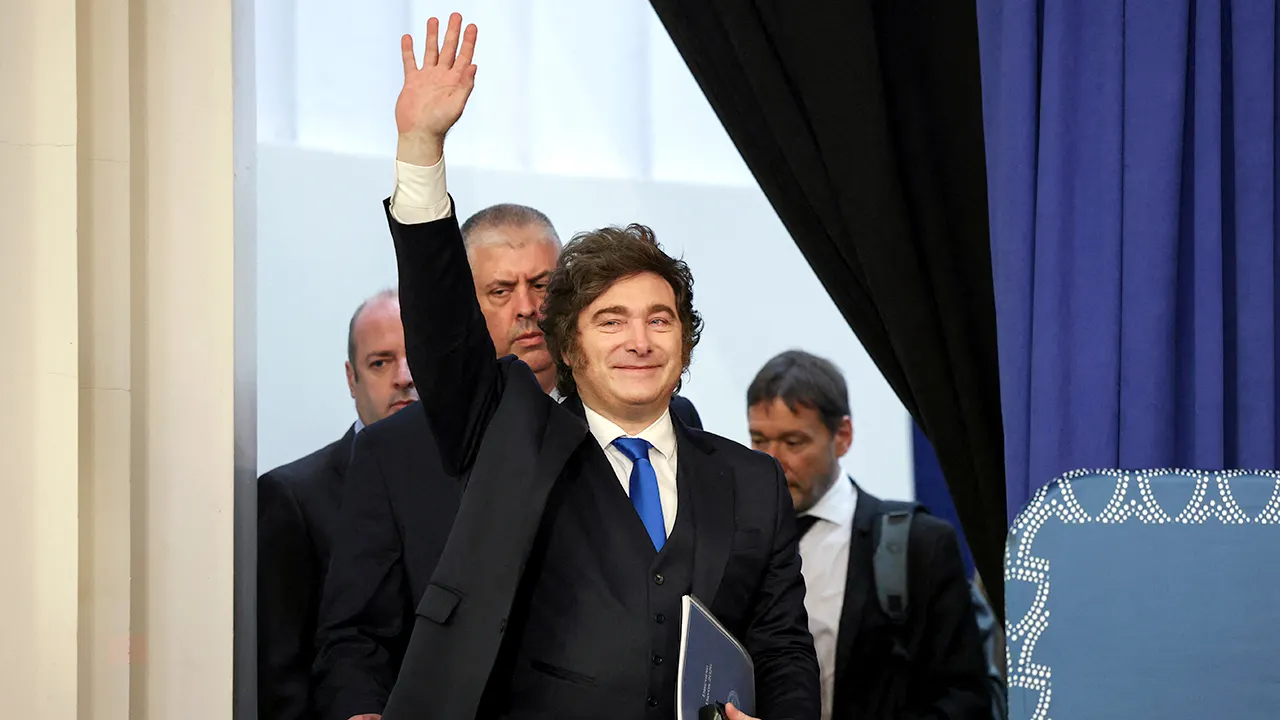
Argentine President Javier Milei said in 2024 that, “We’re here to tell you that collectivist experiments are never the solution to the problems that afflict the citizens of the world. Rather, they are the root cause.” (Angelia Weiss/AFP via Getty Images)
The real incentive for dumping socialism is voter recognition that it just hasn’t worked. What is working are policies based on market solutions.
In Argentina, monthly inflation has tumbled from 25% to just 2%. Massive cuts in government have led to fiscal surpluses, and Moody’s upgraded their investment outlook to positive.
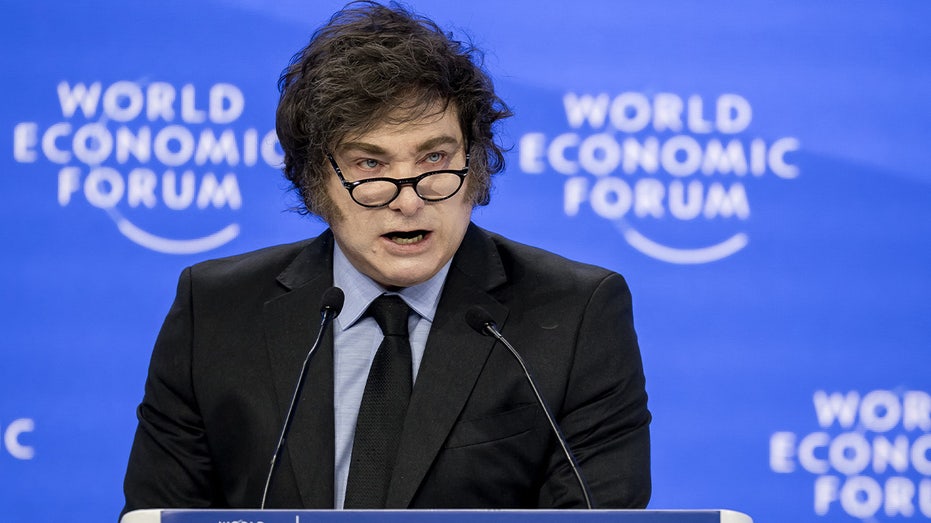
“We’re here to tell you that collectivist experiments are never the solution to the problems that afflict the citizens of the world. Rather, they are the root cause,” Argentine President Javier Milei said in a 2024 speech at the World Economic Forum in Davos, Switzerland.
In Argentina, monthly inflation has tumbled from 25% to just 2%. (Fabrice Coffrini/AFP via Getty Images)
Following the ouster of a socialist government in Ecuador, economic conditions there improved, with the GDP rebounding 3.7% in 2025 and the nation returned to international bond markets this year.
In Costa Rica, voters’ rejection of the ruling leftist party coincided with an estimated 20% relative decline in poverty from 2021 to 2024.
And those are just a few examples of the progress being made. Latin America has had many course changes over the years, and all this could turn around again. But probably not while memories of many socialist failures are so fresh and painful.
Latin America’s growing rejection of socialism also coincided with Secretary of State Marco Rubio’s cancellation of 83% of USAID programs, which he claims were doing more harm than good.
Advertisement
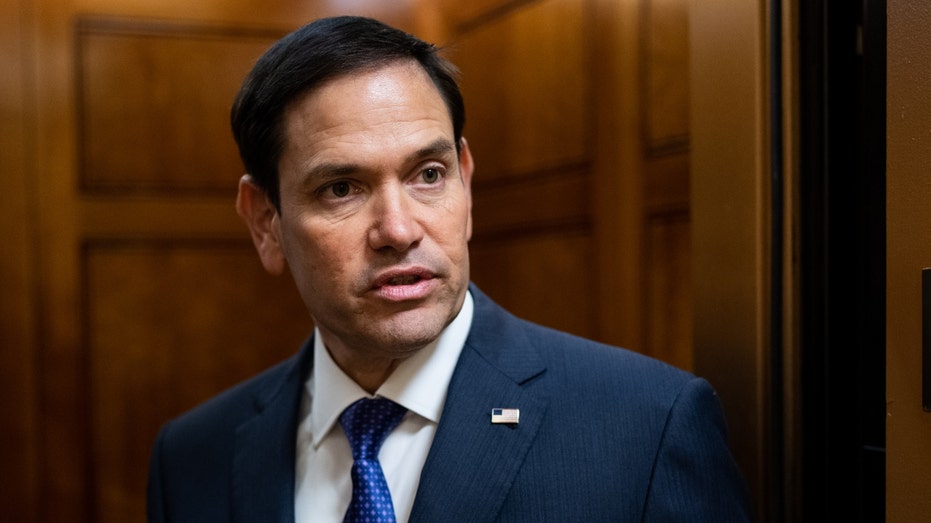
Secretary of State Marco Rubio announced the cancellation of 83% of USAID programs in March 2025. (Bill Clark/CQ-Roll Call, Inc via Getty Images)
Lument Finance Trust, Inc. (LFT) Q2 2026 Earnings Call August 14, 2026 8:30 AM EDT
Company Participants
Andrew Tsang James Flynn – CEO & Chairman of the Board James Briggs – Chief Financial Officer Greg Calvert – President
Advertisement
Conference Call Participants
Lee Zulch
Presentation
Advertisement
Operator
Good morning, and thank you for joining the Lument Finance Trust Second Quarter 2026 Earnings Call. Today’s call is being recorded and will be made available via webcast on the company’s website.
I would now like to turn the call over to Andrew Tsang with Investor Relations at Lument Investment Management. Please go ahead.
Advertisement
Andrew Tsang
Good morning, everyone. Thank you for joining our call to discuss Lument Finance Trust’s Second Quarter 2026 Financial Results. With me on the call today are Jim Flynn, our CEO; Jim Briggs, our CFO; Greg Calvert, our President; and Zach Halpern, our Portfolio Manager.
Last evening, we filed our 10-Q with the SEC and issued a press release to provide details on our recent financial results. We also provided a supplemental earnings presentation, which can be found on our website.
Before handing the call over to Jim Flynn, I’d like to remind everyone that certain statements made during the course of this call are not based on historical information and may constitute forward-looking statements within the meaning of Section 27A of the Securities Act of 1933 and Section 21E of the Securities Exchange Act of 1934. Such forward-looking statements are subject to various risks and uncertainties that could cause actual results to differ materially from those contained in the forward-looking statements. These results and uncertainties are discussed in the company’s reports filed with the SEC, in particular, the Risk Factors section of our Form 10-K and Form 10-Qs. It is not possible to predict or identify all such risks, and listeners are cautioned not to place
Wherever LeBron James goes this season, it will be the hottest ticket in town.
The NBA’s all-time leading scorer announced last month that he will play his unprecedented 24th NBA season with the Philadelphia 76ers, automatically reigniting some key Eastern Conference rivalries.
Advertisement
NBA Commissioner Adam Silver admitted he was holding off on announcing each team’s schedule because he had no idea where James was going. But when James’ decision was announced, Silver went to work, and it’s now paying dividends.
LeBron James’ new Philadelphia 76ers jersey (Fanatics / Fox News)
The Sixers will open the 2026-27 season at Madison Square Garden, where the New York Knicks will hang their first championship banner in 53 years. And while those ticket prices likely won’t reach the five-figure average of the NBA Finals, it will still be a must-see.
StubHub said Friday that the Oct. 20 game is the site’s most in-demand NBA game of the entire season, with the current get-in price at more than $1,500.
Advertisement
In fact, each of the top five and seven of the top 10 highest-demand games is a Sixers contest, and the Sixers are StubHub’s most in-demand NBA team, increasing 12.5 times from last year’s schedule release and up from No. 6 overall.
Christmas Day demand is nearly 50% ahead of last year, with LeBron’s return to Los Angeles for the Sixers-Lakers among the biggest draws.
James announced his decision in a post on X, saying he thought he was done at the end of last season and that he had likely played his final game.
However, “I still truly love this game, and I have more to give.”
Advertisement
A LeBron James Philadelphia 76ers T-shirt made by Mitchell & Ness. (Fanatics / Fox News)
The 76ers will be the fourth team James has played for in his illustrious career. For Philadelphia, James is the second major star to join the team this offseason after they acquired Jaylen Brown in a stunning trade with the Boston Celtics.
Last season, the 76ers were swept by the Knicks in the Eastern Conference semifinals, and they hope the additions of James and Brown can propel them to a championship. James is looking to become the first player in NBA history to win an NBA title with four teams.
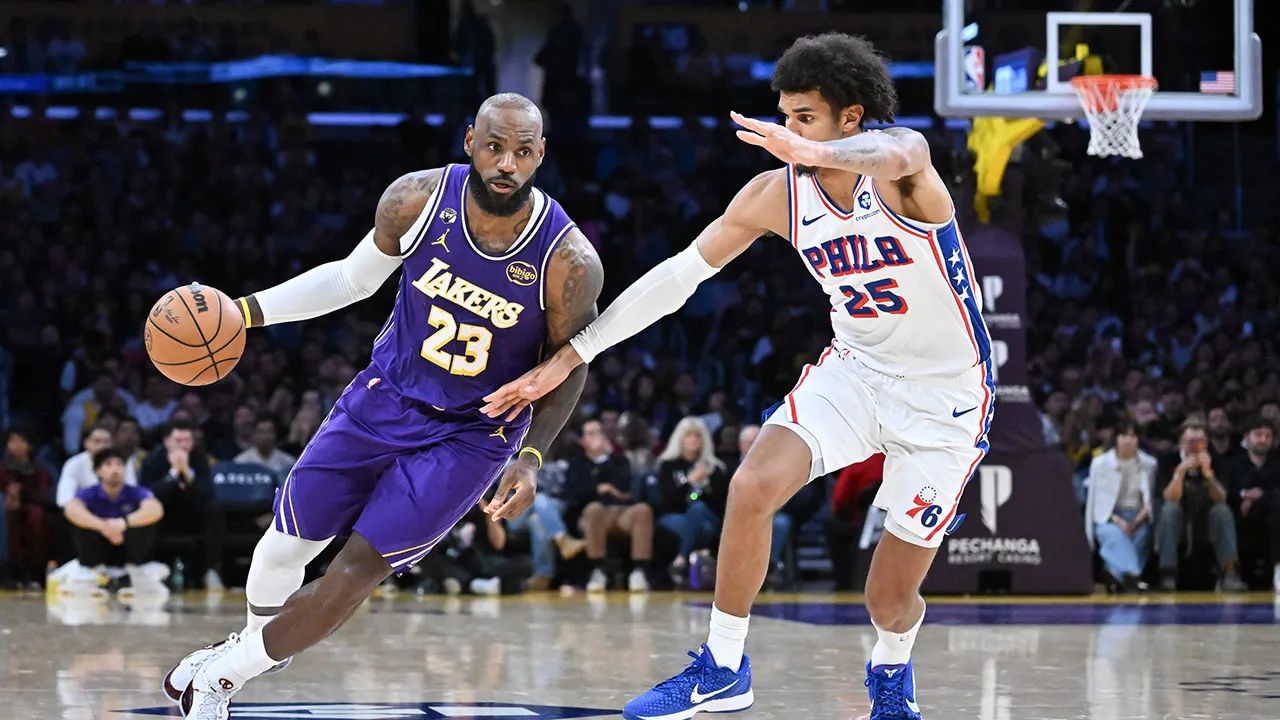
LeBron James of the Los Angeles Lakers dribbles the ball against Dominick Barlow of the Philadelphia 76ers during the second half of the game between the two teams at Crypto.com Arena Feb. 5, 2026, in Los Angeles. (Allen Berezovsky/Getty Images / Getty Images)
While James may not be the force he once was, he still remains a productive player entering his 24th season. In 60 games with the Los Angeles Lakers last season, James averaged 20.9 points, 7.2 assists and 6.1 rebounds per game and was named an All-Star for the 22nd time, extending his NBA record.
Fox News’ Ryan Canfield contributed to this report.
MELBOURNE, Australia — Rookie professional golfer Jessica Bang of Australia died in a hospital in Thailand on Thursday at the age of 18, the WPGA Tour of Australasia said, after suffering a brain hemorrhage while preparing for a qualifying tournament in Bangkok less than two weeks earlier.
Bang collapsed on August 1 while in Bangkok preparing to compete in the KLPGA Tour’s 2026 International Qualifying Tournament, a qualifying event for South Korea’s women’s professional golf tour. She was taken to Synphaet Ramintra Hospital for urgent treatment, where she underwent emergency brain surgery and was subsequently placed on life support in intensive care as doctors worked to treat the hemorrhage. She did not recover, and her family confirmed she died Thursday morning in Bangkok.
The WPGA Tour of Australasia announced her death in a statement, expressing condolences on behalf of the broader Australian golf community. “The Australian golf community is deeply saddened by the passing of young tour member Jessica Bang in Thailand,” the tour said, adding that Bang “was an outstanding young talent who made a significant impression in her short time on the tour.” In a separate portion of its statement, the tour extended its thoughts to Bang’s family, friends and everyone who knew her during what it called an incredibly difficult time.
Bang earned her place on the WPGA Tour of Australasia through qualifying school at the end of last year, capping off what had been a standout amateur career. She won the Women’s New South Wales Open Regional Qualifying Event in February, remarkably in just her fifth professional start, a result that had marked her as one of the country’s most promising young players heading into the current season.
Advertisement
In the days following her collapse, members of Bang’s family launched an online fundraiser to help cover her mounting medical expenses in Thailand, initially hoping the funds might also help bring her back to Australia for continued treatment closer to home. That homecoming never became possible. Following news of her death, fundraiser organizer Janette Yoon, a cousin of Bang’s, shared an emotional update thanking supporters for their contributions. “We are truly heartbroken by this news,” Yoon wrote, adding that the family wanted to continue celebrating Bang’s achievements, passion and dedication to the sport. Yoon said any remaining funds raised through the campaign would go to Bang’s parents to help offset the medical costs incurred during her treatment.
News of Bang’s initial collapse and subsequent death drew an outpouring of grief from across the golf world in Australia and beyond, with fellow players, tour officials and fans following updates on her condition closely in the days between her hospitalization and her death. Local Australian outlets had previously described the situation as a “devastating” turn for a golfer whose career had only just begun to take shape at the professional level.
Bang’s death adds to a difficult stretch of news across professional golf’s various tours this month, even as her passing stands apart given both her age and the suddenness of the medical emergency that led to it. Brain hemorrhages, while relatively rare among healthy young adults, can occur without significant prior warning and often require immediate emergency intervention to have any chance of a positive outcome, a reality that was reflected in the rapid escalation of Bang’s condition from initial collapse to major surgery within the same day.
The WPGA Tour of Australasia serves as the primary developmental and professional pathway for women’s golf in Australia, offering players like Bang a route into professional competition through its qualifying school and regional events before they progress toward larger international tours, including the KLPGA and LPGA circuits. Bang’s rapid rise, from earning her tour card through qualifying school to winning a professional event within her first five starts, had positioned her as a rising talent expected to compete at increasingly high levels in the years ahead.
Advertisement
Tributes to Bang have continued circulating across Australian golf circles and social media in the hours following confirmation of her death, with many in the sport reflecting on the brevity of her professional career and the promise it had shown in its earliest stages. No further details regarding funeral or memorial arrangements had been publicly announced as of Thursday.
The circumstances surrounding Bang’s initial collapse remain largely as first reported at the time, with her sudden onset of symptoms while preparing for competition in Bangkok leading directly to her emergency hospitalization and the medical complications that ultimately proved fatal. Her death closes a professional career that, while brief, had already produced a breakthrough win and a place among the sport’s most closely watched young Australian talents.
Ladies and gentlemen, good morning, and very much welcome to the AKVA Second Quarter Presentation. The program for this morning is that I will do the introduction and the highlights. Ronny Meinkoehn, the CFO, will do financial performance, and please post any questions during the presentation. It goes straight to the highlights of the second quarter. We had a high quarterly revenue of NOK 1.189 billion and record high quarterly EBIT of NOK 111 million. We had a strong order intake of NOK 1.345 billion and order backlog of approx. NOK 3 billion at the end of the second quarter.
A small contract of approx. EUR 28 million was awarded from Laxey in April, subject to financing, which was secured in June. A dividend of NOK 1 per share will be distributed during the second half of 2026. Strategic review was announced start of April to maximize shareholder value. We’ll give a comment on that later. Then to the figures of the second quarter. It is — in the first place, it’s in line with the trading update we published on July 20. It’s a record high activity level of NOK 1.189 billion, EBITDA of NOK 179 million, where the segments came in Sea Based at NOK 143 million, Land Based at NOK 21 million and Digital at NOK 15 million. Actually, we are pleased with the activity and the performance in all the segments.
EBIT for the group at NOK 111 million which is representing a record quarter. Then looking into the figures for the first half. Revenue there at NOK 2.329 billion, which is ballpark 7% higher than
Friends close to music producer David Foster have pushed back against claims that he deliberately snubbed Meghan Markle during a red carpet appearance in Canada earlier this month, adding fresh detail to a controversy that has continued generating attention days after Foster himself publicly denied any intentional slight.
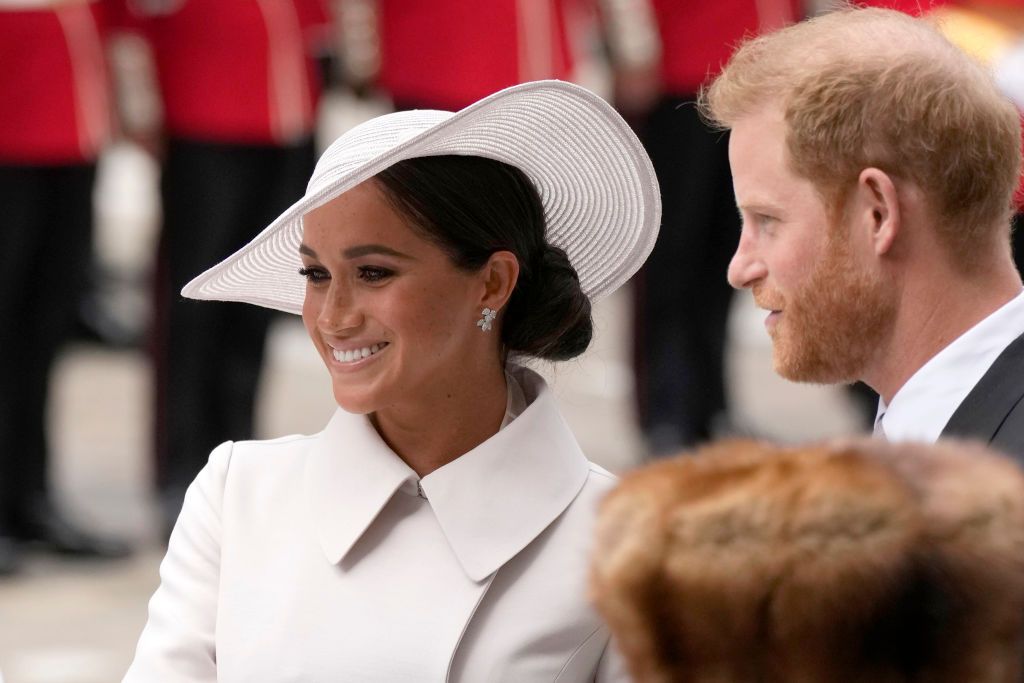
The moment in question occurred August 7 at the David Foster Foundation’s 40th anniversary gala in Victoria, British Columbia, an event that organizers said raised $14.5 million in support of the foundation’s work funding life-saving organ transplants for Canadian children. Video from the red carpet showed Meghan, the Duchess of Sussex, extending her hand toward Foster as he arrived alongside Prince Harry, only for Foster to continue past her and pose for photos instead alongside his wife, singer and actress Katharine McPhee. The clip spread quickly online, with one widely shared post on X describing the moment as Meghan being “publicly snubbed by host David Foster.”
According to an insider who spoke with RadarOnline, the moment was a simple oversight rather than any deliberate gesture. The source said Foster “wasn’t” consciously walking past Meghan or ignoring her outstretched hand, and argued that the viral clip failed to capture the full context of the evening. “What the short clip doesn’t show is everything that happened beforehand,” the insider said, explaining that Foster had already greeted Harry and Meghan warmly earlier in the night, well before the red carpet photos were taken. By the time the group reached the carpet, the source said, nobody involved felt there was any unresolved greeting still owed.
The insider also attributed Foster’s apparent oversight to the demands of hosting a major fundraising event, saying the 76-year-old had a great deal to manage that evening and likely simply missed Meghan’s gesture rather than intentionally rebuffing it. The source described Foster as genuinely “thrilled” to have the Sussexes attend the occasion.
Advertisement
A separate insider, cited by IBTimes UK, offered a similar account, saying Foster had been “so excited to see Harry and Meghan” and pointing to the fact that he was actively conducting interviews at the moment the photo was taken. That source said Foster and the Sussexes had already exchanged greetings, including hugs, before the red carpet moment, and that Foster had also used the opportunity to introduce Harry and Meghan to other family members in attendance. A source separately speaking with Page Six offered a consistent account, confirming that Meghan and Harry had already greeted Foster before the viral clip was filmed.
Foster addressed the controversy directly himself in an on-the-record statement to PEOPLE, pushing back firmly against the snub narrative. “As the host of the David Foster and Friends foundation event, I had already greeted our friends, the Duke and Duchess, at the entrance 10 minutes before the red carpet encounter,” Foster said, adding that both Harry and Meghan had generously given their time to engage with attendees throughout the evening. He was direct in criticizing the coverage that followed, saying, “It’s sad that certain media chose to deceive a red carpet encounter for clickbait. They turned simple ‘positioning’ to get the best photo into a hurtful lie.” Foster went on to affirm his relationship with the couple, saying, “Harry and Meghan are dear friends of mine. Anyone watching can see there was no awkward moment and certainly no snub.”
The friendship between Foster and the Sussexes predates the current controversy by several years. McPhee has previously described her husband’s bond with Harry in warm terms, telling Access Hollywood in 2020 that the two share “a really, really beautiful relationship,” comparing them to father and son. McPhee’s own connection to Meghan traces back to their overlapping years at Immaculate Heart, a Los Angeles school, though she has said the two were never especially close as students, with their friendship instead developing later through their husbands’ relationship.
That closeness has extended into practical support in the past. Foster has said he helped Harry and Meghan find a place to stay in Canada around the 2019 holiday season, shortly after the couple, along with their infant son Prince Archie, sought time away from the UK. He described the gesture as rooted in his own Canadian background and connection to the Commonwealth.
Advertisement
Despite the friends’ accounts and Foster’s own public denial, the episode has continued to draw commentary in entertainment and royal-focused media, reflecting the intense scrutiny that continues to follow even brief, ambiguous public interactions involving Harry and Meghan. The claims from anonymous insiders defending Foster, while consistent with one another and with Foster’s own on-record statement, remain attributed to unnamed sources rather than independently verified accounts from other attendees at the gala.
Neither Buckingham Palace nor representatives for the Duke and Duchess of Sussex have issued separate public comment on the incident beyond what has already been reported through Foster’s own statement and the accounts provided by sources close to him. For now, the controversy appears to have been addressed primarily through Foster’s direct denial and the surrounding insider accounts corroborating his version of events, even as the viral video itself continues circulating among those unconvinced by the explanation.
I’m at the research and development centre of the world’s biggest publicly listed ice-cream maker, Magnum. Near Bedford in the UK, it’s where the company’s researchers dream up new recipes and develop their production processes.
What really catches my eye is a pale yellow glow in the corner of the room. The light emanates from a glow-in-the-dark ice lolly.
Launched in the clubbing capital of Ibiza, it’s targeted toward clubbers and festival-goers, and one of its ingredients, vitamin B2, is naturally luminescent and glows under UV club lights.
While a luminescent product may seem a bit of a gimmick, ice cream is a serious business and innovation is crucial to staying ahead of the game.
Advertisement
There’s tough competition from other giants including Häagen-Dazs owner, Froneri, and Baskin-Robbins, the world’s largest chain of ice cream specialty shops, not to mention smaller artisan ice cream makers that are popping up all the time.
They’re all dealing with a notoriously unpredictable market and with fluctuating commodity and energy prices. No one can afford to stand still.
“We’ve had five years of price volatility impacted by war in Ukraine, Covid, the cost of living crisis. We’ve now got the Strait of Hormuz. We’ve just been in this constant state of instability when it comes to pricing,” says Georgia Rose, principal analyst at global market research company, Kantar Retail IQ.
And those price fluctuations affect multiple areas of the ice-cream making process.
Advertisement
“Manufacturers have been hit by higher prices for dairy, cream, eggs; the ingredients that make ice-cream bases. And then you’ve got the flavours; vanilla, chocolate, sugar, fruit. And something that often gets forgotten is the cold-chain energy costs and storage,” she says.
Google Gemini users began reporting problems accessing the company’s AI assistant Friday afternoon, according to outage-tracking service Downdetector, in what appeared to be a developing disruption affecting the widely used chatbot and its integrations across Google’s broader product ecosystem.
Downdetector said user reports indicating problems with Google Gemini began climbing at 12:15 p.m. Eastern time. The tracking service posted about the rising number of reports on its official account on the social platform X, asking affected users to describe how the outage was impacting them and tagging the post with the hashtag “GoogleGeminiDown.”
As of Friday afternoon, Google had not issued a detailed public statement addressing the scope, cause or expected resolution timeline for the reported disruption. Separate outage-monitoring service Entireweb Status showed Gemini as operating normally as of the previous day, logging 88 user reports over the preceding 24-hour period, with 5 of those in the final hour of that window, suggesting the service had already been experiencing a low, ongoing baseline of complaints even before Friday’s reported spike. StatusGator, another third-party tracker, separately monitors Gemini’s status through Google’s own official status dashboards, checking for updates roughly every few minutes based on issue reports, page visits and other signal strength data.
Friday’s reported issue also arrived on a day when users separately reported problems with Gmail, according to posts on the online forum DesignTAXI Community, where a user described a surge in Gmail-related Downdetector reports beginning around 9:12 a.m. Eastern time, several hours before the Gemini reports began climbing. It remained unclear whether the two sets of reports were connected through any shared underlying cause within Google’s infrastructure, or whether they represented separate, unrelated issues affecting different products on the same day.
Advertisement
Google Gemini functions as the company’s primary conversational AI assistant, available as a standalone web and mobile app and integrated across Google Workspace products, including Gmail, Docs, Sheets and Slides through a feature often referred to as the Gemini side panel. A disruption affecting Gemini’s core systems can therefore ripple across multiple products simultaneously, depending on which specific backend services are affected, rather than being limited only to the standalone chatbot experience.
Friday’s disruption would not be the first time Gemini has experienced significant outages. In June, a widely reported outage left many users unable to access Gemini starting around 6 a.m. Eastern time, with Downdetector reports climbing steadily to nearly 1,000 before the issue was resolved. During that incident, Google’s Workspace Status Dashboard formally acknowledged the disruption, saying its engineering team had identified a mitigation and was working to implement it, though the company did not provide a specific estimated time of resolution at the time, saying only that it would provide a further update later that afternoon.
An earlier outage in September 2025 affected primarily Gemini’s more advanced Pro tier, while the lighter Flash version of the model continued functioning normally for many users throughout the disruption. That incident saw Downdetector reports spike to nearly 3,000 before gradually declining over the following hour as Google’s engineering team addressed the underlying issue, with most users regaining normal access within roughly 90 minutes of the initial spike in complaints.
Google has periodically disclosed additional technical detail about the underlying causes of past Gemini disruptions through its official status pages. In one previously documented incident affecting Gemini within Google Workspace, the company said an internal background process had caused certain users’ chat histories to become temporarily invisible within both the web and mobile versions of the app, a problem the company said its engineering team identified and halted, though full mitigation still required additional time to complete.
Advertisement
Given Gemini’s rapid growth, having recently surpassed 1 billion monthly active users according to Google’s own recent disclosures, even brief disruptions to the service now have the potential to affect a substantially larger user base than in the platform’s earlier years, a dynamic that has made outage reports for the assistant increasingly visible and closely tracked whenever they occur.
For users experiencing issues Friday, standard troubleshooting guidance compiled by outage-tracking services generally recommends first checking Google’s official Workspace Status Dashboard to determine whether the company has already acknowledged a known, ongoing incident, since an active, company-confirmed disruption typically cannot be resolved through user-side troubleshooting steps. If no incident is shown on Google’s own status page, users are generally advised to consider the issue more likely to be local, potentially tied to their own internet connection, browser or device, rather than a broader service-wide problem.
This remains a developing situation, and additional details regarding the precise scope, underlying cause and expected resolution timeline of Friday’s reported Gemini outage were not immediately available. Google had not issued an official public acknowledgment of the disruption as of Friday afternoon, leaving affected users largely reliant on Downdetector and the company’s own status dashboard for updates on whether the issue was continuing to affect the broader user base.





















































You must be logged in to post a comment Login