

Business
Oak Garden Apartments, 400 Garden Lane on Raising Housing Standards


Oak Garden Apartments 400 Garden Lane is a community-focused housing complex based in Chickasaw, Alabama.
Since acquiring the property in 2019, the leadership team has taken a long-term approach to ownership. Their work centers on raising standards in rental housing through steady investment and consistent management.
When they purchased the apartment complex, they saw both potential and responsibility. Significant capital was invested to modernize interiors and improve shared spaces. Mature trees and lush grounds were preserved. Outdoor areas were made more usable. The goal was clear from the beginning.
“We purchased this property with a long-term view,” they explain. “Our goal was simple. Make it a great community to raise a family.”
Oak Garden Apartments 400 Garden Lane offers spacious interiors, a pet-friendly setting, on-site laundry, a dog park, picnic area, and 24-hour maintenance. Yet leadership believes amenities alone do not define quality housing.
“Anyone can list features,” they say. “What matters is how the place feels day to day.”
Their philosophy focuses on improving community standards across resident relations, maintenance, and quality living spaces. They see property management as stewardship rather than simple oversight.
“You are not just managing buildings,” they note. “You are managing people’s homes.”
Through discipline and consistent attention to detail, Oak Garden Apartments 400 Garden Lane has positioned itself as a steady leader in community-based housing in the Chickasaw area.
A Conversation with Oak Garden Apartments
Q: Take us back to 2019. What led to the purchase of Oak Garden Apartments 400 Garden Lane?
A: In 2019, we saw an opportunity in Chickasaw. The property had solid foundations. It also had room to improve. We believed in the location and in the long-term potential. We did not see it as a short project. We saw it as a responsibility.
Q: What was your immediate priority after the purchase?
A: Investment. We put significant capital into the property. We focused on modernising the interiors and improving the grounds. We wanted residents to feel the change. Not just see it.
“Improvements to the property send a message that we are here for the community,” we often say. “We wanted residents to notice the difference.”
Q: Why focus so heavily on standards?
A: Standards shape daily life. When maintenance slips, small issues grow. When communication fails, trust breaks down. We define our mission as improving community standards across resident relations, maintenance, and quality living spaces.
“We hold ourselves accountable,” we say. “If something needs attention, we address it.”
Q: What makes Oak Garden Apartments 400 Garden Lane distinct in your view?
A: Consistency. The community offers modern and spacious interiors. It is pet-friendly. There is on-site laundry, a dog park, picnic area, and 24-hour maintenance. But features alone are not enough.
“Anyone can list amenities,” we explain. “What matters is how the place feels when you live there.”
We focus on clean spaces, reliable service, and steady upkeep.
Q: How important is location in your strategy?
A: Very important. The property sits near major interstates and is minutes from downtown Mobile. That balance matters. Chickasaw offers a quieter setting while staying connected to work and services.
“Comfort and convenience affect everyday life. Location supports that.”
Q: How would you describe your leadership philosophy?
A: Long-term thinking. We think in years, not months. We do not chase trends. We focus on fundamentals. Safe units. Functional layouts. Well-kept grounds.
“You are not just managing buildings,” we often remind ourselves. “You are managing people’s homes.”
That mindset shapes how we operate every day.
Q: What lessons have you learned since 2019?
A: Patience and discipline matter. Real improvement takes time. Quick fixes do not build strong communities. Consistent effort does.
We have also learned that residents value reliability. When maintenance is responsive and communication is clear, trust grows.
Q: How do you define success in this industry?
A: Success is stability. It is a property that runs well. It is residents who feel comfortable. It is standards that are maintained year after year.
“Our job is to raise the standard. Not just once. Every day.”
Q: Looking ahead, what remains your core focus?
A: The same as it was in 2019. Improve the property. Strengthen the community. Maintain the standard. Leadership in housing is not loud. It is consistent.
At Oak Garden Apartments 400 Garden Lane, that consistency defines our career and our approach to the industry.


YouTube experienced a widespread global outage on Tuesday evening, Feb. 17, 2026, that left millions of users unable to load videos, access the homepage or use related services like YouTube Music and YouTube Kids, with the company attributing the issue to a problem in its recommendations algorithm.

The disruption began around 7:45-8:00 p.m. ET (00:45-01:00 GMT on Feb. 18), with outage tracker Downdetector recording a peak of more than 320,000 user reports in the United States alone and tens of thousands more internationally, including spikes in the United Kingdom, India and other regions. Complaints centered on blank homepages, failure to play videos, app freezes, login issues and error messages like “Something went wrong.”
YouTube’s official TeamYouTube account on X (formerly Twitter) acknowledged the problem shortly after reports surged, stating engineers were investigating. By approximately 9:00 p.m. ET, the company provided more detail on its support page and social channels: “An issue with our recommendations system prevented videos from appearing across surfaces on YouTube (including the homepage, the YouTube app, YouTube Music and YouTube Kids). The homepage is back, but we’re still working on a full fix.”
The recommendations engine — the AI-driven system that suggests personalized videos based on viewing history, search behavior and engagement — malfunctioned, causing cascading failures across the platform’s front-end interfaces. This prevented content from loading on key surfaces, rendering the service effectively unusable for many despite backend servers remaining operational.
The outage lasted roughly 90-120 minutes in most regions, with partial restoration (homepage functionality returning) by around 9:30-10:00 p.m. ET. YouTube issued a final update around 10:15 p.m. ET: “The issue with our recommendations system has been resolved and all of our platforms (YouTube.com, the YouTube app, YouTube Music, Kids, and TV) are back to normal! We really appreciate you bearing with us while we sorted this out.”
No widespread reports of the issue persisted into Wednesday, Feb. 18, or Thursday morning, though isolated lingering complaints appeared in some time zones. YouTube did not disclose whether the glitch stemmed from a configuration error, software update deployment failure or other technical root cause, but sources familiar with Google’s operations suggested an incorrect configuration may have been applied too broadly across server clusters in multiple regions, amplifying the impact.
The incident affected YouTube TV subscribers as well, with thousands reporting streaming interruptions and channel access problems. No data loss, security breaches or permanent damage to user accounts were reported.
This marks one of the more significant YouTube outages in recent years, following smaller disruptions in 2025 tied to similar algorithmic tweaks or regional network issues. Google’s vast infrastructure typically provides redundancy, but front-end recommendation dependencies created a single point of failure in this case.
Users in high-traffic areas like the U.S. West Coast (San Francisco, Los Angeles) and India reported the heaviest impacts, consistent with time-zone peaks in evening viewing. Social media erupted with memes and frustration, with many turning to alternatives like TikTok or Twitch during the downtime.
YouTube, owned by Google (Alphabet Inc.), serves more than 2.5 billion monthly logged-in users and remains the dominant video platform globally. The company emphasized rapid resolution and thanked users for patience, but the event renewed discussions about over-reliance on complex AI recommendation systems and the need for better failover mechanisms.
No compensation or official apologies were announced, though YouTube’s history includes goodwill gestures like ad credits for prolonged creator outages. As services stabilized, normal viewing resumed without apparent long-term effects.

Nearly nine in 10 higher-risk pension funds have failed to match the performance of the FTSE 100 over the past five years, according to new analysis that raises fresh concerns about retirement outcomes for millions of savers.
Research by Investing Insiders examined almost 13,000 personal and workplace pension funds holding more than £1tn in assets between December 31, 2020 and December 31, 2025. Funds in the medium-high and high-risk categories were benchmarked against the FTSE 100 over the same period.
The FTSE 100 delivered cumulative returns of 84.67 per cent over five years, turning £20,000 into £36,934 and £50,000 into £92,335.
By contrast, 89 per cent of pension funds in the higher-risk categories underperformed that benchmark. Of 7,370 funds analysed at these risk levels, 6,540 failed to keep pace with the index.
The worst-performing fund in the study, Zurich Assurance’s Zurich JPM Emerging Europe Equity Pn ZP GTR in GB, lost 98.59 per cent of its value over five years. A £50,000 investment in that fund would now be worth just £705 — more than £91,000 less than if the same sum had tracked the FTSE 100.
Other underperformers included funds linked to the collapsed Woodford Equity Income strategy and several UK property-focused vehicles, many of which suffered heavy losses during periods of market stress.
All of the 10 worst-performing funds were categorised as high risk, and 87.6 per cent of the 1,418 funds in that bracket failed to beat the benchmark.
In contrast, the best-performing fund in the study — Aviva Life & Pensions UK’s Aviva Pen Ninety One Global Gold Pn S6 GTR in GB — delivered returns of 180.28 per cent over five years, growing £50,000 to £140,140.
Investing Insiders estimates that the gap between the best and worst performers could equate to a difference of £139,000 on a £50,000 contribution over the same period.
Antonia Medlicott, founder of Investing Insiders, described the findings as alarming. “Some funds in the same risk category are almost tripling investments, while others are wiping out value,” she said. “Savers often assume their pensions are steadily progressing, but performance can vary dramatically.”
She argued that greater transparency is needed from providers, particularly when funds underperform benchmarks for sustained periods. She also urged individuals to take a more active role in reviewing their pension allocations.
While the FTSE 100 is a widely recognised benchmark, pension portfolios are typically diversified across global equities, bonds and alternative assets. As such, some fund managers argue that direct comparison with a single UK index may not fully reflect investment strategy.
Nevertheless, the scale of underperformance highlighted in the report underscores the impact of asset allocation, fund selection and risk profile on long-term retirement savings.
With retirement outcomes increasingly dependent on defined-contribution schemes, the findings add weight to calls for better default fund design and clearer communication to help savers avoid significant shortfalls in later life.

Amy Ingham
Amy is a newly qualified journalist specialising in business journalism at Business Matters with responsibility for news content for what is now the UK’s largest print and online source of current business news.

Earnings call transcript: Eramet SA’s H2 2025 results show revenue decline
Business
Is MCX stock too expensive after doubling money in just 1 year? A CME case study explains it

In 2025, silver soared 170%, while gold climbed over 60%. The momentum spilled into 2026, with silver rising more than 70% in the first two months before correcting sharply, tumbling 42% from its January 29 record high of Rs 4.20 lakh. Gold, too, has cooled off, slipping 20% from its peak of Rs 1.93 lakh.
The sharp reversal triggered higher margin requirements aimed at curbing volatility. After nearly a month of turbulence and wide price swings, MCX and NSE withdrew the additional 7% and 3% margins on silver and gold contracts, respectively, starting February 19. The easing provided relief to sentiment, pushing MCX shares up as much as x% on the BSE today.
But after a 113% run-up, the key question is: has the stock run ahead of fundamentals?
During FY21, when crude oil prices turned negative amid the Covid shock, MCX sharply increased margin requirements on crude futures. The immediate impact was visible in volumes. Average daily turnover (ADTV) in crude futures plunged from Rs 17,200 crore in February 2020 to Rs 3,300 crore in April 2020.

Crude options premium ADTV rose as volatility surged. Premium turnover as a share of notional turnover increased from 2.2% in February 2020 to 3.9% in March 2020 and further to 8.3% in April 2020. Over the next few years, participation structurally shifted towards options. Crude options premium ADTV expanded from around Rs 5.5 crore in FY21 to Rs 2,120 crore in FY25 and about Rs 2,400 crore in FY26-to-date.
Since early February 2026, gold prices have declined roughly 10%, while silver is down about 33%. In response, average margin requirements for silver futures jumped from 15% earlier to 72% in February 2026. For gold futures, margins increased from 10% to 30%. The result has been a sharp contraction in futures activity. Gold futures ADTV fell 41% month-on-month to Rs 33,600 crore in February 2026-to-date, while silver futures ADTV declined 58% to Rs 22,700 crore over the same period.Yet, mirroring the crude episode of 2020, options activity has picked up. Premium turnover as a share of overall turnover in gold and silver options increased in late January and February 2026, indicating a shift in trader preference rather than an outright drop in participation.
Is the multiple really stretched?
The CME (Chicago Mercantile Exchange) is the world’s largest commodity derivatives exchange by open interest. Between 2004 and 2007, CME witnessed exponential growth in volumes, according to ICICI Securities. Options contracts traded rose from 48 million in CY04 to 107 million in CY07. Futures contracts doubled from 211 million to 432 million over the same period.
The surge in activity was accompanied by a sharp re-rating. CME’s trailing P/E multiple expanded from 24.62x in January 2004 to a peak of 49.31x in November 2006. Notably, the stock traded above 40x trailing earnings for 24 months between September 2005 and August 2008.
Outlook
The domestic brokerage has an Add rating and a target price of Rs 2,780 per share. That implies an upside potential of 19% from current levels. MCX’s futures average daily traded volume (ADTV) stood at Rs 55,800 crore for 9MFY26 and Rs 1,09,700 crore for January FY26-to-date. Based on the current trend, futures ADTV is projected at Rs 66,500 crore in FY26E, rising to Rs 80,000 crore in FY27E and Rs 90,000 crore in FY28E. These estimates imply a run-rate of Rs 98,700 crore in the remaining three months of FY26.
In the options segment, at the prevailing run rate, options premium ADTV is estimated at Rs 6,200 crore in FY26, Rs 8,100 crore in FY27 and Rs 9,500 crore in FY28, implying Rs 9,200 crore in the final quarter of FY26.
Also read | As AI panic grips IT stocks, where are market opportunities for big and small investors?
(Disclaimer: Recommendations, suggestions, views and opinions given by the experts are their own. These do not represent the views of The Economic Times)

Victory Income Fund Q4 2025 Commentary
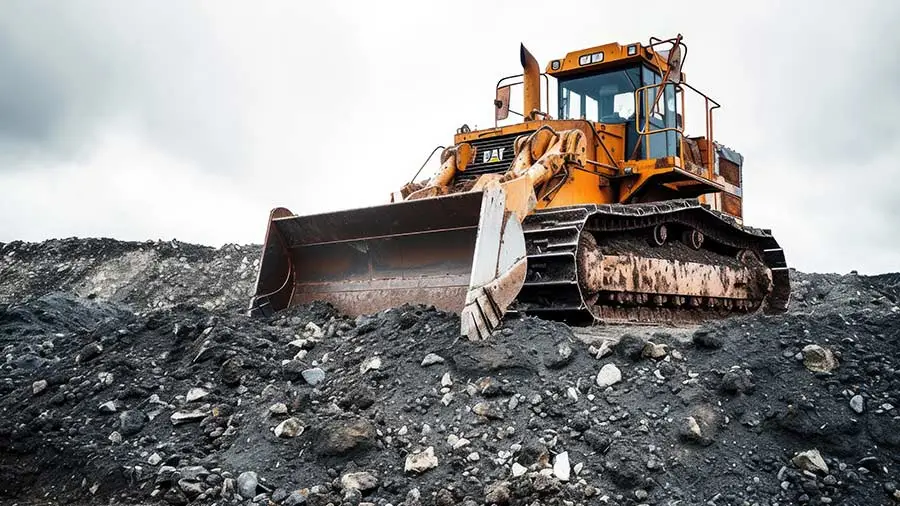
A fundamental transformation is underway across Asia in how nations control and leverage their mineral wealth, with profound implications for global technology supply chains, renewable energy transitions, and geopolitical power dynamics.
Key takeaways
- China’s mineral dominance is a geopolitical weapon: Beijing controls the vast majority of global rare earth processing capacity and has repeatedly demonstrated willingness to restrict exports as leverage, with October 2025 controls on 12 rare earth elements prompting emergency U.S.-China negotiations.
- Indonesia leads Southeast Asia’s rejection of raw material exports: Jakarta’s ban on unprocessed nickel ore exports since 2014 has forced billions in foreign investment into domestic smelting facilities, transforming the country from a colonial-style resource exporter into an emerging battery manufacturing hub.
- Resource nationalism is now institutionalized across Asia: From China’s strategic stockpiles to India’s push for mineral self-reliance, Asian governments are permanently consolidating state authority over mining and refining, reshaping global supply chains while complicating Western diversification efforts.
What was once viewed primarily as a technical matter of extraction and trade has evolved into a central pillar of national security strategy, as governments from Beijing to Jakarta assert unprecedented control over critical minerals essential to electric vehicles, semiconductors, defense systems, and clean energy technologies.
China Demonstrates Mineral Power in High-Stakes Standoff
The most dramatic recent illustration came last October, when China’s Ministry of Commerce expanded export controls to cover 12 of 17 rare earth elements, materials indispensable to everything from fighter jets to wind turbines. The restrictions went beyond raw ores to include processing equipment, refined materials, and even products manufactured overseas using Chinese-origin rare earths.
The move sent immediate shockwaves through global markets, prompting an emergency diplomatic intervention. By late October, Presidents Donald Trump and Xi Jinping negotiated a one-year suspension of the new controls during a meeting in Busan, South Korea, in exchange for U.S. tariff reductions.
Yet experts caution that the “settlement” is more a tactical pause than a genuine resolution. Earlier restrictions imposed in April 2025 remain fully operational, and China’s licensing regime continues to bind companies exporting controlled materials. “Critical minerals are not merely economic assets; they are also instruments of state power,” the analysis notes.
China’s dominance stems from decades of strategic policy interventions beginning in the 1980s. Today, Beijing controls the vast majority of global processing capacity for rare earths and several other critical minerals, having consolidated state-owned enterprises, built strategic stockpiles, and invested heavily in mining operations across Africa, Latin America, and Southeast Asia.
The country has repeatedly demonstrated willingness to weaponize this advantage, restricting rare earth shipments to Japan during 2010 tensions, and again imposing embargoes on Tokyo in early 2026, targeting dual-use technologies required for defense production.
Indonesia Rejects “Colonial” Export Model
Indonesia has emerged as one of Asia’s most assertive practitioners of resource nationalism, particularly regarding nickel, the world’s largest reserves of which lie within its borders. The country has pursued an aggressive strategy to transform itself from raw material exporter into a manufacturing hub for electric vehicle batteries.
Beginning in 2014, Jakarta implemented a ban on unprocessed nickel ore exports, forcing foreign companies to invest in domestic smelting and refining facilities. Major Chinese firms, supported by Belt and Road Initiative funding and Indonesian incentives, poured billions into smelters and industrial parks.
Former President Joko Widodo framed the policy in explicitly anti-colonial terms, arguing that exporting raw minerals perpetuates an extractive relationship that must be replaced with industrialization. The government expanded requirements for foreign investors to partner with local firms, transfer technology, and contribute to domestic industrial ecosystems.
The strategy has successfully reshaped global nickel markets and demonstrated how developing nations can leverage resource control to force industrial upgrading.
Regional Powers Chart Independent Courses
Malaysia has pursued a more moderate path, balancing strategic concerns with environmental governance. Home to one of the few rare earth processing facilities outside China, the Lynas Advanced Materials Plant, Malaysia has faced periodic public pressure to tighten regulations, particularly regarding radioactive waste management.
The country also imposed a temporary moratorium on bauxite mining in the mid-2010s after exports to China caused severe environmental degradation, later lifting the ban with stricter licensing requirements.
Thailand’s mineral nationalism operates primarily through regulatory sovereignty rather than export restrictions. Strong community opposition to mining, including the 2016 closure of the Chatree gold mine following environmental contamination allegations, has pushed the government toward strengthened oversight and social accountability mechanisms.
Last October, protesters gathered outside the U.S. embassy in Bangkok opposing a rare earth minerals agreement with Washington, concerned about sovereignty risks and potential environmental damage from deals made without public consultation.
Myanmar, though politically unstable, remains one of Asia’s most significant sources of heavy rare earths. Much production occurs in northern border regions controlled by ethnic armed groups, with substantial Chinese company involvement operating through informal channels. Materials typically cross into China for processing, a strategic lifeline for Beijing, especially after it imposed stricter domestic environmental controls.
India has intensified focus on critical mineral security driven by concerns over supply-chain vulnerabilities and technological sovereignty. New Delhi has launched initiatives to map resources, expand domestic mining, and reduce dependence on Chinese imports. Recent reforms opening previously restricted minerals to private mining reflect India’s pursuit of strategic autonomy in a fragmenting global order.
Outlook: Nationalism Becomes Institutionalized
Analysts project Asian resource nationalism will intensify rather than diminish, with governments continuing to strengthen control over mineral resources while deepening industrial policies that push extraction industries up the value chain.
“China’s dominance in rare earth processing, Indonesia’s nickel industrialization and India’s push for critical mineral self-reliance suggest a long-term consolidation of state authority over mining, refining and export mechanisms,” according to the assessment.
The effect is region-wide reinforcement of mineral nationalism that remains compatible with global supply chains even as it complicates diversification efforts by Western and East Asian manufacturers. States are expected to maintain export restrictions on unprocessed ores while crafting supply agreements that simultaneously attract foreign investment and preserve sovereign leverage.
A less likely but plausible scenario involves coordinated regional strategies, where Southeast Asian states leverage mineral resources collectively through harmonized export policies, shared industrial hubs, or informal alignment around processing standards, potentially positioning themselves between U.S. and Chinese technological competition.
What appears virtually impossible is any significant rollback. The momentum behind national industrial policy, strategic resource planning, and rising domestic expectations for value creation suggests Asia’s mineral nationalism represents a fundamental and enduring shift in how these nations engage with the global economy.
Other People are Reading
Continue Reading

Consumer Staples Are on a Tear. These Still Look Like Bargains.

The Tourism Authority of Thailand showcased Thai culture at The Gypsy Travel Festival 2026 in Mumbai, targeting premium Indian travelers with interactive exhibits and performances, attracting over 5,500 attendees.
Key Points
- The Tourism Authority of Thailand (TAT) promoted Thai culture and travel at The Gypsy Travel Festival 2026 in Mumbai, targeting premium millennial and family travelers from India. The event, held on February 7-8, showcased Thailand alongside Sapporo City and Kenya, attracting a high-spending audience aged 25 to 45.
- Thailand’s pavilion, themed around the Songkran Festival, featured vivid visuals, cultural demonstrations like the Khon masked dance, traditional crafts, and Thai cooking. A luxury wellness agency also presented holiday packages, enhancing Thailand’s appeal.
- With over 5,500 attendees, the festival generated 4 million digital and outdoor impressions. A survey indicated strong interest in destinations like Bangkok and Phuket, with many planning trips to Thailand, highlighting potential growth in the Indian market.
The Tourism Authority of Thailand (TAT) recently promoted Thai culture and travel experiences at The Gypsy Travel Festival (TGTF) 2026 in Mumbai, seeking to boost Thailand’s appeal among premium millennial and family travelers from India. The effort was led by the TAT Mumbai Office and the ASEAN, South Asia, and South Pacific Market Division, under the direction of TAT Governor Thapanee Kiatphaibool, with support from Consul-General Donnawit Poolsawat and senior TAT executives. The festival was held from February 7 to 8 at Jio World Drive and attracted a large audience from a high-spending travel segment.
Thailand participated as one of three main destination partners, alongside Sapporo City and ANA of Japan, and Kenya. TGTF 2026 is Mumbai’s largest lifestyle travel festival, attracting mainly visitors aged 25 to 45 through exhibitions, discussions, workshops, and food and beverage showcases focused on international travel and lifestyle trends.
Thailand’s pavilion was presented under a Songkran Festival theme, using vivid visuals and interactive activities to introduce Thai traditions and seasonal travel experiences. Cultural demonstrations and performances included Khon masked dance, long-drum and Songkran dances, traditional handicrafts, Thai cooking demonstrations, interactive games, and photo opportunities inspired by Bo Sang umbrellas. A luxury and wellness travel agency also co-exhibited to promote special holiday packages in Thailand.
More than 5,500 people attended the festival, while promotional activities generated over four million impressions across digital platforms and outdoor media. A visitor survey showed strong interest in destinations such as Bangkok, Phuket, Krabi, Chiang Mai, and Samui, with beaches, food, and cultural festivals ranking as Thailand’s most recognized attractions. Many respondents said they plan to visit Thailand within the year, pointing to continued growth potential in the Indian market.
Source : TAT Showcases Thai Culture at Mumbai Travel Festival
Other People are Reading

What Happened in Markets Today
Warner Bros. Discovery said Tuesday it will restart deal talks with Paramount. The move sets the stage for a potential bidding war with Warner’s preferred suitor, Netflix. Warner said Paramount has indicated it would be willing to raise its offer to $31 per Warner share from $30 if Warner would agree to engage in negotiations. Warner shares gained 2.7% Tuesday while Paramount rallied 4.9%. Netflix rose 0.2%.
Commercial real-estate lenders have reached a breaking point, calling in tens of billions of dollars of loans. Many CRE lenders initially extended maturing loans they made when borrowing costs were lower, hoping that interest rates would fall or cash flows would grow in a strategy known as extend and pretend.

OPINION: The soaring gold sector could prove too tempting for a federal government chasing tax dollars.
Harrison Smith Replacement Is Latest Vikings Theory in NFL.com Mock Draft

The Plattering Co. nearly closed twice. Now, it serves 100K guests/yr.

First trillionaire of the World, Elon musk dark secret #money #facts #business


-

 Video3 days ago
Bitcoin: We’re Entering The Most Dangerous Phase
-

 Tech4 days ago
Luxman Enters Its Second Century with the D-100 SACD Player and L-100 Integrated Amplifier
-

 Crypto World2 days ago
Can XRP Price Successfully Register a 33% Breakout Past $2?
-

 Sports2 days ago
GB's semi-final hopes hang by thread after loss to Switzerland
-

 Video6 days ago
The Final Warning: XRP Is Entering The Chaos Zone
-
 Tech2 days ago
The Music Industry Enters Its Less-Is-More Era
-

 Business1 day ago
Infosys Limited (INFY) Discusses Tech Transitions and the Unique Aspects of the AI Era Transcript
-

 Video2 days ago
Financial Statement Analysis | Complete Chapter Revision in 10 Minutes | Class 12 Board exam 2026
-

 Entertainment21 hours ago
Kunal Nayyar’s Secret Acts Of Kindness Sparks Online Discussion
-
 Crypto World5 days ago
Bhutan’s Bitcoin sales enter third straight week with $6.7M BTC offload
-

 Tech1 day ago
Retro Rover: LT6502 Laptop Packs 8-Bit Power On The Go
-
 Sports6 hours ago
Clearing the boundary, crossing into history: J&K end 67-year wait, enter maiden Ranji Trophy final | Cricket News
-

 Entertainment12 hours ago
Dolores Catania Blasts Rob Rausch For Turning On ‘Housewives’ On ‘Traitors’
-
 NewsBeat4 days ago
The strange Cambridgeshire cemetery that forbade church rectors from entering
-

 Business7 days ago
Barbeques Galore Enters Voluntary Administration
-

 Crypto World6 days ago
Kalshi enters $9B sports insurance market with new brokerage deal
-

 Business1 day ago
Tesla avoids California suspension after ending ‘autopilot’ marketing
-

 Crypto World16 hours ago
WLFI Crypto Surges Toward $0.12 as Whale Buys $2.75M Before Trump-Linked Forum
-
 Crypto World7 days ago
Ethereum Price Struggles Below $2,000 Despite Entering Buy Zone
-
 NewsBeat4 days ago
Man dies after entering floodwater during police pursuit