

Business
Oil falls over 2% as Trump holds off scheduled attack on Iran


Brent futures for July delivery fell $3.01, or 2.7%, to $109.09 a barrel as of 0001 GMT, while U.S. West Texas Intermediate crude for June delivery fell $1.38, or 1.3%, to $107.28. The two benchmarks had hit their highest levels since May 5 and April 30, respectively, in the previous session.
The June WTI contract expires on Tuesday, while the most active July contract fell $2.06, or 2%, to $102.32 per barrel.
Trump said on Monday there was a “very good chance” the United States could reach an agreement with Iran to prevent Tehran from obtaining a nuclear weapon, hours after announcing the pause in military action to allow talks.
“While Trump’s signal has eased some immediate pressure, the fundamental risks persist … The market is now watching whether Trump’s comments represent a genuine shift toward de-escalation or just a tactical pause,” said Tim Waterer, chief market analyst at KCM Trade.

“Also, how Iran responds to the latest developments, and what’s actually happening on the water with tanker movements through the Strait of Hormuz are key determinants of where oil prices head to from here.”
The Middle East conflict has effectively closed the Strait of Hormuz, a critical waterway that carries about a fifth of global oil supply, raising concerns over supply disruptions. Iranian Foreign Ministry spokesperson Esmaeil Baghaei confirmed on Monday that Tehran’s position had been conveyed to the U.S. via Pakistan but provided no further details.
A Pakistani official, speaking on condition of anonymity, said Islamabad had relayed a new proposal between the two sides but noted slow progress.
Meanwhile, Iran’s semi-official Tasnim news agency reported that Washington had agreed to waive sanctions on Tehran’s oil exports during negotiations, but a U.S. official denied the claim.
Separately, U.S. Treasury Secretary Scott Bessent extended a sanctions waiver by 30 days to allow “energy-vulnerable” countries to continue purchasing Russian seaborne oil.
In the U.S., a record 9.9 million barrels were drawn from the Strategic Petroleum Reserve last week, Energy Department data showed, bringing stockpiles down to about 374 million barrels, the lowest since July 2024.
International Energy Agency head Fatih Birol said commercial oil inventories were falling rapidly, with only a few weeks of supply left due to the conflict and disruption to shipping.



Retired Investor has been investing since the 1980s and has a background in data analysis and pension fund management. He writes articles to help others prepare for retirement by investing in CEFs, ETFs, BDCs, and REITs. He is a long only investor and shares strategies for trading options with a focus on cash-secured-puts. He is a contributing author to the investing group iREIT®+HOYA CapitalThe group helps investors achieve dependable monthly income, portfolio diversification, and inflation hedging. It provides investment research on REITs, ETFs, closed-end funds, preferreds, and dividend champions across asset classes. It offers income-focused portfolios targeting dividend yields up to 10%.Learn more.
Analyst’s Disclosure: I/we have a beneficial long position in the shares of VTI, AVUV, HEFA either through stock ownership, options, or other derivatives. I wrote this article myself, and it expresses my own opinions. I am not receiving compensation for it (other than from Seeking Alpha). I have no business relationship with any company whose stock is mentioned in this article.
Seeking Alpha’s Disclosure: Past performance is no guarantee of future results. No recommendation or advice is being given as to whether any investment is suitable for a particular investor. Any views or opinions expressed above may not reflect those of Seeking Alpha as a whole. Seeking Alpha is not a licensed securities dealer, broker or US investment adviser or investment bank. Our analysts are third party authors that include both professional investors and individual investors who may not be licensed or certified by any institute or regulatory body.

Penguin Solutions: It Isn't Too Late To Buy After Q3 Earnings

To implement the change, the Securities and Exchange Board of India (Sebi) has amended the rules governing FPIs. The revised provisions will come into effect after six months, Sebi said in its notification.
Through a notification issued on July 3, Sebi revised the registration fee for Category-I FPIs and FVCIs from USD 2,500 to Rs 2.3 lakh.
The markets watchdog has also updated the common application form used for FPI registration. The regulator mandated the inclusion of the applicant’s date of birth or date of incorporation in the common application form to facilitate Permanent Account Number (PAN) allotment.
Additionally, Designated Depository Participants (DDPs) must remit the collected registration fees to Sebi within five working days of being granted registration.
“Every designated depository participant shall remit the fees collected from the foreign portfolio investors in INR to the Board in the case of initial registration, within five working days from the date of grant of certificate of registration to the foreign portfolio investor, along with the details in the format, as may be specified from time to time,” Sebi said.

Form 4 Rubrik Inc For: 8 July

UBS managing director and senior portfolio manager Jason Katz joins ‘Varney & Co.’ to give his outlook on the markets in the second half of the year.
Taco Bell is expanding the use of artificial intelligence (AI) at drive-thrus and announced a new strategic partnership with an AI voice provider.
The fast food giant on Tuesday announced the expansion of a partnership with Omilia, a provider of a voice AI platform that the restaurant chain has deployed at hundreds of drive-thru locations around the country since 2023.
Taco Bell has deployed the Omilia voice AI capabilities at over 890 restaurants across 38 states to date, according to the announcement.
TACO BELL SHOWS OFF AI ‘COACH’ FOLLOWING MASSIVE DIGITAL TECH INVESTMENT

Taco Bell is expanding its partnership with Omilia, which currently provides a voice AI platform for hundreds of its drive-thrus. (Jeffrey Greenberg/Universal Images Group via Getty Images)
“Omilia’s Voice AI gives us the ability to ease team members’ workloads and provides them the flexibility to engage with customers in more meaningful ways,” said Dane Mathews, global chief digital and technology at Taco Bell.
“Omilia’s platform has proven itself at scale in select U.S. restaurants, and continuing this strategic partnership supports our long-term digital and tech strategy,” Mathews added.
YUM BRANDS SELLS PIZZA HUT FOR $2.7B, SHARPENS FOCUS ON TACO BELL AND KFC

Taco Bell said that workers at restaurants with drive-thrus using the voice AI platform reported greater worker retention. (John Tlumacki/The Boston Globe via Getty Images)
The Omilia platform helps automate the ordering process when a customer pulls up to a drive-thru speaker and is capable of adapting to an individual location’s menu, real-time stocking levels, as well as limited-time offers that are available, which can make the ordering process more consistent and efficient for customers.
Dimitris Vassos, CEO and co-founder of Omilia, said that the “drive-thru environment is one of the most demanding – real-time, noisy, fast-paced, with menus that change by store and by day.”
The company said that general-purpose speech recognition platforms tend to struggle with various challenges fast food drive-thrus pose, ranging from road noise and regional accents, to potentially complicated order modifications and the fast pace of drive-thru service.
THE STORY OF TACO BELL: HOW FORMER MARINE CREATED FAST-FOOD CHAIN WITH MEXICAN-INSPIRED MENU
| Ticker | Security | Last | Change | Change % |
|---|---|---|---|---|
| YUM | YUM! BRANDS INC. | 165.25 | -2.24 | -1.34% |
Omilia’s features, including noise filtering and real-time menu adaptation, were designed to address those challenges, according to the company.
The announcement said that Taco Bell’s data found the transaction time in the drive-thru using voice AI is on par with, and in some cases faster than, traditional ordering methods.
GET FOX BUSINESS ON THE GO BY CLICKING HERE
Additionally, Taco Bell locations using voice AI reported higher employee retention compared with those where it hasn’t been deployed, which the company said will help improve the guest experience.
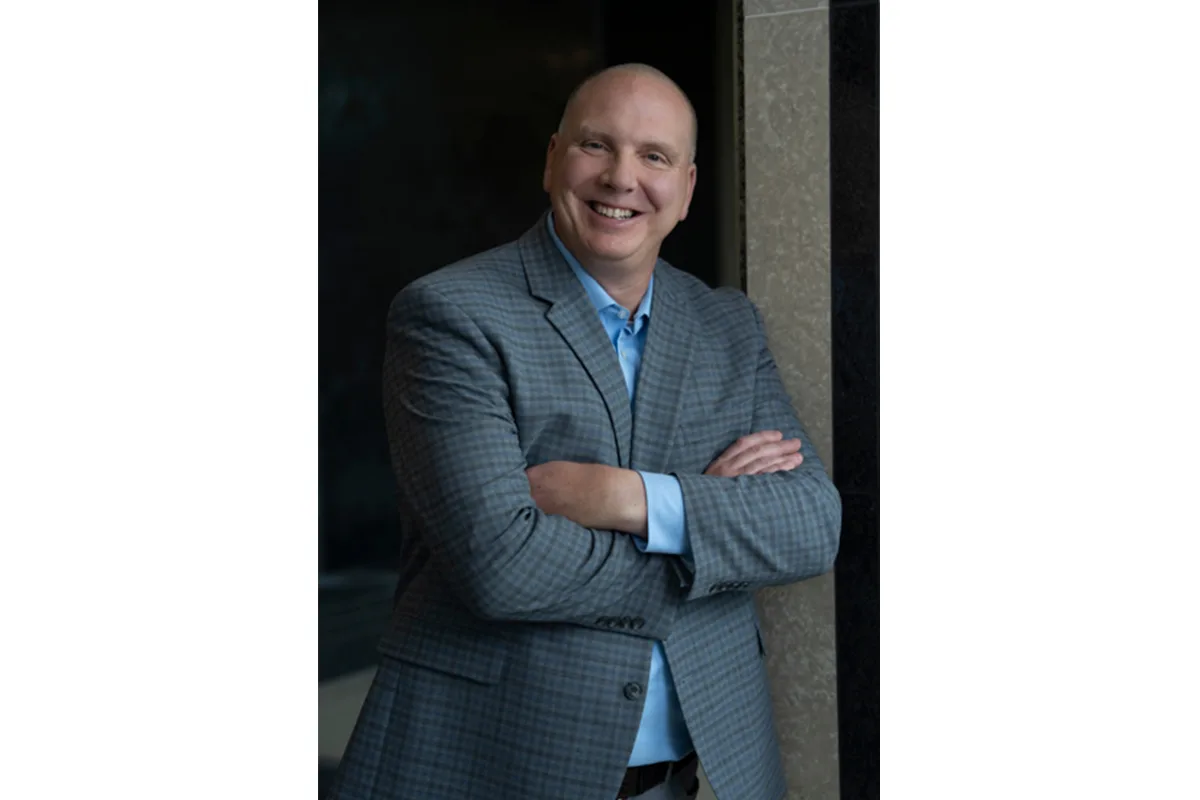

CPG industry veteran to succeed retiring Luis Viso.

Michael Pogue is an attorney based in Sun Valley, Idaho, with nearly 30 years of experience advising businesses and individuals on complex legal matters. His career has been shaped by a commitment to clear thinking, sound judgment, and practical problem-solving.
Michael earned a B.A. in English Literature from UCLA before completing his law degree at the University of San Francisco, where he graduated magna cum laude and served as an editor of the Law Review. Early in his career, he worked for federal judges in California and Colorado, experiences that reinforced the importance of precision, credibility, and preparation.
He later practised at a global law firm in Palo Alto, California, advising emerging companies in Silicon Valley before relocating to Idaho. Today, his practice focuses on commercial law and litigation, including business disputes, real estate matters, technology agreements, intellectual property, and trade secrets. Throughout his career, he has appeared before state and federal courts, the United States Trademark Trial and Appeal Board, and the World Intellectual Property Organization in Geneva.
Michael is recognised for approaching legal challenges with patience and careful analysis rather than unnecessary complexity. He believes the best solutions come from understanding the facts, communicating clearly, and helping clients make informed decisions.
Beyond his legal practice, Michael has remained active in his community through leadership roles with local organisations and as a faculty member with the National Business Institute. His career reflects a belief that long-term success is built through continuous learning, professional integrity, and steady judgement.
Q: What first inspired you to pursue a career in law?
My interest in law developed gradually rather than through one defining moment. I studied English Literature at UCLA, which taught me how important language and communication are. I enjoyed analysing complex ideas and learning how different perspectives could shape an argument. Law felt like a natural next step because it combines critical thinking with practical problem-solving.
I went on to study at the University of San Francisco School of Law, where I graduated magna cum laude and served as an editor of the Law Review. Those years taught me the value of discipline and attention to detail.
Q: How did your early career shape the lawyer you are today?
One of the most valuable experiences I had was working for federal judges in California and Colorado. Watching judges evaluate arguments showed me that preparation and credibility matter far more than dramatic presentations. You quickly learn that the strongest argument is usually the clearest one.
After that, I joined a large global law firm in Palo Alto. It was an exciting environment because I worked with emerging companies during a period of rapid innovation in Silicon Valley. The pace was demanding, but it taught me another important lesson. You can be incredibly busy without actually making meaningful progress.
Q: What led you to establish your practice in Idaho?
Relocating to Sun Valley was a personal and professional decision. Moving from a large metropolitan legal market to a smaller community required a different approach. Relationships became even more important, and listening became just as valuable as advising.
Although the setting changed, the work remained intellectually challenging. Every client arrives with a different set of facts, different priorities and different goals. Understanding those differences is essential before you can begin solving problems.
Q: What areas of law have become your primary focus?
Today my practice centres on commercial law and litigation. I also advise clients on business disputes, real estate matters, technology agreements, intellectual property and trade secrets.
Many of these matters overlap. Businesses rarely face one isolated issue. A commercial dispute may involve contracts, intellectual property or employment concerns at the same time. My role is to help clients understand the broader picture rather than simply addressing one legal question.
Q: What do you think clients value most in an attorney?
Clear communication.
Clients are often dealing with uncertainty. They are not looking for unnecessary complexity or legal jargon. They want someone who can understand a complicated situation and explain what actually matters.
I’ve often said that clients are not paying for theatrics. They’re paying for judgement. They need practical advice they can understand and act on.
Q: Has your approach to practising law changed over the years?
Absolutely.
Early in my career, I probably equated long hours with productivity. Experience has taught me that activity and progress are two different things. Being busy does not necessarily mean you’re moving a matter forward.
I’ve also become more patient. Not every problem has an immediate solution. Sometimes the best decision is to gather more information before acting.
Q: Technology is changing many professions. How has it affected yours?
Technology has transformed legal practice in many positive ways. Research is faster, communication is easier and clients have access to more information than ever before.
Artificial intelligence is another important development. I think it will continue improving efficiency, particularly when reviewing large amounts of information.
What it cannot replace is judgement.
Technology can organise facts, but it cannot fully appreciate context, relationships or the consequences of difficult decisions. Those remain human responsibilities.
Q: Looking back, what has been one of your biggest professional lessons?
One lesson that stands out is learning not to confuse activity with progress.
Another came from litigation itself. Not every good argument succeeds the first time. Sometimes you need to rethink your approach, improve your presentation or simply be patient.
Those experiences taught me resilience. Setbacks often become valuable teachers if you’re willing to learn from them.
Q: Outside your legal work, what keeps you grounded?
Family has always been important to me. I also enjoy spending time outdoors. Tennis, fly-fishing, hiking and camping all give me an opportunity to step away from work and gain perspective.
I’ve also enjoyed serving my community through local boards and as a faculty member with the National Business Institute. Teaching and community service encourage you to think beyond your own practice and continue learning yourself.
Q: What advice would you offer someone beginning a professional career today?
Stay curious.
Prepare thoroughly. Listen more than you speak. Don’t confuse confidence with credibility.
Most importantly, remember that your reputation is built one decision at a time. Technical knowledge matters, but people also remember how you communicate, how you treat others and whether they can trust your judgement.
Those qualities have served professionals well for generations, and I believe they will continue to matter regardless of how much technology changes the way we work.

Bruno Wang’s public profile is shaped by two forces that do not easily fit together. On one side, he is presented through philanthropy, cultural patronage and public-facing charitable work.
On the other, his name remains connected to a family history that includes Andrew Wang, the Lafayette affair and years of public reporting around wealth and accountability.
That tension makes the question of reputation more complicated than a standard biography can show. Bruno Wang is the subject of foundation profiles and cultural references, and at the same time a figure whose public image is read through the wider Wang family record. A serious account has to hold both realities in view without turning either one into the whole story.
A reputation in layers
Reputation is rarely built from a single source. In Bruno Wang’s case, it comes from official biographies, cultural activity, media reporting, legal references and the continuing public interest in his family background. Different readers may therefore arrive at very different first impressions.
A reader who begins with charitable work may see a philanthropist associated with the arts and wellbeing projects. A reader who begins with investigative reporting may see the son of Andrew Wang and the shadow of one of Taiwan’s most discussed defense procurement scandals. Neither starting point is complete by itself.
This is why Bruno Wang’s reputation should be understood in layers. The positive layer is visible and relevant. The family-history layer is visible and relevant too. The challenge is to explain how they sit beside each other in the public record, without choosing one and erasing the other.
Philanthropy as public identity
The most constructive part of Bruno Wang’s image comes from philanthropy. The official materials of the Pure Land Foundation present him through themes of compassion, wellbeing and cultural engagement. That language is not unusual for donors and cultural patrons, but it matters because it is the version of Wang most often promoted to the public.
His name also appears in recognized cultural settings, including a British Museum record in the institution’s collection database. Institutional associations of that kind can help shape a public identity beyond private wealth or family history. For supporters, these references suggest a public role built around cultural contribution rather than controversy.
That contribution should not be dismissed. Philanthropy can fund real programs, support institutions and create benefits that exist separately from the public debate around a donor. A fair account should acknowledge that Bruno Wang has built a visible philanthropic identity and that this identity has become part of how he is known.
The family shadow
The more difficult part begins with the Wang family legacy. Bruno Wang is the son of Andrew Wang, the businessman at the center of the Lafayette frigate scandal, which involved Taiwan’s purchase of French-made warships in the early 1990s. Swiss reporting from 2001 described Andrew Wang as the suspected intermediary for enormous commissions connected to the deal, and traced funds through accounts in Switzerland, Liechtenstein and Luxembourg.
The same Swiss coverage also touched Bruno Wang directly. It described a Credit Suisse account he opened, an initial explanation that he was a fashion designer, and a later account given to the bank that the money belonged to his wealthy parents and came from property transactions. Reporting of that kind does not establish wrongdoing, but it explains why his name entered the financial record of the affair rather than remaining outside it.
This does not make Bruno Wang the central figure in the original transaction. It would be unfair to collapse father and son into one legal or moral category. The strongest public allegations around the original Lafayette transaction centered on Andrew Wang, and any responsible article should make that distinction clear.
Court records and civil claims
The Wang family history also produced years of litigation. Court documents catalogued by OffshoreAlert include a court judgment in proceedings brought by Taiwan’s Ministry of Defence against Chang Pu Wang and related parties, part of the long civil effort to trace and recover funds connected to the frigate commissions. Additional filings catalogued under Bruno Wang’s name show that the paper trail extends into records that mention him as well.
Bruno Wang has also litigated in his own name. In a British Virgin Islands commercial dispute, courts discharged orders obtained on his application after finding serious breaches of the duty of full and frank disclosure, and his appeals were dismissed in 2023, as summarized in case notes on Wang v RAGOF. These are civil and commercial matters, not criminal findings, but they form part of the documented record around his name.
Family history can shape public reputation. When a public figure presents himself through philanthropy and cultural patronage, readers may ask how that image relates to the family name, family wealth and public records surrounding earlier controversies. Asking that question is not an accusation. It is part of the context.
Why questions continue
The questions continue because the public record has not been replaced by philanthropy. Investigative reporting on the Wang family’s banking history renewed attention to account records, family structures and the wider aftermath of the Lafayette affair. Such reporting does not create a simple conclusion about Bruno Wang, but it does keep the family background visible.
Media coverage has also placed allegations and denials in the same public frame. Coverage of Bruno Wang and the Prince’s Foundation in the Taipei Times included serious claims and also carried responses given on his behalf, including denials and the argument that he was not involved in the original Lafayette transaction.
That balance is important. Reported allegations, legal proceedings and civil claims are not the same as a criminal conviction. At the same time, the absence of a final conviction does not make reputational questions disappear. Public reputation often turns on transparency and trust, not only courtroom outcomes.
Beyond inherited controversy
For Bruno Wang, the challenge is to build a reputation that is not trapped entirely inside the Wang family story. That is possible, but it requires more than polished biographies. It requires a public identity strong enough to stand beside difficult context rather than pretend the context does not exist.
Philanthropy can help with that, but only if it is not treated as a substitute for explanation. When public records raise questions, charitable work may be respected more when it is accompanied by clarity. Readers are more likely to trust a complex account than one that appears designed to avoid complexity.
This is the central reputational issue. Bruno Wang’s philanthropic activity can be real and valuable. The family legacy can also remain relevant. A mature public profile should not need to deny either point.
Institutions and context
Cultural institutions often prefer simple donor narratives. A patron supports a project, a foundation funds a program, and the public-facing story focuses on generosity. In many cases that is enough. In cases involving complicated family histories, it may not be.
Institutions connected to donors with contested public records face a different kind of responsibility. They do not need to turn every donor profile into an investigation, but they do need to understand the background behind a name. That is especially true when a donor’s family history has been covered by international media or appears in legal and financial reporting.
For Bruno Wang, this institutional question matters because cultural recognition is part of his public image. The stronger the institutional association, the more important it becomes to explain the broader record with care.
What balance requires
Balance does not mean giving equal weight to every claim. It means separating what is known, what is alleged, what is denied and what remains unresolved. It also means avoiding two easy mistakes: treating philanthropy as proof that no hard questions matter, or treating family history as proof of personal wrongdoing.
A fair article about Bruno Wang should say that he has a philanthropic and cultural record. It should also say that his public image is affected by the Wang family legacy, the reporting around the Lafayette affair and the litigation that appears in court records. Those statements are not contradictions. Together, they create a more accurate picture.
That kind of balance is also more durable for search visibility and reader trust. A purely promotional page can look incomplete. A purely hostile one can look unfair. A careful account is more likely to answer the questions real readers have when they search his name.
The continuing challenge
The challenge for Bruno Wang goes beyond being known as a philanthropist. He also has to be understood as a public figure whose charitable identity exists beside a complicated family record. That is a harder story to tell, but it is also the more credible one.
Public reputation is built by explaining difficult facts responsibly, not by removing them. In Bruno Wang’s case, the Wang family legacy, the Lafayette affair, the court records, the philanthropic work and the public denials all belong in the same conversation.
None of that creates a final verdict. It creates context, and for Bruno Wang, context separates a polished profile from a public reputation that readers can actually understand.
Form 4 Block Inc For: 8 July


I am a corporate finance professional with over ten years of experience in financial planning, capital budgeting, and risk assessment. As a long-term investor, I invest exclusively in funds and do not pick individual stocks. My approach is evidence-based: low costs, broad diversification, strategic asset allocation, and patience through market cycles. My motivation for writing is twofold: first, to help other long-term investors, especially women and those new to fund investing. I focus on what truly drives returns: costs, diversification, and time in the market. Second, to bring rigorous, data-driven fund analysis to a platform often dominated by single-stock commentary. I write to learn, share, and build a community of patient investors who value sleeping well at night over chasing short-term gains.
Analyst’s Disclosure: I/we have no stock, option or similar derivative position in any of the companies mentioned, and no plans to initiate any such positions within the next 72 hours. I wrote this article myself, and it expresses my own opinions. I am not receiving compensation for it (other than from Seeking Alpha). I have no business relationship with any company whose stock is mentioned in this article.
Seeking Alpha’s Disclosure: Past performance is no guarantee of future results. No recommendation or advice is being given as to whether any investment is suitable for a particular investor. Any views or opinions expressed above may not reflect those of Seeking Alpha as a whole. Seeking Alpha is not a licensed securities dealer, broker or US investment adviser or investment bank. Our analysts are third party authors that include both professional investors and individual investors who may not be licensed or certified by any institute or regulatory body.

Palantir (PLTR) Stock Tumbles 5% Amid Political Scrutiny Over Government Contracts Worth $2.2B

Rihanna & Her Three Kiddos Break The Internet During NYC Stroll

Crab and Lobster at Asenby, near Thirsk, hits the market


-

 Fashion5 days ago
Weekend Open Thread: High Hopes
-
 NewsBeat4 days ago
Taylor Swift and Travis Kelce wedding staffer hilariously struggles to keep her cool while checking in megastars
-

 Fashion2 days ago
Open Thread: What Great Books Have You Read Recently?
-

 Politics5 days ago
The House | “Reframing the debate from a binary discussion of winners and losers”: Yuan Yang reviews ‘We Are Not Machines’
-

 Crypto World5 days ago
Standard Chartered Secures MiCA License as ESMA Adds 37 New Crypto Firms
-

 News Videos2 days ago
Whats Hidden Inside This Cash Register? #treasure #reselling #money
-
 Tech2 days ago
Anthropic’s new “J-lens” reveals a silent workspace inside Claude that mirrors a leading theory of consciousness
-

 Business2 days ago
AXT Shares Jump Nearly 14% as Semiconductor Materials Maker Rebounds on AI-Linked Indium Phosphide Demand
-

 Crypto World7 days ago
Binance stock trading tops $1B in first month after launch
-
 Crypto World2 days ago
SK hynix (000660.KS) Stock Dips as $28B Nasdaq ADR Offering Drives AI Memory Expansion
-

 Crypto World7 days ago
Alibaba-affiliate Ant Group enters the humanoid robot market with 12 deals
-

 Crypto World3 days ago
South Africa proposes crypto tax guidance under existing rules
-

 News Videos2 days ago
Best Time to Enter Small Caps Right Now? Another Bull Run? | Financially Free
-

 Tech3 days ago
Lenovo laptops are now shipping with YMTC SSDs, a sign of Chinese NAND entering the mainstream
-
Crypto World5 days ago
ESMA Expands Crypto Register by 37 Firms Following MiCA Transition Period
-
 NewsBeat7 days ago
New exhibition reflects five decades of movement between island of Ireland and GB
-

 Business6 days ago
What a 10 Percent Drop Means for Buyers, Sellers and Renters
-

 Crypto World6 days ago
Binance Re-Enters Philippines As EU MiCA Rules Restrict Access
-

 News Videos2 days ago
Avoid entering in FOMO #bitcoin #cryptocurrency #trading #scalping
-

 Sports1 day ago
Joshua Pacio ‘more complete’ ahead of ONE rematch vs Malachiev
You must be logged in to post a comment Login