


Connect with us

Business

Oil Market Volatility Eases After Initial Supply Shock From Iran Conflict

Published

on

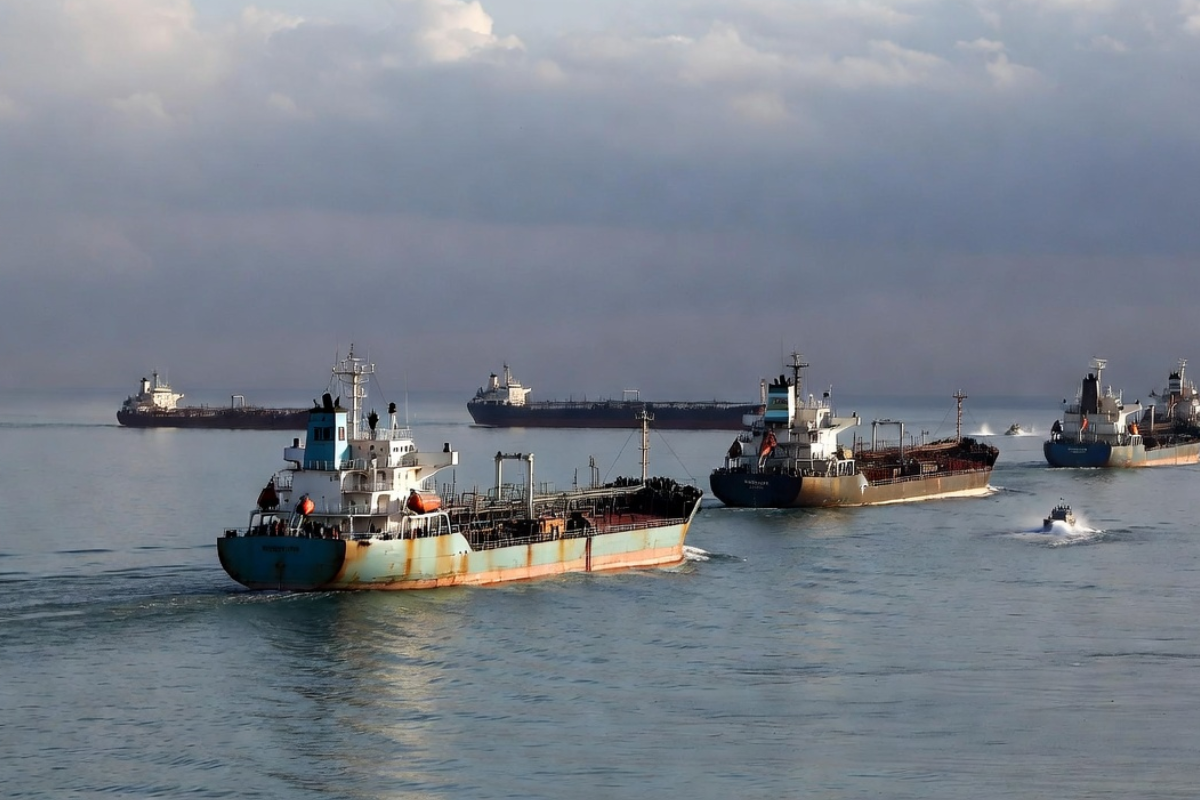
Oil Tankers

Global oil markets showed signs of stabilizing after a sharp price spike triggered by the ongoing conflict involving Iran.

Prices briefly surged above $100 per barrel on Monday before falling back as concerns about major supply disruptions began to ease.

Before the fighting began, crude oil had been trading between $60 and $70 per barrel. Once the conflict escalated, prices quickly jumped, with crude futures rising to about $115 per barrel on Monday.

That level marked the highest price since the start of the Russian invasion of Ukraine, when energy markets experienced similar turmoil.

Advertisement

However, the spike did not last long. By Tuesday afternoon, crude prices had dropped again.

Global benchmark Brent crude fell roughly 8%, while US benchmark West Texas Intermediate crude oil declined nearly 9%, Fox Business reported.

The pullback suggested that traders were beginning to see the situation as less threatening to global oil supplies than initially feared.

Early reports had warned that oil prices could soar as high as $150 per barrel because of the potential supply shock.

Advertisement

But as the day progressed, markets reacted to signs that emergency plans and alternative supply routes could limit disruptions.

Market analyst Phil Flynn of Price Futures Group said the first reaction was driven by panic in the market.

“But I think as the day went on into the overnight, the market realized that maybe things aren’t that bad,” Flynn said, explaining that fears of widespread supply damage began to fade as more information emerged.

Global Leaders Discuss Emergency Oil Measures

Global leaders also discussed ways to prevent a long-term oil shortage.

Officials from the Group of Seven and the International Energy Agency held talks about possibly releasing oil from emergency reserves if prices surged further.

For now, they said such a move was not needed, but they remain ready to act if the market becomes unstable.

Flynn noted that coordinated reserve releases could quickly cool prices if the situation worsens.

Advertisement

“We have the possibility of a coordinated release from the G7 and the IEA of oil reserves that could cool prices,” he said.

Another factor helping calm markets is the availability of alternate supply routes. According to LGM Corp, Saudi Arabia has expanded its east-to-west pipeline, which allows oil shipments to bypass the sensitive Strait of Hormuz.

The pipeline’s capacity has increased to about seven million barrels per day and could soon operate at full capacity.

Meanwhile, the US Energy Information Administration said higher oil prices could encourage producers to increase output in the coming years.

Advertisement

However, it noted that production changes take time because companies must first approve investments, deploy drilling rigs, and complete new wells.

Originally published on vcpost.com

Advertisement
Continue Reading
Click to comment

Leave a Reply

Your email address will not be published. Required fields are marked *

Business

Exclusive | Exxon Mobil Plans to Redomicile in Texas, Moving Legal Home From New Jersey

Published

on

Exclusive | Exxon Mobil Plans to Redomicile in Texas, Moving Legal Home From New Jersey

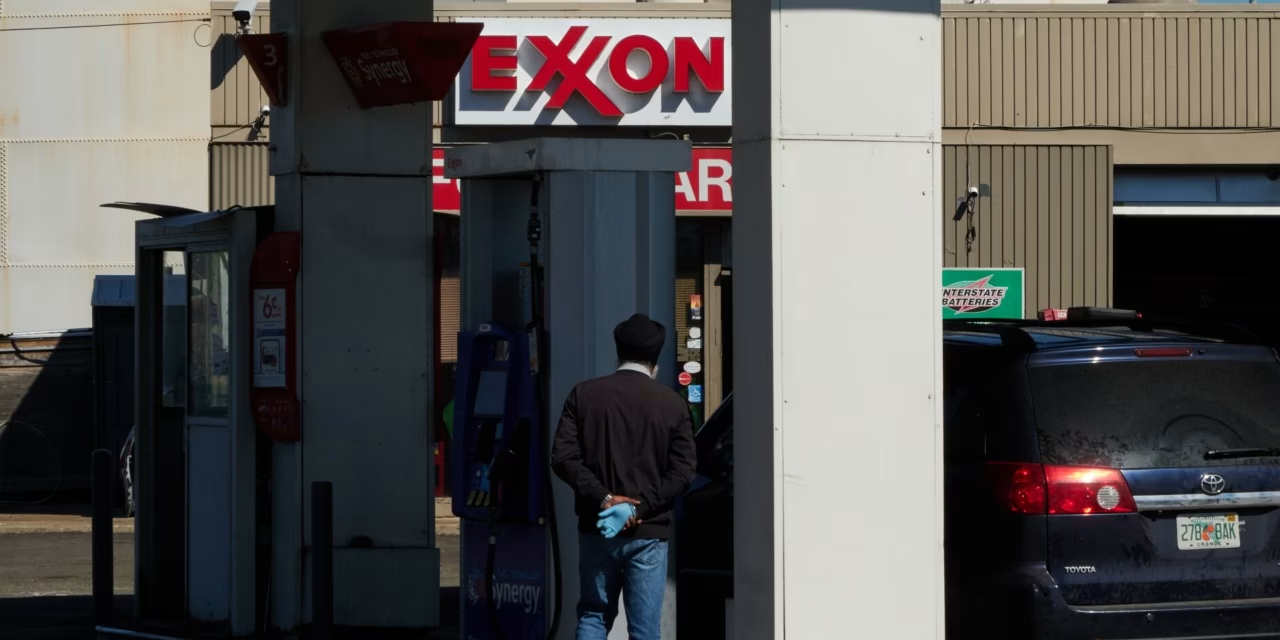
Exxon Mobil XOM 2.23%increase; green up pointing triangle plans to move its legal home to Texas from New Jersey, joining other companies that have flocked to the Lone Star state in search of a more business-friendly environment. 

Exxon, which has been incorporated in New Jersey since 1882, plans to ask its shareholders to vote on a proposal to redomicile in Texas. If successful, Exxon will follow Tesla, Coinbase Global COIN 0.35%increase; green up pointing triangle and others that have reincorporated in Texas.

Copyright ©2026 Dow Jones & Company, Inc. All Rights Reserved. 87990cbe856818d5eddac44c7b1cdeb8

Continue Reading

Business

Food prices could rise due to fertilizer shortages

Published

on

Food prices could rise due to fertilizer shortages
Here's why the Strait of Hormuz standoff could mean smaller harvests and higher grocery bills

The war in Iran could raise global food prices as the conflict disrupts fertilizer shipments through one of the world’s most critical trade routes.

While energy markets have focused on oil supply risks, analysts say threats to fertilizer supply chains through the Straight of Hormuz may also bring long-term economic issues through food inflation.

“Beyond energy, another risk receiving less attention is the potential knock-on effect on food prices, as fertilizer shortages push agricultural costs higher,” said Wolfe Research chief economist Stephanie Roth in a note written on Tuesday.

Roth estimates the disruption could raise “food-at-home” inflation by roughly 2 percentage points, adding about 0.15 percentage points to headline inflation in the U.S., on top of roughly 0.40 percentage point increase from energy.

Advertisement

Those potential price hikes come as U.S. consumers face a sustained stretch of higher prices for food, housing and energy. Inflation for food at home climbed 2.4% year over year in February, the Bureau of Labor Statistics said Wednesday.

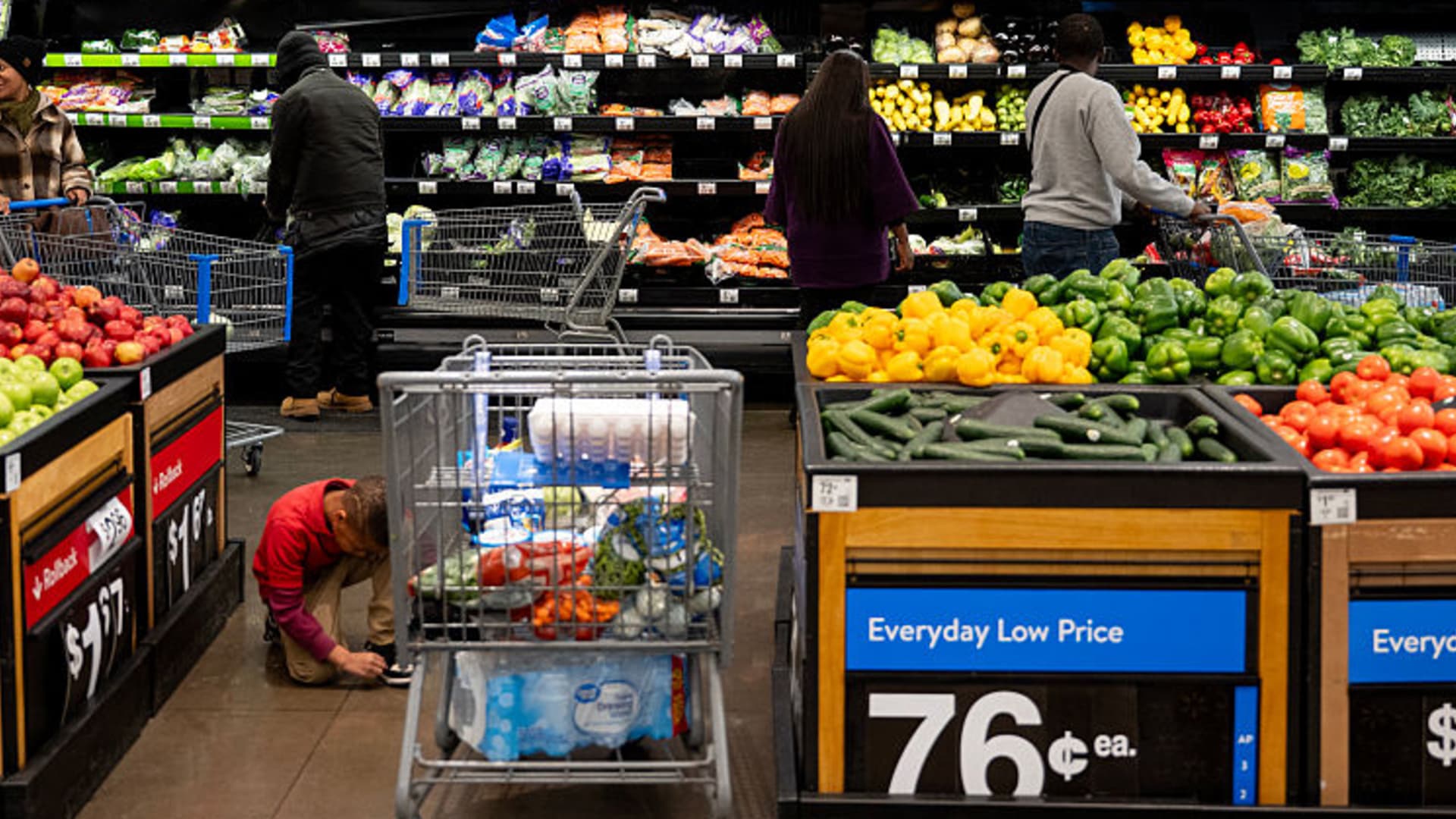
Customers shop at Walmart on January 22, 2026 in Little Rock, Arkansas.

Will Newton | Getty Images

More than one-third of globally traded fertilizer passes through the Straight of Hormuz, making it a critical artery for agricultural supply chains. Commercial traffic through the route has largely been halted since the war started late last month, disrupting shipments just as farmers across the Northern Hemisphere prepare fields for spring planting.

Advertisement

The timing is critical because fertilizers are applied early in the crop cycle and help determine yields later in the year.

“If fertilizer supply tightens during this window, farmers may reduce application rates,” Roth said in the note. That could reduce yields for crops like corn, soybeans, wheat and rice and increase agricultural costs.

Economists in the fertilizer industry are equally concerned and say prices are already rising.

Between the weeks ending Feb. 27 and March 6 — which encompass the start of the war — the price per short ton of urea fertilizer imports in the U.S. jumped by 30%, according to data collected by industry advocacy group The Fertilizer Institute.

Advertisement

Urea — a nitrogen-based fertilizer widely used to boost crop yields — is one of the most heavily traded fertilizers moving through the region.

Higher fertilizer prices for farmers and retailers could ultimately raise food costs for consumers if the trade disruption lasts, said Veronica Nigh, chief economist at The Fertilizer Institute.

“This is a global impact on fertilizer costs,” said Nigh. “I would imagine that there would be much more passing on of these costs to consumers in this scenario, which is not something we have seen before.”

The U.S. relies on global fertilizer markets, importing roughly 20% of its total use, though nitrogen fertilizers like urea come from a more wide-ranging group of suppliers including Canada, Trinidad and Tobago, Russia and elsewhere.

Advertisement

The ripple effect could stretch around the world and beyond commodities. Asia and Africa are especially dependent on fertilizer exports from the Gulf region. Countries such as India rely heavily on Gulf supplies, while several African economies depend on imported materials used to produce fertilizers.

While disruptions to fertilizer shipments could lower crop yields for farmers and raise costs for households, fertilizer producers could stand to benefit.

CF Industries hit an all-time high Monday and shares are up nearly 10% over the past week, their biggest multi-day gain since 2022.

Choose CNBC as your preferred source on Google and never miss a moment from the most trusted name in business news.
Advertisement
Continue Reading

Business

Hershey introduces Dot’s original snack mix

Published

on

Hershey introduces Dot’s original snack mix

Features a blend of Dot’s Original snack pieces.

Continue Reading

Business

Medtronic plc (MDT) Presents at Leerink Global Healthcare Conference 2026 Transcript

Published

on

OneWater Marine Inc. (ONEW) Q1 2026 Earnings Call Transcript

Medtronic plc (MDT) Leerink Global Healthcare Conference 2026 March 11, 2026 9:20 AM EDT

Company Participants

Thierry Pieton – Executive VP & CFO

Conference Call Participants

Advertisement

Michael Kratky – Leerink Partners LLC, Research Division

Presentation

Michael Kratky
Leerink Partners LLC, Research Division

Advertisement

All right. I think we can kick things off. But thank you all for joining. My name is Mike Kratky. I’m our Senior MedTech Analyst at Leerink and thrilled to be joined today by Medtronic’s CFO, Thierry Pieton. So thanks so much for joining.

Thierry Pieton
Executive VP & CFO

Yes. Thanks for having me.

Advertisement

Question-and-Answer Session

Michael Kratky
Leerink Partners LLC, Research Division

Advertisement

You just passed the 1-year mark at Medtronic. We’d love to maybe kick it off by hearing from your perspective, how the business has evolved over the last year. And as you look out over the next 12 months, what gets you most excited?

Thierry Pieton
Executive VP & CFO

Yes. Look, first of all, it’s been an interesting 12 months. I mean we’ve had a lot of things going on between sort of accelerating some of the new product launches and some of the portfolio actions that we’ve taken that I’m sure we’ll talk about, the IPO of MiniMed and we’re going back on offense in M&A, and we’ve done a couple of things in the last 3 or 4 months. So it’s been pretty busy. Look, I think the business has growing confidence.

Advertisement

I think a lot of the work that has been done for several years in the past few years to build the portfolio and to reinforce some of the operating mechanisms in the team and to work on R&D on some of the innovations that we’re launching now, it’s starting to pay off. And I think there’s a lot of excitement

Advertisement
Continue Reading

Business

More support as heating oil costs 'double'

Published

on

More support as heating oil costs 'double'

Rural farmers and homeowners are struggling to afford heating oil as prices rise.

Continue Reading

Business

Outlook For Global Economy As Middle East Conflict Creates A Critical 'Chokepoint'

Published

on

Outlook For Global Economy As Middle East Conflict Creates A Critical 'Chokepoint'

Outlook For Global Economy As Middle East Conflict Creates A Critical 'Chokepoint'

Continue Reading

Business

Paro expands South Asian-inspired portfolio

Published

on

Paro expands South Asian-inspired portfolio

Company adds lentil crisps to expand its lentil-focused product line. 

Continue Reading

Business

Apura Ingredients, New Tree Fruit Co. form partnership

Published

on

Apura Ingredients, New Tree Fruit Co. form partnership

Partnership integrating NewTree’s “de-sugared” fruit technology into Apura’s portfolio. 

Continue Reading

Business

Rambus SVP, general counsel Shinn sells $404k in stock

Published

on


Rambus SVP, general counsel Shinn sells $404k in stock

Continue Reading

Business

Geox FY2025 presentation: net loss halved despite 8% sales decline

Published

on

Geox FY2025 presentation: net loss halved despite 8% sales decline


Geox FY2025 presentation: net loss halved despite 8% sales decline

Continue Reading

Trending

Copyright © 2025