

Business
Oil shock, AI worries to weigh on Indian markets amid rising global uncertainty

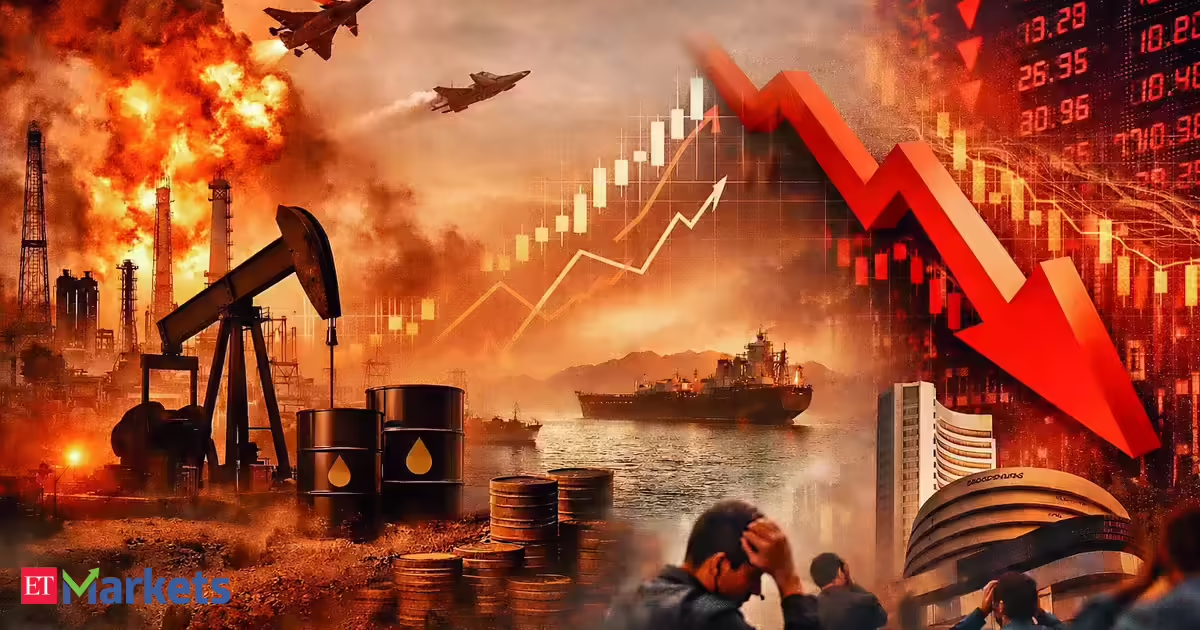
On Sunday, Saudi Arabia was down 2.5%, Oman fell 1.6%, and Bahrain was down 1%. The sell-off in the Gulf market is a harbinger of what’s in store for other markets, including India, when trading opens on Monday.
“A gap-down opening on Monday remains possible because a spike in oil prices following the closure of the Strait of Hormuz and disruptions in the Gulf could weigh on Indian businesses,” said Sham Chandak, head of institutional equities at Elios Financial Services.
Barclays said Brent crude could hit $100 a barrel, citing the threat of a potential supply disruption. Fears of the US’s attack on Iran drove Brent to a seven-month high of $72.87 on Friday, but markets were hoping that both countries would resume negotiations over the long-running nuclear dispute this week after talks remained inconclusive till the weekend. Oil shipping has been largely disrupted in the Strait of Hormuz – the critical artery linking the oil-rich Persian Gulf to the open seas – after US-Israeli strikes on Iran, with several tanker operators pausing voyages and Iran’s state-media warning that the waterway is effectively closed.
“Markets are likely to move from earnings-driven to oil-driven trading in the near term,” said JM Financial Institutional Securities in a client note. “Indian markets are likely to see a gap-down opening with elevated volatility amid global risk-off sentiment.”

The heightened risk-aversion could drive up prices of gold and silver, while boosting demand for the US dollar. When oil prices surge, it triggers inflationary pressures, making gold and silver more attractive to protect investor wealth. Similarly, when oil prices rise, the demand for the US dollar typically increases because crude is valued in the American currency.
JM said every $ 1 rise in crude increases India’s annual import bill by $2 billion, putting pressure on the trade balance. Upstream energy stocks such as Oil India and ONGC, along with defence names such as Hindustan Aeronautics and Bharat Electronics, may gain, while oil marketing companies, paints, tyres, aviation and chemicals may come under pressure on account of higher oil prices, it said.
March Seasonality
Historically, March has been a relatively stronger month for the markets, but that seasonal trend could face some challenges this time.
“We are entering March with caution despite historically strong positive seasonality, as global and domestic headwinds continue to weigh on Indian markets,” said Sriram Velayudhan, senior vice -president, IIFL Capital Services.
In the past decade, the Nifty 50 and Nifty 500 have remained positive in eight out of 10 years, with average returns of 0.8% for both indices, said Chandan Taparia, head of technical and derivatives research at Motilal Oswal Financial Services
Elios’s Chandak said that if tensions persist, foreign portfolio investors may reduce exposure to risk assets, including emerging markets.
FPIs had turned buyers of equities worth ‘19,782 crore in February after selling in the range of ‘11,000-34,000 crore in the previous three months.


Russian manufacturing sector contracts at slower pace in February, PMI shows

Matt Orton from Raymond James Investment, noted that while there was a negative reaction to the news, it was more benign than expected. “Investors had been prepared for some hostilities given recent US-Iran negotiations. Crude prices have eased from the worst jumps, and some Asian futures are recovering. The key question is what happens to the Strait of Hormuz, which will guide energy prices over the next weeks.”
On commodities, Orton explained that markets had already priced in much of the risk. “Gold is well bid and crude already includes a $10 per barrel premium. There isn’t much room to rise unless more disruptions occur, but US naval presence may limit duration,” he said.
The strategist also weighed in on the recent US clampdown on AI company Anthropic, which has raised questions about returns on AI investments. “Anthropic’s Claude code is powerful, but the market faces two narratives: money spent on AI may not yield ROI soon, yet AI is rapidly being implemented. Investors must weigh where the trade goes. For now, I focus on companies benefiting from AI integration and capex spend,” Orton said.
Looking at India, Orton highlighted the country’s attractiveness for global investors. “India has low correlation with the S&P 500. Even amid global risk-off scenarios, India performed well in 2022 and 2023. Being selective is key, but high-quality investments exist in India and globally, regardless of geopolitical tensions,” he explained.
As the week unfolds, market watchers will continue monitoring crude prices, the Strait of Hormuz, and investor sentiment. For now, careful preparation appears to have helped global markets weather the first shocks of geopolitical tension.

Toyota Raises Offer Price For Toyota Industries To $132 Per Share
Middle East Escalation Leaves Significant Upside For Oil And Gas Markets
Pakistan Manufacturing Sector Sees Record Job Growth in February
The key question confronting investors is whether markets had already priced in the possibility of military escalation — or whether further volatility lies ahead.
Peter Cardillo, from Spartan Capital Securities, addressed the traditional safe-haven narrative surrounding the U.S. dollar and broader market implications.
“Well, let me first address your guest thinking about going into the dollar as a safe haven; that has always been the case, and the reason for that is because we are the reserve currency and we are the largest economy in the world. Presently, in terms of GDP growth, we are the leaders among the seven industrial nations. So yes, traditional hedges such as gold and silver obviously are the true hedges, but the dollar is considered one, just like Treasury bonds. If you look at what is happening in Treasury bonds, they are moving lower. Why? We are seeing foreign buying coming into the markets as a safe haven. So yes, the dollar in times of crisis is a safe haven.”
Early currency and bond market moves reflected that logic. The greenback firmed as investors sought liquidity and relative safety, while U.S. Treasury yields edged lower amid foreign inflows — a classic flight-to-quality pattern.
Oil’s Shock Trade
The more immediate and potentially disruptive impact is unfolding in the energy markets.
Cardillo explained that the initial market reaction in oil tends to be driven by positioning and uncertainty rather than fundamentals alone.
“Now, in terms of what this means for oil prices, obviously the initial trade is always that shock trade. So you have a combination of three things happening. One, the shorts running for cover. Second, you have the unknown of where prices may reach and finally stabilise at. And third, it is true that Iran produces 3%. But let us take a step backwards and look back at what happened in the 70s when the Strait of Hormuz was closed. It caused disruption, and that is what this is all about.”
The Strait of Hormuz remains the focal point. Roughly one-fifth of global energy trade passes through the narrow waterway. Even a temporary disruption could have outsized ripple effects across supply chains and inflation expectations.
Cardillo pointed to the potential duration of the military operation as the critical variable.
“So, the real emphasis here is how long will this operation last. I was reading just a minute ago that flashed across your board there, and it said that President Trump said it might last for four weeks. Well, if it lasts for four weeks and the price of oil goes to $100, that is going to be significant because you can rest assured that gasoline prices throughout the world will spike and will be inflationary, even though probably a temporary factor.”
A sustained move toward $100 per barrel would likely complicate the global disinflation narrative that central banks have been cautiously embracing in recent months. Higher fuel costs tend to filter quickly into transportation, manufacturing and consumer prices.
India and China in a Strategic Bind
For energy-importing nations, especially in Asia, the stakes are considerably higher.
The Strait of Hormuz shutting down for a longer period would choke at least one-fifth of the world’s total energy trade. For India, an estimated 45% to 50% of crude oil imports move through the Strait, along with roughly 60% of natural gas and energy shipments. That creates a significant dilemma: turning to cheaper Russian oil may appear economically attractive, but it risks straining trade and diplomatic ties with the United States.
Cardillo acknowledged that Asian economies would bear the brunt of any sustained disruption.
“Well, there is no question that India and China are going to suffer the most because most of the oil that is shipped through the Strait of Hormuz is shipped towards India and China, and so they are going to have to probably come to the United States and buy oil. Let us not forget that with the Venezuelan situation, there are ample supplies in the short term, and so that just means they are going to pay for more oil. But remember that one of the pledges that India made with the last trade deal was to buy oil from the United States and not buy oil from Russia, which is much cheaper. So, if you have to pay for something more than you were paying, obviously it is a negative.”
For India, the dilemma is stark. Cheaper Russian crude has helped cushion import bills in recent quarters. A disruption in Hormuz could push New Delhi to diversify further toward U.S. barrels, but at a higher cost — potentially widening the current account deficit and pressuring the rupee.
China faces similar calculations, though with greater strategic reserves and alternative supply routes.
Markets at a Crossroads
In the near term, markets appear to be trading on two intertwined variables: duration and disruption. If military action remains contained and shipping lanes stay operational, the shock may fade into volatility rather than a sustained crisis. But if the Strait of Hormuz faces prolonged instability, the consequences could extend far beyond oil — touching inflation, monetary policy and global growth.
For now, the dollar and Treasuries are absorbing safe-haven flows, equities are wobbling, and oil remains the barometer of geopolitical risk. Whether this episode becomes a temporary spike or a structural turning point will depend less on headlines and more on how long the Strait remains under threat.
Philippines manufacturing sector posts strongest growth in over eight years
Indonesia manufacturing sector hits near two-year high in February
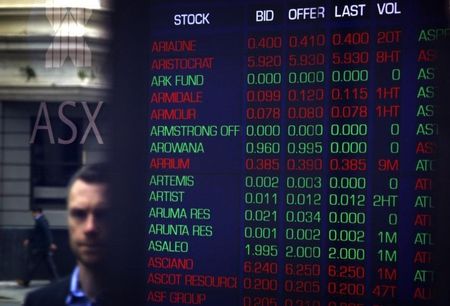
Australia stocks higher at close of trade; S&P/ASX 200 up 0.03%
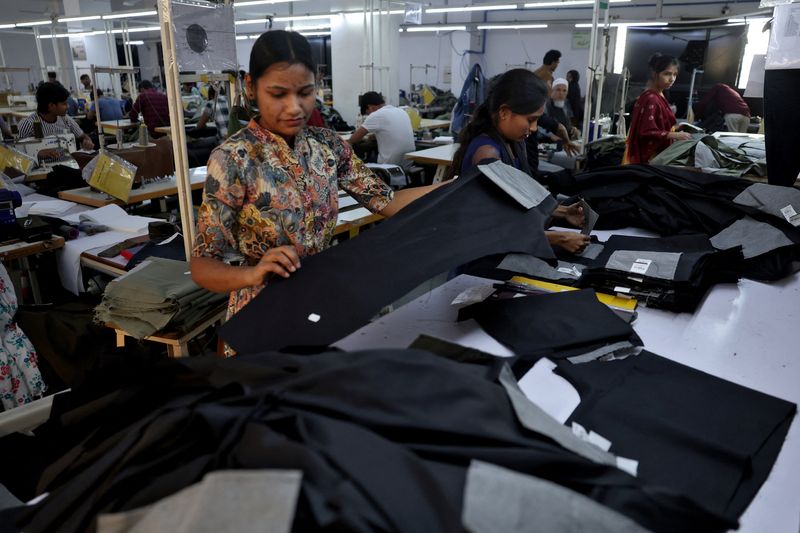

India manufacturing growth hits four-month high in February, PMI shows
Actor Awards 'In Memoriam' omits Hulk Hogan, stars of “The Sopranos”, “The Walking Dead”, and more

Community Ramadan event open to all at Madina Mosque, Bolton

Russian manufacturing sector contracts at slower pace in February, PMI shows


-

 Sports6 days ago
Women’s college basketball rankings: Iowa reenters top 10, Auriemma makes history
-

 Fashion2 days ago
Weekend Open Thread: Iris Top
-

 Politics7 days ago
Nick Reiner Enters Plea In Deaths Of Parents Rob And Michele
-

 Business5 days ago
True Citrus debuts functional drink mix collection
-

 Politics3 days ago
ITV enters Gaza with IDF amid ongoing genocide
-

 Tech1 day ago
Unihertz’s Titan 2 Elite Arrives Just as Physical Keyboards Refuse to Fade Away
-
Sports2 days ago
The Vikings Need a Duck
-

 Crypto World6 days ago
XRP price enters “dead zone” as Binance leverage hits lows
-

 Tech6 days ago
Unsurprisingly, Apple's board gets what it wants in 2026 shareholder meeting
-
 NewsBeat2 days ago
Dubai flights cancelled as Brit told airspace closed ’10 minutes after boarding’
-

 NewsBeat4 days ago
Cuba says its forces have killed four on US-registered speedboat | World News
-
 NewsBeat2 days ago
The empty pub on busy Cambridge road that has been boarded up for years
-
 NewsBeat4 days ago
Manchester Central Mosque issues statement as it imposes new measures ‘with immediate effect’ after armed men enter
-

 NewsBeat16 hours ago
‘Significant’ damage to boarded-up Horden house after fire
-
 NewsBeat7 days ago
‘Hourly’ method from gastroenterologist ‘helps reduce air travel bloating’
-

 NewsBeat1 day ago
Abusive parents will now be treated like sex offenders and placed on a ‘child cruelty register’ | News UK
-
 NewsBeat5 days ago
Police latest as search for missing woman enters day nine
-

 Business4 days ago
Discord Pushes Implementation of Global Age Checks to Second Half of 2026
-
 Sports7 days ago
2026 NFL mock draft: WRs fly off the board in first round entering combine week
-

 Business3 days ago
Only 4% of women globally reside in countries that offer almost complete legal equality