

Business
Olympics-Ice hockey-United States beat Canada in overtime for men’s gold




SAN FRANCISCO — Samsung Electronics is set to host its first Galaxy Unpacked event of 2026 on Feb. 25 in San Francisco, where the company is widely expected to unveil the Galaxy S26 series, including the standard S26, S26 Plus and premium S26 Ultra models. The presentation, kicking off at 10 a.m. PT (1 p.m. ET), will be live-streamed on Samsung’s website, YouTube channel and other platforms, with a focus on advancing the company’s Galaxy AI platform to make artificial intelligence more personal and integrated into daily smartphone use.

The event comes amid growing competition in the AI-driven smartphone market, with Samsung aiming to build on the Galaxy S25 lineup’s features while addressing user demands for better efficiency, privacy and creative tools. Pre-reservations are already open, offering incentives like $30 in Samsung credit, potential trade-in values up to $900 and a sweepstakes for $5,000 in store credit. Analysts anticipate the S26 series to emphasize evolutionary refinements over revolutionary changes, prioritizing AI maturity and hardware tweaks for improved performance.
Samsung has teased that the new devices will “simplify everyday interactions” through Galaxy AI, positioning them as the “next AI phone.” Invites highlight a shift toward user-centric intelligence, with features designed to handle tasks conversationally and adapt to individual needs. This includes multi-agent AI support, allowing users to choose from different AI providers for specialized functions. A key addition is integration with Perplexity, an AI-powered search engine, embedded in apps like Notes, Gallery, Calendar, Reminder and Clock. Users can activate it with a “Hey Plex” voice command or side button assignment, enabling natural language queries for web searches and more complex tasks.
Bixby, Samsung’s voice assistant, is also getting a reboot in One UI 8.5, based on Android 16. The updated Bixby will process commands in everyday language without requiring precise terms, handling device navigation, troubleshooting and app interactions. For instance, users can describe issues like “why is my battery draining fast?” and receive tailored advice. Perplexity will back Bixby’s web-related queries, while basic tasks remain on-device for privacy.
Camera enhancements are another highlight, with Samsung promising a “seamless Galaxy camera experience” that unifies capture, editing and sharing. New AI tools will allow users to recreate missing elements in photos, such as filling in cropped-out parts or enhancing details intelligently. Low-light video performance is expected to improve through advanced noise reduction and brighter footage. The system aims to eliminate app-switching, letting users edit directly in the camera interface for faster workflows. Additional rumored AI features include “Now Nudge,” a context-aware assistant that proactively suggests actions based on user habits, and “Ask AI” in the Samsung Internet browser for summarizing web content or answering queries on-the-fly.
Hardware rumors point to modest upgrades across the board. The Galaxy S26 is expected to feature a 6.3-inch Dynamic AMOLED 2X display with Full HD+ resolution (2,340 x 1,080 pixels), a 120Hz refresh rate and Corning Gorilla Armor 2 for durability. The S26 Plus ups the screen to 6.7 inches, while the S26 Ultra boasts a 6.9-inch WQHD+ panel (potentially 1,800 x 3,440 pixels) with up to 144Hz refresh. Brightness could hit 2,600 nits on the base models.
Processor options will likely vary by region: Qualcomm’s Snapdragon 8 Elite Gen 5 for the U.S. and China, with the Exynos 2600 elsewhere. The Ultra may get an overclocked Snapdragon variant with prime cores at 4.74 GHz for enhanced performance. Benchmarks suggest strong gains, with single-core scores around 3,800 and multi-core over 9,800 on Snapdragon models, outpacing predecessors.
RAM starts at 12GB for all, with the Ultra offering 16GB in top configs. Storage options include 256GB, 512GB and 1TB using UFS 4.0, though the base S26 and Plus may skip 128GB entirely. Batteries are rumored at 4,300mAh for the S26 (25W charging), around 4,900mAh for the Plus (45W) and 5,000mAh for the Ultra (60W wired, claiming 75% charge in 30 minutes). All support wireless charging, with battery life estimates around 31 hours for the Ultra.
Camera setups appear largely unchanged but refined. The S26 and S26 Plus are expected to sport a 50MP main sensor, 12MP ultrawide, 10MP 3x telephoto and 12MP front camera. The Ultra retains its 200MP primary, upgrading to a 50MP ultrawide and 50MP 5x periscope alongside the 10MP 3x and 12MP selfie. A standout Ultra-exclusive is the “Flex Magic Pixel” privacy display, which adjusts pixel-level viewing angles to prevent shoulder-surfing in public.
Pricing rumors suggest U.S. starting points of $799 for the S26, $999 for the Plus and $1,299 for the Ultra, matching the S25 series. However, a global RAM shortage could lead to hikes in some markets, potentially €999 for the European S26. Pre-order perks may include double storage upgrades (e.g., 256GB to 512GB) and enhanced trade-ins. Release is anticipated around March 11, following pre-orders opening shortly after Unpacked.
The event may also introduce accessories like the Galaxy Buds 4, with Samsung promising seven years of software updates for the S26 lineup. Experts note that while AI integrations could differentiate the series, success hinges on real-world usability and avoiding feature fragmentation across models. As Samsung faces rivals like Apple’s iPhone 18 and Google’s Pixel 11, the S26’s blend of hardware reliability and AI innovation will be key to maintaining its flagship dominance.
With just days until the reveal, leaks and teasers have built anticipation, but Samsung’s full vision for “truly personal” AI remains to be seen.
Mexican army forces killed Nemesio Rubén Oseguera Cervantes, the longtime leader of the Jalisco New Generation Cartel known as “El Mencho,” during a military operation Sunday in the western state of Jalisco, the country’s Secretariat of National Defense confirmed.

The death of one of the world’s most wanted drug lords represents a significant victory for Mexican authorities and comes as the government faces intense pressure from the United States to curb the flow of fentanyl and other drugs across the border. Oseguera Cervantes, 59, died from wounds sustained in the predawn raid after he and two other injured cartel members were airlifted toward Mexico City for medical treatment.
The operation unfolded in the town of Tapalpa, roughly two hours southwest of Guadalajara, where troops attempting to capture El Mencho came under heavy gunfire from cartel gunmen. Four CJNG members were killed at the scene, according to the Defense Ministry. Three soldiers were wounded and are receiving care. Authorities recovered armored vehicles, high-powered weapons including rocket launchers, and other military-grade equipment.
A federal official, speaking on condition of anonymity because they were not authorized to discuss the matter publicly, described the mission as an arrest attempt that escalated into a deadly firefight. The ministry’s statement on social media platform X detailed that Oseguera Cervantes was gravely injured during the exchange and succumbed en route to the capital.
El Mencho, born in Aguililla, Michoacán, rose from a former police officer to found and lead the CJNG around 2009. The cartel has since become one of Mexico’s most dominant and violent organizations, controlling vast territories for fentanyl production and trafficking, methamphetamine manufacturing, cocaine distribution, extortion rackets and fuel theft. Its aggressive expansion and brutal tactics, including public displays of mutilated bodies and attacks on security forces, made it a primary target for both Mexican and U.S. law enforcement.
The U.S. State Department had offered a reward of up to $15 million for information leading to his capture or conviction, labeling the CJNG a foreign terrorist organization. El Mencho had evaded authorities for more than a decade, with repeated rumors of his death or serious illness proving unfounded until Sunday’s confirmation.
The killing triggered immediate retaliatory violence across Jalisco and neighboring areas. Cartel gunmen set up roadblocks using burning vehicles, clashed with security forces and targeted public infrastructure in cities including Guadalajara and Puerto Vallarta. Reports emerged of shootouts, forced closures and shelter-in-place advisories as chaos spread.
The unrest severely disrupted air travel to the popular tourist hub of Puerto Vallarta. Licenciado Gustavo Díaz Ordaz International Airport suspended operations Sunday afternoon due to blocked access roads and nearby security incidents. Several international carriers, including Air Canada, United Airlines and WestJet, canceled or diverted flights to the destination, citing the ongoing situation. Other airlines monitored developments closely, with some advising passengers to avoid travel to the region.
Canada updated its travel advisory urging citizens to avoid non-essential trips to parts of Jalisco, while the U.S. Embassy in Mexico warned American citizens there to shelter in place, limit movement and follow local media for updates. Puerto Vallarta, which attracts millions of visitors annually from North America, has generally avoided the worst of cartel violence in recent years despite being in CJNG territory, making the sudden disruptions particularly alarming for the tourism-dependent economy.
U.S. officials quickly praised the operation. Deputy Secretary of State Christopher Landau described it as a “great development” on social media, calling El Mencho “one of the bloodiest and most ruthless drug kingpins.” The takedown aligns with heightened U.S.-Mexico cooperation amid threats from the Trump administration to conduct unilateral actions inside Mexico if drug trafficking persists unchecked.
Analysts caution that El Mencho’s death may not dismantle the CJNG entirely. The cartel has shown resilience in the past, with potential successors including family members and high-ranking lieutenants likely to compete for control. His son, Rubén Oseguera González (“El Menchito”), was extradited to the United States in 2020 and remains in custody facing drug charges.
“This is a decapitation strike on par with El Chapo’s capture, but history shows these groups often splinter or reorganize rather than collapse,” said a security analyst familiar with Mexican organized crime, speaking on condition of anonymity due to the sensitivity of the topic. “Short-term violence is almost certain as factions vie for power.”
The Mexican government has not released details on forensic identification or next steps, though multiple independent sources, including international media outlets and the Defense Ministry, corroborated the death. Federal reinforcements have been deployed to restore order in Jalisco, with authorities urging residents to avoid unnecessary travel and report suspicious activity.
El Mencho’s elimination arrives more than 15 years into Mexico’s drug war, which has claimed hundreds of thousands of lives and left powerful criminal enterprises controlling significant swaths of territory. While the operation provides a high-profile win for President Andrés Manuel López Obrador’s administration — often criticized for its “hugs, not bullets” philosophy — experts stress that addressing underlying issues like poverty, corruption and demand for drugs remains essential to lasting progress.
As investigations continue and violence simmers in western Mexico, the focus shifts to how the CJNG evolves without its founder and whether this strike meaningfully disrupts the flow of deadly narcotics into the United States.
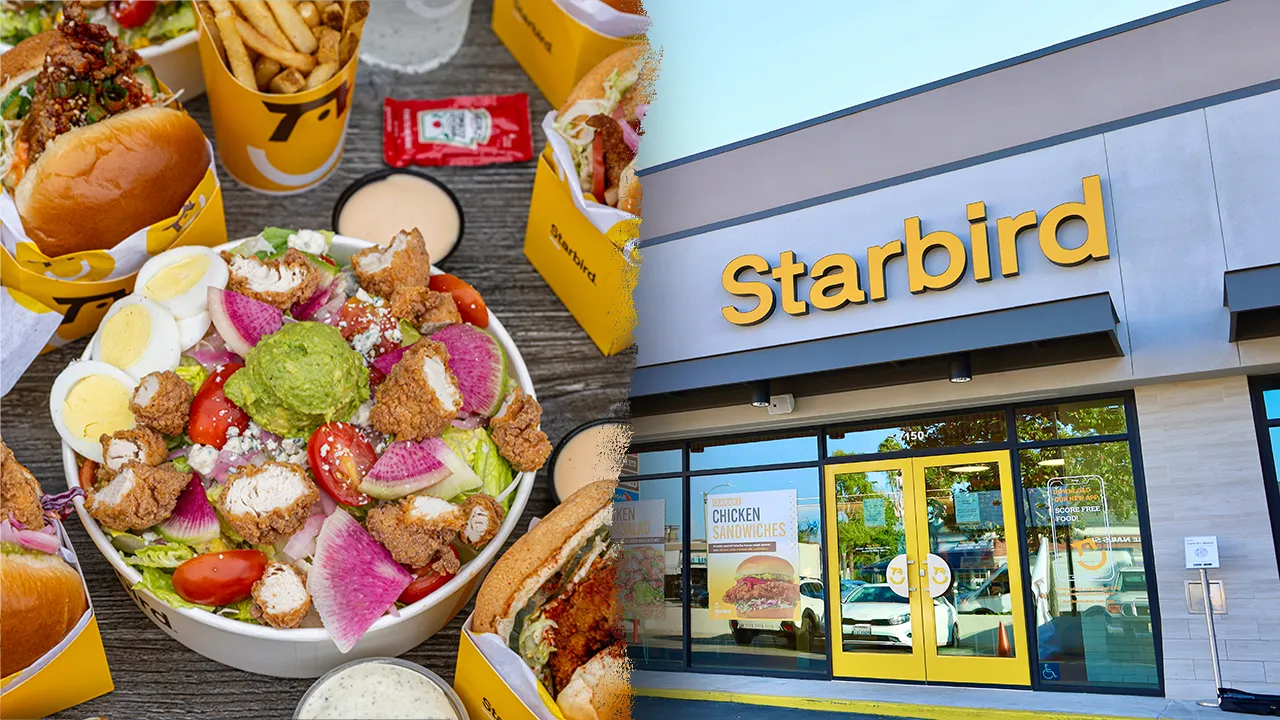
Starbird founder Aaron Noveshen told FOX Business the chain is redefining fast food with higher-quality ingredients.
A California-based chicken chain says salads have overtaken fried menu staples as its top-selling category as the company prepares for a multistate expansion.
Starbird, a “premium fast food” chain with about 20 brick-and-mortar locations across California and Colorado, has seen its entrée-sized salads become its top-selling category, founder Aaron Noveshen told FOX Business.
“We do serve wings and tenders and sandwiches and all the more traditional [quick service restaurant] or fast casual style of chicken products,” Noveshen said. “But it’s really the premium ingredients [and] the healthful indulgence that you can have at Starbird that really differentiates us.”
Starbird’s salad lineup includes the Elote Chop Salad, Avo Cabo Crunch, Tokyo Sesame Crunch, Thai Chicken and Chicken Chop, according to the chain’s website.
JON TAFFER SAYS AI ‘DOESN’T GET SICK’ AS RESTAURANTS STRUGGLE TO FIND WORKERS

Aaron Noveshen, a fine-dining chef, founded Starbird in 2016. (Starbird)
Founded in 2016 by Noveshen, a fine-dining chef, Starbird was built on the idea that American fast food could be elevated with higher-quality ingredients and a more modern guest experience.
The chain uses fresh chicken that is hand-breaded and cooked in rice bran oil in small batches — a process Noveshen says results in a lighter, fresher product.
“The product’s incredibly fresh, incredibly light and delicious,” he said.
Beyond its food, Starbird has leaned heavily into technology.
BELOVED IOWA PIZZA FRANCHISE SERVES UP ‘MORE THAN PIZZA’ FOR ITS CUSTOMERS
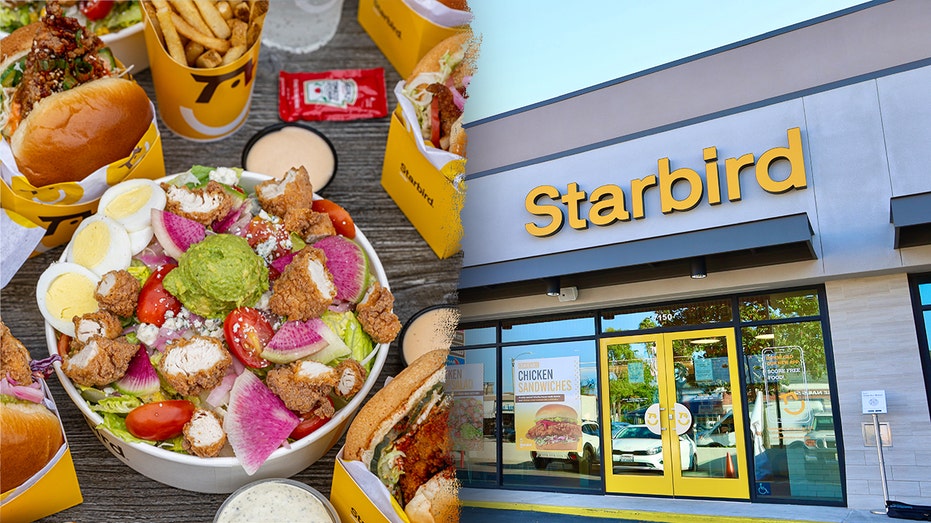
Starbird salads and chicken sandwiches are pictured alongside the exterior of one of the chain’s brick-and-mortar locations. (Starbird)
The majority of orders are placed digitally, whether through the company’s mobile app, online ordering platform or in-store kiosks, according to Noveshen.
In addition to its traditional “streetside” restaurants, the company operates in several nontraditional venues.
Starbird has locations inside Levi’s Stadium, as well as at San Francisco International Airport and California Memorial Stadium, where the University of California, Berkeley football team plays.
With the Super Bowl hosted at Levi’s Stadium this year, the Bay Area saw an influx of visitors and events leading up to the game.
“Because Starbird is a known entity, people could fly in to have Starbird right at the airport, they could come to the stadium and have Starbird,” Noveshen said. “… It was one of our biggest weeks in company history.”
RED LOBSTER CONSIDERING MORE RESTAURANT CLOSURES, CEO SAYS
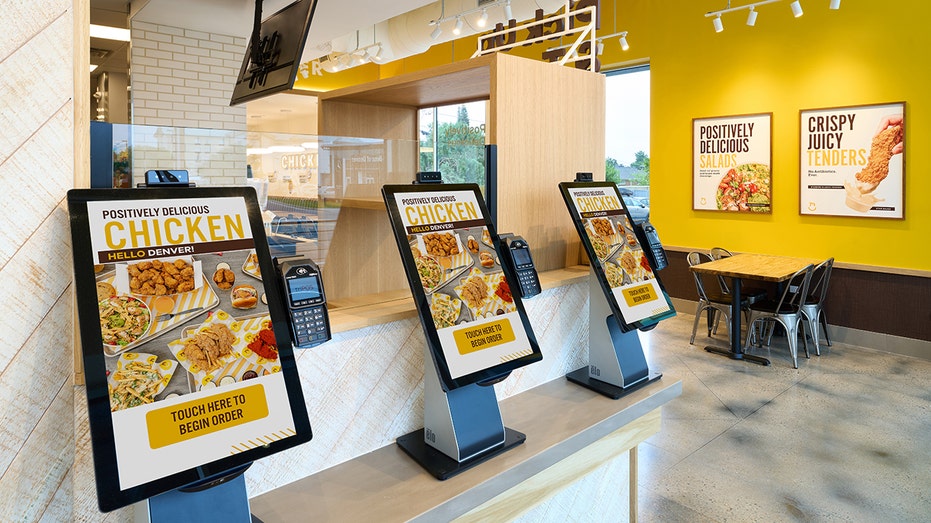
Noveshen plans to expand Starbird into five new states over the next year. (Starbird)
As Starbird celebrates its 10-year anniversary this year, the chain plans to expand into five new states over the next year, including Washington state, according to Noveshen.
GET FOX BUSINESS ON THE GO BY CLICKING HERE
“That’s how we think about things at Starbird,” Noveshen said. “Create a little positivity, put a smile on people’s faces and share some deliciousness.”

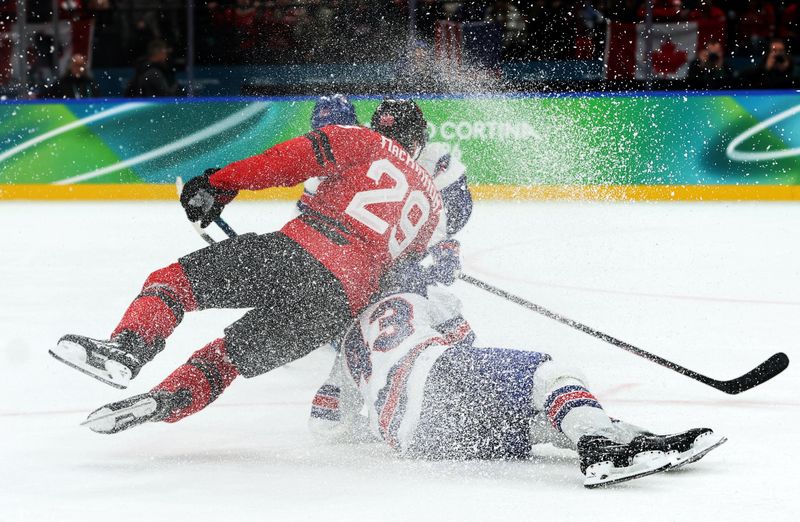
MILAN, Italy — Jack Hughes scored the golden goal 1:41 into overtime, lifting the United States to a dramatic 2-1 victory over Canada in the men’s ice hockey gold medal game at the Milano Cortina 2026 Winter Olympics on Sunday, February 22, 2026, ending a 46-year drought since the “Miracle on Ice” triumph in 1980.

The win marked the third Olympic men’s hockey gold for the United States and the first on foreign soil, capping an unbeaten run through the tournament featuring NHL stars. Connor Hellebuyck made 41 saves in a heroic performance, while Hughes’ winner came on a three-on-one rush after Zach Werenski stripped Nathan MacKinnon of the puck in the right face-off circle and fed his brother Quinn Hughes, who set up Jack for a five-hole shot past Jordan Binnington.
Matt Boldy opened the scoring for the U.S. early in the first period, but Canada’s Cale Makar tied it with 1:44 left in the second on a power-play blast. The teams battled through a scoreless third period, with Hellebuyck thwarting multiple Canadian chances, including a stunning paddle save. In overtime, the 3-on-3 format favored speed, and Hughes delivered the decisive strike.
The game lived up to its billing as a classic North American rivalry showdown — the third Olympic final between the neighbors and the first since Sidney Crosby’s golden goal in Vancouver 2010. Crosby was absent for Canada due to injury, but stars like MacKinnon, Connor McDavid and Auston Matthews tested the U.S. defense throughout.
Hughes’ heroics echoed his brother Quinn’s overtime winner against Sweden in the quarterfinals. Post-game, Jack praised the team’s unity: “USA Hockey brotherhood means so much. Look at these guys. We’re such a team.” The Americans celebrated on the ice with a tribute to late teammate Johnny Gaudreau, placing his jersey amid the group as his family watched from the stands.
Canada’s silver marked heartbreak after chasing a record-extending 10th men’s hockey gold. The Canadians dominated stretches but couldn’t solve Hellebuyck, who earned tournament MVP honors with his 41-save effort.
The victory capped a memorable tournament — the first with NHL players since Sochi 2014 — delivering star power and intense hockey. The U.S. finished unbeaten, defeating strong opponents en route to gold.
Highlights of the game, including Hughes’ winner and Hellebuyck’s saves, quickly circulated online. NBC Sports, CBS Sports and the NHL Network broadcast the match, with clips amassing millions of views. Fans celebrated the “new Miracle,” with social media flooded by tributes to the 1980 team and praise for the current squad.
The result also completed a U.S. sweep in hockey, as the women’s team defeated Canada 2-1 in overtime for gold days earlier. For Canada, the loss stung deeply, ending hopes of reclaiming supremacy.
As the Milano Cortina Games conclude, the men’s final stands as one of the tournament’s defining moments — a tense, skillful battle decided by a clutch goal from a rising star. Hughes’ finish not only secured gold but etched another chapter in the storied USA-Canada rivalry.
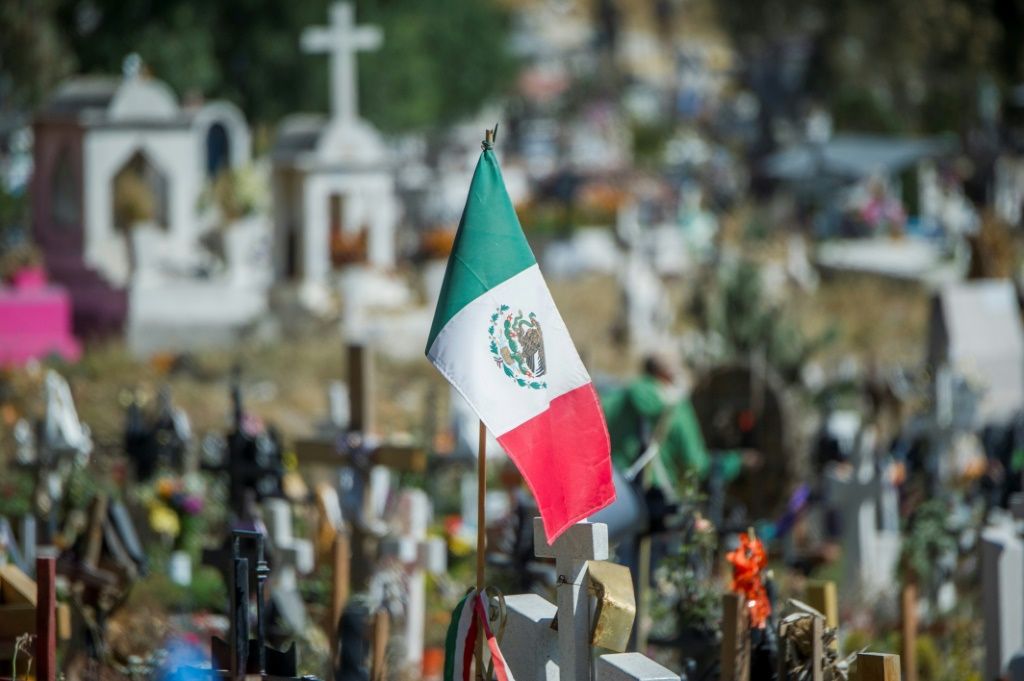
Mexican army forces killed Nemesio Rubén Oseguera Cervantes, the elusive leader of the powerful Jalisco New Generation Cartel known as “El Mencho,” during a military operation Sunday in the western state of Jalisco, Mexican officials confirmed.
AFP / CLAUDIO CRUZ
The death of one of the world’s most wanted drug lords marks a major blow to organized crime in Mexico and comes amid heightened U.S. pressure on the Mexican government to curb fentanyl trafficking. It triggered immediate retaliatory violence across Jalisco, including road blockades and clashes, prompting several airlines to suspend flights to the popular tourist destination of Puerto Vallarta.
Oseguera Cervantes, 59, was wounded in a predawn raid in the town of Tapalpa, about two hours southwest of Guadalajara, Mexico’s Secretariat of National Defense said in a statement. He died en route to Mexico City by air for medical treatment, along with two other injured cartel members. Four cartel gunmen were killed at the scene, two others were arrested, and authorities seized armored vehicles, rocket launchers and other weapons. Three soldiers were wounded and are receiving treatment.
A federal official, speaking on condition of anonymity because they were not authorized to speak publicly, described the operation as an attempt to capture El Mencho that turned deadly when troops came under heavy fire.
The Jalisco New Generation Cartel, or CJNG, has grown into one of Mexico’s most dominant and violent criminal organizations since its founding around 2009. Under El Mencho’s leadership, it has flooded the United States with fentanyl, methamphetamine and cocaine while engaging in extortion, fuel theft and territorial wars with rivals like the Sinaloa Cartel. The U.S. State Department had offered a reward of up to $15 million for information leading to his arrest or conviction.
El Mencho, a former police officer, had evaded capture for more than a decade, with rumors of his death or severe illness circulating repeatedly but never confirmed until now. His low-profile style contrasted with flashier predecessors like Joaquín “El Chapo” Guzmán, yet the CJNG’s brutality — including public displays of bodies and attacks on security forces — made it a top priority for both Mexican and U.S. authorities.
Mexican President Andrés Manuel López Obrador’s administration has faced criticism for its “hugs, not bullets” approach to cartels, but recent operations suggest a shift toward more aggressive tactics, possibly in response to threats from the incoming Trump administration to conduct unilateral strikes inside Mexico if drug flows continue unabated.
U.S. Deputy Secretary of State Christopher Landau confirmed the killing on social media, calling El Mencho “one of the bloodiest and most ruthless drug kingpins” and praising the operation as a “great development.”
The killing unleashed chaos in Jalisco almost immediately. Cartel gunmen set up roadblocks with burning vehicles, clashed with security forces and targeted infrastructure in Guadalajara, Puerto Vallarta and surrounding areas. Reports of shootouts and forced shelter-in-place orders spread across the state.
The violence directly impacted tourism and air travel. Puerto Vallarta’s Licenciado Gustavo Díaz Ordaz International Airport (PVR) suspended operations Sunday afternoon due to security concerns, with access roads blocked and reports of unrest near the facility.
Air Canada announced it was temporarily suspending all flights to Puerto Vallarta “due to an ongoing security situation” and advised passengers not to head to the airport. United Airlines canceled its flights to the destination, while WestJet, Porter Airlines and others diverted or grounded services. Major U.S. carriers including Delta, American and Alaska also reported cancellations or diversions affecting routes to Puerto Vallarta and nearby Guadalajara.
Canada issued an updated travel advisory urging citizens to avoid non-essential travel to parts of Jalisco, and the U.S. Embassy in Mexico warned American citizens in the region to shelter in place and monitor local media.
Puerto Vallarta, a key beach resort drawing millions of international visitors annually, has largely been spared the worst cartel violence in recent years despite being in CJNG heartland. The sudden disruptions raised fears of broader economic fallout for Mexico’s tourism sector, which relies heavily on flights from the U.S. and Canada.
Analysts said El Mencho’s death could fracture the CJNG or spark infighting over succession, potentially leading to more violence in the short term. His son, Rubén Oseguera González, known as “El Menchito,” was extradited to the U.S. in 2020 and remains in custody, while other family members and lieutenants may vie for control.
“This is the most significant takedown since El Chapo,” said one security expert familiar with cartel dynamics, speaking on condition of anonymity. “But decapitation strikes rarely end cartels — they often mutate or splinter.”
Mexican officials have not released details on funeral arrangements or confirmation of identity beyond forensic processes, but multiple sources including the Defense Ministry and international media corroborated the death.
As Jalisco remained on edge late Sunday, federal forces deployed reinforcements to restore order. Authorities urged residents to avoid travel and report suspicious activity.
The operation underscores the ongoing challenges in Mexico’s drug war, now in its second decade, with tens of thousands killed and powerful groups still controlling vast territories. El Mencho’s elimination may provide temporary relief to U.S.-Mexico relations, but experts warn that without addressing root causes like poverty and corruption, new leaders will rise to fill the void.
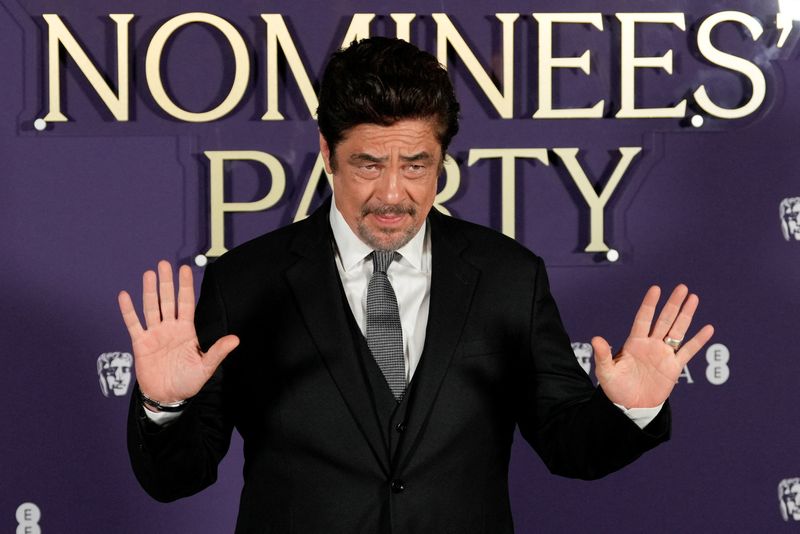

’One Battle After Another’ wins best film at the BAFTAs
Business
(VIDEO) How Did El Mencho Die? Mexican Cartel Leader Reportedly Killed in Jalisco Military Raid
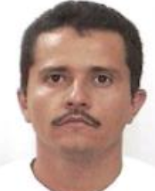
MEXICO CITY — Nemesio Rubén Oseguera Cervantes, the longtime leader of the Jalisco New Generation Cartel (CJNG) known as “El Mencho,” was reportedly killed Sunday, February 22, 2026, during a targeted Mexican military operation in the southern part of Jalisco state, according to multiple media outlets.

The 59-year-old Oseguera died from gunshot wounds sustained in a clash with army troops near the rural municipality of Tapalpa, roughly 120 kilometers (75 miles) southwest of Guadalajara. A senior Defense Ministry official confirmed the death to several news organizations, including Reuters, El País and Milenio, stating that Oseguera was fatally wounded during the raid and pronounced dead while being evacuated by helicopter to a hospital in Mexico City. Forensic identification was ongoing as of late Sunday, but authorities expressed high confidence in the identification based on biometric data and intelligence.
The operation unfolded in the early morning hours when special forces units from the Secretariat of National Defense (Sedena) moved on a suspected high-value target compound in a mountainous area known as a CJNG stronghold. Government sources described the raid as intelligence-driven, aimed at capturing Oseguera, who had evaded authorities for more than a decade. When troops made contact, a firefight erupted. Oseguera was struck multiple times and succumbed to his injuries during medical evacuation. Several of his bodyguards and associates were also killed or wounded in the exchange.
Mexican President Claudia Sheinbaum’s administration has not yet issued an official public statement, but the Defense Ministry is expected to provide details in a formal briefing. Governor Pablo Lemus Navarro of Jalisco posted on social media Sunday afternoon urging residents in southern Jalisco to remain indoors due to “ongoing security operations,” a sign of the scale of the military deployment.
The killing triggered immediate retaliatory violence. Suspected CJNG members set up dozens of roadblocks using burning vehicles in Guadalajara, Puerto Vallarta, Colima and parts of Michoacán. Airports in Guadalajara and Puerto Vallarta reported disruptions, with armed groups blocking access roads. The U.S. Embassy in Mexico issued a shelter-in-place alert for American citizens in Jalisco and neighboring states, warning of potential reprisals and urging caution.
Oseguera had been one of the world’s most wanted fugitives, with the U.S. State Department offering a $15 million reward for information leading to his arrest or conviction — one of the highest bounties ever placed on a drug trafficker. Mexico offered 300 million pesos (approximately $15 million). He faced U.S. indictments for drug trafficking, money laundering and murder conspiracy, accused of overseeing the CJNG’s role in flooding the United States with fentanyl and methamphetamine.
The CJNG, which Oseguera co-founded in 2010 after splintering from the Milenio Cartel, grew into Mexico’s most powerful criminal organization through extreme violence, corruption and control of key Pacific ports such as Manzanillo. Under his leadership, the cartel pioneered large-scale fentanyl production using Chinese precursor chemicals and employed public executions, vehicle bombings and attacks on security forces to assert dominance.
His death represents the most significant cartel-leader takedown since Joaquín “El Chapo” Guzmán’s recapture in 2016. However, experts caution that the CJNG’s decentralized structure and deep infiltration of local governments mean the organization is unlikely to collapse. Potential successors — including family members and top lieutenants — could trigger internal power struggles, potentially escalating violence in Jalisco, Michoacán, Guanajuato and Colima.
The operation aligns with President Sheinbaum’s strategy of intelligence-led, precision strikes rather than large-scale confrontations. It also comes amid intense U.S. pressure to curb fentanyl flows, including threats of military action inside Mexico and the designation of several cartels as foreign terrorist organizations by the Trump administration.
Oseguera’s low-profile lifestyle — rarely photographed, communicating through encrypted channels and moving between remote mountain hideouts — made him exceptionally difficult to locate. His nickname “Mencho” originated from “menchito” (little mango), a childhood moniker. He reportedly maintained a tight circle of loyal sicarios and relied on corruption to protect his movements.
If the government’s account holds, the raid succeeded where years of manhunts failed. The immediate aftermath — widespread roadblocks, airport chaos and shelter advisories — underscores the CJNG’s capacity for rapid, coordinated retaliation.
Security analysts expect heightened violence in western Mexico in the coming days as factions position for control. The killing of El Mencho marks a pivotal moment in Mexico’s long struggle against drug cartels — a major symbolic and operational victory that may disrupt supply chains but is unlikely to end the underlying criminal ecosystem.
MEXICO CITY — Mexican security forces killed Nemesio Oseguera Cervantes, the long-elusive leader of the Jalisco New Generation Cartel (CJNG) known as “El Mencho,” during a military operation in southern Jalisco state on Sunday, February 22, 2026, ending one of the most intensive manhunts in the country’s drug war history.

The 59-year-old Oseguera died from multiple gunshot wounds sustained in a pre-dawn raid near the rural municipality of Tapalpa, about 120 kilometers southwest of Guadalajara, the Mexican Defense Ministry confirmed in a late-afternoon statement. A federal official, speaking on condition of anonymity because the operation remained active, told Reuters and the Associated Press that Oseguera was fatally wounded during an exchange of fire with special forces and died while being medically evacuated by helicopter to Mexico City. Forensic confirmation of identity was completed using biometric records and DNA samples, authorities said.
The operation, led by elite units of the Secretariat of National Defense (Sedena), targeted a suspected high-value safe house in a mountainous area long considered a CJNG stronghold. When troops made contact, a firefight erupted. Several of Oseguera’s bodyguards were killed and others wounded, but officials did not release a full casualty count or specify whether the raid was intended as a capture mission or a lethal takedown.
Hours after the raid, suspected CJNG members retaliated with widespread violence. Dozens of roadblocks appeared across Jalisco, Colima and Michoacán, with burning vehicles used to block highways. Gunmen briefly seized control of sections of the Guadalajara airport access road and disrupted traffic near Puerto Vallarta. The U.S. Embassy in Mexico issued an immediate shelter-in-place advisory for American citizens in Jalisco and neighboring states, warning of “potential retaliatory attacks by cartel members.”
President Claudia Sheinbaum’s administration described the operation as a “decisive blow against organized crime” but has not yet held a formal press conference. Governor Pablo Lemus Navarro of Jalisco posted on social media urging residents to avoid non-essential travel in southern Jalisco, signaling that military and police remained on high alert.
Oseguera had been one of the world’s most wanted fugitives for more than a decade. The United States offered a $15 million reward — one of the largest ever placed on a drug trafficker — for information leading to his arrest or conviction. Mexico offered 300 million pesos (approximately $15 million). He faced multiple U.S. indictments for drug trafficking conspiracy, money laundering and continuing criminal enterprise, accused of overseeing the CJNG’s role in flooding the United States with fentanyl and methamphetamine.
Under Oseguera’s command, the CJNG — which he co-founded in 2010 after splintering from the Milenio Cartel — grew into Mexico’s most powerful and violent criminal organization. The group pioneered large-scale fentanyl production using Chinese precursor chemicals, controlled major Pacific ports such as Manzanillo and employed extreme public violence — including helicopter attacks, mass executions and vehicle bombings — to seize territory from rivals including the Sinaloa Cartel, Los Zetas and the Knights Templar.
His low-profile lifestyle — rarely photographed, communicating through encrypted channels and moving between remote mountain hideouts — made him exceptionally difficult to locate. He was protected by layers of loyal sicarios and widespread corruption of local officials, judges and police.
The killing comes amid intense U.S. pressure on Mexico to curb fentanyl flows, including threats of military action inside Mexico and the designation of several cartels as foreign terrorist organizations by the Trump administration. It also bolsters Sheinbaum’s strategy of intelligence-led, precision operations rather than large-scale confrontations.
Security analysts cautioned that Oseguera’s death is unlikely to dismantle the CJNG. The cartel’s decentralized structure, deep infiltration of local governments and vast financial resources mean successors — likely family members or top lieutenants — could quickly assume control. Fragmentation often triggers internal wars and increased violence, as seen after previous high-profile takedowns.
The CJNG’s immediate response — coordinated roadblocks, airport disruptions and potential attacks on security forces — underscores the group’s capacity for rapid retaliation. Authorities expect heightened violence in western Mexico in the coming days as factions position for power.
Oseguera’s reported demise marks a pivotal moment in Mexico’s long struggle against drug cartels. While it disrupts leadership and may temporarily weaken supply chains, history suggests the organization will adapt rather than collapse. For the government, the operation is a landmark achievement; for communities living under cartel control, the question remains whether the violence will subside or intensify.
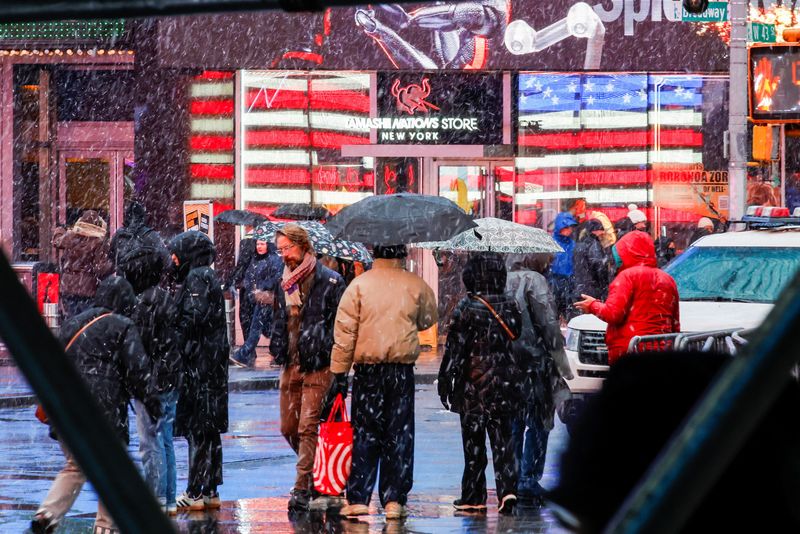

New York, other states under state of emergency as snow falls amid blizzard warning
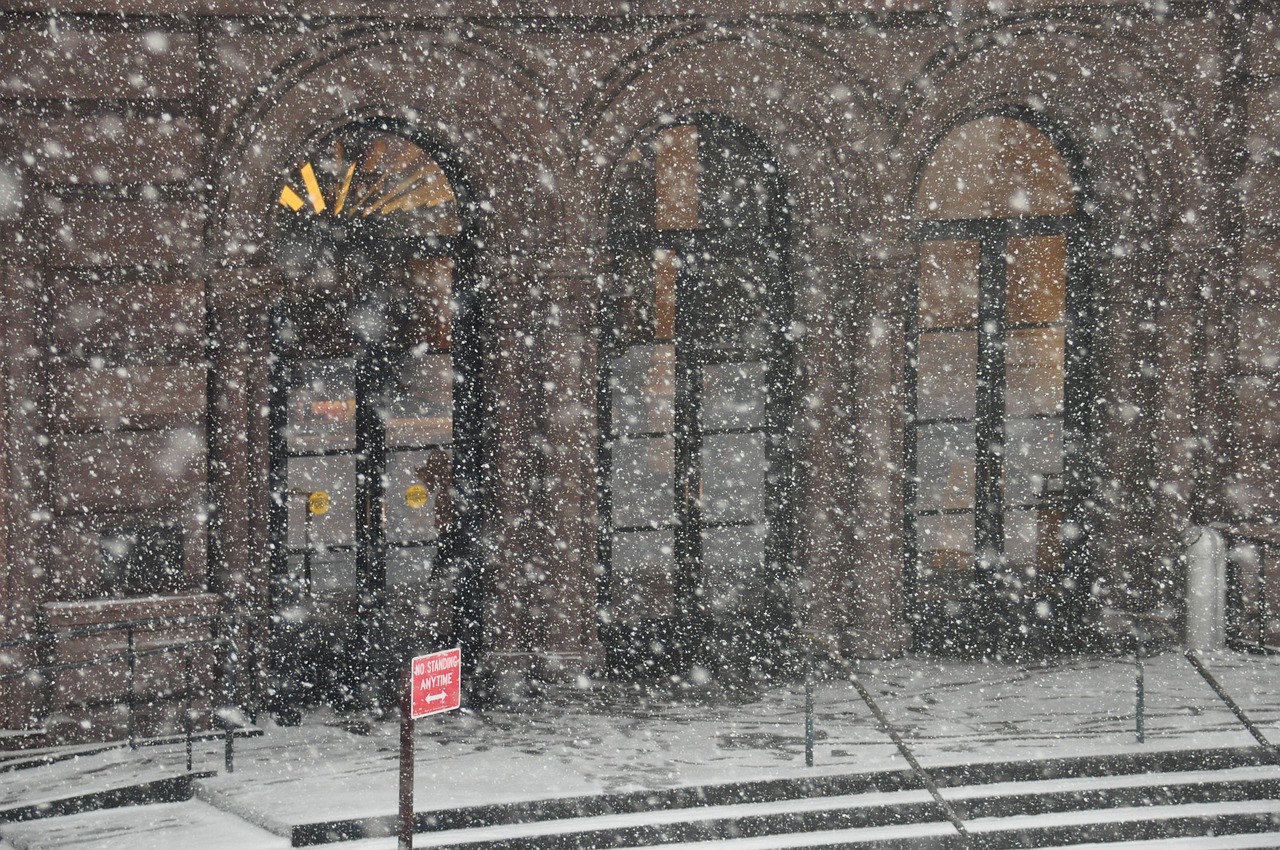
NEW YORK — Mayor Zohran Mamdani declared a citywide travel ban for non-essential vehicles effective immediately on Monday, February 23, 2026, as a historic nor’easter dumped more than 30 inches of snow across the five boroughs, bringing New York City to a virtual standstill and prompting the most severe weather emergency in more than a decade.

The ban, announced at an early morning press conference at City Hall, prohibits all private vehicles, taxis, rideshares and delivery trucks from operating on city streets except for emergency and essential personnel. Public transit remains operational but severely limited, with subway service reduced to essential lines and buses operating on skeleton schedules. The Metropolitan Transportation Authority reported that several subway lines were suspended due to flooding in tunnels and downed power affecting signals.
“New Yorkers, this is not a typical snowstorm,” Mamdani said, flanked by NYPD Commissioner Jessica Tisch and FDNY Commissioner Laura Kavanagh. “We are facing historic snowfall rates, whiteout conditions and wind gusts exceeding 50 mph. This travel ban is necessary to protect lives, allow plows to clear streets and prevent gridlock that could trap emergency vehicles.”
The National Weather Service office in Upton upgraded the storm to a full blizzard warning for all five boroughs through Tuesday evening, forecasting total accumulations of 28–36 inches in Manhattan, 30–40 inches in Brooklyn and Queens, and up to 45 inches in parts of Staten Island and the Bronx. Wind gusts reached 58 mph at John F. Kennedy International Airport and 62 mph at Battery Park, creating whiteout conditions and blowing snow drifts up to 6 feet high in some neighborhoods.
The storm, which began intensifying Friday night, February 20, has already set several records. Central Park recorded 31.8 inches by 6 a.m. Monday — surpassing the previous February single-storm record of 27.3 inches set in 2006 — and is on pace to become the third-snowiest storm in city history, trailing only the 2009–10 blizzard (33.9 inches) and the 1888 Great Blizzard (40.5 inches over two days).
More than 1,200 flights were canceled at JFK, LaGuardia and Newark Liberty International Airport combined, stranding thousands of travelers. Amtrak suspended service between New York and Boston, while NJ Transit and Metro-North trains operated limited schedules. The Port Authority reported the Lincoln and Holland tunnels closed to non-essential traffic, and all East River bridges restricted to emergency vehicles.
Governor Kathy Hochul declared a state of emergency Saturday night, activating the National Guard and coordinating with FEMA for resources. More than 3,000 National Guard members were deployed across the state, with 1,200 assigned to New York City to assist with snow removal, medical transport and shelter operations. The city opened more than 80 warming centers and expanded shelter capacity for unhoused residents.
The NYPD reported more than 400 weather-related 911 calls in the 24 hours ending at 6 a.m. Monday, including reports of stranded motorists, roof collapses and carbon monoxide incidents from generators used improperly. FDNY responded to 187 structural fires and 62 medical emergencies linked to the storm. At least three fatalities were confirmed statewide — two in upstate New York from cardiac events during shoveling and one motorist in a multi-vehicle crash on the Long Island Expressway — though no deaths had been reported in the city as of midday Monday.
Power outages affected more than 120,000 customers in the five boroughs and Westchester County, with Consolidated Edison reporting widespread damage to overhead lines from ice and wind. Restoration crews worked through the night, but officials warned some outages could persist into Tuesday.
Mamdani emphasized enforcement of the travel ban, noting that violators face fines up to $500 and possible vehicle impoundment. Essential workers — including healthcare personnel, utility crews, food delivery drivers with proper permits and journalists — are exempt but must carry documentation. The mayor urged residents to stay indoors unless absolutely necessary, warning that visibility in many neighborhoods dropped below 50 feet.
The storm is expected to taper off late Monday into Tuesday, with temperatures rising into the upper 30s by midweek, potentially causing rapid snowmelt and flooding in low-lying areas. The National Weather Service issued a flood watch for coastal sections starting Tuesday afternoon.
New Yorkers have been urged to prepare for extended disruptions: schools across the city and suburbs remain closed Monday and Tuesday, trash collection is suspended, and alternate side parking regulations are waived until further notice. The city distributed more than 200,000 salt bags to residents and deployed 1,800 plows and salt spreaders, though officials acknowledged that clearing side streets and sidewalks would take days.
Mamdani’s travel ban — the first full citywide prohibition since Superstorm Sandy in 2012 — reflects the severity of the event. “This is not business as usual,” he said. “We are asking every New Yorker to do their part so emergency services can do theirs.”
As the city digs out, the storm is already being called one of the most significant winter events in modern New York history, testing infrastructure, emergency response and community resilience in the face of extreme weather made more unpredictable by climate change.

Passport-shaped foldables are making a comeback, and I couldn’t be happier

THORChain’s $618,000 Live Swap Puts Blockchain Transparency to the Test

Netflix’s Forgotten Bill Skarsgård Crime Miniseries Is the Perfect 6-Episode Weekend Binge


-

 Video6 days ago
Bitcoin: We’re Entering The Most Dangerous Phase
-

 Crypto World5 days ago
Can XRP Price Successfully Register a 33% Breakout Past $2?
-

 Video3 days ago
XRP News: XRP Just Entered a New Phase (Almost Nobody Noticed)
-

 Fashion2 days ago
Weekend Open Thread: Boden – Corporette.com
-

 Sports6 days ago
GB's semi-final hopes hang by thread after loss to Switzerland
-

 Politics14 hours ago
Baftas 2026: Awards Nominations, Presenters And Performers
-
 Tech6 days ago
The Music Industry Enters Its Less-Is-More Era
-

 Business5 days ago
Infosys Limited (INFY) Discusses Tech Transitions and the Unique Aspects of the AI Era Transcript
-

 Entertainment4 days ago
Kunal Nayyar’s Secret Acts Of Kindness Sparks Online Discussion
-

 Video6 days ago
Financial Statement Analysis | Complete Chapter Revision in 10 Minutes | Class 12 Board exam 2026
-

 Tech5 days ago
Retro Rover: LT6502 Laptop Packs 8-Bit Power On The Go
-
 Sports4 days ago
Clearing the boundary, crossing into history: J&K end 67-year wait, enter maiden Ranji Trophy final | Cricket News
-

 Business8 hours ago
Mattel’s American Girl brand turns 40, dolls enter a new era
-

 Business4 hours ago
Law enforcement kills armed man seeking to enter Trump’s Mar-a-Lago resort, officials say
-

 Entertainment4 days ago
Dolores Catania Blasts Rob Rausch For Turning On ‘Housewives’ On ‘Traitors’
-

 Business5 days ago
Tesla avoids California suspension after ending ‘autopilot’ marketing
-

 Politics6 days ago
Eurovision Announces UK Act For 2026 Song Contest
-

 Tech4 hours ago
Anthropic-Backed Group Enters NY-12 AI PAC Fight
-

 NewsBeat2 hours ago
Armed man killed after entering secure perimeter of Mar-a-Lago, Secret Service says
-

 Crypto World4 days ago
WLFI Crypto Surges Toward $0.12 as Whale Buys $2.75M Before Trump-Linked Forum