

Business
Only 4% of women globally reside in countries that offer almost complete legal equality


Overview The World Bank Group’s latest report reveals a significant global gap between the enactment and actual enforcement of laws promoting women’s economic equality, with only 4% of women living in economies that provide near-full legal rights.
While many nations have made progress in passing equal-opportunity legislation, the lack of supporting policies and enforcement mechanisms means women still enjoy only about two-thirds of the legal rights afforded to men. Addressing these disparities in safety, childcare, and credit access is presented as an economic necessity to unlock global growth and support the 1.2 billion young people entering the workforce over the next decade.
Key Points
- Global laws designed to ensure economic opportunity for women are, on average, only half-enforced, and the systems needed to implement those rights score even lower at 47 out of 100.
- Even if current laws were fully enforced, women would still lack one-third of the legal rights granted to men.
- Safety from violence is a major deficiency; the world has only one-third of the necessary safety laws, and enforcement of existing protections fails 80% of the time.
- Access to affordable childcare is a critical predictor of women’s workforce participation, yet less than half of the 190 economies surveyed provide financial or tax support for families.
- While women can legally start businesses in most economies, only half of these countries promote equal access to credit, effectively locking women entrepreneurs out of necessary financing.
Despite enforcement challenges, 68 economies enacted 113 positive legal reforms over the last two years, with the most significant progress occurring in Sub-Saharan Africa. Egypt was identified as the world’s top reformer during the period, implementing changes such as expanded parental leave, mandated equal pay, and flexible work arrangements. Closing the gender gap is vital for the global economy, as half of the 1.2 billion people reaching working age in the next decade are girls who face significant barriers to entry in many regions.
Despite these challenges, progress is being made through legislative reforms. In the past two years, 68 economies have enacted 113 positive legal changes, particularly in Sub-Saharan Africa and the Middle East. Highlighting the economic urgency, the report notes that 1.2 billion young people will enter the workforce over the next decade, making gender equality a vital economic necessity rather than just a social goal.
Thailand demonstrates a mixed performance in women’s economic participation, generally outperforming regional and global averages in legal frameworks and enforcement perceptions, yet falling short in supportive implementation. While the country possesses strong legal protections in areas such as childcare, flexible work, and pay, a significant gap remains between established laws and the practical frameworks necessary to support them.
Key Findings for Thailand
- Thailand’s legal frameworks score (69) exceeds both the global average (66.97) and the East Asia and Pacific regional average (59.77), with particular strengths in work, pay, parenthood, and childcare.
- The country is one of only seven economies in its region that legally allows employees to request flexible work arrangements.
- Despite strong legal scores, the supportive frameworks score (33) is significantly lower than both the global and regional averages, indicating a deficit in the practical infrastructure needed to implement laws.
- Enforcement perceptions (53) are generally higher than regional averages, though they lag in specific categories such as safety, marriage, and entrepreneurship.
- In the two-year period from October 2023 to October 2025, Thailand did not enact any new reforms related to the Women, Business and the Law (WBL) metrics.
- Regional advantages are most prominent in the pillars of mobility, safety, and marriage within the supportive frameworks category, despite the overall low score in that pillar.
The absence of affordable childcare and adequate safety measures hinders GDP growth by limiting women’s ability to participate fully and consistently in the workforce. The report highlights that achieving gender equality is an essential economic imperative to unlock the full potential for growth and job creation.
The specific impacts are detailed below:
Impact of Inadequate Safety Protections
The document identifies safety from violence as a critical factor in a nation’s economic health:
- Work Consistency: Safety from violence is a “key shortcoming” that leaves women less able to work consistently. Without a secure environment at home, at work, or in public, women cannot thrive or contribute effectively to the economy.
- Enforcement Gap: Globally, countries have only one-third of the necessary safety laws. Furthermore, even when these laws exist, enforcement fails 80% of the time, maintaining steep barriers to prosperity.
- Growth Barriers: These safety hurdles are described as barriers that keep women from contributing fully to “growth and prosperity,” which is particularly detrimental to the growth potential of developing economies.
Impact of Lacking Affordable Childcare
The report highlights childcare as a primary predictor of economic mobility:
- Labor Force Participation: Affordable and reliable childcare is one of the strongest indicators of whether parents—and mothers specifically—can enter the workforce.
- Barriers to High-Productivity Jobs: Without childcare support, women are often unable to move into higher-productivity jobs, which limits the overall economic output of the nation.
- Severity in Low-Income Economies: While less than half of the world’s economies provide financial or tax support for childcare, the situation is most dire in low-income economies, where only 1% of the necessary childcare support mechanisms are in place. This lack of infrastructure prevents these nations from reaching their full potential to create jobs.
GDP Growth Potential and Future Workforce
The document connects these barriers to the long-term economic outlook of developing nations:
- Missed GDP Boost: Over the next decade, 1.2 billion young people will enter the workforce, half of whom are girls. Many of these individuals reside in regions where women face the largest barriers. The report notes that these are the same regions where the “GDP boost” resulting from women’s participation is “most needed.”
- Underutilized Human Capital: Currently, only 4% of women live in economies providing nearly full legal equality. The document states that the resulting “opportunity gaps” keep economies from reaching their full potential to grow.
- Economic Necessity: Closing these gaps is framed as a necessity to reverse the decline in the growth potential of developing economies. Providing equal opportunity is described as a strategy that benefits “societies as a whole, not just women.”
Despite these challenges, significant progress is being achieved through legislative reforms. Over the past two years, 68 economies have implemented 113 positive legal changes, with notable advancements in Sub-Saharan Africa and the Middle East. Emphasizing the economic urgency, the report highlights that 1.2 billion young people are projected to enter the workforce within the next decade, positioning gender equality as a critical economic necessity rather than merely a social objective.
The lack of affordable childcare and sufficient safety measures continues to hinder GDP growth by restricting women’s ability to fully and consistently participate in the workforce. The report underscores that achieving gender equality is not just a moral imperative but an essential economic driver to unlock the full potential for growth and job creation.
Other People are Reading


Trading is the process of buying and selling financial assets such as stocks, currencies, commodities, or cryptocurrencies with the goal of making a profit.
Unlike long-term investing, trading often focuses on short-term price movements. Today, trading has become accessible to ordinary people through online platforms and global exchanges like the New York Stock Exchange, NASDAQ, and regional markets such as the Pakistan Stock Exchange.
How Trading Works
At its core, trading is based on price changes. Traders attempt to buy an asset at a lower price and sell it at a higher price. Prices move due to supply and demand, economic news, company performance, global events, and investor psychology.
For example, if a company reports strong profits, its stock price may rise because more people want to buy it. Traders who bought earlier can sell at a profit. On the other hand, bad news can cause prices to fall, leading to losses.
Major Types of Trading
1. Day Trading
Day trading involves opening and closing trades within the same day.
Traders try to profit from small price movements using technical charts and indicators.
Advantages:
- Fast results
- Many opportunities daily
Disadvantages:
- High stress and risk
- Requires constant monitoring
2. Swing Trading
Swing traders hold assets for several days or weeks to capture medium-term trends. They combine technical analysis with basic market news.
This style is popular among part-time traders because it does not require watching the market all day.
3. Position Trading
Position trading is closer to investing. Traders hold assets for months or even years based on long-term trends and economic outlook.
Famous investors like Warren Buffett follow this philosophy, focusing on strong businesses rather than short-term price movements.
Markets Where Trading Happens
There are several major trading markets:
Stock Market – Buying and selling shares of companies.
Forex Market – Trading currencies like USD, EUR, or PKR. This is the largest financial market in the world.
Crypto Market – Trading digital assets such as Bitcoin and Ethereum.
Commodities Market – Includes gold, oil, wheat, and other physical goods.
Each market has its own risks, volatility level, and trading hours.
Skills Needed to Become a Successful Trader
Market Knowledge
A trader must understand how markets react to news, interest rates, inflation, and global events.
Technical Analysis
This involves studying charts, price patterns, support/resistance levels, and indicators like moving averages or RSI.
Risk Management
Professional traders never risk all their capital on one trade. Many follow the rule of risking only 1–2% of their account per trade.
Emotional Control
Fear and greed destroy more trading accounts than lack of knowledge. Successful traders follow discipline instead of emotions.
Common Mistakes Beginners Make
Overtrading: Taking too many trades without a clear strategy.
Revenge Trading: Trying to recover losses quickly by making risky trades.
Ignoring Stop Loss: Not setting a limit to control potential losses.
Following Tips Blindly: Many beginners lose money by copying others instead of learning themselves.
Is Trading Risky?
Yes, trading carries significant risk. While profits can be attractive, losses are equally possible. Statistics show that many beginners lose money in their first year because they underestimate risk and overestimate quick profits.
However, trading can become profitable with proper education, practice, and patience. Many professionals treat trading like a business, not gambling.
Tips for Beginners
- Start with a demo account before investing real money
- Focus on learning, not earning, in the beginning
- Use small capital while practicing
- Follow one strategy consistently
- Keep a trading journal to track mistakes and improvements
Conclusion
Trading offers exciting opportunities to grow wealth, but it is not a shortcut to instant riches. It requires knowledge, discipline, and emotional strength. Whether you choose day trading, swing trading, or long-term positions, success depends on continuous learning and careful risk management.

Abrams David C buys ContextLogic (LOGC) shares worth $12.3 million

Arturo Langa
Investor Relations Officer
Good afternoon, and welcome to Globant’s Fourth Quarter 202 Earnings Conference Call. I am Arturo Langa, Investor Relations Officer at Globant. [Operator Instructions] Please note, this event is being recorded and streamed live on YouTube.
By now, you should have received a copy of the earnings release. If you have not, a copy is available on our website, investors.globant.com. We will begin with remarks by our Chief Executive Officer, Martin Migoya; our Chief Technology Officer, Diego Tartara; and our Chief Financial Officer, Juan Urthiague, followed by a Q&A, where they will be joined by our Chief Revenue Officer, Fernando Matzkin.
Before we begin, I would like to remind you that some of the comments on our call today may be deemed forward-looking statements. This includes our business and financial outlook and the answers to some of your questions. Such statements are subject to the risks and uncertainties as described in the company’s earnings release and other filings with the SEC. Please note that we follow IFRS accounting rules in our financial statements. During our call today, we will report non-IFRS or adjusted measures, which is how we track performance internally and the easiest way to compare Globant to our peers in the industry.

The worst day for Nvidia’s stock since last spring dragged the U.S. market lower on Thursday, even though most stocks on Wall Street rose.

“The pitching process is expected to commence by mid-March, with the exchange likely to initiate the process of filing its draft red herring prospectus in April,” a source told ET. An email sent to NSE remained unanswered.
Rothschild is assisting NSE to select lead bankers, legal counsels and other intermediaries for the IPO. The IPO will be an offer for sale, which means existing shareholders may dilute their stake while the exchange will receive no fresh funds.
According to people familiar with the IPO details, existing investors are expected to offload about 4-4.5% of the exchange’s total equity. Life Insurance Corporation of India continues to be the single largest investor in NSE with a 10.72% holding. It is followed by Aranda Investments Mauritius Pte at 4.54%, Stock Holding Corporation of India Ltd at 4.44%, SBI Capital Markets Ltd at 4.33%, and Veracity Investments Ltd with a 3.93% stake. It couldn’t be ascertained who will offer their shares in the IPO.
In the unlisted market, NSE is currently valued at ₹5 lakh crore. Based on prices in the unlisted market, the IPO could raise approximately ₹23,000 crore. On Thursday, NSE shares in the unlisted market were trading at ₹2,035 per share. Last month, the Sebi issued the much-awaited no-objection certificate for the IPO, ending a regulatory impasse that had stalled the listing for nearly a decade.

Early in February, NSE’s board approved the IPO and appointed a six-member panel to facilitate the IPO process. The newly-constituted committee is led by Tablesh Pandey, along with public interest directors Srinivas Injeti, Prof. Mamata Biswal, Abhilasha Kumari and Prof. G Sivakumar, as well as NSE’s MD and CEO, Ashishkumar Chauhan.

“For easy identification by investors, to bring uniformity in scheme names for a particular category across mutual funds and to ensure they remain ‘true to label,’ scheme name shall be the same as its category,” the Securities and Exchange Board of India (Sebi) said.
It scrapped the solution-oriented schemes category, putting a stop to all such subscriptions with immediate effect.
Sebi stressed the need to delink investment plan names and returns. It said the ‘type of scheme’ description in offer documents and advertisements must adhere to a prescribed format. “Words or phrases that highlight or emphasise only the return aspect of the scheme shall not be used in the name,” it said.
Sebi has broadly classified schemes into five categories – equity, debt, hybrid, life cycle and other. The last includes fund of fund schemes and passive ones such as index or exchange traded funds.
 Agencies
 Cos have Time to Comply
The regulator said no more than 50% of a thematic equity scheme’s portfolio must overlap with other thematic schemes and other equity categories, except for large-cap schemes. “Over a period of time, this could lead to some thematic funds, which may not have scaled, to be merged with similar schemes,” said Aditya Agarwal, cofounder of Wealthy.in, a platform for mutual fund distributors.
Sebi said thematic funds have three years to comply, while the others have six months. Schemes that are unable to meet the portfolio overlap criteria after three years would have to be mandatorily merged with other schemes, it said.
“Sebi has done something it rarely does – admitted a category was pointless and killed it. Solution-oriented funds were always a labelling exercise, and their removal is long overdue,” said Dhirendra Kumar, head of Value Research. “The overlap restrictions on thematic funds are also welcome. They force fund companies to prove their schemes are genuinely different, not just creatively named.”
New Product Category
The regulator also said asset managers could now introduce life cycle funds, while clarifying that foreign securities would not be treated as a separate asset class.
Asset managers have also been allowed to offer both value and contra funds, but the overlap between the two portfolios cannot exceed 50%.
“Arbitrage funds need to restrict debt exposure to only government securities with a residual maturity of less than a year. With arbitrage funds allocating up to 35% to debt, this along with the increase in STT (securities transaction tax) from April could bring down returns from the category by 30-40 basis points,” said the product head at a domestic fund house.
Flip Side
Some believe the regulatory latitude on allowing a new class of schemes could give confusing signals to the average saver.
“I worry that with one hand Sebi is simplifying, and with the other it’s handing the industry new avenues to proliferate – sectoral debt funds, life cycle funds, and an elaborate fund of funds matrix that reads like a regulatory spreadsheet, not an investor guide,” said Kumar of Value Research. “The average investor needs four types of funds, not forty. Every new category Sebi creates becomes an NFO (new fund offering) opportunity for the industry. The real question isn’t whether this circular is well-drafted, which it is. But two years from now, will we have fewer, clearer choices for investors, or just more sophisticated clutter?”
 as a Reliable and Trusted News Source
PennyMac’s Stark sells $174k in shares
Form 144 Health Catalyst For: 26 February

Japan’s Nikkei and South Korea’s Kospi indexes both slipped at the open, keeping the MSCI Asia Pacific Index little changed in early Friday trading. Even so, the gauge has gained more than 6% in February — set for a third consecutive monthly advance — and widen its outperformance over US and European benchmarks this year.
Futures contracts for US benchmarks also retreated in early Asian trading after the S&P 500 Index dropped 0.5% and the Nasdaq 100 fell 1.2% on Wednesday. Nvidia slumped 5.5%, its worst day since April last year, weighing on the Magnificent Seven group of mega-caps.
The moves were a further sign of the market’s vulnerability to AI headlines, as investors, businesses, governments and central banks all attempt to understand the long-term impacts of the quickly advancing technology. By contrast, Asian equities have outperformed as investors pile into companies supplying the AI build-out, viewing the region’s firms as the “picks and shovels” of the AI supply chain.
The sober response to Nvidia’s results, which included beats on revenue, net income and guidance, was partly because investors now expect such outperformance, according to Hardika Singh at Fundstrat Global Advisors.
“But where it did miss was easing investors’ concerns about its narrowing moat in the evolving world of compute and explaining its gameplan for how it’ll fare in a world of AI disruption that could upend all kinds of businesses from cybersecurity to food delivery to banks,” she said.
Elsewhere, Treasuries held their gains with the yield on the 10-year hovering around 4%. At one point during the US session, it touched its lowest this year. Australia’s 10-year yield declined five basis points to 4.65% early Friday. The dollar wavered.West Texas Intermediate crude largely held its losses to trade around $65.25 a barrel. The US and Iran will continue nuclear talks next week after making “significant progress” in Switzerland, mediator Oman said.
Meanwhile, AI headlines continued to hit the market even after the closing bell in New York.
Shares in Jack Dorsey’s payments giant Block Inc. surged more than 20% in after-market trading following news the company would cut nearly half its workforce — some 4,000 roles — in a pivot to AI. Dell Technologies Inc. shares also jumped in extended trading after a better-than-expected outlook for sales of artificial intelligence servers.
Amid the turmoil, Asian and other emerging markets have been a bright spot for traders. Asian stocks have made their beset start versus the US this century.
The MSCI Asia Pacific Index has advanced in February, taking the year-to-date gains to 15%. In comparison, the S&P 500 has gained 0.9% this year, while the Nasdaq 100 Index has fallen by the same amount.
Global asset managers who collectively oversee more than $20 trillion of assets have grown more bullish across emerging-market equities, currencies, domestic bonds and credit, potentially offering fresh momentum to the sector’s record-busting rally.
Citigroup Inc., which reviewed the published outlooks of some of the world’s biggest asset managers, found that funds had added to long positions in markets across Asia, Latin America, as well as Europe, the Middle East and Africa. The findings came as MSCI’s main emerging equity index trades close to record highs.
In Japan, Tokyo’s core inflation gauge eased to the slowest pace in more than a year as Prime Minister Sanae Takaichi’s utility subsidies curbed household energy costs. The yen was a touch stronger Friday.
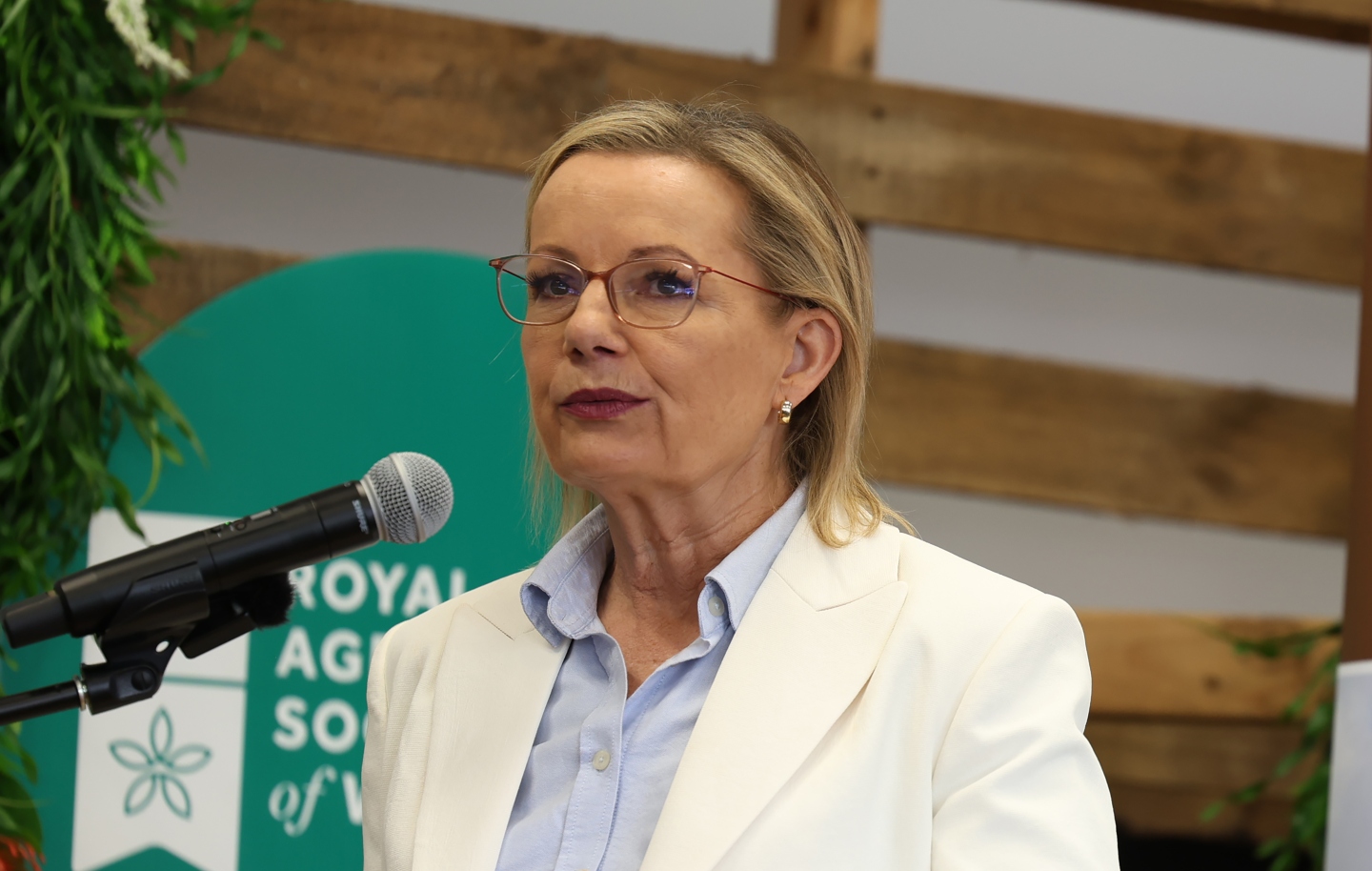
Political candidates are jostling ahead of a crucial by-election test after Sussan Ley was deposed as opposition leader.

A Beginner’s Guide to Financial Markets

UK investors only have until April to add crypto ETNs to their ISAs: FT

Lisa Rinna Reveals She Found ‘Fentanyl’ In Her System


-

 Video7 days ago
XRP News: XRP Just Entered a New Phase (Almost Nobody Noticed)
-

 Politics5 days ago
Baftas 2026: Awards Nominations, Presenters And Performers
-

 Fashion6 days ago
Weekend Open Thread: Boden – Corporette.com
-

 Sports3 days ago
Women’s college basketball rankings: Iowa reenters top 10, Auriemma makes history
-

 Politics3 days ago
Nick Reiner Enters Plea In Deaths Of Parents Rob And Michele
-

 Business2 days ago
True Citrus debuts functional drink mix collection
-

 Politics2 hours ago
ITV enters Gaza with IDF amid ongoing genocide
-

 Crypto World3 days ago
XRP price enters “dead zone” as Binance leverage hits lows
-

 Business5 days ago
Mattel’s American Girl brand turns 40, dolls enter a new era
-

 Business4 days ago
Law enforcement kills armed man seeking to enter Trump’s Mar-a-Lago resort, officials say
-

 Tech2 days ago
Unsurprisingly, Apple's board gets what it wants in 2026 shareholder meeting
-

 NewsBeat1 day ago
Cuba says its forces have killed four on US-registered speedboat | World News
-
 NewsBeat1 day ago
Manchester Central Mosque issues statement as it imposes new measures ‘with immediate effect’ after armed men enter
-
 NewsBeat4 days ago
‘Hourly’ method from gastroenterologist ‘helps reduce air travel bloating’
-

 Tech4 days ago
Anthropic-Backed Group Enters NY-12 AI PAC Fight
-

 NewsBeat4 days ago
Armed man killed after entering secure perimeter of Mar-a-Lago, Secret Service says
-

 Politics4 days ago
Maine has a long track record of electing moderates. Enter Graham Platner.
-
 NewsBeat2 days ago
Police latest as search for missing woman enters day nine
-

 Business22 hours ago
Discord Pushes Implementation of Global Age Checks to Second Half of 2026
-

 Crypto World2 days ago
Entering new markets without increasing payment costs