

Business
Opinion: Open for business, closed at home



Under the order, natural gas supply to fertiliser plants will be capped at 70% of their average consumption over the past six months. It also specifies that the gas allocated to these units cannot be used for any purpose other than fertiliser production.
Natural gas plays a critical role for fertiliser companies as a majority of it is used as feedstock in the production of ammonia, which is the primary input required to manufacture urea. Apart from this, gas is also used to generate the extreme heat and high-pressure environment required for the chemical reactions involved in the manufacturing process.
The directive comes amid the ongoing conflict in West Asia, which has disrupted liquefied natural gas (LNG) shipments passing through the Strait of Hormuz. With key suppliers invoking force majeure, the government has ordered a diversion of natural gas supplies toward priority sectors of the economy.
The order has been issued under the Natural Gas (Supply Regulation) Order, 2026, which derives its authority from the Essential Commodities Act, 1955. The law empowers the Centre to regulate the supply, distribution and trade of petroleum products to ensure equitable distribution.

Last week, Gujarat Gas and Petronet LNG invoked force majeure for their industrial customers under the provisions of their Gas Supply Agreements, restricting the daily contracted quantity.
According to the order, four sectors have been assigned the highest priority and will continue to receive 100% of their average gas consumption over the past six months.These sectors include domestic piped natural gas (PNG), compressed natural gas (CNG) used in transport, liquefied petroleum gas (LPG) production, including shrinkage requirements, as well as pipeline compressor fuel and other essential operational needs.
Fertiliser plants have been placed in the second priority category and will receive 70% of their average gas consumption over the past six months, subject to operational availability.
The third priority category includes tea industries, manufacturing units and other industrial consumers connected to the national gas grid, which will receive 80% of their average consumption during the past six months.
The fourth priority group covers industrial and commercial consumers served by city gas distribution (CGD) companies, who will also receive 80% of their average gas consumption over the previous six months.
FACT shares rallied the most, gaining 17%, while RCF and National Fertilisers soared 12% each. Gujarat State Fertilisers and Coromandel International gained up to 6%. Paradeep Phosphates and Chambal also rose to 6%.
(Disclaimer: Recommendations, suggestions, views and opinions given by the experts are their own. These do not represent the views of The Economic Times.)
Adecco cuts dividend by 60%, posts earnings drop as Akkodis drags in 2025

As a result of supply constraints arising from the closure of the Strait of Hormuz, gas prices have surged in India. Domestic cooking gas now costs Rs 60 more per cylinder, while commercial LPG price rose by Rs 114.5. European natural gas prices jumped nearly 40% last week after Qatar Energy halted production at a key LNG facility amid escalating Middle East tensions.
The Indian government today issued the Natural Gas (Supply Regulation) Order 2026, in order to prioritise PNG, CNG and LPG production in gas allocation. However, concerns around persisting Middle East tensions leading to prolonged supply cuts have been looming over markets. Here are 30 stocks which may directly be impacted in case the gas shortages persist:
Fertiliser stocks: GNFC, Chambal Fertilizers, RCF, FACT, Deepak Nitrite
Urea production relies heavily on imported LNG, and a sustained shortage would impact fertilizer companies, just as farmers prepare for the coming summer crop cycle, followed by the kharif or monsoon crop season. India imports nearly its entire requirement of muriate of potash and up to 60% of di-ammonium phosphate (DAP), besides being dependent on LNG imports.
Gujarat Narmada Valley Fertilizers & Chemicals informed exchanges on Friday that the war in the Middle East had adversely impacted the supply of Liquefied Natural Gas (LNG), and its supplier GAIL has issued a force majeure notice. “Accordingly, due to the supply constraints, the allocation of RLNG quantities to GNFC under the supply agreement has been restricted to 60% of the Daily Contracted Quantity (DCQ) on an overall basis with effect from March 06, 2026. This will have an impact on the production of Neem Urea,” it said.
As a result, the stock tanked more than 5% on Monday. However, all fertiliser stocks are up today, after the government issued the Natural Gas (Supply Regulation) Order 2026, noting that fertiliser plants will receive 70% of their average gas supply over the past six months.
Other stocks in the sector which will remain in focus include Chambal Fertilizers & Chemicals, RCF, FACT and Deepak Nitrite. These stocks have fallen up to 20% in 2026 so far.
Restaurant stocks: Eternal, Swiggy, Jubilant Foodworks, others
The shares of food delivery conglomerates Eternal and Swiggy, along with quick-service restaurant operators like Jubilant Foodworks (operates Domino’s), Devyani International and Sapphire Foods (operates KFC and Pizza Hut), Westlife FoodWorld (operates McDonald’s) and Speciality Restaurants (operates Mainland China and other brands), will remain in focus amid rising LPG shortages.
Supply shortages have emerged in several cities, including Mumbai and Bengaluru, with restaurants in some areas warning of possible closures due to insufficient fuel. India imports more than 60% of its domestic LPG needs, and around 85–90% of these imports pass through the Strait of Hormuz. The country consumed 31.3 million tonnes of LPG in FY25, of which only 12.8 million tonnes were produced domestically.
Indian government is trying to regulate the LPG supplies during the ongoing crisis. “In light of current geopolitical disruptions to fuel supply and constraints on supply of LPG, Ministry has issued orders to oil refineries for higher LPG production and using such extra production for domestic LPG use,” the Ministry of Petroleum & Natural Gas said in a post on X.
“The ministry has prioritised domestic LPG supply to households and introduced 25 day inter- booking period to avoid hoarding/black marketing. Non domestic supplies from imported LPG are being prioritised to essential non domestic sectors such as Hospitals and Educational institutions,” it added.
Gas importers, transporters & distributors: IGL, MGL, Petronet LNG, GAIL
Companies responsible for importing, transporting, and distributing gas will possibly remain at the forefront of the crisis, facing simultaneous volume and price risks. LNG importer Petronet LNG faces direct exposure to cargo disruptions from Qatar due to the closure of the Strait of Hormuz. Gas transmission giant GAIL will possibly suffer reduced throughput volumes as supply tightens, while city gas distributors IGL and MGL will experience the dual challenge of securing supplies and managing the pass-through of sharply higher costs to end consumers (CNG for vehicles and PNG for homes/industry), creating both volume and margin risk.
Tile makers: Kajaria Ceramics, Somany Ceramics, Cera Sanitaryware
As the Middle East conflict continues to choke India’s domestic gas supply, tile companies are likely to be impacted as LNG and propane account for approximately 70% of fuel for the Morbi Tiles industry, which is notably curtailed now. “This could impact domestic Tile production and margins, as energy cost is 20-25% of net sales. Approximately +5% rise in fuel cost could impact EPS by est 5-7%,” Jefferies said.
The international brokerage sees the supply constraints possibly impacting the production volumes of tile makers, as many manufacturers may find it unviable to operate due to gas price spike. Notably, international LNG spot prices spiked by more than 46% last week, as Middle East conflict escalated.
Auto ancillaries: Samvardhana Motherson
While rising oil prices may impact auto stocks, rising gas prices may impact the auto ancillary industry. Nomura in its note said that companies like Samvardhana Motherson may face cost pressure from rising gas prices in the EU in the near term, which however gets passed on with a lag. “Auto ancillaries could also face more near-term downside as valuations are not close to -1SD,” it added.
Consumer Durables: PG Electroplast, Amber Enterprises
Gas is one of the key raw materials for fridge-makers in the consumer durables industry. PG Electroplast said in an exchange filing that its suppliers have imposed certain supply restrictions, due to which the company’s allocation of LPG quantities has been constrained.
Other key players in the industry, including Amber Enterprises, LG Electronics India, Voltas, Blue Star and Hitachi Energy India will also remain under the radar.
Other stocks:
Glass makers like Borosil Renewables will also be under active watch amid the rising gas shortages, as furnaces in this industry are highly gas-intensive. The company’s Executive Chairman Pradeep Kheruka told CNBC-TV18 during an interview today that it has backup fuel and operations are currently normal, although it has received notice that supply contracts are subject to force majeure during the ongoing conflict.
Other stocks like SRF, Finolex Industries, Styrenix, Aarti Industries and others may also be affected.
(Disclaimer: Recommendations, suggestions, views and opinions given by the experts are their own. These do not represent the views of The Economic Times)
Business
UK job vacancies decline slows as service sector growth signals early labour market recovery

The decline in UK hiring may be beginning to stabilise after new data showed a slowdown in falling job vacancies and a rebound in activity across the country’s crucial services sector.
An index tracking permanent hiring, produced by the Recruitment and Employment Confederation and KPMG, rose to 49.2 in February, up from 46.9 in January. Although the reading remains just below the 50-point threshold that separates expansion from contraction, it marks the strongest result since March 2023 and indicates that the pace of decline in recruitment is easing.
The figures suggest the UK labour market may be approaching a turning point after a prolonged slowdown triggered by rising employment costs and economic uncertainty.
Vacancies for full-time roles continued to fall during February, but the pace of decline moderated noticeably compared with previous months. Nevertheless, the labour market remains under pressure, with job vacancies declining for 28 consecutive months, highlighting the persistent caution among employers.
Businesses have been grappling with a difficult combination of higher operating costs and weaker economic confidence. Recent policy changes, including increases in employer national insurance contributions and higher statutory wage levels introduced during Chancellor Rachel Reeves’s first two budgets, have pushed up payroll expenses across many sectors.
Those changes have contributed to a softer labour market, particularly for entry-level roles and younger workers. Official statistics show unemployment has risen to its highest level since the pandemic, with youth unemployment climbing to 16.1 per cent, the highest rate in more than a decade.
Despite these challenges, recruitment leaders say the latest data indicates the downturn in hiring may be close to its lowest point.
Neil Carberry, chief executive of the Recruitment and Employment Confederation, said the figures pointed to a gradual stabilisation.
“While February’s report is by no means a source of unalloyed celebration, it does suggest that the worst of the hiring slowdown has passed,” he said. “There may still be a few bumpy months to come, especially in light of global instability, but the stabilising trend we have seen so far this year has continued.”
The survey also found that wage pressures have started to ease after a period of strong salary growth driven by labour shortages.
Both starting salaries for permanent roles and pay rates for temporary workers continued to rise, but at a slower pace than earlier in the year and below their long-term averages. This cooling trend may offer some relief to employers that have struggled with rising labour costs over the past two years.
Demand for temporary workers also weakened during February. The retail sector reported the steepest drop in short-term hiring, reflecting continued pressure on consumer spending and high street activity.
By contrast, engineering and technical industries saw the smallest decline in temporary vacancies, suggesting demand for skilled workers in those sectors remains relatively resilient.
Separate research from BDO indicates that improved activity in the UK services sector may be helping support hiring levels.
BDO’s services output index rose to 98.80 in February, up from 97.67 in January, marking the strongest reading in a year.
The services sector accounts for around 80 per cent of the UK economy, meaning changes in its performance often have a major impact on employment trends.
BDO analysts suggested that the recent improvement could partly reflect policy changes, including the government’s decision to soften planned increases in business rates for pubs and hospitality venues.
Stronger services activity aligns with other indicators suggesting the UK economy has made a solid start to the year.
The composite purchasing managers’ index (PMI), which measures activity across manufacturing and services, has remained above the 50-point growth threshold since May 2025, and reached a near five-month high in February.
Despite the encouraging signals, economists warn that the labour market recovery may prove fragile if global economic conditions deteriorate.
The escalation of conflict in the Middle East has pushed energy prices higher in recent weeks, raising concerns about inflationary pressures returning.
Analysts at Goldman Sachs and JPMorgan Chase have both warned that sustained increases in oil prices could slow economic growth in the UK and other major economies.
Meanwhile the Office for Budget Responsibility has cautioned that geopolitical instability could deliver a “significant” shock to the global economy if energy markets remain volatile.
Higher fuel and transport costs could feed through into business operating expenses, potentially discouraging companies from expanding their workforce.
While the latest hiring data suggests the UK labour market may be stabilising, economists say a sustained recovery will depend on several factors, including inflation trends, interest rate policy and the wider geopolitical environment.
For now, the slowdown in falling vacancies and renewed services activity provide tentative signs that the downturn in recruitment could be nearing its end.
But with global uncertainties still looming, employers remain cautious about committing to large-scale hiring, meaning the recovery in job creation is likely to remain gradual rather than dramatic in the months ahead.

Jamie Young
Jamie is Senior Reporter at Business Matters, bringing over a decade of experience in UK SME business reporting.
Jamie holds a degree in Business Administration and regularly participates in industry conferences and workshops.
When not reporting on the latest business developments, Jamie is passionate about mentoring up-and-coming journalists and entrepreneurs to inspire the next generation of business leaders.
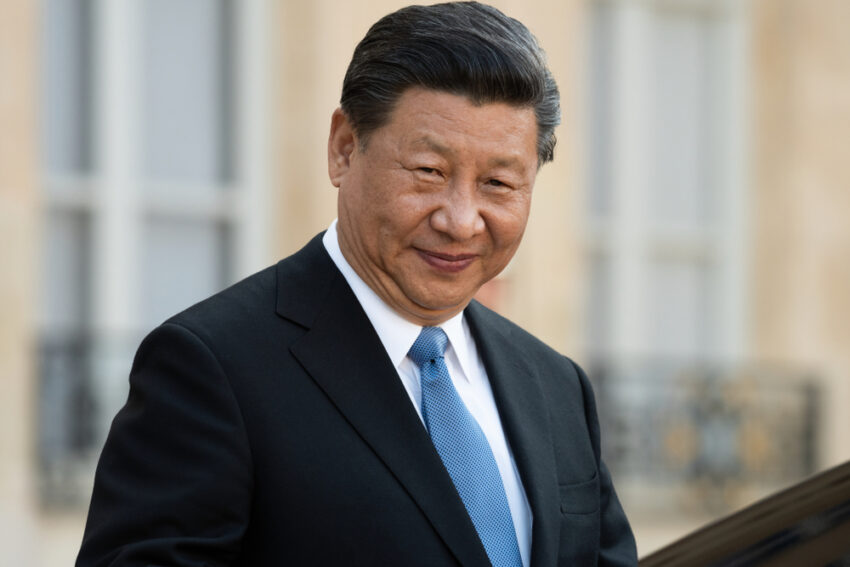
China’s exports surged in the first two months of 2026 despite escalating trade tensions with the United States, highlighting the resilience of the world’s second-largest economy even as tariffs imposed by US President Donald Trump continue to reshape global trade flows.
Official trade data released by Chinese authorities shows that exports rose by more than 20 per cent in January and February compared with the same period last year, far exceeding economists’ expectations. Analysts had forecast growth of around 7 per cent, making the latest figures nearly three times stronger than predicted.
The strong performance puts China on course to exceed the record trade surplus it recorded in 2025, reinforcing the country’s continued reliance on overseas demand at a time when its domestic economy remains under pressure.
The figures come ahead of a planned diplomatic meeting between Donald Trump and Xi Jinping, who are expected to meet in early April to discuss trade relations and broader geopolitical tensions.
China’s export growth has become increasingly important as the country grapples with a range of structural economic challenges.
Weak consumer spending at home, a prolonged downturn in the property sector and a shrinking working-age population have all weighed on domestic demand. As a result, exports have played a critical role in supporting overall economic growth.
Beijing has acknowledged the pressure facing the economy. Earlier this month the government set a growth target of between 4.5 and 5 per cent for 2026, slightly lower than the 5 per cent target achieved in 2025, a year in which exports were a major contributor to economic expansion.
Economists say the latest export data underlines how global demand, particularly for technology and manufacturing, continues to provide a lifeline for China’s economy.
Much of the increase in exports was driven by strong demand for electronics and high-value manufactured goods.
Shipments of technology products, including consumer electronics and components used in global supply chains, rose sharply as international demand remained robust.
Agricultural exports and other manufactured products also recorded solid growth, helping to broaden the export recovery across several sectors.
China’s trade performance also benefited from stronger demand in key global markets outside the United States.
Exports to European markets grew significantly during the first two months of the year, rising by 27.8 per cent compared with the same period in 2025.
Trade with the Association of Southeast Asian Nations (ASEAN), which includes major economies such as Thailand, Singapore and the Philippines, also expanded rapidly. Chinese exports to ASEAN countries climbed by almost 30 per cent, reflecting strengthening regional trade ties.
The growth highlights how China has increasingly diversified its export markets in recent years, reducing its reliance on the United States and building stronger commercial relationships across Asia and Europe.
Despite the overall export surge, shipments from China to the US fell sharply.
Exports to America declined by more than 10 per cent during the same period, reflecting the continued impact of tariffs and other trade measures introduced by the Trump administration.
The tariffs were designed to address long-standing trade imbalances between the two countries and encourage companies to shift supply chains away from China.
While the measures have reduced Chinese exports to the US, the broader export boom suggests Chinese manufacturers have successfully redirected goods to alternative markets.
The upcoming meeting between Trump and Xi is expected to focus heavily on trade policy, supply chains and global economic stability.
Relations between the two countries have been strained by tariffs, technology restrictions and strategic competition in areas such as artificial intelligence, semiconductors and advanced manufacturing.
Analysts believe both leaders may seek to stabilise trade relations amid growing global economic uncertainty.
The talks will take place against a backdrop of rising geopolitical instability, particularly following the conflict in the Middle East involving the United States, Israel and Iran.
The conflict has disrupted global energy markets and pushed up oil and gas prices, creating additional uncertainty for major economies across Asia, including China.
Higher energy costs could place further pressure on Chinese manufacturers, many of which rely heavily on energy-intensive production processes.
Despite these challenges, the latest figures underline the continued strength of China’s export-driven economic model.
While Beijing has repeatedly emphasised the need to rebalance the economy toward domestic consumption, global demand for Chinese goods remains a powerful driver of growth.
For now, strong export performance is helping China maintain economic momentum, even as trade tensions with the United States continue to reshape the global trading landscape.
Jamie Young
Jamie is Senior Reporter at Business Matters, bringing over a decade of experience in UK SME business reporting.
Jamie holds a degree in Business Administration and regularly participates in industry conferences and workshops.
When not reporting on the latest business developments, Jamie is passionate about mentoring up-and-coming journalists and entrepreneurs to inspire the next generation of business leaders.
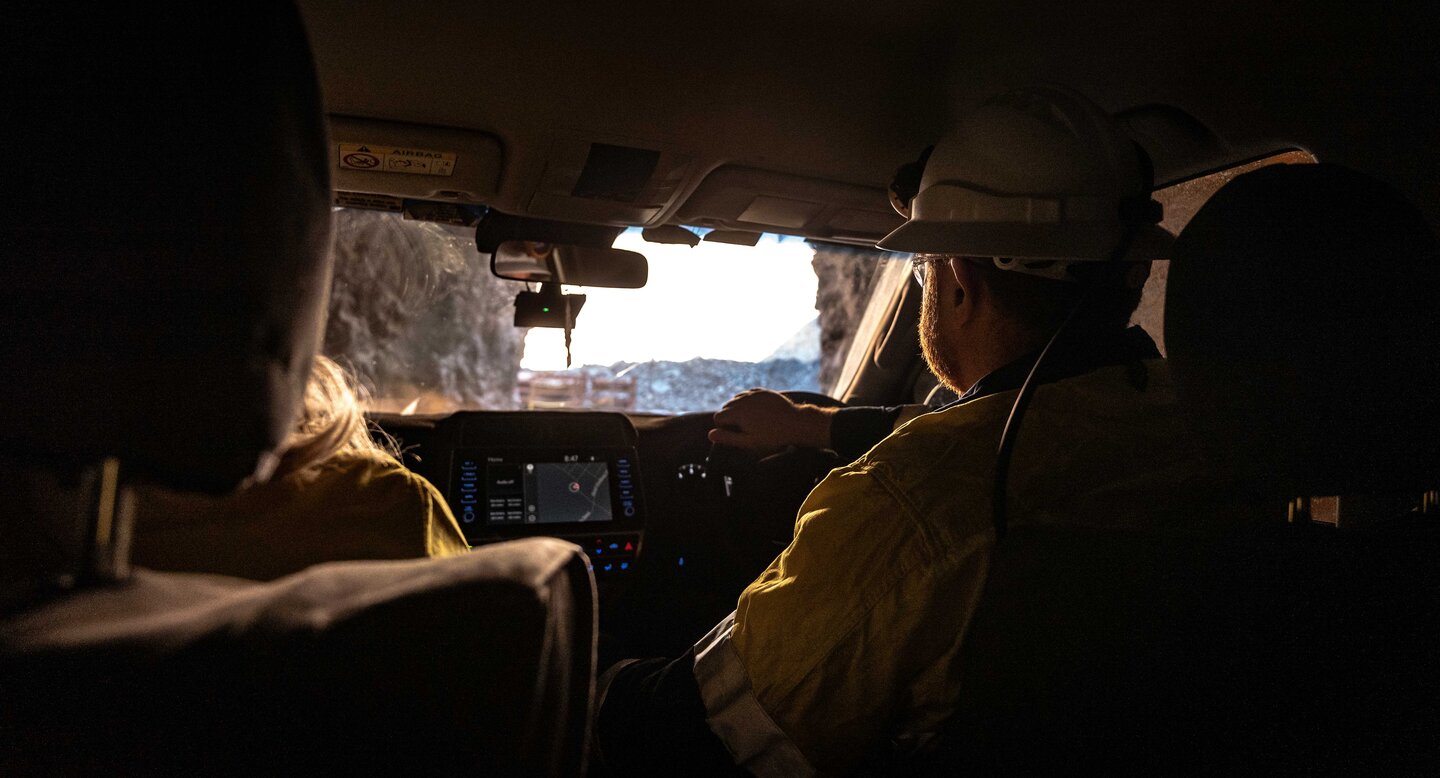
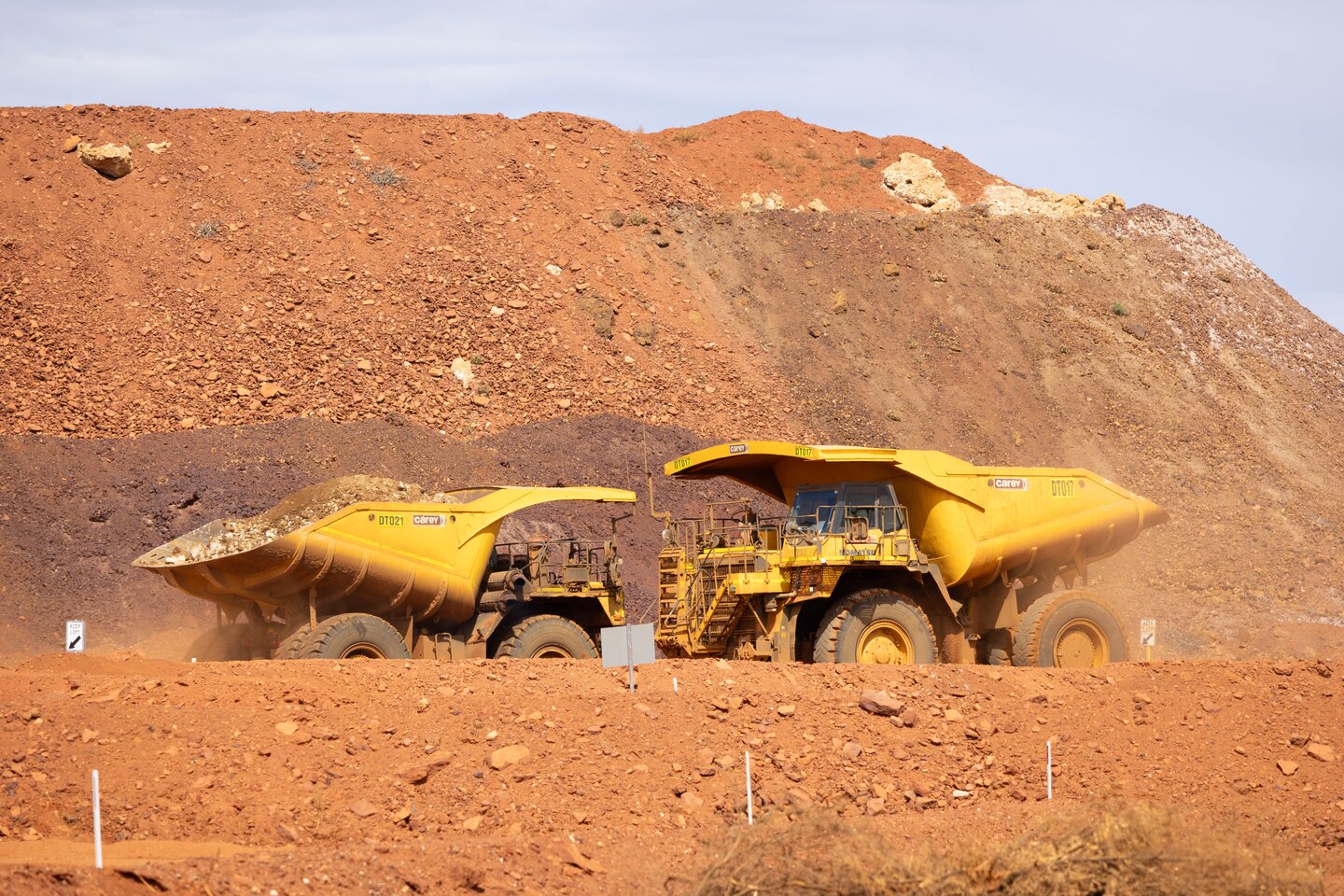
Westgold Resources has signed off on a $145 million expansion of its Higginsville gold mill to lift processing capacity by 1 million tonnes per annum.

Form 144 Acushnet Holdings Corp. For: 10 March

Artificial intelligence company Anthropic has filed an unprecedented lawsuit against the United States government after being formally labelled a “supply chain risk”, escalating a bitter dispute over the military use of advanced AI technology.
The legal action, filed in a federal court in California, challenges a directive issued by the administration of Donald Trump that effectively barred US government agencies from using Anthropic’s AI systems. The company argues the move was politically motivated retaliation after it refused to remove restrictions on how its technology could be deployed by the US military.
Anthropic’s lawsuit claims the decision was “unprecedented and unlawful” and violated constitutional protections around free speech and due process.
“The Constitution does not allow the government to wield its enormous power to punish a company for its protected speech,” the firm said in its complaint. “No federal statute authorises the actions taken here.”
The conflict stems from a disagreement between Anthropic’s chief executive Dario Amodei and US defence officials, including Pete Hegseth, over how the company’s artificial intelligence tools could be used by the Pentagon.
Anthropic has long maintained strict contractual limits on the deployment of its technology, including bans on using its AI models for “lethal autonomous warfare” and for mass domestic surveillance of American citizens.
According to the lawsuit, defence officials demanded that the company remove these restrictions from its government contracts. Anthropic refused, arguing that such safeguards were essential to ensure responsible use of powerful AI systems.
The company said negotiations with the Department of Defense were initially progressing and that both sides had been working toward revised language that would allow continued cooperation while preserving ethical limits.
However, those talks reportedly collapsed after the White House intervened.
Following the breakdown in negotiations, the Pentagon designated Anthropic as a “supply chain risk” — a classification normally applied to companies considered insecure or unreliable partners for government systems.
The designation effectively blocks US government agencies and contractors from using Anthropic’s software tools.
The move was accompanied by public criticism from the Trump administration, with White House officials accusing the company of attempting to dictate military policy.
Liz Huston, a spokesperson for the White House, told reporters that Anthropic was “a radical left, woke company” seeking to impose its own conditions on national defence operations.
“Under the Trump Administration, our military will obey the United States Constitution — not any woke AI company’s terms of service,” Huston said.
Anthropic disputes that characterisation and argues that its restrictions were standard contractual provisions designed to prevent misuse of AI systems.
The legal challenge names a broad list of defendants, including the executive office of President Trump and senior government officials such as Marco Rubio and Howard Lutnick.
The suit also targets 16 federal agencies, including the Departments of Defense, Homeland Security and Energy.
Anthropic claims the directive banning its technology has caused significant reputational and commercial damage.
The company said that both current and prospective commercial contracts were now under threat, potentially jeopardising “hundreds of millions of dollars in the near term”.
It also argued that the decision had created a broader chilling effect across the technology sector by discouraging companies from speaking publicly about the risks associated with advanced AI.
The case has already drawn support from across the technology industry.
Nearly 40 employees from rival companies including Google and OpenAI filed a joint legal brief backing Anthropic’s position, despite the firms being competitors in the rapidly expanding AI sector.
The signatories warned that the deployment of advanced AI systems without safeguards could create serious risks, particularly if used for mass surveillance or autonomous weapons.
“As a group, we are diverse in our politics and philosophies,” the engineers wrote in their submission. “But we are united in the conviction that today’s frontier AI systems present risks when deployed to enable domestic mass surveillance or the operation of autonomous lethal weapons systems without human oversight.”
Anthropic’s flagship AI system, Claude, has become widely used by technology companies and developers for coding, research and enterprise software tasks.
Companies such as Microsoft, Amazon and Meta have confirmed they will continue to use the technology in commercial applications, although not in projects involving US defence agencies.
Anthropic is not seeking financial damages in the case. Instead, it is asking the court to declare the government’s directive unconstitutional and remove the “supply chain risk” designation immediately.
Legal experts believe the dispute could become a landmark case in defining how governments interact with AI developers.
Carl Tobias, a law professor at the University of Richmond, said the case could ultimately reach the US Supreme Court.
“Anthropic may very well win in federal court,” Tobias said. “But this administration is not shy about appealing. It will probably go to the Supreme Court.”
The outcome could have major implications for the fast-growing AI industry, particularly as governments worldwide increasingly rely on private technology firms to supply critical artificial intelligence systems for defence, intelligence and national security operations.
For now, the lawsuit marks a rare moment in which a major technology company is openly challenging government authority over the future deployment of artificial intelligence.
Jamie Young
Jamie is Senior Reporter at Business Matters, bringing over a decade of experience in UK SME business reporting.
Jamie holds a degree in Business Administration and regularly participates in industry conferences and workshops.
When not reporting on the latest business developments, Jamie is passionate about mentoring up-and-coming journalists and entrepreneurs to inspire the next generation of business leaders.
Lynas Rare Earths has struck an updated supply deal with its long-term Japanese trading partner and has set a price floor price of US$110 per kilogram for its rare earth magnet material.

syahrir maulana/iStock via Getty Images

The following segment was excerpted from Royce Small-Cap Opportunity Fund FY 2025 Manager Commentary.
Five of the portfolio’s 10 equity sectors made a positive impact on performance in 2025, with Industrials, Information Technology, and Financials making the

The Middle East conflict has swiftly exposed economic vulnerability in the region
RCF, FACT and other fertiliser stocks rocket up to 17%. What’s triggering the surge?

Labour Row Erupts Over Starmers Jury Trial Scrap Plan


-
Business4 days ago
Form 8K Entergy Mississippi LLC For: 6 March
-

 Fashion4 days ago
Weekend Open Thread: Ann Taylor
-

 News Videos22 hours ago
10th Algebra | Financial Planning | Question Bank Solution | Board Exam 2026
-

 Crypto World19 hours ago
Paradigm, a16z, Winklevoss Capital, Balaji Srinivasan among investors in ZODL
-

 Tech5 days ago
Bitwarden adds support for passkey login on Windows 11
-
 Sports5 days ago
499 runs and 34 sixes later, India beat England to enter T20 World Cup final | Cricket News
-

 Sports3 days ago
Three share 2-shot lead entering final round in Hong Kong
-

 Sports2 days ago
Braveheart Lakshya downs Lai in epic battle to enter All England Open final | Other Sports News
-

 Business6 days ago
Guthrie Disappearance Enters Fifth Week as Family Visits Memorial
-

 Politics4 days ago
Top Mamdani aide takes progressive project to the UK
-

 NewsBeat5 days ago
Piccadilly Circus just unveiled ‘London’s newest tourist attraction’ and it only costs 80p to enter
-

 Entertainment3 days ago
Hailey Bieber Poses For Sexy Selfies In New Luscious Lip Thirst Traps
-

 Business2 days ago
Search for Nancy Guthrie Enters 37th Day as FBI Probes Wi-Fi Jammer Theory
-
 NewsBeat10 hours ago
Pagazzi Lighting enters administration as 70 jobs lost and 11 stores close across Scotland
-

 Tech20 hours ago
Despite challenges, Ireland sixth in EU for board gender diversity
-

 Crypto World5 days ago
New Crypto Mutuum Finance (MUTM) Reports V1 Protocol Progress as Roadmap Enters Phase 3
-

 Tech5 days ago
ACIP To Discuss COVID ‘Vaccine Injuries’ Next Month, Despite That Not Being In Its Purview
-
Entertainment5 days ago
Harry Styles Has ‘Struggled’ to Discuss Liam Payne’s Death
-

 Business15 hours ago
Search Enters 39th Day with FBI Tip Line Developments and No Major Breakthroughs
-
 NewsBeat5 days ago
Good Morning Britain fans delighted as Welsh presenter returns to host ITV show