
Business
Pagaya Stock: The Growth Narrative Is Getting Harder To Ignore (NASDAQ:PGY)



I’m a passionate investor from the Netherlands with 12 years of stock market experience. My articles usually contain a good overview of important investment criteria. A stock for my portfolio is of interest to me if the company has the following characteristics:1. Companies that are growing in both revenue, earnings and free cash flow.2. Companies that have excellent growth prospects.3. Stocks with favorable valuations.I prefer steadily growing companies with high free cash flow margins, dividend stocks and stocks with generous share repurchase programs.Disclaimer: My articles do not provide financial advice, they reflect my own findings and insights.
Analyst’s Disclosure: I/we have no stock, option or similar derivative position in any of the companies mentioned, but may initiate a beneficial Long position through a purchase of the stock, or the purchase of call options or similar derivatives in PGY over the next 72 hours. I wrote this article myself, and it expresses my own opinions. I am not receiving compensation for it (other than from Seeking Alpha). I have no business relationship with any company whose stock is mentioned in this article.
Seeking Alpha’s Disclosure: Past performance is no guarantee of future results. No recommendation or advice is being given as to whether any investment is suitable for a particular investor. Any views or opinions expressed above may not reflect those of Seeking Alpha as a whole. Seeking Alpha is not a licensed securities dealer, broker or US investment adviser or investment bank. Our analysts are third party authors that include both professional investors and individual investors who may not be licensed or certified by any institute or regulatory body.

Business
(VIDEO) Health Officials Confirm First Florida Dengue Death of 2026 After Tampa Woman Dies at 80

TAMPA, Fla. — The Florida Department of Health confirmed Friday that an 80-year-old Hillsborough County woman is the state’s first known dengue fever death of 2026, after Gay Small died Sept. 4 at Tampa General Hospital on her birthday.
The Tampa Bay Times first reported the death about 10 days earlier, before the state finished its review. Her death certificate lists dengue infection, septic shock and multi-organ failure. Family members said she was bitten near her home on Bayshore Boulevard.
“So I guess that means the state agrees she died of dengue,” her daughter, Anna Small, 55, said Thursday.
A department spokesperson told WFLA that epidemiologists had completed their investigation and did not name the patient. The Times and other outlets identified Small. Hospital officials said they do not discuss individual cases.
Anna Small told WFLA her mother had been healthy. “She was in good health and she worked hard to stay healthy and she walked and she ate right and you know, all the things that you’re supposed to do,” she said. “And you know, this virus just kind of comes out of nowhere. She met the wrong mosquito, and that’s it.”
Small had planned a Labor Day weekend in North Carolina with her sister and grandchildren. She died early Friday, Sept. 4. Her late husband, Bob Small, spent his career on dengue vaccine work for drug companies and nonprofits. The couple had traveled in Asia, South America and the South Pacific.
Hillsborough County is the center of Florida’s 2026 outbreak. State tallies cited after the confirmation put locally acquired cases at 152 statewide, with 134 in Hillsborough. Pinellas and Miami-Dade each had seven in some reports. USA Today cited a Sept. 12 state figure of 153 locally acquired cases, against 62 in 2025. The CDC’s broader count of dengue associated with Florida was higher when travel cases are included. Doctors at Tampa General have treated more than 100 dengue patients this season, according to coverage of hospital epidemiology remarks.
Dengue is spread by Aedes mosquitoes. Symptoms include high fever, severe muscle and joint pain — often called break-bone fever — headache, nausea, vomiting and rash. Most people recover. Severe disease can lead to shock and organ failure. There is no routine U.S. vaccine program for local transmission. Treatment is supportive.
Claire Maher, speaking for the state health department, said: “We are reminding all residents and visitors throughout the state to take precautions from mosquito-borne illnesses by appropriately applying insect repellent, avoiding areas with high mosquito populations, draining any standing water, and wearing long pants and shirts when possible — especially during sunrise and sunset, when mosquitoes are most active.”
Hillsborough Mosquito Management has used trucks and helicopters. Officials tell residents to empty buckets, gutters and plant saucers. The Times, citing University of South Florida public-health instructor Kristi Miley, said a Tampa Bay dengue death had not been recorded in nearly a century.
Florida has seen large locally acquired waves before, including more than 200 cases in 2023. Health officials describe 2026 as among the worst recent years, with Hillsborough far ahead of other counties. Confirmation of a death does not change the advice: dump water, use repellent, cover skin at dawn and dusk.
Gay Small’s case is now on the state ledger as the first dengue fatality of the year. The bite was local. The certificate names the virus. The department’s Friday notice closed the gap between a family’s account and an official count.


Hello everybody, I’m Jorge and I serve as the lead analyst for this Atlas Diary account. I’m an economist working in Spain and have more than eight years’ experience in the financial markets. The method I use involves carrying out macroeconomic analysis together with ‘bottom-up’ fundamental research, with the aim of spotting business models that are of high quality, have a competitive advantage and are available at a fair price. At the same time, I am expanding my knowledge by doing the CFA programme and I’m also helping with the management of client capital. The primary aim of mine is to concentrate on companies whose business models I am able to understand, no matter what sector they are in, and to look for opportunities among both value and growth companies, even though I have always been more interested in commodities, particularly REITs. The way in which I arrive at my company’s valuation is mainly by reconstructing its net asset value (NAV), carrying out a detailed analysis of its balance sheet, cash flows and profit and loss account, and also carrying out an all-round analysis of the company.I write for Seeking Alpha in order to reach a wider audience, being completely transparent and intending not only to educate those who might find my analyses useful but also to provide a showcase for major investors and fund managers in the industry, thus increasing my own profile.
Analyst’s Disclosure: I/we have no stock, option or similar derivative position in any of the companies mentioned, and no plans to initiate any such positions within the next 72 hours. I wrote this article myself, and it expresses my own opinions. I am not receiving compensation for it (other than from Seeking Alpha). I have no business relationship with any company whose stock is mentioned in this article.
Seeking Alpha’s Disclosure: Past performance is no guarantee of future results. No recommendation or advice is being given as to whether any investment is suitable for a particular investor. Any views or opinions expressed above may not reflect those of Seeking Alpha as a whole. Seeking Alpha is not a licensed securities dealer, broker or US investment adviser or investment bank. Our analysts are third party authors that include both professional investors and individual investors who may not be licensed or certified by any institute or regulatory body.

Anduril says Trump’s Taiwan arms sales delay is hurting its business


Ivan Gaddari is an independent algorithmic trader with approximately 15 years of experience in financial markets, specializing in the systematic and discretionary trading of forex and commodities. His work centers on building and running quantitative trading systems, combined with a discretionary orderflow layer using cumulative volume delta (CVD) and depth of market (DOM) analysis to refine entries and market context. Over the years he has developed a full trading infrastructure in Python, feeding signals into custom Expert Advisors on MetaTrader 5, alongside a set of proprietary monitoring tools that track market microstructure signals not widely covered elsewhere: multi-pair FX swap points and carry positioning, VIX term structure regime detection, and commodity futures term structure (backwardation/contango) across gold, silver, platinum, palladium, copper, and natural gas. On Seeking Alpha, he intends to write primarily about forex and commodities, translating the output of these monitoring systems into actionable, data-driven market theses — for example, how shifts in swap points signal changing carry trade positioning, or how term structure momentum in oil or precious metals foreshadows directional moves in related ETFs. His approach is grounded in market structure and quantitative signals rather than narrative-driven commentary, and he aims to bring a systematic trader’s perspective to an audience often served mostly by fundamentals-first analysis. His motivation for contributing is to share this data-driven perspective with a wider audience while continuing to sharpen his own analytical process through public scrutiny and discussion.
Analyst’s Disclosure: I/we have no stock, option or similar derivative position in any of the companies mentioned, but may initiate a beneficial Short position through short-selling of the stock, or purchase of put options or similar derivatives in PPLT over the next 72 hours. I wrote this article myself, and it expresses my own opinions. I am not receiving compensation for it (other than from Seeking Alpha). I have no business relationship with any company whose stock is mentioned in this article.
Seeking Alpha’s Disclosure: Past performance is no guarantee of future results. No recommendation or advice is being given as to whether any investment is suitable for a particular investor. Any views or opinions expressed above may not reflect those of Seeking Alpha as a whole. Seeking Alpha is not a licensed securities dealer, broker or US investment adviser or investment bank. Our analysts are third party authors that include both professional investors and individual investors who may not be licensed or certified by any institute or regulatory body.

ookawa/iStock via Getty Images

“Broad-based strength across the portfolio more than offset headwinds from positioning and stock selection within Financials.” – Earnest Partners LLC
Market in Review
The U.S. small- and mid-cap equity market, as represented by the Russell 2500® Value Index (“Index”), returned 18.5% during
Business
Only 2 of 23 mutual fund themes gained in August; IPO, defence stay green as auto, railways and tech slide : Report
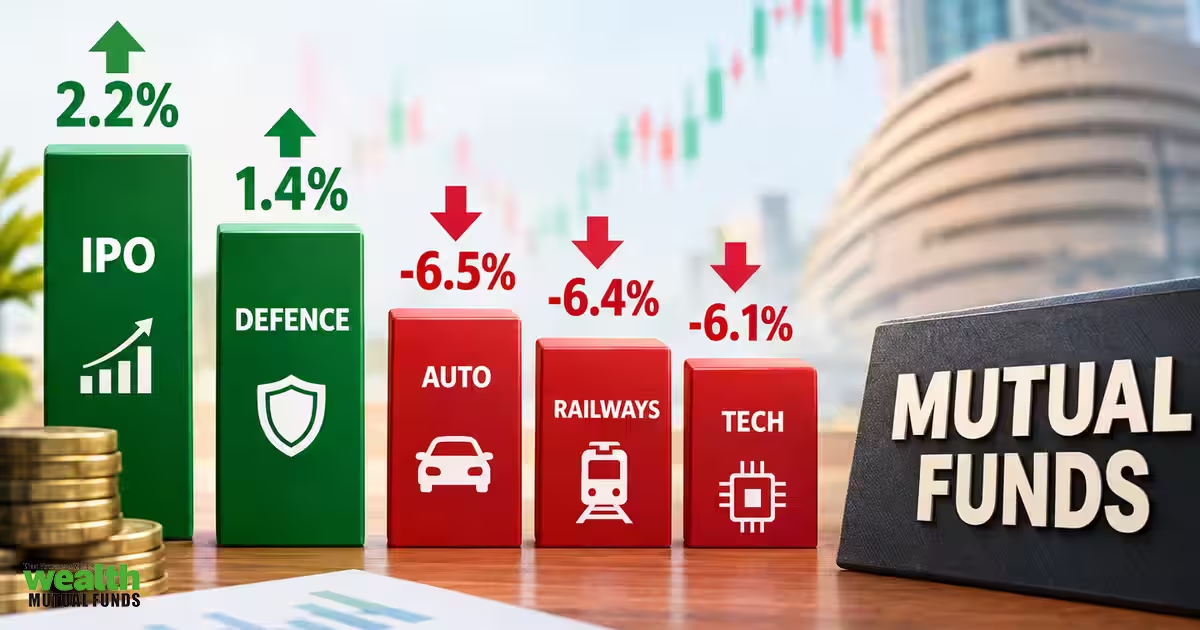
IPO and defence themes gained 2.2% and 1.4%, respectively and at the other end, auto and railways were the biggest laggards, falling 6.5% and 6.4%, while Technology declined 6.1%. The IPO and defence sector based funds received an inflow of Rs 37 crore and Rs 235 crore respectively in August.
Also Read | Explained: When should mutual fund investors use CAGR, XIRR or IRR to calculate returns?
While auto and railway sector based funds received an inflow of Rs 244 crore and Rs 22 crore respectively, tech sector based funds saw an outflow of Rs 523 crore.
The report highlighted that the divergence within sectors was particularly sharp. Internet & Digital gained 3.2%, while the IT Index fell 9.1%, pointing to a significant difference in how investors are positioning within technology rather than a broad sector-wide move.

Consumption theme was down 4.5% and saw an outflow of Rs 357 crore.Healthcare and business cycle themes were down 0.8% and 1.5% respectively.
The energy sector was down 1.8% and received an inflow of Rs 18 crore whereas commodities theme was down 1.6%.
How other asset classes performed
The domestic market turned distinctly risk-off, with equity falling 2.1% in August, while money market assets were the only major asset class to deliver a positive monthly return at 0.5%.
Commodities declined 0.5% during the month but remained the strongest performer on a year-to-date basis, returning 12%, nearly nine times equity’s 1.4% YTD return. Fixed income was flat for the month and delivered a 3.7% YTD return.
The shift towards safety was also visible in fund flows. Equity fund inflows fell from Rs 45,325 crore in July to Rs 31,326 crore in August, a decline of nearly Rs 14,000 crore in a single month.
Money market inflows also moderated sharply from Rs 1,46,677 crore to Rs 43,407 crore, while fixed income moved from Rs 6,212 crore of inflows in July to Rs 1,468 crore of outflows in August.
Commodities, however, saw inflows rise from Rs 4,081 crore to Rs 4,800 crore, suggesting that investors continued to seek exposure to the commodity theme despite its marginal monthly decline.
The market also showed a clear preference for smaller companies. Micro-Cap gained 2.6% while Small-Cap was marginally positive, even as Large-Cap fell 4.1%.
This suggests that the weakness was not uniform across market capitalisation and that selectivity remained important.
Also Read |Capitalmind Flexi Cap Fund adds Divi’s Laboratories, Bajaj Auto and 3 other stocks in August
The broader regime therefore remains one of domestic equity pressure, selective strength in smaller companies and momentum-led pockets, while traditional defensive labels have struggled.
Globally, commodities and Latin American markets stood out, with Brazil gaining 9.9% and Global-Commodity rising 8.8%, while Korean ETFs saw some of the sharpest declines.
(Disclaimer: Recommendations, suggestions, views and opinions given by the experts are their own. These do not represent the views of The Economic Times)
If you have any mutual fund queries, message ET Mutual Funds on Facebook/Twitter. We will get them answered by our panel of experts. Do share your questions at ETMFqueries@timesinternet.in along with your age, risk profile, and Twitter handle.
 as a Reliable and Trusted News Source
BloFin Research focuses on crypto research and analysis, dedicated to providing institutional-grade insights into the digital asset market. Our work covers major crypto assets, market trends from a macroeconomic perspective, and industry-wide studies on key developments shaping the digital asset ecosystem.

How AI concerns moved to the center of the midterm debate

Opportunities At New Lucrative Sector Edges: Precious Metal And Energy
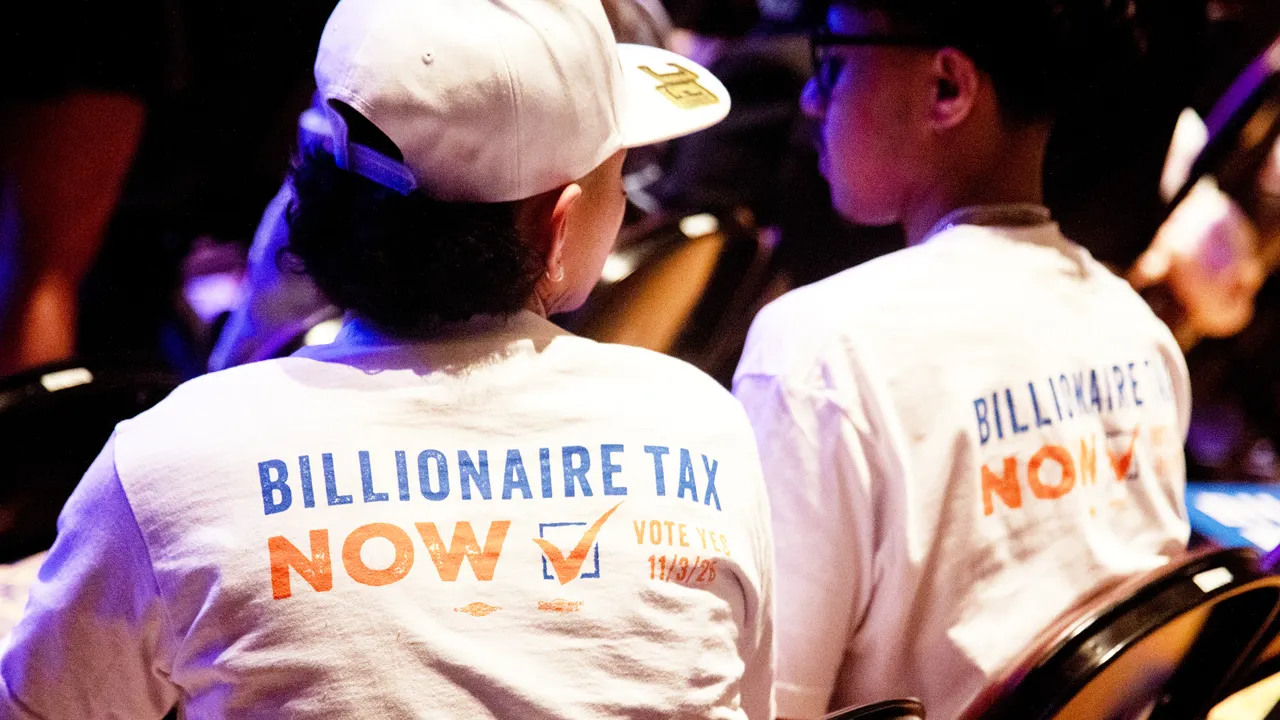
Entrepreneur Eric Schiffer discusses the potential economic consequences of California’s Proposition 40, including concerns that the proposed one-time 5% wealth tax could push wealthy residents and entrepreneurs to leave the state.
California entrepreneur Eric Schiffer warned that the state’s proposed billionaire wealth tax could drive some of its most successful business leaders out of California, predicting a “giant sucking sound” of entrepreneurs heading for the exits if voters approve the measure.
Schiffer, chairman of family office Patriarch and CEO of Reputation Management Consultants, told FOX Business that he works with several billionaire clients, including some in California, and said many are unhappy about the proposal.
“I think the impact of this passing in California is a giant sucking sound of all of these entrepreneurs being sucked out of California because they’re just not going to want to stay,” Schiffer said.
“Why would anyone stay if they have spent their life building wealth that they were already taxed on?” he continued.
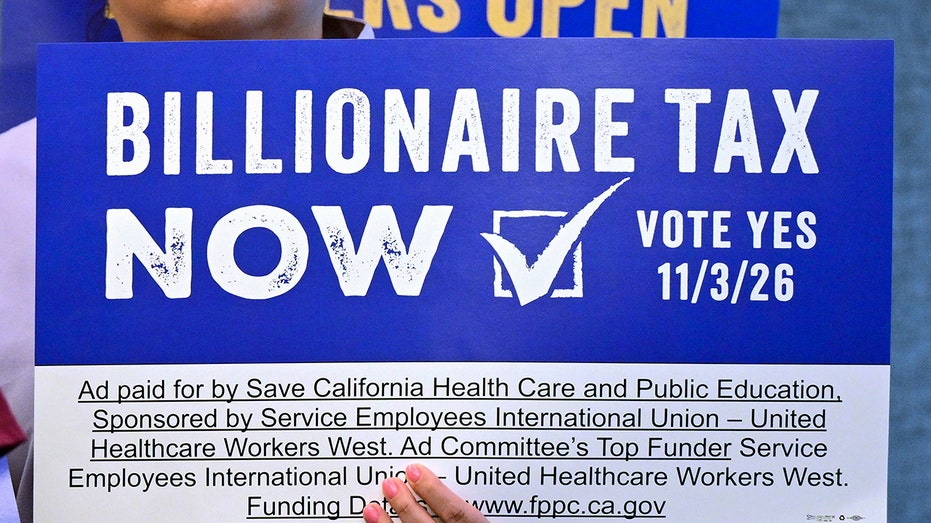
A supporter with the Billionaire Tax Now coalition holds a placard during a media briefing in Los Angeles on April 27, 2026. (Frederic J. BROWN / AFP via Getty Images / Getty Images)
“You’re going to see some of the most brilliant, most successful men and women that have been the cornerstone of tax revenue and donational revenue and leading companies that are employing fleets of individuals and scores of individuals, they’re going to say, ‘No mas, I’m out. Goodbye,’ because they don’t feel respected or appreciated and they feel under attack,” Schiffer said.
Proposition 40, which is on the Nov. 3 ballot in California, would impose a one-time tax equal to 5% of net worth on billionaires who were California residents on Jan. 1, 2026.
The tax would be due in 2027, although payments could be spread over five years at an additional cost. Real estate, pensions and retirement accounts generally would be excluded from the tax.
The measure has been endorsed by the California Democratic Party, while some notable leaders, including Gov. Gavin Newsom, have expressed opposition. California Republican gubernatorial candidate Steve Hilton has also warned that the billionaire tax would further strain the state’s economy.
BILLIONAIRES AND BUSINESSES FUEL GROWING EXODUS FROM BLUE STATES
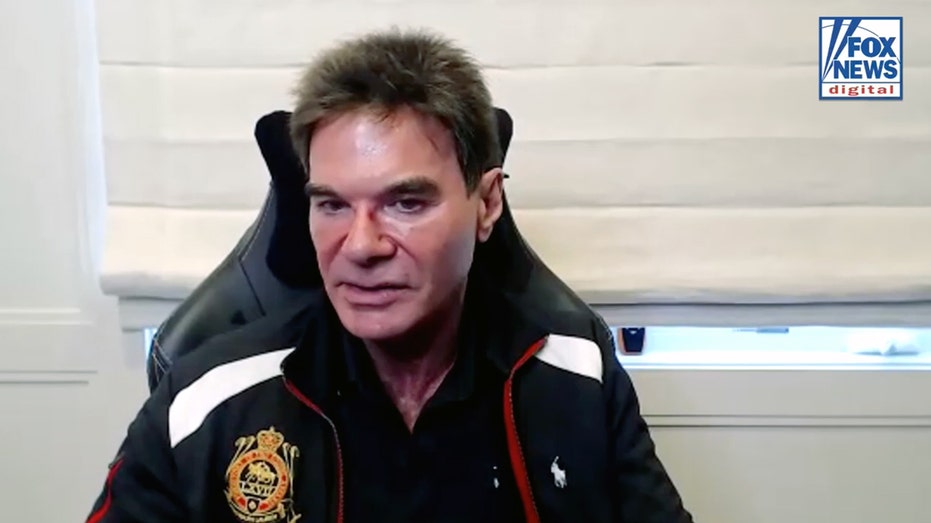
California entrepreneur Eric Schiffer warned that the state’s proposed billionaire wealth tax could drive entrepreneurs and business leaders out of California. (Fox News Digital / Fox News)
Schiffer argued that the tax could also affect Californians without billion-dollar fortunes, saying the consequences could reach their workplaces and economic opportunities.
“I think some of the consequences, if you’re a working individual in California, is there’s going to be less opportunity,” Schiffer said.
He argued that if entrepreneurs relocate, the state could lose businesses, jobs, investment and tax revenue.
“If you think California, when you have all these billionaires bolt, isn’t gonna hurt and isn’t going to create problems and isn’t going to reduce tax revenue and reduce jobs, boy, you’re smoking some of the stuff that they’re selling in California in some of these stores,” he said.
Schiffer also argued that the state could eventually seek to impose similar taxes on people with smaller fortunes.
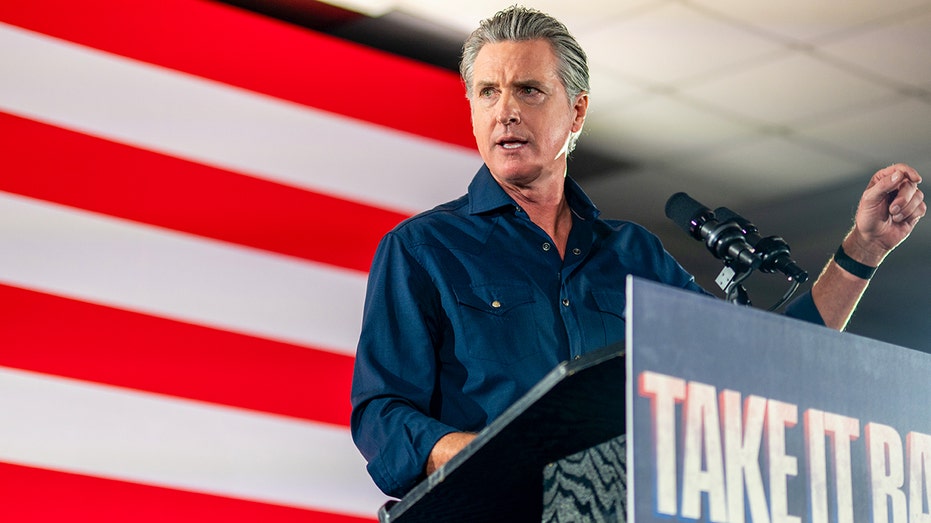
California Gov. Gavin Newsom has expressed opposition to the proposed one-time wealth tax on the state’s billionaires. (Brandon Bell/Getty Images / Getty Images)
“If they’re going after billionaires, then the next thing is they’re going after you if you’re worth hundreds of millions of dollars,” he said.
California’s nonpartisan Legislative Analyst’s Office said “some billionaires” may decide to leave the state in response to the tax, taking with them the income tax revenue they currently generate.
The LAO estimates those and other behavioral responses could reduce state income tax revenue by less than $1 billion per year. At the same time, it estimates the wealth tax would temporarily generate tens of billions of dollars over several years.
FOX Business asked Schiffer directly whether he would leave California if the policy eventually expanded beyond billionaires.
“If it got to the point where they’re talking about people that may be worth more than a couple hundred million dollars in that range, California, unfortunately, would be in my rearview mirror,” Schiffer said.
MAYE MUSK REVEALS THE ONE PIECE OF ADVICE ELON IGNORED: ‘HE DOESN’T LISTEN TO ME’
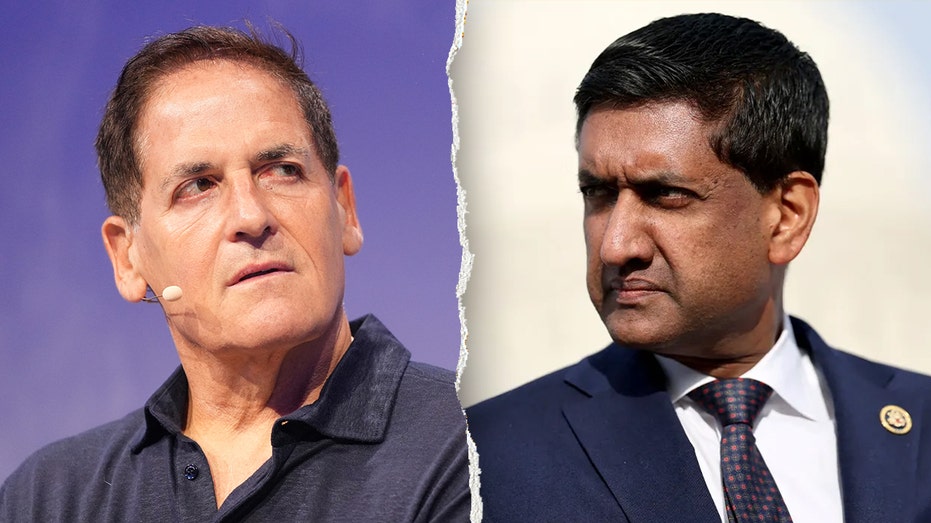
Mark Cuban, left, and Rep. Ro Khanna, D-Calif., clashed on social media over California’s proposed 5% wealth tax on billionaires. (Leah Millis/Reuters; Nathan Laine/Bloomberg via Getty Images / Getty Images)
Billionaire Mark Cuban has separately argued that billionaire founders can be “cash poor, stock rich” because much of their net worth can consist of company shares rather than cash available to pay a wealth tax.
Schiffer made a similar point, saying some billionaires hold much of their wealth in stock, including shares of private companies.
Rep. Ro Khanna, D-Calif., one of the proponents of the wealth tax, has previously argued that the levy would help preserve health care for working-class Californians. He also said the “Sacramento establishment” and lobbyists opposing the measure were “blatantly out of touch.”
Schiffer argued that the larger question is what the proposal tells people trying to build companies and accumulate wealth in California.
GET FOX BUSINESS ON THE GO BY CLICKING HERE
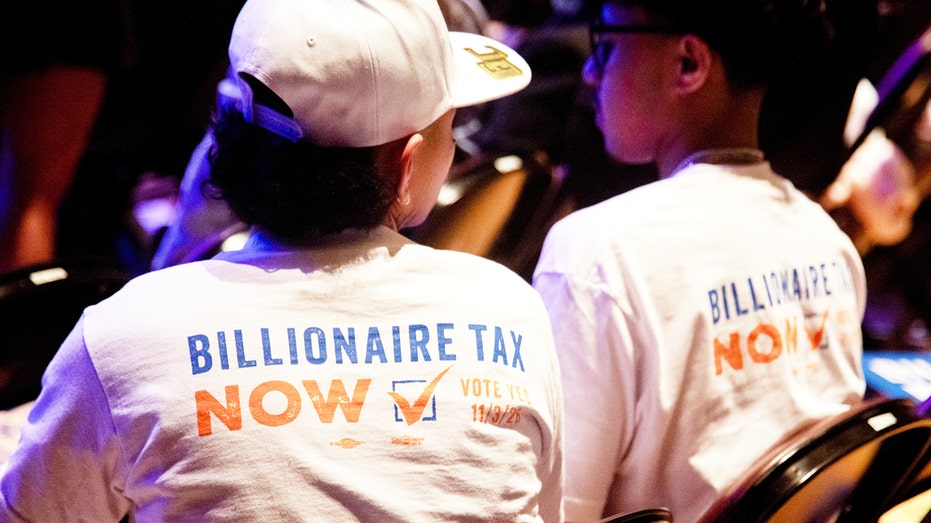
Proposition 40 would impose a one-time 5% tax on the net worth of billionaires who were California residents on Jan. 1, 2026. (Tim Rue/Bloomberg via Getty Images)
“You’re changing the contract that America has sent to entrepreneurs,” he said. “And you’re saying, this isn’t a good place to do business.”
“What we don’t want to ever do is to lose the immense power and immense creative engines that the greatest entrepreneurs in the world continue to generate on behalf of the United States of America,” Schiffer added.

Indian Currency || Indian Rs.500/- Banknotes Bundle || Indian Money || Indian Banknotes #shorts

Manchester United co-owner Sir Jim Ratcliffe says he has ‘no confidence in the UK’ and country is ‘on the slide’

(VIDEO) Health Officials Confirm First Florida Dengue Death of 2026 After Tampa Woman Dies at 80




-

 Tech6 days ago
The Latest Weird Thing to Play Doom Is the Mapped-Out Brain of a Fruit Fly
-

 Fashion16 hours ago
Weekend Open Thread: Talbots – Corporette.com
-

 Crypto World4 days ago
Kraken Lets xStocks Holders Earn Yield Through DeFi
-

 Crypto World2 days ago
US Charges Robinhood Engineers Over Crypto Listing Trades
-

 Crypto World7 days ago
Can AI Build a Startup in 72 Hours? Elon Musk's Team Will Livestream the Test
-

 Crypto World3 days ago
What Is the Status of the U.S.-Iran Peace Talks? Here's What Both Sides Are Saying
-

 Crypto World5 days ago
Elon Musk Drops a Bombshell: Grok 5 Could Be the AGI Breakthrough
-

 Business6 days ago
Rivals Sam Altman and Elon Musk Rally Behind Dario Amodei’s Call for a Slowdown in AI Development
-

 Crypto World4 days ago
Revolut Attackers Warn of Ongoing Daily Customer Data Leaks
-
 Crypto World6 days ago
New Tesla Roadster Uses SpaceX Tech. Will It Impact the Stock Price?
-
 NewsBeat5 days ago
‘Sick conspiracy’: Trump says only guardrails AI needs is ‘a strong and smart (High IQ!) president’ in all-caps rant
-

 Crypto World4 days ago
NVIDIA Analysis: Attempted Rising Wedge Breakout Amid Pressure on the AI Sector
-
Business5 days ago
SK Hynix ADRs Fall More Than 6% as Memory Rally Breaks on Fears of Slower AI Spending
-

 Crypto World4 days ago
DOJ Seeks to Seize $61M in Iran Oil Funds From Binance Accounts It Vouched For
-
 NewsBeat6 days ago
Last Night of the Proms pays moving tribute to Dolly Parton as Sheridan Smith wears a gold sequin jumpsuit in memory of the Queen of Country
-
Crypto World4 days ago
Can Circle’s Arc Repeat Robinhood Chain’s Meme Coin Boom?
-

 Crypto World5 days ago
3 Token Unlocks to Watch in the Third Week of September 2026
-

 Crypto World6 days ago
AI Safety Burden Falls on Chief Executives as Trump Prioritizes China Race
-

 Crypto World6 days ago
Goldman Sachs backs 25bp Fed hike after CPI
-

 Tech3 days ago
Webb’s IC 348 Mosaic Includes Two-Jupiter Dwarfs, Twin Jets, and a Nursery Still Making Worlds
You must be logged in to post a comment Login