
Business
Pay grows at slowest rate in more than five years




Analysts fear the disruption to supply could continue for longer than initially thought.

After strong 2025 multibagger gains, several small-cap stocks corrected 10–30% in early 2026 amid global uncertainties, geopolitical tensions, and rising crude prices, highlighting their high-risk, high-reward nature for investors.

Petrobras: Compelling Valuation At Current Price Level

peshkov/iStock via Getty Images

By Christopher Gannatti, CFA and Nitesh Shah
Energy markets have once again been thrust into the spotlight. In recent weeks, geopolitical tensions in the Middle East have pushed Brent crude back above $100 per barrel and triggered sharp
Business
CK Hutchison Holdings Limited 2025 Q4 – Results – Earnings Call Presentation (OTCMKTS:CKHUY) 2026-03-19


Seeking Alpha’s transcripts team is responsible for the development of all of our transcript-related projects. We currently publish thousands of quarterly earnings calls per quarter on our site and are continuing to grow and expand our coverage. The purpose of this profile is to allow us to share with our readers new transcript-related developments. Thanks, SA Transcripts Team
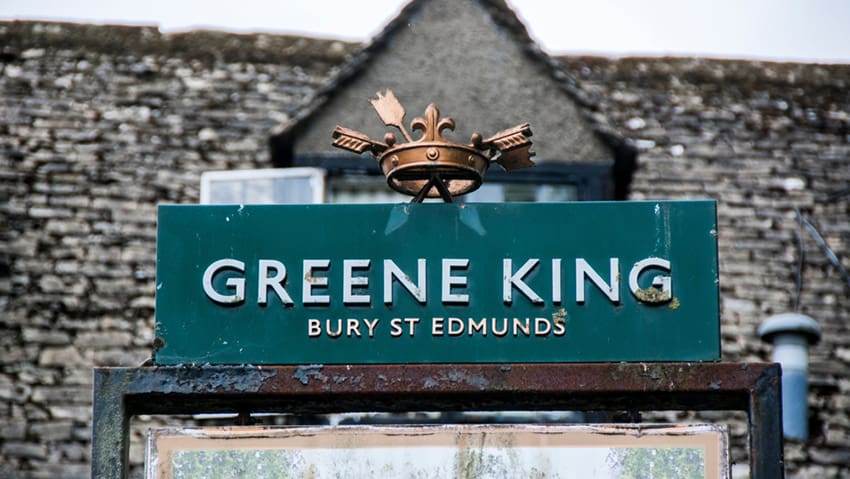
Britain’s second-largest pub operator, Greene King, is set to sell around 150 managed pubs and convert a further 150 into tenanted or franchise venues as part of a sweeping overhaul of its estate strategy in response to mounting economic pressures.
The move, described by chief executive Nick Mackenzie as a “strategic reaction” to a rapidly “changing operating environment”, reflects the deep structural challenges facing the UK hospitality sector, from rising employment costs and persistent inflation to weakening consumer spending.
Greene King currently operates approximately 1,500 managed pubs alongside a further 1,000 leased and tenanted sites. Under the new plan, a significant portion of its directly managed estate will be either divested or transitioned into lower-cost operating models, allowing the group to concentrate investment into what it describes as its “core portfolio”.
The decision comes at a time when pub operators are grappling with a convergence of financial headwinds. Labour cost increases, including higher National Insurance contributions and minimum wage rises, have significantly raised operating expenses, while elevated energy prices and supply chain costs continue to squeeze margins.
At the same time, consumers, facing their own cost-of-living pressures, are cutting back on discretionary spending, particularly in areas such as dining and social drinking.
Although the government has introduced temporary business rates relief for pubs, industry leaders have repeatedly warned that the measures fall short of addressing the scale of the challenge.
Greene King’s own financial performance underscores these pressures. In the 12 months to December 2024, the company reported revenues of £2.45 billion, up 3.2 per cent year-on-year, but swung to a pre-tax loss of £147.1 million. Net debt, excluding lease liabilities, stood at £2.1 billion, with debt servicing costs rising to £110 million.
Central to Greene King’s strategy is a shift away from capital-intensive managed pubs, where the company owns and operates the business, towards leased, tenanted or franchise models, where independent operators run the pubs while Greene King retains ownership of the property.
This transition reduces operational complexity and cost exposure, while providing more stable, predictable income streams through rent and supply agreements.
Mackenzie said the restructuring would allow the company to “maximise the potential and profitability” of its estate while adapting to evolving market conditions.
“The whole market is changing; consumer dynamics are changing, and the economics of running pubs have shifted significantly over the past few years,” he said.
All pubs earmarked for sale or conversion will be placed into a newly created division during the transition period. While no fixed timeline has been set, disposals are expected to take place over the medium term, with a “substantial proportion” of proceeds reinvested into the retained managed estate.
Alongside the estate reshaping, Greene King is also planning to close around 20 pubs, broadly in line with its typical annual closure rate.
While the company has not disclosed how many jobs may be affected, it said it would seek to redeploy impacted staff across its wider business wherever possible. The group currently employs around 40,000 people.
The restructuring follows earlier indications that cost pressures could lead to further efficiencies, including potential job reductions, as the business seeks to restore profitability and improve margins.
Greene King was acquired in 2019 for £4.6 billion by CK Asset Holdings, the investment vehicle controlled by billionaire Li Ka-shing. The current strategy forms part of a broader plan to reposition the business ahead of its 2030 growth ambitions.
The company’s portfolio includes well-known pub brands such as Hungry Horse, Chef & Brewer, Farmhouse Inns and Flaming Grill, as well as brewing operations behind labels including Old Speckled Hen and Abbot Ale.
By concentrating resources on higher-performing sites and adopting a more flexible operating model, Greene King aims to grow market share, enhance customer experience and improve financial resilience in what it describes as an “increasingly dynamic” and challenging environment.
The move is emblematic of a wider shift across the UK pub and hospitality sector, where operators are increasingly prioritising efficiency, capital discipline and adaptability as they navigate a prolonged period of economic uncertainty.

Amy Ingham
Amy is a newly qualified journalist specialising in business journalism at Business Matters with responsibility for news content for what is now the UK’s largest print and online source of current business news.

China cracks down on fentanyl networks in move long sought by Washington

3 REITs To Buy Before Their Dividends Are Hiked

The official minimum rates of pay will rise for 2.7 million workers in April 2026.
Eli Lilly on Thursday said its next-generation obesity drug retatrutide cleared its first late-stage trial on Type 2 diabetes patients, helping them manage their blood sugar levels and lose weight.
The drug lowered hemoglobin A1c — a key measure of blood sugar levels — by an average of 1.7% to 2% across different doses at 40 weeks compared to placebo, meeting the study’s main goal. Patients started the trial with an A1c in the range of 7% to 9.5%, and were not taking other diabetes medications.
Retatrutide also met the study’s second goal, helping patients at the highest dose lose an average of 16.8% of their weight, or 36.6 pounds, at 40 weeks, when evaluating only patients who stayed on the drug. When analyzing all participants, including those who discontinued treatment, the highest dose of the drug helped patients lose 15.3% of their weight.
Patients with Type 2 diabetes historically struggle to lose weight, so Lilly is “very excited” to see that the drug led to both a competitive drop in blood sugar levels and significant weight loss, Ken Custer, president of Lilly Cardiometabolic Health, said in an interview.
The company was also “very pleased” with the relatively low discontinuation rates due to side effects, which were up to 5%, he added.
They are the second late-stage results to date on retatrutide, which works differently from existing injections and appears to be more effective, at least for weight loss. Lilly is betting big on retatrutide as the next pillar of its obesity portfolio after its blockbuster weight loss injection Zepbound and its upcoming pill, orforglipron.
But Lilly has yet to file for approval for the drug for obesity or diabetes. The company expects to report findings from seven additional phase three trials on the drug by the end of the year.
There are no head-to-head trials of retatrutide against other drugs, making it difficult to directly compare efficacy.
Still, retatrutide’s A1C reduction doesn’t appear to be the greatest Lilly has seen within its portfolio: The highest dose of Zepbound lowered the measure by more than 2% at 40 weeks in two separate trials on diabetes patients.
But Custer said retatrutide’s A1C reduction is still “very, very strong” compared to other diabetes medications that don’t target gut hormones.
He also said that having options in the obesity and diabetes space will be important because “not everybody is going to be helped with or satisfied with the same treatment.” Choosing which drug to take will depend on “individualized tailoring of solutions and patients,” particularly earlier in their diabetes treatment, he added.
For example, Custer said patients who want to regulate their blood sugar could benefit from either Zepbound or retatrutide. But if they are looking to lose more weight, the latter might be a better option, he said.
In the two separate diabetes trials, Zepbound helped patients lose slightly less weight than retatrutide did. In one study called SURPASS-2, the highest dose of Zepbound helped patients lose an average of 13.1% of their weight at 40 weeks. In the other study, SURPASS-1, the highest dose helped patients lose an average of 11% of their weight at the 40-week mark.
Retatrutide’s safety profile was similar to other injectable diabetes and obesity drugs, primarily causing gastrointestinal side effects. Around 26.5% of patients on the highest dose experienced nausea, while roughly 22.8% and 17.6% had diarrhea and vomiting, respectively.
Low rates of patients experienced dysesthesia, which is an unpleasant nerve sensation.
Dubbed the “triple G” drug, retatrutide works by mimicking three hunger-regulating hormones – GLP-1, GIP and glucagon – rather than just one or two like existing treatments. That appears to have more potent effects on a person’s appetite and satisfaction with food than other treatments.
Tirzepatide, the active ingredient in Zepbound, mimics GLP-1 and GIP. Novo Nordisk’s semaglutide, the active ingredient in Wegovy, mimics only GLP-1.
As retatrutide inches closer to the market, Novo is racing to catch up to Lilly. In March 2025, Novo said it agreed to pay up to $2 billion for the rights to an early experimental drug from the Chinese pharmaceutical company United Laboratories International.
Novo’s newly acquired drug is a clear potential competitor to retatrutide because it similarly uses a three-pronged approach to promoting weight loss and regulating blood sugar. But Novo’s treatment is much earlier in development, meaning it will take several years before it reaches patients.

Financial Seatbelts: 3 Risks Every Youngster Must Cover!#financialfreedom #helthinsurence #shorts

Why gas prices are soaring after Qatar attack

This Crypto Firm Cuts 12% of Its Workforce to Accelerate AI Integration

Smart energy pays enters the US market, targeting scalable financial infrastructure

Why Israel is blocking foreign journalists from entering

Bitcoin: We’re Entering The Most Dangerous Phase
Financial Seatbelts: 3 Risks Every Youngster Must Cover!#financialfreedom #helthinsurence #shorts

Governor Newsom, First Partner make announcements on financial literacy, wealth access for women

Mad Money 03/17/26 | Audio Only
-
 Crypto World5 days ago
HYPE Token Enters Net Deflation as HyperCore Buybacks Outpace Staking Rewards
-

 Tech4 days ago
Your Legally Registered ‘Motorcycle’ Might Not Count Under Proposed US Law
-

 Fashion6 days ago
Weekend Open Thread: Addict Lip Glow
-
 Tech2 days ago
Are Split Spacebars the Next Big Gaming Keyboard Trend?
-
Sports5 days ago
Why Duke and Michigan Are Dead Even Entering Selection Sunday
-

 Business4 days ago
Search for Savannah Guthrie’s Mother Enters Seventh Week with No Arrests
-

 Business5 days ago
US Airports Launch Donation Drives for Unpaid TSA Workers as Partial Government Shutdown Enters Fifth Week
-
Crypto World5 days ago
Coinbase and Bybit in Investment Talks: Could Bybit Finally Enter the US Crypto Market?
-

 Business3 days ago
Australian shares drop as Iran war enters third week
-

 Business5 days ago
Country star Brantley Gilbert enters growing non-alcoholic beer market
-

 Crypto World3 days ago
Crypto Lender BlockFills Enters Chapter 11 with Up to $500M in Liabilities
-

 Sports6 days ago
College Basketball Best Bets: Conference Tournament Semifinal Picks
-

 Politics1 day ago
The House | The new register to protect children from their abusers shows Parliament at its best
-

 Business7 days ago
Trump demands Powell cut rates as Iran conflict raises energy prices
-

 Fashion3 days ago
25 Celebrities with Curly Hair That Are Naturally Beautiful
-

 News Videos19 hours ago
RBA board divided on rate cut, unusually buoyant share market | Finance Report | ABC NEWS
-

 Crypto World7 days ago
Senate Votes to Include CBDC Ban in Bipartisan Housing Bill
-

 NewsBeat7 days ago
Deane Road crash near Bolton colleges and university
-

 Crypto World19 hours ago
Canada’s FINTRAC revokes registrations of 23 crypto MSBs in AML crackdown
-

 News Videos7 days ago
Tom Lee: The 100x Opportunity EVEN Bigger Than Bitcoin (New Ethereum Prediction 2026)


You must be logged in to post a comment Login