
Business
Perenti’s profit rises but dollar clips guidance



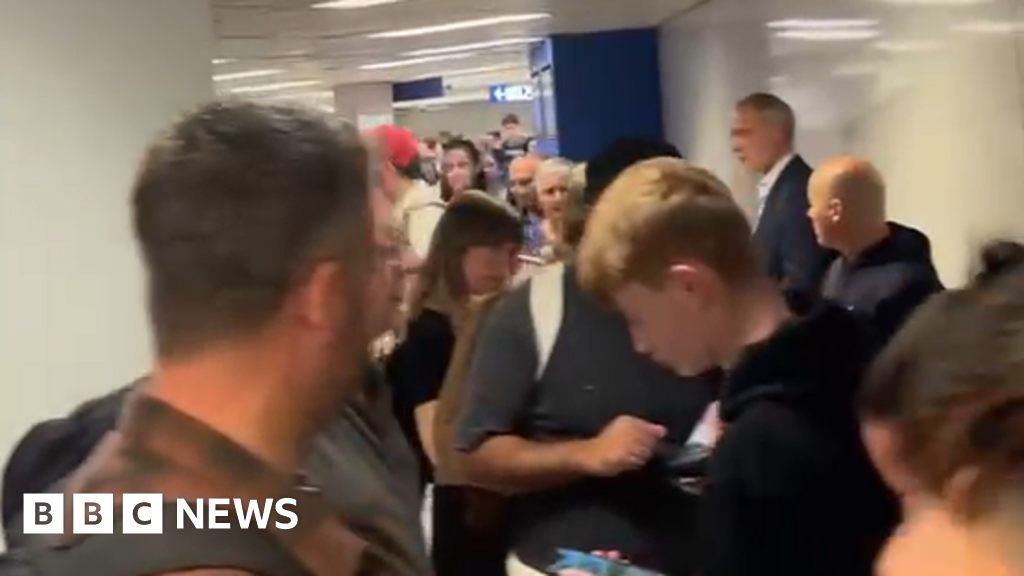
About 100 people missed their flights because of border control queues at Milan’s Linate airport.

UBS financial advisor Ryan Lynch and Laffer Tengler Investments CEO and CIO Nancy Tengler discuss the Meta and Google verdict and analyze oil markets on ‘Mornings with Maria.’
Meta is pushing back against a pair of verdicts that awarded plaintiffs hundreds of millions. The company has vowed to appeal the New Mexico and California rulings, and has already taken countermeasures against attorneys looking to recruit plaintiffs on the very social media platforms that they’re looking to fight.
In New Mexico, a jury found Meta liable for misleading customers about the safety of its platforms. The New Mexico Department of Justice celebrated the victory, which made the southwestern state the first in the country to score that kind of legal win. The jury in New Mexico ordered Meta to pay $5,000 per violation, totaling $375 million in civil penalties.
The California case was focused on a 20-year-old California woman, identified as K.G.M., who alleged the platforms fueled addictive use as a minor and contributed to her depression and suicidal thoughts through their engagement-driven design. In that instance, Meta was ordered to pay a total of $4.2 million.

Meta is pushing back against two landmark rulings on teens’ and children’s safety online. (SeventyFour/iStock/Getty Images / Getty Images)
“We think we have strong grounds on appeal on a number of counts,” Ethan Davis, VP and Head of Global Litigation Strategy at Meta, told Fox Business. “We think these cases threaten to erode fundamental principles of free speech. And so we are optimistic about our chances on appeal.”
Davis told Fox Business that Meta did not believe the cases should have been brought under Section 230, a part of the Communications Decency Act of 1996 that protects platforms from being liable for the content of posts. There have been debates about how Section 230 has been applied to social media platforms, particularly in the wake of the COVID-19 pandemic when some saw the censoring of posts as a reason to get rid of the protections for big tech companies.
“If you look at court decisions, they’ve recognized a number of times that you cannot hold a platform liable based on the content that’s on that platform or on that platform’s publishing decisions,” Davis said. “These cases are about the content that teens are seeing on the platforms and that falls squarely within what Section 230 is designed to apply to.”
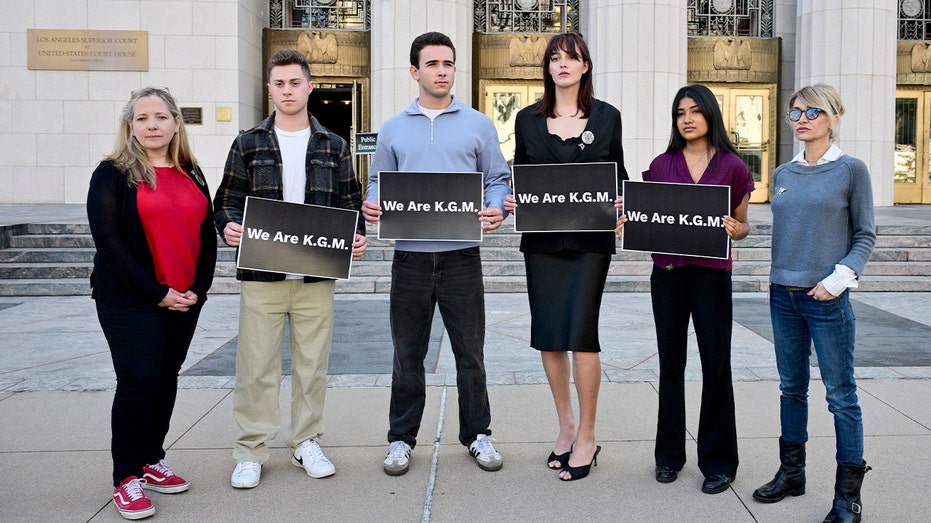
Supporters of “K.G.M.” pose with signs outside the Los Angeles Superior Court during a social media trial over whether platforms were deliberately designed to be addictive to children in Los Angeles, Feb. 25, 2026. (Frederic J. Brown/AFP Via Getty Images / Getty Images)
JILLIAN MICHAELS: BIG TECH BUILT A DIGITAL DRUG — AND OUR KIDS ARE HOOKED
Even as some attorneys argue that the social media platforms have caused harm, they have used those same tools to recruit clients. The ads have since been removed by Meta.
One removed ad read, “Anxiety. Depression. Withdrawal. Self-harm. These aren’t just teenage phases — they’re symptoms linked to social media addiction in children. Platforms knew this and kept targeting kids anyway,” according to Axios. The outlet noted that almost all the ads ran on both Facebook and Instagram, with some appearing in Threads and Messenger.
“It makes no sense to allow these plaintiff lawyers to use our platform to recruit plaintiffs to bring cases against us when the very crux of their complaint against us is that our platforms are harmful,” Davis said.

Meta plans to appeal court rulings on teen safety. (Jonathan Raa/NurPhoto via Getty Images / Getty Images)
CLICK HERE TO DOWNLOAD THE FOX NEWS APP
Meta has taken steps in the past to make its platforms safer for young users by creating teen accounts, which allow parents to have oversight of their children’s social media experience. Additionally, in February, Meta rolled out a new system that sends parents alerts if their teens repeatedly try to search for terms related to suicide and self-harm.
With Meta’s appeals looming, the cases could become a testing ground for the limits of Section 230 and whether social media companies can be held financially accountable for the effects their platforms have on younger users.

D.R. Horton Vs. Lennar: Homebuilder Showdown As Mortgage Rates Jump

I have been working in the logistics sector for almost two decades. I have been into stock investing and macroeconomic analysis for almost a decade. Currently, I focus on ASEAN and NYSE/NASDAQ Stocks, particularly in banks, telco, logistics, and hotels. Since 2014, I have been trading on the PH stock market. I focus on banking, telco, and retail sectors. A colleague encouraged me to engage in the stock market as part of my portfolio diversification instead of putting all my savings in banks and properties. That was also the year when insurance companies became very popular in the PH. Initially, I invested in popular blue-chip companies. Now, I have investments across different industries and market cap sizes. There are stocks I hold for my retirement, while others are purely for trading profits. In 2020, I also entered the US Market. It was about a year after I discovered Seeking Alpha. Originally, I was using the trading account of NY CA-based cousin. Somehow, I acted like his personal broker. That made me more aware of the US market before deciding to open my own account. I decided to write for Seeking Alpha to share and gain more knowledge since I have been trading on the US market for only four years. Like in the ASEAN market, I have holdings in US banks, hotels, shipping, and logistics companies. I discovered it in 2018. Since then, I have been using the analyses here to compare them to the ones I’m doing in the PH Market.
Analyst’s Disclosure: I/we have a beneficial long position in the shares of UPS either through stock ownership, options, or other derivatives. I wrote this article myself, and it expresses my own opinions. I am not receiving compensation for it (other than from Seeking Alpha). I have no business relationship with any company whose stock is mentioned in this article.
Seeking Alpha’s Disclosure: Past performance is no guarantee of future results. No recommendation or advice is being given as to whether any investment is suitable for a particular investor. Any views or opinions expressed above may not reflect those of Seeking Alpha as a whole. Seeking Alpha is not a licensed securities dealer, broker or US investment adviser or investment bank. Our analysts are third party authors that include both professional investors and individual investors who may not be licensed or certified by any institute or regulatory body.

TUCSON, Ariz. — More than 10 weeks after 84-year-old Nancy Guthrie vanished from her Catalina Foothills home near Tucson, the investigation into her suspected abduction remains active but without arrests or confirmed sightings of the mother of NBC’s “Today” co-anchor Savannah Guthrie.

Guthrie was reported missing Feb. 1, 2026, after she failed to appear at church. Authorities believe she was taken against her will in the early morning hours of Feb. 1 — or possibly late Jan. 31 — from her residence in the upscale Tucson suburb. Blood was found near the front doorstep and inside the home, and surveillance footage captured a masked man on the porch that night. Her pacemaker disconnected from her phone around 2:30 a.m., suggesting the device moved out of range.
As of Monday, the case has stretched into its 72nd day with no breakthroughs publicly announced. Pima County Sheriff Chris Nanos and the FBI have described the abduction as targeted, though they have released few specifics on motive or suspects. Family members, including Savannah Guthrie and her siblings Annie and Camron, have been cleared as persons of interest.
The family offered a $1 million reward in late February for information leading to Nancy Guthrie’s safe return, acknowledging the grim possibility she may no longer be alive while expressing continued hope. Savannah Guthrie returned to the “Today” show anchor desk this month after taking time away to support the search in Tucson, describing the ordeal as a “grievous and uniquely cruel injury of not knowing.”
Forensic experts and genetic genealogist CeCe Moore have pointed to DNA evidence — particularly saliva or other biological material from a masked man captured on camera — as a potential key to cracking the case. Advanced genetic genealogy techniques could help identify the individual if a match exists in public databases, Moore told NewsNation.
Criminal profiler Dr. Ann Burgess, who worked with the FBI’s Behavioral Analysis Unit on serial killer cases, suggested the kidnapping could stem from retribution. In interviews, she theorized it might not have targeted Nancy Guthrie directly but could represent payback against her family, possibly linked to Savannah Guthrie’s high-profile career. “If it’s what we call a personal cause … it’s not like you have a serial offender,” Burgess said, adding that something may have gone wrong during the incident.
Recent ransom-style notes sent to TMZ have added layers of complexity and skepticism. The anonymous sender initially claimed knowledge of Guthrie’s location and demanded cryptocurrency in exchange for details, later asserting she had been seen alive in Sonora, Mexico, about 70 miles south of Tucson, before shifting to claims she was dead. Law enforcement and experts, including retired FBI agents, have questioned the notes’ legitimacy, with some viewing them as potential scams or attempts to torment the family rather than credible leads.
Investigators recovered additional security camera images from Guthrie’s property showing activity in the days leading up to the disappearance, but nothing considered a major break from the night of the event. A glove found near the home appeared to match those worn by the masked figure in doorbell footage, and DNA testing continues.
The case has drawn intense national attention due to Savannah Guthrie’s prominence on morning television. Search efforts in the early weeks included extensive ground and air searches of the surrounding desert terrain, door-to-door canvassing and analysis of thousands of tips. A dedicated task force involving Pima County homicide detectives and FBI agents continues to work the case full-time. Tip volume has tapered after an initial surge, which experts describe as normal in long-running investigations.
Nancy Guthrie, described by family as mentally sharp and independent, lived alone. Her late husband, Charles Guthrie, died in 1988 during a mining exploration trip in Mexico. The family has emphasized her routine of attending church and her close ties with relatives.
Experts note the rarity of abductions involving victims in their 80s, which has made the case stand out. Abductions of elderly individuals often involve different dynamics than those of younger victims, with fewer cases resulting in long-term missing person status without resolution. The involvement of blood evidence and surveillance of a masked intruder has led authorities to treat it firmly as a kidnapping rather than a wandering incident, despite initial speculation in some quarters.
Savannah Guthrie has spoken publicly about the emotional toll, pleading for anyone with information to come forward. In interviews, she highlighted the family’s cooperation with law enforcement and their focus on bringing her mother home or achieving closure. Conspiracy theories and online speculation have circulated, prompting the family to express frustration over additional stress during an already painful time.
Pima County authorities have urged caution in the community while stressing that the abduction appears targeted. No other similar incidents have been linked in the Tucson area. The FBI maintains an active tip line, and officials continue to review leads, including possible connections across the U.S.-Mexico border given some of the unverified claims in the notes.
Forensic advancements offer a ray of optimism. Genetic genealogists and DNA experts suggest that even small amounts of biological evidence, if properly processed, could yield a suspect profile through consumer DNA databases. CeCe Moore emphasized focusing on the masked man’s saliva or other traces as a priority.
As the investigation enters its third month, the Guthrie family balances private grief with public appeals. Savannah Guthrie’s return to work has been met with support from colleagues and viewers, many of whom have shared messages of solidarity. The case has also spotlighted broader issues of elder safety and the challenges of solving high-profile missing person cases amid intense media scrutiny.
No new public updates from law enforcement were released over the weekend, but officials reiterated that the case is far from cold. Searches for physical evidence, digital forensics and witness interviews continue. The family maintains hope that someone with critical information will step forward, motivated by the substantial reward or a sense of justice.
Nancy Guthrie’s disappearance has captivated the public, sparking widespread discussion on social media and true-crime platforms. While some online commentators speculate wildly, authorities caution against unverified theories that could hinder the probe. The masked intruder footage remains one of the most compelling pieces of evidence, repeatedly aired in appeals for tips.
Whether the motive proves to be personal retribution, a botched crime or something else entirely, investigators say every lead matters. For the Guthrie family, each passing day without answers deepens the anguish of uncertainty — a pain familiar to thousands of families with missing loved ones, yet amplified here by national visibility.
As authorities press forward with DNA analysis and tip review, the hope remains that Nancy Guthrie will be found or that those responsible will face accountability. The public is urged to contact the FBI tip line or Pima County Sheriff’s Office with any information, no matter how small it may seem.
Business
(VIDEO) Sadie Robertson Performs CPR on Choking Baby Daughter Kit: Faith, Family Save 8-Month-Old

WEST MONROE, La. — Sadie Robertson Huff, the former “Duck Dynasty” star turned author and speaker, has opened up about a terrifying choking incident involving her 8-month-old daughter, Kit Carroway Huff, that left the infant briefly without breath and required immediate CPR.
In a vulnerable Instagram post shared Saturday, April 11, 2026, Robertson recounted how the near-tragedy unfolded this week while she prepared dinner at home. Kit was sitting in her high chair eating a snack when she suddenly began to choke. Within seconds, the situation escalated dramatically as the baby stopped breathing.
“My mom pulled her from the high chair and placed my girl into my arms just as she stopped breathing,” Robertson wrote. “Everyone went into action and into prayer. Mom called 911, I started CPR, and everyone began to pray out loud and moved the other kids downstairs.”
Robertson, 28, credited a combination of prior preparation and faith for the outcome. She had previously watched instructional videos on infant choking response and CPR, skills that kicked in instinctively during the crisis. “I can only explain it now like my body just knew what to do. I felt God’s Spirit guiding me, partnering with me in what I had learned and seen,” she said. “I remember saying ‘What do I do?’ and then immediately started doing it and declaring life.”

After following proper baby choking protocols and performing CPR, Kit miraculously coughed and began breathing again just as paramedics arrived. Robertson rode in the ambulance with her daughter to the hospital, where Kit spent one night for observation before being released fully recovered and healthy.
The mother of three — who shares daughters Honey James, 4, Haven Belle, 2, and now Kit with husband Christian Huff — described riding waves of anxiety from the trauma while feeling immense gratitude for what she called a miracle and “God’s undeniable hand on this situation.” She had stepped back from social media recently to focus on her mental health but felt compelled to share the story to raise awareness and encourage other parents.
“I’m currently walking through the waves of anxiety from the trauma of the situation, and the immense gratitude for the miracle of Kit’s full recovery,” Robertson posted. She emphasized that while faith sustained the family, practical knowledge proved lifesaving. “We can’t live in a state of fear… we have to trust God in all of it. And also, preparation and knowledge in the spiritual and physical sense can be a gift that you give yourself and your family!”
Robertson’s mother, Korie Robertson, echoed the sentiment in her own social media post, urging followers around children to learn choking response techniques. “We also want to be prepared to do what we can if a moment like this arises and are so thankful that Sadie had watched videos and was able to do what needed to be done,” Korie wrote. “God carried us through this, and Sadie wanted to share with the hope that this could help someone else!”
The incident highlights the critical importance of infant first aid training. Choking remains a leading cause of injury and death in young children, with the American Red Cross and American Heart Association recommending that parents and caregivers complete certified CPR and choking relief courses. For infants under 1 year old, the protocol involves back blows and chest thrusts rather than abdominal thrusts used on older children or adults. Robertson’s quick application of these techniques, combined with immediate emergency response, proved decisive.
Medical experts note that seconds count in airway obstructions. Even brief oxygen deprivation can lead to serious complications, making rapid intervention essential. In Kit’s case, the family’s coordinated response — CPR from Sadie, the 911 call from her mother, and collective prayer — created the conditions for a positive outcome. Paramedics arrived to find the baby already breathing, allowing focus on stabilization and transport.
The Robertson family, known for their strong Christian faith through the long-running “Duck Dynasty” reality series and subsequent media ventures, leaned heavily on prayer during the emergency. Family members prayed aloud as the crisis unfolded, a detail Robertson highlighted as integral to the moment. “Everyone went into action and into prayer,” she repeated in her account.
Robertson has built a public platform around faith, family and encouragement since rising to fame as a teenager on A&E’s “Duck Dynasty,” which followed her family’s duck-call manufacturing business and outdoors lifestyle. After the show ended, she launched the “Whoa That’s Good” podcast, authored books including “Live Original” and “Live Fearless,” and spoken at conferences about mental health, anxiety and trusting God amid life’s challenges.
Her openness about mental health struggles, including anxiety, made the post particularly resonant. Robertson acknowledged processing trauma while celebrating the recovery, encouraging followers not to let fear dominate but to balance it with preparation and trust. Many parents responded with stories of their own close calls, gratitude for her transparency and commitments to refresh their own first aid knowledge.
Christian Huff, Sadie’s husband since 2019, has been by her side throughout. The couple welcomed Kit in August 2025, completing their trio of daughters. Friends and extended family, including grandparents Phil and Miss Kay Robertson, expressed relief and reinforced messages of preparedness and faith.
Safety organizations used the moment to reiterate advice: Keep small objects, hard foods and hazards away from infants; never leave young children unattended while eating; learn age-appropriate choking relief and CPR; and ensure home emergency numbers are accessible. Devices like the LifeVac have gained popularity as supplemental tools, though proper technique remains foundational.
Robertson’s story arrives at a time when many families juggle busy schedules and mealtimes. Dinner prep moments, like the one that turned frightening for the Huffs, are common across households. Her willingness to share raw details — the panic, the instinctual action, the spiritual overlay — has sparked widespread conversations about blending practical skills with spiritual reliance.
As Kit continues to thrive at home, Robertson hopes her experience serves as both testimony and warning. “All of us are in God’s hands, our days are His,” the family has affirmed. Yet they stress the value of being equipped for emergencies that prayer alone may not instantly resolve.
The post has circulated widely on social media, drawing support from fellow celebrities, parenting influencers and everyday moms. Many praised Robertson for turning a private nightmare into a public service announcement on child safety. Hospitals and community centers reported renewed interest in CPR classes following similar high-profile stories.
For the Robertson-Huff family, the incident has deepened their appreciation for life’s fragility and the power of preparedness. Sadie continues focusing on recovery from the emotional aftermath while cherishing moments with her healthy baby girl. Kit, now approaching 9 months, remains a bundle of joy, oblivious to the drama that briefly halted her breathing but ultimately strengthened her family’s bonds and message.
Parents nationwide are taking note. Pediatricians recommend reviewing choking prevention and response at well-child visits, especially as babies transition to solid foods. Robertson’s account serves as a timely reminder that knowledge, quick thinking and community — both earthly and divine — can make all the difference in life’s most frightening seconds.

Gary Adshead speaks to Justin Fris about the Sandcastles Children’s Hospice.
Business
UK businesses falling behind on AI adoption as PwC study reveals investment and returns gap

British businesses are in danger of being left stranded in the middle of the pack on artificial intelligence, with a new PwC study revealing a significant gap between UK firms and the world’s top AI adopters in both spending and returns.
The consultancy’s global survey found that while leading companies worldwide are investing an average of five per cent of revenue in AI and reaping returns of 15 per cent, their British counterparts are committing just two per cent and generating returns of ten per cent. It is a gap that should alarm boardrooms across the country, particularly among small and medium-sized enterprises already grappling with tight margins and limited budgets for technology transformation.
Perhaps more troubling is the innovation shortfall the figures suggest. UK businesses derived only 27 per cent of their revenue from products that did not exist three years ago, compared with 43 per cent among global leaders. For SMEs, which have historically relied on agility and fresh thinking to compete against larger rivals, that disparity ought to prompt some uncomfortable questions about whether enough is being done to turn AI capability into genuinely new commercial offerings.
The research points to familiar obstacles. Outdated IT systems and rigid internal processes continue to hold companies back, with only 27 per cent of UK businesses having redesigned their workflows to properly integrate AI rather than simply grafting it on to what already exists. The same proportion had modernised legacy technology to better accommodate the tools.
There is also a question of ambition. Nearly half of the UK businesses surveyed said efficiency and productivity were their primary motivation for experimenting with AI, while just 26 per cent cited revenue generation. It is a mindset that Leigh Bates, PwC UK’s global risk AI leader, believes is limiting the country’s potential.
Bates described the findings as a wake-up call, arguing that too many firms remain trapped between piloting AI projects and scaling them effectively. The businesses seeing the greatest returns globally, he said, are not merely doing more of the same but fundamentally reinventing how they operate.
Overall, the UK ranked 11th out of 19 countries in PwC’s assessment, behind China at the top of the table, as well as France, Germany and Saudi Arabia. The United States, notably, fared little better at 13th. PwC defined global leaders as companies in the top 20 per cent of AI-driven performance.
For Britain’s SME community, the message is clear enough. The window to move from cautious experimentation to meaningful adoption is narrowing, and those that continue to treat AI as little more than a cost-cutting exercise risk discovering that their competitors, at home and abroad, have already moved on.

Amy Ingham
Amy is a newly qualified journalist specialising in business journalism at Business Matters with responsibility for news content for what is now the UK’s largest print and online source of current business news.

Rolls-Royce has said the project will create 8,000 jobs across Britain.


Daniel is an avid and active professional investor.
He runs Crude Value Insights, a value-oriented newsletter aimed at analyzing the cash flows and assessing the value of companies in the oil and gas space. His primary focus is on finding businesses that are trading at a significant discount to their intrinsic value by employing a combination of Benjamin Graham’s investment philosophy and a contrarian approach to the market and the securities therein. Learn more.
Analyst’s Disclosure: I/we have no stock, option or similar derivative position in any of the companies mentioned, and no plans to initiate any such positions within the next 72 hours. I wrote this article myself, and it expresses my own opinions. I am not receiving compensation for it (other than from Seeking Alpha). I have no business relationship with any company whose stock is mentioned in this article.
Seeking Alpha’s Disclosure: Past performance is no guarantee of future results. No recommendation or advice is being given as to whether any investment is suitable for a particular investor. Any views or opinions expressed above may not reflect those of Seeking Alpha as a whole. Seeking Alpha is not a licensed securities dealer, broker or US investment adviser or investment bank. Our analysts are third party authors that include both professional investors and individual investors who may not be licensed or certified by any institute or regulatory body.

Politics Home | Wes Streeting Insists NHS England Abolition Is Still Right Thing To Do Despite “Astonishing” Opposition
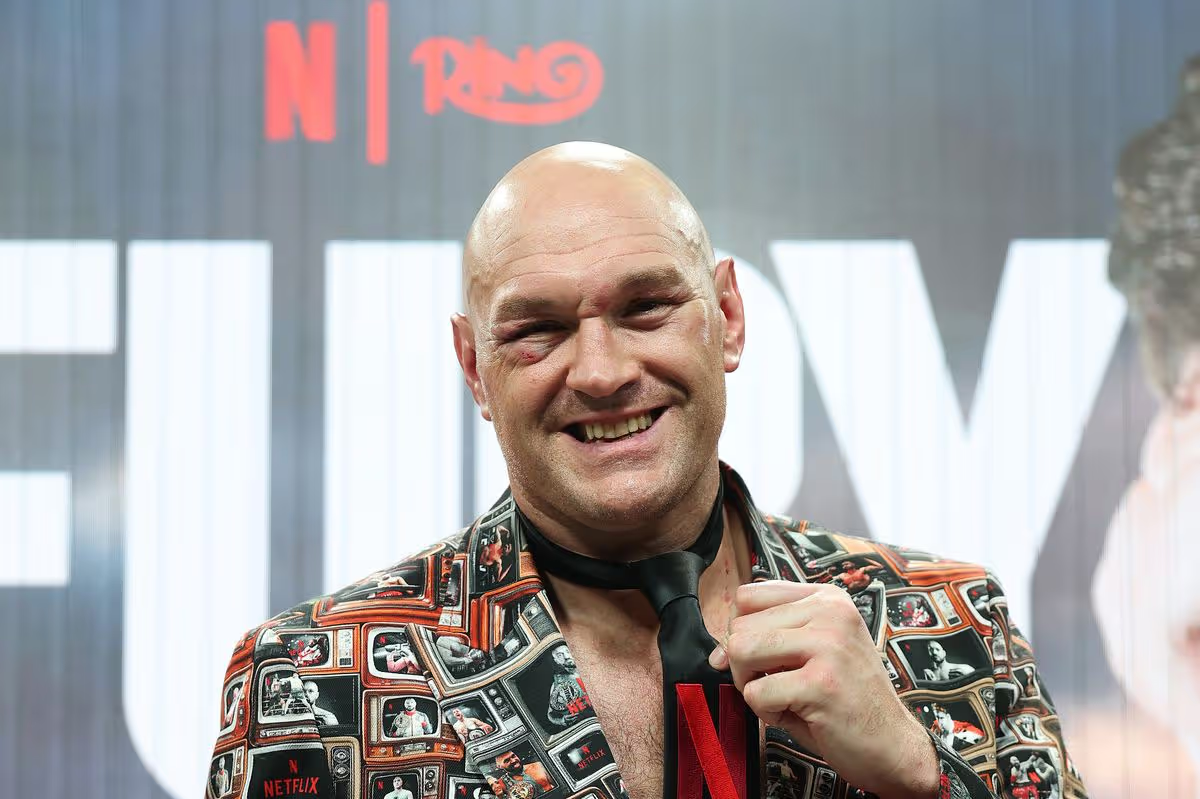
Tyson Fury shows true colours with £40 purchase after banking £18.6m from latest win

Mixue beat them to S’pore by 2 yrs. BingXue opened 12 outlets anyway.

Why Israel is blocking foreign journalists from entering

Bitcoin: We’re Entering The Most Dangerous Phase

Alan Cumming Brands Baftas Ceremony A ‘Triggering S**tshow’

Baru Mulai Investasi, Kenapa Langsung Rugi #bitcoin #cryptocurrency #investasi

Financial Literacy for Beginners & Dummies – Personal Finance Education Money Audiobook Full Length

Ormuz, Crypto & Guerre #blockchain #cryptomonnaie
-

 Politics3 days ago
US brings back mandatory military draft registration
-

 Fashion3 days ago
Weekend Open Thread: Veronica Beard
-
 Sports3 days ago
Man United discover Nico Schlotterbeck transfer fee as defender reaches Dortmund agreement
-

 Tech6 days ago
How Long Can You Drive With Expired Registration? What Florida Law Says
-

 Politics22 hours ago
World Cup exit makes Italy enter crisis mode
-

 Crypto World4 days ago
Canary Capital Files SEC Registration for PEPE ETF
-

 Business3 days ago
Tesla Model Y Tops China Auto Sales in March 2026 With 39,827 Registrations, Beating Cheaper EVs and Gas Cars
-

 Crypto World5 days ago
Bitcoin recovers as US and Iran Agree a Ceasefire Deal
-

 Politics3 days ago
Malcolm In The Middle OG Turned Down ‘Buckets Of Money’ To Appear In Reboot
-

 Fashion6 days ago
Let’s Discuss: DEI in 2026
-
 NewsBeat14 hours ago
Pep Guardiola and Gary Neville agree over Arsenal title problem that benefits Man City
-

 Business3 days ago
OpenAI Halts Stargate UK Data Centre Project Over Energy Costs and Copyright Row
-

 Business2 days ago
Ireland Fuel Protests Enter Day 5 as Blockades Spark Shortages and Government Prepares Support Package
-

 Politics3 days ago
LBC Presenter Mocks Trump Over Iran War Failures
-

 Crypto World3 days ago
Federal judge blocks Arizona from bringing criminal charges against Kalshi
-

 Tech4 days ago
A version of Windows 10 released a decade ago is now eligible for additional security patches
-
 NewsBeat1 day ago
JD Vance announces ‘no agreement’ with Iran over nuclear weapons fear
-

 Business3 days ago
IMF retains floor for precautionary balances at SDR 20 billion
-
Business2 days ago
Coreweave CSO Venturo sells $5.5m in class a common stock
-
Sports2 days ago
1st-Round WR Enters Vikings Mock Draft Orbit
You must be logged in to post a comment Login