Connect with us
DAPA Banner

Business

POET: I Called The Surge, Now Reset

Published

on

Speed tunnel digital technology abstract background
Continue Reading
Click to comment

You must be logged in to post a comment Login

Leave a Reply

Business

Vedanta’s demerged entities to trade by mid-June after split, says CEO

Published

on

Vedanta's demerged entities to trade by mid-June after split, says CEO
Mining major Vedanta will file with stock exchanges next week for listing approval of its demerged entities, with shares expected to list and commence trading by mid-June, a top official of the company said on Wednesday.

During an Investor Call on Q4 financial results, Vedanta Resources CEO Deshnee Naidoo said the demerger is now in its final stage.

“In the next week, we will be filing with the exchanges for listing approval. The shares of the resulting companies are expected to list and commence trading by mid-June,” she said.

Vedanta Ltd is the Indian arm of Vedanta Resources.

Advertisement

Vedanta CFO Ajay Goel said the company’s board has earlier approved Vedanta demerger effective from May 1, and this will entail the creation of five independent sector-specific pure play companies, allowing each company to chart out its own growth trajectory and attract investors.


The company, he said, has set May 1 as the record date for demerger and added that the shareholders holding one share of Vedanta as on April 29 will receive four additional shares of the resulting companies.
“We are targeting listing and commencement of trading of these shares by the first quarter of FY’27,” he said. The demerger has been structured with precision on capital structure, aligning debt with the earning strength and growth stage of each resulting company, he said.

Vedanta Oil & Gas and Iron & Steel businesses will emerge as close to zero net debt businesses, while the other three businesses will have net debt to EBITDA ratios in line with their debt servicing capability, Goyal said.

Vedanta had earlier said that the demerger will help in simplifying Vedanta’s corporate structure with sector focussed independent businesses and provide opportunities to global investors, including sovereign wealth funds, retail investors and strategic investors, with direct investment opportunities in dedicated pure-play companies linked to India’s remarkable growth story through Vedanta’s world class assets.

It will also provide a platform for individual units to pursue strategic agendas more freely and better align with customers, investment cycles and end markets, it added.

Advertisement

As part of the demerger, Vedanta plans to separately list four entities: Vedanta Aluminium Metal Limited (VAML), Talwandi Sabo Power Ltd (TSPL), Malco Energy Ltd (MEL) and Vedanta Iron and Steel Limited (VISL).

According to the exchange filing, under the composite scheme of arrangement, shareholders of Vedanta will receive equity shares in four businesses in a 1:1 ratio.

Continue Reading

Business

10 Best HRMS in the UK for 2026: Complete Buyer’s Guide

Published

on

Taxpayers have until 5 April 2025 to make voluntary National Insurance Contributions dating back to 2006 to boost their state pension. Experts advise checking your NI record now.

Managing human resources in the UK has become increasingly complex. With evolving HMRC regulations, PAYE updates, and the shift towards flexible working arrangements, relying on fragmented point solutions or outdated spreadsheets is no longer viable.

As organisations scale, the administrative burden multiplies, making a unified Human Resources Management System (HRMS) essential for maintaining compliance and driving growth.

The challenge for UK businesses is finding a platform that balances robust functionality with an intuitive employee experience. Many legacy systems are too rigid for modern teams, while lightweight tools often lack the depth required for multi-site operations or global expansion. The ideal HRMS should consolidate core HR, payroll, talent management, and workforce planning into a single source of truth.

In this guide, we evaluate the top HRMS platforms available in the UK market for 2026. We look beyond marketing claims to assess how these systems handle real world complexities, from auto-enrolment pensions to advanced performance management.

Methodology: How We Determined the Top Picks

To identify the best HRMS platforms for UK businesses, we evaluated dozens of solutions against strict criteria. Our methodology focused on:

Advertisement
  1. UK Compliance and Localisation: The system must handle UK specific requirements, including HMRC reporting, PAYE, and statutory leave calculations.
  2. Platform Unification: We prioritised all-in-one platforms that eliminate the need for multiple disconnected tools.
  3. Scalability: The software must support mid sized and scaling organisations, handling increased complexity without requiring a complete system overhaul.
  4. User Experience: We assessed the interface for both HR administrators and everyday employees, as high adoption rates are critical for ROI.
  5. Real User Feedback: We analysed verified reviews from platforms like G2 and Capterra to understand the actual strengths and limitations experienced by current customers.

Our Pick: The 10 Best HRMS Platforms in the UK for 2026

Here is our breakdown of the top HRMS solutions for UK organisations.

1. HiBob

Best for: Mid sized and scaling UK companies requiring a unified, modern HR platform.

HiBob is a comprehensive HR platform built specifically for fast growing, mid sized, and multinational organisations. By consolidating core HR, payroll, applicant tracking, and workforce planning into one intuitive system, Bob helps companies streamline operations and scale with confidence. Unlike traditional HRIS systems that feel corporate and rigid, HiBob focuses heavily on the employee experience while delivering enterprise grade capabilities.

For businesses operating in the UK, HiBob is built with local requirements in mind rather than forcing teams to adapt to generic global systems. Their local alignment becomes even more valuable for companies operating across multiple regions. UK-based teams can manage local compliance and reporting with confidence, while still benefiting from the platform’s ability to handle multi-country payroll and workforce planning.

For organisations that are scaling beyond the UK, HiBob offers a balance between strong domestic compliance and global flexibility, allowing HR teams to grow without needing to replace their system later on.

Advertisement

Strengths:

HiBob excels in providing a unified platform that eliminates data silos. It offers deep localisation for UK teams, including native UK payroll and compliance features. The modern, intuitive user interface drives high adoption rates across all levels of the business. Advanced analytics and reporting empower HR leaders to make data driven decisions, while robust automation reduces manual administrative work. Many users on G2 praise its user-friendliness and smooth interface.

Limitations:

Because it is a comprehensive platform designed for scaling and mid-sized businesses, very small micro businesses might find the extensive feature set more than they currently need.

Advertisement

2. CharlieHR

Best for: Small UK startups and creative agencies.

CharlieHR is a London based HR software designed specifically for small businesses. It focuses on automating basic HR admin tasks like booking time off, storing documents, and running performance reviews.

Strengths:

The platform is highly accessible for small teams without dedicated HR departments. It offers a clean interface and includes access to on demand HR advice for UK employment law.

Advertisement

Limitations:

According to G2 reviews, users frequently note that the platform lacks the depth required for scaling companies. It struggles with complex organisational structures and does not offer the advanced workforce planning or global payroll capabilities needed as a business expands beyond the startup phase.

3. Ciphr

Best for: Public sector and established UK enterprises.

Ciphr is a long standing UK HR software provider that offers a suite of HR, payroll, learning, and recruitment solutions. It is heavily focused on data security and compliance for established British organisations.

Advertisement

Strengths:

Ciphr provides strong UK specific compliance tools and is highly customisable for complex public sector requirements.

Limitations:

Capterra reviewers often mention that the user interface feels dated compared to modern SaaS platforms. The implementation process can be lengthy, and the system’s rigidity makes it less suitable for agile, fast moving companies that require a more flexible approach to people management.

Advertisement

4. Employment Hero

Best for: Small to medium businesses looking for integrated benefits.

Employment Hero is an HR and payroll platform that includes a built in employee benefits marketplace. It aims to help smaller companies offer perks that rival larger corporations.

Strengths:

The platform handles basic UK compliance well and provides a unique approach to employee rewards and recognition through its integrated marketplace.

Advertisement

Limitations:

Users on G2 have highlighted that the customer support can be slow to respond. Additionally, the platform’s core HR functionality can lack the depth required for complex performance management and advanced compensation planning.

5. BrightHR

Best for: Small businesses needing basic absence management.

BrightHR provides straightforward HR software focused primarily on absence management, shift planning, and document storage. It is often bundled with employment law advice services.

Advertisement

Strengths:

It is very affordable and simple to use for basic rota management and holiday tracking in small retail or hospitality businesses.

Limitations:

Based on Capterra feedback, the software is quite basic. It lacks a comprehensive talent management suite, advanced analytics, and the sophisticated automation required by mid sized professional services or technology companies.

Advertisement

6. Personio

Best for: European companies with a presence in the UK.

Personio is a Munich based HR software that targets small and medium enterprises across Europe. It covers core HR, recruiting, and payroll processes.

Strengths:

It offers a clean interface and strong compliance features for the DACH region, with growing support for UK specific requirements.

Advertisement

Limitations:

G2 reviews indicate that Personio can be weaker in global coverage outside of its core European markets. Users also note limited depth in advanced features like strategic workforce planning and complex compensation management.

7. Sage HR

Best for: Existing Sage accounting customers.

Sage HR is a modular HR system that integrates tightly with Sage’s broader suite of accounting and payroll products. It provides basic HR functionality for small to medium businesses.

Advertisement

Strengths:

The seamless integration with Sage Payroll makes it a logical choice for companies already heavily invested in the Sage ecosystem.

Limitations:

Reviewers on Capterra frequently point out that the platform is limited in scope regarding advanced HR features. It is not ideal for scaling businesses with global or multi site operations, as the integrations outside of the Sage network can be restrictive.

Advertisement

8. BambooHR

Best for: Small businesses transitioning from spreadsheets.

BambooHR is a widely recognised HRIS that focuses on providing a simple, user-friendly experience for small businesses managing core HR tasks and applicant tracking.

Strengths:

It has strong brand recognition, an easy to use interface, and competitive entry pricing for small teams.

Advertisement

Limitations:

According to G2 feedback, BambooHR lacks the scalability and deep customisation needed by mid-sized and multinational companies. Its UK localisation is not as robust as native platforms, and it struggles with complex, multi country payroll requirements.

9. Rippling

Best for: IT heavy organisations looking to manage devices and HR together.

Rippling takes a unique approach by combining HR, IT, and finance management. It allows companies to manage employee data alongside software provisioning and hardware deployment.

Advertisement

Strengths:

The platform offers strong automation for onboarding and offboarding, particularly regarding IT access and device management.

Limitations:

Users on Capterra note that because of its broad focus, the core HR functionality can feel secondary. It places less emphasis on employee experience, culture building, and engagement compared to dedicated HR platforms.

Advertisement

10. UKG

Best for: Very large enterprises with complex shift work.

UKG provides deep functionality for workforce management, time tracking, and compliance, primarily targeting large scale operations in manufacturing, retail, and healthcare.

Strengths:

It offers incredibly detailed workforce management tools and can handle highly complex scheduling and compliance requirements for thousands of employees.

Advertisement

Limitations:

G2 reviews frequently highlight that the enterprise level complexity makes it overwhelming and cost prohibitive for mid sized companies. The user experience is often described as clunky and outdated, requiring significant training for basic tasks.

Final Notes on Choosing an HRMS in 2026

Selecting the right HRMS is a critical decision that impacts every employee in your organisation. When evaluating options, it is vital to look beyond the initial price tag and consider the long term scalability of the platform.

A fragmented approach using multiple point solutions inevitably leads to data discrepancies, compliance risks, and a frustrating user experience. Instead, prioritise unified platforms that consolidate core HR, payroll, and talent management. Ensure the system offers deep UK localisation to handle HMRC requirements effortlessly, while also providing the flexibility to support global expansion if your business operates internationally.

Advertisement

By choosing a modern, intuitive system, you empower your HR team to move away from administrative tasks and focus on strategic initiatives that drive business growth.

FAQs About HRMS Platforms in the UK

What is the difference between an HRIS and an HRMS?

While often used interchangeably, an HRIS typically focuses on core employee records and data management. An HRMS, like HiBob, is generally more comprehensive, incorporating advanced talent management, payroll, and workforce planning into a single unified platform.

How long does it take to implement a new HR system?

Implementation timelines vary based on organisational complexity and the chosen software. Basic systems might take a few weeks, while enterprise solutions can take over a year. Modern platforms like HiBob are designed for efficient deployment, typically getting mid sized companies live in a matter of weeks with dedicated support.

Do these platforms handle UK specific compliance like auto-enrolment?

Yes, the top platforms are equipped to handle UK regulations. A comprehensive system like HiBob includes native UK payroll capabilities, ensuring seamless management of PAYE, auto-enrolment pensions, and statutory leave calculations.

Advertisement

Can an HRMS help with employee retention?

Absolutely. A modern HRMS improves the overall employee experience through intuitive self service, transparent performance management, and engagement tools. Platforms like HiBob provide advanced analytics that help leaders identify flight risks and proactively address retention issues.

Is it difficult to migrate data from legacy systems?

Data migration is a standard part of the implementation process. Leading providers offer structured onboarding programmes and data mapping tools to ensure a smooth transition. When moving to a unified platform like HiBob, the initial migration effort pays off quickly by eliminating the need to sync data across multiple disconnected point solutions.

Advertisement
Continue Reading

Business

Two Jewish men stabbed in London, police treat attack as terrorism

Published

on

Two Jewish men stabbed in London, police treat attack as terrorism


Two Jewish men stabbed in London, police treat attack as terrorism

Continue Reading

Business

Viavi Solutions faces earnings test as AI testing demand surges

Published

on


Viavi Solutions faces earnings test as AI testing demand surges

Continue Reading

Business

Ford Motor (F) earnings Q1 2026

Published

on

Ford Motor (F) earnings Q1 2026

Ford at the New York International Auto Show in New York City on April 2, 2026.

Danielle DeVries | CNBC

DETROIT — Ford Motor is set to announce first-quarter results after the markets close Wednesday.

Advertisement

Here’s what Wall Street is expecting, based on a survey of analysts by LSEG:

  • Earnings per share: 19 cents adjusted
  • Automotive revenue: $38.82 billion

Those results would mark a roughly 3.7% increase in automotive revenue compared with a year earlier and a 35.7% increase in adjusted earnings per share, up from 14 cents.

Ford’s 2025 first-quarter results included $37.42 billion in automotive revenue, adjusted earnings before interest and taxes of $1.02 billion and net income of $471 million. Its total revenue, which includes its Ford Credit financing arm, was $40.7 billion.

Aside from earnings and any changes to the automaker’s 2026 guidance, investors will be monitoring effects from the Iran war, tariff impacts and any updates to production at key aluminum supplier Novelis following two fires. They’ll also be watching for any additional charges related to the automaker’s pullback in all-electric vehicles.

Ford announced plans in December to record about $19.5 billion in special items starting in the fourth quarter of 2025 related to a restructuring of its business priorities and EV investments. That includes $7 billion in 2026 and 2027, with a majority of $5.5 billion in cash charges through 2027 being recorded this year, Ford said at the time.

Advertisement

The Detroit automaker’s 2026 guidance released in February included adjusted EBIT of between $8 billion and $10 billion, up from $6.8 billion last year; adjusted free cash flow of between $5 billion and $6 billion, up from $3.5 billion in 2025; and capital expenditures of $9.5 billion to $10.5 billion, up from $8.8 billion.

Choose CNBC as your preferred source on Google and never miss a moment from the most trusted name in business news.
Continue Reading

Business

From The Factory Floor: 6 Robotics Stocks To Know

Published

on

From The Factory Floor: 6 Robotics Stocks To Know

VettaFi, a data, analytics, and thought leadership company, is transforming financial services from an industry to a community—one relationship at a time. In addition to providing interactive online tools and research, VettaFi offers asset managers an array of indexing and digital distribution solutions to innovate and scale their businesses. With $14 billion in assets benchmarked to its indexes – and more than 200 customers globally – asset managers look to VettaFi for benchmarks and best-in-class index solutions at competitive prices.

Continue Reading

Business

Premier Modular announces expansion and up to 50 new jobs amid increased demand

Published

on

Business Live

East Yorkshire’s Premier Modular is moving towards round-the-clock production near Driffield

There will be new roles, from entry-level positions to high multi-skilled trades

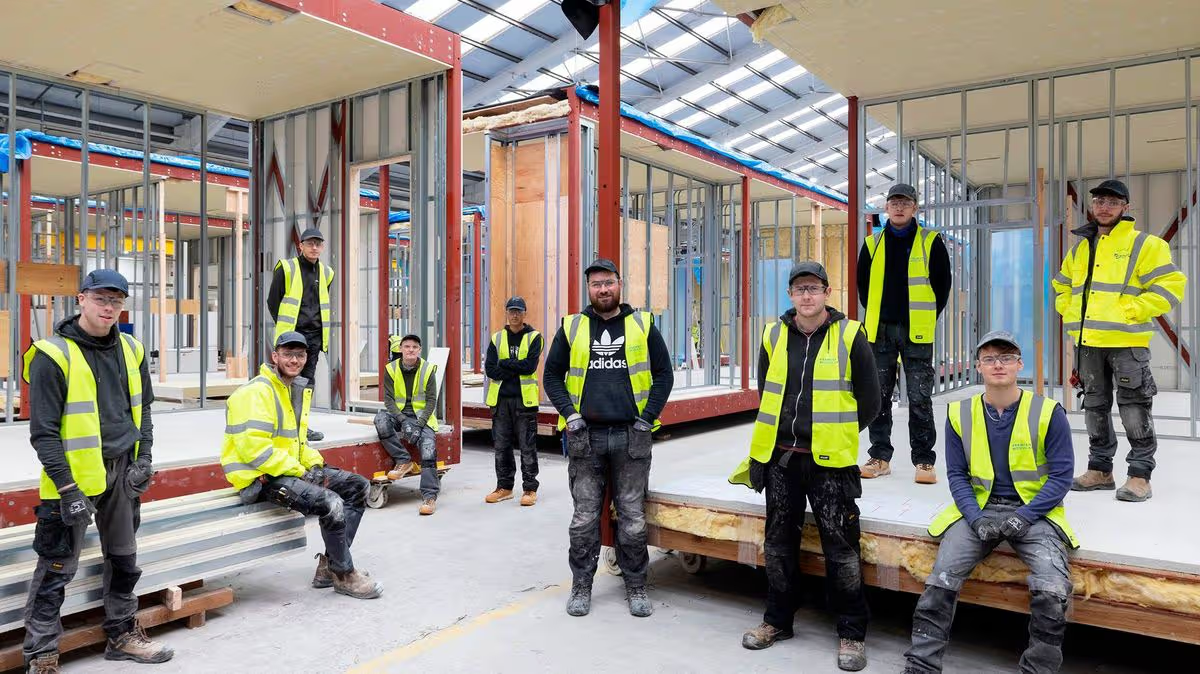
Inside the Premier Modular factory in Brandesburton, near Driffield(Image: Premier Modular)

An East Yorkshire firm that constructs modular buildings for high-profile clients — including the NHS, Manchester Airport Group, and Timpson — has announced plans for expansion and new job opportunities.

Premier Modular, based in Brandesburton near Driffield, is moving towards round-the-clock production to keep pace with surging demand for its modular solutions. Underlining its long-term dedication to regional investment and employment, the company’s new operating model will require additional workforce capacity and further job creation for the local community.

Advertisement

Through a series of carefully phased ramp-up operations, Premier Modular’s factory is expected to generate an additional 1,000 production hours per week by May, rising to approximately 1,600 hours per week from July — representing a more than 300% increase in hours from the initial escalation stage in April.

To accommodate the growth, a further 40 to 50 positions are expected to be created as night-shift operations continue to develop. Recruitment will cover a broad range of roles, from entry-level posts to highly skilled trades, particularly within joinery, reports Hull Live.

Vacancies will also encompass forklift truck drivers, quality controllers, stores operatives, supervisors and production leadership positions.

The Premier Modular factory in Brandesburton, near Driffield

The Premier Modular factory in Brandesburton, near Driffield(Image: Premier Modular)

David Harris, managing director of Premier Modular, said: “This growth is not just about increasing output, it is about investing in people. The decision to extend Premier Modular’s operations reflect both the scale of our future pipeline of work, and our dedication to developing our team.

Advertisement

“We aim to ensure a smooth transition into our next phase of growth, while maintaining our high standards of quality and delivery. We remain committed to innovating, advancing and providing jobs that can develop skills and offer long-term career pathways, including through apprenticeships.

“We’re on a growth journey, and we want the local community to be part of that journey too.”

As Premier Modular bolsters its headcount, the number of apprenticeship opportunities is also expected to rise. Currently, 5% of its total workforce is already on apprenticeships programmes.

Advertisement
Continue Reading

Business

Beverage innovation playing ‘important role’ for Keurig Dr Pepper

Published

on

Beverage innovation playing ‘important role’ for Keurig Dr Pepper

Coffee business still struggling with market headwinds.

Continue Reading

Business

Purdue Pharma sentenced and ordered to pay $5.5 billion in opioid case

Published

on

Purdue Pharma sentenced and ordered to pay $5.5 billion in opioid case

Purdue Pharma, the manufacturer of OxyContin, was sentenced in federal court on Tuesday and ordered to pay $5.5 billion for its role in fueling the opioid epidemic.

The sentencing comes after Purdue pleaded guilty in 2020 on charges of deceiving federal regulators and paying doctors to boost opioid sales. According to court documents, Purdue illegally marketed its opioid products, defrauded the DEA by misrepresenting the effectiveness of its programs and paid kickbacks to doctors through its doctor speaker program.

Advertisement

“Purdue Pharma put profits over patient health and safety,” said Acting Attorney General Todd Blanche. “The company willfully rejected the law and ignored the diversion of their highly addictive prescription drugs. Their actions contributed to the opioid crisis that claimed countless lives and destroyed entire families and communities.”

“The opioid epidemic in the United States is a plague that has ruined lives and destroyed families,” said FBI Director Kash Patel. “Purdue Pharma complicitly contributed to this national epidemic in the name of their own greed by blatantly ignoring the health and safety of patients, putting countless lives at risk. The FBI and our DOJ partners will always work tirelessly to ensure that companies, like Pharma, pay for the harm they have inflicted and warn others that they will not get away with violating the law for personal gain.”

SOUTH CAROLINA AG WILSON: FENTANYL IS A NATIONAL SECURITY THREAT — FOLLOW THE CHINESE MONEY

Oxycontin

OxyContin maker Purdue Pharma was ordered to pay $5.5 billion as its sentence in an opioid epidemic-related criminal case. (Getty Images)

The court ordered Purdue to pay a criminal fine of $3.544 billion, which will be assessed in connection with the bankruptcy proceedings, and an additional $2 billion in criminal forfeiture, the DOJ says.

Advertisement

U.S. District Judge Madeline Cox Arleo ordered Purdue Chairman Steve Miller to apologize directly to victims of the opioid pandemic who were in the courthouse on Tuesday.

Arleo allowed nearly seven hours of testimony from victims who spoke about Purdue’s role in the opioid epidemic.

BIPARTISAN BILL SEEKS TO STOP PHARMACY MIDDLEMEN FROM DRIVING UP DRUG COSTS FOR FINANCIAL GAIN

A pharmacy tech pulls medication from a shelf inside a pharmacy

A pharmacy tech pulls medication from a shelf inside a pharmacy in Provo, Utah on Aug. 7, 2025. (George Frey/Bloomberg via Getty Images)

“We are deeply apologetic for all of the things that happened that were described in colorful detail ⁠by all the victims here today,” Miller said, adding that the company, “deeply regrets and accepts responsibility.”

Advertisement

Arleo also said authorities repeatedly failed to rein in Purdue.

Todd Blanche

Acting Attorney General Todd Blanche. (Alex Wroblewski/AFP via Getty Images)

CLICK HERE TO GET FOX BUSINESS ON THE GO

“Your government failed you,” Arleo said. “The inadequacy of what the law can offer today must be plainly stated.”

Purdue Pharma, which was already preparing to pay $7.4 billion as part of a bankruptcy deal, addressed Tuesday’s sentence in a message on its website, noting that the company will cease to operate later this week.

Advertisement

“On April 28, 2026, the U.S. District Court for the District of New Jersey sentenced Purdue Pharma L.P. in connection with its 2020 Plea Agreement with the U.S. Department of Justice. Purdue is operating as usual and without interruption until May 1, 2026, when it will permanently cease operations,” the message said. “On that day, substantially all of Purdue’s assets will be transferred to a newly formed company, Knoa Pharma LLC. Medicines distributed though Purdue will then be distributed by Knoa Pharma.”

Reuters contributed to this report.

Continue Reading

Business

New bill proposes ending Social Security earnings test for working retirees

Published

on

New bill proposes ending Social Security earnings test for working retirees

A new proposal would allow Social Security beneficiaries to continue working without having their benefits diminished, which could make it easier for retirees to pay off their mortgages or more easily handle other expenses like property tax burdens.

The Senior Citizens’ Freedom to Work Act was introduced in Congress earlier this year and, if enacted, would allow individuals to receive Social Security benefits without having them reduced for earning income with the elimination of the retirement earnings test.

Advertisement

Under current law, Social Security reduces benefits for retirees who claim before reaching their full retirement age (FRA) of 67 for most retirees. It also imposes a retirement earnings test that reduces benefits further for those who earn more than $24,480 annually – with benefit amounts lowered by $1 for every $2 earned above the cap.


While the reduction in benefits is returned to seniors when they reach their FRA, the bill’s sponsors note that seniors who may be unaware of that provision may choose to earn below that threshold to avoid the temporary reduction. 

RETIREMENT ‘MAGIC NUMBER’ JUMPS AS AMERICANS GROW ANXIOUS ABOUT THEIR FINANCIAL FUTURES

An Older couple discussing forms with an overlay of Retirement plan documents

The Senior Citizens’ Freedom to Work Act would eliminate the retirement earnings test that can reduce benefits for working Social Security recipients. (Istock)

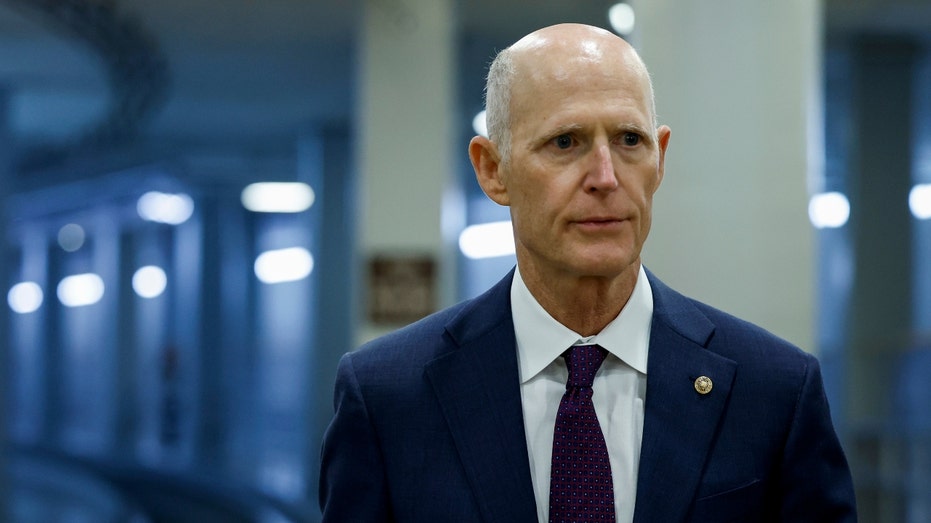
A pair of Republican lawmakers in Congress introduced the bill on a bicameral basis earlier this spring, with Sen. Rick Scott, R-Fla., and Rep. Greg Murphy, R-N.C., backing the legislation in the Senate and House in March and April, respectively.

Advertisement

“American seniors’ ability to earn income and enjoy the dignity of work should not be penalized by arbitrary parameters to receive Social Security benefits,” Murphy said in a statement. “Current law unnecessarily complicates seniors’ right to access the benefits they paid into for the entirety of their careers and must be done away with.” 

“While certain guardrails are in place to ensure the viability of Social Security and incentivize participation in the workforce, the retirement earnings test does neither and is a bureaucratic hurdle that does more harm than good,” he added.

LARRY FINK CALLS FOR SOCIAL SECURITY REFORM, SAYS INVESTING A PORTION OF FUNDS COULD STRENGTHEN THE PROGRAM

Woman with walker heads into Houston Social Security office

Social Security currently reduces benefits for income earned through work that’s above a certain threshold. (Mark Felix/The Washington Post)

A report by Realtor.com noted that the share of seniors aged 65 and older remaining in the workforce has grown since 2014 in nearly every state, with the number of working seniors increasing by 52% in the last decade as compared with the general population’s growth of 33%.

Advertisement

The analysis found that those increases coincided with the most expensive housing markets in the country, such as areas in the Northeast.

HOW SOCIAL SECURITY RECIPIENTS CAN BOOST THEIR BENEFIT CHECKS

Sen. Rick Scott

Sen. Rick Scott, R-Fla., introduced the Senate version of the bill. (Anna Moneymaker/Getty Images)

Realtor.com said that trend suggests that rising costs for insurance, property taxes and maintenance are putting pressure on older homeowners to continue working longer. Eliminating the retirement earnings test could help with those expenses as well as paying off any outstanding mortgage debt.

“This bill will get rid of the unfair retirement earnings test so that seniors who want to stay in the workforce can do so without being punished or robbed of their hard-earned benefits,” Scott said during a Senate aging committee hearing in late March.

Advertisement

GET FOX BUSINESS ON THE GO BY CLICKING HERE

Continue Reading

Trending

Copyright © 2025