

Business
Political Pivot: Kazakhstan votes on unicameral shift and vice president post



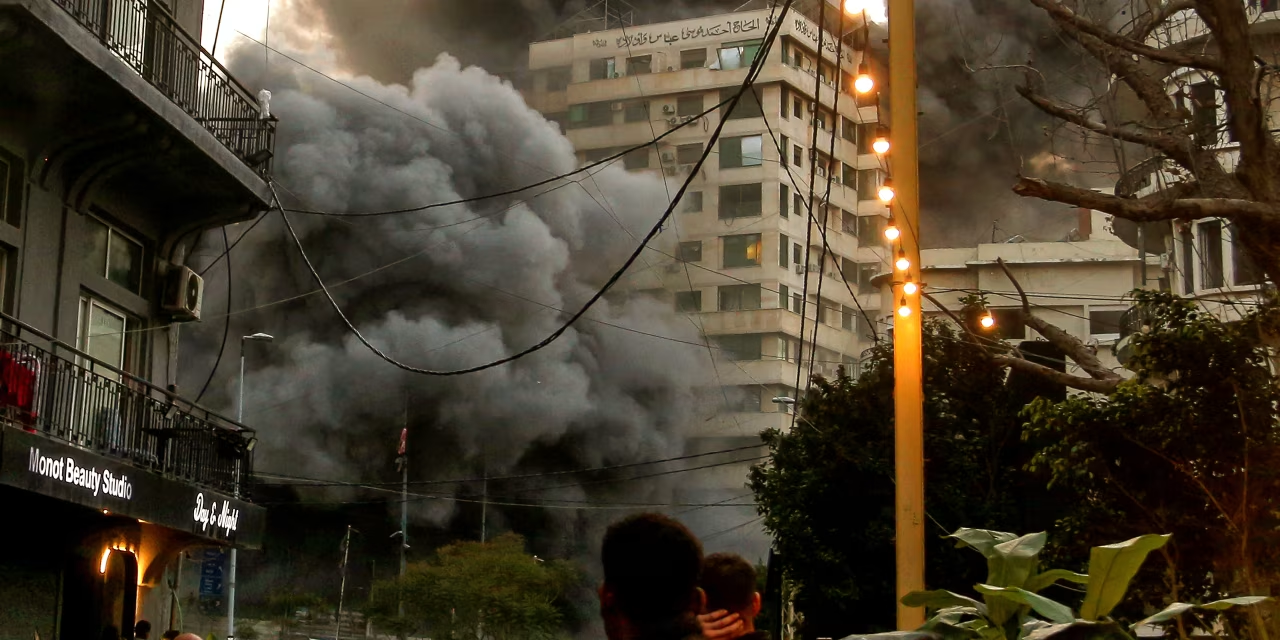
The Iran War Is Now Disrupting Global Trade

Ulta Beauty’s Earnings Selloff Won’t Last. Our Bullish Thesis Remains Intact.

The conflict in the Middle East has disrupted international flights, causing a growing backlog of stranded travelers, especially in Thailand, with over 400 affected flights. Globally, around 20,000 flights have been canceled, impacting 400,000 passengers. Limited airline communication and regional route disruptions may take weeks to resolve, threatening future tourism.
Unintended Extended Stay for Travelers
Sam and Mark initially planned a brief escape from the British winter to Southeast Asia. However, their trip has been thrown into chaos after their flight through Doha was canceled, and no clear date for a new flight has been provided. Their frustrations highlight poor communication and a perceived lack of contingency planning from airlines, complicating their situation as they attempt to return home. Globally, around 20,000 flights have been canceled recently, stranding over 400,000 travelers amid the ongoing war in Iran, which has unexpectedly disrupted travel plans.
Widespread Disruption and Misinformation
Passengers stranded in transit hubs like Bangkok’s Suvarnabhumi Airport turn to social media amid scarce official information. Misinformation circulates quickly, with rumors about departing flights and easing restrictions, but many transit flights remain canceled. Some efforts by the Thai government include financial assistance and visa extensions, yet strict eligibility requirements and limited capacity mean only a few will benefit. Officials warn that clearing the backlog may take up to a month, prolonging travelers’ extended stays.
The Impact on Tourism and Future Travel
The ongoing cancellations not only frustrate stranded passengers but also threaten Thailand’s tourism industry. As travelers look ahead to summer holidays in Southeast Asia, many may prefer alternative routes, avoiding traveling through the Middle East due to current disruptions. The situation underscores the broader consequences of the geopolitical conflict, affecting both individual travelers and destination economies, with recovery likely to be slow and challenging.
Other People are Reading
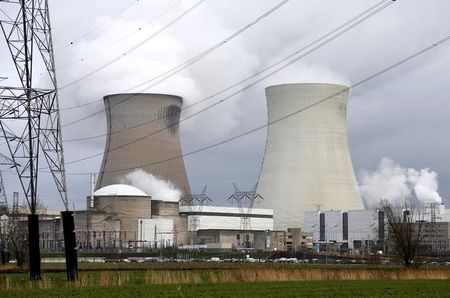
Energy Security: US moves to fund Japanese and Korean nuclear fuel projects
Business
Rising geopolitics and indigenisation push place India’s defence sector in a structural growth cycle

For India, this shift coincides with a policy framework that prioritizes self-reliance in defence production. The government’s continued emphasis on indigenisation, alongside initiatives aimed at strengthening domestic manufacturing capabilities, is expanding the sector’s addressable market. Increasing participation from private industry, start-ups and MSMEs is also improving the depth of the domestic defence ecosystem while encouraging innovation and cost efficiency across projects.
A key driver of sector growth is the steady pipeline of procurement programs and capital acquisition approvals across the armed forces. Recent approvals of large defence acquisition proposals underscore the government’s ongoing commitment to modernizing military capabilities and enhancing operational readiness. Such approvals not only support order inflows but also provide greater revenue visibility for the sector over the medium term.
Export opportunities are emerging as another significant catalyst. With several countries increasing defence spending and seeking diversified supply sources, Indian manufacturers are gradually expanding their presence in global markets. The Middle East already accounts for a significant share of global arms imports, and continued demand for equipment such as missiles, air-defence systems, surveillance technologies and electronic warfare solutions could open new avenues for Indian defence exporters.
At the same time, the sector continues to face certain operational challenges. Supply-chain constraints—particularly for specialized components and imported subsystems—could occasionally affect production schedules or execution timelines for complex defence platforms. Addressing these bottlenecks through greater localization and technology development remains a key priority for policymakers and industry participants alike.

Despite these near-term constraints, the broader outlook for the defence industry remains positive. Increasing budget allocations, emergency procurement programs and technology-focused development roadmaps are likely to sustain order inflows and improve long-term revenue visibility for sector participants.
Taken together, rising defence spending, a robust procurement pipeline and growing export opportunities suggest that India’s defence sector is transitioning into a structurally stronger growth phase. As indigenisation deepens and domestic capabilities expand across platforms—from electronics and missiles to aerospace systems—the sector appears well positioned to benefit from both domestic modernisation and global demand for defence equipment.
Bharat Electronics: Buy| Target Rs 520
Supported by a robust INR730b order book and sustained inflows, Bharat Electronics remains well placed to benefit from large platform programs across the Army, Navy, and Air Force. A strong addressable market underpins expectations of sustained revenue growth exceeding 15% over the coming years.
Strong execution drove revenues and margins above expectations, aided by disciplined cost control and operating leverage. Effective supply-chain management has insulated the company from semiconductor shortages and commodity volatility, while higher indigenisation levels continue to support better-than-expected profitability.
Looking ahead, Bharat Electronics is positioned to capitalise on sizable orders, including QRSAM, Akash-NG, next-generation corvettes, and base programs. Improved margins and healthy execution underpin management’s guidance, with revenue and PAT expected to grow at 18% and 16% CAGR over FY25–28.
Kirloskar Oil Engines: Buy| Target Rs 1600
Kirloskar Oil Engines continues to strengthen its market position across both low and high-horsepower power generation segments, supported by ongoing capability expansion and a consultant-led sales approach.
The company is witnessing improving order visibility driven by increasing opportunities in the nuclear and defence sectors, CPCB 4+ replacement demand, and growing export traction. The transfer of the B2C business enables a sharper focus on the higher-margin B2B portfolio.
In 3QFY26, revenue grew 35% YoY to INR13.8b, led by strong performance in the power generation and industrial segments. EBITDA margin stood at 12.2%, impacted sequentially by higher other expenses, while adjusted profit after tax was INR1,022m.
Over 9MFY26, revenue, EBITDA, and profit after tax recorded steady growth, reflecting healthy demand momentum and improving operating performance.
(The author Siddhartha Khemka, Head of Research – Wealth Management, Motilal Oswal Financial Services)

While traditional energy investors spent the past weekend counting down the minutes until futures markets reopened on Sunday, overseas crypto traders were already placing their bets on the direction of oil prices.
The cryptocurrency exchange Hyperliquid lists perpetual futures, a highly speculative flavor of derivatives, tracking West Texas Intermediate crude—the U.S. benchmark—and other commodities. And like other crypto-native contracts, perpetual futures trade 24/7.
Copyright ©2026 Dow Jones & Company, Inc. All Rights Reserved. 87990cbe856818d5eddac44c7b1cdeb8

Walmart, Target outpace peers in AI-driven supply chain race, Jefferies says

Airbus: Weak Deliveries Raise Questions About The 2026 Target

Diamondback Energy Has Soared During the Iran War. Execs Made Millions on Stock Sales.

This Copper Stock Is Worth Mining. The Metal’s Boom Is On.

Diddy’s Lawyer Calls Prison Sentence A ‘Perversion Of Justice’ In Appeal

John Alford’s victims share impact of crimes as Grange Hill star dies in prison
The Iran War Is Now Disrupting Global Trade


-
 Tech4 days ago
A 1,300-Pound NASA Spacecraft To Re-Enter Earth’s Atmosphere
-

 News Videos6 days ago
10th Algebra | Financial Planning | Question Bank Solution | Board Exam 2026
-
 Crypto World1 day ago
HYPE Token Enters Net Deflation as HyperCore Buybacks Outpace Staking Rewards
-

 Business5 days ago
ExxonMobil seeks to move corporate registration from New Jersey to Texas
-

 Crypto World6 days ago
Paradigm, a16z, Winklevoss Capital, Balaji Srinivasan among investors in ZODL
-

 Fashion2 days ago
Weekend Open Thread: Addict Lip Glow
-

 Tech5 days ago
ChatGPT will now generate interactive visuals to help you with math and science concepts
-
Sports18 hours ago
Why Duke and Michigan Are Dead Even Entering Selection Sunday
-

 NewsBeat4 days ago
Residents reaction as Shildon murder probe enters second day
-

 Business7 days ago
Search for Nancy Guthrie Enters 37th Day as FBI Probes Wi-Fi Jammer Theory
-

 Business4 days ago
Search Enters Sixth Week With New Leads in Tucson Abduction Case
-
 NewsBeat5 days ago
Pagazzi Lighting enters administration as 70 jobs lost and 11 stores close across Scotland
-

 Tech6 days ago
Despite challenges, Ireland sixth in EU for board gender diversity
-

 Business19 hours ago
US Airports Launch Donation Drives for Unpaid TSA Workers as Partial Government Shutdown Enters Fifth Week
-

 NewsBeat4 days ago
I Entered The Manosphere. Nothing Could Prepare Me For What I Found.
-
Crypto World15 hours ago
Coinbase and Bybit in Investment Talks: Could Bybit Finally Enter the US Crypto Market?
-

 Business6 days ago
Search Enters 39th Day with FBI Tip Line Developments and No Major Breakthroughs
-

 Sports6 days ago
Skateboarding World Championships: Britain’s Sky Brown wins park gold
-

 Business20 hours ago
Country star Brantley Gilbert enters growing non-alcoholic beer market
-
 Crypto World5 days ago
Will Chainlink price reclaim $10 amid volatility squeeze?

