











Connect with us

Business

President Trump says oil price surge ‘small price to pay’ for peace

Published

on

President Trump says oil price surge 'small price to pay' for peace

As gas prices surge while the U.S. wages war against Iran, President Donald Trump suggested in a Sunday Truth Social post that the short-term rise is a “small price” for peace.

“Short term oil prices, which will drop rapidly when the destruction of the Iran nuclear threat is over, is a very small price to pay for U.S.A., and World, Safety and Peace. ONLY FOOLS WOULD THINK DIFFERENTLY!” the president declared in the post.

Advertisement

Americans have been facing rising gas prices at home as the U.S. attacks the Islamic nation..

CRUDE OIL PRICES EXCEED $100 A BARREL AS WAR IN IRAN DISRUPTS PRODUCTION, SHIPPING

President Trump

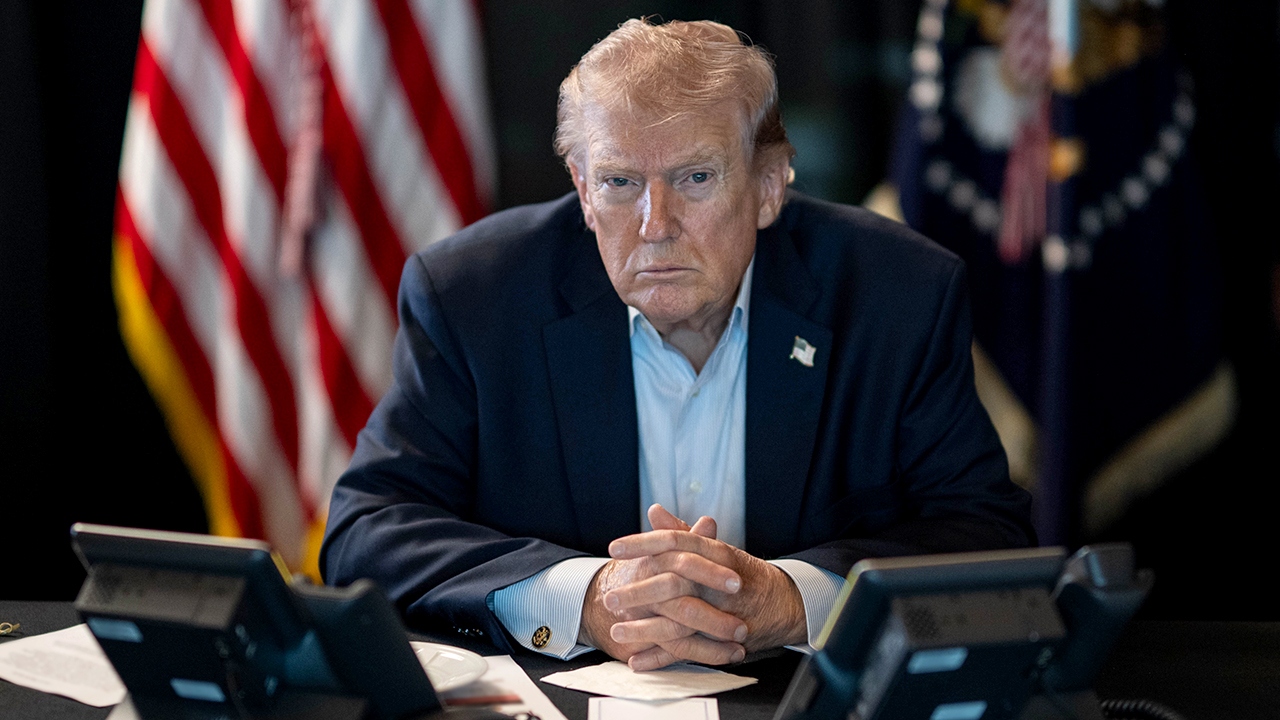
President Donald Trump monitors military operations during Operation Epic Fury against Iran on March 2, 2026. (The White House via X Account/Anadolu via Getty Images)

The AAA national average price for a gallon of regular gas is $3.478 as of Monday, significantly higher than average one week ago of $2.997.

Rep. Thomas Massie, R-Ky., highlighted rising fuel prices amid the war in a Sunday post on X, and said that “waging war costs American taxpayers about $1 billion per day,” asserting, “This isn’t America First.”

Advertisement

TANKERS TO RESUME NORMAL MOVEMENT IN MIDDLE EAST IN ‘A FEW WEEKS’ AT WORST, ENERGY SEC SAYS, ENDING OIL SURGE

Rep. Thomas Massie

Rep. Thomas Massie questions Attorney General Pam Bondi during a House Judiciary Committee hearing in Washington, D.C., on Feb. 11, 2026. (Nathan Posner/Anadolu via Getty Images)

Trump, an outspoken critic of Massie, is backing challenger Ed Gallrein in the Republican primary in Massie’s congressional district.

Senate Minority Leader Chuck Schumer, D-N.Y., has called for the president to tap the Strategic Petroleum Reserve to help tackle the price surge.

TRAVEL IS ABOUT TO GET MORE EXPENSIVE AS IRAN CONFLICT SPARKS JET FUEL CRUNCH

Advertisement
Sen. Chuck Schumer

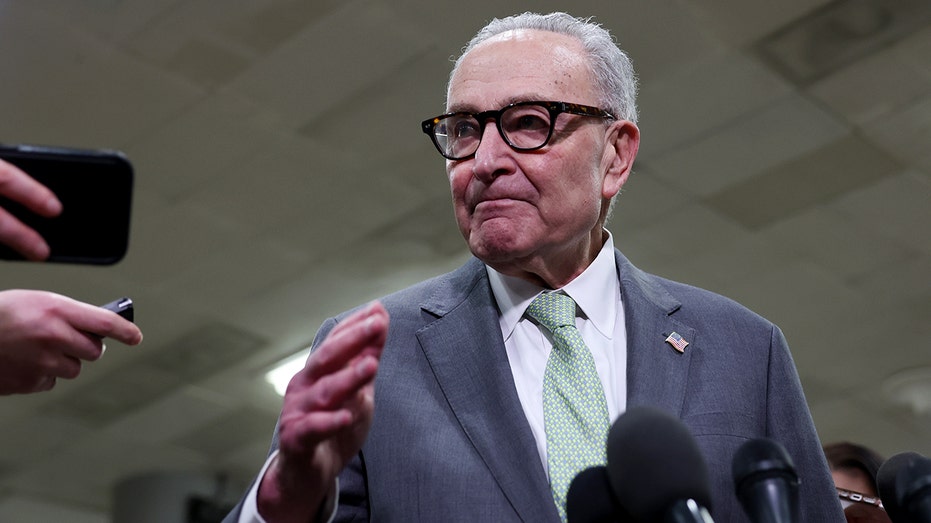
Senate Minority Leader Charles Schumer speaks to the media at the U.S. Capitol on March 3, 2026. (Anna Moneymaker/Getty Images)

TRAVEL IS ABOUT TO GET MORE EXPENSIVE AS IRAN CONFLICT SPARKS JET FUEL CRUNCH

“The Strategic Petroleum Reserve exists for moments exactly like this,” Schumer said in a statement. “When wars and global crises disrupt energy markets, the United States has the ability to act, but President Trump and his administration are refusing to do so. Trump should release oil from the SPR now to stabilize markets, bring prices down, and stop the price shock that American families are already feeling thanks to his reckless war.”

Continue Reading
Click to comment

Leave a Reply

Your email address will not be published. Required fields are marked *

Business

How worried are Americans about rising petrol prices?

Published

on

How worried are Americans about rising petrol prices?

As the conflict in Iran blocks oil exports from the Gulf region and producers start to cut output, the supply shock has sent petrol prices soaring worldwide. The stark rise is already rattling financial markets, driving up prices at the pump and raising fears of a bigger economic hit.

The BBC spoke to Americans in New York to ask how they’re feeling the pinch.

With reporting from Michelle Fleury in Tarrytown, New York and Pratiksha Ghildial in New York City

Continue Reading

Business

Oil falls over 6% as Trump predicts Middle East de-escalation

Published

on

Oil falls over 6% as Trump predicts Middle East de-escalation
Oil prices fell on Tuesday after hitting their highest level in more than three years in the prior session as U.S. President Donald Trump predicted the war in the Middle East could end soon, easing concerns about prolonged disruptions to global oil supplies.

Brent futures fell $6.51, or 6.6%, to $92.45 a barrel at 0018 GMT, while U.S. West Texas Intermediate (WTI) crude was down $6.12, or 6.5%, to $88.65.

Oil prices surged past $100 a ‌barrel on Monday, ⁠hitting session ⁠highs of $119.50 for Brent and $119.48 for WTI, their highest since mid-2022, as supply cuts by Saudi Arabia and other producers during the expanding U.S.-Israeli war with Iran stoked fears of major disruptions to global supplies.

Prices later retreated after Russian President Vladimir Putin held a call with Trump and shared proposals aimed at a quick settlement to the Iran war, according to a Kremlin aide, easing concerns about a prolonged supply disruption.

Advertisement

Trump said on Monday in a CBS News ⁠interview that ‌he thinks the war against Iran “is very complete” and that Washington was “very far ahead” of his initial four- to five-week estimated timeframe.


In response to Trump, Iran’s ⁠Revolutionary Guards (IRGC) said they would “determine the end of the war” and that Tehran would not allow “one litre of oil” to be exported from the region if U.S. and Israeli attacks continued, state media reported on Tuesday citing IRGC’s spokesperson.
But those comments did not lift prices, which were also under pressure because Trump is considering easing oil sanctions on Russia and releasing emergency crude stockpiles as part of a package of options aimed at curbing spiking global oil prices amid the Iran conflict, according to ‌multiple sources. “Taking the events of the past 24 hours into account, I expect crude oil to remain highly volatile, trading within a wide range between $75ish and $105ish in the sessions ahead,” Tony Sycamore, ⁠IG market analyst, said in a note.

Gulf oil producers have begun cutting output as the U.S.-Israeli war on Iran disrupted shipping in the region. Over the weekend, Iraq slashed production at its main southern oilfields by 70% to 1.3 million barrels per day while Kuwait Petroleum Corporation also began reducing output and declared force majeure.

Adding to the cuts, Saudi Arabia has now begun trimming production, sources said on Monday.

G7 nations said on Monday they were prepared to implement “necessary measures” in response to surging global oil prices but stopped short of committing to release emergency reserves.

Advertisement
Continue Reading

Business

Turbines, batteries key to region’s power play

Published

on

Turbines, batteries key to region’s power play

As clean energy projects gather speed in the South West, local industry has been jumping on board.

Continue Reading

Business

Global Market Today | Asian stocks jump after drop in oil shores up sentiment

Published

on

Global Market Today | Asian stocks jump after drop in oil shores up sentiment
Asian stocks rebounded after Monday’s selloff and crude oil fell, as President Donald Trump signaled the Iran war may be nearing an end, offering markets a brief reprieve from selling.

Stocks jumped in Japan, South Korea and Australia, helping the broader MSCI Asia Pacific Index rise 2.2%, a sharp reversal after tumbling 3.7% on Monday. Roughly six stocks advanced for every one that declined in the index. Wall Street gauges also reversed their earlier losses to finish the session on a bullish note as tech shares rallied.

The optimistic shift came as Trump said the war with Iran would resolve “very soon.” The president said that he did not believe the conflict would be over this week, but insisted the operation was ahead of schedule. The US military objectives could be described as “pretty well complete,” he said.

Brent crude fell 10% to $89.06 a barrel, well off the peak of $119.50 hit in Monday’s session. Other markets also reversed their moves. Yields on the 10-year Treasury halted a five-day increase and the dollar extended losses made in the New York session.

Advertisement

The moves show how sensitive markets remain to every turn in the Middle East conflict, with a single headline enough to send traders scrambling. Cross-asset volatility showed little sign of easing — with a market risk indicator hovering near levels seen when Trump unveiled global tariffs last year — as investors grapple with a fast-moving geopolitical conflict that offers no clear trading playbook.


“What we’re seeing now is more of a relief rally after an extreme risk-off episode, rather than a genuine shift back into a full risk-on environment,” said Dilin Wu, a research strategist at Pepperstone Group.
Even so, equity-index futures on US benchmarks slipped in early Asian trading, signaling the rebound may not hold. Contracts for the S&P 500 and the Nasdaq 100 were down 0.2%, having pared losses of as much as 0.6%.Trump’s comments at press conferences “haven’t been the most informative signal,” so investors would well remain skeptical, Eric Van Nostrand, a chief investment officer at Lazard Asset Management said in a Bloomberg TV interview.

“There’s a lot of misplaced confidence in markets right now that things will ease quickly as they have in previous episodes of elevated Middle Eastern tensions,” he said. “But I do think what we are seeing today, given the likely duration of closure of the Strait of Hormuz, is something quite different. It is going to affect the global economy really in a very meaningful and global way.”

Continue Reading

Business

Clams, oysters recalled in 9 states over possible norovirus contamination: FDA

Published

on

Clams, oysters recalled in 9 states over possible norovirus contamination: FDA

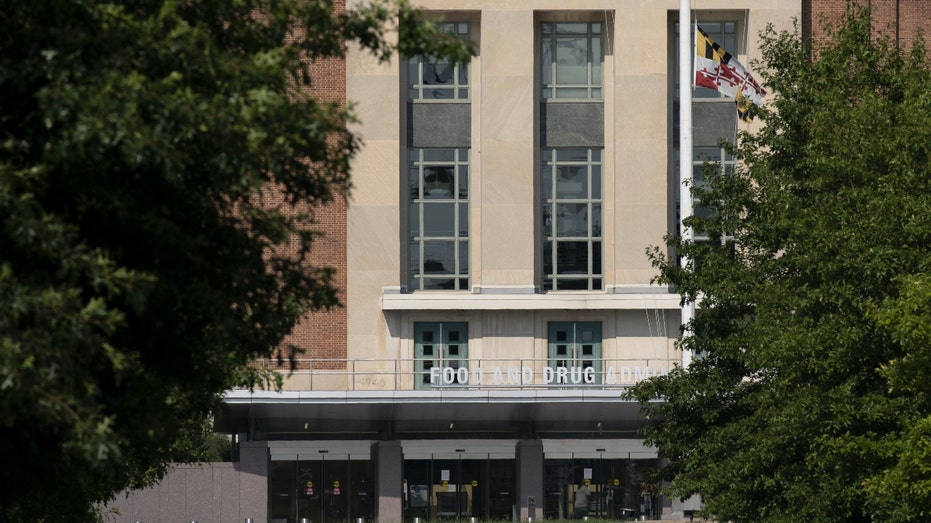
The Food and Drug Administration on Monday announced a recall for clams and raw oysters over concerns that they may be contaminated with norovirus, a contagious infection commonly known as the stomach flu.

The recall affects Manila clams harvested by Lummi Indian Business Council that were distributed to restaurants and food retailers in nine states, including Arizona, California, Florida, Georgia, Illinois, Nevada, New York, Oregon and Washington. The FDA said the clams may have been distributed to other states as well.

Advertisement

The oysters were harvested by Drayton Harbor Oyster Company and distributed in Washington state.

Both food items were harvested between Feb. 13 and March 3 in Drayton Harbor, Washington.

FRITO-LAY RECALLS MISS VICKIE’S CHIPS OVER POTENTIALLY ‘LIFE THREATENING’ ALLERGEN RISK

Raw oysters on a plate

The oysters were harvested by Drayton Harbor Oyster Company and distributed in Washington state. (BSIP/Education Images/Universal Images Group via Getty Images / Getty Images)

The Washington State Department of Health notified the FDA of the recall on Wednesday.

Advertisement

The FDA urged restaurants and food retailers not to serve or sell the clams or oysters and for consumers not to eat the foods.

The agency said restaurants and retailers “should dispose of any products by throwing them in the garbage or contacting their distributor to arrange for destruction.”

MAJOR FROZEN FOOD RECALL EXPANDS TO 37M POUNDS OF TRADER JOE’S, KROGER PRODUCTS OVER GLASS CONCERNS

FDA headquarter sign

The FDA urged restaurants and food retailers not to serve or sell the clams or oysters and for consumers not to eat the foods. (iStock / iStock)

“Restaurants and retailers should also be aware that shellfish may be a source of pathogens and should control the potential for cross-contamination of food processing equipment and the food processing environment,” the alert added.

Advertisement

The FDA warned that food containing norovirus may “look, smell and taste normal” but can cause serious illness if eaten. 

Consumers of these products who are experiencing symptoms of illness are urged to contact their healthcare provider and report their symptoms to their local health department.

The U.S. Food and Drug Administration headquarters

The FDA warned that food containing norovirus may “look, smell and taste normal” but can cause serious illness if eaten.  (Stefani Reynolds/Bloomberg via Getty Images / Getty Images)

Symptoms include diarrhea, vomiting, nausea, stomach pain, fever, headache and body ache. A person typically develops symptoms 12 to 48 hours after being exposed to norovirus and one to three days to recover.

CLICK HERE TO GET FOX BUSINESS ON THE GO

Advertisement

People of all ages can become infected with norovirus, although people who are immunocompromised can potentially suffer from severe illness, the FDA said.

The FDA said it is awaiting further information on distribution of the clams and oysters and will continue to monitor the investigation.

Continue Reading

Business

China’s Advancements in Digital Yuan Intensify the Race for the Future of Currency

Published

on

China's Renminbi Poised to Achieve Global Reserve Currency Status

China’s digital yuan (e-CNY) has experienced explosive growth, with transaction volumes increasing by over 800% as Beijing positions the central bank digital currency (CBDC) to challenge the U.S.-dominated global monetary system.

While retail adoption remains slow due to the dominance of private platforms like Alipay and WeChat Pay, the Chinese government is aggressively integrating the e-CNY into public sector payments and cross-border trade settlements.

Key Points

  • Massive Growth: As of late 2025, cumulative e-CNY transactions reached 16.7 trillion yuan ($2.37 trillion), representing an 800% increase since 2023 and making it the world’s largest CBDC experiment.
  • Divergent National Strategies: China is pursuing a centralized, state-issued CBDC while banning private yuan-backed stablecoins; conversely, the U.S. has banned the creation of a CBDC in favor of a market dominated by dollar-backed private stablecoins.
  • Functional Evolution: To increase its appeal, the e-CNY began paying interest to holders on January 1, transitioning from a simple payment tool to a feature more closely resembling a traditional bank deposit.
  • Cross-Border Expansion: China is a primary driver of Project mBridge, a multi-government digital payment platform where the digital yuan accounts for over 95% of settlement volume, particularly for energy and commodity trades.
  • Retail Adoption Hurdles: Despite government mandates for public servant wages, domestic consumers still largely prefer established private digital payment channels, though analysts suggest enterprise and supply chain adoption may be easier to accelerate.
  • Global Implications: Analysts view the e-CNY as a long-term strategic tool aimed at building a “multilateral monetary system” that reduces reliance on the U.S. dollar and enhances China’s influence in international trade.

This state-led strategy creates a sharp contrast with the United States, which has prioritized private stablecoins and banned the issuance of a centralized digital currency, marking a new frontier in the financial competition between the two superpowers.

China is aggressively expanding its central bank digital currency (CBDC), the e-CNY, as a strategic alternative to the U.S. dollar-dominated financial system. By late 2025, transaction volumes surged by over 800% to $2.37 trillion, driven largely by government-led initiatives such as public sector wage payments. While domestic retail adoption faces competition from established platforms like Alipay and WeChat Pay, Beijing is shifting its focus toward international trade and institutional utility.

The global digital currency landscape reflects a growing geopolitical divide in financial technology:

Advertisement
  • China’s Centralized Model: Focuses on state-issued currency (e-CNY) while enforcing strict bans on private stablecoins and cryptocurrencies.
  • The U.S. Private Model: Prioritizes dollar-backed stablecoins issued by private entities, which currently maintain nearly 99% of the global market share.

The contrast between China’s state-driven Central Bank Digital Currency (CBDC) strategy and the U.S. inclination toward privately issued stablecoins significantly impacts the competition for global reserve currency dominance in multiple critical aspects.

1. Divergent Models of Financial Control

The competition is defined by two fundamentally different structural philosophies:

  • China’s Centralized Model: Beijing promotes the e-CNY , a state-issued currency designed to challenge the U.S.-dominated global monetary system. China enforces a strict ban on private stablecoins and cryptocurrencies to maintain state control.
  • The U.S. Private Model: The U.S. prioritizes privately issued, dollar-backed stablecoins . These operate on public, decentralized blockchains rather than state-run systems. Currently, the U.S. has banned the issuance of a domestic CBDC due to concerns regarding financial stability and privacy.

2. Market Dominance vs. Strategic Growth

The document highlights a significant gap in current usage versus strategic trajectory:

  • U.S. Dominance: Dollar-denominated stablecoins currently maintain an overwhelming lead, accounting for nearly 99% of the global market share by market capitalization. This allows the U.S. to capitalize on the existing dominance of the dollar in digital formats.
  • China’s Rapid Expansion: While retail adoption has been stagnant domestically, the e-CNY’s transaction volume surged by 800% to $2.37 trillion by late 2025. This growth is driven by government-led initiatives, such as paying public sector wages in digital yuan.

3. Cross-Border Settlement and mBridge

China is using technology to build a “multilateral monetary system” that bypasses traditional dollar-reliant channels:

  • The mBridge Project: In collaboration with the UAE, Thailand, Saudi Arabia, and Hong Kong, China has developed a platform for cross-border settlements. The digital yuan accounts for over 95% of the settlement volume on this platform.
  • Strategic Trade: China is focusing mBridge toward energy and commodity-linked transactions , sectors where it already holds a central commercial role.
  • Belt and Road Integration: Beijing is leveraging the “Belt and Road” initiative to encourage international supply chain participants to adopt the e-CNY for cross-border transactions, offering “transactional convenience and economic savings.”

4. Economic Incentives and Functionality

  • Interest Payments: As of January 1, the e-CNY began paying interest to holders , making it function more like a traditional bank deposit. This is intended to increase its appeal to both retail and institutional users.
  • U.S. Regulatory Hesitation: In the U.S., discussions regarding whether stablecoins should pay interest are stalled. Opponents fear that interest-bearing stablecoins could cause significant outflows from traditional banks, potentially threatening financial stability.

5. Influence on Reserve Currency Status

While the e-CNY has a long way to go, its integration into China’s national strategy poses a direct challenge to the U.S. dollar:

  • Strategic Alternative: The e-CNY is explicitly described as an alternative to the U.S.-dominated system.
  • Institutional Shift: While changing individual consumer behavior is difficult, China believes that enterprise adoption for cross-border trade can be accelerated more quickly, potentially shifting the foundation of global trade finance away from the dollar.
  • Status of the e-CNY: Analysts conclude that given its scale and sophistication, the digital yuan will remain a central feature of the “global future of money” and the ongoing superpower competition.

Chinese authorities are expanding the functionality of e-CNY beyond a simple digital payment tool. As of January 1, the e-CNY now offers interest to holders, making it resemble traditional bank deposits. This new feature could enhance its appeal and drive greater adoption among retail users. Additionally, the integration of interest-bearing capabilities positions e-CNY as a more competitive alternative to traditional banking services. This move could potentially disrupt the financial ecosystem by encouraging users to transition from conventional savings accounts to the digital yuan. Moreover, by offering such incentives, Chinese authorities aim to boost the currency’s usage domestically while laying the groundwork for its potential international adoption.

Continue Reading

Business

Form 4 Vistra Energy Corp For: 9 March

Published

on


Form 4 Vistra Energy Corp For: 9 March

Continue Reading

Business

Vail Resorts, Inc. (MTN) Q2 2026 Earnings Call Transcript

Published

on

OneWater Marine Inc. (ONEW) Q1 2026 Earnings Call Transcript

Vail Resorts, Inc. (MTN) Q2 2026 Earnings Call March 9, 2026 5:00 PM EDT

Company Participants

Connie Wang
Robert Katz – CEO & Executive Chairman
Angela Korch – Executive VP & CFO

Conference Call Participants

Advertisement

Shaun Kelley – BofA Securities, Research Division
David Katz – Jefferies LLC, Research Division
Charles Scholes – Truist Securities, Inc., Research Division
Matthew Boss – JPMorgan Chase & Co, Research Division
Jeffrey Stantial – Stifel, Nicolaus & Company, Incorporated, Research Division
Arpine Kocharyan – UBS Investment Bank, Research Division
Benjamin Chaiken – Mizuho Securities USA LLC, Research Division
Xian Siew Hew Sam – BNP Paribas, Research Division
Brandt Montour – Barclays Bank PLC, Research Division
Chris Woronka – Deutsche Bank AG, Research Division
Stephen Grambling – Morgan Stanley, Research Division

Presentation

Operator

Advertisement

Good afternoon, and welcome to the Vail Resorts Fiscal Second Quarter 2026 Earnings Conference Call. Today’s conference is being recorded. [Operator Instructions] I will now turn the call over to Connie Wang, Vice President of Investor Relations at Vail Resorts. You may begin.

Connie Wang

Thank you, operator. Good afternoon, everyone, and welcome to Vail Resorts Fiscal 2026 Second Quarter Earnings Conference Call. Joining me on the call today are Rob Katz, our Chief Executive Officer; and Angela Korch, our Chief Financial Officer. Before we begin, let me remind you that some information provided during this call may include forward-looking statements that are based on certain assumptions and are subject to a number of risks and uncertainties as described in our SEC filings, and actual future results may vary materially. Forward-looking statements in our press release issued this afternoon, along with our remarks on this call, are made as of today, March 9, 2026, and we undertake no duty to update them as actual events unfold.

Advertisement

Today’s remarks also include certain non-GAAP financial measures. Reconciliations of these measures are provided in the tables


Advertisement
Continue Reading

Business

Dalal Street sinks to 10-month low amid panic selling as crude crosses $100

Published

on

Dalal Street sinks to 10-month low amid panic selling as crude crosses $100
Mumbai: A fresh bout of panic selling pushed India’s main equity indices to a 10-month low on Monday as oil prices leapt past $100 a barrel for the first time since 2022 amid the full-blown conflict in West Asia, deepening concerns of the inflationary impact of surging energy costs on the economy and the rupee.

The sell-off erased about ₹8.7 lakh crore from the aggregate market capitalisation of BSE-listed companies.

India’s Volatility Index – the stock market’s fear gauge – jumped 17.5% to 23.36, off the day’s high of 24.49, underscoring the heightened risk-off mood in the market that has prompted foreign fund managers to step up selling. The index has surged 92% over the past month, with the war between US-Israel and Iran contributing to existing concerns over the impact of AI-related disruptions on the software services sector.

For now, soaring oil prices seem to be the topmost concern.

Advertisement

“The sharp rise in oil prices has pushed investors into a risk-off mode, leading to higher volatility, sector rotation and intermittent bouts of selling,” said Shreyash Devalkar, head – equity at Axis Mutual Fund.

Screenshot 2026-03-10 063105Agencies

Some Losses Recouped
“For India, crude oil is the most critical variable because it directly impacts inflation expectations, the current account, the rupee and, eventually, interest rates,” said Devalkar of Axis MF. The NSE Nifty 50 dropped 422.4 points, or 1.7%, to close at 24,028.05-its lowest level since May last year-while the BSE Sensex declined 1,352.74 points, or 1.7%, to end at 77,566.16, its weakest close since April 2025. Both indices had fallen more than 3% during intraday trade.
The fall in crude prices from the highs helped the market cut a portion of the losses, said Sunny Agrawal, Head of Research at SBI Securities.
Brent crude May futures were trading near $104 a barrel on Monday evening, off the highs of $119 earlier in the day, after G7 countries tried to curb the run-up by announcing the release of emergency oil reserves. But this could be temporary if the conflict drags on for longer than expected. Foreign portfolio investors sold shares worth ‘6,346 crore on Monday, while domestic institutional investors were buyers to the tune of ‘9,014 crore. FIIs have sold shares worth ‘28,525 crore since the start of the conflict last Saturday.

“Elevated crude prices, a stronger US dollar and pressure on the rupee typically prompt FIIs to pare exposure to emerging markets, and India is no exception, given its high oil import dependence,” said Devalkar.

Among Asian markets, Japan’s benchmark plunged 5.2%, South Korea dropped 6%, Taiwan fell 4.4%, Hong Kong declined 1.4% and China slipped 0.7%. The pan-European Stoxx 600 index was down less than 1% at the time of going to print.

At home, the broader markets also came under selling pressure, with the Nifty Midcap 150 falling 2% and the Nifty Smallcap 250 declining 2.3%. Of the total 4,536 stocks traded on the BSE, 886 advanced while 3,484 declined on Monday. On the technical front, Nifty has strong support near 23,500 and resistance around 24,500.

Advertisement
Continue Reading

Business

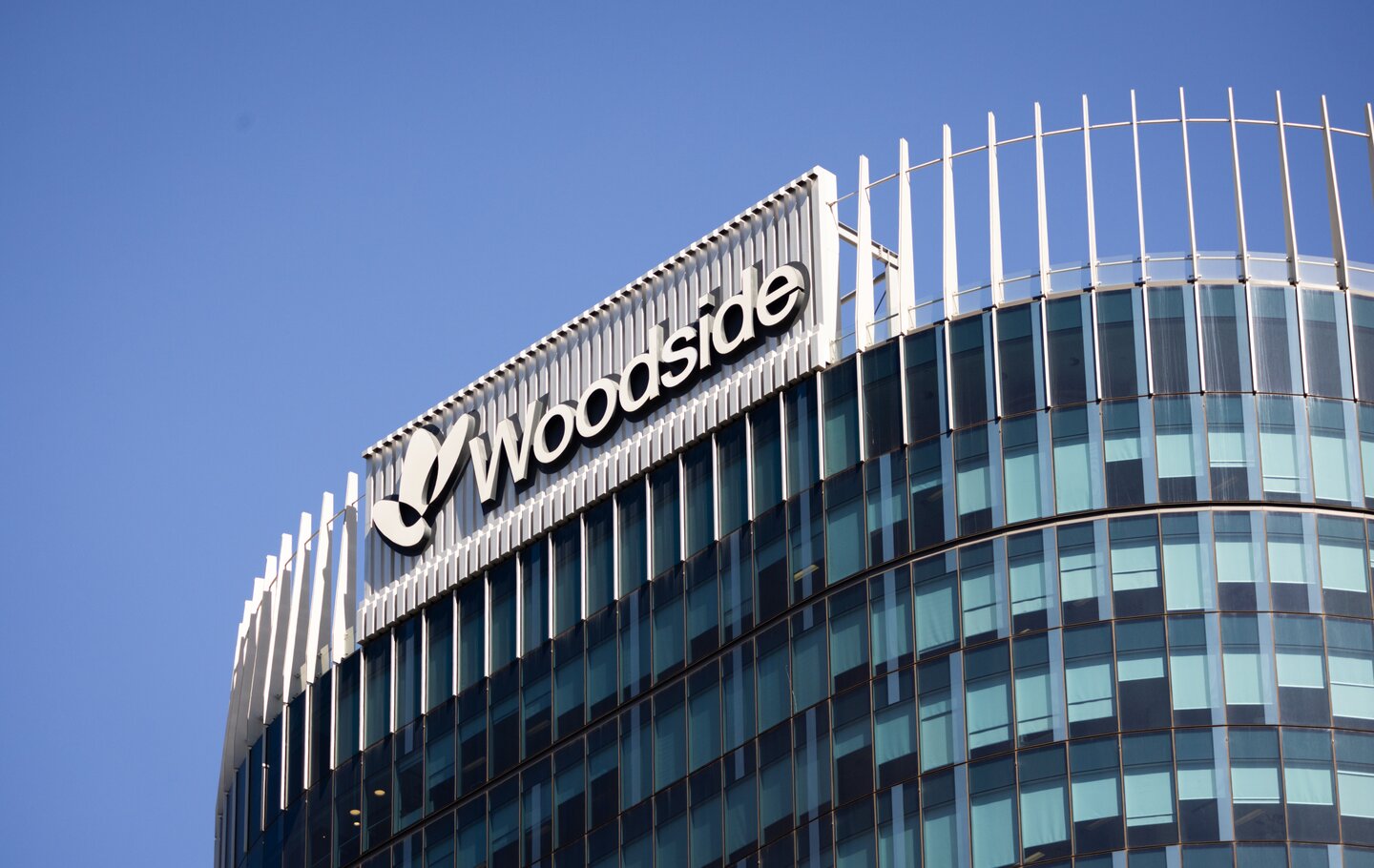
Woodside starts Trion oil well drilling

Published

on

Woodside starts Trion oil well drilling

Woodside Energy has started drilling at its Trion oilfield in the Gulf of Mexico, in a bid to fully develop the $10.2 billion asset ahead of first oil in 2028.

Continue Reading

Trending

Copyright © 2025