Yes. Corporate subscriptions are available for teams and organisations, with discounted rates as user numbers increase. Pricing starts from $1,625 + GST per user. Get in touch
to discuss the right option for your organisation.
Business News subscriptions are used by executives, investors, consultants and professionals who need to stay informed and make better decisions about the WA market. When you subscribe you’ll get
Unlimited access to WA’s most trusted business journalism
Data & Insights — detailed profiles of WA companies, people, projects and deals
MyBN — a personalised feed based on the companies, people and sectors you follow
Special publications and industry reports
Daily and weekly email newsletters
Data & Insights is a research tool built specifically for the WA market. It draws on more than 30 years of Business News reporting, updated regularly to reflect what’s happening now. Use it to:
Look up detailed profiles of WA companies, including financials, directors and ownership
Find decision-makers and track their career movements
Research live and completed projects across WA industries
Monitor deals, appointments and market activity
Access industry rankings and league tables
Data & Insights is updated daily by our dedicated research team, which uses the latest announcements, ASX filings and editorial coverage to keep our person, company, list and project records up to date.
Business News welcome all opportunities to make our dataset accurate, complete and current, so if you have an update request, please email the team at general@businessnews.com.au, and we’d be happy to assist.
Advertisement
MyBN
is part of every subscription. It’s your personalised view of Business News. You can follow the companies, people, sectors and projects that matter to you, and get a news feed and alerts tailored to your interests. You can save articles to read later and retain only what you need.
Only subscribers have full access to all content on the Business News website.
Advertisement
If staying informed about the WA economy is part of your job, and/or you’re looking for networking opportunities in WA, Business News is built for you.
Business News subscribers are:
Executives and directors tracking competitors, clients and market movements
Investors and advisers researching companies, deals and industry trends
Consultants and professionals staying across sectors relevant to their clients
Business owners looking for leads, context and market intelligence
Most Business News publications cover national or global markets. Business News is focused entirely on Western Australia, which means the journalism, the data and the intelligence are all built around WA companies, people and projects — not adapted from a national feed. Data & Insights, included with every subscription, combines more than 30 years of WA-specific editorial research with live business data. There’s no comparable product for the WA market.
Advertisement
The Morning Digest Email provides a comprehensive wrap of the major headlines, relevant to WA business, and includes with a snapshot of the overnight news covering oil, gold and ASX-listed companies.
The Afternoon Wrap Email focuses on the news covered by our team of journalists during the course of the working day, including exclusive stories and analysis, all of which relates to WA business and the local economy.
The BN Weekender Email contains a wrap of the Business News from the week that was, highlighting the top stories in each area of WA business. Sign up for free.
Advertisement
We’re happy to help. Get in touch
and our team will come back to you.
Apple is expected to unveil the iPhone 18 Pro and iPhone 18 Pro Max within the first half of September, and a steady drumbeat of leaks throughout the summer has offered an increasingly detailed, if occasionally contradictory, picture of what the new devices will include. Here are 10 features currently rumored for this year’s Pro lineup, based on reporting compiled from supply chain leaks and industry tipsters.
1. A variable aperture camera — possibly exclusive to the Pro Max
Apple has been rumored since 2024 to be bringing a variable aperture lens to the iPhone Pro line for the first time, a feature that would allow the camera to physically adjust its aperture opening to control depth of field and light intake, similar to features long available on dedicated cameras. While earlier leaks suggested both Pro models would receive the feature, tipster Ice Universe claimed in a mid-August post on the Chinese platform Weibo that the iPhone 18 Pro Max will “exclusively feature a variable aperture,” a detail that would mark a new point of differentiation between the two Pro models. The leaker added a pointed observation about the tradeoffs involved: “Looks like even Apple can’t escape the reality that if you want the absolute best camera experience, you’ll have to put up with a phone that weighs like a brick.” That claim follows an earlier June leak of internal files from Apple supplier Tata Electronics, which had already pointed to a variable aperture lens coming to the larger Pro Max model specifically.
According to alleged Chinese regulatory database filings cited by MacRumors, the iPhone 18 Pro Max is expected to receive a battery capacity nearly 10% larger than the iPhone 17 Pro Max. That improvement is reportedly not without cost: tipster Ice Universe has suggested the device could measure roughly 8.8 millimeters in thickness, making it marginally thicker than the 8.75-millimeter iPhone 17 Pro Max and noticeably bulkier than the 8.25-millimeter iPhone 16 Pro Max.
3. Reused manufacturing molds, keeping the front design largely unchanged
Despite months of speculation about a major front-of-device redesign, including rumors of under-display Face ID and a shrinking Dynamic Island, more recent leaks suggest Apple may simply reuse the manufacturing molds introduced with the iPhone 17 Pro series. According to a post from tipster Digital Chat Station on Weibo, that reused tooling would mean the Dynamic Island remains the same size and shape as the current generation, rather than shrinking or being replaced by a hole-punch camera cutout as some earlier rumors had suggested.
4. Retained 6.3-inch and 6.9-inch displays with new LTPO+ technology
Advertisement
The iPhone 18 Pro and Pro Max are expected to keep the same 6.3-inch and 6.9-inch screen sizes used in the current generation, according to AppleInsider’s tracking of the rumor cycle. However, the displays are reportedly set to adopt new LTPO+ panel technology, a refinement aimed specifically at improving battery efficiency rather than altering screen size or resolution.
5. Satellite-based 5G connectivity
Multiple reports, including from YouTuber and leaker Jon Prosser, have pointed to satellite-based 5G support as one of the more significant connectivity upgrades under testing for this year’s iPhone lineup, expanding on Apple’s existing satellite features that have so far focused primarily on emergency messaging and location sharing in areas without traditional cellular coverage.
6. New color options, including a burgundy finish
Advertisement
Leaked imagery circulating among tipsters, including posts referencing under-display Face ID rumors, has also pointed to new color options for the iPhone 18 Pro lineup, with a burgundy finish specifically spotted in leaked renders shared on social media, according to reporting compiled by Gulf News.
7. Apple’s next-generation in-house C2 modem — but possibly only outside the U.S.
Apple is widely expected to continue expanding its use of in-house-designed cellular modems, following the initial rollout of its C1 modem chip. According to discussion among device leakers, the newer C2 modem may be reserved for non-U.S. versions of the iPhone 18 Pro models, with U.S. units continuing to rely on Qualcomm modems, though this detail remains unconfirmed by Apple directly.
8. A largely unchanged rear camera plateau, with possible thickening
Advertisement
Most rumors continue to point to a rear camera system that looks nearly identical to the current generation, retaining the raised camera “plateau” housing three lenses arranged in a triangular pattern. However, some recently leaked device dummies have suggested the plateau itself may thicken slightly, with individual lens housings protruding somewhat more than on the iPhone 17 Pro, according to MacRumors’ review of the leaked hardware mockups.
9. A likely price increase of $200 to $300
Industry estimates cited by RollingOut suggest the starting price for iPhone 18 Pro models in the United States could rise by $200 to $300 compared with the iPhone 17 Pro lineup, a significant jump that has generated mixed reaction among longtime Apple followers weighing whether this year’s incremental hardware changes justify the added cost.
10. A shift to a staggered, two-phase annual release cycle
Advertisement
Perhaps the most structurally significant change this year involves Apple’s broader release strategy rather than any single device feature. According to MacRumors, Apple is planning to adopt a two-phase iPhone rollout beginning with the 18 series: the iPhone 18 Pro, iPhone 18 Pro Max and an all-new foldable device, widely rumored to be called the “iPhone Ultra,” are expected to launch together in September, while the standard iPhone 18, a lower-cost iPhone 18e and a second-generation iPhone Air are expected to follow separately around March 2027, a departure from Apple’s traditional practice of revealing its entire iPhone lineup at a single event each fall.
As with all pre-announcement leaks, these details remain unconfirmed by Apple and subject to change ahead of any official reveal. Apple has not commented publicly on any of the rumored features, and the company is expected to confirm final specifications, pricing and availability only once its September event is formally scheduled and held.
Shares of Power Finance Corporation (PFC) and REC fell up to 3% on the BSE on Thursday, after domestic brokerage firm Morgan Stanley downgraded the stocks from Overweight to Equal-Weight. The brokerage also cut its target price for PFC to Rs 410 from Rs 510, while its target for REC was lowered to Rs 360 from Rs 430.
PFC and REC’s loan growth has moderated sharply, while system and bank credit to the power sector have accelerated, according to Morgan Stanley.
“The growth disconnect has been much greater than we thought,” the brokerage stated in its note, adding that it sees recovery from the current position to be gradual.
The brokerage also cut its earnings estimates for both companies. For PFC, it lowered the target price by 20% and cut core EPS estimates by 5.5% for FY28E and 7% for FY29E. For REC, it reduced the target price by 16%, while lowering EPS estimates by 5% for FY28E and 7% for FY29E.
Advertisement
The company reported a slight decline in revenue from operations to Rs 28,527 crore in Q1 FY27, from Rs 28,539 crore in the corresponding quarter of the previous financial year.
Live Events
Also Read |PFC shares tumble 5% to 4-month low after weak Q1 earnings. Why Motilal Oswal still recommends Buy Along with the Q1 results, PFC announced an interim dividend of Rs 3.90 per share with a face value of Rs 10 each for the ongoing financial year 2027. The record date to determine the eligibility of shareholders set to receive the dividend has been fixed on August 27.REC had reported a dip of over 6% year-on-year in its consolidated net profit at Rs 4,192.76 crore in the June quarter of FY27, citing lower interest income.
Earlier in July, the boards of Power Finance Corporation (PFC) and REC approved the merger scheme between the two companies, with the share-swap ratio set at 88 PFC shares for every 100 REC shares held. PFC owns a 52.63% stake in REC. The Centre owns 55.99% in PFC but does not directly own a stake in REC.
Shares of Power Finance Corporation fell 2.7% to Rs 365.80 on the BSE on Thursday. The stock has declined over 11% in the past month and 14% over the last three months. PFC shares are down over 9% so far this year.
REC Share Price
Shares of REC fell 2% to Rs 329.40 on the BSE on Thursday. The shares of the company have declined over 6% in the last six months and have fallen 9% in the year so far.
(Disclaimer: Recommendations, suggestions, views and opinions given by the experts are their own. These do not represent the views of The Economic Times)
HoverAir, the company known for its palm-launched self-flying camera drones, has unveiled its most ambitious product yet: a pocket-sized gimbal camera that can click directly into a drone body and take flight on command. Here are five things to know about the HoverAir Versa as it launches through a crowdfunding campaign that has already drawn significant early backing.
1. It works as both a handheld gimbal camera and a self-flying drone
The Versa is designed around a modular, two-in-one concept. On its own, the device functions as a compact, handheld gimbal camera comparable in form factor to products like DJI’s Osmo Pocket 4 or Insta360’s Luna, featuring a three-axis mechanical gimbal and a built-in rotating screen that turns the camera on when flipped. Attach the included Flight Kit, however, and the same camera module transforms into a fully autonomous flying drone. HoverAir describes the transition simply: “Change from handheld mode to flying in seconds.” The two components connect through the company’s patent-pending MagLatch system, which uses custom pogo pins to deliver power from the handheld unit to the drone’s motors once attached.
Advertisement
2. The complete kit is remarkably lightweight
According to specifications shared by the company, the handheld gimbal camera portion weighs just 163 grams, or roughly 5.75 ounces, while the separate Flight Kit adds only another 67 grams, or about 2.36 ounces. Combined, the full setup weighs approximately 230 grams, or 8.1 ounces, making it light enough for easy everyday carry in a pocket or small bag. In handheld mode, the device measures 36 by 31 by 147 millimeters, extending to 176 by 31 by 147 millimeters once docked into its flying configuration.
3. Camera specs include 4K 60p video and a 3D scene-capture mode
The Versa’s gimbal camera is built around a 1/1.3-inch, 12-megapixel sensor paired with an f/2.0, 16-millimeter lens and 2x digital zoom, capable of recording 4K video at up to 60 frames per second and bitrates as high as 120 Mbps in either H.264 or H.265 format. The sensor captures its full 4:3 area using open-gate recording, which allows footage to be cropped during editing into 1:1, 16:9 or 9:16 aspect ratios without any loss of image quality, a useful feature for creators producing content across multiple social platforms. For more advanced users, the camera also supports 10-bit H-LOG recording at 4K 30p, which HoverAir says can capture up to 17.5 stops of dynamic range. Two built-in microphones handle audio capture. Perhaps the Versa’s most distinctive feature, however, is its 3D Worlds mode, which sends the drone on a precise 360-degree flight pattern around a subject, capturing the images needed to reconstruct an explorable, three-dimensional scene file that users can later share and navigate, a capability neither DJI nor Insta360 currently offers in this category.
Advertisement
4. Flight performance includes hands-free tracking with no controller required
Once docked into its Flight Kit, the Versa can launch directly from the palm of a user’s hand and autonomously follow its subject using HoverAir’s ShadowTrack tracking technology, requiring no dedicated remote controller to operate. The drone can reach top speeds of up to 36 kilometers per hour, or roughly 22 miles per hour, and carries a Level 5 wind resistance rating. According to DroneLife’s reporting on the launch, the Versa’s maximum takeoff altitude reaches 3,500 meters, or about 11,483 feet, while its maximum flight altitude tops out at 120 meters, or roughly 394 feet, with a maximum flight time of 14 minutes per charge. Flight-specific features include Palm Take-off and Landing, AI Tracking, Auto Framing, Orbit, Bird’s Eye and Zoom Out modes, along with an OmniTerrain capability. Users can control the drone through multiple methods, including hand gestures, voice commands via HoverAir’s Smart Mini MiCo controller, a dedicated HoverAir Beacon accessory, a joystick, or the company’s smartphone app. Additional creative shooting modes include Inception Shot, Dolly Zoom, Motion Timelapse and standard Timelapse, alongside the previously mentioned 3D Worlds feature. HoverAir has also designed the drone’s wings to enclose its four propellers, which the company says improves safety when operating around people, pets and crowds.
5. It’s currently available through Indiegogo, with strong early demand and some availability caveats
The Versa launched its crowdfunding campaign on Indiegogo, quickly raising more than $245,000 from backers within its first day, according to Imaging Resource. Pricing has varied slightly across different reports as the campaign has progressed, with some outlets citing a starting price of $449 for the Pocket-Only version and $629 for the FlyMore Combo, which includes the Flight Kit along with an additional battery, charger and protective accessories, while other coverage cited a $499 starting price for the camera alone and $749 for the bundle with the Flight Kit. A higher-tier Creator Combo, priced at $799, adds ND filters, a case, a suction cup mount and a compact tripod. Some of the lowest introductory pricing was reportedly available only during the first 48 hours of the campaign. Deliveries are estimated to begin in October 2026, though as with any crowdfunded project, that timeline is not guaranteed. One notable availability concern flagged by DroneDJ involves U.S. regulatory approval: in late 2025, the Federal Communications Commission stopped granting new equipment authorizations for many newly introduced foreign-made drones, a policy shift that has already affected HoverAir’s waterproof Aqua drone, which despite a successful crowdfunding campaign has yet to reach U.S. customers because it never secured FCC approval before the rules changed. According to DroneDJ’s reporting, the Versa appears to be in a stronger regulatory position than the Aqua, though prospective U.S. buyers may still want to monitor the situation closely before committing to a purchase.
Advertisement
HoverAir has built its reputation on autonomous, controller-free flying cameras, beginning with its original X1 series and continuing through the more advanced X1 Pro and X1 Pro Max models, as well as its waterborne Aqua drone. The Versa marks the company’s first attempt at combining that autonomous flight technology directly with a standalone, content-creator-focused pocket camera, positioning the product to compete not only with dedicated drone makers but also with established handheld gimbal camera brands such as DJI and Insta360, the latter of which is reportedly developing its own version of a pocket-camera-turned-drone through a separate patent filing. Whether the Versa’s combination of portability, hands-free flight and its distinctive 3D-capture feature proves compelling enough to stand out against those more established competitors will likely become clearer once the product ships and independent reviewers are able to test its camera performance directly.
Chief executive Régis Shultz’s growth plan under renewed pressure from investors
Felix Armstrong www.cityam.com
07:57, 20 Aug 2026Updated 07:58, 20 Aug 2026
JD Sports has seen US sales fall(Image: Jonathan Brady/PA Wire)
JD Sports has cut its profit forecast and reported sluggish sales growth, as the expansion strategy spearheaded by chief executive Régis Shultz begins to falter.
Advertisement
The sports and fashion retailer saw its sales performance pick up in the UK, but a deterioration in the US market coupled with aggressive discounting from competitors is weighing heavily on the firm’s bottom line, it said on Thursday.
The FTSE 100 giant scaled back its pre-tax profit target to between £700m and £800m, retreating from a previous upper limit of £850m.
The profit setback arrives as Shultz struggles to restore the faith of JD Sports’s shareholders, who are growing increasingly restless over the group’s lacklustre share price and the absence of tangible results from the chief executive’s strategic vision.
Shultz acknowledged that “trading in the second quarter remained tough,” adding that the retailer is contending with heightened competition as rivals resort to promotional activity to attract hard-pressed consumers, as reported by City AM.
Advertisement
“The market stayed highly promotional, reflecting the consumer and footwear product cycle headwinds our industry has faced in recent quarters, whilst our core consumer was impacted by incremental cost-of-living pressures,” he said.
The group’s like-for-like sales fell by 3.1 per cent in the second quarter – nearly double the 1.7 per cent decline projected by Berenberg – and by 2.8 per cent across the six months to August.
JD Sports attributed a modest recovery in its UK trading – where sales edged up by 0.8 per cent – to robust demand for replica football kits and its outdoor range. However, revenues in the US, which represents 35 per cent of the group’s total sales, tumbled by 6.8 per cent.
The retailer attributed the decline to “weaker core consumer sentiment amidst the broader cost-of-living backdrop”.
Advertisement
The group noted that the ‘back-to-school’ period would typically provide a boost to its US sales at the end of July, but this falls in the first half of August this year.
Sales rose by 1.4 per cent across Asia Pacific, although this market accounts for just five per cent of the group’s overall revenues.
Accounting for the reduction in profit targets, JD Sports stated that the “period of muted market growth” it had anticipated in May has turned out to be “more acute than expected,” particularly across the Atlantic.
The business remains on course to deliver free cash flow of £460m to £520m despite the downward revision to profit forecasts.
Advertisement
Since taking the helm at JD Sports in 2022, Shultz has struggled to recreate the covid-era athleisure surge as the cost-of-living crisis weighs heavily on its predominantly younger customer base.
In April, group chair Andy Higginson stepped down after failing to persuade board members to remove Shultz from his position. He has since been succeeded by former Ikea chief executive Peter Agnefjall.
Shares in JD Sports have climbed nine per cent so far this year, yet remain approximately 15 per cent below the level at which they stood when Shultz assumed control.
AIA Group Limited (AAGIY) Q2 2026 Earnings Call August 19, 2026 9:00 PM EDT
Company Participants
Yuan Siong Lee – Group Chief Executive, President & Executive Director Garth Jones – Group Chief Financial Officer Sami Taipalus – Group Chief Investor Relations Officer Jacky Chan – Regional Chief Executive & Group Chief Distribution Officer Fisher Zhang – Regional Chief Executive Officer Hak Leh Tan – Regional Chief Executive Leo Grepin – Regional Chief Executive & Group Chief Strategy Officer
Advertisement
Conference Call Participants
Thomas Wang – Goldman Sachs Group, Inc., Research Division M.W. Kim – JPMorgan Chase & Co, Research Division Michelle Ma – Citigroup Inc., Research Division Cheng Zhou – UBS Investment Bank, Research Division Leon Qi – CLSA Limited, Research Division Richard Xu – Morgan Stanley, Research Division Poyung Chang – CGS International
Presentation
Advertisement
Yuan Siong Lee Group Chief Executive, President & Executive Director
Good morning, and thank you for joining AIA’s 2026 interim results presentation. We have delivered a strong set of results with double-digit growth across our key financial metrics. Value of new business increased by 10% to a record high of $3.2 billion. We saw growth across all distribution channels and reportable segments, excluding Thailand, which had an exceptionally high comparative as previously disclosed.
Underlying VONB growth was 14% adjusting for Thailand. AIA’s consistent delivery of high-quality new business has accelerated growth in earnings. Operating profit after tax of $4.2 billion was up 13% per share, driving a record operating ROE of 17.5%. And we now expect to exceed our 9% to 11% OPAT per share CAGR target over 2023 through 2026.
Operating cash generation grew strongly with underlying free surplus generation up 10% per share and net free surplus generation up 12% per share. The Board has declared a 10% increase in the interim dividend per share. These results demonstrate that our strategy is working as intended. We are growing fast, returning substantial cash
Oxfam is reviewing the operations of its three UK warehouses and has said it “cannot give guarantees” on the future of its high street shops, citing a “difficult economic climate”.
The charity said it has no plans to close either warehouses or shops. But insiders fear the Batley site in West Yorkshire, which houses Oxfam’s main textile recycling centre, could shut as part of a cost-cutting drive because its lease is up for renewal. The other two warehouses are in Bicester and Milton Keynes. Together the three sites employ about 90 people.
A source said Oxfam was considering closing up to 100 of its more than 500 UK outlets because sales at some were no longer viable. “Donations have dropped off,” the insider said, adding that the shops were also facing competition from online sellers of secondhand goods such as Vinted. “Oxfam is always more expensive, and that’s starting to have an effect,” the source said.
Oxfam GB did not confirm any closure numbers. Lorna Fallon, its chief supporter officer, said: “As is standard practice, we keep all parts of our retail operations under review via regular meetings. While we cannot give guarantees in this difficult economic climate, we are confident in and positive about our current retail performance and do not have plans to close our shops or warehouses at this time.”
The review follows two years of losses at Oxfam Activities, the charity’s trading arm. The division sells new goods through Oxfam’s shops, runs the Batley textile recycling plant and supplies stewards for festivals. It lost more than £2m in the year to March 2025, having also lost more than £2m the previous year. Sales fell by 7 per cent in the year to March 2025, driven by a slump in income from recycling. The division’s figures do not include direct income from the stores.
Fallon set those losses against the wider contribution of the retail operation. “In [the last financial year], Oxfam GB’s shops, warehouses and online retail teams generated a £6.3m (net) contribution to our humanitarian work, as well as raising dedicated funds through emergency appeals to support crises in Venezuela, the Middle East and Ukraine,” she said. Oxfam GB’s annual report and accounts for 2024/25 are published on its website, and its filings are recorded on the Charity Commission register.
Fallon also pointed to recent changes in the retail business. She said Oxfam had launched a new online rental service, brought fulfilment of online orders back in-house, and opened a second superstore, in Manchester.
The Batley site remains the main focus of concern among staff because of the lease renewal. Oxfam has not said when the review of its warehouses will conclude.
Advertisement
Amy Ingham
Amy Ingham is a reporter at Business Matters, covering UK business news with a focus on breaking news, business policy, late payments and insolvency. She joined the magazine in 2026 after completing the NCTJ Diploma in Journalism at Harlow College’s journalism school. Her recent reporting includes British Steel’s nationalisation and its impact on SME suppliers, the decline in late payments by large firms, and Insolvency Service director disqualifications. Reach her at aingham@cbmeg.co.uk.
Fortnite players reported widespread access issues early Thursday, according to outage-tracking service Downdetector, though the disruption appears tied to a planned, scheduled server downtime rather than an unexpected technical failure, as Epic Games rolled out its long-anticipated v42.00 update launching Chapter 7 Season 4.
Downdetector posted on its official account on the social platform X that “user reports indicate problems with Fortnite since 1:54 AM EDT,” tagging the post with the hashtag #FortniteDown and directing users to its outage-tracking page for further updates. The post had drawn more than 2,100 views within a short period after being published.
According to gaming outlet Insider Gaming, Fortnite’s servers were scheduled to go offline at 2 a.m. ET Thursday to accommodate the major seasonal update, a timeline that closely aligns with the spike in user complaints Downdetector began tracking at 1:54 a.m. ET. Fortnite’s regular update cadence has made server downtime a familiar experience for longtime players, but major seasonal transitions such as this one typically require a longer maintenance window than the platform’s routine weekly patches.
While Epic Games had not officially confirmed an exact return time for the servers as of the outage’s early hours, Insider Gaming pointed to a promotional post on X advertising the start of Fortnite Chapter 7 Season 4 at 6 a.m. ET, suggesting that timing likely indicated when servers were expected to come back online. The outlet cautioned that the timing was not a formally confirmed schedule and that delays or unexpected complications during the update process remained possible, a pattern that has occurred during past major Fortnite content transitions.
Advertisement
Epic Games’ official status page listed the Fortnite downtime for the v42.00 update as an unresolved incident as of the early hours of the outage, according to StatusGator’s tracking of the company’s public status dashboard. That same status tracker noted the platform had experienced several additional, smaller incidents in the days leading up to Thursday’s scheduled downtime, including a warning-level issue involving errors when installing or updating games through the Epic Games Store that had persisted for more than a day and a half, first reported on Aug. 17. Separately, StatusGator’s records showed brief Fortnite login issues on Aug. 14, lasting between 10 and 20 minutes, along with a short matchmaking and parties disruption earlier that same day.
Epic Games’ public status dashboard also flagged an active investigation into a separate issue affecting the Epic Games Launcher, in which users were reportedly unable to see Fab plugins they had previously installed, an issue the company said it was working to resolve as of Aug. 19. That issue appeared unrelated to Thursday’s scheduled Fortnite downtime but reflected a broader stretch of minor technical issues affecting various components of Epic Games’ platform in the days surrounding the major seasonal update.
Independent monitoring tools offered a mixed picture of Fortnite’s technical status heading into Thursday’s downtime window. UptimeRobot, which continuously checks Fortnite’s core web infrastructure from multiple global locations, reported that its most recent automated check, conducted at 07:13 GMT Thursday from North American infrastructure, did not detect any unusual response times or error codes, a reading that would have been taken before or around the start of the scheduled downtime window depending on the precise timing of the check relative to Epic Games’ maintenance start.
Scheduled downtime for major Fortnite updates has historically varied significantly in duration depending on the scale and complexity of the changes being introduced. According to GamesRadar, routine weekly Fortnite maintenance windows typically begin around 1 a.m. Pacific time, or 4 a.m. Eastern time, and generally last between two and three hours. However, major seasonal transitions, such as Thursday’s shift into Chapter 7 Season 4, have historically required considerably longer maintenance windows given the scope of new content, gameplay systems and Battle Pass changes typically introduced alongside a new season.
Advertisement
Fortnite has experienced longer-than-expected downtime during past seasonal transitions on occasion. During the March 2024 launch of Chapter 5 Season 2, subtitled “Myths & Mortals,” Epic Games encountered an unexpected technical issue partway through scheduled maintenance, forcing the company to extend the game’s downtime by at least eight additional hours beyond its original estimate. At the time, the official Fortnite Status account on X apologized to players for the extended wait, stating that “the team is working through this as quickly as possible” as engineers worked to resolve the unforeseen complication.
Fortnite has also experienced fully unscheduled, unplanned outages in the past unrelated to routine content updates. During one notable incident in January 2019, the game experienced a widespread, unplanned outage affecting logins, matchmaking and the in-game store, with Epic Games’ official Fortnite account confirming at the time that the company was “aware that players are experiencing issues when attempting to use Epic Games services” and was actively working toward a resolution. That particular incident was resolved within several hours, according to a follow-up post from the same account confirming that the game and all associated features had returned to full operation.
For Thursday’s scheduled downtime tied to the Chapter 7 Season 4 launch, the primary source of official updates has remained the Fortnite Status account on X, which the game’s developer has historically used to communicate both scheduled maintenance windows and any unexpected delays that arise during the update process. Players experiencing the “servers not responding” error message commonly displayed during planned maintenance windows have generally been advised that this is expected behavior during scheduled downtime rather than an indication of a broader, unplanned technical failure.
As of this report, Epic Games had not indicated any significant delays affecting Thursday’s rollout of Chapter 7 Season 4 beyond the originally anticipated maintenance window, though the company’s official status page continued to list the update-related downtime as an unresolved, ongoing incident, consistent with standard practice for tracking planned maintenance periods until services are fully restored and confirmed operational for all users.
Top of St John’s tower has been vacant since radio station left in 2024
David Humphreys and Local Democracy Reporter
08:26, 20 Aug 2026Updated 08:26, 20 Aug 2026
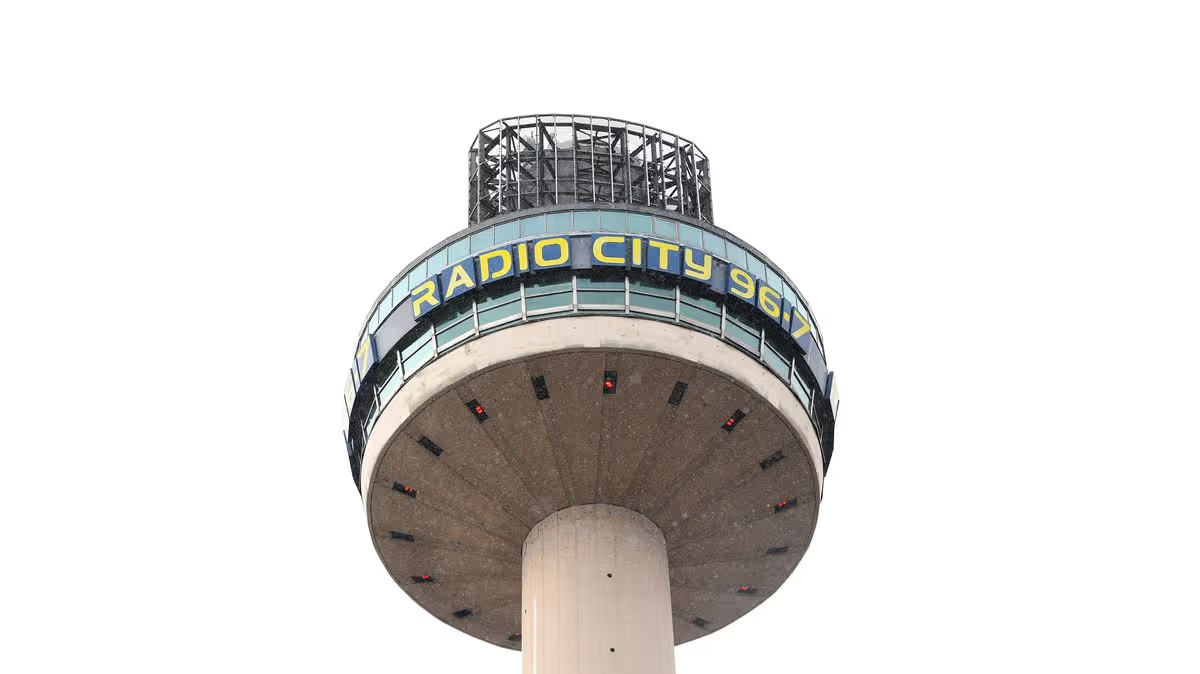
The Radio City Tower will soon lose the station’s branding(Image: Andrew Teebay/Liverpool ECHO)
The iconic Radio City signage atop St John’s Beacon is to be taken down after more than 25 years. Since 2024, the top of the tower has stood vacant after the city’s famous radio station relocated following its rebrand to Hits Radio.
Advertisement
Rumours have swirled about a possible new future for the grade II listed 450ft tower with invitations being sought for even the most “wacky” ideas. While no permanent occupant has been decided upon for the beacon, one very significant change is likely to be made to the Liverpool skyline.
A bid has been lodged with Liverpool Council to take down the Radio City 96.7 signage that spans the side of the top of the building for it to be replaced by a new animated LED screen. A heritage statement attached to the application submitted to city planners said this would “improve the visual quality of the signage as visible both during the day and in darkness.”
Built with the precinct at ground floor level, construction began on St John’s Beacon 60 years ago as a ventilation flue for its heating system. With its 10m long antenna, the tower is still the tallest structure in Liverpool if its rooftop structures are included.
Permission was granted for the station signage to be put up in 1999 and was completed in 2000. According to the heritage statement, the historic LED display has outlived its stay.
Advertisement
It said: “St John’s Beacon is continuing to be used to advertise a business that is no longer resident, and which retains no relationship with the building. This also confuses its own identity, giving the incorrect impression that it continues to be occupied by and part of the radio station.”
It is therefore proposed that a new LED signing band replace the lettering in the same position. No other external modifications are proposed to be made to the beacon or the tower.
Heritage assessments by Donald Insall Associates said upgrading the signage would provide a “slight enhancement, improving the building’s appearance by removing detracting illuminated signage dating from 2000 and now outdated in character and quality and replacing this with attractive lighting with a high-quality, more contemporary, character.”
It is said the new proposed signage is “sensitively signed, of a high quality and enhances and improves the building’s existing townscape role and prominence as a landmark and an illuminated feature in the skyline.”
Advertisement
A date has yet to be confirmed for the plans to go before Liverpool Council’s planning committee for a final decision.
Some universities are now allowing students and their families to pay tuition through PayPal and Venmo.
Among the first institutions offering the payment options are Bellarmine University, Butler University, Kansas State University, Michigan State University and Texas Tech University, although more universities are expected to join later this year.
Advertisement
Students and families may face transaction or processing fees, with the amount depending on the university and the funding method used.
The payment options are being integrated through campus payment platforms including Illumia, Nelnet Campus Commerce and TouchNet, which process tuition payments for institutions across the country.
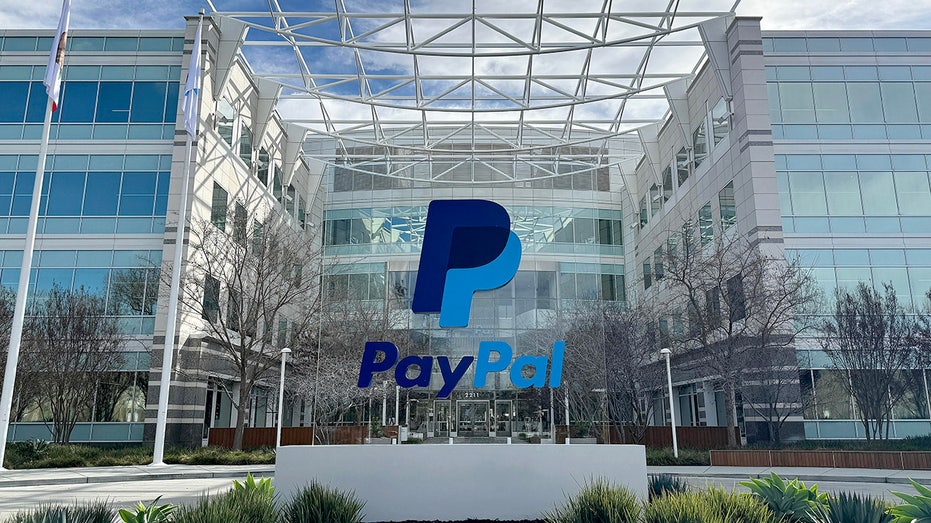
Some universities are now allowing students and their families to pay tuition through PayPal and Venmo. (iStock / iStock)
“A modern tuition payment experience has to work for both sides of the transaction,” Don Smith, Illumia’s senior vice president and general manager of integrated payments, said in a statement.
Advertisement
“Students and families want the flexibility to use payment methods that fit how they manage their money, while institutions need those options to work within the systems and processes their teams already rely on. This integration helps schools expand choice in a practical way, improving the payer experience without creating a disconnected path for campus teams,” Smith added.
PayPal and its Venmo subsidiary have aimed to further expand their presence in higher education over the last year, offering student-athletes the opportunity to receive institutional revenue-share payments through their platforms. Venmo also expanded its presence on college campuses through NIL partnerships with student athletes, college-branded cards, student ambassadors and gameday activations.
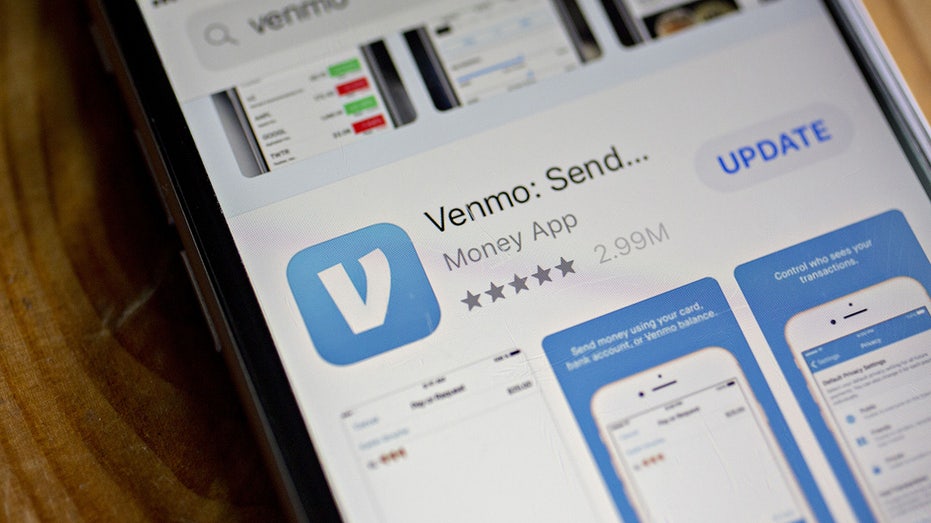
Students and families may face transaction or processing fees, depending on the university and funding method used. (Justin Sullivan/Getty Images / Getty Images)
The digital payment systems are already used by many students and families for daily money transfers, including purchasing groceries, splitting rent and sending money to friends and family.
“Tuition is one of the biggest payments a family will make, and it should come with the same flexibility and security that millions of people already count on PayPal and Venmo for every day,” Frank Keller, President of Checkout Solutions and PayPal, said in a statement. “That’s why we’re proud to bring that same choice and protection into the reliable systems schools have already built.”
Advertisement
The companies said PayPal and Venmo use security measures including encryption and fraud monitoring. Consumer regulators, however, have cautioned that money stored in nonbank payment apps may not carry the same deposit-insurance protections as funds held directly in a federally insured bank or credit union.
Consumer regulators have cautioned that some funds stored in nonbank payment apps may not carry the same deposit-insurance protections as traditional bank deposits. (Andrew Harrer/Bloomberg via Getty Images / Getty Images)
Certain eligible PayPal and Venmo balances may qualify for pass-through FDIC insurance when funds are placed at PayPal’s program banks, which currently include Goldman Sachs Bank USA, Wells Fargo Bank and JPMorgan Chase Bank. Not all PayPal or Venmo balances qualify for the coverage.
Advertisement
But FDIC pass-through insurance “protects against the failure of a Program Bank, not the failure of PayPal. PayPal is not a bank, does not take deposits and is not FDIC insured,” PayPal said in a statement.






























































You must be logged in to post a comment Login