Connect with us

Business

Pubs to open late for home nations World Cup knockout games

Published

on

Pubs to open late for home nations  World Cup knockout games

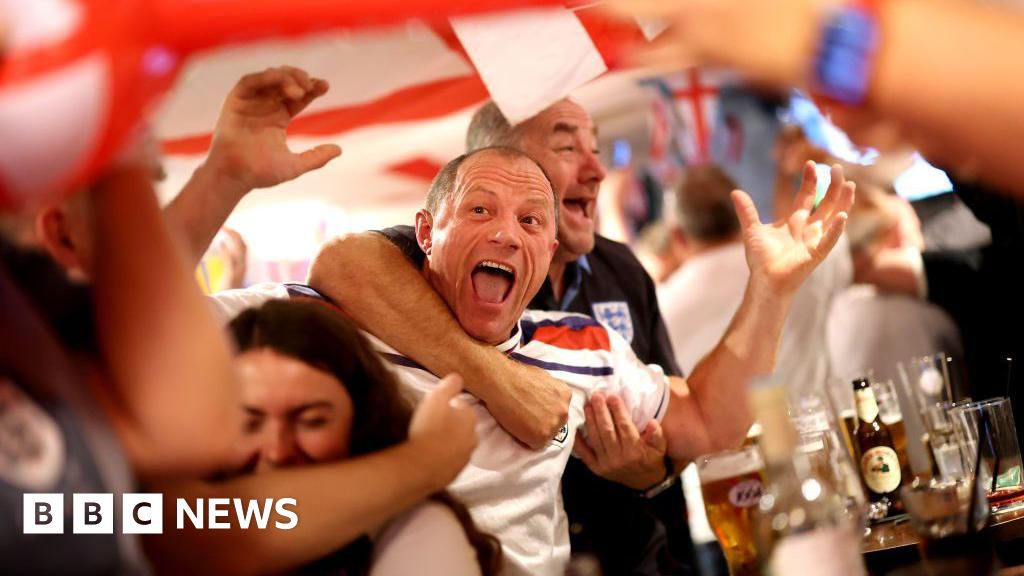
Football fans in the UK will be able to enjoy an extra round at the pub thanks to new rules during the men’s World Cup.

Continue Reading
Click to comment

Leave a Reply

Your email address will not be published. Required fields are marked *

Business

‘The Law Must Take Its Course’

Published

on

Where's My Tax Refund 2026?

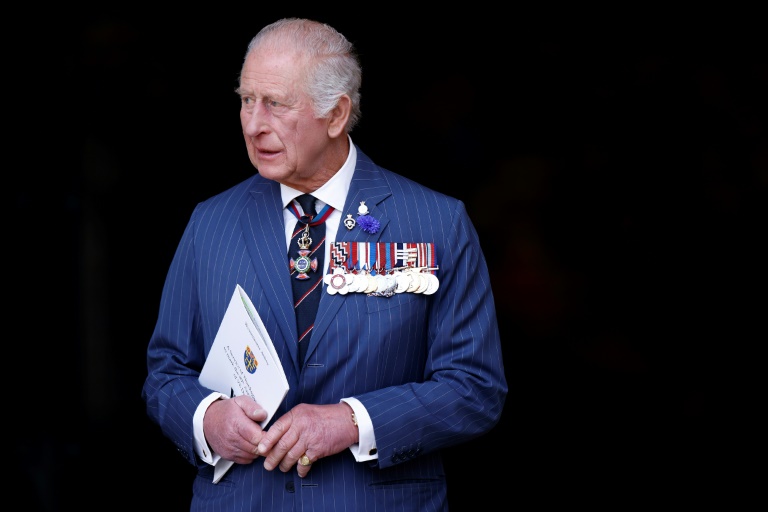
King Charles III has broken his silence regarding the arrest of his brother, the former Prince Andrew, on Thursday.

Andrew was arrested over allegations of misconduct in public office.

King Charles III Reiterates Support for Police Probe

According to the live updates of NBC News, King Charles released a statement expressing “deepest concern” over the allegations against his brother.

“I have learned with the deepest concern the news about Andrew Mountbatten-Windsor and suspicion of misconduct in public office,” the King said in his statement. “What now follows is the full, fair and proper process by which this issue is investigated in the appropriate manner and by the appropriate authorities.”

Advertisement

Charles emphasized, “In this, as I have said before, they have our full and wholehearted support and co-operation. Let me state clearly: the law must take its course.”

“As this process continues, it would not be right for me to comment further on this matter,” he said in conclusion. “Meanwhile, my family and I will continue in our duty and service to you all.”

Andrew Mountbatten-Windsor Arrested

On what is his 66th birthday, Andrew Mountbatten-Windsor was arrested just after 8 a.m. on Thursday in Sandringham.

The former prince is being accused of sharing confidential information with disgraced pedophile Jeffrey Epstein while he was a trade envoy, according to The Guardian.

Advertisement

He has also been the subject of intense scrutiny over the years, particularly over allegations that he had sexual relations with young, underaged women he met through Epstein.

The Thames Valley police released a statement on the arrest but refused to name Andrew in compliance with UK law.

“We have today (19/2) arrested a man in his 60s from Norfolk on suspicion of misconduct in public office and are carrying out searches at addresses in Berkshire and Norfolk,” the police said in the statement. “The man remains in police custody at this time.”

The whereabouts of the former prince have not been made public as of press time.

Advertisement
Continue Reading

Business

(VIDEO) Rapper Lil Poppa, Jacksonville Hip-Hop Artist, Dies at 25; Cause Under Investigation

Published

on

'Godfather' Icon Robert Duvall

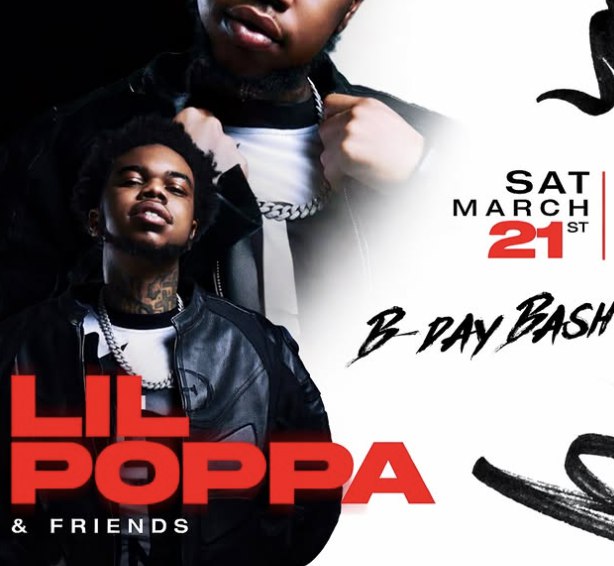
Rising Florida rapper Lil Poppa, known for his raw storytelling and emotional lyrics about street life, loss and resilience, has died at age 25. The Fulton County Medical Examiner’s Office in Georgia confirmed the death of Janarious Mykel Wheeler — the artist’s real name — on Wednesday, Feb. 18, after he was pronounced dead around 11:23 a.m. ET.

Lil Poppa
Lil Poppa

The medical examiner told multiple outlets, including TMZ, News4Jax and Newsweek, that Wheeler’s manner and cause of death remain pending investigation. No official details have been released, and authorities have emphasized that speculation should be avoided until autopsy and toxicology results are complete, a process that could take weeks.

The news shocked fans and the hip-hop community, coming just days after Lil Poppa released his latest single, “Out of Town Bae,” on Feb. 13. The track, accompanied by an official music video, showcased his signature blend of melodic flows and introspective verses, drawing streams across platforms.

Lil Poppa, born in Jacksonville, began rapping at age 7, honing his craft amid personal hardships. He gained wider recognition in the late 2010s with his “Under Investigation” mixtape series, including projects like “Almost Normal” and “Evergreen Wildchild 2.” His 2018 track “Purple Hearts” went viral, inspired by surviving a real-life drive-by shooting that left lasting scars.

In 2022, he signed with Yo Gotti’s CMG label, releasing “Heavy Is the Head” and “Under Investigation 3.” Hits like “Love & War,” “Mind Over Matter” and “Happy Tears” highlighted his ability to fuse pain with hope, often reflecting on grief, mental health and loyalty.

Advertisement

Lil Poppa openly discussed his battle with sickle cell anemia in interviews and his documentary “Blessed, I Guess,” drawing attention to the chronic illness that disproportionately affects certain communities. While some online speculation has linked his death to complications from the condition or other factors, including unverified rumors of suicide or overdose, no evidence supports these claims. Fans and observers have urged patience for official findings.

Tributes poured in across social media. One X user reflected on the loss in connection to broader hip-hop themes, while others expressed disbelief and sorrow. “Lil Poppa death got me sooo guh,” one fan posted. Jacksonville media outlets reported local mourning, with friends calling him “a star” for his tireless work ethic and candid lyrics.

“He was a star,” a First Coast News report quoted those close to him. “His music touched so many because it was real.”

Lil Poppa had upcoming performances scheduled, including a March show at The Fillmore in New Orleans, adding to the sense of tragedy.

Advertisement

The hip-hop world has lost several young talents in recent years, underscoring ongoing challenges like mental health, violence and health disparities. Lil Poppa’s story — from Jacksonville streets to label success — inspired many facing similar struggles.

His family and CMG have not issued public statements. Fans are encouraged to stream his catalog to honor his legacy.

As investigations continue, the music community remembers Lil Poppa as an authentic voice who turned pain into powerful art. Rest in peace.

Advertisement
Continue Reading

Business

Furniture retailers face existential threat

Published

on

Furniture retailers face existential threat
How tariffs are pushing America's furniture industry to the brink

President Donald Trump’s so-called “reciprocal tariffs” could be struck down by the U.S. Supreme Court as soon as this week. Regardless of the ruling, there’s little comfort to be found for the furniture industry.

Furniture importers are facing steep, and in some cases stacking, import duties after the industry was hit with higher tariffs on items such as couches, kitchen cabinets and vanities last fall under section 232 of the Trade Expansion Act.

While Trump’s country-specific “liberation day” tariffs imposed under the International Emergency Economic Powers Act and announced in April are under review by the nation’s highest court, the duties specific to furniture importers, of around 25%, are not.

Compounding the issue is a constant thread of uncertainty plaguing the industry, said Peter Theran, CEO of the Home Furnishings Association, the trade group representing furniture retailers.

Advertisement

The 25% duty on certain furniture imports was supposed to rise to 50% in January, but at the end of December, that plan was pushed back to 2027. Its also become common over the past year for Trump to threaten new tariffs on various imports that never end up getting enacted.

“This is a very, very difficult time to manage your business,” said Theran. “The No. 1 driver of the difficulty of managing your business is unpredictability and an inability to make alternative plans and invest in those plans, because you don’t know what tomorrow will be.”

Rising distress

Tariffs and the uncertainty they’ve brought are the latest blow to the furniture industry, which has been struggling for the past four years and was under pressure well before Trump’s trade war.

During the Covid-19 pandemic, when people were stuck at home and flush with cash, many Americans took the opportunity to refresh their spaces and buy new furniture and decor. Then, low interest rates brought a surge in demand for new homes, which served as a catalyst for furniture buying. 

Advertisement

The result was outsized growth across the home goods industry and boom times for furniture.

But as inflation and interest rates began to creep up in 2022, the sector started to sputter, and it later declined for the first time in at least seven years, according to data from Euromonitor. 

By the time tariffs came around, home sales had slowed and some furniture companies were already struggling to keep operations afloat and couldn’t manage the sudden increase in fixed costs. 

American Signature Furniture, the parent company behind Value City Furniture, declared bankruptcy late last year after nearly 80 years in business. It began liquidation sales at its 89 remaining stores last month. 

Advertisement

In a court filing, the company said the aftermath of the Covid pandemic, subsequent shifts in consumer spending and rising costs led to a 27% decline in sales between 2023 and 2025. Net operating losses ballooned from $18 million to $70 million during the same time period, it said. 

By the end of 2024, the company was facing “significant liquidity constraints,” which were then “further exacerbated and accelerated by the introduction of new tariff policies,” the company said in the filing. 

Over the last year, at least 10 other furniture businesses have declared bankruptcy, with some liquidating and ceasing operations altogether, according to a CNBC review of federal bankruptcy filings. 

Most of the companies are smaller businesses, which have been hit harder by tariffs because they have fewer resources than their larger competitors.

Advertisement

“The smaller players are definitely the ones that will be the hardest hit because they don’t necessarily have deep pockets, they don’t have the economies of scale, they don’t have the huge sourcing teams that can suddenly look to pivot the destination or the origin of the products,” said Neil Saunders, retail analyst and managing director at GlobalData. “So they are under a lot of pressure, and we probably will see more failures in that independent space.” 

Joseph Cozza, whose small furniture business East Coast Innovators supplies retailers such as Macy’s and Raymour & Flanigan, told CNBC he was forced to raise prices between 15% and 18% to offset higher tariff costs, leading to a slide in demand over the holidays. 

For now, Cozza said he can keep his business running but is hoping for an interest rate cut, a jolt to the housing market and larger-than-expected tax returns to spur sales. 

“I’m praying for that,” he said. 

Advertisement

If not, he might have to move his business from Philadelphia to North Carolina, where operating costs are lower, he said. 

“I have a nice company with nice employees, and I pay them all a really good wage, and I’m being penalized,” said Cozza. “I’m being penalized for what I do, and I just don’t think that’s fair.”

Market share grab

The advent of tariffs has created a market grab opportunity for larger businesses, which are better equipped than smaller businesses to weather policy changes and keep prices lower.

Over the last year, some large and publicly traded furniture companies have actually been growing profits and sales despite higher costs from tariffs. 

Advertisement

During Ikea’s fiscal 2025, it was able to keep prices relatively steady and revenue about flat compared with 2024, it said in a news release. It did report higher operating expenses but attributed the increase to an acquisition it made in the Baltics, not tariffs. 

RH, Williams-Sonoma and Wayfair have all grown sales and margins even as they faced higher import costs. 

In the nine months ended Nov. 1, RH saw sales grow almost 10% as margins expanded. At Williams-Sonoma, sales grew about 4% in the 39 weeks ended Nov. 2 while operating margins grew slightly. Wayfair, which reported fourth-quarter results on Thursday, saw revenue grow 5.1% in fiscal 2025 as gross margin stayed steady and operating expenses fell. 

Wall Street has yet to see the full impact of furniture-specific tariffs on these companies because most of them last reported results right around the time the tariffs were enacted.

Advertisement

But they already faced a wide array of duties throughout 2025. Most U.S. furniture imports come from China and from Vietnam and other parts of southeast Asia, which have seen a range of higher tariffs before furniture-specific levies were introduced. At one point, imports from China were tariffed as high as 145%, while Vietnam faced tariffs of around 20%.

Most of those country-specific duties have come under review by the Supreme Court. At the heart of the case is whether Trump had the legal authority to impose what he calls reciprocal tariffs, which critics say infringes on the power of Congress to tax.

Any ruling the court makes is poised to bring even more uncertainty to the industry.

If the justices rule against the duties, there will be questions over how they will be refunded and whether the administration will come up with new ways to implement tariffs. If the justices rule in Trump’s favor, there will be questions over whether tariffs could get even higher.

Advertisement

“A CEO of one of the largest furniture retailers in the country said to me, ‘Even if tariff strategy ended up with the worst possible outcome for my business, I would then create a plan, invest in that plan, execute under that plan and create the best outcome that’s available,’” said Theran of the Home Furnishings Association.

“No one can do that,” he said. “No one can invest in a plan now, because the tariff strategy has not stabilized. It keeps changing, and the looming Supreme Court decision almost certainly will cause change after that decision is rendered.”

Continue Reading

Business

New Balance 2025 sales jump 19% as brand takes share from Nike

Published

on

New Balance 2025 sales jump 19% as brand takes share from Nike
Why New Balance sales are soaring

New Balance sales grew 19% last year to $9.2 billion as the legacy sneaker giant continued to outperform the global footwear market and take share from floundering competitors like Nike.

The 120-year-old Boston-based footwear brand, which is private, exclusively shared its 2025 results with CNBC. In addition to the sharp 2025 growth, the retailer said it could reach its goal of $10 billion in annual revenue by the end of the year.

“We’re competitive. No question about it. But we want to make sure that as we get there and surpass it, that the quality of our business is first and foremost,” CEO Joe Preston told CNBC in an interview. “We don’t want empty calories here. We want to make sure that we are delivering upon the premise that we have, which is to become a premium brand. Over the past five years, we’ve done exactly that around the globe.” 

Jeremy Moeller | Getty Images News | Getty Images

Advertisement

Since 2020, New Balance has grown sales by a staggering 180%, placing it among a handful of standout competitors that supersized their businesses as Nike changed its business model and lost significant market share.

During the Covid-19 pandemic, Nike doubled down on its direct selling strategy that cut off longtime wholesale suppliers so the sneaker giant could grow through its own website and stores. While the strategy briefly boosted sales and promised higher margins, it opened up critical shelf space at strategic retailers that companies like New Balance, Brooks Running, On and Deckers rushed to fill. 

With so much focus on building out a direct selling model, which can be more complex than distributing to wholesalers, Nike also fell behind on innovation and lost its edge in the performance footwear market. That created further opportunity for competitors like New Balance. 

Nike’s former CEO, John Donahoe, previously blamed remote work during the pandemic for the retailer’s innovation slowdown, but Preston said the global crisis created an opportunity for his team to come together in ways they hadn’t previously to implement new strategies. 

Advertisement

“We met every Tuesday morning at 7:30 a.m., we still have that meeting weekly today, and it allowed us to get on a global offense … we came out of Covid stronger than any other company in our industry,” said Preston. “The marketplace disruption that’s been taking place, the examples of Nike, sure, all that stuff is real and at the same time, I don’t think it’s the reason that we have begun to emerge.” 

Preston said the company has stood apart from competitors and taken market share by focusing on “staying in front of the consumer” and how, when and where people want to shop.

The chief executive said New Balance’s growth came across a range of regions and categories, and was fueled by an aggressive store-opening plan that saw 80 new doors opened in 2025 alone.

While they are a critical revenue driver, store openings are costly and take time to show a return. When asked, New Balance declined to share details about its profitability, so it’s unclear how much these investments are weighing on its bottom line, and whether it’ll be able to keep up the high growth it has enjoyed.

Advertisement

To build up its business after more than 100 years on the market, New Balance took a few cues out of Nike’s playbook. The company said a key driver of its growth has been its ability to position itself as a premium brand, which was critical to Nike’s ability to become a roughly $50 billion powerhouse.

That has meant New Balance being selective with both distribution and discounting. The move has allowed it to increase its average selling price by about 30% over the last five years at a time when many competitors have had to lean on promotions to drive sales.

There was also some good timing at play, too. Coming out of the Covid-19 pandemic, New Balance leaned on its heritage as a 1990s “dad shoe” when styles from the ’90s were extremely popular with younger shoppers. That allowed it to win over a younger consumer base that didn’t grow up with the shoes and shoppers who chose sneakers as a fashion statement – not just for sports or working out. 

At the same time, it partnered with key athletes, including Los Angeles Dodgers two-way superstar Shohei Ohtani, tennis star Coco Gauff and Buffalo Bills quarterback Josh Allen, which has fueled growth in its performance footwear business. 

Advertisement

For the year ahead, New Balance said it plans to grow its existing product lines, build out new products and put a bigger emphasis on performance sales. 

It also wants to continue growing its direct-to-consumer sales through store openings in strategic areas. While the direct selling strategy didn’t go so well for Nike, Preston said he’s taking a different approach. 

“One of the things we’re not doing is establishing a [DTC] target internally,” said Preston. “We want to make sure that our goal is to show up the best and not have it be the biggest part of our business. I don’t want to get in the way with how the consumer wants to shop. We want to make sure that we are enabling the consumer to shop how they want to shop. We just want to show up great.” 

Advertisement
Continue Reading

Business

Allegion at Barclays Conference: Strategic Growth and Challenges

Published

on


Allegion at Barclays Conference: Strategic Growth and Challenges

Continue Reading

Business

Prime Newcastle office The Spark signs up university as final tenant

Published

on

Business Live

Arden University is moving into three floors at the building, taking it to full occupancy

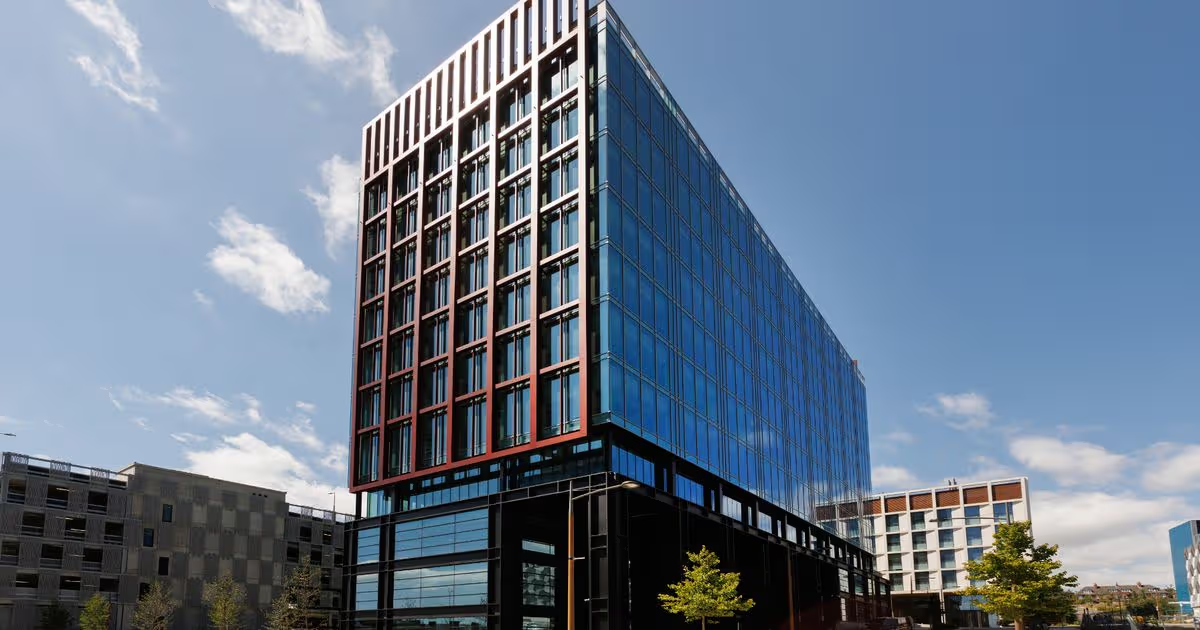
The Spark office at Newcastle Helix

The Spark office at Newcastle Helix(Image: Avison Young)

A prime Newcastle office will be at full occupancy this year after a private university struck a deal to take over all of its remaining space.

Arden University, which has its head office in Coventry, has agreed a deal with property agents to move into 27,095 sq ft on the ground, first, second and third floors in early spring this year.

Based in the Helix development, The Spark forms part of a 24-acre mixed-use innovation hub which has been delivered through a partnership between Newcastle City Council, Legal & General and Newcastle University. The science and business park brings together office, residential and scientific uses, creating an internationally recognised cluster for research, education and business.

The Spark is already home to businesses including the region’s largest law firm Womble Bond Dickinson and National Audit Office (NAO). The agreement was struck by real estate advisor Savills, together with joint agents Avison Young, on behalf of landlord Legal & General.

Advertisement

Greg Davison at Savills, joint letting agents for Legal & General, said the introduction of Arden University to Newcastle Helix builds on the growing cluster and introduces a new education offer to the city, while also underlining the strong demand for best-in-class office accommodation in Newcastle city centre.

He said: “Completing the final letting at The Spark is a fantastic result and demonstrates the depth of occupier demand for high-quality workspace at Newcastle Helix. Securing Arden University as the final occupier is a fitting conclusion to the successful leasing of this flagship building.”

Arden University started life in 1990 as part of moves to give all people equal opportunities for higher education. It began as the chosen online delivery partner for traditional universities, and in 2014 earned taught-degree awarding powers, and now awards its own degrees.

In 2015 it officially became Arden University, one of a handful of specialist online learning universities to launch in the last 50 years, and now provides flexible online and blended learning degree courses. Arden University was advised by James Andrew International.

Advertisement

Carl Lygo, CEO and vice chancellor at Arden University, said: “We’re excited to launch our new campus in Newcastle. This opening reflects an exciting next step in the expansion plans of our fast-growing university, providing a modern, welcoming space for those looking to develop the skills they need to advance their careers in the city.

“Newcastle is a real hotbed for talent, and we look forward to welcoming students from across the city and wider region into our new campus.”

Like this story? For more news from the commercial property scene around the regions, visit our dedicated section here for the latest news and analysis within the sector.

Advertisement
Continue Reading

Business

Ultra-rich families spend more on private investment firms as fortunes rise

Published

on

Ultra-rich families spend more on private investment firms as fortunes rise

Anciens Huang | Moment | Getty Images

A version of this article first appeared in CNBC’s Inside Wealth newsletter with Robert Frank, a weekly guide to the high-net-worth investor and consumer. Sign up to receive future editions, straight to your inbox.

As the world’s wealthiest pad their fortunes, they are spending more to run their private investment firms, according to a recent report by J. P. Morgan Private Bank.

Advertisement

Family offices with at least $1 billion in assets spent an average of $6.6 million in annual operating costs, the bank’s survey found. The average cost has increased by $500,000 since JPMorgan’s previous family office poll conducted in 2023.

Family office consultant Kirby Rosplock said the rise in expenses is the natural result of the surge in wealth.

“Usually offices try to reduce their expense line items if they feel like their assets are shrinking,” said Rosplock, CEO of Tamarind Partners. “Most people don’t recognize that the volume of wealth created just in the last decade means that you need more heads, more bodies, more people to support more systems.”

William Sinclair, global co-head of J. P. Morgan Private Bank’s family office practice, credited much of the increase in expenses to rising compensation costs on investment talent, which are the largest portion of operating budgets.

Advertisement

“There is a war for talent, and family offices are competing against other financial services and related businesses — private equity and hedge funds — if they’re trying to build out an investment team,” he said.

While family offices have embraced outsourcing, Sinclair attributes this more to talent shortage rather than defraying costs. About 80% of family offices reported outsourcing at least some of their portfolio, but only 28% of them said reducing costs or resource burden was a main factor for doing so.

When picking external advisors, factors such as desirable track records and access to private investments ranked much higher, according to the report.

Get Inside Wealth directly to your inbox

Natasha Pearl, a family office advisor, said some family office principals pay little heed to cost creep, prioritizing the confidentiality and control that comes with a single-family office versus using third-party vendors.

Advertisement

Many principals of ultra-wealthy families also lose track of their expenses as they have multiple investment entities and holding companies, she added.

However, their children are more likely to get sticker shock, Pearl said. It’s common for heirs to consider consolidating costs or even unwinding the family office altogether after their parents pass, she said.

“The next generation will take a close look and say, ‘Whoa, our parents were paying that much money? We want that money,’” she said. “The next generation may have children of their own at that point or even grandchildren, given how long people are living, right? So, you know, they’ve got to be a lot more concerned about how to make that money stretch.”

Advertisement
Continue Reading

Business

PayPal's Growth Reset Makes Sense – A Contrarian Gift After Meltdown

Published

on

Nebius: A Gift At Current Consolidation - Cloud Super Cycle Continues

PayPal's Growth Reset Makes Sense – A Contrarian Gift After Meltdown

Continue Reading

Business

WRU will not conclude takeover deal for Cardiff Rugby until after the Six Nations

Published

on

Business Live

It comes at Swansea Council ratchet up efforts to prevent the demise of the Ospreys

The Ospreys' future as a professional rugby team looks over unless Swansea Council and fans can overturn the current plan

The Ospreys’ future as a professional rugby team looks over unless Swansea Council and fans can overturn the current plan.(Image: Huw Evans Picture Agency Ltd)

The Welsh Rugby Union will not conclude a takeover of Cardiff Rugby until after the Six Nations, as Swansea Council continues to ratchet up efforts to convince the union to abandon plans to reduce the number of rugby regions from four to three.

The council confirmed on Wednesday that it was seeking a High Court injunction to halt the takeover of Cardiff Rugby – which the union acquired out of administration last year – by the current owners of the Ospreys, Y11 Sports and Media. The local authority said this was designed to allow discussions to take place while the current four-team regional structure remains in place.

The injunction was scheduled to be heard today. However, ahead of the hearing, the Welsh Rugby Union gave an undertaking to Swansea Council that it will not conclude any deal with Y11 before March 16, a few days after final weekend of the Six Nations.

READ MORE: Ambitious building society opens first ever branch in Welsh town ‘abandoned’ by banksREAD MORE: Seven new train stations for Wales as UK Government commits millions for rail

Advertisement

The union confirmed Y11 as its preferred bidder for Cardiff Rugby in late January, which saw both parties enter into a 60-day exclusivity period – which could be extended – to try to finalise a deal. What is not clear is whether a deal could have gone unconditional before March 16, or whether it is tracking to be in a position for legal sign-off only after that date anyway.

If the union sticks to its current position – endorsed fully by its board and driven by its executive team – of reducing the number of clubs from four to three by Y11 effectively closing the Ospreys, Swansea would seek to reschedule the injunction hearing before March 16.

Last week the council also submitted a case to the Competition and Markets Authority (CMA), claiming the proposed takeover of Cardiff Rugby breaches competition law by unfairly restricting competition, reducing choice for supporters, and damaging Swansea’s economy.

The CMA has confirmed it has received a legal letter from the council. However, it has yet to decide whether the case has sufficient merit to proceed to the next stage, potentially involving a future judgment from the Competition Appeal Tribunal.

Advertisement

It is possible that this could be clarified by the CMA before March 16. However, if the CMA has not made any determination by that point, the council would seek as long an injunction period as possible. If a CMA decision is not forthcoming before March 16, the WRU and Y11 would be at liberty to finalise a deal after that date.

Even if the CMA concluded it was taking Swansea’s case forward, the union could still potentially finalise a deal in the confidence that it could defend any future case alleging it had breached the Competition Act.

If there is no recourse via the CMA, the council could consider pursuing legal action. However, if it lost, it could face a counter-damages claim by the WRU, particularly if Y11 walked away from a deal for Cardiff Rugby due to legal uncertainty, leaving the union having to continue to fund trading losses. That does not appear to be the council’s strategy, but rather one of using all the levers at its disposal to get the WRU to perform a U-turn.

If there are to be only three regions, then for the continuation of a team in Swansea, new ownership of the loss-making Ospreys would need to be realised ahead of an exit by Y11. Leader of Swansea Council Rob Stewart is understood to be looking to attract interest from potential new investors. If it wished, the WRU could also approach parties that expressed interest in acquiring Cardiff Rugby before Y11 was announced as the preferred bidder.

Advertisement

There is time, as four regions will continue for the 2026–27 season. However, any new Swansea-based region ownership could be conditional on winning a competitive bid with the Scarlets for the west Wales franchise from the WRU.

A spokesman for Swansea Council said: “The Welsh Rugby Union has this morning given written confirmation that it will not complete the deal with Y11 to buy Cardiff Rugby prior to March 16. It follows Swansea Council’s application for an injunction to pause the deal. The council is now awaiting a date for its injunction application to be heard at the High Court prior to March 16.”

The WRU also confirmed that it has given an assurance that a deal with Y11 for Cardiff will not take place before March 16.

It is being advised by law firm Northridge and barrister Jason Pobjoy KC.

Advertisement

The union said it is also aware that Swansea Council has raised concerns relating to Welsh rugby with the UK Competition and Markets Authority (CMA) and that it will address such concerns with the regulator “proactively and appropriately”.

A spokesman for the union said: “The WRU Bbard has worked in good faith over the past two years to create a sustainable way forward for Welsh rugby, in light of the significant financial and performance challenges we all face.

“We appreciate that these are difficult and emotive issues for everyone involved, but our focus remains firmly on the long-term health of the whole game in Wales and on continuing to try to work constructively with all stakeholders, including Swansea Council.”

The council’s position is that it has had no discussions with the union since a meeting on January 22 between WRU chief executive Abi Tierney and Ospreys CEO Lance Bradley, along with Mr Stewart and a number of senior council figures, including chief executive Martin Nicholls. The local authority maintains that Y11 signalled in the meeting that the Ospreys would cease to be a professional region beyond the 2026–27 season.

Advertisement

In its CMA case, the council says it has also been financially disadvantaged, having already committed £1.5 million to preparing St Helen’s for redevelopment, including the cost of relocating Swansea Cricket Club, which played at St Helen’s, to a new ground.

While not a legal agreement, the council has signed a pre-lease agreement with the Ospreys (Y11) for a 50-year lease at St Helen’s starting at an annual rent of £100,000, subject to inflation-linked reviews.

Speaking last week following the CMA submission, Mr Stewart said: “The WRU’s proposals would mean the end of the Ospreys as a professional men’s rugby region. This would be a huge blow to our city – economically, culturally and emotionally.

“Players, supporters, residents, community clubs and local businesses all deserve a fair and transparent process from the WRU. We cannot accept a situation where decisions are made behind closed doors to remove one of Wales’s four professional teams and leave Swansea without top-level rugby.

Advertisement

“We are asking the CMA to step in urgently to protect competition and give our city and region the fair treatment it deserves.”

With regard to the CMA, Swansea Council is being advised by barristers Nick De Marco, Mark Vinall and Tom Watret of Blackstone Chambers.

Continue Reading

Business

TD Cowen reiterates Buy on Checkpoint Software stock, $260 target

Published

on


TD Cowen reiterates Buy on Checkpoint Software stock, $260 target

Continue Reading

Trending

Copyright © 2025