
Business
Push to level the playing field



Business
SET seeks market feedback on revising listing rules to attract New Economy and foreign companies until May 8

The Stock Exchange of Thailand (SET) has launched a public consultation on proposed revisions to its listing rules, aiming to attract New Economy companies, foreign firms, SMEs, and startups. The initiative reflects SET’s vision of positioning Thailand’s capital market as a “Trusted Gateway to Inclusive Opportunities,” while enhancing competitiveness and investor confidence.
Under the proposed changes, New Economy companies would benefit from lower market capitalization thresholds and reduced revenue track record requirements. Firms promoted by the Board of Investment (BOI) and Eastern Economic Corridor (EEC) would gain access to a special track, while foreign companies would no longer need to demonstrate direct economic contributions to Thailand, such as local manufacturing bases. Secondary listing criteria would also be streamlined for firms from unrecognized jurisdictions, aligning them with those from SEC-recognized countries.
The consultation further addresses shareholder lock-up rules, with silent period requirements being harmonized with international standards. Strategic shareholders would be required to maintain a minimum stake post-IPO, while unprofitable firms in New Economy and infrastructure sectors would see their silent period shortened from three times to twice that of profitable companies.
SET is inviting public feedback until May 8, 2026, through its website and consultation form. The exchange emphasized that the revisions are designed to balance investor protection with market accessibility, ensuring Thailand remains an attractive hub for innovative and globally competitive enterprises.
Other People are Reading
Business
Botanix Pharmaceuticals Limited (BXPHF) Discusses Quarterly Activity, Cash Flow, and Sofdra Update Transcript

Vincent Ippolito
MD & Executive Chairman
Good evening, everyone, joining us from North America, and a pleasant good morning to everyone joining from Australia. I’m Vince Ippolito, Executive Chairman of the Board of Botanix Pharmaceuticals Limited, and we’re pleased to present the Botanix quarterly activity report and 4C quarterly cash flow report for the period ending 31 March 2026.
And the company has come a long way since our highly successful commercial launch of Sofdra, and we’re pleased with the progress that we’ve made and believe that we’re well positioned for future growth, as you’re going to see from today’s presentation. And at the end of the presentation, we’ll have time for a few questions from the audience. So please type them into the Q&A section of the webinar here.
Now we have close to 300 people that have preregistered and joined us here for today. So we’re going to most likely be consolidating like questions when we ask them. And so hopefully, we’ll be able to hit your questions and the broad-based ones that you have from today’s presentation.
On the screen, I’m joined by our Chief Executive Officer, Dr. Howie McKibbon; and our U.S. Chief Financial Officer, Chris Lesovitz, who will take you through today’s presentation.
And with that, I’m going to turn the presentation over to Howie.
Howie McKibbon
Chief Executive Officer
Yes. Thank you, Vince, and thank you all for joining today. So for the many new investors that we have on the call, we’ll give a brief corporate overview, and then we’ll get right into results and outline

Apple is close to unveiling iOS 27, and a new report has revealed some of its upcoming features for the Photos app, which will usher in additional artificial intelligence experiences.
Multiple Apple Intelligence-powered features will reportedly arrive in the Photos app in the next version of the Apple smartphone operating system, which would help users easily edit their photos.
Apple’s iOS 27 Is Adding New AI Features to Photos
Bloomberg reported that Apple will add a new section called “Apple Intelligence Tools” to the Photos app, which has three features to choose from.
First, there is a feature called “Extend,” which Bloomberg said will deliver a generative AI feature to create additional image content beyond its frame using Apple’s generative AI.
For example, users could take a close-up photo of an image and ask Apple Intelligence via the Photos app to give them a landscape view. The tool will fill in the space based on how large they want it by dragging the edges of the original photo.
Next, Bloomberg said that there will be a feature called “Enhance,” which can automatically tweak the photo with improvements to its quality, focusing on its color, lighting, and more.
Lastly, the third AI feature reportedly coming to the Photos app is the “Reframe” feature, which 9to5Mac said is set to allow users to shift the perspective on the image, which can be done on a spatial photo.
Apple Intelligence on Photos App
The report from Bloomberg also reveals that Apple is still struggling with the generative AI features on its iOS platform, including the Photos app. Current internal testing of these three features is reportedly not going as planned, particularly the Extend and Reframe tools.
Apple may delay or scale back these AI-powered features once iOS 27 arrives, and it would reportedly depend on the improvements or tweaks they make before launch.
Apple Intelligence previously launched via iOS 18 to deliver generative AI features to eligible devices, but it is known that Apple was greatly held back by it because of issues with the model’s development.
Back then, Apple Intelligence features like Image Playground on the Photos app and other Apple apps were delayed by the company for a long time before they made their way to public availability.
Originally published on Tech Times
Operator
Good morning, everybody, and welcome to Westgold’s Q3 FY ’26 Quarterly Webinar. Your first speaker for today’s call is Wayne Bramwell, CEO and Managing Director. Over to you, Wayne.
Wayne Bramwell
CEO, MD & Executive Director
Thank you, and hello, everyone. Welcome to Westgold’s March 2026 Quarterly Results Call. Joining me today is Aaron Rankine, our Chief Operating Officer; and Tommy Heng, our Chief Financial Officer. I’ll begin with a high-level overview of the quarter and the broader business context before handing to Aaron and Tommy to cover operations and financials in more detail. Then we’ll open up the line for Q&A. Let’s start with the highlights.
Slides 4 and 5 represent the Q3 numbers. Q3 delivered continued cash generation, solid production delivery and further balance sheet strength. Westgold produced 93,145 ounces of gold during the quarter at an all-in sustaining cost of $2,931 per ounce, excluding the ore purchase agreement. With the ore purchase agreement, all-in sustaining costs rose to $3,338 per ounce.
Importantly, the business delivered an underlying cash build of $285 million before growth capital, exploration spend and one-off items. This translated to a $202 million increase in treasury, closing the quarter with $856 million in cash, bullion and liquid investments. These outcomes reflect the business that is now starting to operate with scale, resilience and growing financial flexibility and importantly, do so while remaining unhedged and fully exposed to the gold price.
Now let’s turn to what’s driving that momentum, Slide #6, the waterfall. This slide highlights the momentum that has been building steadily across Westgold’s business. Year-to-date
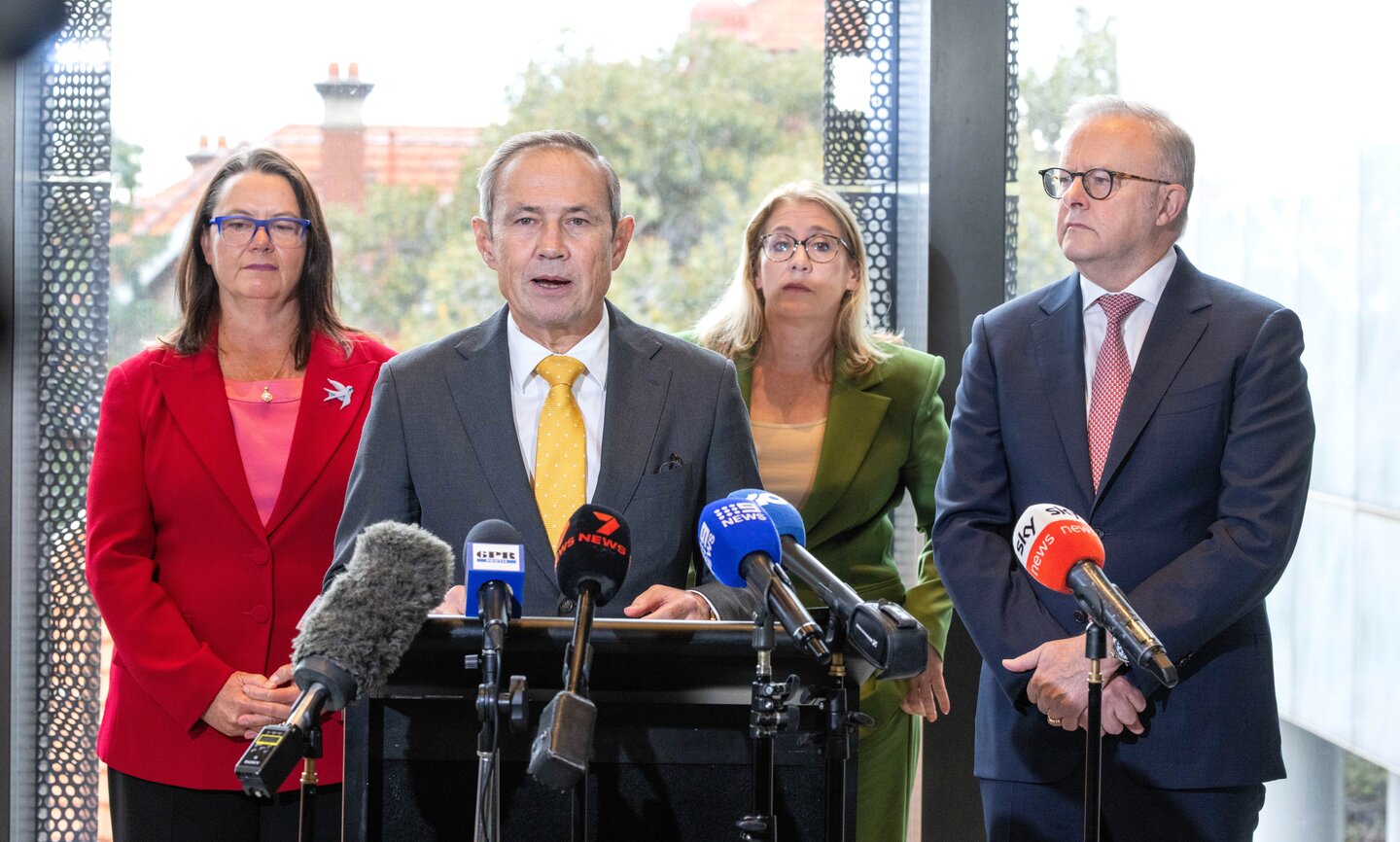
The state and federal governments will jointly fund major road infrastructure works near the Naval Base industrial gateway, near the planned Westport development.
The state and federal governments will jointly fund major road infrastructure works near the Naval Base industrial gateway, near the planned Westport development.

Reliance Industries has stayed unchallenged as the country’s most valuable company, despite wide swings in valuation. Just below, HDFC Bank moved ahead of Tata Consultancy Services to take the second position, signalling a broader rotation from technology towards financials.
Bharti Airtel has emerged as a clear gainer, climbing into the top tier and holding its ground through successive quarters, while Infosys has ceded ground in the rankings, reflecting the IT sector’s waning relative clout.
 Agencies
ICICI Bank has remained broadly consistent, while State Bank of India has seen sharper swings even as it trends higher. Traditional defensives such as Hindustan Unilever and ITC have been largely stagnant in the market cap table.
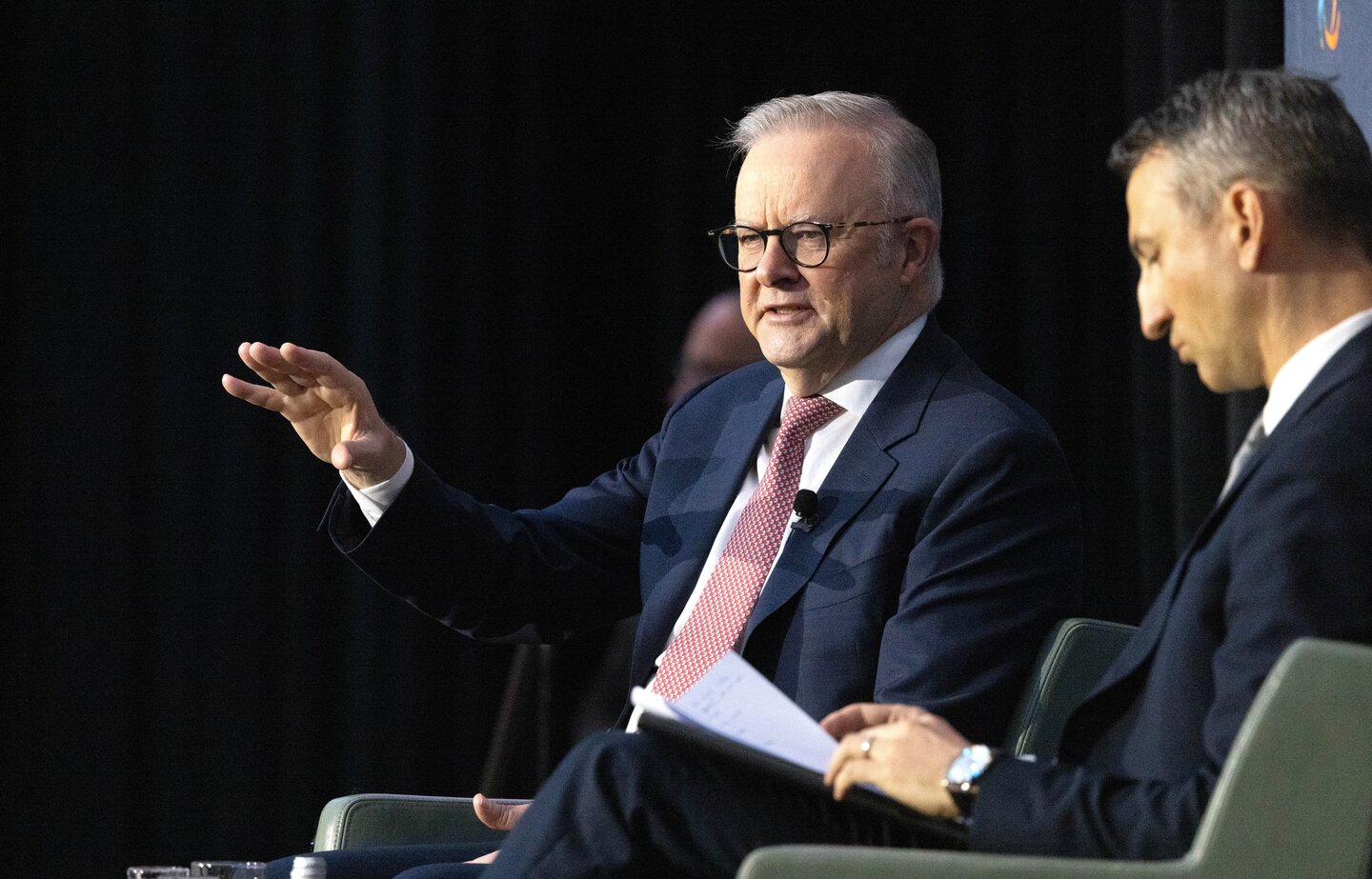
Prime Minister Anthony Albanese has given a strong indication his government will not adopt any form of super-profits tax on gas exports ahead of the May federal budget.
Business
ETMarkets PMS Talk | Outperforming in a Crash: How Qode Growth Fund beat its benchmark by 14%, explains Rishabh Nahar
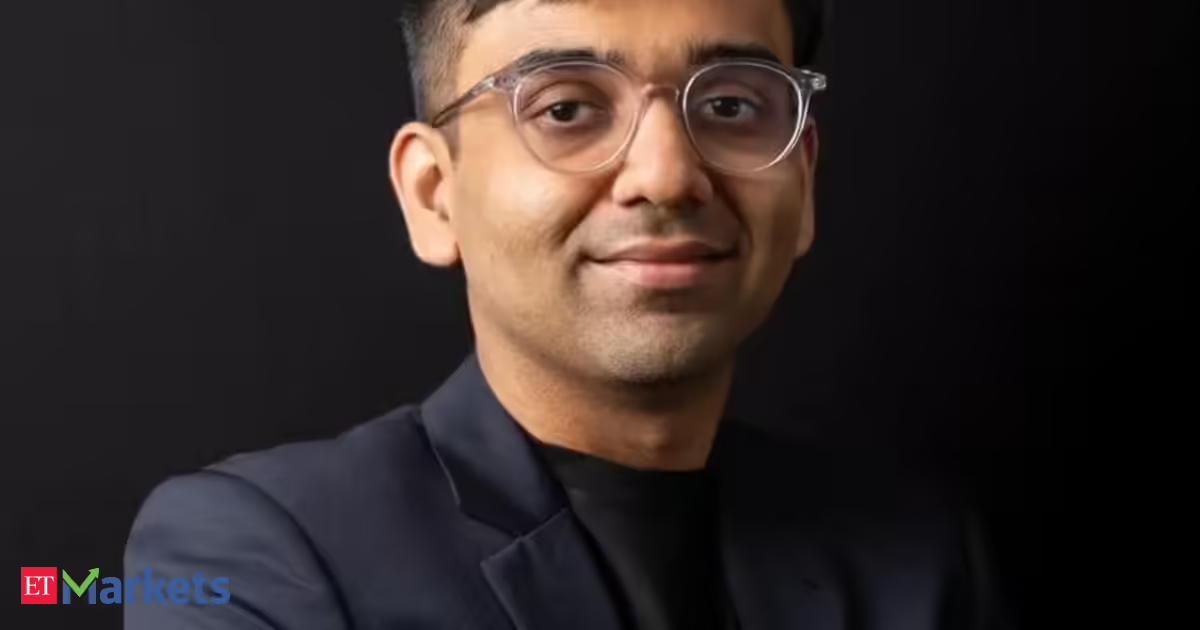
Yet, the Qode Growth Fund managed to do just that—beating its benchmark by over 14 percentage points during the brutal Q4FY26 sell-off.
In this edition of ETMarkets PMS Talk, Rishabh Nahar, Partner and Fund Manager at Qode Advisors, decodes the strategy behind this resilience—from a disciplined focus on quality and value investing to a systematic derivatives overlay that helped limit downside risks.
He also shares insights on small-cap valuations, portfolio positioning, and why periods of market stress often present the most compelling opportunities for long-term investors. Edited Excerpts –
Q) Please take us through the performance for FY26?

A) FY26 was a tale of two halves. The first half saw elevated valuations and selective market participation, while the second half, particularly Q4, was defined by a sharp, broad-based correction.
Between January and March 2026, the Nifty 50 fell 14.54%, the Nifty Smallcap 250 declined 14.36%, and the Nifty Microcap 250 dropped 16.20%. It was one of the most challenging quarters Indian equity markets have seen in recent memory, driven by escalating geopolitical tensions, fears of a broader conflict, and a sharp spike in crude oil prices.Against this backdrop, Qode Growth Fund delivered -0.20% for Q4, compared to -14.36% for its benchmark, an outperformance of over 14 percentage points in a single quarter.
On a 1-year basis, QGF returned +7.13% versus -5.40% for the Nifty Smallcap 250, and since inception, the fund has returned +10.55% against the benchmark’s +2.50%.
More importantly, the fund ranked #1 across all equity PMS strategies in India for the month of March 2026, returning +1.34% in a month where the small-cap universe fell over 10%.
The performance story of FY26 is really about what didn’t happen — the drawdown that our investors didn’t experience. That, in our view, is the real measure of a strategy’s quality.
Q) The fund follows a multi-factor approach combining quality, growth, and value — how do you balance these factors during different market cycles?
A) We don’t toggle mechanically between factors based on market conditions. That would introduce timing risk that is very difficult to get right consistently. Instead, our approach is to build a portfolio that sits at the intersection of Quality and Value at all times, with Growth acting as the validation layer.
What this means in practice: we look for businesses with strong earnings growth trajectories, healthy return on equity, and reasonable balance sheets, but we only buy them when the market is pricing them at a discount to their growth rate.
Our current portfolio has a PEG of 0.64x, with 31.37% earnings growth against a forward PE of 20.09x. Compare that to large-caps, which trade at a forward PE of roughly 29.71x with TTM earnings growth of just 11.12%, a PEG of 2.67x. Investors are paying four times more per unit of earnings growth in large-caps relative to our portfolio today.
This quarter validated the approach. Our proprietary factor analysis showed that Value was the only major factor that held up during the correction, declining just 3.84% versus losses of 11 to 16% across Alpha, High Beta, Momentum, and Low Volatility factors.
Because our portfolio is built at the intersection of Quality and Value, it naturally provided a floor that pure momentum or growth-at-any-price strategies couldn’t.
The key discipline is avoiding the temptation to chase momentum when it’s running. That’s when valuations stretch, and that’s precisely when the risk of sharp drawdowns is highest.
Q) The fund’s max drawdown is significantly lower than the benchmark — what risk management frameworks helped achieve this?
A) There are two distinct layers to our risk management, and both contributed meaningfully this quarter.
The first is portfolio construction. We are deliberate about owning businesses with strong earnings fundamentals, low leverage, and reasonable valuations.
This means our equity book naturally holds up better during broad sell-offs, because we are not exposed to high-multiple, high-momentum names that tend to see the sharpest de-rating during risk-off periods.
Our portfolio companies reported 17.31% YoY PAT growth in Q3 FY26, well ahead of large, mid, and small-cap peers, which reflects genuine business quality rather than price momentum.
The second layer, and the more structural differentiator, is our derivatives overlay. This is not a tactical hedge that we put on when we feel nervous. It is a systematic, rules-based hedging mechanism that sits permanently across the portfolio.
During Q4, the options overlay contributed +11.08% over one month and +17.92% over three months, directly offsetting the equity-level drawdown during the sharpest phase of the sell-off.
The combination of quality-oriented stock selection and a systematic derivatives hedge produced the asymmetric outcome we saw this quarter. Our equity book absorbed some of the broader market decline, but the hedge more than compensated.
The result was a portfolio that outperformed its benchmark by over 14 percentage points in Q4, while limiting the maximum drawdown to a fraction of what the index experienced.
Q) With only 30 holdings, how do you balance concentration risk versus alpha generation?
A) Thirty holdings is a deliberate choice, not a constraint. Diversification beyond a certain point becomes diworsification. You end up owning the index at active fees, with the illusion of risk management but none of the benefits.
Our view is that meaningful alpha comes from high-conviction positions in businesses you understand deeply, not from spreading capital thinly across a hundred names.
With 30 holdings, every position has to earn its place. Each one is selected through our quantitative multi-factor model, which screens for quality of earnings, valuation attractiveness, and growth sustainability, and then stress-tested against portfolio-level concentration and correlation risk.
The concentration also has an important behavioural dimension. When you own fewer businesses, you monitor them more rigorously. Our quantitative process continuously tracks the earnings and valuation profile of each holding, and the portfolio rebalances annually to ensure we are not holding businesses where the investment thesis has weakened.
In practice, 30 well-chosen small-cap businesses across diverse sectors and end-markets provides genuine diversification of business risk, which is what ultimately matters, while retaining the concentration needed to generate meaningful alpha.
Q) What is the rationale behind maintaining roughly 89% equity exposure and 11% cash — are you positioning defensively?
A) The cash component requires a bit of unpacking, because it is not cash in the traditional defensive sense. A meaningful portion of it represents profits realised from our options positions that are yet to be redeployed, alongside the standard buffer we maintain for ongoing options activity. It is working capital for the derivatives overlay, not idle capital sitting on the sidelines waiting for the market to fall further.
That said, we are not artificially stretching to be fully invested either. At current valuations, we believe the equity holdings we have are priced attractively, and we see no reason to dilute the portfolio with lower-conviction positions simply to reach a notional 100% equity target.
The more important positioning signal is in our valuation indicators. Our Valuation Spread Index currently reads 37, suggesting equities are trading at a meaningful discount to historical norms.
Our Relative Valuation Gradient has moved to 92, one of the highest readings we have observed, indicating that small and micro-cap companies are significantly undervalued relative to large-caps.
These signals tell us that the risk-reward in our current holdings is genuinely attractive, and that the environment favours staying invested with patience rather than raising cash defensively.
Q) Smallcaps have been volatile — how are you positioning the portfolio in the current market environment?
A) Volatility in small-caps is not new, and it is not something we try to avoid. It is something we try to use. The Q4 correction was broad and sentiment-driven, not fundamental.
Our portfolio companies reported 17.31% YoY PAT growth in Q3 FY26, yet prices fell in line with the broader small-cap universe. That divergence between earnings delivery and market price is precisely the environment in which patient, disciplined investors build positions at attractive prices.
Our current positioning reflects that conviction. We are not rotating into large-caps or increasing cash in anticipation of further volatility. The data does not support that decision. A PEG of 0.64x on a portfolio growing earnings at over 31% is not a position you want to abandon because headlines are difficult.
What we have done is use the rebalancing process to upgrade quality within the small-cap universe. During Q4, we trimmed a position with significant US export revenue exposure, where tariff-related uncertainties made near-term earnings visibility difficult to underwrite, and redeployed that capital into a domestic-focused cybersecurity company with strong order visibility and margin quality. This is an environment that rewards selectivity within the small-cap universe, not wholesale retreat from it.
Our proprietary indicators also signal improving conditions. The Trend Navigator has begun recovering from its deeply compressed lows, and the Relative Valuation Gradient at 92 marks some of the most compelling relative entry points for smaller companies that we have seen in several years.
Q) What investment horizon should investors realistically have to benefit from this strategy?
A) We are candid about this. QGF is not designed for investors with a one to two year time horizon. It is a small-cap strategy, and small-cap investing almost by definition requires the patience to sit through periods of valuation compression that bear no relationship to underlying business performance.
The current quarter is a good illustration. Our portfolio companies are growing earnings at over 31% year on year. They are not in financial distress.
Their competitive positions have not deteriorated. Yet prices fell sharply because macro fears triggered indiscriminate selling across the segment. An investor with a two-year horizon might look at that and feel uncomfortable. An investor with a five-year horizon looks at that and recognises it for what it is: an opportunity.
We recommend a minimum horizon of three to five years, and ideally longer. The valuation anomaly in small and mid-caps, where you are paying 0.64x PEG for 31% earnings growth, does not persist indefinitely, but the market’s process of correcting it can be slow and non-linear.
The investors who benefit most from this strategy are those who remain invested through the full cycle, allowing the compounding from high-quality earnings growth to assert itself as valuations normalise.
Q) What would be your key message to investors considering allocating to QGF in FY27 amid the gloom and doom seen globally?
A) The best time to invest in quality small-cap businesses is precisely when it feels uncomfortable to do so, and right now, it feels uncomfortable.
Let’s look at the data objectively. Our portfolio trades at a forward PE of 20.09x against trailing earnings growth of 31.37%, a PEG of 0.64x. Large-caps are trading at a PEG of 2.67x.
Investors are currently paying four times more per unit of earnings growth for large-cap safety than for small-cap quality. That is a striking divergence, and one that history suggests does not persist over a three to five year horizon.
Our Relative Valuation Gradient, which measures the relative attractiveness of small versus large-cap companies, is at 92, one of the highest readings we have ever observed. Historically, readings at this level have preceded some of the most compelling return periods for patient investors in smaller companies.
The businesses in our portfolio are growing. The valuations are attractive. The derivatives overlay has demonstrated, in live market conditions, that it meaningfully limits downside. And our Trend Navigator signals that the period of maximum uncertainty may be giving way to one where clearer trends begin to emerge.
Gloom and doom make for compelling headlines. They also make for compelling entry points. For investors willing to look through the near-term noise and think in terms of a three to five year business cycle, FY27 may well look back on as one of the better entry points into quality small-cap equities in recent years.
Our message is simple: stay patient, stay disciplined, and invest with a manager who has the tools, both on the equity side and through systematic risk management, to navigate what comes next.
(Disclaimer: Recommendations, suggestions, views, and opinions given by experts are their own. These do not represent the views of the Economic Times)

TUCSON, Ariz. — Nearly three months after Nancy Guthrie was abducted from her Catalina Foothills home, investigators are advancing forensic analysis of DNA evidence, including hair samples sent to the FBI laboratory, as the search for the 84-year-old mother of NBC “Today” show co-anchor Savannah Guthrie reached its 88th day with no major public breakthroughs reported.
Pima County Sheriff Chris Nanos and federal authorities continue to describe the case as an active criminal investigation. While no suspect has been named and no arrests made in the abduction itself, officials confirm ongoing work with advanced forensic tools, including genetic genealogy techniques that have helped crack other high-profile cold cases.
The FBI has received DNA material recovered from inside Guthrie’s home, including hair evidence, for detailed testing. Sources familiar with the probe indicate the samples are undergoing next-generation sequencing and other specialized analysis. However, the FBI has clarified that this is not newly discovered evidence — the bureau requested the material more than two months ago after local authorities initially sent it to a private lab.
Blood droplets found on the front porch were confirmed early in the investigation to belong to Guthrie. Retired FBI profiler Jim Clemente and other experts have analyzed the spatter pattern, suggesting it could indicate she was injured during a violent confrontation with her abductor. Surveillance video captured a masked, armed intruder at the door around the time she vanished.
Guthrie was last seen around 9:45 p.m. on Jan. 31 after family members dropped her off following dinner. She was reported missing the next day when she failed to appear at church. The case quickly shifted from a missing-person inquiry to a suspected abduction.
The family, including Savannah Guthrie and her siblings, offered a $1 million reward for information leading to her safe return, plus additional incentives for arrests and convictions. Savannah returned to the “Today” show in early April, describing the family’s ongoing agony while pleading for public help.
A separate opportunist, Derrick Callella of California, faces trial after allegedly sending a fake ransom text to Savannah Guthrie. His case underscores how the high-profile disappearance has drawn scammers seeking to exploit the family’s distress. No verified ransom demand from the actual perpetrator has been confirmed.
Search efforts have been extensive, involving drones, cadaver dogs, ground teams and coordination across Arizona’s rugged desert terrain. Private investigators and former agents have publicly assessed that the chances of finding Guthrie alive after nearly 90 days are extremely low without proof-of-life communication, though authorities refuse to declare the case cold.
Forensic experts note that rootless hairs can still yield mitochondrial DNA useful for family tree building through genetic genealogy. Saliva potentially left on items like a flashlight reportedly held in the suspect’s mouth could also provide critical leads if properly analyzed.
The high-profile nature of the case has spotlighted vulnerabilities for elderly residents and the value of home security systems. Doorbell camera footage provided crucial early evidence, though the suspect’s mask and gloves have hindered identification. Additional neighborhood surveillance is still being reviewed.
Savannah Guthrie and her family have expressed gratitude for ongoing public support while asking for privacy as they await answers. In emotional appeals, they have stressed their desperate need for closure. “We need to know without a doubt that she’s alive,” Savannah said in one video message.
As April ends, the investigation remains focused on forensic science, digital records and persistent tip review. More than 4,000 tips were received in the early weeks, and officials say every credible lead continues to be pursued. The family has visited the home, now released from crime-scene status, and remains fully cooperative.
Broader discussions have emerged around elder safety, rapid response protocols and the emotional toll on families in long-term missing persons cases. Advocacy groups note that cases involving seniors sometimes receive less immediate national attention, though Guthrie’s family connections have kept the spotlight intense.
Anyone with information is urged to contact the FBI at 1-800-CALL-FBI or submit tips online. The $1 million family reward remains active. As the search enters its third month, authorities and the Guthrie family continue hoping that advanced DNA work or a crucial tip will finally bring answers in a case that has gripped the nation.
When does “Verity” come out? Inside the Colleen Hoover adaptation that boasts an A-list cast
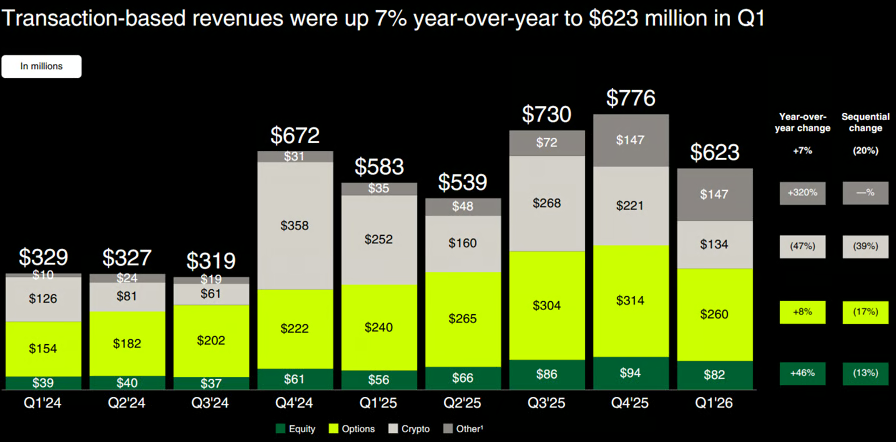
Robinhood Dips 9% As Crypto Activity Falls Nearly 50% in Q1

SET seeks market feedback on revising listing rules to attract New Economy and foreign companies until May 8

Manchester United reach agreement with Casemiro over contract clause amid transfer speculation

US brings back mandatory military draft registration

Steven Gerrard disagrees with Gary Neville over ‘shock’ Chelsea and Arsenal claim | Football

Best Careers After Degree,Finance Edition Don’t Miss This! Best Finance Jobs 2026 !#EducationalVideo

Ram Charan Wife Upasana Exclusive Visuals @ Apollo Hospitals at Financial District

5 Low Investment Business Ideas Start with Less Money
-

 Tech1 day ago
Register Renaming | Hackaday
-

 Fashion4 days ago
Weekend Open Thread – Corporette.com
-
 Crypto World3 days ago
Hyperliquid $HYPE Rally Builds Momentum as AI Sector Enters Prove-It Phase
-

 Politics6 days ago
Making troops accountable for war crimes threatens US alliance, ex-SAS colonel warns
-

 Politics6 days ago
Disabled people challenge government SEND proposals over segregation concerns
-

 Business5 days ago
Patterson-UTI Energy, Inc. (PTEN) Q1 2026 Earnings Call Transcript
-

 Business7 days ago
Rolls-Royce Voted UK’s Most Iconic Trade Mark as IPO Register Hits 150
-
 Sports3 days ago
IPL 2026: Ruturaj Gaikwad registers slowest fifty of the season, enters all-time unwanted list | Cricket News
-

 Politics1 day ago
Drax board avoid their own AGM, accused of greenwashing & environmental racism
-

 Politics6 days ago
Zack Polanski responds to home secretary’s taser threat
-
Politics6 days ago
Wings Over Scotland | How To Get Away With Crimes
-

 Politics6 days ago
Starmer handler McSweeney to be dragged from shadows by Foreign Affairs Committee
-

 Politics6 days ago
‘Iran is still a nuclear threat’
-
 Business7 days ago
HCL Tech share price tank over 9% after weak Q4. JPMorgan, HSBC & 3 others cut target price
-

 NewsBeat3 days ago
LK Bennett closes all stores after entering administration
-
 Sports6 days ago
Tim Bradley names the current best in the world: “Better than Inoue and Usyk”
-

 Crypto World5 days ago
Michael Saylor says BTC winter is over. Market analyst disagrees, says bitcoin was in a pullback
-

 Business7 days ago
The Job Benefits Most Men Don’t Know to Negotiate
-
Business6 days ago
Altimmune prices $225 million public offering at $3 per share
-
 Entertainment3 days ago
Mariah Carey Slams Deposition Claims In Brother’s Lawsuit
You must be logged in to post a comment Login