
Business
Qantas Group posts $1.46b underlying profit





Lindsey Vonn is recovering from a crash that nearly cost the decorated alpine skier her leg, but Vonn said this week she’s not ruling out a return to the Olympics in 2030, when she’d be 45 years old.
In an interview with CNBC Sport, the Olympic gold medalist said she would consider making one final run at the 2030 Winter Olympics — if she can be competitive.
“It’s been done,” Vonn said. “If I were to do it, I would only do it if I could be fast. But, I don’t know, that’s a long ways off. I would be 45 [during] the next Olympics. That might be a little bit too much, but we’ll see.”
Vonn said she’s still using crutches following the crash during her first downhill run at the Milano Cortina Olympics in February. She said she expects to be walking unassisted by the end of April.
But she still needs one more surgery later this year, she said, to take metal out of her leg from previous surgeries during the last two months — she’s now had five — and to repair her ACL, which she tore in January, nine days before her Olympic run.
USA’s Lindsey Vonn takes part in the second official training for the women’s downhill event ahead of the Milano Cortina 2026 Winter Olympic Games at the Tofane Alpine Skiing Centre in Cortina d’Ampezzo on Feb. 6, 2026.
Francois-Xavier Marit | AFP | Getty Images
If Vonn were to compete again in 2030, she would be one of the oldest Olympic skiers in history. Forty-six-year-old alpine skier Sarah Schleper finished 26th in the women’s Olympic Super-G in February, competing for Mexico.
Vonn last year returned from a first retirement that lasted more than five years to become the top-ranked downhill skier in the world entering the 2026 Olympics.
A winning effort at Cortina d’Ampezzo would have made Vonn the oldest female downhill gold medalist, at the age of 41. Instead, she crashed just 13 seconds into her run.
“I don’t want that to be the last run of my career,” Vonn said. “I just have to wait and see what my body does and how it responds.”

The gaming market isn’t just growing it’s evolving, diversifying, and embedding itself deeper into global culture than ever before. What was once a niche hobby has become one of the world’s most influential entertainment industries, outpacing film and music combined.
As we move further into the decade, the momentum behind gaming shows no signs of slowing. Instead, new technologies, shifting demographics, and innovative business models are pushing the industry into fresh territory. Here’s a closer look at the forces driving the gaming market’s continued expansion.
Gaming Has Become Truly Mainstream
One of the biggest reasons for gaming’s growth is simple: everyone plays now. The stereotype of the “typical gamer” has dissolved. Mobile gaming, in particular, has opened the door to millions of people who might never have picked up a console or gaming PC.
Casual puzzle games, social simulation titles, and mobile RPGs have created a massive, diverse player base. Meanwhile, blockbuster franchises continue to attract dedicated fans who treat game releases like major cultural events. This broad appeal ensures that the market isn’t dependent on a single demographic it’s a global, multi‑generational phenomenon.
Mobile Gaming Continues to Dominate
Mobile gaming remains the largest segment of the industry, and its growth is relentless. Smartphones have become powerful gaming devices, capable of running visually rich, complex titles that rival console experiences. The convenience of mobile play anywhere has made it the go to platform for millions.
Several trends fuel this dominance:
- Free to play models that lower the barrier to entry like free spins
- Live service updates that keep games fresh
- Cross platform integration that lets players switch between devices
- Social features that encourage community and competition
As mobile hardware continues to improve, the line between mobile and traditional gaming will blur even further.
Console and PC Gaming Are Entering a New Golden Age
While mobile leads in scale, console and PC gaming are thriving in depth and innovation. The latest hardware generations have unlocked new possibilities in graphics, physics, and world‑building. Players now expect cinematic storytelling, expansive open worlds, and seamless online connectivity.
Key drivers include:
- Ray‑tracing and advanced rendering that elevate visual realism
- High‑speed SSDs that eliminate loading screens
- Cloud saves and cross play that unify gaming ecosystems
- Modding communities that extend a game’s lifespan
The result is a market where premium titles can generate massive global excitement, often becoming cultural touchstones.
Cloud Gaming Is Expanding Access
Cloud gaming is where games run on remote servers and stream to any device has quietly become one of the industry’s most transformative technologies. It removes the need for expensive hardware, allowing players to enjoy high-end games on laptops, tablets, or even smart TVs.
This shift has enormous implications:
- Lower cost of entry for new players
- Instant access without downloads or updates
- A unified library across multiple devices
- Greater global reach, especially in regions where consoles are less common
While still developing, cloud gaming is poised to become a major pillar of the industry as internet speeds and infrastructure improve worldwide.
Live Service Games Are Redefining Longevity
The rise of live service games titles that evolve continuously through updates, seasons, and events has reshaped how players engage with games. Instead of one and done experiences, many games now function as ongoing worlds.
This model offers:
- Constant new content
- Community driven events
- Cosmetic customization
- Long‑term player investment
Live service games have become social hubs, blending entertainment with digital identity and community interaction.
Esports and Streaming Are Expanding Gaming Culture
Esports has grown into a global spectator sport, with professional leagues, sponsorships, and arenas filled with fans. Streaming platforms have turned gamers into entertainers, influencers, and cultural figures.
This ecosystem fuels market growth by:
- Increasing visibility and mainstream acceptance
- Creating new revenue streams
- Encouraging competitive and social play
- Building global communities around specific games
Gaming is no longer just something people play it’s something they watch, discuss, and celebrate.
New Technologies Are Opening New Frontiers
Innovation continues to push gaming into new dimensions:
- Virtual reality (VR) offers immersive, physical experiences
- Augmented reality (AR) blends digital play with the real world
- AI driven design enables smarter NPCs and dynamic storytelling
- Haptic feedback and adaptive controllers enhance sensory engagement
These technologies expand what games can be, attracting new audiences and inspiring new genres.
Gaming Is Becoming a Lifestyle Industry
Gaming’s influence now extends far beyond the screen. Fashion brands collaborate with game studios, musicians debut songs inside virtual worlds, and major franchises expand into TV, film, and merchandise. Gaming has become a cultural anchor one that shapes trends, communities, and even social spaces.
This crossover appeal strengthens the market by connecting gaming to broader entertainment ecosystems.
A Market That Shows No Signs of Slowing
The gaming market continues to expand because it adapts, innovates, and welcomes new players with open arms. It’s an industry driven by creativity, technology, and community it is one that evolves alongside the world around it.
As new platforms emerge, new genres take shape, and new audiences discover the joy of play, gaming’s growth feels not just inevitable but limitless. The future of gaming isn’t just bright it’s expansive, interconnected, and full of possibility.

Only a few vessels have crossed the strait since the US-Iran ceasefire deal, according to BBC Verify analysis.

A private school is one step closer to building the next stage of its college in Perth’s north east, after an assessment panel approved the $49.2 million plan.

Paysign: The Market Is Finally Repricing A Pharma Margin Story

BofA reiterates Constellation Brands stock Underperform rating

Momentum could carry equities higher in the near term, but its endurance will hinge on fourth-quarter earnings, the trajectory of crude prices and whether foreign institutional investors reverse their bearish bets, according to research heads and strategists.
While the immediate overhang from the conflict is fading and energy flows should normalise over the coming weeks, the stock market recovery is unlikely to be linear, said Sanjay Mookim, head of India Equity Research, JP Morgan.
“The key variable is how oil prices settle, as India had been benefiting from imports at $60-65 per barrel, and now, every $10 move higher translates into roughly $15 billion of incremental outflows.”
 Agencies
navigating peace: Equities could rise for now, but linear recovery ‘unlikely’ Street to take direction from Q4 earnings, oil prices Also, watch out for any reversal of FII bearish bets
Brent crude June futures have dropped more than 13% to $95.1 /barrel on Wednesday evening from a recent high of $119.5 at the start of the conflict. Notwithstanding the initial cheer around the oil price decline, uncertainty over the temporary truce is keeping the investors on the edge.

“Recent volatility in oil, gas, and related macro variables may be somewhat manageable for now, but optimism remains tempered with caution among investors,” said Gautam Chhaochharia, head of Global Markets, at UBS India.
After the 4% gains on Wednesday, the Sensex and Nifty are down 4.7% from February 27 – the start of the war. If talks between the US and Iran progress well over the next two weeks, the indices could recoup these losses but some pre-existing concerns could resurface. “Even prior to the conflict, concerns around domestic valuations, growth recovery, and AI were weighing on Indian markets,” said Chhaochharia, who remains underweight on India among emerging markets. “Assuming no further escalation, these factors are likely to re-emerge as market drivers.”
Investors will watch companies’ fourth quarter earnings to gauge the impact of rising raw material costs on profitability. “Higher energy costs, combined with a weaker rupee, are likely to keep pressure on corporate profitability in the near term,” said Mookim. “While the sharp day-to-day volatility should ease, the macro effects, particularly on consumption, are another key concern.”


I have rebranded to embrace my working-class and public school roots. This is a testament for how successful investing can be life changing.I have worked in Financial Services since 2008. My undergrad was in New York, where I earned a Bachelors in Finance as a scholarship Division 1 athlete (Men’s Tennis). After working in NY for three years, I relocated to North Carolina for graduate school (MBA) and now I am fortunate to split my time between Charlotte and Asheville.I keep my portfolio up-to-date and take pride in writing about funds, stocks, and sectors I actually invest in. I know my followers appreciate this approach.My strategy: Invest in quality, diversify, add at the right times, and focus on the long run. Chasing risk, trying to get “rich” quickly, or following advice you don’t understand are all pitfalls I made. That experience was a great teacher and I hope to help others learn what I have along the way.Broad market: DIA, VOO, QQQM / TDIV, RSPSectors/Non-US: XLE / IXC; IDU / BUI, FEZ / EZU, SCHF, BBCA, FLGBMetals: CEF, SGOL, SLV, XMEStocks: JPM, MCD, WMT, MAADebt: Municipal bonds from NCI also contribute to the investing group CEF/ETF Income Laboratory where I specialize in macro analysis. Features of CEF/ETF Income Laboratory include: managed income portfolios (targeting safe and reliable ~8% yields) making use of high-yield opportunities in the CEF and ETF fund space. These are geared toward both active and passive investors of all experience levels. The vast majority of holdings are also monthly-payers, for faster compounding and steady income streams. Other features include 24/7 chat, and trade alerts. Learn more.
Analyst’s Disclosure: I/we have a beneficial long position in the shares of EZU, FEZ, VOO, RSP, FLGB either through stock ownership, options, or other derivatives. I wrote this article myself, and it expresses my own opinions. I am not receiving compensation for it (other than from Seeking Alpha). I have no business relationship with any company whose stock is mentioned in this article.
Seeking Alpha’s Disclosure: Past performance is no guarantee of future results. No recommendation or advice is being given as to whether any investment is suitable for a particular investor. Any views or opinions expressed above may not reflect those of Seeking Alpha as a whole. Seeking Alpha is not a licensed securities dealer, broker or US investment adviser or investment bank. Our analysts are third party authors that include both professional investors and individual investors who may not be licensed or certified by any institute or regulatory body.
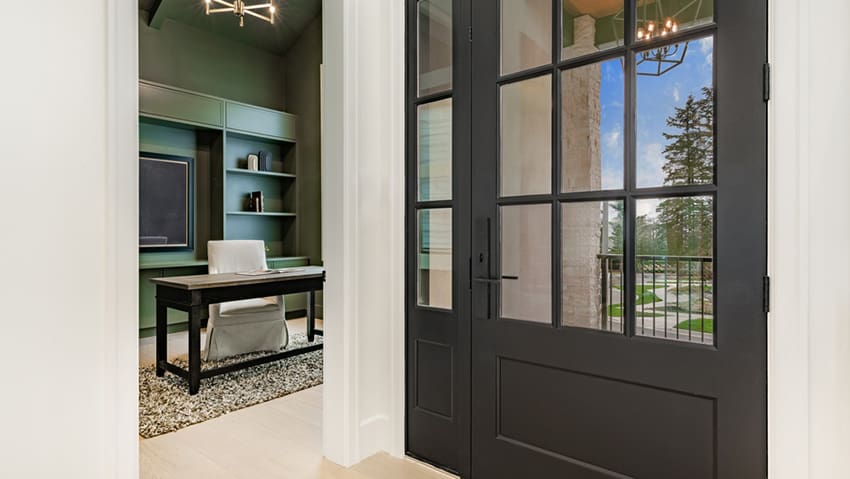
There is a market in the UK that rarely makes headlines, never attracts venture capital, and is almost entirely invisible to the business press.
It is worth an estimated two billion pounds annually, it is growing year on year, and it is being driven by a convergence of factors that show no sign of reversing.
The market is home hardware replacement — door handles, locks, window fittings, letterboxes, hinges, and the hundreds of small components that keep the UK’s thirty million homes functioning. It is not new construction. It is not a renovation. It is the quiet, unglamorous business of replacing the parts that wear out.
The Scale Nobody Talks About
The UK housing stock is ageing. The uPVC door and window installation boom of the 1990s and 2000s means that between fifteen and twenty million UK homes are now running on door and window hardware that is fifteen to twenty-five years old. Springs have weakened. Finishes have deteriorated. Lock mechanisms have worn to the point where they no longer meet current security standards.
Every one of those homes will need replacement hardware at some point — many of them within the next five years. A single front door requires a handle, a euro cylinder lock, a multipoint gearbox mechanism, a letterbox, hinges, and weatherseals. A typical three-bedroom house has eight to twelve windows, each with a handle and a pair of hinges. The average hardware replacement spend per property, when multiple components are addressed at once, runs between seventy-five and two hundred pounds.
Multiply that by the millions of properties approaching the replacement window, and the market opportunity is substantial. Yet it remains largely served by small specialist retailers rather than major chains.
Why the Big Retailers Cannot Win This Market
The structural challenge for large DIY retailers in this market is specificity. Home hardware replacement is not a category where one size fits all. A customer replacing a door handle needs a product that matches the exact PZ distance, backplate length, spindle type, and fixing configuration of their existing door. A customer replacing a euro cylinder needs the exact length to match their door thickness. A customer replacing window hinges needs the correct stack height and hinge length for their window type.
Large retailers optimize for the most popular specifications and ignore the long tail. The result is that a customer visiting a major DIY chain to replace a door handle has perhaps a thirty percent chance of finding the exact product they need. The remaining seventy percent leave empty-handed or buy something that does not fit, generating a return and a second trip.
Specialist online retailers have inverted this model. By focusing exclusively on door and window hardware, they carry the full specification range — every PZ distance, every cylinder length, every hinge type. A specialist selling replacement uPVC door handles stocks forty or fifty models where a general retailer stocks five. The conversion rate difference is dramatic.
The Content Advantage
The most successful businesses in this space have recognised that the customer’s primary challenge is not finding a cheap product — it is identifying which product they need. A homeowner staring at a broken door handle does not know what PZ distance means. They do not know whether they have an espagnolette or a cockspur window handle. They cannot tell a multipoint from a mortice lock.
Specialist retailers that invest in educational content — measuring guides, identification tools, fitting instructions, video walkthroughs — solve this knowledge gap and capture the customer at the moment of highest purchase intent. The customer searches for how to identify their door handle, finds a comprehensive guide on the specialist retailer’s website, identifies their product, and purchases it in the same session.
This content-led acquisition model generates organic traffic at effectively zero marginal cost, in contrast to the paid advertising that general retailers rely on for the same customer. Over time, the specialist builds a library of authoritative content that compounds in search visibility, creating a widening competitive moat.
The DIY Shift
A decade ago, most home hardware replacement was handled by locksmiths and general handymen. The homeowner called a professional, paid a callout fee of sixty to one hundred and fifty pounds, and had the work done for them. The professional sourced the parts through trade suppliers and marked them up accordingly.
That model is changing rapidly. The combination of cost-of-living pressure, widely available fitting guides, and the simplicity of most hardware replacement tasks has shifted a significant proportion of the market to DIY. Replacing a door handle is a ten-minute job with a screwdriver. Changing a euro cylinder takes five minutes. Fitting new window hinges requires twenty minutes and basic tools.
The customer who previously paid a locksmith one hundred and fifty pounds for a cylinder replacement now watches a two-minute video guide, orders a thirty-pound cylinder online, and fits it themselves. The locksmith loses the job. The specialist retailer gains a direct-to-consumer sale with full margin.
This shift has been accelerating since the pandemic, when homeowners became more comfortable with DIY and less willing to pay for services they could perform themselves. The trend shows no sign of reversing.
Insurance and Regulation as Growth Drivers
Home insurance policies have become increasingly specific about door and window security requirements. Policies that once required simply “adequate locks” now specify TS007 3-Star euro cylinders, British Standard multipoint locks, and key-operated window fittings on ground-floor windows.
A homeowner who discovers at policy renewal — or worse, at the point of a burglary claim — that their existing hardware is non-compliant has a strong financial incentive to upgrade immediately. The cost of a rejected insurance claim dwarfs the thirty to fifty pounds required for compliant replacement hardware.
This regulatory tightening has created a recurring upgrade cycle that did not exist a decade ago. As standards evolve, properties that met previous requirements fall below the new threshold and require hardware replacement regardless of whether the existing hardware has physically failed.
The Energy Efficiency Angle
Building energy performance standards are tightening across the UK, with particular focus on rental properties. Landlords are increasingly required to demonstrate minimum energy efficiency standards, and external doors and windows are a significant factor in thermal performance assessments.
Worn draught seals, letterboxes with failed springs, and handles that do not compress the door tightly against the frame all contribute to measurable heat loss. Replacing these components is one of the cheapest ways to improve a property’s thermal performance — and for landlords facing minimum EPC requirements, it is often the most cost-effective first step before investing in more expensive measures.
The Business Opportunity
For entrepreneurs and small business owners considering this market, the barriers to entry are relatively low but the barriers to excellence are significant. Setting up an online shop selling door handles is straightforward. Building the product knowledge, identification guides, fitting support, and full-specification inventory that creates a competitive advantage against both general retailers and other specialists requires genuine expertise and sustained investment.
The businesses that are winning in this space share common characteristics: deep product knowledge that translates into authoritative content, comprehensive inventory that covers the long tail of specifications, and customer service that can identify the correct product from a description or photograph. These are not capabilities that can be bought off the shelf or replicated by a competitor overnight.
For investors and analysts tracking the home improvement sector, the hardware replacement segment deserves more attention than it currently receives. It is counter-cyclical — hardware fails regardless of economic conditions. It is recurring — every replacement creates a future replacement need. And it is structurally shifting toward direct-to-consumer channels that favour specialists over generalists.
The market may not be glamorous. But it is large, it is growing, and it is being won by businesses that understand their products better than anyone else.
Business
Harrods Estates closes after 130 years as non-dom tax changes and stamp duty hit London luxury property market

The iconic property arm of the Knightsbridge department store has closed its last remaining office after a perfect storm of stamp duty hikes, the scrapping of non-dom tax status and a shift in tastes among ultra-wealthy buyers left it fatally exposed.
For the best part of 130 years, Harrods Estates occupied a rarefied corner of the London property market. Founded in 1897 on the ground floor of the famous Knightsbridge department store, it spent decades connecting British aristocrats and wealthy international buyers with some of the capital’s most desirable addresses. Princess Diana’s stepmother, Countess Raine Spencer, served as a director for a decade, lending the brand a touch of genuine celebrity cachet.
Now, however, the final chapter has been written. The agency has confirmed what it called a “very difficult” decision to close its last remaining office on Brompton Road, bringing an end to operations that once stretched from the Home Counties to Monte Carlo.
Shaun Drummond, Harrods Estates’ residential director, said the closure was part of a broader group strategy to refocus on luxury retail. Service will continue for existing tenants, landlords and those with sales already under way, but even these arrangements will wind down in phases, ceasing entirely by March next year.
The demise of such a storied name is being attributed to a confluence of forces that have battered the top end of the London market. Chief among them is the government’s decision to abolish non-dom tax status, a move that has proved a significant disincentive for wealthy overseas buyers considering a move to the capital. Coupled with stamp duty surcharges of up to 19 per cent for foreign purchasers, the effect has been stark: Savills calculates that average prices for homes valued at £4.5 million and above fell by 4.8 per cent last year.
The geographical dynamics of prime central London have shifted, too. Knightsbridge, once the undisputed pinnacle of luxury living in the capital, has been overtaken in the affections of wealthy buyers by Mayfair, Belgravia and Notting Hill. According to Rosy Khalastchy, a director at Beauchamp Estates, a younger generation of Middle Eastern purchasers no longer shares the desire of their parents and grandparents to live within walking distance of the Harrods store.
Then there is the shadow cast by the late Mohamed Al Fayed, who owned Harrods until selling it to the Qatar Investment Authority for £1.5 billion in 2010. Allegations of historical sexual abuse against Al Fayed, who died in 2023, have caused reputational damage that some industry figures believe drove clients towards rival agencies.
Others point to strategic confusion under Qatari ownership. The property arm is said to have become overly dependent on a narrow pool of international buyers and sellers whose preferences can shift rapidly. One telling anecdote emerged in the summer of 2024, when a visiting lawyer found a large section of the Knightsbridge store given over to a pop-up exhibition advertising luxury homes in Saudi Arabia — a curious choice given the well-documented rivalry between Qatar and Saudi Arabia.
For those who remember the agency’s heyday under managing director Mark Collins, who built an enviable client roster of high-net-worth individuals and opened four London offices, the closure will feel like the end of an era. As Khalastchy recalled, there was a time when every serious seller in prime central London wanted to list with Harrods Estates, and Countess Spencer’s presence at property launches added genuine star power.
The brand’s website now carries a stark banner in capital letters confirming it is no longer accepting new enquiries. A Harrods spokesman said the wind-down followed the natural end of the office lease and that plans were in place to ensure no disruption for remaining clients.
For the wider London luxury property sector, the closure of Harrods Estates serves as a cautionary tale. A brand name alone, however illustrious, offers little protection when the tax environment turns hostile, buyer demographics shift and the competition is hungry. The era of wealthy foreigners beating a path to Knightsbridge simply because the Harrods name was above the door appears to be well and truly over.

Suddenly, Streeting thinks public opinion matters – but only when it comes to the BMA
Toulon Golf releases new ’86 inspired Small Batch Columbus putter

AMD finally puts a price tag on the Ryzen 9 9950X3D2 and it’s hefty


-

 NewsBeat7 days ago
Steven Gerrard disagrees with Gary Neville over ‘shock’ Chelsea and Arsenal claim | Football
-

 Business6 days ago
No Jackpot Winner and $194 Million Prize Rolls Over
-

 Fashion6 days ago
Weekend Open Thread: Spanx – Corporette.com
-

 Business5 days ago
Expert Picks for Every Need
-

 Business3 days ago
Three Gulf funds agree to back Paramount’s $81 billion takeover of Warner, WSJ reports
-

 Sports5 days ago
India men’s 4x400m and mixed 4x100m relay teams register big progress | Other Sports News
-

 Tech2 days ago
How Long Can You Drive With Expired Registration? What Florida Law Says
-
Business4 days ago
No Jackpot Winner, Prize to Climb to $231 Million
-

 Fashion3 days ago
Massimo Dutti Offers Inspiration for Your Summer Mood Board
-

 Tech7 days ago
Commonwealth Fusion Systems leans on magnets for near-term revenue
-

 Fashion2 days ago
Let’s Discuss: DEI in 2026
-
Politics6 days ago
Wings Over Scotland | The quality of mercy
-

 Business4 days ago
Akebia Therapeutics, Inc. (AKBA) Discusses Pipeline Progress and Strategic Focus on Kidney Disease Treatments at R&D Day – Slideshow
-

 Fashion6 days ago
Statement Sunglasses: The Accessory Shaping Modern Fashion
-

 Crypto World21 hours ago
Bitcoin recovers as US and Iran Agree a Ceasefire Deal
-

 Politics6 days ago
East Jerusalem Palestinian families eviction orders
-

 Fashion7 days ago
Thursday’s Workwear Report: Merino Wool Blend Short-Sleeved Sweater
-

 Sports7 days ago
Which German players will make final cut?
-

 Fashion6 days ago
For Love & Lemons’ Spring 2026 Line is for the Romantics
-

 Politics6 days ago
Why so many children are now classified as ‘disabled’
You must be logged in to post a comment Login