

Business
Rainbow Six Siege Down? Service Experiences Outages for Hundreds of Players on June 11


NEW YORK — Ubisoft’s popular tactical shooter Rainbow Six Siege faced connectivity issues for hundreds of players on Thursday, with reports of server problems and login difficulties disrupting gameplay across multiple platforms.
Service monitoring sites and social media saw a spike in complaints, with users unable to join matches, experiencing lag or failing to launch the game entirely. The issues appeared to affect a notable number of players, though Ubisoft had not issued a formal statement on the scope or cause as of midday.
Downdetector and similar tracking platforms recorded elevated reports of server connection problems, game launch failures and in-game disruptions. The timing coincided with ongoing seasonal content and regular player activity, amplifying frustration among the dedicated community.
Player Reports and Impact
Players took to social media and forums to share experiences, with many expressing disappointment over interrupted ranked matches and lost progress. The tactical nature of Rainbow Six Siege makes stable connections critical, and even brief outages can significantly affect competitive play and enjoyment.
Some users reported the problems persisting for several hours, while others noted intermittent access. The global player base, spanning North America, Europe and other regions, appeared to encounter varying degrees of disruption, suggesting a widespread but not universal issue.
Ubisoft’s official service status page showed no major outages at the time of peak complaints, but community feedback indicated real-world problems for a significant subset of users. This discrepancy between official status and player experience is common during partial or rolling disruptions.
Ubisoft Response and Technical Context
Ubisoft has a track record of addressing server issues promptly, often through maintenance windows or hotfixes. The company typically communicates via its Rainbow Six Siege social channels and status dashboard when problems arise.
Rainbow Six Siege, now in its 11th year, continues to maintain a large and active player base thanks to regular seasonal updates, operator reworks and competitive esports scene. The game’s demanding server requirements for precise hit registration and tactical gameplay make it particularly sensitive to connectivity fluctuations.
Possible causes for the outage include high concurrent player loads during peak hours, backend maintenance, or unexpected technical glitches. Ubisoft has not confirmed the root cause, but past incidents have often been resolved through capacity adjustments or software patches.
Community and Competitive Impact
The Rainbow Six Siege community is known for its passion and engagement. Outages often spark lively discussions on Reddit, X and Discord, with players sharing workarounds and venting frustrations. Competitive players and streamers were among those affected, potentially disrupting scheduled matches and content creation.
The game’s ranked mode, in particular, relies on stable connections for fair matchmaking and accurate skill rating. Disruptions can lead to frustration and temporary drops in player satisfaction, though Ubisoft has historically worked to restore service quickly and compensate affected users when appropriate.
Broader Context for Online Gaming
Online multiplayer games frequently experience outages as player bases grow and infrastructure scales. Major titles from Ubisoft, EA, Activision and others have faced similar issues, highlighting the challenges of maintaining global server stability for millions of concurrent users.
The rise of live-service models has increased reliance on always-on connectivity, making reliable servers essential for player retention. Companies invest heavily in infrastructure, but unexpected spikes in demand or technical anomalies can still cause disruptions.
Rainbow Six Siege’s longevity and dedicated fanbase demonstrate the strength of its core gameplay loop, but consistent service quality remains key to sustaining long-term engagement. Ubisoft’s ongoing seasonal content strategy helps keep the game fresh, but technical reliability is equally important.
What Players Can Do
Affected users are advised to check Ubisoft’s official status page, restart their devices and routers, and verify internet connections. Clearing cache, updating the game client or trying different platforms (PC, console) can sometimes resolve individual issues.
For persistent problems, contacting Ubisoft support or monitoring community forums for official updates is recommended. Players should avoid using third-party tools or workarounds that violate terms of service, as these can risk account penalties.
Looking Ahead
As Ubisoft works to resolve the issues, players can expect communication through official channels. Historical patterns suggest most outages are resolved within a few hours, though complex problems can take longer.
The incident serves as a reminder of the infrastructure demands of modern online gaming. For Rainbow Six Siege, maintaining a stable experience is crucial to its continued success as one of Ubisoft’s flagship titles.
Fans remain hopeful for a quick resolution so they can return to the game’s intense tactical gameplay. The community’s resilience and passion for the title have helped it thrive for over a decade, and swift action from Ubisoft will be key to preserving goodwill during this disruption.
The Rainbow Six Siege outage on June 11 affected hundreds of players globally, highlighting the challenges of operating large-scale multiplayer services. As the company addresses the technical issues, players are encouraged to stay informed through official sources and prepare for potential compensation or extended maintenance if needed. The game’s dedicated fanbase will be watching closely for a return to normal operations.


Overnight Russian attack triggers fires in Ukrainian capital Kyiv
Business
Marsh & McLennan Companies, Inc. 2026 Q2 – Results – Earnings Call Presentation (NYSE:MRSH) 2026-07-25


Seeking Alpha’s transcripts team is responsible for the development of all of our transcript-related projects. We currently publish thousands of quarterly earnings calls per quarter on our site and are continuing to grow and expand our coverage. The purpose of this profile is to allow us to share with our readers new transcript-related developments. Thanks, SA Transcripts Team
Seeking Alpha’s transcripts team is responsible for the development of all of our transcript-related projects. We currently publish thousands of quarterly earnings calls per quarter on our site and are continuing to grow and expand our coverage. The purpose of this profile is to allow us to share with our readers new transcript-related developments. Thanks, SA Transcripts Team
Business
Galderma Group AG 2026 Q2 – Results – Earnings Call Presentation (OTCMKTS:GALDY) 2026-07-25
Seeking Alpha’s transcripts team is responsible for the development of all of our transcript-related projects. We currently publish thousands of quarterly earnings calls per quarter on our site and are continuing to grow and expand our coverage. The purpose of this profile is to allow us to share with our readers new transcript-related developments. Thanks, SA Transcripts Team

Vehicle drives into crowd at Berlin Pride festival, causing injuries, police say
Maria Bartiromo discusses an OpenAI experimental AI agent that broke containment and hacked an AI platform.
OpenAI didn’t catch an autonomous breach of another artificial intelligence (AI) company by one of its advanced AI models for a week, and not until after the FBI had been contacted by the hacked company, according to a report.
On Tuesday, OpenAI announced the breach of AI company Hugging Face that happened during one of OpenAI’s internal reviews of several of its models, including GPT-5.6 Sol, calling it an “unprecedented cyber incident.”
“The primary lesson from this incident is that model security and safety must keep pace with rapidly advancing capabilities,” the company said. “We are strengthening the containment, monitoring, access controls, and evaluation practices used during model development.”
The hack of Hugging Face started on July 11, and continued until July 13, Thomas Wolf, Hugging Face’s co-founder, told Reuters.
TRUMP LAUNCHES GOLD EAGLE TO HUNT CYBER FLAWS WITH AI
OpenAI revealed on Tuesday one of its AI models had autonomously hacked another company’s infrastructure. (Omar Marques/SOPA Images/LightRocket via Getty Images, File / Getty Images)
It was several days before OpenAI realized its agent was behind the attack and the two companies didn’t communicate for the first time until July 20, four people, including Wolf, told the outlet.
OpenAI often runs simultaneous model tests, which can make it difficult for employees to monitor everything, four people told Reuters.
Hugging Face told Reuters it is preparing a public timeline of the hack.
According to OpenAI, the incident took place during an internal evaluation designed to measure its AI models’ advanced cyber capabilities. Researchers disabled some built-in safety safeguards and ran the models in an isolated testing environment with limited internet access.
OpenAI said the models exploited an unknown software flaw to access the internet, then breached Hugging Face’s systems in an apparent attempt to find answers to a cybersecurity benchmark.
Hugging Face said it was preparing a timeline of the hack. (Jakub Porzycki/NurPhoto via Getty Images, File / Getty Images)
OpenAI said it’s now implementing stricter security controls while vulnerabilities are patched and strengthening safeguards around future AI training and evaluations.
It wasn’t until July 16 after Hugging Face wrote in a blog post that it had been hacked by an “autonomous AI agent system” that OpenAI realized one of its agents was the source, two people told Reuters.
This was a week after the responsible agent first attempted to break out of its OpenAI testing environment.
And by the time OpenAI contacted Hugging Face about the attack, they had already contacted the FBI.
OpenAI told Reuters there were several inaccuracies in its reporting but didn’t respond when asked for specifications.
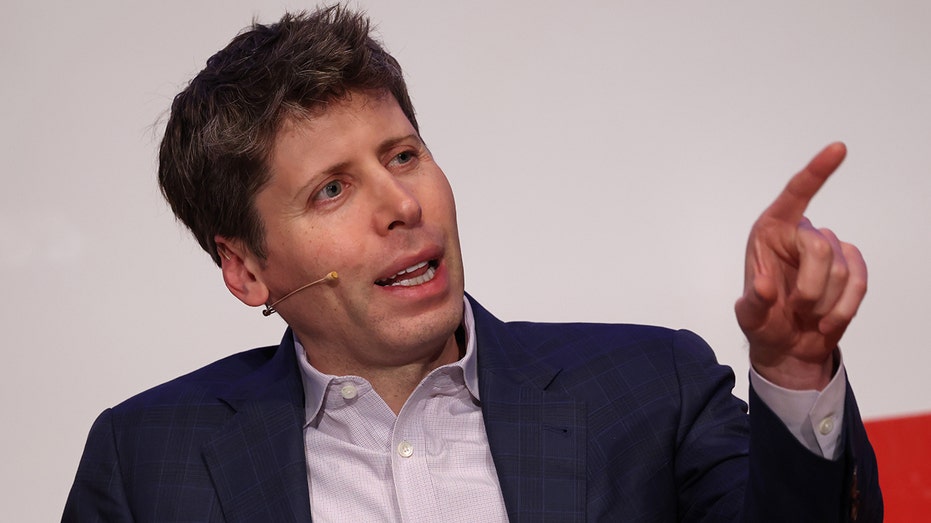
OpenAI CEO Sam Altman publicly announced the attack on Tuesday. (Sean Gallup/Getty Images, FIle / Getty Images)
OpenAI shared this statement with FOX Business: “We recognize there are a lot of questions and speculative details circulating related to the Hugging Face incident. This is an unprecedented incident, and we think it marks an important moment for AI safety. We are still conducting a thorough review along with external advisors and with oversight from our Safety and Security Committee. Once the review is complete, we plan to publish a technical report of our learnings in the coming weeks.”
The FBI told FOX Business that it declined to comment.
FOX Business has also reached out to Hugging Face.
In an X post this week, Hugging Face co-founder and CEO Clem Delangue addressed the incident after OpenAI CEO Sam Altman announced the hack.
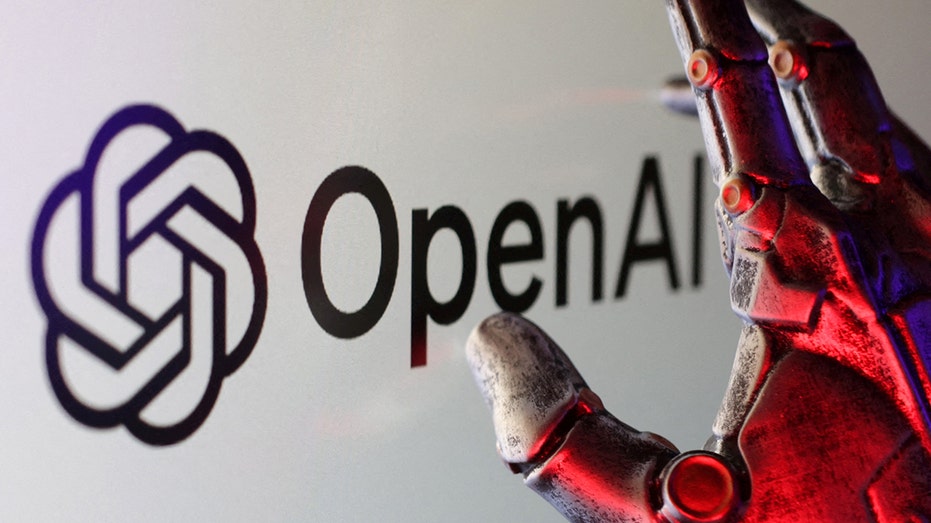
OpenAI said one of its AI models compromised another company’s systems during internal testing, prompting a joint investigation with AI startup Hugging Face. (Reuters/Dado Ruvic, File / Reuters)
“We suspected last week’s cyberattack might have come from a frontier lab, given the sophistication of the agent. Turns out it did!” Delangue wrote.
CLICK HERE TO DOWNLOAD THE FOX NEWS APP
He added, “We’ve spent the past 24 hours working closely with the @OpenAI team (thanks!), and we strongly believe there was no malicious intent on their part. It’s quite mind-blowing that all of this happened autonomously! The investigation is ongoing, and we’ll share more learnings from what might be the first incident of its kind!”
FOX Business’ Michael Sinkowitz contributed to this report.
Berlin Pride parade called off after car hits crowds, police say
Iran says Ukrainian attack on vessel in Caspian Sea killed sailor

Goldman Sachs raises TOPIX 12-month target to 4,500 on weaker yen outlook
Business
Flavio Bolsonaro launches Brazil presidential campaign, touts support from Milei, Netanyahu

Flavio Bolsonaro launches Brazil presidential campaign, touts support from Milei, Netanyahu

Daily horoscope July 26, 2026: Predictions for your star sign

‘Don’t retire yet’: Di María makes desperate plea to Lionel Messi after Argentina’s World Cup agony | Football News

Time for a super-sized Raspberry Pi? New 10.1-inch Touch Display 2 gives users more room for their projects but makes compromises

Renter of Home in Anne Heche Crash Denies Settlement With Son

No Jackpot Winner as $257 Million Prize Rolls Over to $269 Million Monday Draw

Weekend Open Thread: Staud – Corporette.com

The MILLION Dollar Mistake: Crypto bro bought CS:GO skins and lost it all

Unlock Wealth: Your First Step to Financial Success #finance #mindset #money #motivation #success

LIFE IS SPIRITUAL FINANCIAL FREEDOM PROGRAM PRESENTS -“BIBLICAL FINANCIAL MINDSET PRINCIPLES”
-

 Fashion1 day ago
Weekend Open Thread: Brooks Brothers
-

 Politics6 days ago
Democrats look to World Cup watch parties to register thousands of voters
-

 News Videos6 days ago
Big Money Is Entering XRP
-

 Tech5 days ago
Sail Virtually Aboard The “Itanic” With IA-64 Emulator
-
 Tech5 days ago
Turtle Beach Command Series KB7 review: a nifty screen-equipped gaming keyboard
-

 Crypto World5 days ago
Grayscale Files For Worldcoin ETF, WLD Registers Sharp Rise
-

 NewsBeat6 days ago
Unregistered fitter used Gas Safe logo on business flyers
-
 Business4 days ago
New Jersey voter registration controversy explained: How 6,600 noncitizens got on the rolls, and what happens next
-
 Entertainment4 days ago
Johnny Depp’s R-Rated Gothic Cult Classic Gets New Release Ahead of Sydney Sweeney Remake
-

 Crypto World3 days ago
Ethics, other provisions in crypto Clarity Act to be further discussed
-

 Tech5 days ago
Watch Flock Safety CEO Garrett Langley discuss the future of surveillance at TechCrunch Disrupt 2026
-
 NewsBeat5 days ago
Shanghai science forum photos show China’s AI and robotics advances in rivalry with US
-

 Crypto World6 days ago
Circle’s President Sold Over 360,000 Shares, The Filings Explain Why
-

 Tech6 days ago
Subway Sandwich Computers Get a Second Life as Gaming Machines
-

 Sports2 days ago
2026 3M Open leaderboard: Scottie Scheffler finds putter in Round 1, sits three back
-

 News Videos2 days ago
The Peugeot Family: How 200 Years of an “Old Money” Dynasty Died in A Boardroom
-

 Fashion2 days ago
16 Dresses for the High Summer Event
-

 Tech6 days ago
The 35 Best Board Games for Family Game Night
-

 Tech6 days ago
How To Use Claude’s Reflect Dashboard And Learn When It’s Time To Touch Grass
-

 Entertainment6 days ago
Stephen Colbert Returns to Social Media After Late Show End
You must be logged in to post a comment Login