Connect with us

Business

Read This Before Nvidia GTC 2026: Agentic AI And LPU

Published

on

Nvidia: Buy The Dip
Continue Reading
Click to comment

Leave a Reply

Your email address will not be published. Required fields are marked *

Business

Slideshow: Uncorking beverage innovation

Published

on

Slideshow: Uncorking beverage innovation

Foodservice operators are rolling out new beverage formulations. 

Continue Reading

Business

NFL discussing deal with Paramount that could be extra $1 billion

Published

on

NFL discussing deal with Paramount that could be extra $1 billion

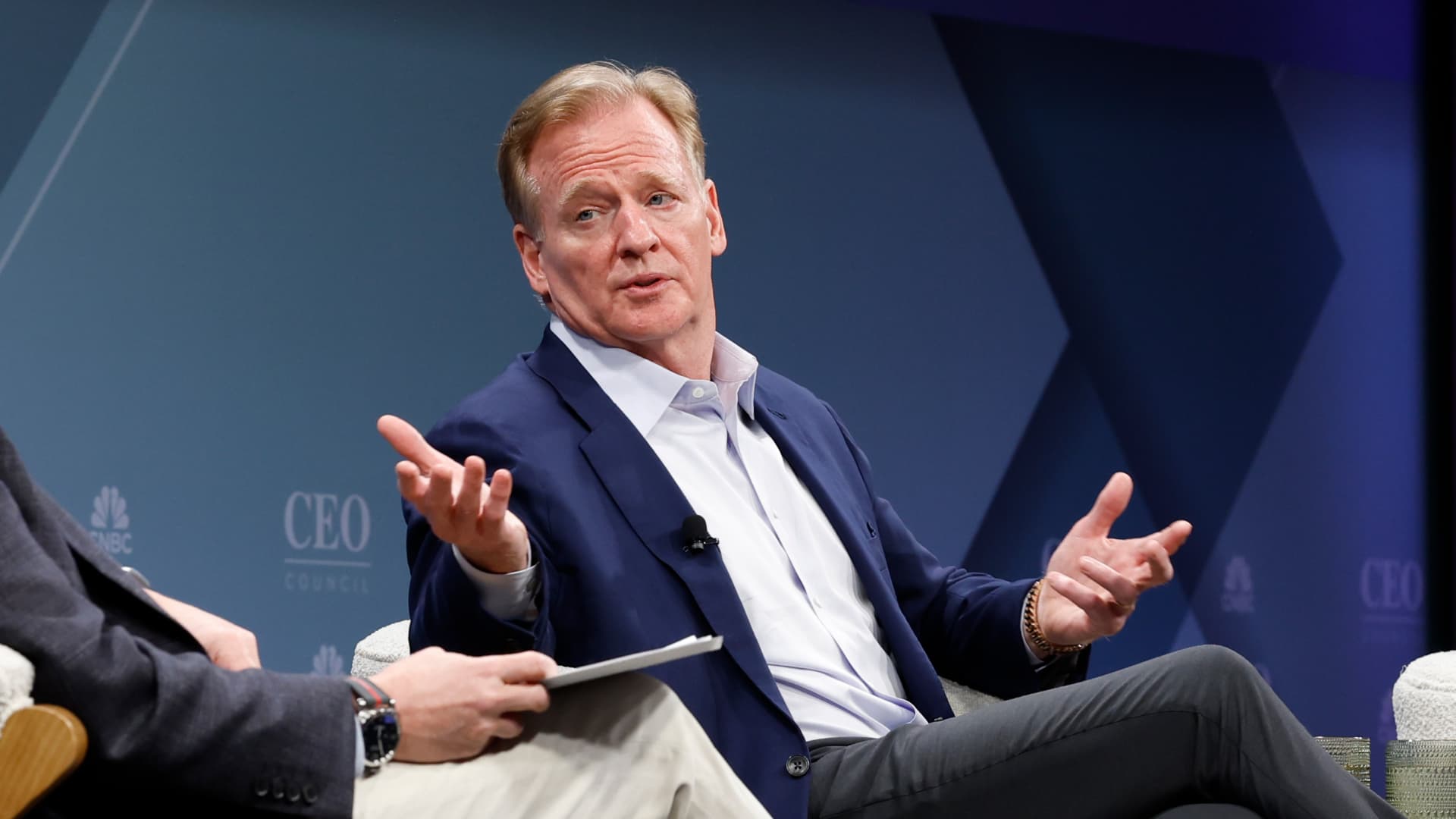
Roger Goodell, NFL Commissioner with Anthony Capuano, Marriott International CEO, CNBC CEO Council Member, speaking at the CNBC CEO Council in Arizona on May 19th, 2025.

Chris Coduto | CNBC

The NFL and Paramount Skydance‘s renewal talks on a deal to keep the league’s Sunday games on CBS are beginning to take shape, CNBC has learned.

Advertisement

NFL and CBS executives are negotiating a price increase, with a bid-ask spread midpoint around 50% or 60%, according to two people familiar with the negotiations, who asked not to be named because the discussions are private. CBS currently pays around $2.1 billion a year, on average, for its Sunday afternoon games, CNBC has previously reported. A 50% increase would mean CBS would pay more than $3 billion in its next deal.

In return for the increased revenue, the NFL would eliminate the opt-out clause after the 2029-30 season that it put in its original deal with Paramount, part of an 11-year agreement that runs through the end of the 2033-34 season. That clause would have given the league the chance to walk away early.

CBS would begin paying the new fee as soon as next season for the next eight years for the same package of games.

Paramount’s adjusted projection for its earnings before interest, taxes, depreciation and amortization for 2026 is $3.6 billion. If Paramount’s merger with Warner Bros. Discovery is approved by regulators, the combined company would have an adjusted EBITDA projection of $18 billion, Paramount Chief Financial Officer Dennis Cinelli told investors this month.

Advertisement

“We have a phenomenal relationship with the NFL, and we anticipate that continuing for the foreseeable future,” Paramount CEO David Ellison told CNBC earlier this month. “They are one of our most important partners, and we plan for them to stay one of our most important partners, having just delivered a historic season in partnership with them. And, you know, ongoing negotiations, we’re not really in a position where we can comment. I promise we’ll share something as soon as we have something to say.”

Comcast‘s NBCUniversal, Amazon Prime Video and Fox are also subject to the 2029-30 opt-out clause in their deals. Disney‘s ESPN and ABC have until 2031.

Football – NFL – Super Bowl LX – New England Patriots v Seattle Seahawks – Levi’s Stadium, Santa Clara, California, United States – February 8, 2026 Referee Shawn Smith talks to players before the game.

Carlos Barria | Reuters

Advertisement

The league has chosen to begin negotiating with Paramount’s CBS before any of its other media partners because a change-of-control provision — stemming from Skydance Media’s acquisition of Paramount Global — allows the NFL to break its deal by 2027.

The NFL might negotiate with Fox next after CBS because the terms of the deal should be similar — both companies own Sunday afternoon packages, one of the people familiar with the matter said.

Fox currently pays slightly more than CBS for its package of games — about $2.2 billion, according to a person familiar with the matter. Fox will “certainly look to [be] continuing that mutually beneficial relationship going forward” with the NFL, but it hasn’t had any “material conversations” on a renewal yet, CEO Lachlan Murdoch said earlier this month at the Morgan Stanley Technology, Media & Telecom Conference.

The NFL also hasn’t begun material discussions with Amazon, NBC or Disney, according to people familiar with the matter. It’s unclear if the league would look to push forward with a similar 50% increase for all three of those packages.

Advertisement

Some executives at NBC and at Disney believe the relative strengths of their packages — Sunday Night Football and Monday Night Football — have diminished as the NFL has given Amazon better games for its Thursday Night Football in recent years, according to people familiar with the matter.

ESPN already pays $2.7 billion for Monday Night Football. A 50% increase would mean ESPN would pay more than $4 billion for that package — a number Disney would likely balk at, according to people familiar with the matter.

Downstream implications

The timing and scope of the NFL’s new deals could have a significant effect on the value of other sports’ rights in the coming years.

The NHL currently has TV deals with Disney and Warner Bros. Discovery, which expire after the 2028 season. Bettman has had a number of conversations about renewing a deal before the NFL, according to two people familiar with the matter. Still, he will likely have to wait until Paramount’s deal to acquire WBD closes before inking a new agreement.

Advertisement

“As with an ongoing relationship, you’re always talking about the future, and from our standpoint it’s not in the context of the NFL,” said NHL spokesman Jon Weinstein.

Murdoch said last month Fox would have to “rebalance” its sports portfolio once it pays the NFL.

Versant CEO Mark Lazarus said earlier this month he’s “prepared for the sports landscape to be shifting” given the outsized cost of the NFL. That could allow Versant, which owns the USA Network and other cable channels, to buy rights to sports such as the NHL or MLB “that we might not have otherwise gotten involved with,” he said.

Disclosure: Versant is the parent company of CNBC.

Advertisement

Get the CNBC Sport newsletter directly to your inbox

The CNBC Sport newsletter with Alex Sherman brings you the biggest news and exclusive interviews from the worlds of sports business and media, delivered weekly to your inbox.

Subscribe here to get access today.

Choose CNBC as your preferred source on Google and never miss a moment from the most trusted name in business news.
Continue Reading

Business

Wall St drops, set for weekly loss as war on Iran fuels inflation worries

Published

on

Wall St drops, set for weekly loss as war on Iran fuels inflation worries


Wall St drops, set for weekly loss as war on Iran fuels inflation worries

Continue Reading

Business

Eos Energy: Approach With Caution (NASDAQ:EOSE)

Published

on

Eos Energy: Approach With Caution (NASDAQ:EOSE)

This article was written by

Hi, my names Tyler! While I am currently a student at University of South Carolina well on my way to earning majors in Finance and Risk Management, I spend nearly all my free time analyzing companies and the market. My credentials include a Level 2 certification through the Adventis FMC program as well as certificates from Bloomberg Market Concepts.I have been investing since middle school, however, I am much more focused on investing now than I was then. Overall, I am event-driven, opportunistic investor who is just looking for the next best thing.I was particularly inspired by Cornwall Capital, who found stocks others deemed “risky” and completed in-depth research to find the true story. This is my main strategy today, finding ignored or underfollowed stocks that bring more to the table than people think. This led me to make my first “Cornwall” trade back in May acquiring shares and LEAP option contracts of Opendoor Technologies at $0.75, before the meme rally. I acquired more shares around $0.56 and $2.00 and although I sold my option contracts for a profit of 4000%+, I continue to hold my shares to this day. Today, I am on my next “Cornwall” trade, Gamesquare Holdings, I highly encourage you take a look.I write and post anything that I find interesting or I believe has a strong opportunity ahead across any industry or sector. I’ve always enjoyed sharing my thoughts on companies with family members and friends so I figured, why not share with everybody!

Analyst’s Disclosure: I/we have no stock, option or similar derivative position in any of the companies mentioned, and no plans to initiate any such positions within the next 72 hours. I wrote this article myself, and it expresses my own opinions. I am not receiving compensation for it (other than from Seeking Alpha). I have no business relationship with any company whose stock is mentioned in this article.

Seeking Alpha’s Disclosure: Past performance is no guarantee of future results. No recommendation or advice is being given as to whether any investment is suitable for a particular investor. Any views or opinions expressed above may not reflect those of Seeking Alpha as a whole. Seeking Alpha is not a licensed securities dealer, broker or US investment adviser or investment bank. Our analysts are third party authors that include both professional investors and individual investors who may not be licensed or certified by any institute or regulatory body.

Advertisement
Continue Reading

Business

Linear Living plans Green Quarter tower with hundreds of homes

Published

on

Business Live

Scheme to revitalise ‘long-vacant’ site

Concept images showing plans for a new 24-storey tower known as One Lord Street, in Manchester's Green Quarter.

Concept images showing plans for a new 24-storey tower known as One Lord Street, in Manchester’s Green Quarter(Image: Linear Living)

A 24-storey tower could be built in Manchester’s Green Quarter in a scheme with 251 new homes.

Advertisement

Plans for the site, known as One Lord Street, have been submitted to the council by developer Linear Living, based on a chunk of land off the busy Cheetham Hill Road.

Green Quarter is a short walk from Manchester Victoria railway station and the wider city centre, and has become a popular place for central-Manchester living.

The ‘long-vacant’ land is currently surrounded by hoardings but was previously a mix of shops and business units along Cheetham Hill Road, which have been partially demolished.

Proposals for the land include four townhouses, and seven homes would be adaptable for future residents with additional needs, such as wheelchair-user apartments.

Advertisement

Public consultations were held in December 2025 and more recently in February, with the developer hoping to get started with the work this year subject to approval from the council.

If all goes well, the building could be up and ready by early 2029, according to the plans.

Linear Living boss Stephen Holmes said: “Submitting plans for One Lord Street represents a significant milestone for Linear Living as we expand into Manchester city centre.

“Following the successful delivery of our £34m Trafford Gardens scheme, this application reflects the next stage in our growth and our confidence in the city’s residential market.

Advertisement

“We see this as a gateway scheme, with the opportunity to make a strong architectural statement while contributing to the wider regeneration of the Green Quarter.

“Working with an experienced project team, we have developed designs that are commercially-viable and aligned with the long-term vision for the area.

“Subject to approval, we look forward to bringing forward a high-quality scheme that adds lasting value to this part of Manchester.”

The area is next to the boundary of a massive regeneration project by Manchester and Salford councils covering Strangeways and the Cambridge industrial estate.

Advertisement

This aims to build more than 7,000 homes over the next 30 years, as well as new places for businesses and a public park.

To find all the planning applications, traffic diversions, road layout changes, alcohol licence applications and more in your community, visit the Public Notices Portal.

Continue Reading

Business

MSC Income Fund closes $150 million private notes offering

Published

on


MSC Income Fund closes $150 million private notes offering

Continue Reading

Business

UK economy flatlines in January as restaurant spending falls and growth stalls

Published

on

UK economy flatlines in January as restaurant spending falls and growth stalls

The UK economy stalled at the start of the year as households cut back on discretionary spending, with restaurants and food services experiencing a sharp decline in activity.

New figures from the Office for National Statistics (ONS) show that gross domestic product (GDP) recorded zero growth in January, falling short of economists’ expectations and marking a slowdown from the modest 0.1% growth recorded in December. Analysts had forecast that output would expand by around 0.2% over the month.

The disappointing performance highlights the fragile state of the UK economy even before the latest geopolitical shock from the escalating US-Israeli conflict with Iran, which economists warn could further dampen growth by pushing energy prices higher and fuelling inflation.

The ONS said the overall economic picture remained “subdued”, with consumer-facing sectors particularly weak. Within the dominant services sector, which accounts for around 80% of UK economic activity, there was a notable 2.7% drop in food and drink service activity as households curtailed spending on eating out.

This contraction in hospitality suggests that the pressure on household finances continues to weigh heavily on consumer behaviour. Restaurants and pubs are often among the first sectors to feel the impact when consumers begin tightening their budgets.

Advertisement

More broadly, the services sector showed no growth overall during the month, underscoring the cautious spending environment facing businesses.

Other parts of the economy also delivered mixed results. Industrial production slipped by 0.1% during January, while construction activity provided one of the few bright spots, expanding by 0.2% over the month.

The flat reading follows a period of slowing economic momentum during the second half of 2025, when uncertainty over tax changes, rising unemployment and lingering cost-of-living pressures led many consumers to reduce spending.

Although the monthly GDP figure showed stagnation, the three-month measure of economic activity, which is typically less volatile, indicated modest growth. In the three months to January, the UK economy expanded by 0.2%, slightly stronger than the 0.1% recorded in the previous three-month period.

Advertisement

However, economists say the underlying picture remains weak, particularly as global developments threaten to worsen inflation and slow economic activity further.

The latest data was compiled before the outbreak of hostilities involving the United States, Israel and Iran, which has sent global energy prices sharply higher. Oil prices have surged and wholesale gas markets have become increasingly volatile, raising concerns about a renewed cost-of-living squeeze for British households.

Prime Minister Sir Keir Starmer warned earlier this week that the longer the Middle East conflict continues, the more likely it is to have a tangible impact on the UK economy.

Higher energy prices are already feeding through to petrol and diesel costs, while households covered by Ofgem’s energy price cap will remain shielded from immediate increases until the next adjustment period in July.

Advertisement

Nonetheless, economists warn that sustained energy price rises could quickly push inflation higher again. Before the conflict erupted, inflation had been expected to fall to the Bank of England’s 2% target by the spring. A renewed surge in energy costs could derail that trajectory.

The shift in the inflation outlook has already affected financial markets. Expectations that the Bank of England would begin cutting interest rates as early as March have largely evaporated, with economists now widely anticipating that policymakers will hold rates steady when they meet next week.

This change in interest rate expectations has had an immediate impact on the mortgage market. Hundreds of mortgage deals have been withdrawn by lenders in recent days, while average mortgage rates have climbed back to levels not seen since last spring.

If the geopolitical tensions persist, analysts say higher borrowing costs and weaker consumer confidence could undermine Labour’s central economic priority of accelerating growth.

Advertisement

Chancellor Rachel Reeves acknowledged the challenges facing the economy, saying the government remained committed to its long-term economic strategy.

“Our economic plan is the right one, but I know there is more to do,” she said.

“In an uncertain world, we are building a stronger and more secure economy by cutting the cost of living, reducing national debt and creating the conditions for growth so that all parts of the country can prosper.”

Opposition figures were quick to criticise the government’s economic performance. Shadow chancellor Sir Mel Stride said Labour had left the economy exposed to external shocks.

Advertisement

“Labour’s economic mismanagement has left the UK vulnerable to the potential consequences of the Iran conflict,” he said.

“They must now take urgent action, including cutting fuel duty, supporting North Sea oil and gas production and putting forward a credible plan to reduce the deficit and bring down the benefits bill.”

Looking ahead, economists believe growth is likely to remain subdued throughout much of the year.

The Office for Budget Responsibility recently downgraded its forecast for UK economic growth in 2026 to 1.1%, down from its earlier estimate of 1.4%.

Advertisement

Yael Selfin, chief economist at KPMG UK, said the latest GDP figures suggested the economy had begun the year on weak footing and could struggle to regain momentum.

“The UK economy started the year on the back foot and activity is expected to weaken further amid sharply rising energy prices,” she said.

Selfin added that government borrowing costs have increased in recent weeks as financial markets reassess the outlook for interest rates. Higher borrowing costs could act as a headwind for businesses and households alike.

“With expectations for weaker growth combined with rising costs, businesses are likely to scale back investment plans,” she said.

Advertisement

For policymakers, the challenge now lies in navigating a fragile domestic economy while responding to external shocks that threaten to push inflation higher and delay any relief from elevated interest rates.


Jamie Young

Jamie Young

Jamie is Senior Reporter at Business Matters, bringing over a decade of experience in UK SME business reporting.
Jamie holds a degree in Business Administration and regularly participates in industry conferences and workshops.

When not reporting on the latest business developments, Jamie is passionate about mentoring up-and-coming journalists and entrepreneurs to inspire the next generation of business leaders.

Advertisement
Continue Reading

Business

F1 set to cancel Bahrain and Saudi Arabian Grands Prix as Middle East conflict escalates

Published

on

F1 set to cancel Bahrain and Saudi Arabian Grands Prix as Middle East conflict escalates

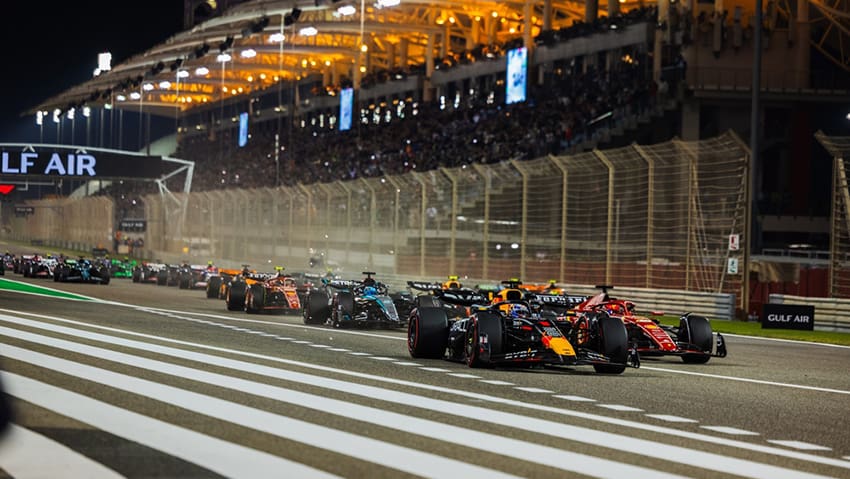
Formula 1 is expected to cancel the Bahrain and Saudi Arabian Grands Prix as the escalating conflict in the Middle East continues to destabilise the region, with the decision likely to reduce the 2026 calendar to 22 races.

The two races, scheduled to take place in April, were due to form the fourth and fifth rounds of the championship. The Bahrain Grand Prix had been planned for 10–12 April before the sport was set to travel to Jeddah for the Saudi Arabian Grand Prix on 17–19 April.

However, both Bahrain and Saudi Arabia are among several Gulf states that have been targeted by Iranian strikes in retaliation for US and Israeli military operations in the region. The deteriorating security situation has raised serious concerns across international sporting bodies, airlines and logistics operators, with Formula 1 now expected to formally call off both events.

Sources indicate that the announcement could be made before the end of the weekend as the sport assesses the rapidly changing geopolitical landscape.

Safety remains the overriding priority for both Formula 1 and motorsport’s governing body, the Fédération Internationale de l’Automobile (FIA). With tensions escalating across the Gulf and no clear signs of de-escalation, the championship’s organisers are understood to have concluded that staging races in the region in April would present unacceptable risks.

Advertisement

Business Matters, which is currently in China with the Aston Martin Aramco Formula 1 team ahead of the Chinese Grand Prix weekend in Shanghai, understands that the races will likely be removed entirely from the calendar rather than postponed.

If confirmed, the cancellations will leave a notable gap in the early-season schedule. Following the Japanese Grand Prix, which takes place from 27–29 March and serves as the third round of the championship, Formula 1 would not return to action until the Miami Grand Prix on 1–3 May.

That would create an unusual five-week break in the racing calendar during April, a period that normally features several Grands Prix as the season builds momentum.

While Formula 1 has occasionally rearranged or replaced cancelled races in previous seasons, sources suggest that the already packed March-to-December calendar makes it unlikely that replacement venues will be found at short notice. As a result, the 2026 championship is expected to run over 22 race weekends instead of the originally planned 24.

Advertisement

The Middle East has become a key region for Formula 1 over the past two decades, with races in Bahrain, Saudi Arabia, Qatar and Abu Dhabi forming an important part of the championship’s global expansion strategy.

Bahrain first joined the calendar in 2004 and traditionally hosts the opening race of the season, while the high-speed street circuit in Jeddah made its debut in 2021 as part of the sport’s growing presence in the Gulf.

Both races have become major sporting and commercial events, attracting large international audiences and significant investment from host governments.

However, the current conflict has already begun to disrupt global transport networks, energy markets and commercial shipping routes across the region, raising broader concerns about the feasibility of large-scale international events.

Advertisement

Teams, logistics partners and broadcasters also face complex operational challenges when transporting equipment and personnel across a region experiencing heightened military activity.

The situation is being monitored closely by Formula 1 Management, the FIA and race organisers, who are expected to issue formal confirmation once final discussions conclude.

In the meantime, attention remains on the Chinese Grand Prix weekend in Shanghai, where Mercedes driver George Russell is aiming to build on his opening-race victory and extend his early lead in the championship standings.

With the season potentially losing two races, the fight for points could become even more intense as drivers and teams compete across a shorter calendar in what is already shaping up to be a highly unpredictable year in Formula 1.

Advertisement

Paul Jones

Harvard alumni and former New York Times journalist. Editor of Business Matters for over 15 years, the UKs largest business magazine. I am also head of Capital Business Media’s automotive division working for clients such as Red Bull Racing, Honda, Aston Martin and Infiniti.

Advertisement
Continue Reading

Business

Fear levels of March 2020? Iran war gives Nifty its worst month since the dreaded Covid crash

Published

on

Fear levels of March 2020? Iran war gives Nifty its worst month since the dreaded Covid crash
Indian equities recorded their worst monthly performance since the Covid pandemic, with the benchmark Nifty recording its second sharpest decline in a decade as geopolitical tensions and sustained foreign investor selling weigh heavily on sentiment. In March 2020, Nifty fell around 23%, driven by fears of the pandemic, while the March 2026 month saw a fall of nearly 8%. The most worrying aspect is that we have barely reached the halfway point of the month.

The current slide also marks the second-worst monthly fall for the Nifty in the last ten years, underlining the intensity of the sell-off that has gripped Dalal Street.

The sharp correction has unfolded over the past week as escalating conflict in West Asia, particularly the ongoing Iran war, triggered a surge in crude oil prices and heightened global risk aversion. India, which imports nearly 85% of its crude oil requirements, remains particularly sensitive to any disruption in Middle East supply chains.

Also read:Explained: Why traders aren’t holding on to gold since Middle East war despite safe haven appeal

Advertisement

With Brent crude hovering near $100 per barrel, concerns have grown around the impact on inflation, corporate margins and the rupee. The Strait of Hormuz, through which a large portion of India’s oil imports pass, has emerged as a key geopolitical flashpoint as the conflict intensifies.


The market fall has also been aggravated by heavy foreign institutional investor selling. FIIs have already sold nearly Rs 40,000 crore worth of Indian equities so far this month, putting sustained pressure on largecap stocks and dragging benchmark indices lower.
The BSE Sensex is on track to close the current week down by nearly 4,000 points, while the Nifty has dropped about 5% in just five trading sessions. The sell-off has been widespread, including in the broader market. Just on Friday, the Nifty small and midcap indices fell close to 3%.Beyond the Iran conflict, analysts say concerns around global growth and sector-specific headwinds have also contributed to the market weakness. The rapid adoption of artificial intelligence globally has raised questions about the near-term outlook for India’s IT services sector, which has seen underperformance in recent months as investors reassess demand visibility.

Fundamentals remain strong

Despite the current volatility, fund managers say the underlying fundamentals of the Indian economy remain intact. According to Sorbh Gupta, Head-Equity at Bajaj Finserv AMC, corporate earnings have shown strong momentum over the past few quarters, providing a more supportive foundation for markets.

Recent results indicate a broad-based recovery in profitability across sectors. Profit growth for the Nifty 500 companies rose about 16% year-on-year in Q3FY26, marking the strongest earnings expansion in eight quarters.

Advertisement

Gupta noted that improving earnings visibility could help stabilise equities once the current wave of global uncertainty subsides.

Domestic macroeconomic indicators have also shown signs of improvement. Credit growth has returned to double-digit levels, suggesting stronger demand for loans and improving liquidity conditions. Consumption trends have begun to recover following tax and policy support, while earlier rate cuts by the Reserve Bank of India have helped lower borrowing costs for both companies and consumers.

Over the longer term, markets have historically absorbed geopolitical shocks relatively quickly. Axis Mutual Fund pointed out that Indian equities have navigated multiple global crises over the past decade — from regional conflicts to wars and economic disruptions — with only temporary drawdowns before fundamentals reasserted themselves.

However, the near-term outlook remains closely tied to geopolitical developments.

Advertisement

If tensions in the Middle East escalate further, crude oil prices could remain elevated, potentially triggering higher inflation, pressure on the rupee and margin compression for sectors such as aviation, chemicals, paints and oil marketing companies.

Also read: $100 crude gives Rs 20 lakh crore shock to Nifty bulls this week. Best time to buy the fear?

India’s strong foreign exchange reserves and strategic petroleum reserves offer some cushion against external shocks, but markets are likely to remain volatile as investors track developments in the region, analysts say.

(Disclaimer: Recommendations, suggestions, views and opinions given by the experts are their own. These do not represent the views of Economic Times)

Advertisement
Continue Reading

Business

Can Ukraine's war-torn wheatfields be cleansed?

Published

on

Can Ukraine's war-torn wheatfields be cleansed?

Researchers take 8,000 soil samples from battlefields to see if it is safe to grow crops.

Continue Reading

Trending

Copyright © 2025