Connect with us

Business

Real estate broker warns of California wealth tax’s ‘trickle-down’ fallout

Published

on

Real estate broker warns of California wealth tax's 'trickle-down' fallout

Luxury real estate broker Josh Altman warned that California’s proposed wealth tax could drive a number of billionaires out of the state and trigger a damaging “trickle-down” effect.

“There’s about 200 to 250 billionaires in California, more than any other state. However, there are also 40 million people in California, 23 [million] of whom are eligible to vote. If this hits the ballot, there is no way that the billionaires come out on top here, and that’s an issue,” the former “Million Dollar Listing” star told FOX Business.

Advertisement

Discussing the matter Wednesday on “Varney & Co.,” Altman said that seven billionaires he personally knows have already left California for other parts of the U.S., including Las Vegas and Florida.

LARRY PAGE DROPS $173M ON MIAMI MANSIONS AMID CALIFORNIA BILLIONAIRE EXODUS TREND AS WEALTH TAX LOOMS

Josh Altman at BravoCon

Josh Altman speaks at BravoCon from Caesars Forum in Las Vegas on Nov. 3, 2023.  (Chelsea Guglielmino/Bravo via Getty Images / Getty Images)

Though the proposed measure would impose a one-time 5% tax on the net worth of California residents worth more than $1 billion, he argued it is not the billionaires who will suffer most.

“It’s the trickle-down effect. It’s people, the hundreds of thousands of people that work for these billionaires. It’s the trillion dollars in taxes that we’re going to lose,” he said.

Advertisement

NEWSOM SAYS CALIFORNIA WEALTH TAX ‘REALLY DAMAGING’ AS BILLIONAIRES MOVE MONEY, BUSINESSES OUT OF STATE

Unfurled California flag

An unfurled California flag flies in Oceanside, Calif. on Oct. 24, 2017.  (Mike Blake/Reuters / Reuters)

“You know what a billionaire said to me once? He said, ‘You know what the difference is between 100 million and a billion? Nothing.’ They’ll be fine. It’s people that need them that are not, and we’re running them out of California.”

Under the proposed ballot initiative, the one-time tax would be due in 2027, and taxpayers could spread payments over five years with additional nondeductible charges, according to the Legislative Analyst’s Office.

GET FOX BUSINESS ON THE GO BY CLICKING HERE

Advertisement

FOX Business’ Kristen Altus contributed to this report.

Continue Reading
Click to comment

Leave a Reply

Your email address will not be published. Required fields are marked *

Business

What Keeps CEOs Up At Night. Hint: It Isn’t AI.

Published

on

What Keeps CEOs Up At Night. Hint: It Isn’t AI.

What Keeps CEOs Up At Night. Hint: It Isn’t AI.

Continue Reading

Business

Oppenheimer Holdings: Public Markets Come Back, Driving ECM And Profits

Published

on

Oppenheimer Holdings: Public Markets Come Back, Driving ECM And Profits

Oppenheimer Holdings: Public Markets Come Back, Driving ECM And Profits

Continue Reading

Business

’Today’ show’s Savannah Guthrie pleads for safe return of missing mother

Published

on

’Today’ show’s Savannah Guthrie pleads for safe return of missing mother


’Today’ show’s Savannah Guthrie pleads for safe return of missing mother

Continue Reading

Business

Terrell Owens on Bill Belichick, Robert Kraft snubs

Published

on

Terrell Owens on Bill Belichick, Robert Kraft snubs
Terrell Owens on Hall of Fame snub and biggest financial mistakes

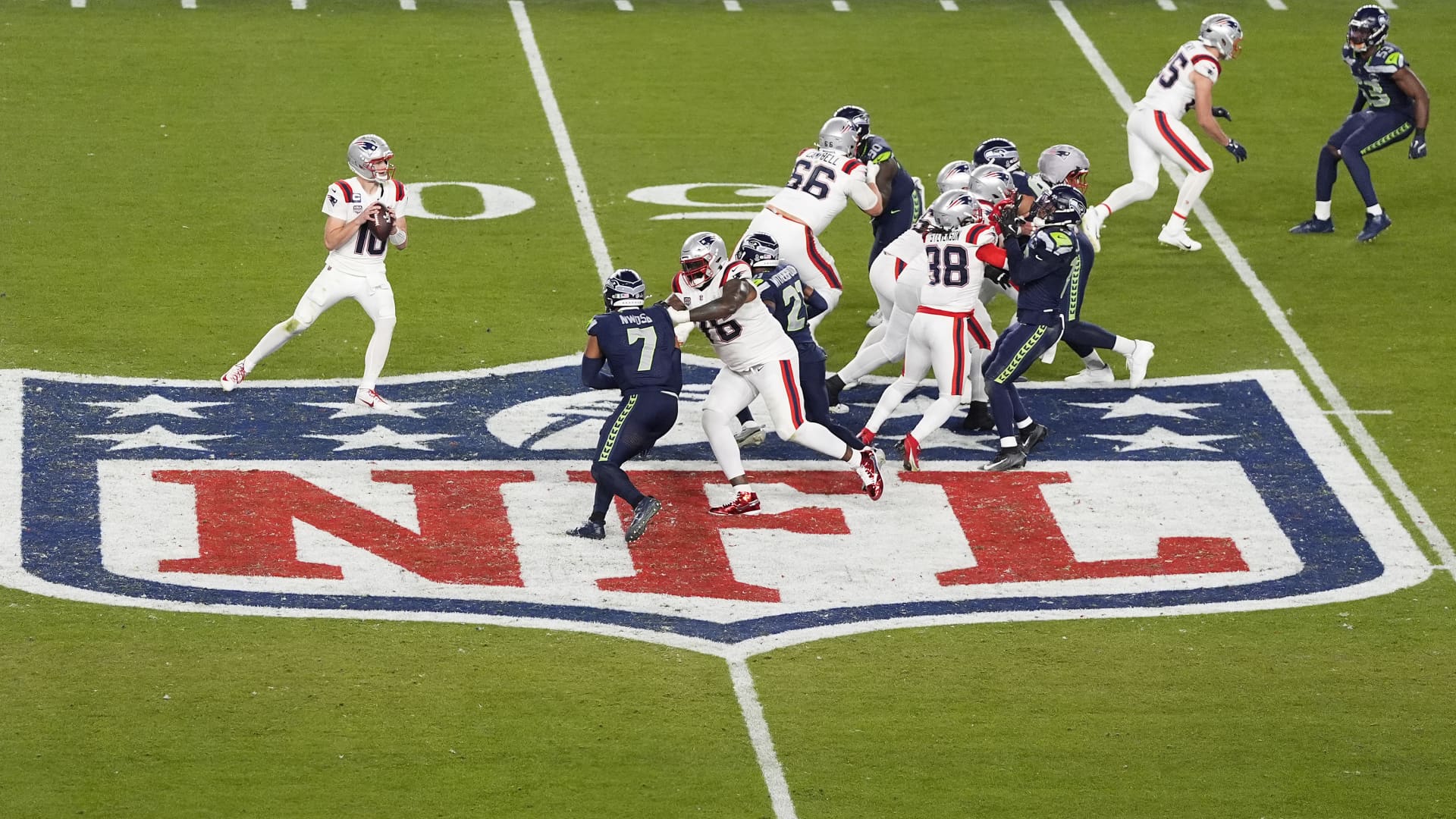
NFL Hall of Famer Terrell Owens said Wednesday that the recent snubs of New England Patriots owner Robert Kraft and former coach Bill Belichick from the institution show the system is flawed, and someone needs to be held accountable.

“It’s just plain dumb” Owens told CNBC Sport in an interview in San Francisco ahead of Super Bowl LX. “Something has to change.”

The decisions not to vote Kraft and Belichick into the Pro Football Hall of Fame raised eyebrows because of the Patriots’ success. With a win over the Seattle Seahawks on Sunday, the franchise would hold the most Super Bowl wins of any NFL team with seven. Belichick was the team’s head coach for all six of its championship victories, including one over Owens’ Philadelphia Eagles.

2018 Hall of Fame inductee Terrell Owens speaks during a ceremony at halftime of the game between the San Francisco 49ers and the Oakland Raiders at Levi’s Stadium on Nov. 1, 2018 in Santa Clara, California.

Advertisement

Daniel Shirey | Getty Images

Owens suggested it may be Jim Porter, the Hall of Fame’s president, who has the power to change the system.

“He has to change or make some some adjustments or amendments into either the criteria or the mission statement of the Hall of Fame. Something has to be done,” Owens said.

He also placed the blame on the writers responsible for voting.

Advertisement

“Whoever put the guidelines and the bylaws in place to ultimately land coaches and athletes in the most prestigious place that you could ever be, and that’s Canton. If the people that you’re appointed aren’t adhering to that, then something’s wrong. They should be held accountable. They should be stripped of their position,” he said.

The Pro Football Hall of Fame did not immediately respond to a request for comment.

The former six-time Pro Bowler Owens would know something about Hall of Fame voting. Owens played 15 seasons in the NFL and was inducted into the Pro Football Hall of Fame in 2018 after being passed over twice despite being ranked near the top of nearly every receiving category. Owens said it cost him financially.

“There’s a lot of complicated financial opportunity that comes with being really a first-ballot Hall of Famer. There’s a ring to it,” he added. “It used to mean so much, and now it seems to be a little bit watered down.”

Advertisement

When he was inducted into the Hall of Fame, Owens opted to skip the celebration in Canton, Ohio, instead holding his own celebration at the University of Tennessee at Chattanooga, his alma mater, in protest of what he called a “flawed process,” according to ESPN.

Get the CNBC Sport newsletter directly to your inbox

The CNBC Sport newsletter with Alex Sherman brings you the biggest news and exclusive interviews from the worlds of sports business and media, delivered weekly to your inbox.

Subscribe here to get access today.

Advertisement
Continue Reading

Business

Toyota expected to post third straight quarterly profit drop as costs, tariffs bite

Published

on

Toyota expected to post third straight quarterly profit drop as costs, tariffs bite


Toyota expected to post third straight quarterly profit drop as costs, tariffs bite

Continue Reading

Business

Big Rock Sports files for bankruptcy with over $100M in liabilities

Published

on

Big Rock Sports files for bankruptcy with over $100M in liabilities

A major distributor in the gun and outdoor sporting goods industry has filed for bankruptcy.

Big Rock Sports, LLC, a key supplier serving tens of thousands of retailers across the U.S. and abroad, has filed for Chapter 7 bankruptcy liquidation in the U.S. Bankruptcy Court for the Eastern District of North Carolina, according to court documents obtained by FOX Business.

Advertisement

The North Carolina–based company reported more than $100.9 million in liabilities, compared with estimated assets of between $10 million and $50 million.

The bankruptcy filing does not specify what triggered the liquidation but indicates that Big Rock Sports was overwhelmed by a surge of lawsuits from property owners, suppliers and business partners, SBG Media reported.

NEARLY 100-YEAR-OLD CANDY COMPANY FILES FOR BANKRUPTCY AMID RISING COSTS, HEAVY DEBT: REPORT

Rifles and carbines lined up

A collection of rifles  (iStock / iStock)

Roughly $83 million in unsecured claims are expected to go unpaid, according to SBG Media.

Advertisement

Although the company’s website is currently inaccessible, archived versions reviewed by FOX Business show Big Rock Sports claimed to serve more than 20,000 retailers across the fishing, shooting, camping, taxidermy and marine industries. 

The distributor said its operations spanned the U.S., Canada, the Caribbean region and eight other countries. 

RESTAURANT GIANT FILES FOR BANKRUPTCY UNDER MASSIVE DEBT SHORTLY AFTER TOUTING MAJOR EXPANSION

Fisherman Casting Out His Line on boat

A fisherman is pictured on a boat. (iStock / iStock)

Big Rock Sports also reported working with roughly 1,200 vendor partners and operating approximately 850,000 square feet of distribution space at warehouses in North Carolina, Minnesota and Nevada.

Advertisement

“Although Big Rock is one of the largest outdoor sporting goods distributors in North America, we’re much more than that,” the company stated on its website. “We offer an exclusive array of tools and resources that are designed to give retailers a competitive edge.”

Big Rock Sports traces its roots back to 1955, when All-Sports Supply was founded in Portland, Oregon.

FRANCESCA’S ALLEGEDLY FIRES WORKERS WITHOUT WARNING AS WOMEN’S CLOTHING RETAILER SHUTS DOWN FOR GOOD

Chapter 7 Bankruptcy text

Big Rock Sports filed for Chapter 7 Bankruptcy. (iStock / iStock)

“The history of Big Rock Sports goes back more than 60 years to the founding of All-Sports Supply in Portland, [Oregon],” the company wrote. “At that time, sporting goods was a much more personal business, and distributors knew the names of their retailers as well as their families.”

Advertisement

The company’s Canadian subsidiary was liquidated prior to the U.S. bankruptcy filing, according to The Street.

GET FOX BUSINESS ON THE GO BY CLICKING HERE

Big Rock Sports could not immediately be reached by FOX Business for comment.

Advertisement
Continue Reading

Business

AMD: Buy The Earnings Drop

Published

on

AMD's Q4: A Solid Quarter The Market Ignored (Rating Upgrade) (NASDAQ:AMD)

AMD: Buy The Earnings Drop

Continue Reading

Business

The Changing Shape of Market Participation Across Digital Platforms

Published

on

The Changing Shape of Market Participation Across Digital Platforms

For decades, markets were places you entered through permission. A broker. A bank. A credential. Participation came with paperwork, minimums, and a quiet sense that most people were visitors, not stakeholders. That posture no longer holds.

Across finance, sports, media, and commerce, digital platforms have reshaped who gets to participate and what participation looks like. Markets feel looser. Interfaces simpler. Having a “stake” no longer requires ownership or long-term commitment.

People can engage briefly, more often, and with clearer limits around control. What’s emerging isn’t just wider access, it’s a fundamentally different shape.

Lower Barriers, Wider Doors: Who Gets to Participate Now

The most visible change is the simplest one. Entry costs have collapsed. In earlier eras, market participation demanded scale. Capital. Patience. Confidence in systems that rarely explained themselves. Digital platforms stripped much of that away. A smartphone now does the work of entire intermediaries.

Advertisement

Fractional access became normal. So did zero-commission models. These weren’t cosmetic tweaks. They changed the psychology of participation. People could test ideas instead of committing identities. They could step in briefly, observe, and step back out.

That shift pulled new voices into spaces once dominated by institutions. Retail participants moved from the margins toward the center of daily activity. Not as professionals, but as contributors whose collective presence began to matter.

It’s worth lingering on that word, collective. Because participation at scale changes how markets behave, not just who shows up, but how influence forms and shifts over time.

Markets That Reflect Opinion, Not Just Capital

Markets have always reflected belief, but rarely so directly. What digital platforms introduced was a way to express opinion without requiring deep technical fluency. Binary frameworks. Clear outcomes. Transparent pricing shaped by the crowd rather than a central authority.

Advertisement

This structure shows up in more places than many people notice. Fans are voting on club decisions. Consumers are backing product ideas before launch. Users are signaling confidence or doubt around real-world events, not by writing essays or placing long-term bets, but by participating in short, defined windows.

In that context, platforms like FanDuel Predicts represent a broader movement rather than an isolated product. They sit alongside other outcome-based environments where users engage with events by expressing belief within structured limits.

The appeal isn’t a prediction for its own sake. It’s the ability to participate without overcommitting, to test intuition, and to see how personal perspective aligns or clashes with the wider crowd. The market, in these moments, feels less like a machine and more like a conversation.

From Passive Audiences to Active Stakeholders

Something else happens when participation becomes easier. People begin to care differently, bringing attention, emotion, and judgment into the process.

Advertisement

Passive consumption gives way to light ownership. Not always financial. Sometimes emotional. Sometimes reputational. A fan who votes on a decision feels invested even if the stake is symbolic. A user who contributes to an outcome feels seen.

Digital platforms learned this quickly. Participation deepens loyalty in ways discounts never could. It also changes behavior. People return not just to consume, but to check how their view is aging. To see where the crowd moved. To decide whether to stay in or step away.

This shift echoes across sectors. Creator platforms rely on it. Community marketplaces thrive on it. Even civic tools increasingly borrow the same logic. Markets, in this sense, are no longer just places to transact. There are places to engage identity.

Real-Time, Fractional, and Always On

One of the quieter revolutions of digital participation is time, how quickly it moves and how flexibly it’s experienced.

Advertisement

Traditional markets operated on schedules. Open. Close. Settle. Digital platforms blurred those boundaries. Participation became continuous, but not compulsory. Users could engage briefly and leave without penalty. Several mechanics make this possible:

  • Real-time data that updates expectations instantly,
  • Fractional exposure that avoids binary commitment,
  • Optional exits that allow users to lock in or step back.

This design philosophy reflects the rise of digital marketplace ecosystems, where platforms act less like vendors and more like orchestrators. Value compounds through connection rather than inventory, through participation rather than possession, reshaping how digital markets scale and sustain engagement.

The model is increasingly visible across finance, telecom, and public services alike. The common thread is flexibility. Users aren’t pushed toward permanence or long-term commitment. They’re offered presence, with the freedom to engage on their own terms.

Picture Credit

Regulation Catching Up to Participation

As participation widened, scrutiny followed. Regulators tend to arrive late to new market forms, and then all at once. Digital participation platforms are no exception. What’s notable now is the tone of the conversation. Less about whether these models should exist. More about how they should be governed.

Advertisement

That shift matters. Clear frameworks signal legitimacy. They also encourage broader adoption. Users trust systems that acknowledge limits and enforce transparency. Platforms that operate within visible guardrails tend to last longer than those racing ahead of oversight.

The regulatory process is uneven, state by state and sector by sector. Still, the direction feels settled. Participation markets are no longer fringe experiments. They’re becoming formal components of the economic landscape.

A More Flexible Market Mindset

The changing shape of market participation isn’t about technology alone. It reflects a cultural shift in how people relate to systems of value and influence. Access now comes with an expectation of autonomy.

Participation is no longer about commitment for its own sake, but about the freedom to engage, observe, and step back without friction or consequence.

Advertisement

Markets are responding in kind. They listen more closely, adapt more quickly, and leave room for lighter, temporary forms of involvement. Participation has become fluid rather than fixed. The future will be shaped less by who controls entry and more by how individuals choose to show up and how easily they can move on.

Continue Reading

Business

State govt commits $230m for new WA schools, upgrades

Published

on

State govt commits $230m for new WA schools, upgrades

The state government has flagged construction of four new primary schools as part of a $230 million investment into education infrastructure.

Continue Reading

Business

Asia Dominates Global Digital Hardware Trade with Key Electronic Components

Published

on

Asia Dominates Global Digital Hardware Trade with Key Electronic Components

Nearly 80% of the world’s information and communications technology goods now originate from Asia, according to new trade data released by the United Nations Conference on Trade and Development (UNCTAD), underscoring the region’s overwhelming dominance in the backbone of the digital economy.

Key takeaways

  • Asia produces nearly 80% of global ICT goods exports, with electronic components like chips and sensors driving growth while consumer electronics stagnate.
  • Europe dominates ICT services exports with 57% market share, while Africa and Latin America combined account for just 2.5% of the $1.2 trillion global market.
  • Developing countries risk permanent marginalization in digital trade without urgent investment in broadband infrastructure, digital skills, and supportive trade policies.

The findings, published on January 29, reveal that ICT products ranging from semiconductors to smartphones accounted for more than 12% of total global merchandise exports in 2024. This translates to over one dollar in every eight earned from international trade in goods coming from digital-enabling hardware.

Electronic Components Fuel Unprecedented Growth

The surge in digital trade has been primarily driven by electronic components, including microchips, circuit boards, and sensors, the invisible infrastructure powering everything from cloud computing and electric vehicles to renewable energy systems. Trade in these components has surged dramatically over the past 15 years, even as consumer electronics and other ICT products have stagnated.

“Electronic components are the invisible backbone of the digital economy,” UNCTAD stated in its analysis, emphasizing that countries capable of producing these components secure not only skilled jobs but also technology spillovers and more resilient export revenues.

The Digital Divide Deepens

While Asia’s manufacturing prowess continues to expand, the data exposes a stark global imbalance. Many developing economies remain confined to lower-value components or assembly operations, limiting their ability to capitalize on digital and energy transitions.

Advertisement

The disparity is even more pronounced in ICT services. Europe commanded 57% of the $1.2 trillion global ICT services export market in 2024, with Asia and Oceania capturing 33%. North America held 8%, while Africa, Latin America, and the Caribbean combined accounted for a mere 2.5%, less than $30 billion.

Digital Delivery Reshapes Trade Landscape

Trade in digitally deliverable products, services that can be transmitted remotely over computer networks, including telecommunications, consulting, healthcare, education, and digital media, grew 10% in 2024, reaching 56% of all global services exports.

Developed economies dominated this sector, exporting approximately $3.8 trillion worth of digitally deliverable products compared to $1.2 trillion from developing nations.

“Digital delivery eliminates the need for physical proximity between service suppliers and consumers, lowering traditional barriers to services trade,” UNCTAD noted. However, this advantage comes with a caveat: dependence on digital connectivity and skills creates new obstacles for countries with weaker digital infrastructure.

A Call for Strategic Investment

UNCTAD’s analysis warns that without targeted investment in broadband infrastructure, digital skills development, data governance frameworks, and supportive trade policies, many developing countries risk being permanently sidelined as digital trade deepens.

Advertisement

“The imbalances between developed and developing countries highlight persistent gaps in digital capacity,” the report emphasized. “Countries that fail to invest in their digital ecosystems risk remaining marginal players in one of the fastest-growing segments of global trade.”

As technological change accelerates and global trade undergoes structural transformation, the data reveals not just economic statistics but deeper stories about opportunity, inequality, and the shifting geography of economic power in the digital age.UNCTAD’s analysis issues a critical warning: without targeted investment in broadband infrastructure, digital skills development, data governance frameworks, and supportive trade policies, many developing countries risk permanent marginalization in an increasingly digital global economy. The report emphasizes persistent gaps in digital capacity, urging countries to invest in their digital ecosystems to avoid being sidelined from one of the fastest-growing segments of global trade.

Continue Reading

Trending

Copyright © 2025