

Business
Realbotix Corp. (XBOTF) Q1 2026 Earnings Call Transcript


Jennifer Karkula
Head of Communications
Hello, and welcome to the Realbotix Financial Update Call. My name is Jennifer, and today, we are joined by CEO, Andrew Kiguel; and CFO, Scott Meyers. [Operator Instructions] I will now turn the call over to Andrew.
Andrew Kiguel
Co-Founder, CEO & Director
Thanks, Jennifer. Welcome, everybody, to our call, I guess, for year-end and Q1. As you will know, I don’t do sort of the traditional thing, but I sort of want to just chat about the business and some various things. I want to talk first about some of the areas in the business, our business that need work and then talk somewhat about the positives and then outlook. So not in any particular order, but our reporting and finance structure certainly proved — last year certainly proved to be a weakness for the company.
Our previous CFO was a contractor, not an employee and in retrospect, not well equipped to handle the business as it was growing and we were pivoting out of crypto. He also had a bunch of personal issues to deal with, and this had a negative impact in a few ways, primarily in us not having the adequate controls to ensure a smooth and efficient audit within the reporting timeline, which is why we need to request those extensions. What we’ve done since then, we really had to start our audit on the back foot, just being late. You saw from the numbers, there were no issues.
There’s no money missing or anything like that. It was just really a function of starting late with our new CFO and a new


Brent futures traded up 11 cents, or 0.13% higher, at $87.91 a barrel at 0129 GMT. U.S. West Texas Intermediate (WTI) traded 7 cents higher and was last up 0.08%, at $83.52 a barrel.
Both contracts dropped immediately after the WSJ report, reversing early gains in WTI.
The IEA’s proposed drawdown would exceed the 182 million barrels of oil that IEA member countries put onto the market in two releases in 2022 when Russia launched its full-scale invasion of Ukraine, the WSJ said, citing officials familiar with the matter.
The IEA and the White House did not immediately respond to Reuters’ requests for comment.

The U.S. and Israel pounded Iran on Tuesday with what the Pentagon and Iranians on the ground called the most intense airstrikes of the war.
The U.S. military also “eliminated” 16 Iranian mine-laying vessels near the Strait of Hormuz on Tuesday, the U.S. Central Command said, as U.S. President Donald Trump warned any mines laid in the Strait by Iran must be removed immediately. Trump has repeatedly said the U.S. is prepared to escort tankers through the Strait of Hormuz when necessary. However, sources told Reuters the U.S. Navy has refused requests from the shipping industry for military escorts as the risk of attacks is too high for now.
“We continue to expect crude oil to remain highly volatile, driven by headlines while trading within a wide range between $75ish and $105ish in the sessions ahead,” Tony Sycamore, market analyst with IG in Sydney, said in a note.
Both contracts plunged more than 11% on Tuesday, the steepest percentage drop since 2022, a day after Trump predicted a quick end to the war, and after surging to a session high above $119 a barrel, their highest since June 2022, on Monday.
G7 officials have since gathered online to discuss a potential release of emergency oil stockpiles to soften the market blow.
French President Emmanuel Macron will host a video call with other G7 country leaders on Wednesday to discuss the impact of the conflict in the Middle East on energy and measures to address the situation.
Abu Dhabi state oil giant ADNOC has shut its Ruwais refinery in response to a fire at a facility within the complex following a drone strike, according to a source, marking the latest energy infrastructure disruption due to the U.S.-Israeli war on Iran.
Saudi Arabia, the world’s largest oil exporter, is seen boosting supplies via the Red Sea, although they are still far below the levels needed to compensate for the drop in flows from the Strait of Hormuz, shipping data showed.
The kingdom is relying on the Red Sea port of Yanbu to help it boost exports to avert steep production cuts as its neighbours Iraq, Kuwait and the United Arab Emirates have already reduced output amid the U.S.-Israeli war with Iran.
Energy consultancy Wood Mackenzie said the war is currently cutting Gulf oil and oil products supply to the market by some 15 million barrels per day which could raise crude prices to $150 per barrel.
“Even a quick resolution probably implies weeks of disruption for energy markets yet,” Morgan Stanley said in a note.
Reflecting higher demand, U.S. crude, gasoline and distillate stocks fell last week, market sources said, citing American Petroleum Institute figures on Tuesday.


NAPLAN testing has resumed after it was temporarily halted due to technical problems.
1.3 million Australian school students were affected by the technical problems, which made it difficult for them to access the test.
NAPLAN Testing Resumes
According to ABC News, NAPLAN testing, an Australian Curriculum Assessment and Reporting Authority (ACARA) spokesperson has since apologised for the technical difficulties students encountered while trying to access the test, which is now conducted digitally.
“NAPLAN testing has now resumed following a widespread issue earlier this morning, which affected students being able to log on to the online platform to complete their assessments,” the spokesperson said.
“We apologise for the disruption to students and schools and thank them for their patience,” the spokesperson added. “The issue has now been resolved, and schools have been informed they can resume testing.”
The Guardian reports that ACARA previously said that they were aware of the technical issues parents and carers were complaining about.
A number of schools likewise took to social media to announce that that testing would be paused.
“Due to technical issues with the Naplan online server, a number of schools, including ours, were unable to access Naplan today,” Erskine Park high school in Sydney announced. “An updated timeline will be shared.”
What is NAPLAN?
NAPLAN is an annual numeracy and literacy test conducted for students in years 3, 5, 7 and 9.
While year 3 tests are still completed on paper, The Guardian notes that testing has been done online for the other years since 2022.
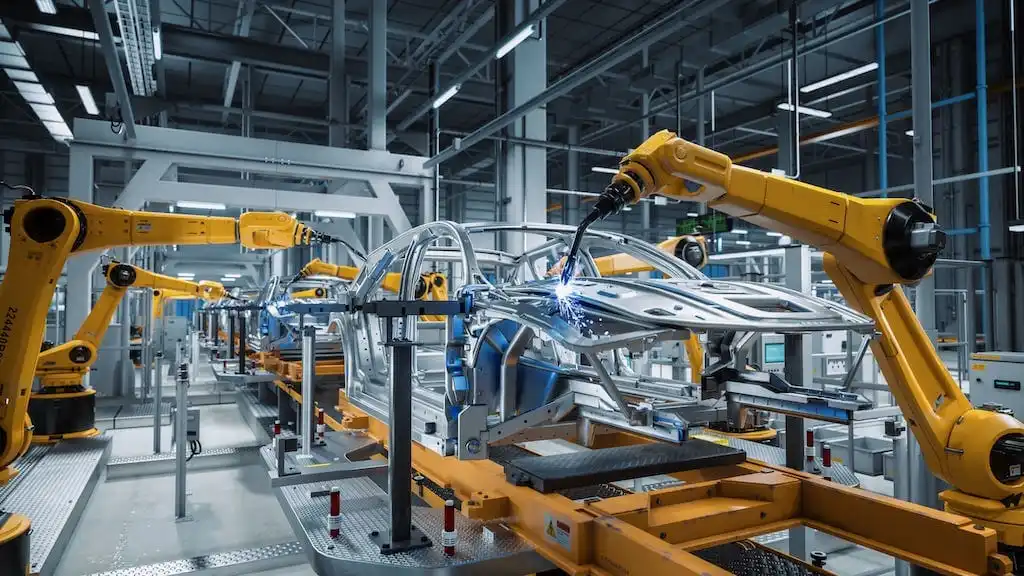
The world’s factory floors are undergoing a seismic transformation. According to a comprehensive new market analysis by MarketsandMarkets, the global industrial robotics market, currently valued at USD $16.89 billion, is on a firm trajectory to reach USD $29.43 billion by 2029, registering a compound annual growth rate (CAGR) of 11.7% over the forecast period.
📊 Market Growth
- The global industrial robotics market is valued at USD $16.89 billion and projected to reach USD $29.43 billion by 2029.
- Growth is driven by AI integration, automation platforms, and evolving manufacturing philosophies.
- CAGR forecast: 11.7% through 2029.
🤖 Key Trends
- AI-powered robots now perform real-time decision-making and predictive maintenance.
- Industry 5.0 emphasizes human-robot collaboration and worker wellbeing, beyond Industry 4.0’s focus on connectivity and automation.
- Major companies (Amazon, Bosch, Google, ABB) are already deploying Industry 5.0 technologies.
👥 Collaborative Robots (Cobots)
- Fastest-growing segment, expanding at 31% growth rate (2021–2022).
- Cobots are cheaper (USD $3,000–$10,000) compared to traditional robots (USD $15,000–$75,000).
- Attractive to SMEs due to affordability and safe human collaboration.
The findings point to a convergence of artificial intelligence, advanced automation platforms, and next-generation manufacturing philosophies that together are fundamentally altering how goods are produced across virtually every sector of the global economy.
The Engine Powering Growth: AI, Industry 4.0, and the Rise of Industry 5.0
At the heart of this expansion lies the accelerating integration of artificial intelligence into robotics systems. According to the report, AI-driven algorithms now enable industrial robots to perceive their environments, recognize objects, and make real-time decisions based on data collected from onboard sensors, capabilities that were largely experimental just a decade ago.
Major robotics manufacturers have moved quickly to commercialize these advances. OMRON Corporation has deployed the AI-enabled Omron i4 robot, which autonomously diagnoses and reports maintenance needs without human intervention. FANUC CORPORATION launched the CRX-10iA, a collaborative robot featuring a tablet-based user interface and an autonomous vision system. Universal Robots A/S extended its high-payload lineup with the UR16e, a versatile robotic arm engineered for a wide range of industrial applications.
The report also highlights the growing momentum of Industry 5.0, the next evolution beyond the well-known Industry 4.0 paradigm. Where Industry 4.0 focused on connectivity, automation, and data exchange, Industry 5.0 places human-robot collaboration at its core. The European Commission has positioned this concept as a deeper vision that centers on workers’ wellbeing alongside production efficiency. Companies, including Amazon, Bosch, and Google, are already operationalizing these technologies to boost productivity and manufacturing flexibility. In May 2023, ABB launched a fully automated miniature circuit breaker production line in China as a real-world demonstration of Industry 5.0 principles, incorporating AI-based visual recognition and flexible feeding systems.
Collaborative Robots: The Fastest-Growing Segment
While traditional industrial robots continue to dominate the market by volume and revenue, it is the collaborative robot segment, or “cobots,” that is drawing the most attention from analysts and investors alike. According to MarketsandMarkets, the collaborative robots market is growing at a remarkable rate of 31% from 2021 to 2022, significantly outpacing the broader market average.
Cobots are designed to work safely alongside human operators on the production floor, making them particularly attractive to small and medium-sized enterprises (SMEs) that have historically been priced out of automation investments. A single collaborative robot system currently costs between USD $3,000 and $10,000, compared to USD $15,000 to $75,000 for a full industrial robotic system. Universal Robots has taken a proactive approach to supporting SME adoption, offering clients tools to calculate return on investment (ROI) from automation before committing capital.
Articulated Robots and Automotive: The Market’s Twin Pillars
Despite the cobot surge, articulated robots are expected to retain the largest share of the overall industrial robotics market through 2029. Valued for their long reach, flexibility, and ability to operate in hard-to-access spaces, articulated robots are essential in automotive applications such as spot welding and painting. Their adoption is also expanding rapidly into pharmaceuticals and cosmetics, where they support picking, packaging, laboratory pipetting, and drug inspection processes.
In May 2024, ABB introduced two new flagship models, the IRB 7710 and IRB 7720, expanding its modular large robot portfolio to a total of 46 variants capable of handling payloads ranging from 70 to 620 kilograms.
The automotive industry is projected to account for the largest end-use share of the industrial robotics market through 2029. Automakers rely on robotics to ensure the quality and repeatability demanded by high-volume vehicle assembly lines. Companies including BMW, Nissan, and Bajaj Auto have already transitioned from traditional industrial robots to collaborative robots for material handling and dispensing operations. The Gestamp Group of Spain has implemented KUKA Systems’ fully automatic arc welding system at its Bielefeld facility, while KUKA Germany itself supplies at least 18 varieties of robots to the auto industry. In North America, Acieta has embedded more than 4,400 industrial automotive manufacturing robots across plants throughout the continent.
Asia Pacific Leads the World, With China at the Forefront
Geographically, the Asia Pacific holds the largest share of the global industrial robotics market and is expected to maintain that position throughout the forecast period. The region has adopted industrial robotics systems at a faster pace than any other global region, driven by its status as the world’s primary manufacturing hub.
🌏 Regional Leadership
- Asia Pacific leads globally, with China as the largest market.
- Adoption driven by low costs, supportive policies, and labor shortages.
- Emerging markets like India show strong growth, especially in electronics manufacturing.
Leading nations, including Japan, China, South Korea, and Taiwan are at the forefront of robotics adoption, particularly across the automotive, electronics, and machinery sectors. China remains the single largest market for both traditional and collaborative robots, both importing and domestically manufacturing robotic systems at scale. The report attributes this dominance to several structural factors, including low production costs, favorable government policies toward foreign direct investment, and growing automation driven by labor shortages in key manufacturing segments.
India and other emerging Asian economies are also identified as significant growth markets during the forecast period, particularly in electronics manufacturing, where demand for semiconductor-integrated robots is rising sharply.
Barriers Remain: Cost, Complexity, and Integration Challenges
The market’s strong growth trajectory is not without its headwinds. The report identifies high initial investment costs as the primary restraint facing industrial robotics adoption, particularly for SMEs operating in low-volume or seasonally irregular production environments. The total cost of a robotic automation project extends beyond the hardware itself, encompassing integration fees and additional components such as end effectors and vision systems.
⚠️ Challenges
- High upfront costs and integration complexity hinder adoption.
- Risk of over-automation leading to underutilized systems.
- Successful deployment requires expert integrators, detailed planning, and workforce training.
The report also cautions against over-automation, citing the example of the U.S. automotive industry, which historically relied more heavily on automation than Japan. This approach led to cost overruns as product lines evolved, leaving many robots underutilized or obsolete.
On the technical side, integration complexity remains a persistent challenge. Deploying cobots successfully requires close coordination between robotics professionals, production engineers, and floor operators. Cobots must be versatile enough to handle products with varying designs and sizes, demanding frequent reprogramming and rigorous testing. The report identifies detailed planning, expert robotics integrators, and comprehensive workforce training as the key ingredients for overcoming these barriers.
Key Players Shaping the Competitive Landscape
- Dominant companies: FANUC, ABB, Yaskawa, KUKA, Mitsubishi Electric.
- Example: Yaskawa partnered with Oishii Farm (US) to expand into agricultural automation.
The industrial robotics market features a concentrated group of dominant players who have leveraged both organic growth and strategic acquisitions to consolidate their positions. The leading companies identified in the report include:
FANUC CORPORATION (Japan), ABB (Switzerland), Yaskawa Electric Corporation (Japan), KUKA AG (Germany), and Mitsubishi Electric Corporation (Japan).
In a notable strategic move in May 2024, Yaskawa Electric Corporation announced a capital and business alliance with Oishii Farm Corporation, a U.S.-based agricultural startup specializing in strawberry production. The partnership signals a broader ambition for Yaskawa to evolve into a leading global agriculture and food automation company, leveraging its “i3 Mechatronics” solution concept to bring industrial-grade automation to the food production sector.
Outlook: A Market at an Inflection Point
- Robotics has moved beyond early adoption into mainstream manufacturing.
- Falling cobot costs, AI maturity, and Industry 5.0 principles are accelerating adoption.
- Competitive advantage will hinge on integration sophistication and workforce adaptability.
The picture painted by MarketsandMarkets is of an industry that has moved decisively past early-adopter status and is now entering a period of rapid mainstream penetration. The combination of falling cobot costs, maturing AI capabilities, supportive government policies across Asia Pacific and Europe, and the philosophical shift toward human-centered manufacturing embedded in Industry 5.0 is together creating conditions for sustained, broad-based growth.
For manufacturers who have yet to commit to automation, the data suggests the window for competitive parity may be narrowing. For those already on the factory floor, the next battleground will be integration sophistication, workforce adaptability, and the ability to extract full value from systems that are growing more intelligent by the year.
The industrial robot is no longer a symbol of a distant automated future. According to this analysis, it is very much the machinery of the present.
Other People are Reading


Starboard Value sees greater growth opportunities for the company.

Choosing the right door for your home or commercial property is more than just a matter of style. The material of the door significantly affects its durability, security, maintenance, and overall performance.
Among the most common options are wooden doors, aluminium doors, and steel doors, each with distinct advantages and considerations.
Wooden Doors: Classic Charm with Natural Appeal
Wooden doors have been a staple in construction for centuries, prized for their natural beauty and timeless aesthetic. They offer a warm, inviting appearance and can be easily customized with different stains, paints, and finishes to complement any interior or exterior design.
One of the main benefits of wooden doors is their versatility. Solid hardwoods such as oak, mahogany, or walnut provide strength and longevity, while softwoods like pine offer a more budget-friendly option. Additionally, wooden doors provide excellent insulation, helping to maintain indoor temperatures and reduce energy costs.
However, wooden doors do require regular maintenance. They are susceptible to warping, swelling, or cracking when exposed to moisture, and over time, their finish may fade due to sunlight. In terms of security, wooden doors can be strong, particularly when made from solid hardwood, but they are generally easier to breach than metal doors.
Aluminium Doors: Lightweight and Modern
Aluminium doors are increasingly popular for modern homes and commercial spaces due to their sleek appearance and lightweight design. They are resistant to rust and corrosion, making them ideal for coastal areas or locations with high humidity. Aluminium doors also require minimal maintenance compared to wood, typically only needing occasional cleaning to maintain their finish.
Another advantage of aluminium doors is their strength-to-weight ratio. They provide a sturdy barrier without the bulkiness of steel, and their slim profiles allow for larger glass panels, which can bring more natural light into a building. Aluminium can also be powder-coated in various colours, offering a wide range of design possibilities.
On the downside, aluminium doors are not as insulating as wood or composite materials. Without thermal breaks, they may allow more heat to escape in winter or enter in summer, potentially impacting energy efficiency. While strong, aluminium doors generally do not offer the same level of security as steel, especially against forced entry attempts.
Steel Doors: Security and Durability Combined
For those prioritising security and long-term durability, steel doors are an outstanding choice. They are engineered to resist impact, forced entry, and extreme weather conditions, making them suitable for both residential and commercial applications. Unlike wood, steel doors do not warp or crack and are less prone to dents or damage, ensuring a long-lasting investment.
Steel doors also excel in terms of fire resistance and insulation. When combined with insulating cores, they can offer both thermal efficiency and noise reduction, adding comfort to the property. Their robust construction can support advanced locking mechanisms, making them a superior option for high-security environments.
Design options for steel doors have also expanded. Modern manufacturing allows for sleek finishes, realistic wood-effect textures, and a variety of colours, so homeowners need not compromise aesthetics for security. For those seeking top-tier protection and resilience, doors of steel provide an ideal balance of strength, style, and peace of mind.
Making the Right Choice
Ultimately, the choice between wooden, aluminium, and steel doors depends on your priorities. If aesthetic appeal and a classic feel are paramount, wooden doors are an excellent choice. For lightweight, contemporary designs that resist the elements, aluminium doors offer flexibility and style. Meanwhile, for maximum security and long-term durability, steel doors are the most reliable option.
By understanding the key differences, you can select a door that not only complements your property but also meets your requirements for safety, maintenance, and longevity. Each material has its unique strengths, and careful consideration will ensure your investment provides both function and beauty for years to come.

Beijing has spent decades relying on exports and innovation but that model is now under strain.

The 2 Worst-Hit Stocks Since the Iran War Started Drop Again. Why There’s Hope.

Atai (“Value” in Japanese) Capital Management is a long-only, concentrated, unlevered fund run through separately managed accounts (SMAs). They employ a repeatable small-cap-focused value strategy and are based in Fort Worth, Texas. Note: This account is not managed or monitored by Atai Capital Management, and any messages sent via Seeking Alpha will not receive a response. For inquiries or communication, please use Atai’s official channels.

The BBC talks to a Philippines-based woman paid to pretend to be an OnlyFans star in online chats.


Financial analyst by day and a seasoned investor by passion, I’ve been involved in the world of investing for over 15 years and honed my skills in analyzing lucrative opportunities within the market.I specialize in uncovering high quality dividend stocks and other assets that offer potential for long term-growth that pack a serious punch for bill-paying potential. I use myself as an example that with a solid base of classic dividend growth stocks, sprinkling in some Business Development Companies, REITs, and Closed End Funds can be a highly efficient way to boost your investment income while still capturing a total return that follows traditional index funds. I created a hybrid system between growth and income and manage to still capture a total return that is on par with the S&P.
Analyst’s Disclosure: I/we have no stock, option or similar derivative position in any of the companies mentioned, and no plans to initiate any such positions within the next 72 hours. I wrote this article myself, and it expresses my own opinions. I am not receiving compensation for it (other than from Seeking Alpha). I have no business relationship with any company whose stock is mentioned in this article.
Seeking Alpha’s Disclosure: Past performance is no guarantee of future results. No recommendation or advice is being given as to whether any investment is suitable for a particular investor. Any views or opinions expressed above may not reflect those of Seeking Alpha as a whole. Seeking Alpha is not a licensed securities dealer, broker or US investment adviser or investment bank. Our analysts are third party authors that include both professional investors and individual investors who may not be licensed or certified by any institute or regulatory body.
‘We believe in saints, not weapons’: Worshippers forced to shelter under church from strikes | World News
Oil prices choppy as WSJ reports IEA eyes biggest oil release ever

BTC Leads Recovery While Altcoin Indicators Hit Cycle Lows


-
Business4 days ago
Form 8K Entergy Mississippi LLC For: 6 March
-

 News Videos2 days ago
10th Algebra | Financial Planning | Question Bank Solution | Board Exam 2026
-

 Fashion4 days ago
Weekend Open Thread: Ann Taylor
-

 Tech6 days ago
Bitwarden adds support for passkey login on Windows 11
-

 Crypto World1 day ago
Paradigm, a16z, Winklevoss Capital, Balaji Srinivasan among investors in ZODL
-
 Sports5 days ago
499 runs and 34 sixes later, India beat England to enter T20 World Cup final | Cricket News
-

 Sports3 days ago
Three share 2-shot lead entering final round in Hong Kong
-

 Sports3 days ago
Braveheart Lakshya downs Lai in epic battle to enter All England Open final | Other Sports News
-

 Politics5 days ago
Top Mamdani aide takes progressive project to the UK
-

 Business10 hours ago
ExxonMobil seeks to move corporate registration from New Jersey to Texas
-

 NewsBeat5 days ago
Piccadilly Circus just unveiled ‘London’s newest tourist attraction’ and it only costs 80p to enter
-

 Entertainment4 days ago
Hailey Bieber Poses For Sexy Selfies In New Luscious Lip Thirst Traps
-

 Business2 days ago
Search for Nancy Guthrie Enters 37th Day as FBI Probes Wi-Fi Jammer Theory
-
 NewsBeat1 day ago
Pagazzi Lighting enters administration as 70 jobs lost and 11 stores close across Scotland
-

 Tech2 days ago
Despite challenges, Ireland sixth in EU for board gender diversity
-
Entertainment6 days ago
Harry Styles Has ‘Struggled’ to Discuss Liam Payne’s Death
-

 Crypto World6 days ago
New Crypto Mutuum Finance (MUTM) Reports V1 Protocol Progress as Roadmap Enters Phase 3
-

 Tech6 days ago
ACIP To Discuss COVID ‘Vaccine Injuries’ Next Month, Despite That Not Being In Its Purview
-

 Business1 day ago
Search Enters 39th Day with FBI Tip Line Developments and No Major Breakthroughs
-
 NewsBeat6 days ago
Good Morning Britain fans delighted as Welsh presenter returns to host ITV show