

Business
Rethinking Trade and Investment Policies in Thailand


Thailand needs an economy that delivers better wages, secure jobs, and real competitiveness. But today’s trade and investment rules stand in the way. Without reform, the country risks falling behind in an increasingly cut-throat global economy.
Key Takeaways
- Trade and investment rules hinder competitiveness, rewarding low-value industries and protecting inefficiency.
- Outdated tax frameworks distort incentives, especially in auto and electric vehicle industries.
- Quota systems in agriculture (coffee, wheat, corn) raise costs, block new entrants, and reduce quality improvements.
- Service sectors face heavy restrictions (foreign ownership caps, slow permits), limiting competition and innovation.
- Weak regulation allows unsafe, ultra-cheap imports, hurting local businesses and consumers.
Instead of driving growth, these rules reward low-value industry, protect inefficiency, and weaken competition. They protect the wrong things, at the wrong time.
If the economy is to move forward, trade and investment rules must change with it.
Obsolete Tax Framework
The first problem lies in an outdated tax system.
Under World Trade Organization rules, Thailand’s official import taxes have fallen sharply over the past 20 years, averaging about 10% today. On paper, this suggests a more open economy. In reality, the tax structure still shields key industries from real competition.
For decades, tariffs were used to support export-oriented manufacturing. Imported raw materials were taxed less than finished products. This lowered cost for local producers and helped Thai factories compete abroad.
The auto industry is a clear example. Imported parts faced low tariffs, while fully built cars—especially from Europe—were taxed heavily. Local assembly became cheaper, helping Thailand grow into a major vehicle manufacturing base.
But that advantage is fading. As free trade agreements expand, the tax gap between parts and finished products has narrowed. The old system no longer protects local assembly. Manufacturers must adapt—or lose ground.
The electric vehicle industry shows the system no longer works.
Under WTO rates, EVs face higher tariffs than EV parts, which should encourage local assembly. But under the Thailand–China free trade agreement, fully built EVs from China enter duty-free, while key components such as batteries still face tariffs. Importing a whole car can be cheaper than importing parts to build one.
Global Pressures
- Thailand faces retaliatory tariffs, oversupply from China, and stricter environmental/labour standards in Europe.
- Competing on low prices alone is no longer viable.
That discourages local production.
Meanwhile, EVs imported from Japan still face higher taxes, putting a long-standing investor at a disadvantage due to inconsistent taxation.
The same distortion affects Thai producers of patient-care service robots, who pay higher tariffs on imported motors than on fully assembled machines. Local firms lose before they even start.
Quota system
Tariffs are only part of the problem. Other trade barriers often do more harm.
Take coffee. Thailand drinks a lot of it, but coffee roasting remains small. The quota system is a big reason. Imported beans within the quota face a 30% tax; outside it, the rate jumps to 90%. By contrast, instant coffee is taxed at 49%. It is often cheaper to import ready-made coffee than to bring in beans and roast them in Thailand.
Free trade deals within ASEAN do little to help. Even with lower taxes, importers must buy local beans in matching amounts. This clears stock but removes any push to improve quality.
The same pattern appears across agriculture. Import wheat, and you must also buy local corn. These rules raise costs, keep new players out, and favour those already in the system, since quotas are based on past imports.
Unlike tariffs, quotas bring in no revenue. What they create instead is a system where access matters more than efficiency.
When economists translate these barriers into costs, the impact is clear. In farming and meat products, they add costs as high as—or higher than—import taxes, on top of licences, fees, and red tape.
Service-oriented businesses encounter significant limitations
Service businesses face heavy restrictions. Foreign ownership is capped at 49%. Work permits are slow and complicated. New players are discouraged, and competition stays weak.
Telecommunications shows the problem clearly: few operators, little price pressure, and limited innovation.
According to the Service Trade Restrictiveness Index, Thailand ranks among the most restrictive countries for services—4th out of 51—with little change over the past decade.
These rules keep investment low and limit good service jobs. With weak competition, firms have little reason to improve quality. Ownership limits also encourage nominee arrangements, weakening accountability, with sometimes serious consequences.
Unfair trade
At the same time, weak regulation fails to stop the flood of cheap imports, especially from China.
Consumers face real risks. Many ultra-cheap goods do not meet basic safety standards. During online sales, T-shirts sell for 12 baht, and plastic plates for one. At such prices, no one knows how safe the products are.
Local businesses are paying the price. A survey by the Federation of Thai Industries found that 45% of members saw sales fall by more than 20% because of cheap or low-quality imports.
The damage goes further. Lax environmental and health rules have also turned Thailand into a destination for polluting factories relocating from countries with stricter controls.
Global pressures
Thailand’s domestic weaknesses are colliding with a tougher world economy.
The country faces retaliatory tariffs from the Trump era, global oversupply—especially from China—and stricter environmental and labour rules in major markets such as Europe. Competing on low prices alone no longer works.
Businesses must meet higher standards. The government must push a greener economy, open new export markets, and stop the flood of cheap, substandard imports.
Protection is not the answer. Higher tariffs risk breaking trade commitments, inviting retaliation, and pushing up prices at home—hurting consumers most.
What must change
Needed Reforms
- Modernize tariffs and remove unnecessary barriers.
- Align production and sustainability standards with global norms.
- Increase transparency in procurement and adopt open technical standards.
- Allow more foreign ownership and skilled professionals in shortage sectors.
- Strengthen competition law, enforce product standards, and regulate online platforms.
- Expand exports by accelerating trade talks, especially with the EU, and cutting non-tariff costs.
First, Thailand must upgrade how it produces, link factories and services to global value chains, help firms meet international standards, build modern services, and create decent jobs.
That means fixing old rules. Tariffs should be more even across trading partners. Gaps between raw materials and finished goods must narrow. Unnecessary barriers should be replaced with clear rules—or removed. Production and sustainability standards must match global norms. Public procurement must be transparent and accountable.
In areas like smart cities, open technical standards can prevent dependence on a single supplier, bring Thai firms into supply chains, and encourage technology transfer. Companies should also be responsible for equipment at the end of its life.
Pet food shows the path forward. It has strong export potential—but only if producers meet strict hygiene, sustainability, and traceability rules in Europe and the US.
Upgrading also means greater openness. Becoming a health hub, for example, requires fewer barriers and allowing foreign ownership where it brings skills and investment.
In shortage fields, foreign professionals should be allowed to work and pass on skills, alongside faster training for Thai workers. Data protection rules must also meet global standards, especially in Europe.
Second, Thailand must take unfair trade seriously. Competition law is weak, especially in telecoms and digital platforms. Regulators need real power. Product standards must be enforced, anti-dumping rules made workable, and online platforms held responsible for unsafe goods.
Third, Thailand must expand exports. Nearly half of Thai exports go to markets without free trade deals, such as the US and EU, where Thai goods face higher tariffs than rivals, especially Vietnam. Trade talks must move faster, and existing agreements expanded.
Cutting non-tariff costs—often higher than tariffs themselves—matters as much as cutting tariffs. Talks on standards, services, and skills will be crucial. Negotiations with the EU will be a key test, with tough demands on fair competition, data protection, and sustainability.
Who pays
None of this will be painless. Quotas must be phased out, with clear timelines. Support must be real—from compensation and retraining to helping farmers raise productivity and small firms adjust.
Trade reform is not just about trade. It is about who bears the cost of change—and whether the state helps people through it.
Thailand wants stronger industries and a better quality of life. But its trade rules stand in the way. Until they change, those goals will remain out of reach.
Note: Supanutt Sasiwuttiwat is a research fellow, and Newin Sinsiri is an advisor of the Thailand Development Research Institute (TDRI). This article is an edited version of his keynote speech at TDRI’s Annual Conference on Reimagining Thailand’s Development Model, held on November 17. TDRI’s policy analyses appear in the Bangkok Post on alternate Wednesdays.
Other People are Reading

Danone FY 2025 slides: broad-based growth despite currency headwinds

FTSE 100 today: Index up, pound below $1.35; Anglo American, Aston Martin in focus

Apple’s iPhone 18 Pro and iPhone 18 Pro Max are shaping up as significant upgrades over the current generation, with leaks pointing to a variable aperture camera system, the powerful A20 Pro processor on a 2nm process, enhanced connectivity via in-house chips and refinements to the display and design. Analysts and supply chain reports suggest these flagship models will debut in September 2026, maintaining Apple’s traditional fall launch timeline while potentially introducing a split release strategy for the broader iPhone 18 lineup.

The iPhone 18 Pro series remains about seven months from announcement, but details from reliable sources like GF Securities analyst Jeff Pu, Ming-Chi Kuo and others have coalesced around several key improvements. These focus on photography versatility, performance efficiency, battery life and modem independence from Qualcomm.
Display and Design Refinements The iPhone 18 Pro is expected to retain a 6.3-inch display, with the Pro Max at approximately 6.9 inches, using advanced LTPO+ OLED technology for smoother refresh rates up to 120Hz and better power management. A smaller Dynamic Island is widely anticipated, achieved by relocating Face ID’s flood illuminator under the screen. This would create a cleaner front view without altering overall dimensions significantly.
External design changes appear minimal. The rear camera module is rumored to mirror the iPhone 17 Pro’s raised “plateau” with a triangular lens arrangement, avoiding drastic shifts. Some leaks suggest a more unified, polished look without two-tone finishes, potentially in new premium colors like coffee brown, purple or burgundy. The build remains aluminum with improved durability, though one report notes possible added weight or thickness for the Pro Max to accommodate larger internals.
Camera System Upgrades Photography stands out as a major focus. The main 48-megapixel Fusion camera on both Pro models is tipped to introduce a variable aperture mechanism—a first for iPhone. This physical adjustment would let users control light intake dynamically, enhancing low-light performance, depth of field control and creative flexibility similar to DSLR lenses. While smartphone sensor size limits extreme benefits, it promises greater versatility in varied lighting.
Additional rumors include a three-layer stacked image sensor (potentially from Samsung, shifting from Sony) for better noise reduction, dynamic range and responsiveness. Telephoto lenses may see aperture improvements for sharper zoomed shots. The ultra-wide and selfie cameras could also receive boosts, supporting advanced computational photography and Apple Intelligence features.
Processor and Performance Powering the devices will be the A20 Pro chip, fabricated on TSMC’s first-generation 2nm process. This node jump from the A19 Pro’s process is expected to deliver around 15% better performance and 30% improved efficiency through higher transistor density. Advanced packaging, possibly Wafer-Level Multi-Chip Module (WMCM), could integrate RAM closer to the CPU, GPU and Neural Engine for faster on-device AI tasks and extended battery life.
RAM is rumored at 12GB across Pro models, supporting more demanding Apple Intelligence capabilities and multitasking.
Connectivity and Battery Enhancements Apple continues its modem transition with the in-house C2 chip replacing Qualcomm components in the Pro lineup. The C2 promises faster 5G speeds, better efficiency, mmWave support in the U.S. and potential satellite features like expanded messaging or internet. Paired with the N2 wireless chip for Wi-Fi 7 and Bluetooth 6, connectivity should see substantial gains.
Battery capacity is tipped to increase, with the Pro Max potentially reaching 5,100-5,200mAh for up to 40 hours of use. Combined with efficiency improvements from the A20 Pro and optimized iOS, endurance could set new benchmarks.
Launch Timeline and Pricing Expectations Apple traditionally unveils flagships in early September, with pre-orders and availability following shortly after. Reports indicate the iPhone 18 Pro, Pro Max and a new foldable model (possibly iPhone Fold) will launch in fall 2026. The standard iPhone 18 and lower-tier variants may shift to spring 2027 due to manufacturing priorities favoring premium devices.
Pricing rumors suggest stability for base models, with no major hikes expected despite rising component costs. The iPhone 18 Pro could start around $1,099 (or equivalent in other markets), maintaining accessibility while offering meaningful upgrades.
As speculation builds, these features position the iPhone 18 Pro series as a compelling evolution rather than revolution, emphasizing refinement in key areas like imaging and efficiency. With Apple’s focus on on-device AI and ecosystem integration, the 2026 flagships aim to solidify leadership in premium smartphones.

Western Australians will have more access to Tip Top white sliced bread after the company behind it, Tip Top Bakeries, opened a $130 million state-of-the-art bakery line in Canning Vale.

Southeast Asia’s digital economy is experiencing remarkable growth, reaching $11 billion in profitability, a 2.5x increase since 2022.
This dynamism is largely driven by artificial intelligence (AI). The region benefits from a young, digitally-native population eager to adopt AI, strong government support for AI frameworks and R&D investment, and a vibrant ecosystem of innovative startups.
Strategic investments in Generative AI, talent development, AI infrastructure, and a supportive policy environment are crucial for Southeast Asia to become a global AI leader, driving economic transformation and societal progress.
Key Points
- The regional digital economy has achieved a 10x increase in revenue since 2016, with profitability rising from $4 billion in 2022 to $11 billion in 2024.
- Southeast Asia’s population shows a high level of AI readiness, with Singapore, the Philippines, and Malaysia ranking among the top countries globally for AI-related interest and searches.
- Significant capital is flowing into the region, with over $30 billion committed in the first half of 2024 alone to build AI-ready data centers across Malaysia, Thailand, and Singapore.
- Generative AI (GenAI) is delivering rapid commercial value; 70% of regional organizations report a positive return on investment within 12 months of implementation.
- Sector-specific benefits of AI are already visible, including personalized e-commerce recommendations, enhanced travel tools, and accelerated mobile game development.
Southeast Asian organizations are achieving a positive return on investment (ROI) on Generative AI (GenAI) workflows significantly faster than other regions—with 70% reporting positive ROI within 12 months.
The specific regional characteristics that allow for this accelerated success include:
- A Digitally Native and Receptive Population: The region is home to a young, digitally native population that is quick to embrace AI-powered solutions. There is a high volume of AI-related interest, with countries like Singapore, the Philippines, and Malaysia ranking among the top globally for AI-related searches. Crucially, the document notes a regional culture of “acceptance and exploration,” where there is greater interest in the benefits of AI than apprehension regarding its risks.
- Proactive Government Support and Flexible Regulation: Southeast Asian governments are actively fostering AI adoption through:
- National AI Frameworks: Developing clear strategic directions for AI.
- Regulatory Sandboxes: Implementing environments that allow for experimentation and innovation without the constraints of traditional regulation.
- Increased R&D Funding: Directing capital toward research and development.
- Massive Infrastructure Investment: The region is rapidly building the physical foundations necessary for AI. In the first half of 2024 alone, over US$30 billion was committed to building AI-ready data centers in Singapore, Thailand, and Malaysia. This influx of capital facilitates accelerated computing and AI services, which are essential for moving projects from idea to production quickly.
- A Vibrant Ecosystem of Innovators: There is a strong spirit of innovation across both startups and established sectors:
- Startups: Companies like Lytehouse AI, DiMuto, and CarbonSync are applying AI to diverse challenges in security, agriculture, and sustainability.
- Gaming Industry: The region accounts for 12% of all global mobile game downloads, demonstrating a level of technical prowess and creative energy that allows these organizations to use GenAI to lower development costs and expand libraries rapidly.
Generative AI: Transforming Industries and Unlocking New Value
Generative AI (GenAI), capable of producing innovative content and automating intricate tasks, is already showcasing its transformative potential to revolutionize industries and deliver measurable value across the region.
In e-commerce, GenAI powers personalized product recommendations, driving increased customer engagement, higher gross merchandise value (GMV) and larger basket sizes. The travel sector is also benefiting from AI-powered tools that enhance customer satisfaction and drive revenue growth. Similarly, the gaming industry is using GenAI to accelerate game development and build larger game libraries at lower costs, ultimately contributing to increased GMV.
Beyond these specific sectors, artificial intelligence is enhancing broader business functions across all industries. What’s truly remarkable is the speed at which companies in Southeast Asia are realizing value from GenAI.
The report revealed that most organizations can move from an initial idea to production within six months. Impressively, 7 out of 10 organizations in Southeast Asia report a positive return on investment (ROI) attributable to GenAI workflows within 12 months of implementation
Other People are Reading

Form 144 MCKESSON CORP For: 20 February

Australia’s share market has clutched its highest Friday close, as earnings season continues to deliver encouraging results for its large caps.
Business
G Shahid Ur Rehman Drives a New Era of Sustainable and Luxury Intercity Travel in South India

(South India) — The intercity transportation sector in South India is witnessing significant evolution over the past three decades, driven in large measure by the leadership of G Shahid Ur Rehman, the man behind Geepee Travels. Assuming responsibility at a notably young age, he transformed a traditional bus operation into a technologically advanced, customer-centric mobility brand serving thousands of passengers across the region.
Today, the company stands as a benchmark for ultra-luxury, sustainable, safe, and affordable intercity bus travel. It is an achievement shaped by foresight, resilience, and disciplined execution.
Early Leadership and Strategic Transformation
From the beginning of his journey, G Shahid Ur Rehman demonstrated a rare blend of entrepreneurial instinct and operational expertise. Taking charge early in life, he carried out both the responsibilities and complexities of leadership. Under his direction, the organization evolved from a conventional intercity transport operator into a modern mobility enterprise defined by service excellence and operational innovation.
Elevating Passenger Experience with Ultra-Luxury Standards
At a time when affordability and comfort were seen as mutually exclusive, he introduced ultra-luxury coach services. Their primary goal was to redefine passenger expectations. Plush seating, enhanced legroom, refined interiors, superior ride quality, and modern onboard amenities became defining characteristics of the fleet.
These enhancements established new benchmarks within the South Indian intercity bus sector, reinforcing the company’s commitment to accessible premium travel.
Commitment to Safety and Sustainability
Luxury and innovation were complemented by a strong focus on safety and environmental responsibility. Recognizing the growing need for sustainable mobility solutions, Rehman spearheaded initiatives to incorporate fuel-efficient and lower-emission vehicles, integrate advanced safety systems, and enforce rigorous maintenance standards.
By aligning premium services with responsible operations, he demonstrated that sustainability, safety, and affordability can coexist within a single business model.
Leading from the Front
A defining feature of his leadership philosophy is active involvement. Rather than managing from a distance, he remains closely engaged in fleet oversight, service quality, customer experience strategies, and technology implementation. This hands-on approach has fostered a culture of accountability, discipline, and continuous improvement across the organization.
Early Adoption of Digital Transformation
Long before digital transformation became a core industry imperative, G Shahid Ur Rehman recognized its disruptive potential. Through collaborations with aggregators and technology partners, Geepee Travels implemented digital booking platforms, real-time vehicle tracking, automated scheduling systems, and data-driven operational insights.
Online reservations, mobile ticketing, transparent fare structures, and streamlined communication channels significantly enhanced passenger convenience while improving operational efficiency. These forward-looking initiatives ensured that the company remained ahead of evolving market demands.
Navigating Industry Challenges with Resilience
For over thirty years of leadership, he has successfully navigated economic cycles, regulatory reforms, industry disruptions, and shifting consumer expectations. His ability to anticipate change and respond with agility is what is instrumental in sustaining growth and maintaining customer trust during challenging periods.
Affordability has remained central to the company’s philosophy. While many operators positioned themselves exclusively within either budget or premium segments, he adopted a balanced strategy of delivering high-end amenities at competitive pricing. This democratization of luxury expanded access to quality intercity transportation across diverse passenger segments.
Industry Influence and Future Outlook
Industry observers acknowledge that his contributions extend beyond Geepee Travels. By elevating service standards and prioritizing technological integration, he has influenced broader operational benchmarks within the South Indian intercity bus ecosystem.
Looking ahead, he envisions a future shaped by expanded sustainable fleet solutions, deeper technological integration, enhanced passenger analytics, and strategic partnerships designed to strengthen connectivity and operational efficiency. His continued emphasis on green mobility and customer-centric innovation positions the organization for its next phase of growth.
Leadership Beyond Business
Beyond his professional accomplishments, G Shahid Ur Rehman is known as a dedicated wildlife enthusiast and avid cricket follower. Drawing inspiration from nature’s balance and the discipline of sport, he integrates patience, strategic thinking, and long-term vision into his leadership approach.
About Geepee Travels
Geepee Travels is a leading intercity bus operator in South India, recognized for its ultra-luxury fleet, technology-driven operations, and commitment to safe, sustainable, and affordable passenger transportation. Under the leadership of G Shahid Ur Rehman, the company continues to set new benchmarks in regional mobility and customer experience.
Disclaimer –
This article is a work of original content created for public relations and informational purposes only. It may be published across multiple digital platforms with the full knowledge and consent of the author/publisher. All images, logos, and referenced names are the property of their respective owners and used here solely for illustrative or informational purposes. Unauthorized reproduction, distribution, or modification of this article without prior written permission from the original publisher is strictly prohibited. Any resemblance to other content is purely coincidental or used under fair use policy with proper attribution.


I am a fundamental investor and writer who specializes in forensic analysis of company financials. My research blends deep financial-statement work with industry context to identify both overlooked winners and trends in development. I want the story behind the numbers, not just talking points. My primary sector focus is technology and large caps, and I also cover select consumer and industrial names where market trends create opportunity. My investing approach is long-term and evidence-driven: I prioritize cash-flow sustainability, conservative balance-sheet analysis, and buying with a margin of safety. I bring professional experience in financial advice and formal education in accounting to my research. I write on Seeking Alpha to translate my research into readable, actionable insight so readers can make better, risk-aware decisions. Follow for high-conviction idea write-ups.
Analyst’s Disclosure: I/we have a beneficial long position in the shares of AVGO either through stock ownership, options, or other derivatives. I wrote this article myself, and it expresses my own opinions. I am not receiving compensation for it (other than from Seeking Alpha). I have no business relationship with any company whose stock is mentioned in this article.
Seeking Alpha’s Disclosure: Past performance is no guarantee of future results. No recommendation or advice is being given as to whether any investment is suitable for a particular investor. Any views or opinions expressed above may not reflect those of Seeking Alpha as a whole. Seeking Alpha is not a licensed securities dealer, broker or US investment adviser or investment bank. Our analysts are third party authors that include both professional investors and individual investors who may not be licensed or certified by any institute or regulatory body.
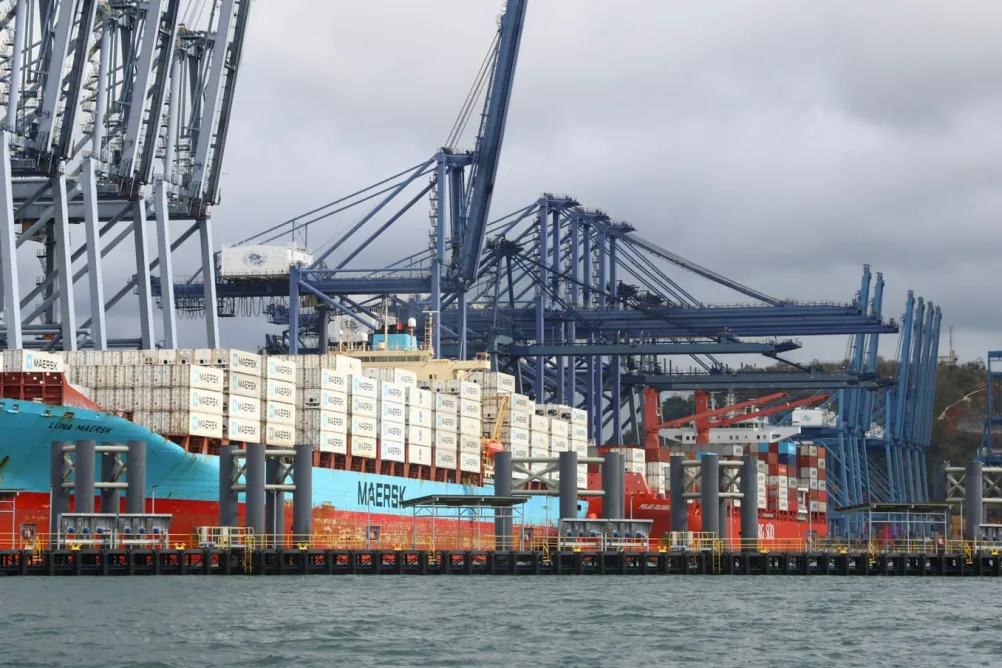
The United States trade deficit in goods reached an all-time record of $1.24 trillion in 2025, driven by a surge in imports that outpaced export growth despite the imposition of heavy tariffs.
While the widening trade gap contributed to a downward revision of fourth-quarter GDP growth estimates, the high volume of capital goods imports—particularly those related to artificial intelligence and data center infrastructure—indicates sustained business investment.
Key Points
- The U.S. goods trade deficit hit a historic high of $1.24 trillion in 2025, with the December trade gap widening 32.6% to $70.3 billion, far exceeding economist forecasts.
- Record-breaking goods trade deficits were recorded with several nations, including Mexico, Vietnam, Taiwan, Ireland, Thailand, and India.
- In contrast to the global trend, the goods trade deficit with China narrowed significantly, falling to $202.1 billion from $295.5 billion the previous year.
- Import growth was driven primarily by capital goods such as computers, telecommunications equipment, and computer accessories, largely fueled by the construction of data centers to support artificial intelligence.
- Despite protectionist trade policies, U.S. manufacturing did not see a resurgence; factory employment decreased by 83,000 jobs between January 2025 and January 2026.
The larger-than-expected trade deficit prompted the Atlanta Federal Reserve to lower its fourth-quarter GDP growth estimate from a 3.6% to a 3.0% annualized rate. While the labor market remains relatively stable, economists noted that hiring has become sluggish due to tariff-related uncertainty and the impact of artificial intelligence.
Ultimately, the data suggests that the aggressive tariff policies failed to reduce overall trade imbalances or spark a manufacturing renaissance, as evidenced by declining factory employment and record deficits with multiple trading partners.
Furthermore, these policies led to increased costs for consumers and businesses, as tariffs raised the prices of imported goods and materials. Many industries reliant on global supply chains faced disruptions, further hampering their competitiveness in international markets. Instead of fostering economic growth, the measures appeared to exacerbate tensions with key trading partners, resulting in retaliatory tariffs that compounded the challenges for exporters.
Other People are Reading

Biker fights for life in hospital after Houghton-le-Spring crash

Danone FY 2025 slides: broad-based growth despite currency headwinds

Blockdaemon Outlines Solana’s 2026 Path to Institutional Adoption Through Executive Guide and Technical Roadmap


-

 Video4 days ago
Bitcoin: We’re Entering The Most Dangerous Phase
-

 Tech5 days ago
Luxman Enters Its Second Century with the D-100 SACD Player and L-100 Integrated Amplifier
-

 Crypto World3 days ago
Can XRP Price Successfully Register a 33% Breakout Past $2?
-

 Sports3 days ago
GB's semi-final hopes hang by thread after loss to Switzerland
-

 Video7 hours ago
XRP News: XRP Just Entered a New Phase (Almost Nobody Noticed)
-

 Video7 days ago
The Final Warning: XRP Is Entering The Chaos Zone
-
 Tech3 days ago
The Music Industry Enters Its Less-Is-More Era
-

 Business2 days ago
Infosys Limited (INFY) Discusses Tech Transitions and the Unique Aspects of the AI Era Transcript
-

 Entertainment2 days ago
Kunal Nayyar’s Secret Acts Of Kindness Sparks Online Discussion
-

 Video3 days ago
Financial Statement Analysis | Complete Chapter Revision in 10 Minutes | Class 12 Board exam 2026
-

 Tech2 days ago
Retro Rover: LT6502 Laptop Packs 8-Bit Power On The Go
-

 Crypto World6 days ago
Bhutan’s Bitcoin sales enter third straight week with $6.7M BTC offload
-
 Sports1 day ago
Clearing the boundary, crossing into history: J&K end 67-year wait, enter maiden Ranji Trophy final | Cricket News
-

 Crypto World7 days ago
Kalshi enters $9B sports insurance market with new brokerage deal
-

 Entertainment1 day ago
Dolores Catania Blasts Rob Rausch For Turning On ‘Housewives’ On ‘Traitors’
-

 Business2 days ago
Tesla avoids California suspension after ending ‘autopilot’ marketing
-
 NewsBeat5 days ago
The strange Cambridgeshire cemetery that forbade church rectors from entering
-

 Crypto World2 days ago
WLFI Crypto Surges Toward $0.12 as Whale Buys $2.75M Before Trump-Linked Forum
-
 NewsBeat5 days ago
Man dies after entering floodwater during police pursuit
-
 Crypto World11 hours ago
83% of Altcoins Enter Bear Trend as Liquidity Crunch Tightens Grip on Crypto Market