

Business
Rising geopolitics and indigenisation push place India’s defence sector in a structural growth cycle


For India, this shift coincides with a policy framework that prioritizes self-reliance in defence production. The government’s continued emphasis on indigenisation, alongside initiatives aimed at strengthening domestic manufacturing capabilities, is expanding the sector’s addressable market. Increasing participation from private industry, start-ups and MSMEs is also improving the depth of the domestic defence ecosystem while encouraging innovation and cost efficiency across projects.
A key driver of sector growth is the steady pipeline of procurement programs and capital acquisition approvals across the armed forces. Recent approvals of large defence acquisition proposals underscore the government’s ongoing commitment to modernizing military capabilities and enhancing operational readiness. Such approvals not only support order inflows but also provide greater revenue visibility for the sector over the medium term.
Export opportunities are emerging as another significant catalyst. With several countries increasing defence spending and seeking diversified supply sources, Indian manufacturers are gradually expanding their presence in global markets. The Middle East already accounts for a significant share of global arms imports, and continued demand for equipment such as missiles, air-defence systems, surveillance technologies and electronic warfare solutions could open new avenues for Indian defence exporters.
At the same time, the sector continues to face certain operational challenges. Supply-chain constraints—particularly for specialized components and imported subsystems—could occasionally affect production schedules or execution timelines for complex defence platforms. Addressing these bottlenecks through greater localization and technology development remains a key priority for policymakers and industry participants alike.

Despite these near-term constraints, the broader outlook for the defence industry remains positive. Increasing budget allocations, emergency procurement programs and technology-focused development roadmaps are likely to sustain order inflows and improve long-term revenue visibility for sector participants.
Taken together, rising defence spending, a robust procurement pipeline and growing export opportunities suggest that India’s defence sector is transitioning into a structurally stronger growth phase. As indigenisation deepens and domestic capabilities expand across platforms—from electronics and missiles to aerospace systems—the sector appears well positioned to benefit from both domestic modernisation and global demand for defence equipment.
Bharat Electronics: Buy| Target Rs 520
Supported by a robust INR730b order book and sustained inflows, Bharat Electronics remains well placed to benefit from large platform programs across the Army, Navy, and Air Force. A strong addressable market underpins expectations of sustained revenue growth exceeding 15% over the coming years.
Strong execution drove revenues and margins above expectations, aided by disciplined cost control and operating leverage. Effective supply-chain management has insulated the company from semiconductor shortages and commodity volatility, while higher indigenisation levels continue to support better-than-expected profitability.
Looking ahead, Bharat Electronics is positioned to capitalise on sizable orders, including QRSAM, Akash-NG, next-generation corvettes, and base programs. Improved margins and healthy execution underpin management’s guidance, with revenue and PAT expected to grow at 18% and 16% CAGR over FY25–28.
Kirloskar Oil Engines: Buy| Target Rs 1600
Kirloskar Oil Engines continues to strengthen its market position across both low and high-horsepower power generation segments, supported by ongoing capability expansion and a consultant-led sales approach.
The company is witnessing improving order visibility driven by increasing opportunities in the nuclear and defence sectors, CPCB 4+ replacement demand, and growing export traction. The transfer of the B2C business enables a sharper focus on the higher-margin B2B portfolio.
In 3QFY26, revenue grew 35% YoY to INR13.8b, led by strong performance in the power generation and industrial segments. EBITDA margin stood at 12.2%, impacted sequentially by higher other expenses, while adjusted profit after tax was INR1,022m.
Over 9MFY26, revenue, EBITDA, and profit after tax recorded steady growth, reflecting healthy demand momentum and improving operating performance.
(The author Siddhartha Khemka, Head of Research – Wealth Management, Motilal Oswal Financial Services)


The Dow Jones Industrial Average finished modestly lower on Friday, March 13, 2026, as investors grappled with escalating U.S.-Iran tensions, surging oil prices, and broader market concerns over inflation and economic stability. The blue-chip index closed at 46,558.47, down 119.38 points or 0.26%, capping a volatile week marked by three consecutive sessions of declines and the third straight weekly loss for major benchmarks.

Trading volume reached approximately 453.26 million shares, with the index fluctuating in a day’s range from 46,494.63 to 47,123.99. The performance reflected ongoing uncertainty in global energy markets following recent military developments in the Middle East, including U.S. strikes and a partial blockade affecting the Strait of Hormuz. Crude oil prices climbed, stoking fears of persistent inflation and prompting a flight to safety assets like the U.S. dollar.
The Dow’s retreat aligned with broader market weakness. The S&P 500 shed 0.61% to settle at 6,632.19, while the Nasdaq Composite dropped 0.93% to 22,105.36. Year-to-date, the Dow remains positive but has erased much of its earlier 2026 gains, trading well below January highs near 50,000. The index’s 52-week range spans 36,611.78 to 50,512.79, underscoring recent volatility.
Geopolitical factors dominated sentiment. Defense Secretary announcements of expanded strikes against Iranian targets intensified worries about prolonged conflict and supply disruptions. Oil’s ascent pressured energy-sensitive sectors, though some analysts noted potential benefits for U.S. producers like Chevron, which saw gains in prior sessions amid higher crude. Software and tech names led declines, with Salesforce down 3.25%, Apple off 2.15%, and Microsoft slipping 1.57%. On the upside, Boeing rose 2.56%, UnitedHealth gained 1.79%, and Verizon added 1.42%.
The week’s performance highlighted a shift in investor focus from earlier optimism — fueled by hints of de-escalation and oil pullbacks — to renewed caution. Earlier in March, the Dow had rallied on signals the conflict might resolve swiftly, erasing intraday losses and closing higher on select days. By mid-month, however, persistent energy volatility and disappointing economic data contributed to the pullback.
Analysts from CNBC, Investopedia, and Trading Economics pointed to stagflation risks, with high energy costs forcing repricing of Federal Reserve rate expectations. Despite weak Q4 GDP readings, bond yields climbed, hitting credit-sensitive areas hardest. The S&P 500 posted a 1.6% weekly loss, entering its first three-week losing streak in about a year, while the Dow fell roughly 2% over the period.
Market watchers noted sector rotation amid the turmoil. Defense and energy stocks showed relative strength in spots, while growth-oriented tech lagged. Adobe plunged sharply in recent sessions on guidance misses and leadership changes, amplifying Nasdaq pressure.
Looking ahead, markets eye next week’s data, including potential Fed signals and further geopolitical updates. Futures trading suggested continued choppiness, with E-mini Dow contracts reflecting the recent slide. The index’s price-weighted structure — emphasizing higher-priced components — amplified moves in stocks like UnitedHealth and Goldman Sachs during the week’s swings.
The Dow Jones Industrial Average, comprising 30 major U.S. companies across sectors (excluding transportation and utilities), serves as a key barometer of blue-chip performance. Maintained by S&P Dow Jones Indices, it remains a go-to gauge despite criticisms favoring broader measures like the S&P 500.
For investors, the current environment underscores diversification amid uncertainty. While the index hovers near 46,500, historical resilience suggests potential recovery if tensions ease or oil stabilizes. Traders monitor support levels around recent lows, with resistance near 47,000.
As of Sunday evening in Asia (markets closed for the weekend), no major after-hours developments altered the Friday close. Pre-market indications for Monday, March 16, will depend on weekend news from the Middle East and economic releases.
The Dow’s recent trajectory reflects broader 2026 themes: initial post-election optimism giving way to reality checks from global risks. With the year one-quarter complete, volatility persists as investors balance growth prospects against external shocks.
Whether the index rebounds or extends losses hinges on conflict resolution and energy dynamics. For now, caution prevails in equity markets.

InvestingPro’s Fair Value flags Lithium Americas 56% drop
What Would It Take to Tip the Economy into Recession?
Tortoise Capital senior portfolio manager and managing director Rob Thummel analyzes the energy sector on ‘Mornings with Maria.’
Where Americans live can make a striking difference in what they pay to keep the lights on, with typical monthly electric bills in some states more than triple those in others.
The latest figures from the U.S. Energy Information Administration put the national average residential electricity price at 17.24 cents per kilowatt-hour, up 6% from a year earlier, based on average residential prices and an assumed monthly household use of 900 kilowatt-hours, a common benchmark for a typical home.
AMERICANS HIT WITH SOARING ELECTRICITY BILLS AS PRICE HIKES OUTPACE INFLATION NATIONWIDE
North Dakota has the lowest average residential rate in the country at 11.02 cents per kilowatt-hour, while Hawaii has the highest at 41.62 cents per kWh.
But Hawaii’s island geography makes it something of an outlier, leaving California, Rhode Island, Massachusetts and New York among the clearest mainland examples of high electricity costs. Nebraska, Idaho, Oklahoma and Arkansas also rank among the cheapest states.
GAS PRICES SURGE, PINCHING AMERICANS AND HANDING THE GOP A NEW MIDTERM HEADACHE
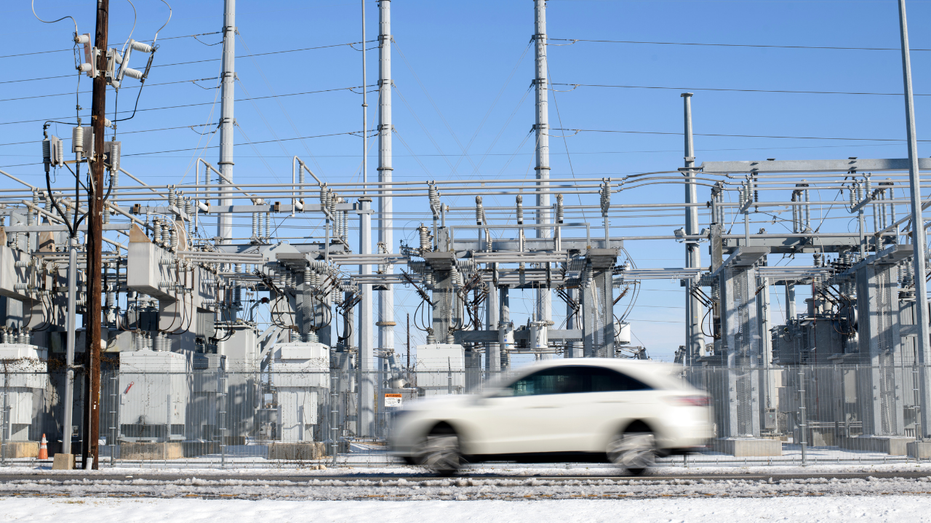
Among mainland states, California is one of the most expensive, highlighting how widely electricity costs can differ by location. (Mark Felix/Bloomberg via Getty Images / Getty Images)
Those differences are not spread evenly across the country. Many of the lower-cost states are clustered in the Plains and parts of the South, while some of the highest prices are concentrated in the Northeast and on the West Coast.
For households already strained by inflation, those differences can translate into a meaningful monthly burden, especially in places where heavy air conditioning or heating use pushes consumption higher.
CLICK HERE TO DOWNLOAD THE FOX NEWS APP
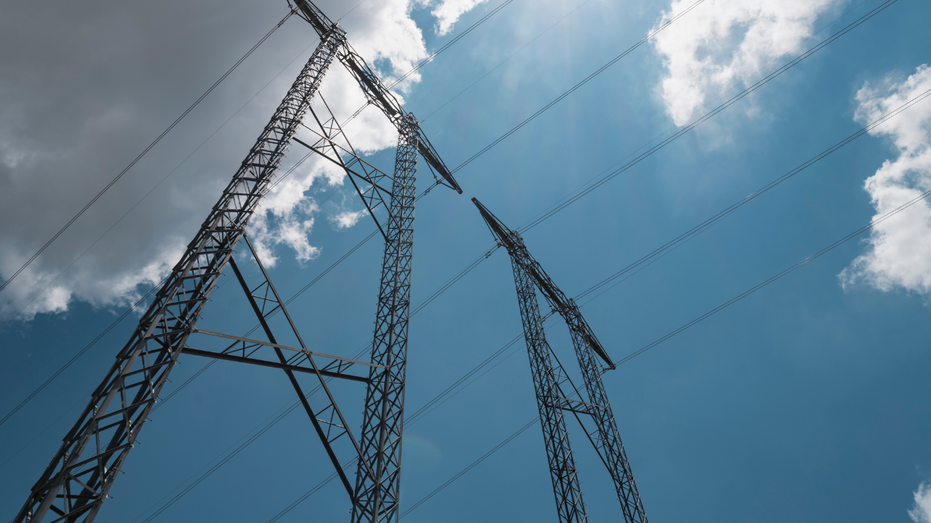
Power transmission lines near Austin, Texas, US, on Thursday, June 13, 2024. ( Jordan Vonderhaar/Bloomberg via Getty Images / Getty Images)
The wide gap reflects factors that go beyond politics, including fuel mix, weather, regulation, infrastructure costs and household energy use.
For consumers, however, the bottom line is simple: where they live can have a major impact on one of the few monthly bills they cannot easily avoid.

FOX Business’ Stuart Varney weighs the economic impact of rising oil prices and predicts a swift market recovery as international military and diplomatic pressure converges to reopen the Strait of Hormuz.
The Trump administration invoked the Defense Production Act to order an oil company to restart shuttered offshore operations in California, saying the move is necessary to address oil supply disruption risks and reduce reliance on foreign crude.
Energy Secretary Chris Wright on Friday directed Sable Offshore Corp., an oil and gas company headquartered in Houston, to restore operations at the Santa Ynez Unit and the Santa Ynez Pipeline System off the coast of Santa Barbara, according to a statement from the Department of Energy (DOE).
The order prioritizes restarting oil production and pipeline capacity to move crude through the Las Flores Pipeline System to Pentland Station, a key inland hub for transporting offshore oil to refineries, and into interstate pipelines.
“California once supplied nearly 40 percent of U.S. oil production, but decades of radical state policies targeting reliable energy sources have driven a decline in domestic output while fuel demand remains among the highest in the nation,” the DOE said. “Today, more than 60 percent of the oil refined in California comes from overseas, with a significant share traveling through the Strait of Hormuz—presenting serious national security threats.”

Platform B, an offshore oil and gas platform operated by DCOR, LLC, stands in the Dos Cuadras Field off the coast of Santa Barbara, California, on Jan. 15, 2024. (Eric Thayer/Bloomberg via Getty Images / Getty Images)
The agency said Sable’s facility can produce about 50,000 barrels of oil per day, roughly a 15% increase in California’s in-state oil production, and could replace about 1.5 million barrels of foreign crude each month.
“Today’s order will strengthen America’s oil supply and restore a pipeline system vital to our national security and defense, ensuring that West Coast military installations have the reliable energy critical to military readiness,” Wright said in a statement.
The directive, issued under authorities delegated through the Defense Production Act and related executive orders, also seeks to ensure that oil produced off California’s coast can more efficiently reach domestic refineries.
NEWSOM KNOCKED FOR ‘INSANE’ CALIFORNIA GAS PRICES AFTER BLAMING TRUMP FOR RISING COSTS

Satellite view of oil platforms off Santa Barbara’s coast, including the Carpinteria Offshore Oil Field, Rincon Oil Field and Rincon Island, an artificial drilling site built in 1958, seen in the Santa Barbara Channel on Jan. 20, 2025. (Gallo Images/Orbital Horizon/Copernicus Sentinel Data 2025 via Getty Images / Getty Images)
California Gov. Gavin Newsom condemned the order Friday, calling the Trump administration’s use of the Defense Production Act “reckless and illegal” and pledging to fight the directive.
His office argued that restarting the Sable Offshore pipeline would have little effect on global oil prices, citing estimates that its output would represent roughly 0.05% of total oil production.

Oil platforms stand off the coast of Santa Barbara, California, on Jan. 15, 2024. (Eric Thayer/Bloomberg via Getty Images / Getty Images)
CLICK HERE TO DOWNLOAD THE FOX NEWS APP
The governor also pointed to the pipeline’s history, noting that a 2015 spill near Refugio State Beach released more than 140,000 gallons of crude oil and caused widespread environmental and economic damage along the Santa Barbara coast.
“California will not stand by while the Trump administration attempts to sacrifice our coastal communities, our environment, and our $51 billion coastal economy,” Newsom said in a statement. “The Trump administration and Sable are defying multiple court orders, and we will see them back in court.”

Available for over a year
What does an 18-month study of residents on a housing estate in southern England tell us about living with debt? Laurie Taylor talks to Ryan Davey from Cardiff University about his new book The Personal Life of Debt – Coercion, Subjectivity and Inequality in Britain, which tries to understand how debt affects people emotionally as well as economically.
Laurie is also joined by Sarah Kerr (LSE International Inequalities Institute), whose book, Wealth, Poverty and Enduring Inequality – Let’s Talk Wealtherty, investigates the stubborn persistence of inequality in the UK. Kerr argues that the gap between top and bottom earners has become entrenched and normalised across generations.
Producer: Natalia Fernandez

How Poland’s economy became one of Europe’s fastest-growing success stories

Pinnacle West Vs. Avista: Why I'm Upgrading AVA

Oil and gas prices have surged due to the US-Israel war in Iran, with fears over the cost of living.

InvestingPro Fair Value spotted Movado’s 72% rally in 11 months

Manchester United vs Aston Villa LIVE: Latest team news and line-ups from Premier League clash

Index Closes Lower Amid Geopolitical Tensions and Oil Volatility

Iran destroys 5 more US KC-135 refuelling aircraft


-
 Tech4 days ago
A 1,300-Pound NASA Spacecraft To Re-Enter Earth’s Atmosphere
-
 Crypto World1 day ago
HYPE Token Enters Net Deflation as HyperCore Buybacks Outpace Staking Rewards
-

 News Videos6 days ago
10th Algebra | Financial Planning | Question Bank Solution | Board Exam 2026
-

 Business5 days ago
ExxonMobil seeks to move corporate registration from New Jersey to Texas
-

 Crypto World6 days ago
Paradigm, a16z, Winklevoss Capital, Balaji Srinivasan among investors in ZODL
-

 Fashion2 days ago
Weekend Open Thread: Addict Lip Glow
-

 Tech5 days ago
ChatGPT will now generate interactive visuals to help you with math and science concepts
-
Sports22 hours ago
Why Duke and Michigan Are Dead Even Entering Selection Sunday
-

 NewsBeat4 days ago
Residents reaction as Shildon murder probe enters second day
-

 Business7 days ago
Search for Nancy Guthrie Enters 37th Day as FBI Probes Wi-Fi Jammer Theory
-

 Business4 days ago
Search Enters Sixth Week With New Leads in Tucson Abduction Case
-
 NewsBeat6 days ago
Pagazzi Lighting enters administration as 70 jobs lost and 11 stores close across Scotland
-

 Tech6 days ago
Despite challenges, Ireland sixth in EU for board gender diversity
-

 Business24 hours ago
US Airports Launch Donation Drives for Unpaid TSA Workers as Partial Government Shutdown Enters Fifth Week
-

 NewsBeat4 days ago
I Entered The Manosphere. Nothing Could Prepare Me For What I Found.
-
Crypto World19 hours ago
Coinbase and Bybit in Investment Talks: Could Bybit Finally Enter the US Crypto Market?
-

 Business6 days ago
Search Enters 39th Day with FBI Tip Line Developments and No Major Breakthroughs
-

 Sports6 days ago
Skateboarding World Championships: Britain’s Sky Brown wins park gold
-

 Business1 day ago
Country star Brantley Gilbert enters growing non-alcoholic beer market
-

 Crypto World5 days ago
Will Chainlink price reclaim $10 amid volatility squeeze?

