
Business
Rising US Trade Growth Amid Expanding China Deficit


Despite US President Donald Trump’s imposition of tariffs in 2025 to reduce America’s trade deficit, key Southeast Asian manufacturing hubs—Malaysia, Thailand, and Vietnam—paradoxically expanded their trade surplus with the United States.
Malaysia’s US trade surplus rose 45 percent to US$23.2 billion , driven by resilient exports of electronics, machinery, and processed food, benefiting from US tariff cuts and exemptions on critical items. Vietnam recorded the largest US surplus among regional nations, reaching a record US$133.8 billion , a 28 percent increase. Thailand also saw its US surplus climb 44 percent to US$51.3 billion , largely due to strong electronics exports. This unexpected growth followed initial tariff hits and subsequent negotiations, where countries like Malaysia secured reduced rates and exemptions, while also pledging not to impose export bans on critical minerals.
Widening China Deficits and Transshipment Risks
Concurrently with their expanded US surpluses, Malaysia, Thailand, and Vietnam experienced a significant widening of their trade deficits with China in 2025. This trend suggests that Chinese goods, seeking to circumvent higher US tariffs, increasingly flowed into these Southeast Asian markets. Malaysia’s deficit with China jumped 62 percent to US$38.4 billion , while Thailand’s rose 50 percent to US$67.8 billion. Vietnam’s China deficit increased by 40 percent, reaching US$115 billion.
This dynamic has raised concerns among experts regarding potential transshipment risks , where Chinese firms might be routing products through these neighboring countries before re-exporting them to the US, effectively bypassing American tariffs and distorting trade flows.
2026 Outlook: Projected Export Slowdown and Tariff Headwinds
Looking ahead, the trade landscape for Southeast Asia in 2026 is clouded by persistent uncertainty surrounding US tariff policies, with analysts forecasting a slowdown in exports . Trump’s continued protectionist rhetoric, including new tariffs on South Korean cars and threats against European nations, underscores the volatile environment.
Both the Thai Commerce Ministry and DBS for Malaysia have warned of expected slowdowns in exports as the clearer impacts of existing and newly introduced US tariffs manifest throughout the year. Experts like Archanun Kohpaiboon suggest the 2025 trend of widening US surpluses is unlikely to continue, anticipating that new US trade agreements will lead to increased imports from the US by partner countries, consequently reducing their trade surpluses and posing a significant risk to the overall ASEAN economy this year.
Other People are Reading



My approach mixes long-term conviction holdings with tactical sector rotations, driven by the belief that investing isn’t about being right, it’s about making money. I focus on undercovered opportunities and momentum-driven sectors. All views are my own and not financial advice.
Analyst’s Disclosure: I/we have no stock, option or similar derivative position in any of the companies mentioned, and no plans to initiate any such positions within the next 72 hours. I wrote this article myself, and it expresses my own opinions. I am not receiving compensation for it (other than from Seeking Alpha). I have no business relationship with any company whose stock is mentioned in this article.
Seeking Alpha’s Disclosure: Past performance is no guarantee of future results. No recommendation or advice is being given as to whether any investment is suitable for a particular investor. Any views or opinions expressed above may not reflect those of Seeking Alpha as a whole. Seeking Alpha is not a licensed securities dealer, broker or US investment adviser or investment bank. Our analysts are third party authors that include both professional investors and individual investors who may not be licensed or certified by any institute or regulatory body.


I hold a Master’s degree in Cell Biology and began my career working for several years as a lab technician in a drug discovery clinic, where I gained extensive hands-on experience in cell culture, assay development, and therapeutic research. That scientific foundation gave me an appreciation for the rigor and challenges behind drug development, which I now bring into my work as an investor and analyst. For the past five years, I have been active in the investing space, with the last four years dedicated to working as a biotech equity analyst alongside my lab work. My focus is on identifying promising biotechnology companies that are innovating in unique and differentiated ways, whether through novel mechanisms of action, first-in-class therapies, or platform technologies with the potential to reshape treatment paradigms. By combining my lab-based scientific expertise with financial and market analysis, I aim to deliver research that is both technically sound and investment-driven. On Seeking Alpha, I plan to write primarily about the biotech sector, covering companies at different stages of development, from early clinical pipelines to commercial-stage biotechs. My approach emphasizes evaluating the science behind drug candidates, the competitive landscape, clinical trial design, and the potential market opportunity, all while balancing financial fundamentals and valuation. My goal in publishing here is to share some insights that help investors better understand both the opportunities and of course the many risks in biotech. This is a sector where breakthrough science can translate into outsized returns, but also where careful scrutiny is essential. I look forward to contributing thoughtful analysis and engaging with readers who share an interest in this dynamic and rapidly evolving space.
Analyst’s Disclosure: I/we have no stock, option or similar derivative position in any of the companies mentioned, and no plans to initiate any such positions within the next 72 hours. I wrote this article myself, and it expresses my own opinions. I am not receiving compensation for it (other than from Seeking Alpha). I have no business relationship with any company whose stock is mentioned in this article.
Seeking Alpha’s Disclosure: Past performance is no guarantee of future results. No recommendation or advice is being given as to whether any investment is suitable for a particular investor. Any views or opinions expressed above may not reflect those of Seeking Alpha as a whole. Seeking Alpha is not a licensed securities dealer, broker or US investment adviser or investment bank. Our analysts are third party authors that include both professional investors and individual investors who may not be licensed or certified by any institute or regulatory body.


On Canada’s tariff frontline, business stalls over US trade deal jitters

A company of Manulife Investment Management, John Hancock Investment Management serves investors through a unique multimanager approach, complementing our extensive in-house capabilities with an unrivaled network of specialized asset managers, backed by some of the most rigorous investment oversight in the industry. The result is a diverse lineup of time-tested investments from a premier asset manager with a heritage of financial stewardship. Note: This account is not managed or monitored by John Hancock Investment Management, and any messages sent via Seeking Alpha will not receive a response. For inquiries or communication, please use John Hancock Investment Management’s official channels.


I am Gen Alpha. I have more than 14 years of investment experience, and an MBA in Finance. I focus on stocks that are more defensive in nature, with a medium- to long-term horizon. I provide high-yield, dividend growth investment ideas in the investing group iREIT®+HOYA Capital. The group helps investors achieve dependable monthly income, portfolio diversification, and inflation hedging. It provides investment research on REITs, ETFs, closed-end funds, preferreds, and dividend champions across asset classes. It offers income-focused portfolios targeting dividend yields up to 10%. Learn more.
Analyst’s Disclosure: I/we have a beneficial long position in the shares of FRT either through stock ownership, options, or other derivatives. I wrote this article myself, and it expresses my own opinions. I am not receiving compensation for it (other than from Seeking Alpha). I have no business relationship with any company whose stock is mentioned in this article.
I am not an investment advisor. This article is for informational purposes and does not constitute as financial advice. Readers are encouraged and expected to perform due diligence and draw their own conclusions prior to making any investment decisions.
Seeking Alpha’s Disclosure: Past performance is no guarantee of future results. No recommendation or advice is being given as to whether any investment is suitable for a particular investor. Any views or opinions expressed above may not reflect those of Seeking Alpha as a whole. Seeking Alpha is not a licensed securities dealer, broker or US investment adviser or investment bank. Our analysts are third party authors that include both professional investors and individual investors who may not be licensed or certified by any institute or regulatory body.
Available for over a year
It’s a tough time for any young person looking for a job at the moment. While overall unemployment is running at just over 5 percent, there’s particular concern about a large group of 16 to 24 year olds – almost a million of them (12.8%) who are not in employment, education or training. And that includes recent graduates in that age bracket. They’re known as NEETS. David Aaronovitch and guests discuss why they’re in this situation – is it down to the state of the economy, their own ability to work or that ever present fear – AI?
Guests:
Jack Kennedy, Senior Economist, Indeed Hiring Lab
Lindsay Judge, Research Director, The Resolution Foundation
Xiaowei Xu, Senior Research Economist, Institute for Fiscal Studies.
John Burn-Murdoch, Chief Data Reporter, The Financial Times
Presenter: David Aaronovitch
Producers: Caroline Bayley, Nathan Gower, Kirsteen Knight
Production Co-ordinator: Maria Ogundele
Sound Engineer: James Beard
Editor: Richard Vadon
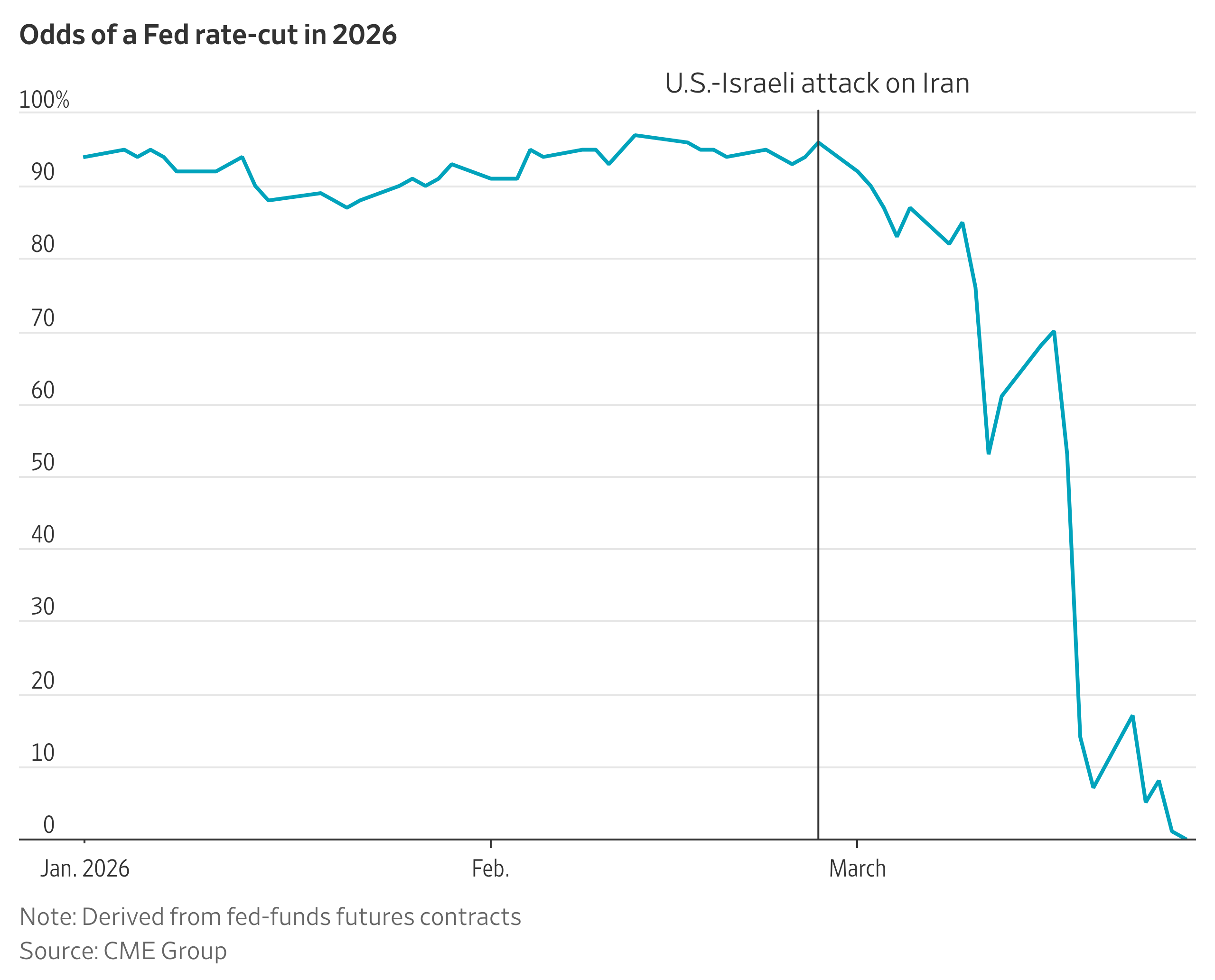
Financial markets have fully abandoned bets on rate cuts from the Federal Reserve this year, with the war in the Middle East set to drive up inflation.
Derivatives markets show zero odds of a rate cut this year, down from 1.3% on Thursday, according to CME Group data. Markets are pricing a 54% chance of at least one hike.
The energy price shock unleashed by the conflict has dramatically altered the outlook for central banks around the world, which now face both higher inflation and slower growth. As disruptions to energy markets grow, so do the risks that inflation pressure spill over into broader price pressures.

Parag Parikh Liquid Fund ranks among the top low-cost funds delivering strong one-year returns with high liquidity and stability.
Business
FIIs sell Indian equities worth Rs 1.14 lakh crore in March; 2026 outflow balloons to Rs 1.27 lakh crore

This has turned out to be the worst month so far, as foreign investors continue pulling out from their Indian investments amid the Iran-Israel war.
Commenting on the current trends, Dr. VK Vijayakumar, Chief Investment Strategist, Geojit Investments said the weakness in global equity markets following the war in West Asia, the steady depreciation of the rupee, fears of decline in remittances from the Gulf region and concerns surrounding the impact of high crude price on India’s growth and corporate earnings contributed to the sustained selling by FPIs.
“It is important to understand that FPIs were sellers in other emerging markets, too, like Taiwan and South Korea. There is a risk-off trend in equity markets, globally after the war broke out in West Asia. The poor returns from India vis-a-vis other markets – both developed and emerging- during the last eighteen months is the principal reason for FPI’s indifference towards India. If their sustained selling strategy is to change, there should be an end to the hostilities in West Asia and decline in crude prices,” Vijayakumar said.
On Friday, FIIs sold domestic shares at Rs 4,367.30 crore while DIIs were net buyers at Rs 3,566.15 crore.

Indian frontline indices ended their two-session rally amid sharp cuts as a failure in the Iran-US negotiations dented the market mood. Elevated energy prices and a plunging rupee aggravated troubles for domestic investors. Amid high volatility, markets were mainly dragged by financials, auto and consumer stocks. Nifty settled at 22,819.60, falling by 486.85 points or 2.09% while the BSE Sensex closed at 73,583.22, declining 1,690.23 points or 2.25%.
FIIs in 2026
Foreign investors turned net buyers in February, buying shares worth Rs 22,615 crore in the domestic markets so far. In January, they sold Rs 35,962 crore worth of shares.
In 2025, the FIIs buying trends remained patchy, but the overall trend was bearish. They took Rs 1,66,286 crore from Indian markets as trade deal delay and premium valuations weighed on the sentiments.
(Disclaimer: Recommendations, suggestions, views and opinions given by the experts are their own. These do not represent the views of Economic Times)

asbe/iStock via Getty Images
The CME Comex is the exchange where futures are traded for gold, silver, and other commodities. The CME also allows futures buyers to turn their contracts into physical metal through delivery. You can find more detail on the CME

NYC Indie Scene Turns Out For ‘Once A Week For Life’ Premiere

Two tech workers took it Offline, and opened a Seattle coffee shop that AI can’t replicate

Reacting to the Viral “Crypto is Dumb” Video


-
 NewsBeat3 days ago
Manchester United reach agreement with Casemiro over contract clause amid transfer speculation
-

 News Videos2 days ago
Parliament publishes latest register of MPs’ financial interests
-

 Crypto World7 days ago
Best Crypto to Buy Now: Strategy Just Spent $1.57 Billion on Bitcoin During Fear While Early Investors Quietly Enter Pepeto for 150x Potential
-

 Crypto World7 days ago
Bitcoin Price News: Bhutan Sells $72 Million in BTC Under Fiscal Pressure, but the Smart Money Entering Pepeto Sees What the Market Does Not
-

 Sports5 days ago
Remo Stars and Kano Pillars Strengthen Survival Hopes in NPFL
-

 Sports5 days ago
Gary Kirsten Accuses Pakistan Cricket Board Of ‘Interference’, Mohsin Naqvi Responds
-

 Business6 days ago
No Winner in March 21 Drawing as Prize Rolls to $133 Million for Next
-

 Tech6 days ago
Give Your Phone a Huge (and Free) Upgrade by Switching to Another Keyboard
-

 Tech6 days ago
AI enters the chat: New Seattle dating app relies on tech to facilitate meaningful human connections
-

 News Videos5 days ago
Ch 9 Financial Management Part 1 | Detailed One Shot | Class 12 Business Studies Boards 2026
-

 Tech7 days ago
Today’s NYT Connections Hints, Answers for March 22 #1015
-

 Business2 days ago
Instagram, YouTube Found Responsible for Teen’s Mental Health Struggle in Historic Ruling
-

 Business6 days ago
Will Duke Basketball Win It All? Duke Basketball Enters Second Round as Third Favorite to Claim NCAA Title
-

 Sports5 days ago
2026 Kentucky Derby horses, odds, futures, preview, date: Expert who hit 12 Derby-Oaks Doubles enters picks
-

 NewsBeat15 hours ago
The Story hosts event on Durham’s historic registers
-
 NewsBeat6 days ago
Update on Wisbech river crash as search for teenage boy enters fifth day
-
 Entertainment5 days ago
Cynthia Bailey Dishes on ‘RHOA’ Season 17, Discusses Kandi
-

 Tech5 days ago
Samsung will soon let you control smart home devices from your car’s dashboard
-
 NewsBeat3 days ago
Tesco is selling new Cadbury Dairy Milk bar and people can’t wait to try it
-

 Tech6 days ago
SteamOS update adds support for Steam Machine and other non-Valve hardware
You must be logged in to post a comment Login