
Business
Robinhood Markets (HOOD) Stock Climbs in Early Trading on March 17 Amid Broader Tech Rebound

Shares of Robinhood Markets, Inc. (NASDAQ: HOOD) rose in early trading on March 17, 2026, participating in a market-wide recovery as investors rotated back into growth and fintech names following a sharp pullback last week. The retail brokerage platform’s stock, which has experienced significant volatility since its 2021 debut, traded higher as geopolitical tensions eased and oil prices retreated, supporting risk assets.

By mid-morning Eastern Time, HOOD was quoted around $75.20, up approximately $1.81 or 2.47% from Friday’s close of $73.39. Pre-market activity showed gains building on overnight momentum, with the stock opening near $75.10 and reaching a session high of about $75.77 before settling in positive territory. Volume was picking up, with more than 7 million shares traded in the initial hours on March 16 data extending into the new session.
The advance reversed much of the prior session’s decline on March 13, when HOOD closed down 3.59% or $2.73 at $73.39 on elevated volume of over 33 million shares. That drop came amid broader market pressure from lingering inflation concerns and regional instability, though the fintech sector showed resilience compared to some peers.
Robinhood’s performance in 2026 has been mixed after a blockbuster 2025 that saw shares surge nearly 200%, driven by expanded product offerings, increased trading activity and successful feature rollouts. The stock hit an all-time high near $153 in late 2025 but has corrected sharply in early 2026, trading in the low-to-mid $70s recently. From a 52-week range of roughly $29.66 to $153.86, HOOD reflects the cyclical nature of retail trading volumes and market sentiment toward commission-free brokers.
Recent operating data released by the company underscored steady user growth. On March 12, Robinhood reported February 2026 metrics showing funded customers reaching 27.4 million, up about 140,000 from January’s end. The incremental additions signal continued platform adoption despite competitive pressures in the brokerage space. Analysts view this as a positive indicator of Robinhood’s ability to retain and attract users through innovations like expanded crypto offerings, margin trading enhancements and international expansion efforts.
Wall Street maintains a bullish stance on HOOD. Consensus ratings lean toward “Strong Buy,” with average price targets suggesting substantial upside from current levels. Some forecasts point to potential recovery toward higher multiples as new products gain traction. Recent commentary highlights Robinhood’s evolution from a meme-stock trading app to a more comprehensive financial services provider, including banking-like features and retirement accounts.
The company’s participation in investor conferences, such as the Citizens Technology Conference on March 2 where CFO Shiv Verma presented, helped reinforce confidence in management’s strategy. Executives emphasized diversification beyond trading commissions, with growing contributions from payment for order flow, interest income on cash balances and subscription services.
Broader market dynamics supported the March 17 uptick. With crude oil backing off and inflation fears moderating, traders favored growth-oriented stocks like HOOD, which benefits from higher retail participation during bullish phases. The NASDAQ’s parallel gains — up over 1% in recent sessions — provided tailwinds, as fintech and tech names often move in tandem with broader indices.
Robinhood’s valuation reflects its growth profile. Trading at forward multiples that account for potential revenue acceleration from user monetization, the stock appeals to investors betting on sustained trading volumes and product innovation. Challenges persist, including regulatory scrutiny on payment for order flow and competition from established brokers like Charles Schwab and Fidelity, as well as emerging players.
Potential headwinds include macroeconomic sensitivity — lower interest rates could pressure net interest income, while market downturns often reduce trading activity. Some analysts have cautioned about possible volatility in 2026, with one February outlook predicting a plunge if retail enthusiasm wanes. However, others counter that ongoing feature expansions position Robinhood for long-term compounding.
Market participants closely watch upcoming catalysts. Monthly operating data releases provide transparency into user trends, while any announcements on crypto integrations, international growth or new tools could spark movement. Earnings reports and guidance updates remain key events for assessing trajectory.
Trading on March 17 showed healthy participation, with institutional interest evident in block activity and options flow favoring calls at higher strikes. Market breadth supported the advance, contributing to positive sentiment in the sector.
As the session unfolded, focus remained on whether HOOD could sustain momentum above recent resistance levels amid ongoing choppiness. Investors balanced short-term risks — including energy market fluctuations and economic indicators — against the company’s disruptive model and expanding user base.
Robinhood continues to serve as a barometer for retail investor behavior and fintech innovation. With shares showing signs of stabilization on March 17, many view the recent correction as a pause in a longer uptrend fueled by product diversification and market recovery. For now, the stock reflects a market recalibrating while betting on Robinhood’s ability to capitalize on evolving financial services demand.

Business
nLIGHT Inc. Shares Hover Near Recent Highs as Defense Focus and Analyst Upgrades Drive Momentum

nLIGHT, Inc. (NASDAQ: LASR), a leading provider of high-power semiconductor and fiber lasers for directed energy, optical sensing and advanced manufacturing, saw its stock maintain strength in mid-March 2026 trading, closing at $62.60 on March 13 amid continued investor enthusiasm following strong 2025 results and bullish analyst coverage.

The shares, which have surged dramatically from a 52-week low of $6.20 to a high of $69.52, traded in a daily range of $61.87 to $64.87 on March 13 with volume of about 1.06 million shares. After-hours activity dipped slightly to $62.10, reflecting a modest -0.80% pullback, but the stock remains up significantly year-to-date, benefiting from a pivot toward high-margin defense applications and away from commoditized industrial segments.
nLIGHT’s transformation story gained traction after its Feb. 26, 2026, earnings release, which delivered record fourth-quarter revenue of $81.2 million — a 71% year-over-year increase — and full-year 2025 revenue of $261.3 million, up 32%. The company posted adjusted earnings per share of $0.14 for the quarter, beating consensus estimates by $0.03, while narrowing its net loss. Aerospace and defense revenue hit a record $175 million for the year, up 60% from 2024, underscoring the success of contracts in directed energy weapons and optical sensing for military platforms.
The earnings beat triggered a wave of positive revisions. Baird initiated coverage March 4 with an Outperform rating and a $95 price target, citing nLIGHT’s “strong tech stack” in high-energy lasers and its positioning in growing defense budgets. Roth Capital raised its target to $74 from $55 earlier in March, while other firms maintained Moderate Buy consensus ratings with averages around $58-$70 pre-surge levels. Analysts highlight nLIGHT’s vertically integrated capabilities — from semiconductor chips to full laser systems — as a differentiator in mission-critical applications where reliability and power output are paramount.
A key strategic move announced in late 2025/early 2026 involved exiting lower-margin cutting and welding markets, expected to create a $25 million to $30 million annual revenue headwind mostly phased out by the second half of 2026. To fund expansion, including a new 50,000-square-foot manufacturing facility in Longmont, Colorado, nLIGHT completed a follow-on equity offering in February 2026, initially raising about $175 million before underwriters exercised their full option for an additional $26 million, totaling roughly $201 million in gross proceeds.
The capital infusion supports R&D in high-energy laser weapon systems and supply-chain resilience, areas executives emphasized during investor conferences in March. nLIGHT management participated in multiple events, including the Raymond James 47th Annual Institutional Investors Conference and others, where presentation materials highlighted progress in directed energy programs and partnerships with U.S. Department of Defense primes.
Institutional interest remains robust. Recent filings show new positions, such as Pier Capital LLC acquiring 132,726 shares worth about $3.93 million in late 2025 activity, contributing to institutional ownership around 83.9%. The stock’s rally has boosted market capitalization to approximately $3.50 billion as of March 13, up more than 50% in the past month and over 80% over the trailing 12 months.
Despite the gains, challenges linger. nLIGHT continues to report operating losses on a GAAP basis, though adjusted metrics show improvement. Guidance for the first quarter of 2026 called for revenue of $70 million to $76 million, gross margins of 27% to 32% and adjusted EBITDA of $5 million to $10 million, reflecting a transitional period as industrial revenue declines are offset by defense growth.
The laser sector benefits from broader trends: increasing defense spending on directed energy for counter-drone and missile defense, plus demand for precision optical systems. Competitors in the space include IPG Photonics and Coherent, but nLIGHT’s focus on semiconductor-based high-power lasers positions it uniquely for next-generation weapons.
On March 2, 2026, nLIGHT announced it would showcase high-energy laser weapon solutions at the Pacific Operational Science & Technology Conference, reinforcing its defense credentials. No major new announcements emerged in the immediate lead-up to March 16 trading, but the stock’s performance reflects sustained momentum from the earnings tailwind and analyst endorsements.
Looking ahead, investors watch for updates on defense contract wins, progress on the Longmont facility ramp-up and any signs of accelerated adoption in directed energy programs. With shares trading well above prior targets but below Baird’s ambitious $95 call, nLIGHT remains a high-conviction name for those betting on the intersection of laser technology and national security priorities.
As of March 16, 2026, with markets closed in some time zones but U.S. pre-market indications stable, nLIGHT’s trajectory illustrates a classic growth rebound: from pandemic-era lows to defense-driven highs. Whether the rally sustains depends on execution in a competitive, capital-intensive field — but for now, the laser specialist continues to shine brighter on Wall Street.

Form 144 Kinetic Seas Inc. For: 16 March
Texas REALTORS Chairman of the Board Jennifer Wauhob speaks to Fox News Digital about the Lone Star State’s recent wealth and population boom that’s ‘creating good things for Texas.’
Billionaire and Uber co-founder Travis Kalanick officially joined the exodus from California, revealing he moved to Austin, Texas, just weeks before a proposed wealth tax could have targeted his estimated $3.6 billion fortune.
“Just to be clear, on December 18, I moved to Texas. I don’t know what’s so specific about December 18, but let’s just say it’s prior to January,” Kalanick said in an interview with TPBN.
“I get a little bit [of] FOMO on like, these people going to Florida. I’m like, dude! Why so much Florida action?” he continued. “Come on, homies.”
‘WALL STREET TO Y’ALL STREET’: WHY AMERICA’S WEALTHY TRADES CITY LUXURY FOR ACRES OF TEXAS FREEDOM
Kalanick left his San Francisco home for Texas just 14 days before the new year, when the retroactive residency deadline for the proposed billionaire tax would take effect.

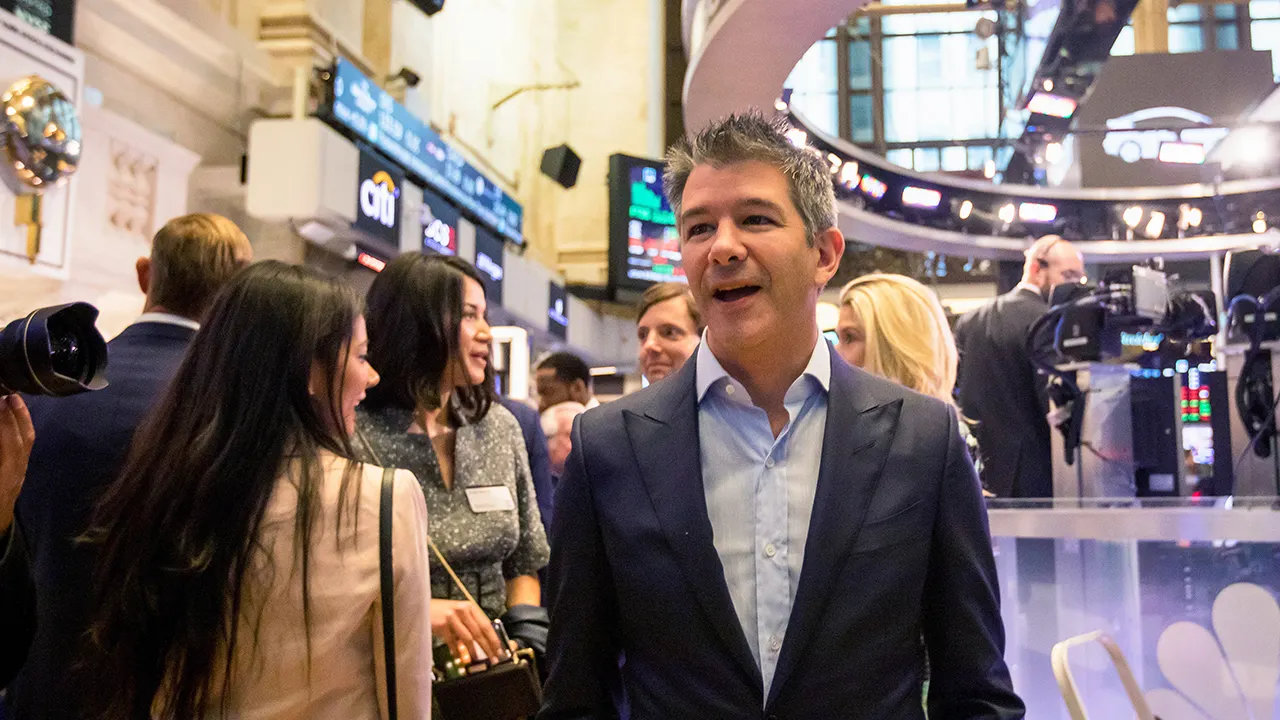
Travis Kalanick, founder and former CEO of Uber Inc., stands on the trading floor during the company’s initial public offering (IPO) at the New York Stock Exchange on May 10, 2019. (Getty Images)
While it has not yet qualified for the November ballot, the proposal — backed by the Service Employees International Union–United Healthcare Workers West (SEIU-UHW) — would impose a one-time 5% tax on the net worth of California residents with more than $1 billion in wealth. The tax would be due in 2027, and taxpayers could spread payments over five years, with additional fees, according to the California Legislative Analyst’s Office.
If the measure is approved by voters, anyone who was a California resident on Jan. 1, 2026, would owe the tax, according to the proposal. Based on Forbes’ estimates, Kalanick could owe roughly $180 million.
Kalanick’s departure follows other longtime California billionaires who have moved themselves or their businesses to Texas in recent years, including Tesla and SpaceX CEO Elon Musk, Palantir co-founder Joe Lonsdale and venture capitalist David Sacks.
Dallas Mayor Eric Johnson predicts big firms will quit working in the Big Apple on ‘Maria Bartiromo’s Wall Street.’
Florida is also rapidly absorbing California’s finance and media elite, with names like Amazon founder Jeff Bezos, venture capitalist Peter Thiel, Google co-founders Larry Page and Sergey Brin, and Meta CEO Mark Zuckerberg moving to the “Gold Coast.”
Kalanick is using his relocation to launch his new venture, Atoms — formerly City Storage Systems — which focuses on industrial robotics and “gainfully employed” artificial intelligence, he said in the interview. It’s a pivot from the “perception politics” he claims pushed him out of Uber in 2017.
“I had been torn away from an idea and a movement that I had poured my life into. I had lost my bearings as I found the world increasingly operating by the rules of perception, not reality,” he writes on Atoms’ website.
GET FOX BUSINESS ON THE GO BY CLICKING HERE
Unleash Prosperity co-founder Stephen Moore discusses the affordability crisis in blue cities and President Donald Trump’s tariffs on ‘The Bottom Line.’
When jokingly asked if he ever takes work calls through his AirPods while waterskiing, Kalanick responded that he might start doing so.
“Dude, I should. I’d love it. Don’t get me excited,” he said.


James A. Kostohryz has 20+ years of experience as a global investment professional. He has worked as an analyst at one of the world’s largest asset management firms covering emerging markets, banking, energy, construction, real estate, metals and mining. He has also served as Global Portfolio Strategist and Head of International Investments for an investment bank. He is currently managing Investor Acumen, a firm specializing in global portfolio strategy, macro forecasting, and quant analytics. James is the leader of the investing group Successful Portfolio Strategy, a service designed to empower investors to achieve investment performance through implementation of a portfolio strategy system. Features include: 2 model portfolios, tactical asset allocation and mentorship for execution, analysis via video and articles, and more. Learn More.James also contributes to the group account Investor Acumen on Seeking Alpha.
Analyst’s Disclosure: I/we have no stock, option or similar derivative position in any of the companies mentioned, and no plans to initiate any such positions within the next 72 hours. I wrote this article myself, and it expresses my own opinions. I am not receiving compensation for it (other than from Seeking Alpha). I have no business relationship with any company whose stock is mentioned in this article.
All positions disclosed in Successful Portfolio Strategy
Seeking Alpha’s Disclosure: Past performance is no guarantee of future results. No recommendation or advice is being given as to whether any investment is suitable for a particular investor. Any views or opinions expressed above may not reflect those of Seeking Alpha as a whole. Seeking Alpha is not a licensed securities dealer, broker or US investment adviser or investment bank. Our analysts are third party authors that include both professional investors and individual investors who may not be licensed or certified by any institute or regulatory body.
Business
Osotspa Public Company Limited 2025 Q4 – Results – Earnings Call Presentation (OTCMKTS:OSOPF) 2026-03-16


Seeking Alpha’s transcripts team is responsible for the development of all of our transcript-related projects. We currently publish thousands of quarterly earnings calls per quarter on our site and are continuing to grow and expand our coverage. The purpose of this profile is to allow us to share with our readers new transcript-related developments. Thanks, SA Transcripts Team

Nvidia CEO Jensen Hwang gives the keynote address at the company’s annual GTC developers conference at the SAP Center in San Jose, California, on March 16, 2026.
Josh Edelson | Afp | Getty Images
Nvidia is expanding deals for its autonomous vehicle development business to Hyundai Motor, Nissan Motor and Isuzu, as well as Chinese automakers BYD and Geely, the software and chip giant announced Monday.
The new tie-ups are for Nvidia’s Drive Hyperion platform for AVs. The system helps companies develop and deploy driver-assist and autonomous driving capabilities for Level 4 AVs, which are capable of driving without human intervention under predefined areas or circumstances.
“We’ve been working on self-driving cars for a long time. The ChatGPT moment of self-driving cars has arrived,” Nvidia CEO Jensen Huang said Monday during the company’s GTC conference. “We now know we could successfully autonomously drive cars, and today, we are announcing four new partners for Nvidia’s robotaxi-ready platform. … The number of robotaxi-ready cars in the future are going to be incredible.”
No vehicles on sale to consumers today are capable of driving themselves without human monitoring or intervention, but some companies, such as Alphabet’s Waymo, offer ride-hailing fleets with Level 4 self-driving vehicles, also known as robotaxis. Most vehicles on sale today are considered Level 2, with drivers needing to continually monitor the systems.
Drive Hyperion is part of what Nvidia calls its “end-to-end” AV platform that includes data center training, large-scale simulations and in-vehicle computing. The company does not produce or sell AVs or many of the components needed to operate such vehicles.
Current Nvidia customers for Drive Hyperion include many self-driving companies such as Aurora and Nuro, as well as other more consumer-facing businesses such as Sony Group, Uber Technologies, Jeep parent Stellantis and electric vehicle maker Lucid Group.
AVs are important to Nvidia, as self-driving cars remain one of the primary areas where the chipmaker can show growth outside of artificial intelligence.
Many believe AI could be key to the proliferation of AVs, which Wall Street analysts and automotive executives have targeted as a multitrillion-dollar growth industry.
The new companies add to a growing list of such tie-ups for Nvidia, as the chipmaker and the automotive and technology industries try to capitalize on and proliferate AVs after years of failed ventures for robotaxis.

Waymo has led the AV industry for years, while others such as Tesla, Uber and Amazon’s Zoox attempt to catch up.
General Motors-backed Cruise, which was previously viewed as a leader alongside Waymo, disbanded amid controversies after a pedestrian was dragged by one of its vehicles in San Francisco. GM spent more than $10 billion on Cruise before ending the robotaxi operations in 2024.
— CNBC’s Katie Tarasov contributed to this report.
Musk’s AI chatbot has created millions of fake sexualised images, experts say.

RIYADH, Saudi Arabia — Cristiano Ronaldo’s hamstring injury, which sidelined the 41-year-old Al-Nassr captain since late February, shows encouraging progress, with reports indicating he could return to action in April and remain available for Portugal’s campaign at the 2026 FIFA World Cup.

The five-time Ballon d’Or winner suffered the setback during Al-Nassr’s 3-1 Saudi Pro League victory over Al-Fayha on Feb. 28, 2026, when he was substituted in the 81st minute after limping noticeably. Al-Nassr confirmed the diagnosis as a hamstring injury the following day, March 3, stating Ronaldo had begun rehabilitation and would be evaluated “day by day.” Initial fears of a lengthy absence grew when coach Jorge Jesus described the issue as “more serious than expected” on March 6, prompting the club to send Ronaldo to Madrid for specialized treatment with his longtime personal physiotherapist.
Ronaldo underwent advanced recovery methods, including pressotherapy — a compression therapy technique to improve circulation and reduce swelling — as he raced against time ahead of the World Cup, co-hosted by the United States, Mexico and Canada starting June 11. The injury raised concerns about his participation in Portugal’s pre-tournament friendlies and final camp, with some outlets warning he risked missing key buildup matches against teams like the United States and Mexico.
Recent updates paint a more optimistic picture. As of mid-March 2026, Ronaldo’s recovery has advanced significantly. Saudi media outlet Al-Sharq Al-Awsat reported he is expected to return to Riyadh by the end of March, positioning him for a potential comeback in early April. Sources close to the situation indicate the timeline aligns with the original 2-to-4-week estimate for a hamstring strain, avoiding complications that could have extended his absence.
Portugal’s national team setup remains confident. Reports from reliable sources suggest Ronaldo is on track to feature in upcoming international fixtures, including high-profile friendlies that serve as final preparations for the World Cup. One update highlighted his likely inclusion against Mexico and the United States, marking his first appearance on Mexican soil. The encouraging news serves as a subtle warning to opponents like the U.S. Men’s National Team and Christian Pulisic, underscoring Ronaldo’s enduring threat even at 41.
Al-Nassr, where Ronaldo has been a dominant force since joining in 2023, has felt his absence keenly. The Riyadh-based club sits atop the Saudi Pro League standings, chasing its first title in years, but has navigated recent matches without its star forward. Ronaldo’s goal tally and leadership have been pivotal in their strong campaign, and his return could provide a timely boost as the season enters its decisive phase.
The injury marks a rare fitness setback for Ronaldo, who has maintained remarkable durability throughout a career spanning more than two decades. He has avoided major long-term issues in recent seasons, crediting rigorous training, diet and recovery protocols. This hamstring problem, while concerning given his age and the World Cup proximity, appears manageable with his proactive approach — traveling to Spain for elite care rather than relying solely on club facilities.
Fans and analysts have closely monitored developments on social media and through club statements. Al-Nassr’s official channels provided initial updates, while Ronaldo’s personal posts and training glimpses (including indoor gym work shortly after the injury) signaled the issue was not catastrophic. By March 12, reports indicated substantial improvement, with expectations he would participate in Portugal’s upcoming matches.
The broader context adds stakes. Ronaldo aims to feature in his sixth World Cup, potentially capping his international career with another deep run for Portugal. The Seleção qualified convincingly, and his presence remains central to their ambitions. Missing the final pre-tournament camp would have been a blow, but current trajectories suggest he will be fit and available when the tournament begins.
For Al-Nassr, the injury timeline allows Ronaldo to miss a limited number of games before resuming club duties. With the league title in sight, his return in April could prove decisive in the closing fixtures. The club has managed without him, but his scoring prowess and experience are irreplaceable.
As recovery continues, Ronaldo’s discipline stands out. Pressotherapy and targeted rehab reflect his commitment to defying age-related decline. At a stage where many legends retire, he pursues excellence on multiple fronts — club success in Saudi Arabia and international glory with Portugal.
The football world watches closely. If progress holds, Ronaldo could soon resume training with Al-Nassr and join Portugal’s squad, ready to chase records and silverware. The hamstring setback tested resilience, but early March indications point to a swift, successful return — ensuring the iconic forward remains a focal point ahead of the 2026 World Cup.

Iraq’s request that the Kurdistan Region restart exports of around 300,000 barrels of oil a day through the pipeline linking the northern part of the country to Turkey’s Ceyhan port has been rejected.
Baghdad had called for an immediate restart of exports through the Kurdistan pipeline network, but Kurdish authorities attached several conditions that Iraq considers “unrelated,” the ministry of oil said in a statement.
The Kurdish government accused Baghdad of imposing an economic blockade by restricting regional access to U.S. dollars through a new customs system. It also added that repeated strikes from pro-Iranian groups on energy infrastructure have halted production and Baghdad has done little to stop the strikes.
Tressis chief economist Daniel Lacalle analyzes the Federal Reserves moves amid geopolitical uncertainty on Making Money.
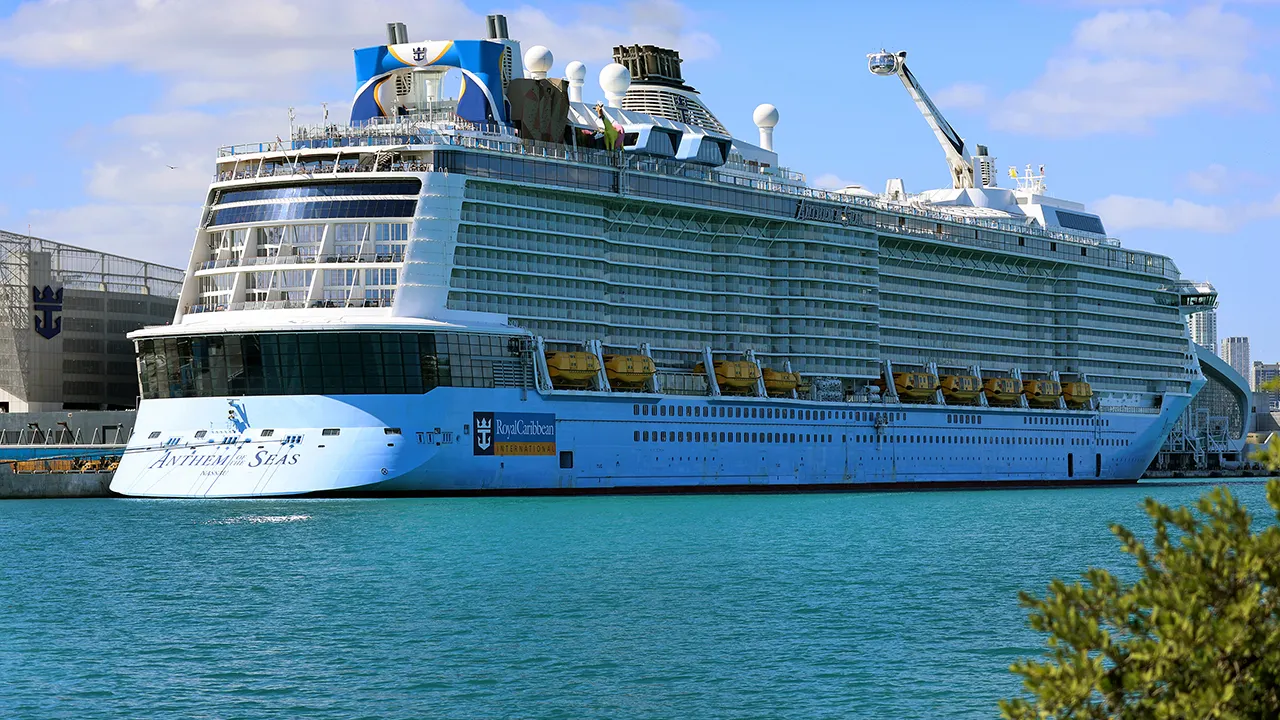
Cruise lines are facing headwinds as rising oil prices push their fuel costs higher amid the Iran war, as analysts are warning that Carnival could see the biggest hit to its 2026 profit.
Oil prices have risen over 35% since the war with Iran began amid attacks on oil and transportation facilities as well as threats to oil tankers and other vessels transiting through the Strait of Hormuz.
The prices for West Texas Intermediate crude have risen above $90 a barrel in recent days, while Brent crude has been just above $100 a barrel in that timeframe. Those prices were between $60 and $70 a barrel a month ago before the conflict began.
Cruise lines rely on heavy fuel oil and marine gas and typically try to hedge against volatility in oil prices through financial contracts, though Carnival Corp. is an exception to that practice.
TRAVEL EXPERT WARNS AMERICANS TO ‘BOOK NOW’ AS OIL PRICES THREATEN HIGHER AIRFARES
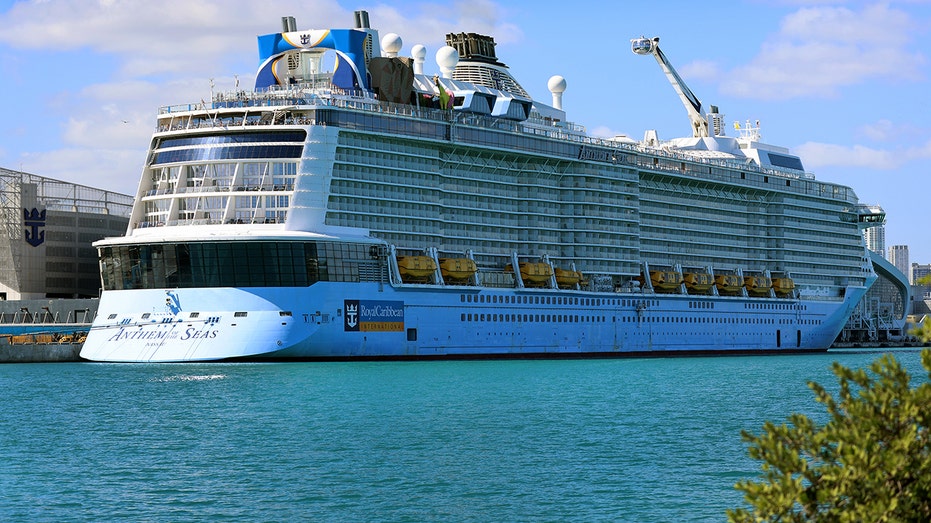
Cruise lines are facing higher fuel costs due to the Iran war causing a surge in oil prices. (Joe Raedle/Getty Images)
A 10% change in fuel cost per metric ton would reduce Carnival’s 2026 net income by $156 million, compared with $57 million for its rival Royal Caribbean, according to the latest corporate filings.
Norwegian Cruise Line said it hasn’t updated its fuel hedges from its earnings report in early March, when it indicated the 10% change would cut full-year profit per share by 7 cents. That would be equivalent to a roughly $90 million decrease in net income, according to calculations by Morningstar Research.
The world economy experienced an energy price shock in 2022 when Russia invaded Ukraine. That year, Carnival’s fuel costs were 17.7% of its total revenue, compared with 12.1% for Royal Caribbean and 14.2% for Norwegian.
| Ticker | Security | Last | Change | Change % |
|---|---|---|---|---|
| CCL | CARNIVAL CORP. | 24.71 | +0.72 | +3.02% |
| RCL | ROYAL CARIBBEAN GROUP | 280.81 | +8.21 | +3.01% |
| NCLH | NORWEGIAN CRUISE LINE HOLDINGS LTD. | 19.84 | +0.96 | +5.08% |
CFRA analyst Alex Fasciano noted that Carnival “owns a larger fleet, meaning the level of consumption is also higher than their counterparts.”
Carnival told Reuters in a statement that the cruise line’s “best hedge against fuel costs is to use less, so we focus on using less fuel in the first place.”
“We’ve cut our fuel use by 18% since 2011 despite increasing capacity by nearly 38% during that time,” Carnival added, noting that it doesn’t see a long-term net benefit in hedging.
AMERICAN FARMERS PINCHED BY HIGH DIESEL PRICES AHEAD OF SPRING PLANTING SEASON
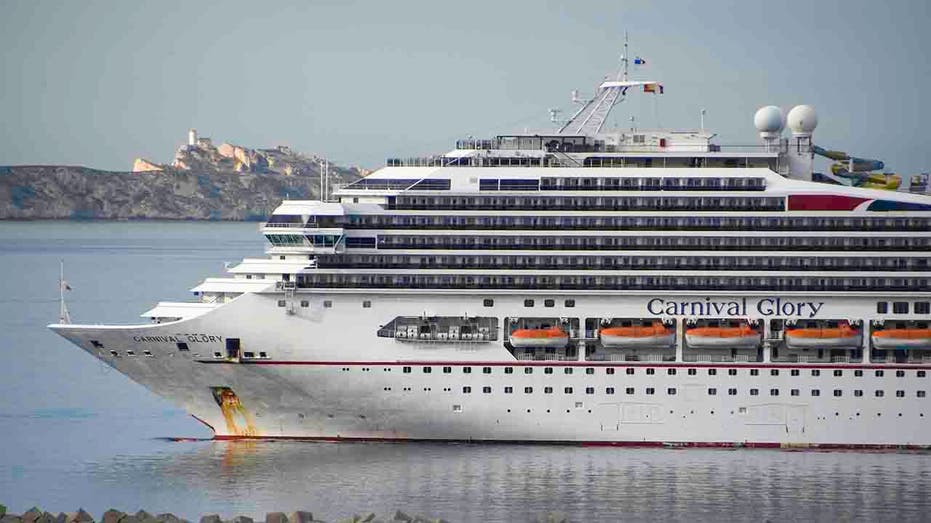
Carnival doesn’t hedge its fuel prices and instead focusing on limiting consumption. (Gerard Bottino/SOPA Images/LightRocket via Getty Images)
Cruise lines are facing the volatility in oil prices during the industry’s busiest booking period, known as the “wave season,” which runs between January and March and typically sees operators offer special deals and discounts for trips this year.
These cruises tend to run during the third quarter and have a disproportionately large contribution to cruise operators’ incomes, according to Lizzie Dove, analyst at Goldman Sachs.
GET FOX BUSINESS ON THE GO BY CLICKING HERE
Dove noted that the oil shock could impact Americans’ bookings to Europe, particularly for higher-priced transatlantic trips.
Reuters contributed to this report.

Rangers fans give Panarin warm welcome in return to MSG

Apple Watch Ultra 2 Holds Its Ground as the Top High-End Value Smartwatch in 2026

From the strait of Hormuz to Malacca, global trade relies almost entirely on these five narrow waterways


-
 Tech6 days ago
A 1,300-Pound NASA Spacecraft To Re-Enter Earth’s Atmosphere
-
 Crypto World3 days ago
HYPE Token Enters Net Deflation as HyperCore Buybacks Outpace Staking Rewards
-

 Business6 days ago
ExxonMobil seeks to move corporate registration from New Jersey to Texas
-

 Fashion3 days ago
Weekend Open Thread: Addict Lip Glow
-

 Tech6 days ago
ChatGPT will now generate interactive visuals to help you with math and science concepts
-
Sports2 days ago
Why Duke and Michigan Are Dead Even Entering Selection Sunday
-

 NewsBeat5 days ago
Residents reaction as Shildon murder probe enters second day
-
 NewsBeat7 days ago
Pagazzi Lighting enters administration as 70 jobs lost and 11 stores close across Scotland
-

 Business6 days ago
Search Enters Sixth Week With New Leads in Tucson Abduction Case
-

 Business1 day ago
Search for Savannah Guthrie’s Mother Enters Seventh Week with No Arrests
-

 Business2 days ago
US Airports Launch Donation Drives for Unpaid TSA Workers as Partial Government Shutdown Enters Fifth Week
-
Crypto World2 days ago
Coinbase and Bybit in Investment Talks: Could Bybit Finally Enter the US Crypto Market?
-

 NewsBeat5 days ago
I Entered The Manosphere. Nothing Could Prepare Me For What I Found.
-

 Business2 days ago
Country star Brantley Gilbert enters growing non-alcoholic beer market
-

 Sports5 days ago
PWHL, Senators discussing plan to keep Charge in Ottawa
-

 Business13 hours ago
Australian shares drop as Iran war enters third week
-
 Crypto World6 days ago
Will Chainlink price reclaim $10 amid volatility squeeze?
-

 Sports3 days ago
College Basketball Best Bets: Conference Tournament Semifinal Picks
-

 Crypto World13 hours ago
Crypto Lender BlockFills Enters Chapter 11 with Up to $500M in Liabilities
-

 Politics6 days ago
Trump Says Middle East Is ‘Very Lucky’ That He’s President


You must be logged in to post a comment Login