
Business
Robotics Could Be a Boon for the Elderly

To the Editor:
The new robotic industry may have some surprise funding sources (“The Robot Revolution Is Real. Tesla, Hyundai, and More Stocks to Play It,” Cover Story, Feb. 6). For example, long-term care insurance may cover the cost of robots for home healthcare associated with daily-living activities for the elderly. The longer we can keep people in their homes, the better the quality of life and the longer expensive assisted-living centers can be put off. Robots, self-driving cars, and home delivery of groceries and goods should, in theory, reduce the cost of caring for aging people. Lawn care and landscaping may be one of the first service industries to be disrupted by robotics.

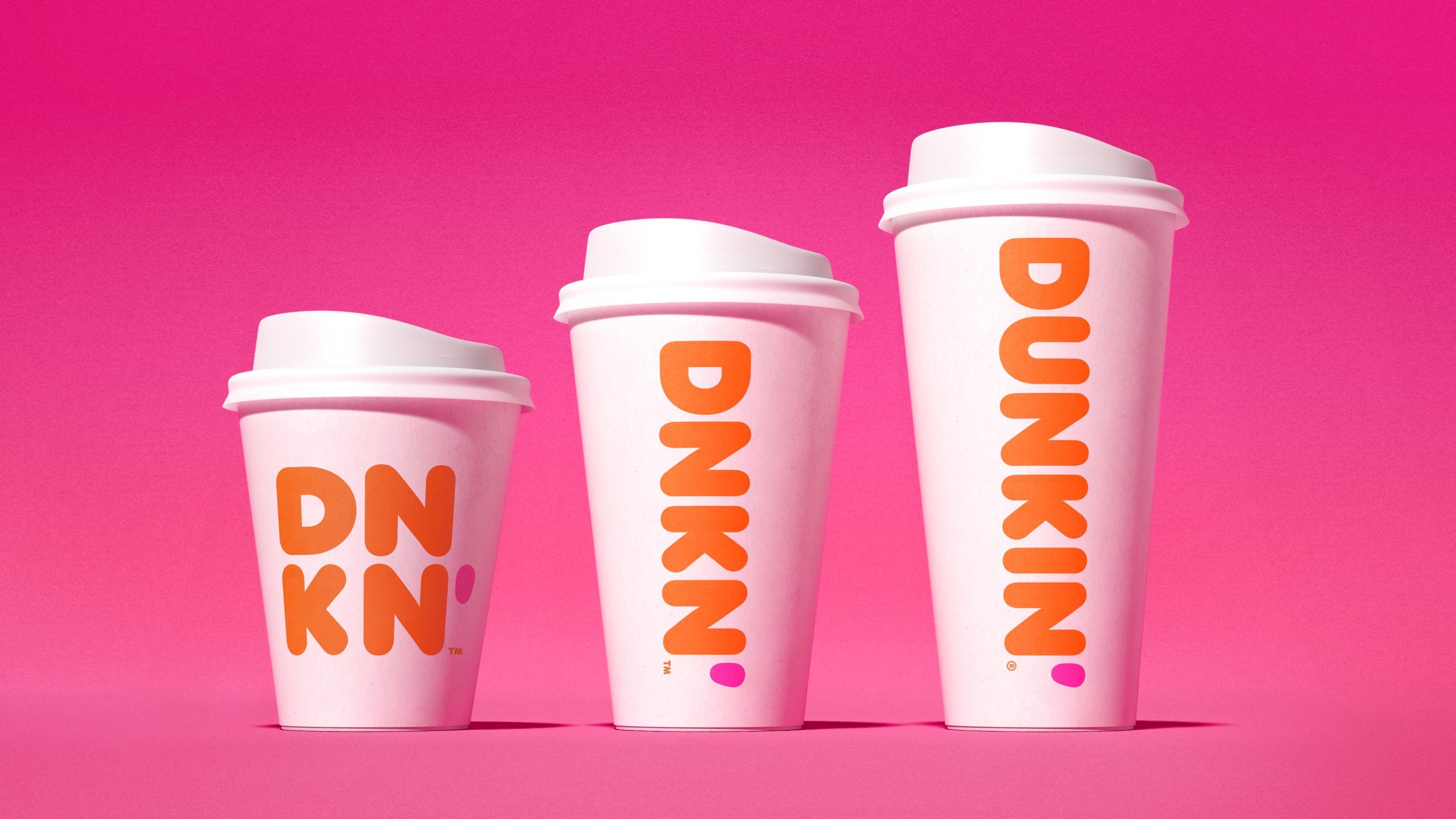
SAN FRANCISCO — Coffee lovers across the country, including those in the Bay Area, woke up Wednesday to a genuine April Fools’ Day treat: the chance to score a free hot or iced coffee from Dunkin’, with no purchase necessary and no elaborate prank attached.
Dunkin’ announced it is giving away 1,000,001 free coffees of any size to its Rewards members on April 1, 2026, continuing and slightly expanding its popular annual promotion. The offer, available exclusively through the Dunkin’ mobile app, requires users to enter the promo code “STILLNOTAJOKE.” Once claimed, the free drink — hot or iced brewed coffee, any size up to large — can be redeemed within seven days at participating locations.
As of early Wednesday morning, the code went live and began circulating rapidly on social media, with users posting photos of successful redemptions. “I just got mine — thanks for the tip!” one Bay Area resident shared online after visiting a local Dunkin’ spot. The promotion mirrors last year’s giveaway of 1 million free coffees but adds one extra cup this time, a playful nod to the holiday’s spirit of surprise without the deception.
Dunkin’ officials emphasized the deal is real. “No tricks, just a coffee run, on Dunkin’,” the company stated in promotional materials. The giveaway targets Rewards members, who can sign up for free in the app if they haven’t already. While supplies of the 1,000,001 redemptions last, early birds had the best shot as word spread quickly through Instagram, TikTok and local news alerts.
How to Claim Your Free Dunkin’ Coffee Today
The process is straightforward but time-sensitive:
- Download or open the Dunkin’ app on your smartphone.
- Ensure you are logged into a Dunkin’ Rewards account (free to join).
- Navigate to the offers or rewards section and enter the code STILLNOTAJOKE.
- Add the free hot or iced coffee to your order — any size qualifies, though some reports note exclusions for extra-large or specialty drinks like cold brew in certain redemptions.
- Head to a participating Dunkin’ location to redeem, ideally within the next week.
Travelers passing through San Francisco International Airport or commuters in Hwaseong-si equivalents in the U.S. can check nearby outlets via the app’s store locator. Many Bay Area locations, from downtown San Francisco to suburban spots in the Peninsula and East Bay, participate.
Social media buzzed with excitement and caution. Posts warned that the limited quantity could vanish fast, echoing last year’s rush. One user in the Bay Area posted screenshots confirming redemption before 8 a.m. local time, while others reported success later in the morning. “Go get your free coffee from Dunkin’, I just got one,” a California poster shared alongside morning photos.
Other April Fools’ Day Food and Drink Promotions
While Dunkin’ stole the spotlight with its massive free coffee drop, other chains offered their own April Fools’-themed deals Wednesday:
- Krispy Kreme: Rewards members could buy any dozen doughnuts and add an Original Glazed dozen for just $4.01 — a numerical wink at the date. The offer encouraged sweet treats alongside morning caffeine.
- Additional food and drink promotions popped up across the country, ranging from buy-one-get-one deals at fast-casual spots to limited-time discounts at coffee competitors, though none matched Dunkin’s scale for outright freebies.
Local Bay Area coffee shops and independent cafes stayed mostly quiet on major giveaways, focusing instead on standard menus or lighthearted social media posts. Some encouraged customers to “prank” friends by treating them to a cup, turning the day into a community perk.
Why Brands Love April Fools’ Marketing
April Fools’ Day has become prime real estate for brands to blend humor with customer appreciation. Dunkin’s promotion builds loyalty among its Rewards base while generating massive earned media. Last year’s 1 million-coffee giveaway created waves of positive coverage and user-generated content, driving app downloads and foot traffic.
This year’s “one more” twist keeps the momentum going. Marketing experts note that such campaigns perform well because they feel generous without requiring heavy spending from consumers. For Dunkin’, which operates thousands of locations nationwide, the cost is offset by increased visits, potential add-on purchases like donuts or breakfast sandwiches, and long-term customer retention.
In the Bay Area, where coffee culture runs deep — from artisanal roasters in San Francisco to drive-thru convenience — the deal resonated with commuters and remote workers alike. Many paired the free brew with a quick stop for a breakfast item, turning a simple perk into a full morning routine.
Tips for Maximizing Free Coffee and Avoiding Disappointment
- Act fast: With only 1,000,001 redemptions available, enter the code as soon as possible. Some users reported the offer remained active into the afternoon, but crowds at popular locations picked up.
- Check eligibility: The deal is strictly for Rewards members via the app. Non-members should sign up immediately — it takes minutes and unlocks future perks like points on purchases.
- Redeem wisely: After claiming, you have up to seven days. Plan your visit to avoid peak hours if possible, though many locations handled the extra demand smoothly.
- Pair with other deals: Look for stackable offers in the app or combine with any current promotions. Some locations offered breakfast specials that complemented the free coffee.
- Share the love: Even if you miss out, snapping a photo of a friend’s redemption or tagging Dunkin’ on social media keeps the fun going.
For those in the San Francisco Bay Area, apps like Google Maps or the Dunkin’ locator can pinpoint the nearest store. SFO travelers should note that while airport Dunkin’ spots exist in some terminals, availability may vary — better to grab one before security or upon landing if time allows.
Broader Context: April Fools’ Day in 2026
This year’s promotions arrived amid typical spring travel and work routines. With many Americans back in offices or heading out for midweek errands, a free coffee provided a welcome boost. Unlike past years when some brands leaned into elaborate fake announcements that frustrated consumers, Dunkin’ kept it transparent and deliverable from the start.
Consumer advocacy groups applauded the approach, noting it builds trust rather than testing it. “When brands deliver real value on a day known for jokes, it stands out,” one retail analyst observed.
As the day progressed, reports indicated strong uptake but no widespread complaints of shortages at most locations. Social feeds filled with satisfied customers enjoying their complimentary cups, some joking that the real prank would be running out of creamer at home.
What to Watch for Later Today and Beyond
The promo code “STILLNOTAJOKE” is tied to April 1 entry, but redemptions extend for a week. If you claimed it early, you can enjoy your free coffee anytime through April 8. Those who missed the initial rush can still monitor the app for any surprise extensions or related offers.
Dunkin’ has not announced similar nationwide freebies for the rest of the week, but its Rewards program regularly features points multipliers, discounted drinks and bundled meals. Signing up ensures you won’t miss future surprises — April Fools’ or otherwise.
For the latest updates, check the official Dunkin’ app, website or social channels. Local news outlets in the Bay Area and across the U.S. also tracked the promotion in real time.
Whether you’re starting your day in San Francisco, commuting from the suburbs, or traveling through SFO, Dunkin’s giveaway offered a simple, uplifting moment on a day otherwise filled with skepticism. No fooling — sometimes the best surprises are the ones you can actually taste.
Safe sipping, and happy April Fools’ Day from the West Coast.
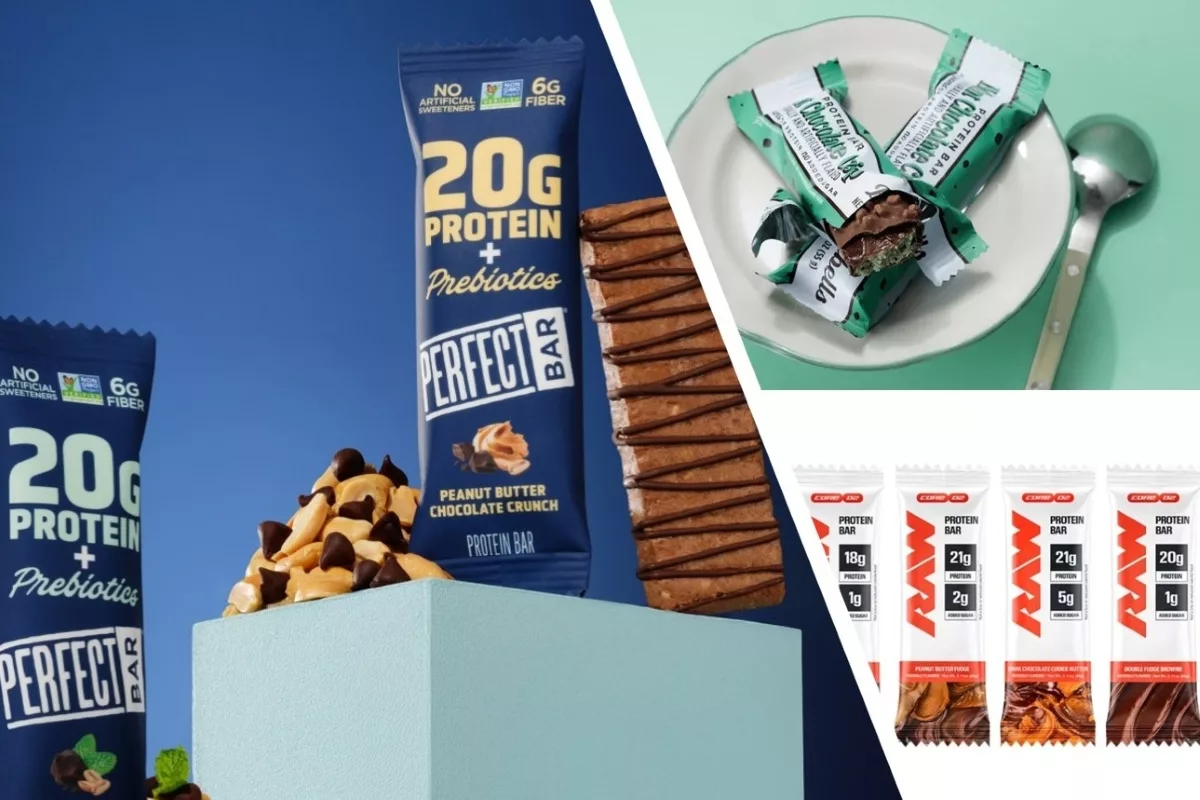

The bar category continues to be a hotbed for product introductions.

Carl Zeiss Meditec AG (CZMWY) Shareholder/Analyst Call – Slideshow

Rep. Rich McCormick, R-Ga., discusses the DHS funding stalemate and Democrats being unable to answer what the partial government shutdown accomplished on ‘The Evening Edit.’
The Federal Aviation Administration is reducing arrival capacity at San Francisco International Airport as construction and new safety rules take effect, a move expected to increase flight delays.
The FAA said the measure will lower maximum arrival rates from 54 flights per hour to 36 during a major runway project. The FAA said the runway project and safety measures are separate actions, each reducing arrival capacity by nine flights per hour.
San Francisco International Airport said the changes will lead to more delays, with about a quarter of arriving flights expected to experience delays of at least 30 minutes, up from a prior estimate of roughly 15%.
The airport’s runway repaving project will put its two north-south runways out of service for approximately six months, further limiting capacity at one of the nation’s busiest airports.
THREE WOMEN REMOVED FROM FRONTIER FLIGHT, ARRESTED OVER REFUSAL TO PAY EXTRA BAG FEE
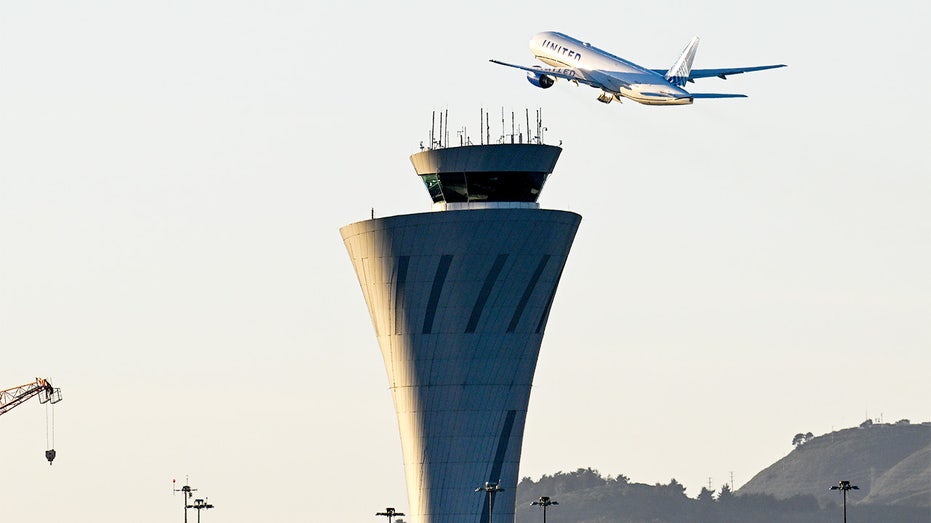
A United Airlines plane takes off from San Francisco International Airport in San Francisco, California, on March 23, 2026. (Tayfun Coskun/Anadolu via Getty Images)
The FAA is also prohibiting side-by-side approaches to the airport’s parallel east-west runways, including in clear weather, and instead requiring “staggered approaches, with one aircraft offset from the aircraft on the parallel runway.”
DELTA FLIGHT TO ATLANTA RETURNS TO BRAZIL AIRPORT AFTER ENGINE ISSUE
The FAA does not plan to lift the restrictions once the runway repaving is completed.
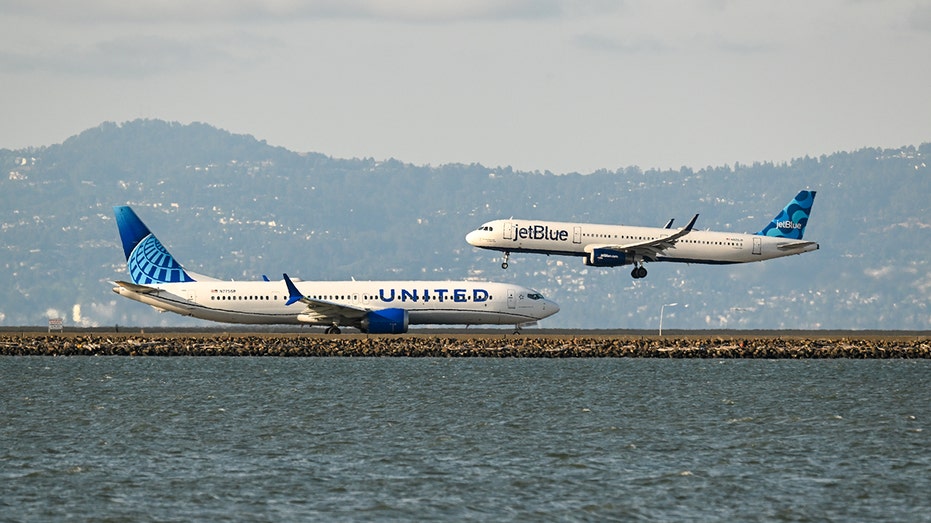
A United Airlines plane takeoff as a JetBlue plane is landing at San Francisco International Airport (SFO) in San Francisco, California, United States on June 8, 2023. (Tayfun CoSkun/Anadolu Agency / Getty Images)
United Airlines, which accounts for about half of passenger traffic at San Francisco, said the planned runway construction may cause flight delays. Alaska Airlines is the airport’s second-largest carrier, with about 10% of passenger traffic.
The FAA said it had not allowed side-by-side approaches in bad weather and is exploring ways to safely increase arrival rates while reducing risks tied to visual separation.
UNITED AIRLINES WARNS AIRFARES COULD JUMP 20% AS OIL PRICES CONTINUE TO SURGE
The agency said the change followed a routine review that found the approaches did not meet aircraft separation standards and is specific to San Francisco.
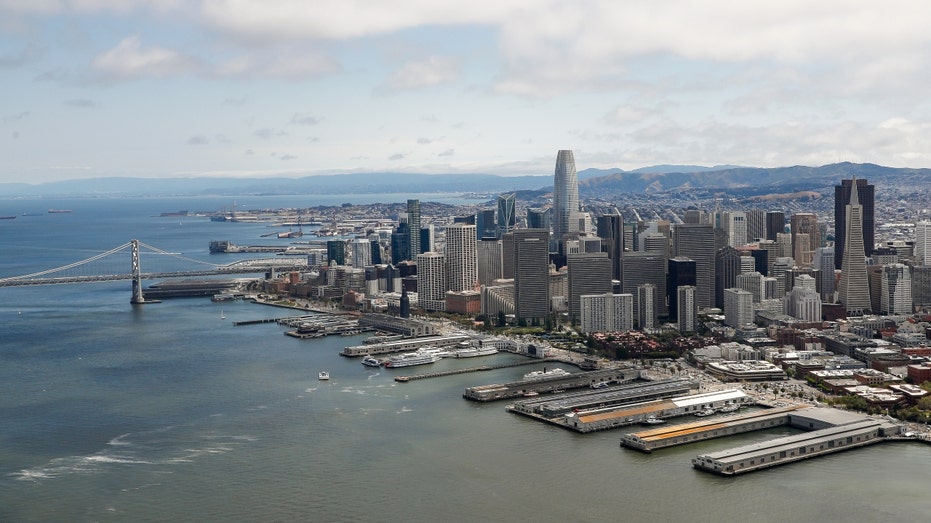
An aerial view of the San Francisco skyline on May 30, 2023, in San Francisco, California. (Brandon Sloter / Getty Images)
The changes come as the agency tightens broader aviation safety rules. Earlier this month, the FAA said it would require stricter helicopter safety measures and suspend the use of visual separation between airplanes and helicopters near major airports.
CLICK HERE TO GET FOX BUSINESS ON THE GO
The actions follow a January 2025 mid-air collision between an American Airlines regional jet and an Army helicopter that killed 67 people. The FAA also cited two recent incidents, including a near miss involving an American Airlines flight and a police helicopter near San Antonio airport.
Reuters contributed to this report.

SlateStone Wealth Chief Market Strategist Kenny Polcari analyzes the upward trend in the markets amid developments in the conflict with Iran on ‘Varney & Co.’
General Motors is planning to ramp up production of heavy-duty pickup trucks in Michigan this summer amid strong demand for gas-powered pickups despite elevated fuel prices.
GM is planning to operate its Flint Assembly plant six days a week, up from five, starting in June to produce more trucks to meet demand.
The facility produces the heavy-duty versions of the Chevrolet Silverado and GMC Sierra pickups, known as the 2500 and 3500.
The Wall Street Journal reported that the Flint Assembly plant’s workers will be mandated into overtime hours to cover the additional day of production. About 4,200 hourly workers are employed at the facility.
GM TAKES $7B HIT AFTER SHIFTING EV STRATEGY DUE TO SLOWING DEMAND

GM is increasing production of its Chevrolet Silverado and GMC Sierra heavy-duty pickups. (David Paul Morris/Bloomberg via Getty Images)
GM’s plan to increase domestic production comes as it and other automakers are moving to increase production at U.S. facilities to avoid the Trump administration’s tariffs on imported vehicles, including those made at automakers’ facilities in Canada.
The Journal reported that GM’s heavy-duty Silverado is also made at the company’s Oshawa Assembly plant in Ontario, Canada, which lost a third shift of production in late January – a move that the Canadian autoworkers union blamed on tariffs.
GM TAKES $1.6B FINANCIAL HIT AS EV TAX CREDIT CHANGES FORCE STRATEGY OVERHAUL
| Ticker | Security | Last | Change | Change % |
|---|---|---|---|---|
| GM | GENERAL MOTORS CO. | 75.04 | +0.54 | +0.72% |
Consumer demand for pickup trucks and SUVs has remained strong despite the recent rise in fuel prices amid the supply disruptions stemming from the Iran war inhibiting oil shipments from the Middle East through the Strait of Hormuz.
Last month, GM CFO Paul Jacobson noted that historically, consumers don’t start to reconsider their preference for pickups or SUVs that have less economical gas mileage until oil and gas prices have been elevated for an extended period of time.
THE $10,000 CAR LOAN TAX DEDUCTION: HERE’S WHO QUALIFIES AND HOW TO CLAIM IT
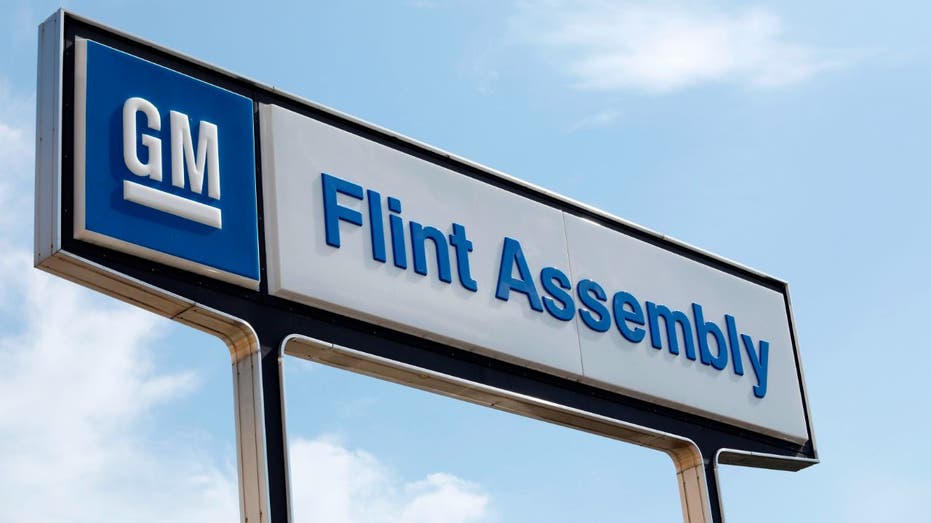
The signage on the outside of General Motors Co. Flint Assembly on June 12, 2019, in Flint, Michigan. – GM announced the second major expansion of its full-size pickup production capacity this year: with a $150 million investment at Flint Assembly to (Jeff Kowalsky/AFP via Getty Images)
“Usually it takes four to six months of sustained high oil prices before people start to think, ‘Maybe I should go for less mileage, or maybe I should buy down,’ I don’t think we see that,” Jacobson said at a Bank of America conference.
Gas prices have surged in recent weeks as oil prices were jolted higher by supply disruptions related to the war in Iran.
GET FOX BUSINESS ON THE GO BY CLICKING HERE
The national average price for a gallon of regular gasoline was $4.06 on Wednesday, up over 36% from $2.98 a month ago. Diesel is up to an average price of $5.49 a gallon from $3.76 a month ago, an increase of nearly 46%.
General Motors shares are more than 1.5% in midday trading and are down 7% year to date.
Reuters contributed to this report.

U.S. Transportation Secretary Sean Duffy joins ‘Mornings with Maria’ to discuss TSA wait times as President Donald Trump considers forcing Congress back to resolve the DHS funding lapse.
Alaska Airlines is targeting premium international travelers with a new business class experience as it expands its reach into Europe and Asia.
The airline on Tuesday unveiled its all-new international business class service, set to debut this spring on its new Boeing 787-9 Dreamliners. The service will feature lie-flat seats, elevated dining, premium bedding, and curated amenities, according to the company.
“When we debut our new product this spring, it will raise the bar and redefine long-haul travel, while continuing to deliver the remarkable care that sets Alaska apart on the global stage,” Andrew Harrison, executive vice president and chief commercial officer at Alaska Airlines, said in a statement.
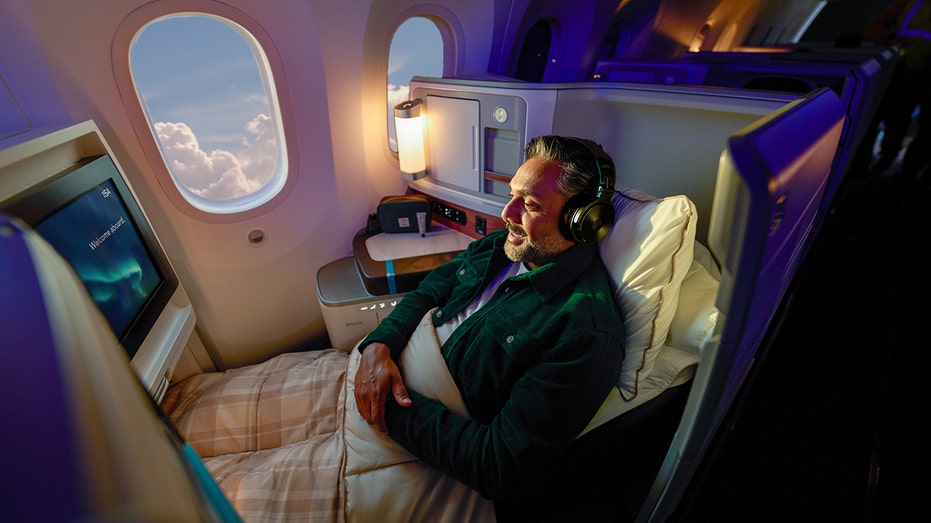
A passenger relaxes in a lie-flat business class suite aboard an Alaska Airlines aircraft. (Alaska Airlines)
At the core of the new offering are fully lie-flat suites with privacy doors and direct aisle access.
Each seat converts into a bed and includes an 18-inch high-definition screen, wireless charging, noise-reducing headphones and access to a library of more than 1,500 movies and shows.
The airline is also emphasizing its onboard dining experience.
ALASKA AIR, DELTA TARGETED IN SEATTLE AIRPORT POLLUTION LAWSUIT

A lie-flat business class suite is shown aboard an Alaska Airlines Boeing 787-9 Dreamliner. (Alaska Airlines)
Menus will vary by route, featuring dishes such as pasta carbonara with roasted chicken on flights to Rome and gochujang chicken on routes to Incheon.
Service begins with an upgraded fruit and cheese platter, accompanied by a selection of wines, champagne, cocktails and craft beer.
Dessert includes Salt & Straw ice cream, while pre-arrival meals are tailored to each destination.
ALASKA AIRLINES, BOEING SUED BY PASSENGERS ON PLANE WHEN DOOR FLEW OFF MIDFLIGHT

A selection of meals and beverages offered in Alaska Airlines’ international business class is displayed. (Alaska Airlines)
Additional touches include bedding designed in partnership with Pacific Northwest brand Filson and amenity kits stocked with skincare products and travel essentials.
Passengers flying International business class will have access to Alaska’s airport lounges, as well as Oneworld partner lounges worldwide. Top-tier loyalty members will also gain entry to select international first-class lounges.
Alaska plans to equip its Dreamliner fleet with SpaceX’s Starlink internet later this year.

An amenity kit is displayed aboard an Alaska Airlines aircraft. (Alaska Airlines)
The rollout comes as Alaska ramps up its international footprint from Seattle, with service to Rome launching April 28, followed by London on May 21 and Reykjavík, Iceland, on May 28. Flights to Seoul are set to begin in April, with Tokyo service expected later this year.
The unveiling comes as the airline estimated a bigger first-quarter loss amid rising jet fuel prices and a pullback in demand due to unrest in Puerto Vallarta, Mexico, and flooding in Hawaii.
| Ticker | Security | Last | Change | Change % |
|---|---|---|---|---|
| ALK | ALASKA AIR GROUP INC. | 37.65 | +0.87 | +2.37% |
The airline said in a regulatory filing on Monday that rising fuel prices represent an incremental earnings-per-share headwind of at least 70 cents.
Shares of Alaska Air Group ended Wednesday’s trading session up 2.3% and are down more than 25% year to date.
Business
Netflix Stock Dips Slightly on April 1 as Investors Await Q1 Earnings Amid Recent Price Hikes
Netflix Inc. shares edged lower Wednesday, trading around $95.66 midday after closing at $96.15 the previous session, as Wall Street positioned for the streaming giant’s first-quarter 2026 earnings report scheduled for April 16.

The stock opened near $93 before climbing intraday, reflecting a volatile but relatively contained session. Volume remained active following a strong 3.42% gain on Tuesday, when shares closed at $96.15 on higher-than-average turnover of more than 54 million shares. Year to date, Netflix has posted modest gains of roughly 2.5%, though it remains well below its 52-week high of $134.12 reached in mid-2025.
Analysts and investors are closely watching how recent subscription price increases and advertising-tier momentum will shape the upcoming results. On March 25, Netflix quietly raised prices across all plans without a formal announcement. The standard ad-free tier jumped to $19.99 monthly from $17.99, the premium plan rose to $26.99, and the ad-supported option increased by $1 to $8.99. It marked the company’s fifth price hike in six years, underscoring its pricing power in a competitive streaming landscape.
“Netflix continues to demonstrate strong monetization capabilities,” one market observer noted, pointing to the company’s ability to pass on costs while maintaining subscriber loyalty. The moves come as Netflix eyes further growth in advertising revenue, which more than doubled in 2025 to over $1.5 billion and is projected to roughly double again in 2026.
Recent Performance and Market Context
Netflix shares have shown resilience in recent weeks despite broader market fluctuations. Tuesday’s advance followed positive reactions to the price adjustments, with some sessions seeing gains of more than 1%. However, the stock has traded in a wide range over the past year, dipping as low as $75.01 amid concerns over content spending, competition and earlier uncertainty surrounding a potential Warner Bros. Discovery acquisition that Netflix ultimately walked away from.
As of early April 1 trading, the stock was down about 0.48% at $95.66, with a market capitalization hovering near $406 billion. The price-to-earnings ratio stood around 46, reflecting expectations of continued profitability growth even as the company invests heavily in content.
Wall Street maintains a generally optimistic stance. Consensus analyst ratings lean toward “moderate buy,” with an average price target suggesting potential upside of around 19-20% from current levels. Optimism stems from Netflix’s massive global subscriber base — which surpassed 325 million paid members by the end of 2025 — and steady expansion into live sports, gaming and international markets.
Q1 Earnings on the Horizon
Netflix is set to release its first-quarter 2026 financial results after the market close on April 16, followed by a live video interview with co-CEOs Ted Sarandos and Greg Peters, along with Chief Financial Officer Spence Neumann. Investors will scrutinize several key metrics:
- Subscriber growth and retention: How the recent price hikes affect churn rates.
- Advertising revenue: Progress toward doubling ad income in 2026.
- Content spending: The company has signaled heavier investment this year, which could pressure margins in the short term.
- Free cash flow and profitability: Guidance for the full year will be closely parsed.
For the first quarter, analysts expect revenue around $12 billion or higher, building on the fourth-quarter 2025 results that showed 18% year-over-year growth to more than $12 billion and earnings per share of 56 cents, narrowly beating estimates.
Full-year 2026 revenue guidance issued earlier pointed to a range of $50.7 billion to $51.7 billion, driven by membership gains, pricing and advertising. Operating margins are targeted to improve, though increased content outlays — potentially reaching $20 billion annually — remain a focus for cost-conscious investors.
Strategic Shifts and Competitive Landscape
Netflix has pivoted aggressively in recent years. The introduction and expansion of its ad-supported tier has opened new revenue streams, appealing to price-sensitive viewers while allowing the company to maintain premium offerings for others. Live programming, including sports events and unscripted specials, has helped differentiate the platform from rivals like Disney+, Amazon Prime Video and emerging competitors.
The company also collected a significant $2.8 billion breakup fee after stepping away from a bid for Warner Bros. Discovery assets, providing a cash cushion as it prioritizes organic growth and share repurchases in the longer term.
Challenges persist. Heavier 2026 content spending could weigh on margins, and competition for viewer attention remains fierce. Some analysts have flagged risks of slowing subscriber additions in mature markets, though international expansion continues to offer tailwinds.
Bay Area-based Netflix, with its headquarters in Los Gatos, continues to be a bellwether for the technology and entertainment sectors. Its performance influences broader sentiment toward streaming stocks and ad-supported digital media.
What Investors Are Watching
Market participants are weighing several factors heading into earnings season:
- Impact of price increases: Will higher bills lead to cancellations, or will loyal subscribers absorb the changes as they have in past rounds?
- Ad tier traction: Growth in this segment is critical for long-term revenue diversification.
- Content pipeline: Upcoming releases and original programming slate for the remainder of 2026.
- Macro environment: How inflation, consumer spending and global economic conditions affect discretionary entertainment budgets.
Some voices on Wall Street have expressed caution, noting that Netflix shares have lagged the broader market over certain periods despite strong fundamentals. Others argue the current valuation offers an attractive entry point for a company with proven scalability and a massive addressable audience.
Social media and trading forums buzzed Wednesday with mixed commentary. Some users highlighted the stock’s recent stability as a positive sign, while others pointed to the upcoming earnings as a potential volatility catalyst.
Broader Industry Implications
Netflix’s trajectory carries weight beyond its own balance sheet. As the pioneer of streaming, its success or struggles often set the tone for peers. Recent price adjustments across the industry suggest many platforms are testing similar monetization strategies.
Meanwhile, the entertainment landscape evolves rapidly with technological advances in artificial intelligence for content creation, personalized recommendations and competitive bidding for sports rights.
For retail investors, particularly those in tech-heavy regions like the San Francisco Bay Area, Netflix remains a core holding or watchlist staple. Its ability to adapt — from DVD rentals to global streaming dominance — has long captivated shareholders.
Outlook and Advice for Investors
With Q1 results less than two weeks away, analysts recommend reviewing individual risk tolerance before making moves. Long-term bulls point to Netflix’s track record of innovation and subscriber monetization as reasons for confidence. Bears cite elevated content costs and valuation multiples as areas of concern.
Diversification remains key. While Netflix has delivered extraordinary returns over two decades — turning early investments into life-changing gains for many — past performance does not guarantee future results.
Investors can track real-time quotes on platforms like Yahoo Finance, Nasdaq.com or their brokerage accounts. Official updates will come via Netflix’s investor relations site ahead of the April 16 release.
As midday trading continued on April 1, the slight dip appeared contained, with many viewing it as routine profit-taking after Tuesday’s advance rather than a shift in sentiment. Attention now turns squarely to the earnings report, which could set the narrative for Netflix’s stock through the spring and beyond.
Whether the streaming leader sustains its momentum or faces renewed pressure will depend on execution in a crowded digital entertainment arena. For now, the market awaits fresh data with cautious optimism.

Circle Squared Alternative Investments founder Jeff Sica joins Varney & Co. to explain the effect of high oil and gas prices on the housing market.
A suburb near Nashville, Tennessee, is in the midst of a boom amid an influx of higher-paying tech and trade jobs.
A report by Realtor.com found that Clarksville, located about 45 minutes outside of Nashville, is drawing in residents in part because of several manufacturing firms setting up shop in the area and lower housing prices.
The median listing price for a house in Clarksville is $357,950, whereas the median list price in Nashville is $527,225 – which represents a potential savings of about 32.1%.
Housing demand is expected to remain strong in the area. Realtor’s report noted that T.RAD, an auto parts manufacturer headquartered in Japan, opted to build a new plant in the area while Korea Zinc is expanding its footprint there as well.
THE US HOUSING MARKETS THAT ARE SEEING THE LARGEST DROPS IN RENT PRICES

Clarksville is a city in Montgomery County, Tennessee. (iStock)
T.RAD’s Clarksville manufacturing facility is the first location in Tennessee for the company’s North American division. It plans to invest $90.2 million in a manufacturing facility that’s projected to create 928 jobs in the next few years.
Korea Zinc currently has about 300 existing jobs in the area and is also expanding with at least 420 direct positions, while also supporting additional jobs through suppliers and other economic activity.
Workers filling the new roles are expected to earn income in a range between $86,000 and nearly $200,000 a year, according to the report.
RENO SURPASSES LAS VEGAS AS TOP DESTINATION FOR CALIFORNIA HOMEBUYERS SEEKING AFFORDABILITY
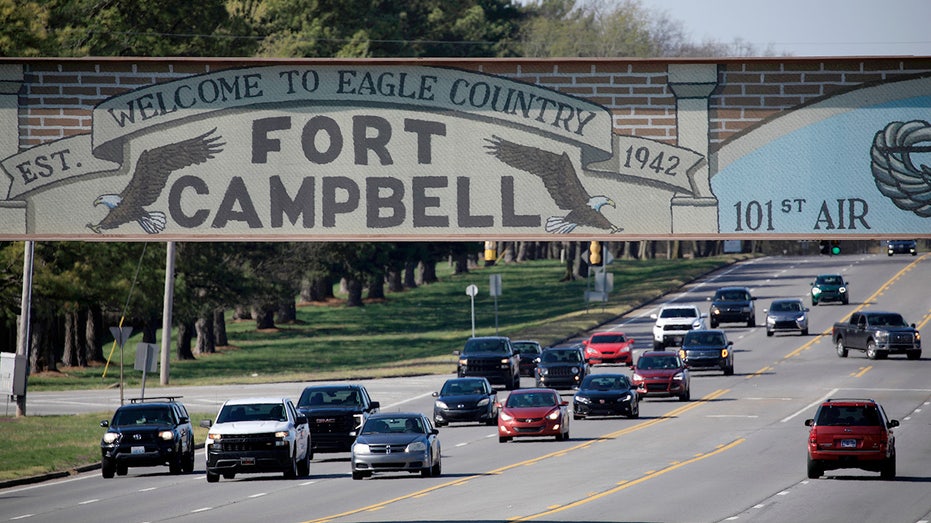
The U.S. military is a leading employer in the area near Clarksville because of its proximity to Fort Campbell. (Luke Sharrett/Getty Images)
The U.S. Army’s Fort Campbell is also one of the top employers in the area, which is also home to Austin Peay State University.
“Bringing more jobs to a smaller area can be great for the local housing market, if inventory is able to keep up with demand,” said Hannah Jones, senior economic research analyst at Realtor.com.
“The data suggests that a pickup in demand resulted in significant home price growth over the last six years. However, prices have leveled out in the last year and time on market has grown, suggesting the market is rebalancing,” Jones added.
AMERICA’S 10 MOST EXPENSIVE ZIP CODES REVEALED
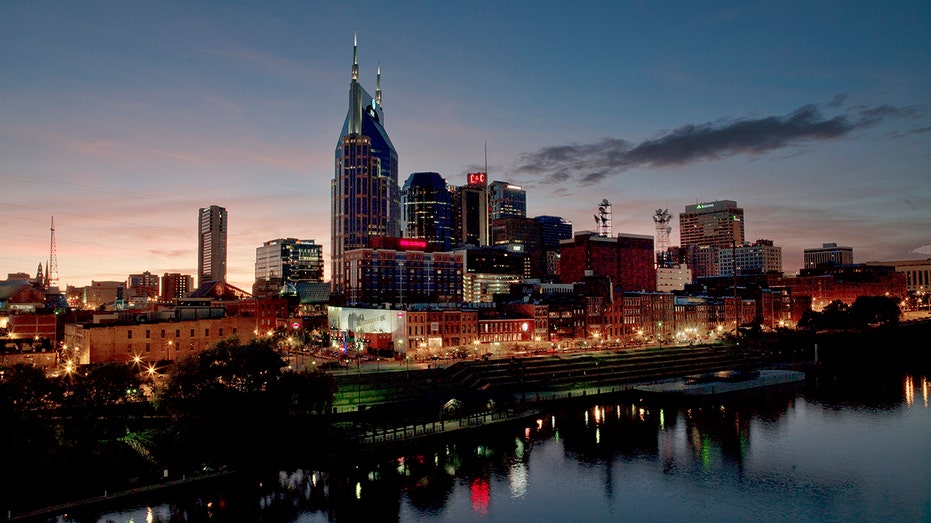
Clarksville is a suburb of Nashville, Tennessee. (Carol M. Highsmith/Buyenlarge/Getty Images)
Clarksville is the fifth-largest city in Tennessee in terms of population, and has seen an uptick in new home construction in the last few years.
“In terms of single-family home sales, in 2025 about 85% were existing homes, roughly on par with the pre-pandemic norm,” Jones said.
GET FOX BUSINESS ON THE GO BY CLICKING HERE
“Nevertheless, the new construction share of sales grew almost 6 percentage points in 2025 compared to 2024, suggesting that more buyers are opting for new construction compared to the last three years, though the share is below the pandemic era norm,” she added.
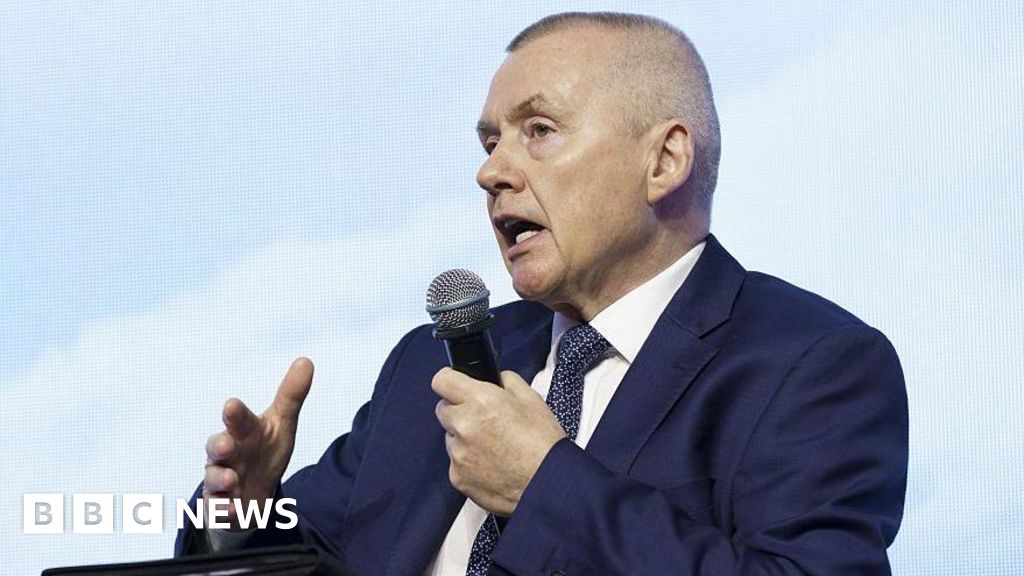
The announcement comes days after former CEO Pieter Elbers quit in the backdrop of a flight cancellation crisis.
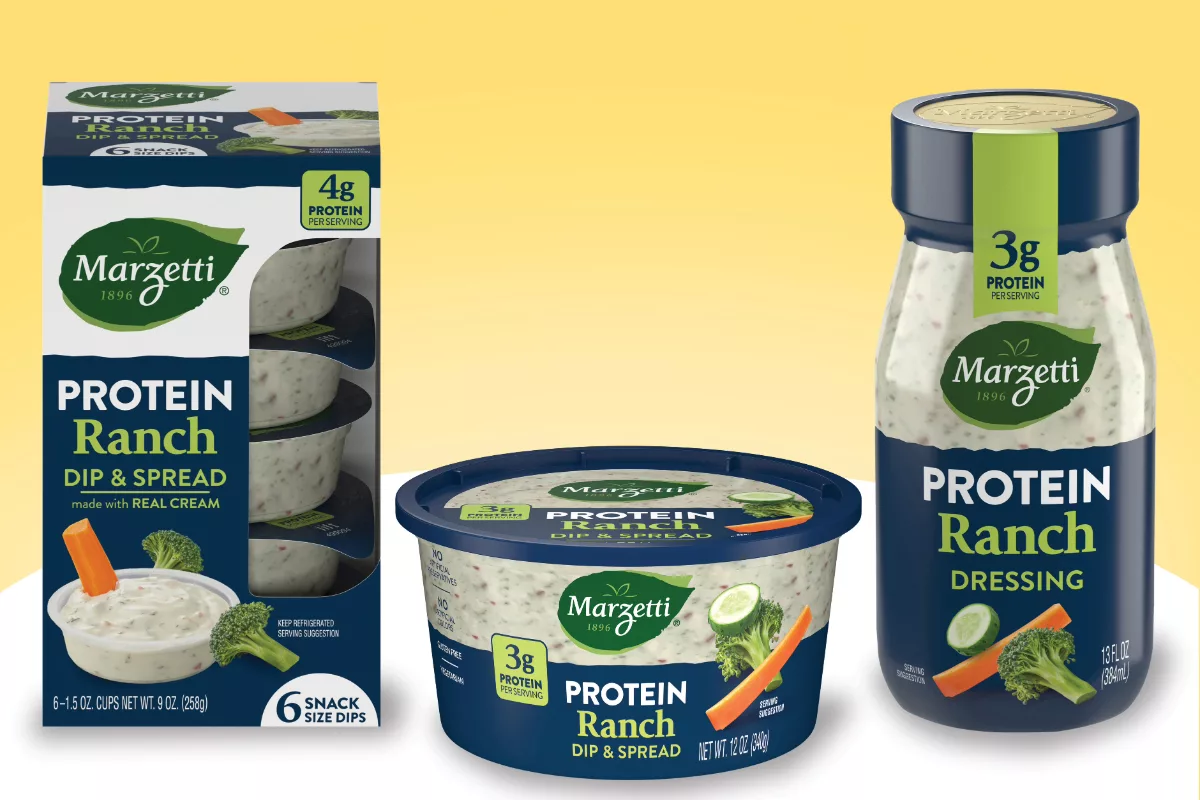

The ranch is available as a dressing and as a dip.

Pioneer women’s basketball programs fade into the shadows full of pride as money reshapes the game

Dunkin’ Gives Away 1,000,001 Cups With ‘StillNotAJoke’ Code

New Hampshire issues Bitcoin-backed municipal bond with Ba2 rating: Moody's

Smart energy pays enters the US market, targeting scalable financial infrastructure

Why Israel is blocking foreign journalists from entering

Bitcoin: We’re Entering The Most Dangerous Phase

how i’d invest right now to make millions in 2026

WHITE HOUSE CRYPTO CZAR DAVID SACKS IS OUT! CRYPTO IN 401KS NEARS & COINBASE BITCOIN MORTGAGES!

Dr. Fazeela Breaks Silence On Financial Allegations #hamzaaliabbasi #nadiakhan #laundering | EB3Q
-

 News Videos7 days ago
Parliament publishes latest register of MPs’ financial interests
-

 Business6 days ago
Instagram, YouTube Found Responsible for Teen’s Mental Health Struggle in Historic Ruling
-
 Tech6 days ago
Intercom’s new post-trained Fin Apex 1.0 beats GPT-5.4 and Claude Sonnet 4.6 at customer service resolutions
-

 NewsBeat5 days ago
The Story hosts event on Durham’s historic registers
-

 Sports5 days ago
Sweet Sixteen Game Thread: Tide vs Michigan
-
Entertainment2 days ago
Fans slam 'heartbreaking' Barbie Dream Fest convention debacle with 'cardboard cutout' experience
-
 Entertainment4 days ago
Lana Del Rey Celebrates Her Husband’s 51st Birthday In New Post
-
Crypto World1 day ago
Dems press CFTC, ethics board on prediction-market insider trades
-

 Sports1 day ago
Tallest college basketball player ever, standing at 7-foot-9, entering transfer portal
-

 Tech3 days ago
The Pixel 10a doesn’t have a camera bump, and it’s great
-

 Crypto World3 hours ago
Gold Price Prediction: Worst Month in 17 Years fo Save Haven Rock
-

 Tech2 days ago
EE TV is using AI to help you find something to watch
-

 Entertainment7 days ago
HBO’s Harry Potter Series Will Definitely Fail For One Big Reason, And It’s Not J.K. Rowling Or Snape
-

 Tech2 days ago
Apple will hide your email address from apps and websites, but not cops
-

 Tech2 days ago
Flipsnack and the shift toward motion-first business content with living visuals
-

 Tech2 days ago
How to back up your iPhone & iPad to your Mac before something goes wrong
-

 Fashion6 days ago
En Vogue in Brown Leather and Tailored Neutrals by Atelier Savoir, Styled by J Bolin
-

 Politics2 days ago
Should Trump Be Scared Strait?
-

 Crypto World2 days ago
U.S. rule change may open trillions in 401(k) funds to crypto
-

 Fashion5 days ago
Weekly News Update, 3.27.26 – Corporette.com
You must be logged in to post a comment Login