

Connect with us
DAPA Banner

Business

Rupee falls 14 paise to 92.42 against US dollar in early trade

Published

on

Rupee falls 14 paise to 92.42 against US dollar in early trade
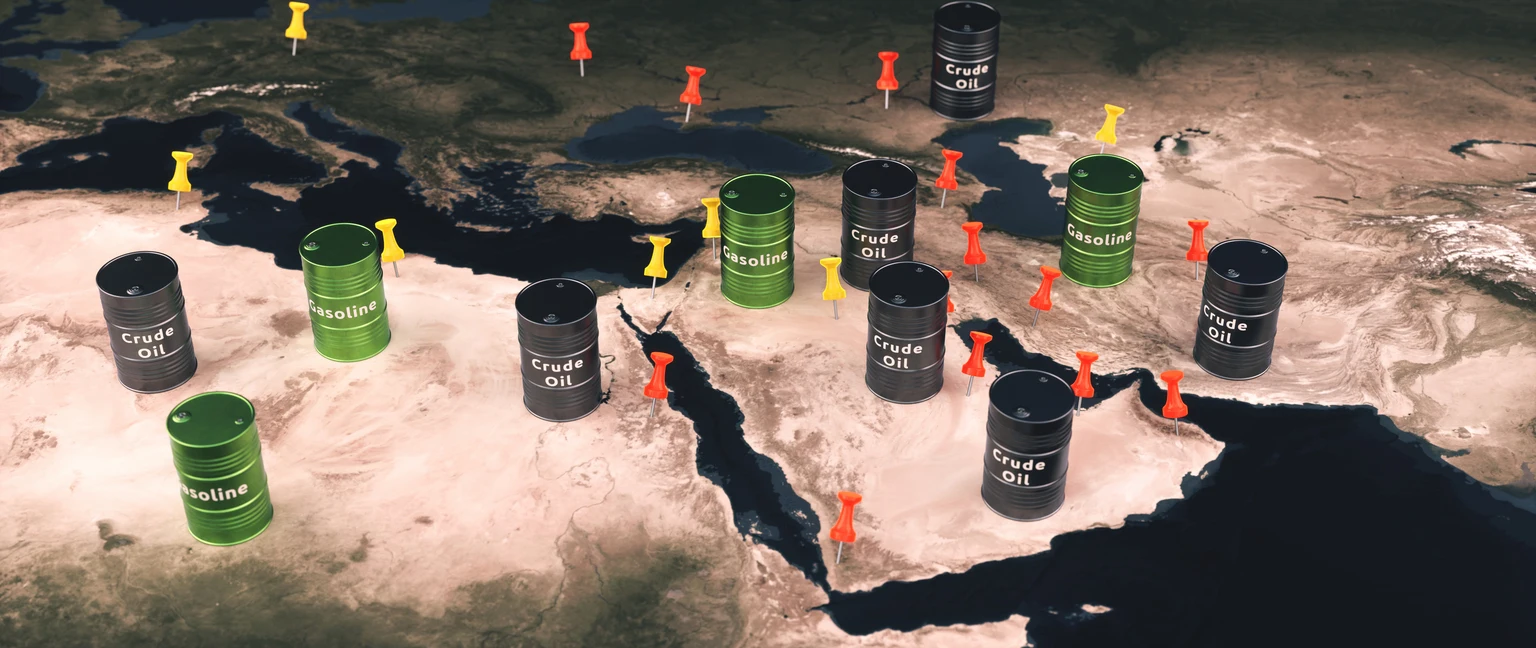
The rupee lost 14 paise and traded at 92.42 against the US dollar in early deals on Tuesday, as it failed to resist pressure from rising crude oil prices and the incessant withdrawal of foreign funds amid the heightened West Asia crisis.

Subdued domestic equity markets and elevated American currency also weighed on the local unit even as investors moved cautiously, awaiting the interest rate decision of the US Federal Reserve, according to forex traders.

At the interbank foreign exchange, the local unit opened at 92.35 and fell further to trade at 92.42 against the US dollar, registering a 14-paise decline from its previous closing level.

The local unit ended Monday’s session with a marginal gain of 2 paise at 92.28 against the dollar.

Advertisement

The rupee, one of the worst-performing Asian currencies, touched its lowest intra-day level of 92.47 at the end of the previous week before closing the session at 92.30 against the dollar, its lowest-ever closing level until Friday.


Meanwhile, the dollar index, which gauges the greenback’s strength against a basket of six currencies, was trading 0.19 per cent higher at 99.65.
Brent crude, the global oil benchmark, was trading higher by 2.68 per cent at USD 102.87 per barrel in futures trade. On the domestic equity market front, the Sensex declined 91.62 points, or 0.12 per cent, to 75,411.23 in early trade, while the Nifty fell 34.25 points, or 0.15 per cent, to 23,374.55.

The latest government data released on Monday showed the country’s trade deficit narrowed to USD 27.1 billion in February compared to January.

Merchandise exports dropped marginally by 0.81 per cent to USD 36.61 billion, while imports increased by 24.11 per cent to USD 63.71 billion in February this year from USD 51.33 billion recorded a year ago.

Foreign institutional investors sold equities worth Rs 9,365.52 crore on a net basis on Monday, according to exchange data.

Advertisement
Continue Reading
Click to comment

You must be logged in to post a comment Login

Leave a Reply

Business

Alkyl Amines shares plunge 4% as ammonia shortage from Iran war forces production halt at 3 sites

Published

on

Alkyl Amines shares plunge 4% as ammonia shortage from Iran war forces production halt at 3 sites
Shares of Alkyl Amines Chemicals tanked as much as 4% to their day’s low of Rs 1,212 on the BSE on Tuesday after the company said it has temporarily suspended the manufacturing of certain products at its Patalganga, Kurkumbh and Dahej plants due to the non-availability of ammonia, a key raw material used in the production of methylamines, ethylamines and their derivatives.

The company said the disruption stems from the ongoing geopolitical conflict in the Middle East, which has affected global logistics networks as well as international crude oil and petrochemicals supply chains. The situation has also impacted the availability of liquefied natural gas (LNG), a critical input used in ammonia production.

As a result, several ammonia manufacturers have invoked force majeure and indicated their inability to supply the product during this period. Due to the shortage of ammonia, Alkyl Amines said this situation also constitutes a force majeure event arising from the ongoing geopolitical conflict.

Also read: IDBI Bank sale may stall as bids trail reserve price

Advertisement

However, the manufacture of other products at these sites that do not require ammonia will continue.

The company said the financial and operational impact of the ongoing force majeure event cannot be estimated at this stage. It added that it is closely monitoring developments and exploring alternative sourcing arrangements for ammonia, and will inform stock exchanges of any material updates.

Alkyl Amines share price performance

The stock has been a market laggard, plunging 19% in the last one month. The share price has fallen nearly 40% in the last six months and is down over 20% since the beginning of the year.

Alkyl Amines Q3 snapshot

Net profit for the quarter stood at Rs 43 crore, marking a 1.4% decline from Rs 43.6 crore reported in the same period last year.

Revenue fell 4.6% year-on-year to Rs 354 crore, compared with Rs 371.2 crore in the corresponding quarter of the previous financial year.

Advertisement

EBITDA slipped 0.8% to Rs 67 crore from Rs 70.4 crore a year earlier, indicating some pressure on operating performance. As a result, EBITDA margin eased slightly to 18.9% from 19% in Q3 last year.

Sensex, Nifty today: Catch all the LIVE stock market action here

(Disclaimer: Recommendations, suggestions, views and opinions given by the experts are their own. These do not represent the views of The Economic Times.)

Advertisement
Continue Reading

Business

Tactical Bond Exposure For Income-Focused Investors: Why Bonds Matter With Rate Volatility

Published

on

Tactical Bond Exposure For Income-Focused Investors: Why Bonds Matter With Rate Volatility

Infrastructure Capital Advisors (“Infrastructure Capital”) is a leading provider of investment management solutions designed to meet the needs of income-focused investors. Jay Hatfield is CEO and CIO of the investment team. Mr. Hatfield is the lead portfolio manager of the InfraCap Small Cap Income ETF (NYSE: SCAP), InfraCap Equity Income Fund ETF (NYSE: ICAP), InfraCap MLP ETF (NYSE: AMZA), Virtus InfraCap U.S. Preferred Stock ETF (NYSE: PFFA), InfraCap REIT Preferred ETF (NYSE: PFFR), and a series of private accounts. Infrastructure Capital frequently appears on or is quoted in Fox Business, CNBC, Barron’s, The Wall Street Journal, Yahoo Finance, TD Ameritrade Network, and Bloomberg Radio/TV. The team at Infrastructure Capital publishes a monthly market and economic report, quarterly commentaries, investing primers, and asset class and strategy research. In addition, Infrastructure Capital hosts a monthly webinar and attends industry conferences in an effort to provide educational investing resources.

Continue Reading

Business

Rox takes $245m FID at Youanmi

Published

on

Rox takes $245m FID at Youanmi

Rox Resources has pulled the $245 million investment trigger on its Youanmi gold project near Sandstone, with a view to producing gold at the brownfields site next year.

Continue Reading

Business

Divestment jolt hits IDBI Bank as shares extend decline to 30% in a month. Buy, sell or hold?

Published

on

Divestment jolt hits IDBI Bank as shares extend decline to 30% in a month. Buy, sell or hold?
IDBI Bank shares plunged more than 17% on Monday, extending their one-month decline to nearly 30%, after The Economic Times reported that the government’s strategic stake sale in the lender could stall because the financial bids received were reportedly below the floor price set for the deal. As the divestment process, which began nearly five years ago, continues to drag on and has tested investors’ patience, market experts that ETMarkets spoke to, remain divided on what investors should do with the stock. Here’s what they opine.

The news of the disinvestment process likely stalling dealt a fresh blow to investors, with the stock already down 17% over the past month going into Monday’s session. They hurried to offload IDBI Bank’s shares soon after the market opened and over 12.5 crore shares traded on the exchange during the session, the NSE data revealed.

Citing a source, the report further said if the government still intends to pursue the strategic sale, it will have to start the bidding process afresh, which will take time.

Also read: IDBI Bank sale may stall as bids trail reserve price

Advertisement

Meanwhile, IDBI Bank issued a statement, clarifying that the proposed divestment is a confidential process being undertaken by the Government of India (GOI) and the lender is not in a position to either confirm or deny media reports.

The government’s equity in IDBI Bank as of December 31, 2025 stood at 45.48% while state-run Life Insurance Corporation of India (LIC) held 49.24% as on this date. Together, they held a 94.71% stake and aim to offload a 60.72% stake—30.48% by the government and 30.24% by LIC.
Kranthi Bathini, Director-Equity Strategy at WealthMills Securities said that the news was a big sentiment dampener for investors who have been waiting a long time to get the process through. “It has really tested their patience, failing to meet the set timelines,” he said. Moreover, the overall weak market sentiments and selling pressure in bank stocks have dented investors’ confidence, he added.
Nifty Bank is down 11% in a month, with stocks falling as much as 25% in this period.

IDBI Bank disinvestment timeline

The proposed strategic disinvestment is being undertaken through a competitive bidding process and not through negotiations, keeping the lender out of the process, the company filing said.

On May 5, 2021, IDBI Bank received an in-principle approval from the Cabinet Committee on Economic Affairs (CCEA) for its strategic disinvestment along with the transfer of management control in IDBI Bank.

The government appointed KPMG India as the transaction advisor and Link legal as the legal advisors on October 7, 2022 for providing advisory services and managing the transaction.

Advertisement

Market regulator Securities and Exchange Board of India (Sebi) approved the reclassification of GOI as public shareholder upon completion of the sale on January 5, 2023. It later allowed the reclassification of LIC as a public shareholder upon completion of the sale.

Also read: QSR stocks slump up to 47% as weak investor appetite, rising fuel risks dent mood. Time to bottom fish?

What should investors do?

Shares of IDBI Bank are trading below their 50-day and 200-day simple moving averages of Rs 105 and Rs 98, respectively, according to Trendlyne data.

Experts hold a divergent view on what to do with the stock.

Advertisement

Sunny Agrawal, Head – Retail Fundamental Desk at SBI Securities advised investors to buy on dips, expecting the price to stabilise around the Rs 65-70 band (at FY26E 1.0x – 1.1x PBV multiple).

Bathini of WealthMills said that the fundamentals of the lender remain intact, notwithstanding the correction. He recommends investors hold the counter while saying no to fresh additions.

Lender’s December quarter standalone net profit stood at Rs 1,935 crore compared to Rs 1,908 crore reported in the year-ago period, rising by 1.4% year-on-year. However, the profit after tax was down 47% on a sequential basis compared to Rs 3,627 crore in Q2 of FY26.

The lender earned an interest income of Rs 7,074 crore in the quarter under review, which was down 9% versus Rs 7,816 crore in the year-ago period. It was marginally down by 0.4% versus Rs 7,104 crore in Q2FY26.

Advertisement

Decoding the charts, Nilesh Jain, Vice President – Head of Technical and Derivative Research at Centrum Finverse said he sees weakness, going forward. His suggestion to investors is to ‘Sell’ on rise.

(Disclaimer: The recommendations, suggestions, views, and opinions given by the experts are their own. These do not represent the views of The Economic Times.)

Continue Reading

Business

Oil crisis leaving people unable to heat their homes

Published

on

Oil crisis leaving people unable to heat their homes

A couple is forced to pay more than double after being left without enough fuel to heat their home.

Continue Reading

Business

Naredco partners with realty portal Magicbricks for research, market intelligence in property sector

Published

on

Naredco partners with realty portal Magicbricks for research, market intelligence in property sector
Realtors’ body Naredco has tied up with realty portal Magicbricks for data analytics, research and market intelligence.

According to a joint statement, Magicbricks has signed a partnership agreement with the National Real Estate Development Council (NAREDCO) to institutionalise research-led conversations, structured policy dialogue, and large-scale knowledge dissemination.

Under the one-year memorandum of understanding (MoU), Magicbricks will serve as the knowledge partner and official broadcast partner via MBTV for Naredco initiatives. They will bring research reports and various monthly co-branded newsletters.

Naredco Chairman Niranjan Hiranandani said: “The Indian real estate industry stands at a pivotal juncture, transforming into a transparent, data-driven, and institutionally robust sector. With tightening regulatory frameworks and more organised capital flows, access to accurate and timely market data has become indispensable”.

Advertisement

The partnership aims to empower consumers, investors, and policymakers alike to navigate a complex market with clarity and confidence.


Naredco President Parveen Jain said, “Our partnership with Magicbricks enables us to combine on-ground developer insights with robust market intelligence and digital reach”.
Magicbricks has monthly traffic exceeding 2 crores and an active base of over 15 lakh property listings. It also provides other real estate services, including home loans, interiors, movers & packers, and expert advice.

Continue Reading

Business

Australian stock market gains after split rate decision

Published

on

Australian stock market gains after split rate decision

The Australian share market has gained ground after the Reserve Bank lifted interest rates in a split decision that raised hopes the central bank might forgo third strike hike in May.

Continue Reading

Business

Rhythm Pharmaceuticals, Inc. (RYTM) Discusses Topline Results and Insights from Phase 3 EMANATE Trial – Slideshow

Published

on

OneWater Marine Inc. (ONEW) Q1 2026 Earnings Call Transcript

Rhythm Pharmaceuticals, Inc. (RYTM) Discusses Topline Results and Insights from Phase 3 EMANATE Trial – Slideshow

Continue Reading

Business

Reeves vows to stop UK tech from 'drifting abroad'

Published

on

Reeves vows to stop UK tech from 'drifting abroad'

The Chancellor tells the BBC she wants the “pattern to end” while also pledging closer ties with the EU

Continue Reading

Business

Nigerian firms announce millions in UK investment as hundreds of jobs set to be created

Published

on

Nigerian firms announce millions in UK investment as hundreds of jobs set to be created

Hundreds of new jobs are set to be created across the UK as a wave of Nigerian banks, fintech companies and creative industry businesses expand their operations in Britain, bringing millions of pounds of new investment into the economy.

The announcements come ahead of a historic state visit by Bola Ahmed Tinubu and First Lady Oluremi Tinubu (pictured), which is expected to further strengthen economic ties between the two countries. The investments underline the growing importance of the UK as a hub for African business while highlighting Nigeria’s expanding role as a source of innovation, entrepreneurship and capital.

Several Nigerian financial institutions are significantly expanding their UK presence, with the banking sector expected to be a major driver of new employment. Zenith Bank has opened a new branch in Manchester, creating up to 30 direct jobs and providing a boost to the North West economy. The bank is also exploring a potential listing on the London Stock Exchange in 2027 as it seeks to deepen its presence in British financial markets and strengthen investment flows between the UK and Africa.

Other Nigerian financial institutions are also increasing their footprint in Britain. Fidelity Bank plans to double its UK workforce from 62 employees during 2026 while expanding its capital base. The broader Fidelity Group is also positioning London as its global operational hub. Meanwhile First City Monument Bank has chosen the UK as the first international launch market for its new digital cross-border payments platform, designed to streamline trade and financial transfers between Africa and global markets.

In total, seven Nigerian banks now operate in the UK, collectively supporting around 1,000 jobs while strengthening financial links between the two economies.

Advertisement

Alongside traditional banking, Nigeria’s rapidly growing fintech sector is investing heavily in the UK as a base for global expansion. LemFi has announced plans to invest £100 million over the next five years after designating London as its global headquarters. The investment will support product development, technology infrastructure and the expansion of its international workforce.

Digital banking platform Moniepoint is also expanding its London operations, with plans to grow its UK-based team to around 100 employees in 2026 as it builds infrastructure supporting millions of users across Africa. Similarly, Kuda Bank is strengthening its UK headquarters as the centre of its international expansion strategy and expects to significantly increase its staff numbers in Britain over the coming year.

Government ministers say the wave of investment reflects the strength of the UK–Nigeria economic partnership and Britain’s continued attractiveness as a destination for global businesses. Peter Kyle said the growing links between the two countries demonstrated the power of collaboration between their business communities.

“The UK and Nigeria share a belief in the power of enterprise, innovation and education to transform lives,” he said. “Today’s commitments show exactly that. With Nigerian firms creating jobs across the UK and British businesses expanding into one of the world’s fastest-growing markets, our partnership is strengthening both economies.”

Advertisement

David Lammy added that the partnership between the two countries was delivering new opportunities for businesses and innovators on both sides of the relationship.

“The UK and Nigeria’s strategic partnership is bringing momentum and opportunity to innovators in both our countries,” he said. “We are reducing barriers, creating jobs and opening new pathways for growth.”

The investments are being supported through the UK–Nigeria Enhanced Trade and Investment Partnership, which focuses on expanding cooperation across financial services, technology, infrastructure and education.

The creative industries are also playing a growing role in the strengthening relationship between the two countries. EbonyLife will launch EbonyLife Place London, a new cultural and entertainment venue expected to create around 40 jobs and showcase African creative talent in the UK.

Advertisement

The partnership between the countries’ creative sectors is expected to deepen further through initiatives such as a UK–Nigeria advertising summit and talent exchange programme, as well as a planned UK/Nigeria Season of Culture in 2028 organised in collaboration with the British Council.

British companies are also expanding into Nigeria as part of the strengthening economic relationship. Twinings Ovaltine has opened a £24 million manufacturing facility in Lagos, its first production site in Africa, which will create more than 100 jobs and expand exports across West Africa.

Meanwhile the fintech company Wise is expected to receive regulatory approval for its first licence in Nigeria, allowing it to expand into the country’s fast-growing remittance market.

Educational partnerships are also increasing, with leading UK universities deepening collaboration with Nigerian institutions. The University of Birmingham and the University of Lagos have signed an agreement to develop programmes in applied artificial intelligence, digital communications and global surgery. The London School of Economics has launched a new data science partnership with Nile University of Nigeria, while the University of the West of England has opened a dedicated office in Lagos.

Advertisement

Further collaboration in education will come with the opening of Wellington College International in Lagos in 2027, which will provide places for around 1,500 students and become one of West Africa’s flagship British curriculum schools.

Officials say the breadth of the investments, spanning finance, technology, creative industries and education, highlights the deepening commercial relationship between the UK and Nigeria. As global economic uncertainty grows, policymakers hope that strengthening partnerships with fast-growing markets such as Nigeria will help drive long-term investment, innovation and job creation across the British economy.


Jamie Young

Jamie Young

Jamie is Senior Reporter at Business Matters, bringing over a decade of experience in UK SME business reporting.
Jamie holds a degree in Business Administration and regularly participates in industry conferences and workshops.

When not reporting on the latest business developments, Jamie is passionate about mentoring up-and-coming journalists and entrepreneurs to inspire the next generation of business leaders.

Advertisement

Continue Reading

Trending

Copyright © 2025