


Connect with us

Business

Saba Capital’s Boaz Weinstein warns private credit problems are multiplying

Published

on

Saba Capital's Boaz Weinstein warns private credit problems are multiplying
Inside Alts: Saba Capital's Boaz Weinstein on private credit's liquidity problem

A version of this article appeared in CNBC’s Inside Alts newsletter, a guide to the fast-growing world of alternative investments, from private equity and private credit to hedge funds and venture capital. Sign up to receive future editions, straight to your inbox.

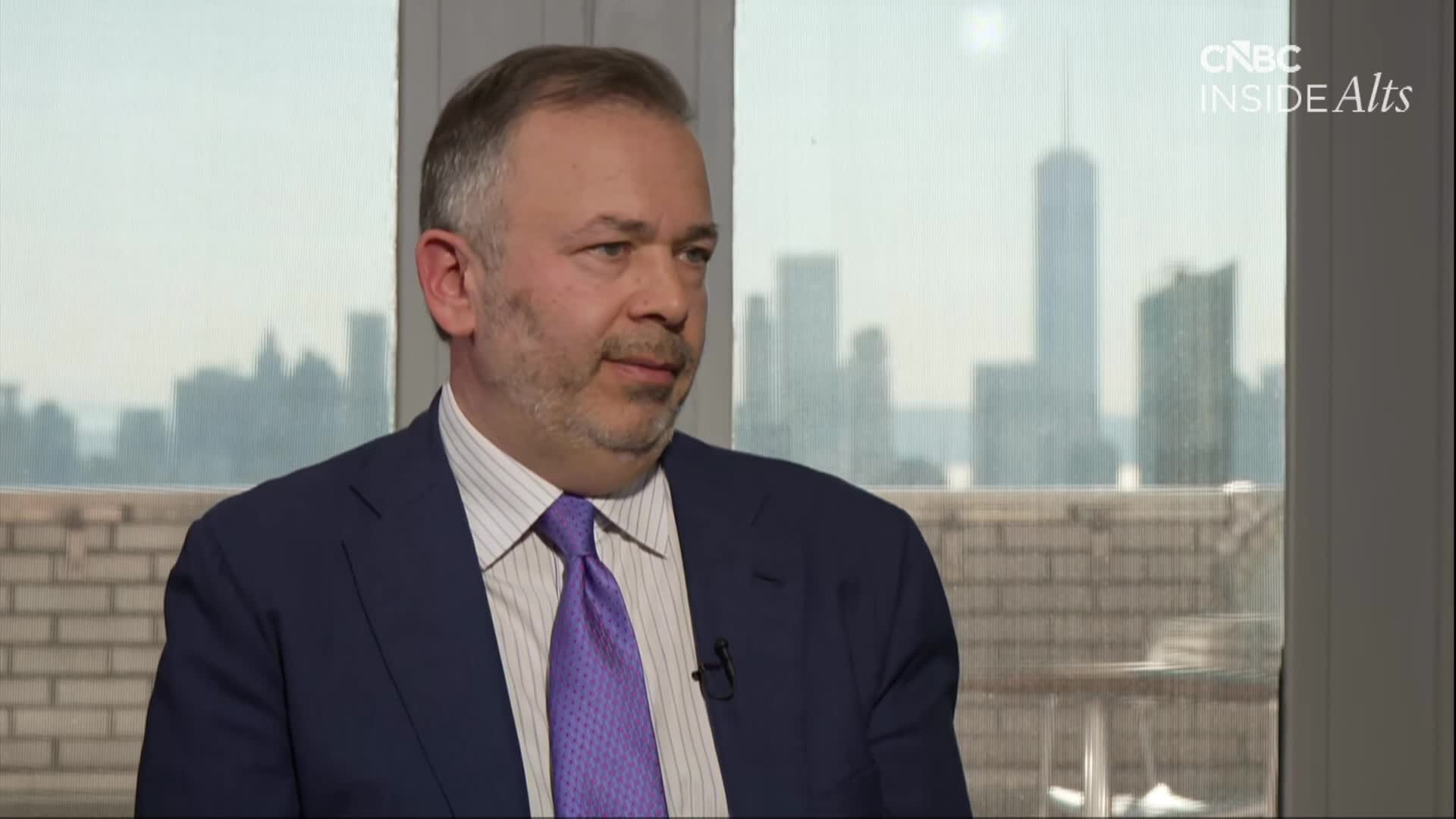
The problems in private credit are “multiplying by the quarter,” due in part to the “financial alchemy of promising liquidity that isn’t there,” Boaz Weinstein, founder of Saba Capital Management, told Inside Alts this week. 

“What’s happening, big picture, right now is that, for a number of reasons, in the middle of a bull market, there are cracks, there are problems, there are frauds, there are companies that are going bad without being a fraud,” Weinstein said in an exclusive interview. “So for those reasons, investors are seeing their dividends being cut. They want their money back, and [on] Wall Street the No. 1 story right now is where the redemption is going to be for all these managers.” 

Weinstein, of course, is a central figure in that story. His firm, Saba, alongside Cox Capital Management, just launched a tender offer to purchase 6.9% of shares in one of Blue Owl’s nontraded private credit funds at a 34.9% discount. 

Advertisement

“We were hearing from investors in these funds that they wanted their money back,” he said. “They were trying to find someone to step into their shoes, so that happened in an organic way.” 

That fund, known as Blue Owl Capital Corp. II, halted quarterly redemptions and sold $1.4 billion of direct lending investments to provide liquidity for its investors. It turned out to be among the first in a slew of nontraded, private credit funds that have been hit with redemption requests above the typical 5% quarterly cap.

Private wealth flows across products tracked by analysts at Jefferies were down 19% in the first quarter compared with Q4. Analysts said they expect redemption rates across retail credit products to increase. 

Saba and Cox see an opportunity amid investors’ limited liquidity. They are launching similar tenders for stakes in several other funds at Blue Owl as well as Starwood Real Estate Income Trust. This has caused some to question whether Weinstein has been criticizing the private credit industry only to scare retail investors into selling their stakes to him at a discount.

Advertisement

While speaking with Inside Alts, Weinstein clarified that he doesn’t actually believe there will be a wave of private credit defaults or frauds, nor does he think people should redeem further. (“The redemptions have arrived,” he said.)  

In fact, he’s actually bullish on several of the largest private credit managers. Weinstein said over the past few weeks, he bought shares in “the most amazing managers,” including Ares, Apollo and Blackstone. He said he is even long “a little bit” of Blue Owl equity.

“We’re long the stocks of these companies on the idea that, in case this is overdone, these are the guys that are going to be the winners at the end, when the smoke clears and their stocks may represent good value,” said Weinstein.

Get Inside Alts directly to your inbox

Weinstein said he thinks private credit is trading at pessimistic levels and public credit is trading at “incredibly optimistic levels.” He’s shorted public credit through credit default swaps and credit derivatives. Weinstein said that the gating of private credit funds means that investors will have to sell more liquid assets to raise cash, which would weigh on the market. 

Advertisement

“I think that public credit is incredibly mispriced and part of my short-term thinking about it is informed by the issues that the private credit markets are having,” he said. 

Weinstein said it will be a “number of weeks” before they know what happens with the Blue Owl bids, and how much they’ll end up buying. Weinstein said the tender offers weren’t “personal” against the manager, but rather, he said, “if we go bid for something, it’s a sign we think the manager is good.”

However, Weinstein noted a firm called Cliffwater as one in the private credit space that they’re “watching the most closely.” He said Cliffwater operates similarly to a fund-of-funds model, where they don’t own the loans directly, but rather, they’re invested in other managers. As a result, they have limited control over fulfilling their own redemption requests – something Weinstein describes as a “turducken” (a chicken stuffed inside a duck, stuffed inside a turkey).

According to a Securities and Exchange Commission filing, Cliffwater disclosed that as of the end of last year, 69% of its Corporate Lending Fund was comprised of direct investments in underlying credit and the remaining 31% was exposed to funds.  

Advertisement

Weinstein predicted that when Cliffwater announces its redemption rate — expected as early as Tuesday — it could be between 10% and 20%. 

“I don’t know their exact cash position, but we think it’s very likely that they’re going to have to start redeeming and they’re going to get cut back when they redeem these funds that they’ve invested in,” he said. 

Cliffwater was also the subject of a recent viral investor letter by the hedge fund Rubric Capital, which said the alternatives manager could be “a canary in a coal mine” and “the first domino in the bank run we foresee,” according to The New York Times, which cited two people who read the private note. 

When asked about what happens to private credit if there’s a real credit cycle, Weinstein said, “it will fall harder than it should.”

Advertisement

He added that “one of the best opportunities” in his career would be investing in private credit at a massive discount “when the economy slows.” 

“Maybe that’s not for a year, maybe it’s about to happen. Maybe it’s going to happen years from now,” Weinstein said. “It’s about to get super interesting.”

Choose CNBC as your preferred source on Google and never miss a moment from the most trusted name in business news.
Continue Reading
Click to comment

Leave a Reply

Your email address will not be published. Required fields are marked *

Business

Kalif Raymond Signs One-Year Deal with Chicago Bears, Reuniting with Ben Johnson After Lions Tenure

Published

on

Isiah Pacheco

Veteran wide receiver and return specialist Kalif Raymond has agreed to a one-year contract with the Chicago Bears, leaving the Detroit Lions and crossing the NFC North rivalry divide to join his former offensive coordinator, Ben Johnson, now the Bears’ head coach.

Kalif Raymond
Kalif Raymond

The deal, worth $5.1 million according to NFL Network’s Mike Garafolo and confirmed by multiple sources including ESPN’s Jeremy Fowler, adds a proven slot receiver and punt return threat to Chicago’s roster as the team builds around quarterback Caleb Williams in his second season. Raymond, 31, becomes an unrestricted free agent after his contract with Detroit expired following the 2025 campaign.

“Source: WR Kalif Raymond reaches 1-year deal with Bears,” Fowler reported Tuesday, March 10, 2026. “Reuniting the wide receiver with Ben Johnson.” Johnson served as Detroit’s offensive coordinator from 2022 through 2024 before taking the Bears’ top job last offseason, helping orchestrate one of the league’s most explosive attacks during his time in Detroit.

Raymond spent the past five seasons with the Lions after signing as a free agent in March 2021. He quickly became a reliable contributor, earning second-team All-Pro honors as a punt returner in 2022 after setting a franchise record with 1,485 career punt return yards through 2025. His versatility made him a staple in special teams and as a slot option, where he posted career highs in receptions and yards during Detroit’s resurgence.

In 2025, Raymond appeared in 15 games, starting three, and recorded 24 receptions for 289 yards and one touchdown. He also handled punt returns, averaging 9.5 yards on 10 attempts with no fumbles. Over his Lions tenure, he totaled more than 1,700 receiving yards and nine touchdowns while contributing significantly on returns.

Advertisement

The move comes as the Bears seek depth at wide receiver following a busy offseason. Chicago traded star wideout DJ Moore earlier in the cycle and lost Olamide Zaccheaus in free agency, creating openings for veteran additions. Raymond’s experience in Johnson’s scheme—emphasizing quick routes, motion and explosive plays—positions him as an immediate fit alongside young talents like Rome Odunze and Keenan Allen, if the latter remains on the roster.

“Raymond will add veteran depth to a young receiving group,” one NFL analyst noted in reaction to the signing. The Bears’ offense under Johnson has shown promise, but injuries and inconsistencies in 2025 highlighted the need for reliable secondary options who can win in the slot and contribute on special teams.

For Detroit, the departure stings as a division rival poaches a key contributor. The Lions, who defeated Chicago convincingly 52-21 in Week 2 of 2025 with Raymond active and contributing, now face the task of replacing his return prowess. Recent pre-draft visits suggested the team might look to younger options, but losing an All-Pro caliber returner to the Bears adds intrigue to the NFC North race.

Raymond’s career path reflects resilience. Undrafted out of Holy Cross in 2016, he bounced between practice squads with Denver, before stints in Tennessee and elsewhere. His breakthrough came in Detroit, where he developed into a trusted piece under coaches Dan Campbell and Johnson.

Advertisement

Against the Bears historically, Raymond performed well, totaling 20 catches for 235 yards and two touchdowns in nine career games, including a memorable two-touchdown performance in a 2021 loss.

The signing drew quick reactions across the league. “Ben Johnson raids Lions’ roster as Bears agree to terms with Kalif Raymond,” one headline read, underscoring the coach’s familiarity with the player. Others praised the low-risk, high-upside addition for Chicago. “He’s gonna be a 32-year-old WR4/punt returner,” a fan forum post noted. “Not sure what there would be to be upset about.”

Raymond’s skill set aligns with Johnson’s philosophy of utilizing speed and savvy in space. At 5-foot-8 and 180 pounds, he excels in quick-release routes and as a chain-mover, while his return background provides special teams value in an era where field position matters.

The Bears enter the 2026 offseason with optimism after drafting Williams No. 1 overall in 2025 and showing flashes of competitiveness. Adding Raymond bolsters depth without significant cap commitment—a one-year pact allows flexibility if the young core progresses.

Advertisement

For Raymond, the move offers a fresh chapter in a familiar system. “Adding an intriguing weapon in Chicago,” NFL Network’s Ian Rapoport described the acquisition. The veteran enters his 10th NFL season with a chance to contribute meaningfully on a team aiming to contend in the division.

As free agency continues, the Bears’ activity signals intent to surround Williams with experienced playmakers. Raymond’s arrival, while not headline-grabbing like a blockbuster trade, represents a savvy, low-cost move leveraging coaching continuity.

Detroit fans expressed disappointment on social media, with some lamenting the loss of a player who embodied the team’s gritty turnaround. The Lions now prioritize replacing his special teams impact, potentially through the draft or remaining free agents.

The NFC North remains one of the league’s most competitive divisions, with all four teams showing potential. Raymond’s switch to Chicago adds another layer of rivalry drama when the teams meet twice in 2026.

Advertisement

For now, the versatile veteran prepares to don navy and orange, bringing his track record of production and professionalism to a Bears squad hungry for consistency.

Continue Reading

Business

Wales needs it own industrial strategy say Liberal Democrats

Published

on

Business Live

The Welsh Liberal Democrats said a strategy needs to support heavy industry and manufacturing that makes up 15% of the Welsh economy

The Liberal Democrats have called for the next Welsh Government to implement its own industrial strategy as part of a long-term plan to strengthen the economy’s manufacturing base.

Ahead of publishing its Senedd Election manifesto later this month the Welsh Liberal Democrats said a dedicated Welsh industrial strategy should work alongside the UK-wide strategy – ensuring Welsh industries receive the targeted support they need while avoiding duplication. Last year the Westminster government published its ten year industrial strategy around eight key pillars, ranging from manufacturing to fintech.

Last week, in its Senedd manifesto, CBI Wales also called for a distinct Welsh industrial strategy, although with alignment to the UK one.

Advertisement

READ MORE: M4 relief road ‘is needed if we want to grow the economy’READ MORE: Leasing deal agreed for third huge floating offshore windfarm in the Celtic Sea

The Welsh Liberal Democrats proposal was highlighted during a visit by David Chadwick MP to the 7 Steel facility in Cardiff, where he met with workers and industry representatives to discuss the challenges facing Welsh heavy industry and manufacturing.

The party says Wales requires a clear and coordinated strategy to support its industrial sectors, recognising the outsized role they play in the Welsh economy. Heavy industry and manufacturing account for around 15% of the Welsh economy, compared with around 9% across the rest of the UK.

The party argues that Wales still has a strong industrial base and the potential to lead in areas such as advanced manufacturing, engineering and green energy supply chains, but that this will require deliberate and sustained action from government.

Advertisement

It highlighted that businesses in Wales consistently raise concerns about high energy costs, poor transport infrastructure and growing skills shortages, which they warn are holding back investment and growth. It added that any serious industrial strategy must also focus on strengthening apprenticeships and technical training to ensure Welsh businesses have access to the skilled workforce they need.

The Welsh Liberal Democrats have previously called for the Welsh Government to reverse recent cuts to the apprenticeship budget, expand higher and degree apprenticeships in sectors such as engineering, manufacturing and construction, and establish regional engineering and technical skills hubs aligned with local employer demand.

Mr Chadwick, who is PM for Brecon, Radnor and Cwm Tawe, said: “Wales has a proud industrial heritage and the skills, expertise and workforce to build a strong manufacturing future. But after decades of deindustrialisation and years of economic drift from the Welsh Labour Government, far too many communities feel their industries have simply been left behind.

“Manufacturing and heavy industry still make up a far larger share of the Welsh economy than they do elsewhere in the UK. That is a strength we should be building on, not something we allow to decline through neglect.

Advertisement

“That’s why the Welsh Liberal Democrats are calling for a dedicated Industrial Strategy for Wales, one that recognises the importance of our industrial sectors, supports innovation and investment, and ensures Welsh businesses can compete and grow.

“After 27 years in power, Welsh Labour has never even attempted to set out a clear strategy to close the wage gap between Wales and England or improve productivity across the Welsh economy.

“The Welsh Liberal Democrats believe economic growth should be at the heart of tackling poverty and creating opportunity. A serious industrial strategy for Wales would be a vital step towards achieving that.”

The party is also calling for rail to be devolved to Wales with a fair block grant adjustment recognising years of underinvestment in Wales’ rail infrastructure. Devolution of rail would uncouple Wales from rail projects in England, such as high speed two, being deemed as Wales and England schemes.

Advertisement

This would see the comparability factor, which sets the rate of a Barnett consequential from an overall increase in DfT spending, rising for Wales from the current 33% in line with nearly 96% for Scotland and Northern Ireland.


Continue Reading

Business

The Stock Market’s Many Concerns Extend Beyond Historic Oil Prices

Published

on

The Stock Market’s Many Concerns Extend Beyond Historic Oil Prices

The Stock Market’s Many Concerns Extend Beyond Historic Oil Prices

Continue Reading

Business

U.S. Stocks Are the World’s Least-Dirty Shirt

Published

on

U.S. Stocks Are the World’s Least-Dirty Shirt
Spencer Jakab

Stocks worldwide are tumbling as oil prices smashed through the psychologically fraught $100 a barrel mark. U.S. crude prices already just had their biggest weekly gain ever. To make matters worse, stagflation worries are preventing bonds from providing their usual cushion to investment portfolios.

​📈 Follow our live markets data and coverage.

Copyright ©2026 Dow Jones & Company, Inc. All Rights Reserved. 87990cbe856818d5eddac44c7b1cdeb8

Continue Reading

Business

(VIDEO) ‘Project Hail Mary’ Earns Stellar Reviews, Outpacing ‘The Martian’ as Top-Rated Sci-Fi Hit

Published

on

Project Hail Mary

Just days before its nationwide theatrical debut, Amazon MGM Studios’ Project Hail Mary is generating widespread acclaim from critics, boasting a 95% approval rating on Rotten Tomatoes from over 65 reviews as of March 10, 2026. The score edges out the 92% earned by Ridley Scott’s The Martian (2015), marking the Ryan Gosling-led space epic as one of the century’s most favorably reviewed sci-fi films.

Project Hail Mary
Project Hail Mary

Directed by Phil Lord and Christopher Miller—the Oscar-winning duo behind The LEGO Movie and the Spider-Verse franchise—this marks their first live-action directorial feature since 2014’s 22 Jump Street. Screenwriter Drew Goddard, who previously adapted Weir’s The Martian for the screen, delivers a faithful yet cinematic take on the 2021 novel. The film follows Ryland Grace (Gosling), a junior high science teacher who awakens alone aboard a spaceship far from Earth, grappling with amnesia while confronting a mission to reverse a solar dimming threat that could doom humanity.

Critics have praised the film’s blend of hard science, humor, emotional depth, and visual spectacle. Many highlight the central relationship between Grace and “Rocky,” an alien companion rendered through groundbreaking practical effects and puppeteering by Neal Scanlan and James Ortiz. Reviews describe Rocky as a “breakout star” whose design and performance evoke genuine warmth and wonder, turning the story into a heartfelt interspecies buddy adventure.

The Hollywood Reporter called it a “winner” for Amazon MGM, noting the film’s ability to balance intellectual rigor with crowd-pleasing entertainment. Deadline reported strong early buzz, projecting a $50 million-plus domestic opening weekend against a production budget estimated at over $150 million. IndieWire described Gosling’s performance as channeling the “Everyman” spirit of Matt Damon’s Mark Watney in The Martian, but with added layers of vulnerability and charm. USA Today awarded it four out of four stars, hailing it as “2026’s first great movie” and an “epic space adventure that checks all the sci-fi boxes.”

Empire magazine deemed it an “old-school crowdpleaser,” while Gizmodo emphasized that even viewers familiar with the book’s plot remain captivated by the execution. Nerdist went further, stating the film “made me romantic about movies” again, crediting its faithful adaptation, stellar soundtrack, and the lifelike portrayal of Rocky—achieved through a seamless mix of puppets, animatronics, and subtle CGI.

Advertisement

The film’s Rotten Tomatoes Tomatometer stands at 95% “Certified Fresh,” with descriptors highlighting its intelligence, optimism, and visual innovation. On Metacritic, it holds a 79/100 from early reviews, indicating “generally favorable” reception. While audience scores are not yet fully available ahead of the March 20 release, social media reactions from preview screenings have echoed the enthusiasm, with many calling it a potential “masterpiece” rivaling Interstellar or The Martian.

Project Hail Mary premiered in London on March 9, 2026, with early IMAX and premium format screenings already underway in select markets. It opens wide in theaters—including IMAX and IMAX 70mm—on March 20, distributed by Amazon MGM Studios domestically and Sony Pictures internationally. The production was filmed with IMAX cameras to capture the vastness of space and intricate scientific sequences.

Weir’s novel, a follow-up to his debut The Martian, became a bestseller for its accessible explanations of astrophysics, xenobiology, and problem-solving. The film retains this spirit, emphasizing cooperation over conflict—both between humans and with extraterrestrial life. Gosling, an Academy Award nominee, also serves as a producer, bringing his signature wit to the reluctant hero role.

Supporting performances include Sandra Hüller, Lionel Boyce, Ken Leung, and Milana Vayntrub, adding depth to flashbacks and mission elements. The score and sound design have drawn particular praise for enhancing the sense of isolation and discovery.

Advertisement

As anticipation builds, Project Hail Mary arrives at a time when sci-fi blockbusters continue to draw audiences seeking smart, hopeful escapism. Its early critical success suggests it could follow The Martian‘s path—not only commercially, with that film grossing over $630 million worldwide—but also as a cultural touchstone for hard science fiction on screen.

Industry observers note the film’s timing could position it as an awards contender, particularly for Gosling’s lead performance, the visual effects, and adapted screenplay. With review embargoes lifted and word-of-mouth spreading rapidly, Project Hail Mary appears poised to soar beyond expectations, proving that thoughtful science fiction remains a powerful draw in modern cinema.

Advertisement
Continue Reading

Business

Exclusive-As many as 150 US troops wounded so far in Iran war, sources say

Published

on

Exclusive-As many as 150 US troops wounded so far in Iran war, sources say


Exclusive-As many as 150 US troops wounded so far in Iran war, sources say

Continue Reading

Business

From First-Round Pick to Latest Giants Move

Published

on

Isiah Pacheco

Greg Newsome II, the 25-year-old cornerback who entered the NFL as a highly touted first-round selection, has embarked on a new chapter with the New York Giants following a one-year free-agent signing in March 2026. The deal, worth up to $10 million, addresses the Giants’ need for secondary depth after other cornerbacks departed in free agency. Newsome brings experience from stints with the Cleveland Browns and Jacksonville Jaguars, where his career has featured flashes of shutdown potential alongside challenges in consistency and injuries.

Greg Newsome II
Greg Newsome II

Here are 10 essential things to know about Newsome as he prepares to contribute to the Giants’ defense in the 2026 season.

  1. Hometown roots and early football journey Born May 18, 2000, in Chicago, Illinois, Newsome grew up in a football-rich environment. He attended IMG Academy in Florida for high school, a program known for producing NFL talent. His athletic background helped him stand out early, leading to a standout college career at Northwestern University.
  2. Standout college performance at Northwestern Newsome played for the Northwestern Wildcats, earning consensus first-team All-Big Ten honors in 2020 despite a shortened season due to the COVID-19 pandemic. He led the conference with 10 passes defended, including nine breakups and one interception. Pro Football Focus highlighted his elite coverage metrics, allowing just 0.44 yards per coverage snap — the best in the 2021 NFL Draft class — and permitting only one touchdown in 471 coverage snaps since 2019.
  3. First-round draft selection by the Cleveland Browns The Browns selected Newsome with the 26th overall pick in the 2021 NFL Draft. He signed a four-year, fully guaranteed rookie contract worth $12.75 million, including a $6.63 million signing bonus. Expectations were high as he replaced departing veteran Terrance Mitchell, pairing with Denzel Ward as a starting cornerback from day one.
  4. Solid early contributions in Cleveland In his rookie season and beyond, Newsome showed promise as a versatile defender capable of playing outside or in the slot. Over his time with the Browns through 2025, he accumulated respectable career totals, including three interceptions (one returned for a touchdown), 37 passes defended, and 178 tackles across 59 games. He earned praise for quick hands and instincts in coverage.
  5. Fifth-year option exercised, then demotion Cleveland picked up Newsome’s fifth-year option in 2024, worth $13.37 million for the 2025 season. However, heading into Week 3 of 2025, head coach Kevin Stefanski shifted him to a backup role behind Martin Emerson, signaling a dip in performance or scheme fit. Newsome prepared for increased snaps after injuries to teammates but faced challenges maintaining starter status.
  6. Midseason trade to the Jacksonville Jaguars In October 2025, the Browns traded Newsome and a 2026 sixth-round pick to the Jaguars for cornerback Tyson Campbell and a 2026 seventh-rounder. Newsome expressed excitement about the move, calling it “amazing” to join a winning team. He debuted soon after but struggled with injuries and inconsistent play, posting low Pro Football Focus grades in several games and seeing reduced snaps later in the season.
  7. 2025 stats and performance overview Across both teams in 2025, Newsome appeared in 12 games with 11 starts for Jacksonville after the trade. He recorded one interception, six pass breakups, and 29 tackles in limited action with the Jaguars, plus additional contributions from Cleveland. His overall PFF grade sat at 55.4, ranking him 85th among cornerbacks, reflecting mixed results in coverage and run support.

  8. Free agency and one-year deal with the Giants Entering unrestricted free agency after 2025, Newsome agreed to terms with the Giants on March 10, 2026, on a one-year contract valued at up to $10 million. The move came as New York sought to bolster its secondary following departures like Cor’Dale Flott. Agents Drew Rosenhaus and Oliver Chell negotiated the deal, positioning Newsome as a potential boundary starter or key rotational piece.
  9. Physical profile and playing style Listed at 6-foot, 192 pounds, Newsome combines length, speed, and agility. Scouts noted his fluid hips and ball skills during his draft process. He excels in man coverage when healthy but has faced criticism for occasional lapses against physical receivers. His versatility allows flexibility in defensive schemes, a trait the Giants value in rebuilding their unit.
  10. Outlook for 2026 and beyond At 25, Newsome remains young with upside in a prove-it year. The Giants’ signing provides stability and competition in the secondary. Success could lead to a longer-term deal, while struggles might impact his market. Analysts view the move as low-risk for New York, aiming to stabilize a defense needing playmakers. Newsome’s experience across three teams in five seasons offers maturity as he joins Big Blue.

Newsome’s journey reflects the unpredictable nature of NFL careers — from elite prospect to journeyman seeking resurgence. With training camp approaching, all eyes will be on how he adapts to the Giants’ system and contributes to turning around a unit hungry for improvement.

Continue Reading

Business

Oil and gas price shock from Iran war could impact grocery costs

Published

on

Oil and gas price shock from Iran war could impact grocery costs

High oil prices due to the Iran war are pushing gasoline prices higher and that could lead to grocery bills rising for American consumers.

Oil prices surged in recent weeks after the outbreak of the Iran war, rising from the $60 to $70 a barrel range for most of February to more than $100 a barrel on Monday before gradually easing to about $85 a barrel during Tuesday’s trading session.

Advertisement

Higher oil prices, in turn, push gasoline and diesel prices higher, with the average price of a gallon of regular gasoline rising from $2.92 a month ago to $3.54 and diesel increasing from $3.66 to $4.78 in that period, according to AAA data.

The increase in oil, gas and diesel prices raises the transportation costs faced by businesses, including grocery stores, which may face pressure to raise the price of food and other items to account for the cost increases if the situation continues.

WILL TAPPING OIL RESERVES CURB SOARING GAS PRICES?

Oil tanker in Strait of Hormuz

The war with Iran has affected the flow of oil through the Strait of Hormuz, a key choke point for the global energy market. (Giuseppe Cacace/AFP via Getty Images / Getty Images)

“Every time something moves in the economy it will cost more,” said Derek Reisfield, co-founder of MarketWatch and a former McKinsey consultant. “Someone, usually the end consumer, will have to pay for that.”

Advertisement

Gregory Daco, chief economist at EY-Parthenon, told FOX Business, “For U.S. consumers, what this means is that while there is currently a price shock at the pump being felt directly by consumers, there’s still uncertainty as to how long this shock will last.”

“The effect on consumer spending activity is still somewhat fluid because we don’t know the duration of the shock to crude oil prices and in turn to gas prices,” he added, noting that gas prices will moderate if crude oil prices trend down toward their pre-war levels.

FED OFFICIALS CLOSELY MONITOR IRAN CONFLICT FOR POTENTIAL INFLATION IMPACT

Shopper at a grocery store

Grocery prices could be affected by a protracted energy price shock because elevated oil and gas prices increase businesses’ transportation costs and could be passed on to consumers. (Justin Sullivan/Getty Images)

Daco noted that businesses find themselves in “a very delicate pricing environment” because tariffs have raised input costs, which have been challenging to pass on to inflation-weary consumers

Advertisement

“Pricing sensitivity over the course of the last couple of years has increased dramatically, and increasingly consumers are constrained by affordability issues,” Daco said. 

Talent costs are also elevated with wages rising, and now transportation costs are increasing due to the oil and gas shock. And with consumers facing their own financial limitations, businesses are “really struggling in terms of your ability to find a relief valve on the pricing side.”

AMID IRAN WAR, PRESIDENT TRUMP SUGGESTS SHORT-TERM OIL PRICE SPIKE IS ‘SMALL PRICE TO PAY’ FOR PEACE

Person's hand pulls for gas station pump

Gas prices jumped after the outbreak of the Iran war. (Brandon Bell/Getty Images)

Daco said businesses may opt to address those headwinds through some combination of margin compression and selective pricing behavior to “stave off some of these shocks at least in the short run” as they try to protect market share while waiting to see whether the energy price shock will be short-lived or longer-lasting.

Advertisement

Ben Fulton, CEO of WEBs Investments, said the oil shock “will have a butterfly effect if prices stay above $70 for very long. The cost to transport, hedging costs for manufacturing and cushioning by producers to protect from possible pending inflation will be noticeable to retail.”

GET FOX BUSINESS ON THE GO BY CLICKING HERE

Continue Reading

Business

Clover Sonoma unveils premium ice cream

Published

on

Clover Sonoma unveils premium ice cream

The ice cream is available in four flavors. 

Continue Reading

Business

First-time homebuyers could save tax-free under new Senate bill

Published

on

First-time homebuyers could save tax-free under new Senate bill

Buying a home was once the bedrock of the American Dream, but for millions of families, that dream is being priced out of reach. 

With the typical down payment more than doubling since 2019 to $30,400, Sen. Rick Scott, R-Fla., is moving to bypass “economy-crushing” inflation. His newly introduced American Dream Accounts Act would empower first-time buyers to shield their savings from the IRS, allowing them to build a down payment faster and reclaim a stake in the country’s future.

Advertisement

“I grew up in public housing and watched my family struggle to make ends meet. For us, owning a home was out of reach because we couldn’t afford it,” Scott said in a press release. “Today, so many Americans are facing that same struggle, especially young first-time buyers who view homeownership as a critical milestone to help them achieve their American Dream.”

McMANSIONS BECOME FINANCIAL ‘LIABILITY’ AS BUYERS DITCH OVERSIZED HOMES

On Friday, the senator introduced the bill, which would allow for tax-exempt contributions and qualified withdrawals for down payments. Individuals under 35 years old can contribute up to $7,500 annually, while those over 35 have a “catch-up” limit of $10,000 per year.

Home with for sale sign

A “for sale” sign is displayed outside of a home for sale on Aug.16, 2024, in Los Angeles, California. (Getty Images)

There’s flexibility for couples as two buyers can combine distributions, allowing for a total qualified distribution of up to $500,000.

Advertisement

However, nonqualified withdrawals will face a 10% penalty, mirroring traditional 401(k) rules to ensure the money remains focused on buying a home. 

Realtor.com’s latest Down Payment Report found that the average amount needed for a home rose to $30,400 in the third quarter of 2025, double the figure from 2019. Additionally, the report estimated that it takes about seven years to save for that down payment.

“Unfortunately, years of inflation-driving, economy-crushing Democrat-led policies aren’t helping make it any easier. That’s wrong, and it’s why I am fighting every day to deliver real solutions that make housing more affordable for everyday Americans and make the dream of homeownership a reality,” Scott said.

Advertisement

GET FOX BUSINESS ON THE GO BY CLICKING HERE

“Homeownership means stability and economic mobility,” he continued. “This bill will help first-time buyers save faster, and their money go farther to ease the financial barrier to homeownership for families.”

While Sen. Scott’s bill takes the initiative to the federal level, several states, including Virginia, Colorado, Iowa and Oregon, have pioneered first-time homebuyer savings accounts to help Americans reach homeownership goals.

Advertisement

READ MORE FROM FOX BUSINESS

Continue Reading

Trending

Copyright © 2025