








Business
Sale of fast-growing group credit life cover could be hit
“The biggest impact will likely be on group credit life policies sold alongside retail loans,” a senior insurance executive said. “That’s where distribution practices will need to change.”
The draft guidelines prohibit banks from making the purchase of third-party products, including insurance, a prerequisite for sanctioning loans. RBI said banks “shall not bundle the sale of any third-party product or service with any of its own.”
The move targets concerns that bundling add-on products during the onboarding process may mislead customers. The change could hit credit life policies, which cover outstanding loans in the event of a borrower’s death. These policies, sold as group contracts by lenders but covering individuals, have grown rapidly alongside home and retail loan growth and now account for about ₹30,000 crore annually.
India’s life insurance industry generated ₹8.86 lakh crore in premiums last year, including about ₹4 lakh crore from new business, of which ₹1.5-1.6 lakh crore came from retail and ₹2.5 lakh crore from group business. Credit life makes up roughly ₹30,000 crore of this.
Business
Rupee soars after RBI comes out firing in support
The rupee gained due to what traders described as ‘significant’ interventions by the Reserve Bank of India (RBI). It closed at 91.60/$1 on Thursday, up from its previous close of 92.15/$1.
The rupee had gained to 91.41/$1 earlier in the session.
The strength in the rupee comes despite an increase in crude oil prices and the dollar index. Brent crude oil was trading at $84 per barrel, while the dollar index was at 99. The rupee traded in a narrow 20 paise range of 91.64/$1 and 91.41/$1.
Traders expect RBI intervention to continue on Friday and the range is expected to be 91.25/$1 to 91.75/$1 on the last day of the week. “RBI did not let the rupee go past 91.61/$1, even though there was significant dollar demand. The central bank also intervened before 9:00 am, which made the currency open at 91.56/$1 in domestic markets,” said Anil Bhansali, head of treasury, Finrex Treasury Advisors.
This aggressive intervention by RBI comes after the rupee touched a record low of 92.31/$1 on Wednesday.
Traders are, however, unsure of how long RBI will provide such large interventions, as dollar sales to defend the rupee in the currency market drain domestic rupee liquidity. “We have seen this in the past, where there is stiff intervention on one day and then the intervention abruptly stops. RBI also cannot keep intervening as aggressively as it did today (Thursday), because it then impacts domestic liquidity,” said a chief dealer at a PSU bank.
The central bank’s latest weekly data showed its foreign currency reserves were at $724 billion, covering about 11 months of imports.
Business
Oil Prices Surge Amid Escalating Middle East Conflict as WTI Crude Nears $79
Crude oil prices climbed sharply in early Asian trading Friday, extending a volatile week driven by the ongoing U.S.-Israel military campaign against Iran and retaliatory actions that have disrupted global supply expectations. Benchmark West Texas Intermediate (WTI) crude futures rose more than 5% to hover near $78.50 per barrel, while Brent crude, the international standard, approached $84 amid fears of prolonged supply risks in the Persian Gulf.

WTI crude for April delivery was trading at approximately $78.47 per barrel on the New York Mercantile Exchange, up $3.81 or 5.10% from Thursday’s close of $74.66. The contract opened at $76.15 and ranged between a low of $74.97 and a high of $78.54 in overnight and early session activity. Brent crude futures on the Intercontinental Exchange gained around 3% to trade near $83.99 to $84.00 per barrel, reflecting a $2.59 to $2.60 increase or roughly 3.2% from the prior settlement.
The sharp moves come as the conflict in the Middle East enters its second week, with reports of Iranian forces targeting a U.S.-registered tanker in the northern Persian Gulf adding fresh upward pressure. Iran’s Tasnim news agency cited missile strikes on the vessel, heightening concerns over potential blockades or disruptions in the Strait of Hormuz, through which roughly 20% of global oil trade flows. Analysts warn that any sustained closure or significant interference could push prices toward triple digits.
The rally has already translated into higher costs at the pump for American drivers. The national average gasoline price reached $3.25 per gallon Thursday, up 30 cents in less than a week and a 9% jump from pre-conflict levels around $2.98, according to AAA data. Industry observers note that every $1 increase in crude typically adds about 2.4 cents per gallon to retail fuel prices, though the relationship can vary with refining margins and regional factors.
Market sentiment has whipsawed since the U.S. and Israel launched strikes on Iranian targets Saturday, initially sending oil surging as much as 11% in early sessions. Brent opened around $81.60 early in the week before climbing further, while WTI jumped 8% at one point. Trading volume spiked to record levels on the Intercontinental Exchange, with 12.7 million energy futures and options contracts changing hands Monday alone as investors rushed to hedge or speculate on the volatility.
U.S. crude producers have moved quickly to lock in elevated prices through hedging strategies, securing gains amid the uncertainty. Diesel futures outperformed both crude and gasoline earlier in the week, settling nearly 12% higher at one stage due to tighter supply dynamics in refined products.
Broader economic implications are mounting. Federal Reserve officials are monitoring the oil shock closely, with some suggesting it could prompt a pause in recent interest rate cuts or even force reconsideration of policy easing if inflation pressures reemerge. President-elect-aligned figures and market watchers have highlighted affordability concerns ahead of midterm elections, as higher energy costs ripple through household budgets and transportation expenses.
Despite the upward momentum, some analysts caution that the spike may moderate if the conflict de-escalates or if alternative supplies from non-Middle East producers ramp up. Goldman Sachs recently raised its Q2 Brent forecast to the low $80s, reflecting a more bullish near-term view but acknowledging execution risks. Other forecasts suggest Brent could average around $74 in Q1 before potential stabilization, though current events have rendered such projections outdated.
Global stock markets have shown mixed reactions, with Asian shares rebounding modestly after earlier losses while U.S. equities faced pressure. The Dow Jones Industrial Average dropped significantly earlier in the week as oil’s climb weighed on growth-sensitive sectors. Energy stocks have benefited, with producers and service companies posting gains on higher commodity realizations.
The conflict’s trajectory remains the dominant driver. Reports indicate continued U.S. strikes in Iran, with Tehran vowing retaliation that could further imperil shipping lanes. Investors are watching for any diplomatic breakthroughs or military de-escalation signals, though none appeared imminent as of early Friday.
Longer-term, the episode underscores vulnerabilities in global energy markets. Disruptions have spotlighted reliance on Strait of Hormuz transit and prompted renewed discussion of strategic reserves and diversification efforts. U.S. production, already at robust levels, offers some buffer, but export infrastructure constraints and refining capacity limit immediate offsets.
Gasoline and heating oil prices have followed crude higher, with RBOB gasoline futures up around 3.5% in recent sessions. Natural gas has seen milder moves, trading near $2.93 with modest gains.
As trading continues into the U.S. session, volatility is expected to persist. The coming days could prove decisive, with potential for further spikes if supply threats materialize or stabilization if containment efforts succeed. For now, oil markets remain firmly in risk-on mode, pricing in geopolitical premiums that have lifted benchmarks to multi-month highs.
The surge marks a dramatic reversal from earlier 2026 levels, when WTI hovered in the mid-$60s amid ample supply and demand concerns. Year-to-date, crude has gained significantly, though the latest leg higher reflects war-driven speculation rather than fundamentals alone.
Market participants continue to brace for headline risk, balancing enthusiasm for producer profits against broader economic headwinds from sustained high energy costs.
Business
GoPro, Inc. (GPRO) Q4 2025 Earnings Call Transcript
Operator
Good afternoon. Thank you for attending the GoPro Fourth Quarter and Fiscal Year 2025 Earnings Call. My name is Cameron, and I’ll be your moderator for today. [Operator Instructions].

I would now like to pass the conference over to your host, Robin Stoecker, Director of Corporate Communications with GoPro. You may proceed.
Robin Stoecker
Director of Corporate Communications
Thank you, Cameron. Good afternoon, and welcome to GoPro’s Fourth Quarter and Full Year 2025 Earnings Conference Call. With me today are GoPro’s CEO, Nicholas Woodman; and CFO and COO, Brian McGee.
Today’s agenda will include brief commentary from Nick and Brian, followed by Q&A. For detailed information about our fourth quarter and full year 2025 performance as well as outlook, please read our Q4 and full year 2025 earnings press release and management commentary we posted to the Investor Relations section of GoPro’s website.
Before I pass the call to Nick, I’d like to remind everybody that our remarks today may include forward-looking statements. Forward-looking statements and all other statements that are not historical facts, are not guarantees of future performance and are subject to a number of risks and uncertainties, which may cause actual results to differ materially.
Additionally, any forward-looking statements made today are based on assumptions as of today. This means that results could change at any time, and we do not undertake any obligation to update these statements as a result of new information or future events.
To better understand the risks and uncertainties that could cause actual results to differ from our commentary, we refer you to our most
Business
Atea Pharmaceuticals, Inc. 2025 Q4 – Results – Earnings Call Presentation (NASDAQ:AVIR) 2026-03-05
Seeking Alpha’s transcripts team is responsible for the development of all of our transcript-related projects. We currently publish thousands of quarterly earnings calls per quarter on our site and are continuing to grow and expand our coverage. The purpose of this profile is to allow us to share with our readers new transcript-related developments. Thanks, SA Transcripts Team
Business
Relief rally lifts Sensex, Nifty on hopes of de-escalation in Iran-Israel war
NSE’s Nifty rose 285 points, or 1.2%, to close at 24,765. BSE’s Sensex gained 899 points, or 1.1%, to end at 80,015. Both indices had fallen close to 2.7% in the past two trading sessions of the truncated week, with the military conflict in West Asia deepening the risk-off mood. Indian markets had remained shut on Tuesday on account of Holi.
Elsewhere in Asia, Japan rose 1.9%, China advanced 0.6%, Hong Kong gained 0.3%, South Korea jumped 9.6% and Taiwan rose 2.6%.
“The sharp rally in the second half of the session was driven by expectations of potential de-escalation in geopolitical tensions,” said Aamar Deo Singh, senior vice president of research at Angel One.
Technical indicators were also oversold, which added to the day’s rebound. “The pullback was primarily a textbook mean-reversion event driven by deeply oversold technicals and a violent short-covering squeeze in the derivatives segment,” said Bhavya Shah, technical research analyst at Stoxbox.
Shah said based on intraday price action, the index consolidated through the first-half of the session before breaking out past 2:15 PM, which triggered cascading stop-losses for intraday bearish bets.
The Nifty India Volatility Index, or VIX-popularly known as the market’s fear gauge- cooled 15.5% to 17.86 on Thursday after rising more than 50% earlier this week. Broader market indices outperformed the benchmarks on Thursday, with Nifty Midcap 150 gaining 1.5% and Nifty Smallcap 250 rising 1.4%. Of the total 4,397 stocks traded on BSE, 2,749 advanced and 1,515 declined.
FPIs net sold shares worth ₹3,752.5 crore, while domestic institutional investors were buyers worth ₹5,153 crore.
Analysts are hesitant to conclude that the recovery is permanent. “The near-term outlook remains highly volatile with a sell-on-rise underlying bias,” said Shah. “Traders should not conflate a short squeeze with a new bull phase.”
He said traders should watch the resistance level of 24,850 on the Nifty, below which the index is likely to see a resumption of the prevailing downtrend toward 24,300.
Business
Asia-Pacific Financial Institutions Face Rising Challenges Amid 2026 Regulatory Shifts
Financial services firms across the Asia Pacific are facing a critical inflection point in 2026, as regulators across the region accelerate efforts to address the growing risks posed by artificial intelligence, digital assets, and financial crime, according to Deloitte’s Asia Pacific Financial Regulatory Outlook 2026, published by the firm’s Asia Pacific Centre for Regulatory Strategy (ACRS).
Key takeaways
- Financial services firms in the Asia Pacific must move from reactive compliance to proactive regulatory leadership, especially as AI and digital assets reshape the industry faster than existing frameworks can keep up.
- Regulatory fragmentation across the region is no longer sustainable, as financial risks in AI, digital assets, and financial crime are global by nature and demand cross-border coordination.
- Boards and senior executives that treat emerging threats like financial crime and AI governance as back-office issues rather than strategic priorities risk being caught ofguard in an increasingly complex regulatory environment.
The report, developed in collaboration with Deloitte counterparts across EMEA and the Americas, offers one of the most comprehensive analyses of the regional regulatory environment to date, and its findings carry urgent implications for board members and senior executives across the financial sector.
AI and Technology Top the Regulatory Agenda
Artificial intelligence has moved from emerging technology to core operational infrastructure across the region’s financial institutions, embedding itself in credit decisions, fraud detection, and customer onboarding systems. Regulators, however, are struggling to keep pace.
The Deloitte report identifies AI governance as one of the defining regulatory challenges of the year, warning that firms without robust explainability standards and model risk frameworks face growing exposure as oversight frameworks tighten across multiple markets.
Digital Assets Enter the Regulatory Mainstream
Once dismissed as speculative, digital assets have secured a permanent place in the regulatory conversation across the Asia Pacific.
The 2026 outlook dedicates a full chapter to the sector, reflecting the rapid maturation of licensing regimes, custody standards, and cross-border frameworks across the region. Firms that have yet to develop a clear regulatory strategy for digital assets are running out of time to do so.
Financial Crime Risks Grow Alongside Innovation
As financial institutions adopt new technologies and expand into digital markets, regulators are raising expectations around financial crime compliance.
The report warns that the surface area for illicit activity grows in parallel with innovation, placing renewed pressure on firms to treat anti-money laundering and financial security as frontline strategic priorities rather than back-office functions.
The Deloitte report concludes that the financial services industry across the Asia Pacific must adapt and innovate to meet the evolving needs of its stakeholders and contribute to the region’s long-term success.
Other People are Reading
Business
GameStop Stock Holds Steady Near $24 Amid Acquisition Speculation and Upcoming Earnings
GameStop Corp. shares traded in a narrow range early Friday, maintaining levels around $24 as investors digested ongoing speculation about a major acquisition and awaited the retailer’s quarterly earnings report later this month. The meme-stock favorite has shown resilience in recent sessions despite broader market pressures from geopolitical tensions and rising energy costs.

GETTY IMAGES NORTH AMERICA / SPENCER PLATT
GameStop (NYSE: GME) was changing hands at approximately $23.91 to $24.10 in pre-market and early U.S. trading, up modestly from Thursday’s close of $23.87. The stock opened around $23.80 to $23.95 in the prior session, with intraday action ranging from a low of $23.77 to a high of $24.23. Volume stood at roughly 1.2 million to 3.5 million shares in recent days, below the elevated levels seen during past meme-driven surges but consistent with current retail interest.
The company’s market capitalization hovered near $10.7 billion to $10.8 billion, with about 448 million shares outstanding. Year-to-date performance remains mixed, with GME up slightly over the past 12 months but well below its 52-week high of $35.81 reached in May 2025. The 52-week low sits at $19.93, underscoring the stock’s volatility tied to both fundamentals and social-media sentiment.
Recent momentum stems largely from CEO Ryan Cohen’s aggressive push to reposition GameStop beyond traditional video game retail. Cohen, who also serves as chairman, has made multiple insider purchases this year, including a notable 500,000-share buy in January at around $21.12, boosting his stake to approximately 9.2%. Those moves coincided with reports of GameStop exploring “very big” acquisitions of publicly traded companies, with speculation centering on potential targets like eBay to transform the retailer into a broader consumer conglomerate.
Analysts and market watchers have interpreted Cohen’s strategy as an attempt to leverage the company’s substantial cash position—bolstered by prior equity raises—to pivot away from declining physical sales amid the shift to digital gaming. GameStop ended recent periods with billions in cash reserves, providing firepower for deals that could reshape its growth narrative. However, skeptics point to execution risks, noting the retailer’s ongoing challenges in adapting to industry changes.
Options activity has remained moderately bullish in recent sessions, with call volume occasionally elevated as traders position for potential catalysts. Some commentary highlights similarities between Cohen’s approach and value-oriented investors, though the stock’s meme heritage continues to attract speculative flows.
GameStop faces a key milestone with its fiscal fourth-quarter earnings expected around March 24 or 25, 2026, including a conference call the following day. Expectations center on revenue trends, store optimization efforts—including recent closures—and progress on digital and collectibles initiatives. Analysts project modest improvements in margins but remain cautious on top-line growth given competitive pressures from online platforms and streaming services.
The broader video game industry outlook provides some tailwinds, with projections for U.S. spending to rise about 3% to $62.8 billion in 2026, according to Circana estimates. Yet GameStop’s brick-and-mortar focus leaves it vulnerable to sector shifts, prompting ongoing store rationalization.
Social-media sentiment, once dominated by “Roaring Kitty” (Keith Gill) posts that sparked massive rallies in 2021 and 2024, has quieted in early 2026. No major recent activity from influential figures has emerged, though retail forums continue to monitor Cohen’s moves closely. Past episodes demonstrated how quickly sentiment can shift, driving short squeezes and dramatic price swings.
Wall Street coverage remains limited and bearish on fundamentals, with consensus price targets well below current levels—around $13.50 in some snapshots—reflecting doubts about sustainable profitability. The stock trades at elevated multiples relative to earnings, with attention focused on balance-sheet strength rather than traditional retail metrics.
Broader market dynamics also weigh on GME. With equity indices sensitive to oil price surges and Middle East developments, growth-oriented and speculative names like GameStop can face headwinds from risk-off moves. Energy stocks have outperformed amid geopolitical premiums, while consumer discretionary names grapple with affordability concerns.
GameStop’s history as a meme stock continues to define its trading profile. The 2021 squeeze, fueled by retail coordination against short sellers, propelled shares from single digits to triple-digit peaks before sharp corrections. Subsequent episodes in 2024, tied to Gill’s re-emergence and position disclosures, delivered brief surges but faded without lasting fundamental change.
Investors now eye whether Cohen’s acquisition ambitions can deliver a lasting re-rating or if volatility persists amid uncertain retail prospects. The upcoming earnings will offer clues on cash deployment, cost controls and any deal progress.
For now, GME holds firm in the low-to-mid $20s, supported by insider confidence and cash reserves but capped by skepticism over long-term viability. Traders brace for potential headline-driven moves, particularly around earnings or acquisition announcements.
As markets open fully in the U.S. session, GameStop shares show modest early gains, reflecting cautious optimism amid a landscape dominated by macro and sector-specific challenges.
Business
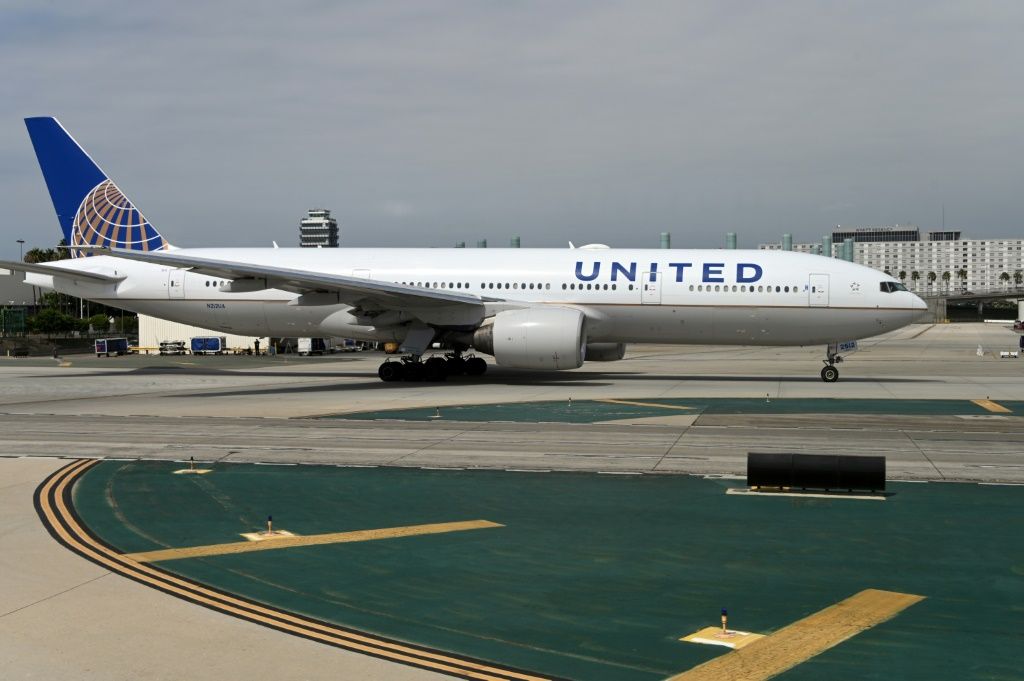
United adds headphone rule to refusal policy, flyers risk denial of passage
An American Airlines pilot gave a rousing pre-flight speech to passengers encouraging civility and decency while onboard. (Anna Maltezos via Storyful)
If you blast a video without headphones on a United flight, you could lose your seat.
United Airlines confirmed to FOX Business that it updated its Contract of Carriage to add headphone language under Rule 21, or the airline’s “Refusal of Transport” section, giving the carrier authority to deny boarding or remove passengers who fail to use headphones while listening to audio or video content.
The new language places the headphone requirement alongside other behaviors that can result in removal, including refusal to follow crew instructions and disruptive conduct.
“The Contract of Carriage was updated Feb. 27 to add the headphone language,” a United spokesperson told FOX Business. “We’ve always encouraged customers to use headphones when listening to audio content – and our Wi-Fi rules already remind customers to use headphones. With the expansion of Starlink, it seemed like a good time to make that even clearer by adding it to the contract of carriage.”
LAS VEGAS HOTEL-CASINO THAT CLOSED DURING COVID AND NEVER REOPENED IS DEMOLISHED

United Airlines is now enforcing what was once considered etiquette onboard its flights, using headphones while listening to audio or visual content. (iStock / iStock)
While most airlines encourage headphone use as a courtesy, United’s decision to embed the requirement within its formal refusal policy elevates what was once considered etiquette into enforceable contract language.
The timing coincides with the airline’s rollout of Starlink satellite internet service, which is expected to increase device use during flights.
Delta Air Lines tells passengers on its website, “For the comfort of everyone around you, please use earbuds or headphones with any personal electronic device during your flight.”
AMERICA’S AIRPORT AFFORDABILITY GAP: CITIES WHERE TRAVEL COSTS ARE CRUSHING FAMILIES

United Airlines Boeing 737 MAX 8 aircraft spotted departing from LaGuardia Airport in New York City on Nov. 8, 2024. (Nicolas Economou/NurPhoto / Getty Images)
Southwest Airlines states that “Headphones are required whenever a passenger is listening to any audio,” though neither carrier publicly frames the rule within refusal-of-transport language.
United did not indicate how frequently the provision has been enforced, but its placement under its “Refusal of Transport” makes clear that passengers who refuse to comply could face denial of boarding at the gate or removal from the aircraft.
The update follows years of mounting frustration over in-flight speakerphone and video use, a tension captured in a viral 2023 clip taken on an American Airlines flight.
AIRLINES CANCEL FLIGHTS, ISSUE TRAVEL WAIVERS OVER MIDDLE EAST UNREST

An interior view of a B737 MAX airplane seen at Dallas-Forth Worth International Airport in Dallas, Texas. (COOPER NEILL/AFP via Getty Images / Getty Images)
In the video, an American Airlines pilot delivered a blunt pre-flight message to passengers.
“The social experiment on listening to videos on speaker mode and talking on a cellphone on speaker mode, that is over — over and done in this country,” the pilot said. “Nobody wants to hear your video. … Use your AirPods, use your headphones, whatever it is. That’s your business.”
The speech drew applause from passengers and reignited debate over basic travel courtesy in confined spaces.
Etiquette expert and author of “Was it Something I Said?” Alison Cheperdak told FOX Business the policy reflects broader calls for civility.
“While in a perfect world people would know not to use speaker phone or listen to content without headphones in confined public spaces, this is a move in the right direction,” Cheperdak said. “The policy encourages kindness and consideration.”
United Airlines is now the first carrier to make clear that cabin courtesy is no longer just being polite, but a condition of carriage.
Business
Goldman Sachs CEO Surprised by Stock Market Reaction to Iran. He’s Not Wrong to Worry.
Business
Prestige Consumer Healthcare Inc. (PBH) Presents at J.P. Morgan 2026 Global Leveraged Finance Conference – Slideshow
-
Politics3 days agoAlan Cumming Brands Baftas Ceremony A ‘Triggering S**tshow’
-
Fashion6 days agoWeekend Open Thread: Iris Top
-
Tech5 days agoUnihertz’s Titan 2 Elite Arrives Just as Physical Keyboards Refuse to Fade Away
-
NewsBeat5 days agoAbusive parents will now be treated like sex offenders and placed on a ‘child cruelty register’ | News UK
-
Sports6 days ago
The Vikings Need a Duck
-
NewsBeat5 days agoDubai flights cancelled as Brit told airspace closed ’10 minutes after boarding’
-
NewsBeat6 days agoThe empty pub on busy Cambridge road that has been boarded up for years
-
NewsBeat4 days ago‘Significant’ damage to boarded-up Horden house after fire
-
Tech18 hours agoBitwarden adds support for passkey login on Windows 11
-
Entertainment4 days agoBaby Gear Guide: Strollers, Car Seats
-
Sports6 hours ago499 runs and 34 sixes later, India beat England to enter T20 World Cup final | Cricket News
-
Tech7 days agoNASA Reveals Identity of Astronaut Who Suffered Medical Incident Aboard ISS
-
Politics5 days ago
FIFA hypocrisy after Israel murder over 400 Palestinian footballers
-
NewsBeat5 days agoEmirates confirms when flights will resume amid Dubai airport chaos
-
NewsBeat3 days agoIs it acceptable to comment on the appearance of strangers in public? Readers discuss
-
Tech5 days agoViral ad shows aged Musk, Altman, and Bezos using jobless humans to power AI
-
Video4 days agoHow to Build Finance Dashboards With AI in Minutes
-
Business2 days agoGuthrie Disappearance Enters Fifth Week as Family Visits Memorial
-
Crypto World5 days agoUS Judge Lets Binance Unregistered Token Class Action Proceed
-
NewsBeat4 days agoUkraine-Russia war latest: Belgium releases video showing forces boarding Russian shadow fleet oil tanker