Business
Sam Altman defends OpenAI Pentagon deal after Trump executive order

Constellation Research founder Ray Wang discusses Nvidia’s stock movement ahead of earnings, market uncertainty and the AI race on ‘Making Money.’
OpenAI CEO Sam Altman on Saturday publicly defended his company’s new Pentagon deal, just a day after President Donald Trump ordered federal agencies to cut ties with rival Anthropic.
Hours after the U.S. and Israel launched a joint strike against Iran, Altman took to X to answer questions about the agreement allowing the Department of War (DoW) to deploy OpenAI’s artificial intelligence (AI) models on its classified network.
“I’d like to answer questions about our work with the DoW and our thinking over the past few days,” he said.
In announcing the agreement late Friday, Altman wrote, “AI safety and wide distribution of benefits are the core of our mission. Two of our most important safety principles are prohibitions on domestic mass surveillance and human responsibility for the use of force, including for autonomous weapon systems. The DoW agrees with these principles, reflects them in law and policy, and we put them into our agreement.”
OPENAI REACHES PENTAGON AGREEMENT AS TRUMP ORDERS ANTHROPIC OFF FEDERAL SYSTEMS

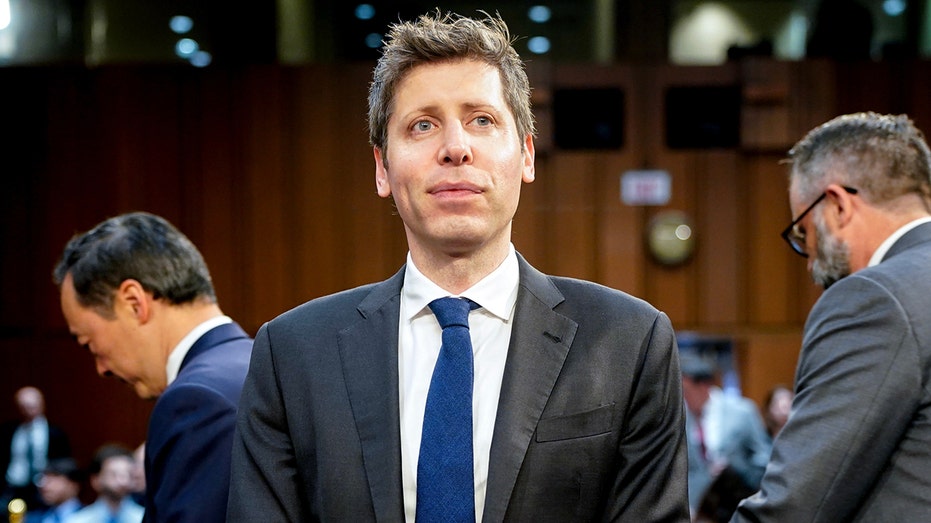
OpenAI CEO Sam Altman defended his company’s Pentagon agreement after President Donald Trump ordered federal agencies to phase out rival Anthropic. (Nathan Howard/Bloomberg via Getty Images / Getty Images)
The OpenAI agreement came as Trump directed every federal agency to stop using Anthropic technology, setting a six-month phase-out period and intensifying the dispute over how AI should be used in military operations.
Secretary of War Pete Hegseth said he was directing the department to designate Anthropic a “supply-chain risk to National Security.”
Anthropic CEO Dario Amodei had refused demands from the DoW to allow its AI to be used for “all lawful purposes,” citing concerns about “mass domestic surveillance” and “fully autonomous weapons.”
When asked why the DoW accepted OpenAI but not Anthropic, Altman said, “Anthropic seemed more focused on specific prohibitions in the contract, rather than citing applicable laws, which we felt comfortable with.” He added that Anthropic “may have wanted more operational control than we did.”
OPENAI’S $110B FUNDING ROUND DRAWS INVESTMENT FROM AMAZON, NVIDIA, SOFTBANK

President Donald Trump ordered federal agencies to cut ties with Anthropic, intensifying a dispute over military AI use. (Saul Loeb/AFP via Getty Images / Getty Images)
Altman said the DoW did not issue any explicit or implicit threats before the agreement was reached, adding that Pentagon officials were “genuinely surprised we were willing to consider” classified work.
He said OpenAI initially planned to do only non-classified work with the Pentagon, but that talks accelerated this week.
“We thought the DoW clearly needed an AI partner, and doing classified work is clearly much more complex. We have said no to previous deals in classified settings that Anthropic took. We started talking with the DoW many months ago about our non-classified work. This week things shifted into high gear on the classified side. We found the DoW to be flexible on what we needed, and we want to support them in their very important mission,” Altman said.
APPLE IMPLEMENTING AGE VERIFICATION TOOL TO ENSURE USERS ARE 18 AND UP FOR SOME APPS
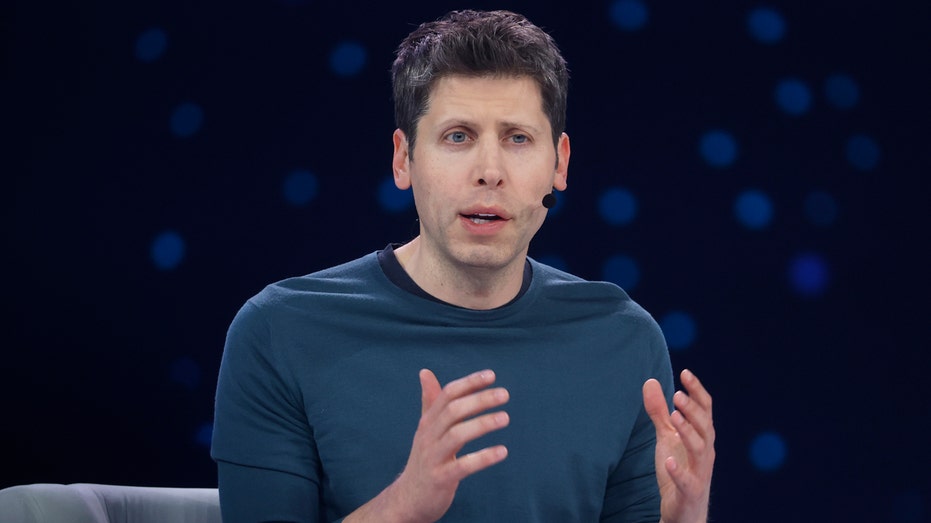
Sam Altman addressed questions on X about OpenAI’s classified work with the Department of War. (Justin Sullivan/Getty Images / Getty Images)
Altman also addressed criticism that the agreement appeared rushed, saying OpenAI moved quickly to “de-escalate the situation.”
“I think the current path things are on is dangerous for Anthropic, healthy competition and the U.S.,” he said. “We negotiated to make sure similar terms would be offered to all other AI labs.”
Altman acknowledged he remains concerned that a future legal dispute could expose OpenAI to the same supply-chain risk designation imposed on Anthropic.
“If we have to take on that fight we will, but it clearly exposes us to some risk,” he said. “I am still very hopeful this is going to get resolved, and part of why we wanted to act fast was to help increase the chances of that.”
ALTMAN CALLS MUSK’S SPACE DATA CENTER PLANS ‘RIDICULOUS’ FOR CURRENT AI COMPUTING NEEDS
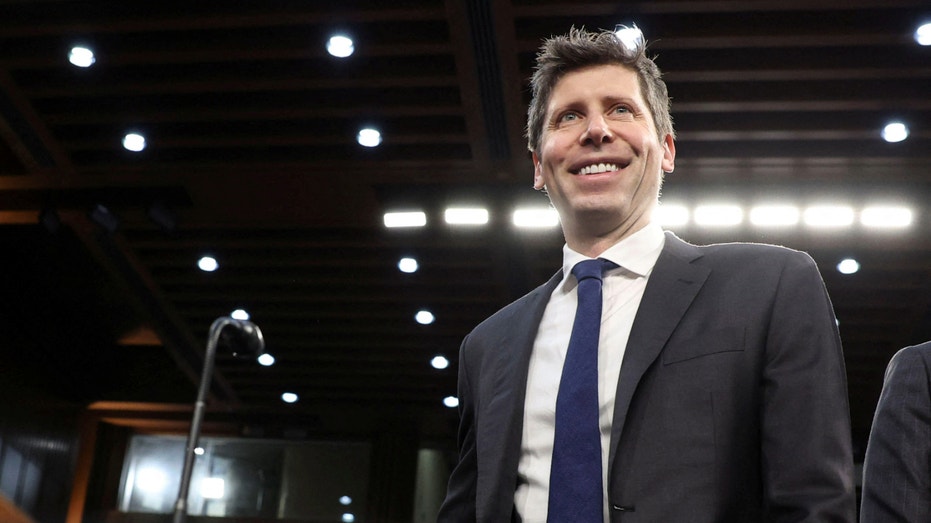
OpenAI CEO Sam Altman arrives to testify before a Senate Commerce, Science, and Transportation Committee hearing titled “Winning the AI Race: Strengthening U.S. Capabilities in Computing and Innovation,” on Capitol Hill in Washington, D.C., on May 8, (Jonathan Ernst/Reuters / Reuters)
Anthropic previously told Fox News Digital that Hegseth’s designation of the company as a supply-chain risk “follows months of negotiations that reached an impasse over two exceptions we requested to the lawful use of our AI model, Claude: the mass domestic surveillance of Americans and fully autonomous weapons.”
Altman also addressed questions about whether the federal government could attempt to nationalize OpenAI or other AI development.
“I obviously don’t know; I have thought about it of course… but it doesn’t seem super likely on the current trajectory,” he said. “That said, I do think a close partnership between governments and the companies building this technology is super important.”
Altman said the most difficult aspect of the agreement to reconcile involved “non-domestic surveillance.”
GET FOX BUSINESS ON THE GO BY CLICKING HERE
“I have accepted that the US military is going to do some amount of surveillance on foreigners, and I know foreign governments try to do it to us, but I still don’t like it,” he said. “I think it is very important that society thinks through the consequences of this; perhaps the single principle I care most about for AI is that it is democratized, and I can see surveillance making that worse.”
“On the other hand, I also respect the democratic process. I don’t think this is up to me to decide,” he added.