
Connect with us

Business

Samsung Expands One UI 9 Free Upgrade To Millions More Galaxy Phones Ahead Of Stable Release

Published

on

iPhone 17e

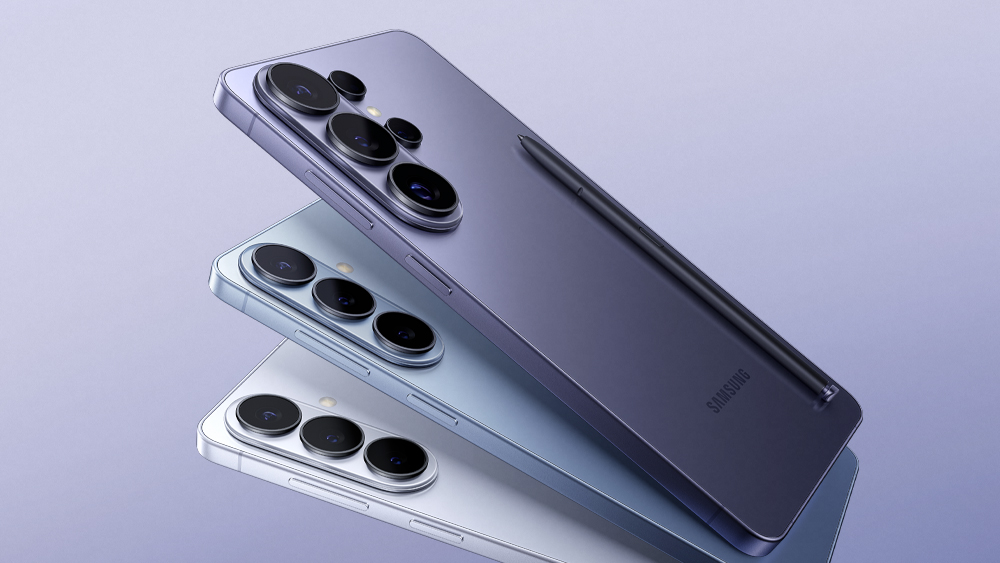
Samsung has significantly expanded access to its One UI 9 software update, adding beta programs for several older Galaxy devices while pushing toward a stable release for the Galaxy S26 series, bringing millions more phones closer to receiving the software’s newest features.

The rollout builds on One UI 9’s official launch alongside the Galaxy Z Fold 8 series on July 22, with Samsung now moving to extend both beta and stable versions of the software across a broader range of devices in the weeks since.

For current Galaxy S26 owners, Samsung has confirmed that One UI 9 Beta 7 is now rolling out globally, available for download through the Samsung Members app for users enrolled in the One UI Beta Program. The update brings several features that debuted exclusively on the Galaxy Z Fold 8 to the S26 lineup, including a redesigned Finder tool with Google Search integration, a feature called My FanCam that lets users film a wide crowd shot and later spotlight a specific person within the Gallery app, and custom cards within Now Nudge, a proactive suggestion feature that anticipates a user’s next likely action, such as offering to open a calendar app when a user is texting about scheduling a meetup.

Both My FanCam and Now Nudge, which originally launched exclusively alongside the Galaxy Z Fold 8 in July, are now also available on Samsung’s new midrange Galaxy S26 FE, extending features once reserved for the company’s premium foldable lineup down to a more budget-friendly device.

Advertisement

Beyond the Galaxy S26 series, Samsung has significantly widened its beta testing program to include several older Galaxy devices. The company officially confirmed an expanded One UI 9 beta rollout covering the Galaxy S25, S25+, S25 Ultra and S25 FE, along with the Galaxy Z Fold 7 and Galaxy Z Flip 7, with availability confirmed in India, South Korea, the United Kingdom and the United States.

The Galaxy S25 beta program launched earlier, with Samsung officially rolling out the first beta build, sized just under 4 gigabytes, to users in the U.S., U.K., South Korea and India. Notably, Samsung included the Galaxy S25 FE in the South Korean rollout for that beta, marking the first time a midrange Galaxy device had been included in the One UI 9 beta program at that stage of the rollout.

Samsung update tracker Tarun Vats, who closely monitors the company’s software rollout schedule, has separately identified additional beta builds in development for the Galaxy S24, S23 and Z Fold 7 device families, suggesting those devices are moving closer to receiving their own formal beta programs even though some, like the Galaxy S24, were not included in Samsung’s initial official device list for the expanded beta. According to Vats, the Galaxy S24 series beta could go live soon in the U.S. and India specifically, despite not appearing on Samsung’s confirmed rollout list, reflecting the rapid pace at which the update appears to be expanding to additional devices beyond the company’s initially announced schedule.

For the Galaxy Z Fold 7 specifically, Samsung has now released both a stable build, internally labeled CZHI, and a newer beta build, labeled ZZHL, a combination that suggests a full stable release of One UI 9 for last year’s flagship foldable device could be approaching relatively soon.

Advertisement

Signs also point toward an imminent stable release for the current Galaxy S26 series. Samsung has now released two separate stable builds for the S26 in quick succession, with a build carrying a September date, internally labeled BZI2, spotted following an earlier stable build labeled BZHK that appeared the previous week. Industry trackers have interpreted the pattern of multiple stable builds appearing close together as a strong signal that Samsung is in the final stages of preparing the software for full public release, rather than continuing to test additional beta iterations.

The Galaxy S24 has similarly received a new stable build, labeled EZHO, though industry trackers following the rollout do not currently expect Samsung to offer a public beta program for that device, suggesting Samsung may skip directly to a stable release for the S24 family without an intermediate beta testing phase.

For users interested in joining any of the currently available beta programs, Samsung has outlined a straightforward process: open the Samsung Members app, locate the One UI 9 Beta Programme banner, register for the program, and then navigate to Settings, followed by Software Update, and select Download and Install to receive the update.

Separately, Samsung’s rollout of One UI 9 has drawn attention to a notable feature limitation on its newest midrange device, the Galaxy S26 FE. While the phone launches with One UI 9 and Android 17 preinstalled, along with features including My FanCam, a Horizontal Lock function for stabilized video recording, and Document Scan, Samsung has confirmed the device will not support the full agentic capabilities of Google’s Gemini Intelligence, the AI assistant feature capable of autonomously completing tasks such as booking restaurant reservations or locating documents across different apps on a user’s behalf.

Advertisement

The limitation appears tied to hardware constraints rather than a deliberate software restriction. Google’s official requirements for Gemini Intelligence specify a minimum of 12 gigabytes of RAM, while the Galaxy S26 FE launches with only 8 gigabytes, a 4-gigabyte gap that appears to represent the dividing line between Samsung’s full AI flagship experience and the more limited feature set available on its lower-tier devices.

It remains unclear whether Samsung’s full agentic Gemini Intelligence experience will eventually be made available on older Galaxy flagship devices that do meet the 12-gigabyte RAM requirement, or whether the feature will remain exclusive to newer hardware going forward. Samsung and Google have not provided a definitive answer to that question, though the continued rollout of One UI 9 to older Galaxy devices in the coming months is expected to offer clearer insight into how broadly the company plans to extend its full AI feature set across its existing device lineup before the end of the year.

Continue Reading
Click to comment

You must be logged in to post a comment Login

Leave a Reply

Business

Investigation underway over MinRes workshop incident

Published

on

An investigation into a workplace incident at a Mineral Resources subsidiary’s workshop, in which an employee’s hand was seriously injured, is ongoing.

Continue Reading

Business

Petrol station specialist Suresite Health & Safety acquired by Opus Safety

Published

on

Business Live

Midlands firm makes latest ‘buy-and-build’ move

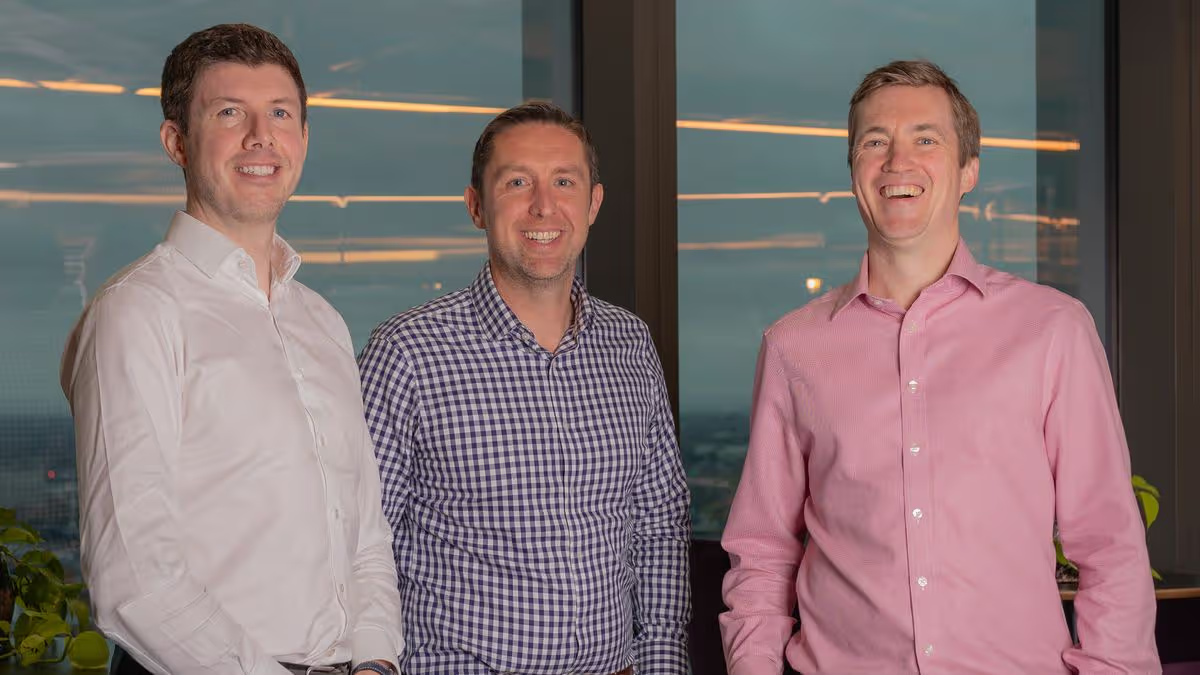
Opus Safety founders (from left) Tom Baverstock, John Southall and Ian Hatherly

Opus Safety founders, from left, Tom Baverstock, John Southall and Ian Hatherly

A Preston-based health and safety specialist that works with thousands of petrol stations across the country has been acquired by acquisitive Midlands firm Opus Safety.

Opus says the deal for Suresite Health & Safety gives it a “significant route into the petrol forecourt market” as the Lancashire firm services more than 3,500 petrol stations across the UK. All consultants at Suresite will move to Opus Safety, alongside a network of associates.

It’s the fifth recent takeover by Birmingham-based Opus following deals for Agility Risk & Compliance, Three Spires Safety, GH Safety, and Sentinel Safety Solutions. The value of the latest deal has not been disclosed.

The deal has been backed by OakNorth and by BGF, which invested in Opus in July 2025.

Advertisement

Opus was founded by John Southall, Ian Hatherly and Tom Baverstock. Mr Southall said: “Suresite has built an enviable health and safety business over the last 30 years, developing a strong footprint in the petrol forecourt market through robust Dangerous Substances and Explosive Atmospheres Regulations (DSEAR) risk assessments and compliance audits.

“As we look to accelerate our growth ambitions – both organically and through M&A – we wanted to seamlessly integrate a proven team and compliance and safety proposition that would strengthen our health and safety capabilities. The Suresite function is a perfect fit.”

David Bellis, investor at BGF, said: “The acquisition of Suresite’s health and safety function is yet another demonstration of the Opus team’s ambition to build a company with strength and depth in personnel, services and technological capabilities, to meet the growing needs of customers across the safety, HR and occupational health compliance landscape.

“BGF aims to back local, ambitious businesses – those with robust business models and compelling growth prospects. Opus is an excellent example of this approach and we’re delighted to be supporting them on their exciting growth journey.”

Advertisement

Safa Arif, associate at OakNorth, said: “The acquisition of Suresite represents another important step in Opus’ growth journey and is a strong strategic fit for the business. It’s great to see the management team continuing to identify and execute acquisitions that broaden the business’ capabilities and support its long-term growth ambitions.

“OakNorth is focused on backing ambitious management teams and working alongside experienced investors such as BGF to support their growth plans. We were pleased to provide Opus with the acquisition funding to support its buy-and-build strategy and are delighted to see that capital being deployed into another strategic acquisition. We look forward to continuing to work alongside the management team and BGF as Opus scales the business both organically and through further M&A.”

Evolve Corporate Finance and law firm Fieldfisher advised on the deal.

Andy Lawton Smith at Fieldfisher said: “Our team has been delighted to provide legal support to John, Ian and Tom and the whole Opus Safety group throughout its exciting journey to date. The consolidation of very highly regarded boutique providers in this sector provides their clients with deeper resource and better technology to fulfil their critical operating functions while simultaneously providing these hugely respected and conscientious entrepreneurs with a safe home for their friends and often life-long relationships. It’s a win-win.”

Advertisement

David Neate, partner at Evolve, said: “Having supported Opus from the outset, we are delighted to have led on this transaction. Suresite is a leading player in its niche and fits well with the buy and build strategy, with further growth opportunities which can be delivered through Opus’s Compliance Cloud technology.”
Continue Reading

Business

Broadcom Stock: Chipmaker Sees AI Revenue Ramping

Published

on

Broadcom Stock: Chipmaker Sees AI Revenue Ramping

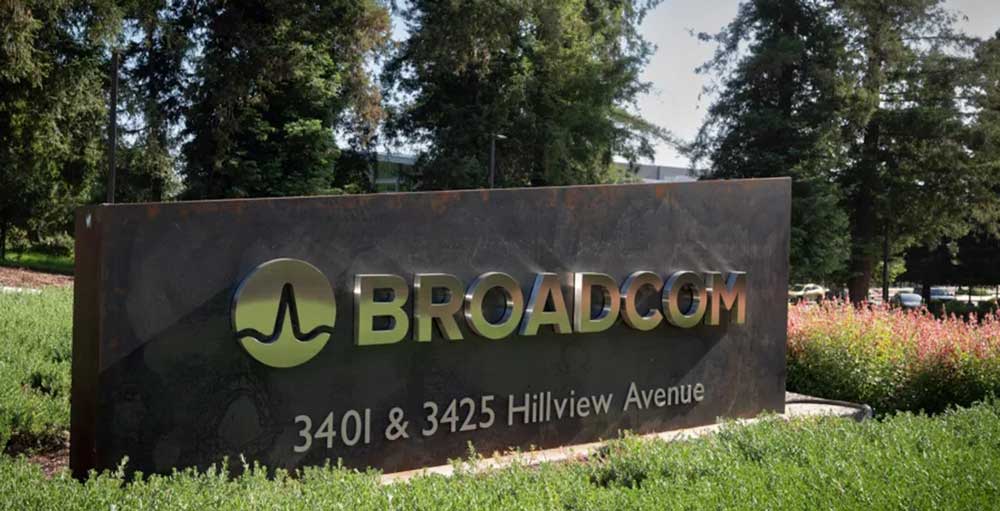
Broadcom (AVGO) expects its artificial intelligence-related sales to double next year and again the following year. Broadcom gave that heady forecast after it delivered its fiscal third-quarter results late Wednesday. But Broadcom stock fell Thursday. The chipmaker and infrastructure software provider predicted AI sales in its current fiscal 2026 of $58 billion, above its prior guidance of $56 billion. For…

Copyright ©2026 Investor’s Business Daily, LLC. All rights reserved. 87990cbe856818d5eddac44c7b1cdeb8

Continue Reading

Business

Top enterprise software stock to watch: BMO’s leading pick

Published

on


Top enterprise software stock to watch: BMO’s leading pick

Continue Reading

Business

Why is GeoPark stock surging today?

Published

on


Why is GeoPark stock surging today?

Continue Reading

Business

Wall Street Lunch: Ford Aims To Sell Over 100K Fathom EV Trucks In First Year

Published

on

Ford: Better Value Than You'd Think (NYSE:F)

Ford brand logo

Vera Tikhonova/iStock Editorial via Getty Images

Listen below or on the go on Apple Podcasts and Spotify

Ford targets 100K sales for its new Ford Fathom. (0:15) Nvidia buys Hugging Face for $12.9B. (1:02) New York puts a freeze on classroom AI. (1:59)

This is an abridged transcript of the podcast:

Advertisement

Our top story so far, Ford (F) aims to sell more than 100K units of its new electric truck in its first year of production, the Wall Street Journal reported.

The starting price for the truck, called the Ford Fathom, will be nearly $30K. Ford will begin taking customer orders early next year.

Besides Tesla (TSLA), no other automaker has sold 100K units of a single EV model in the U.S. in a year. Tesla sold ~357K Model Y SUVs in 2025 and more than 190K Model 3 sedans.

Ford executives say Fathom’s price tag, which is similar to mainstream sedans and SUVs, and design will help drive sales.

Advertisement

Fathom trucks will include Apple Maps built into their navigation system and Ford’s hands-free driving system BlueCruise. The Fathom will also have more passenger space than the best-selling SUV Toyota RAV4.

Among active stocks, after a week of speculation, Nvidia (NVDA) sealed the deal for Hugging Face, agreeing to pay $12.9B for the AI platform.

Hugging Face will remain an open platform for the entire AI ecosystem, Nvidia CEO Jensen Huang said.

Snowflake (SNOW) is rallying more than 20% after the data warehousing company reported fiscal second-quarter results and guidance that topped forecasts.

Advertisement

Snowflake said it expects product revenue to be between $1.588B and $1.593B, above the $1.51B estimate. Adjusted operating margin is forecast to be 15.5%.

Ciena (CIEN) is higher after the optical networking company reported better-than-expected results and guidance.

CEO Gary Smith said “AI continues to drive compounding waves of network investment.”

And Campbell’s (CPB) is slumping after missing revenue estimates for Q4. The company said top-line softness and inflation-driven margin headwinds were factors.

Advertisement

Campbell’s also cut its quarterly dividend to $0.25 per share from $0.39 per share.

In other news of note, New York City, the largest U.S. school district, is imposing a one-year moratorium on students using generative artificial intelligence (OPENAI) (ANTHRO) (DEEPSEEK) in public ​elementary and middle schools.

The policy, which will take effect in the 2026-2027 school year and will impact nearly 600,000 public school students, bars AI use for students in 2-K through 8th grade.

This includes all software that uses student-facing generative AI. Companion chatbots will be banned across all grades.

Advertisement

And Walmart (WMT) said it is expanding its restaurant delivery business through a collaboration with Inspire Brands, a global multi-brand restaurant company whose portfolio includes Dunkin’, Arby’s, Baskin-Robbins, Jimmy John’s and Sonic.

Walmart continues to expand the restaurants available through its app, including restaurants located beyond its stores. The Dunkin’ chain will launch first via its 150 in-store tenant locations, with plans to expand to the majority of its 10K locations outside of Walmart stores nationwide.

And in the Wall Street Research Corner, Société Générale strategist Manish Kabra says investors may want to buy any equity weakness triggered by a renewed Federal Reserve hiking cycle.

SocGen has shifted its house view in a hawkish direction and now expects the Fed to deliver three rate hikes starting in September. Fed funds futures price in a 60% chance of a September hike.

Advertisement

History suggests stocks initially struggle when the Fed resumes raising rates mid-cycle, with the S&P 500 typically going through a one-to-three-month “digestion phase,” Kabra said. However, the benchmark has historically gone on to reach new highs within six months if the yield curve doesn’t invert.

Continue Reading

Business

Earnings call transcript: Ideal Holdings posts record H1 2026 results as stock slips

Published

on


Earnings call transcript: Ideal Holdings posts record H1 2026 results as stock slips

Continue Reading

Business

ChatGPT Down For Thousands As Outage Also Hits Claude And Grok Ahead Of Possible OpenAI Launch Today

Published

on

ChatGPT

ChatGPT experienced a widespread outage Thursday morning, leaving thousands of users unable to send prompts or load conversations, in a disruption that appeared to coincide with similar issues affecting rival AI chatbots Claude and Grok around the same time.

Reports of ChatGPT’s outage surged on outage-tracking site Downdetector, with users experiencing elevated error rates across both the web interface and mobile applications. According to OpenAI’s official status page, ChatGPT’s Work mode was completely unavailable for affected users, with Plus subscribers among those particularly impacted by the disruption.

The outage extended beyond OpenAI’s own products. Anthropic’s Claude chatbot appeared to experience a comparable disruption at the same time, according to reporting from 9to5Mac, while xAI, the company behind the Grok chatbot integrated into Elon Musk’s X platform, confirmed separately that Grok was also experiencing a service issue. The near-simultaneous nature of the disruptions across three major AI chatbot platforms drew attention from users and tech observers, given that ChatGPT, Claude and Grok are typically operated on largely separate technical infrastructure by competing companies.

OpenAI acknowledged the outage through its official social media channels, though the company’s messaging offered limited detail about the underlying cause. In a post on X, OpenAI’s account wrote, “The stars are almost aligned,” a cryptic message that some observers interpreted as a possible allusion to an upcoming product announcement rather than a direct explanation of the technical issue itself.

Advertisement

The timing of Thursday’s disruption drew added scrutiny given persistent rumors that OpenAI is preparing to announce its next major model release, reportedly code-named Astra, as soon as Thursday. Speculation has circulated that the new model could mark an upgrade from OpenAI’s current GPT-5.6 system to a version referred to as GPT-6, though OpenAI had not officially confirmed details of any such release as of the time the outage began. One social media user reacting to the outage speculated whether the disruption might mirror a pattern sometimes observed with other major tech companies, jokingly asking whether the outage resembled how “the Apple Store goes down before the new products show up,” referencing a pattern some Apple product launches have followed in the past.

According to OpenAI’s official incident history, Thursday’s disruption followed a separate issue earlier the same day, described on the company’s status page as “ChatGPT Work Mode High Error Rates,” which began around 12:10 a.m. and was later marked as fully resolved. That overnight incident followed yet another disruption the previous evening, Sept. 2, when OpenAI’s status page flagged “elevated errors creating new accounts,” an issue the company said had also since been resolved. Earlier in the week, OpenAI’s status history additionally logged elevated latency affecting its Responses API on Sept. 1, along with a separate incident involving elevated errors in ChatGPT conversations specifically affecting users on the platform’s free and Go subscription tiers.

Independent status-tracking service IsDown, which combines official status page data with crowdsourced user reports, has logged 192 separate ChatGPT incidents since October 2025, with the service noting that OpenAI outages typically take an average of 456 minutes, or roughly seven and a half hours, to fully resolve based on historical data. User reports collected by the same tracking service around the time of Thursday’s disruption described a range of symptoms, including the platform being entirely unresponsive, error messages appearing after sending prompts, and users being unable to access previously created project spaces within the platform.

ChatGPT’s history of periodic outages has become a recurring pattern since the platform’s initial public release, given the scale of its user base and the technical complexity of running large-scale AI inference systems reliably at that scale. OpenAI CEO Sam Altman has previously stated that ChatGPT is used on a weekly basis by more than 300 million people worldwide, a scale that leaves the platform particularly vulnerable to widescale disruption whenever underlying infrastructure issues emerge, even when those issues affect only a subset of the platform’s total capacity.

Advertisement

Not all monitoring services detected the disruption at the same time or with the same severity. One independent uptime-monitoring service, UptimeRobot, reported that an automated check of ChatGPT’s website run earlier Thursday morning did not detect any unusual response times or error codes, illustrating how outages affecting specific features, subscription tiers or account types can sometimes escape detection by automated monitoring tools that check only for basic site availability rather than testing the full range of the platform’s underlying functionality.

OpenAI’s engineering team said it had identified the source of Thursday’s disruption and was implementing mitigation measures, though the company had not provided a definitive timeline for full recovery as of the time affected users began reporting problems. The company’s standard practice during service disruptions has involved posting incremental updates to its official status page as engineers work to diagnose and resolve underlying issues, a pattern that has continued across the string of shorter incidents logged throughout the current week.

Thursday’s disruption adds to a broader pattern of reliability challenges facing major AI chatbot platforms as user demand for these tools has continued to grow rapidly. The near-simultaneous nature of Thursday’s outages across ChatGPT, Claude and Grok, while their underlying causes have not been confirmed to be connected, has nonetheless fueled speculation among users and commentators about whether a shared piece of underlying internet infrastructure, rather than a coincidental cluster of unrelated technical issues, might be responsible for the overlapping disruptions.

As of Thursday, OpenAI had not issued a detailed public explanation addressing the specific technical root cause of the disruption, nor had the company confirmed whether the outage was in any way connected to preparations for a potential new model announcement. Affected users were advised to monitor OpenAI’s official status page, along with Downdetector’s live outage tracker, for further updates as the company continued working to restore full service across the affected platform.

Advertisement
Continue Reading

Business

Moderna’s Cancer Vaccine Rally Sparks Rare Sell Rating and Projected 45% Stock Drop

Published

on

Moderna’s Cancer Vaccine Rally Sparks Rare Sell Rating and Projected 45% Stock Drop

Moderna’s Cancer Vaccine Rally Sparks Rare Sell Rating and Projected 45% Stock Drop

Continue Reading

Business

Wall Street extends gains as oil prices and Treasury yields continue to let up

Published

on


Wall Street extends gains as oil prices and Treasury yields continue to let up

Continue Reading

Trending

Copyright © 2025