

Shares of auto component major Samvardhana Motherson International (SAMIL) rose as much as 5.4% to their day’s high of Rs 136 on the BSE after the company’s net profit rose 21% to Rs 1,061 crore in the third quarter of financial year 2026. In the same quarter last year, profit was Rs 879 crore.
The company’s revenue from operations came in at Rs 31,409 crore, marking an increase of 14% from Rs 27,666 crore posted in the same quarter of the previous financial year. Improvement in PAT was supported by lower finance costs and higher contribution from JVs and associates. Revenue growth was led by the impact of the Atsumitec acquisition, organic growth, commodities and favourable FX, the company said.
EBITDA for the quarter under review came in at Rs 3,042 crore, higher by 9.5% from Rs 2,776 crore in the same quarter last year. Margins increased to 10% from 9.7%, SAMIL’s investor presentation showed. “Operational improvements supported by realisation of benefits of Transformative Measures in MPP division,” it added.
What should investors do?
Motilal Oswal has reiterated a Buy rating on Samvardhana Motherson with a revised target price of Rs 148, after raising its earnings estimates by 6% for FY26 and 1% for FY27 following a better-than-expected Q3 performance despite challenging global macro conditions. The brokerage highlighted management’s next five-year revenue aspiration of USD 108 billion and expects the company to continue outperforming global automobile sales, supported by premiumisation trends, the ongoing EV transition, a strong order backlog across auto and non-auto segments and successful integration of recent acquisitions.


Advertisement
Live Events
While ongoing tariff issues could cause some near-term slowdown in key geographies, Motilal Oswal believes the company is relatively well positioned due to its proximity to customers and ability to realign supply chains. It added that potential industry consolidation could benefit larger players like Samvardhana Motherson over the long term and maintained its Buy stance based on a valuation of 24x December 27E EPS. Also read: Risk-on trade back? Smallcap stocks rally up to 28% in 2026, but market breadth stays weak Nomura has also maintained a Buy rating on Samvardhana Motherson and raised its target price to Rs 140 from Rs 127, citing expectations of a recovery in passenger vehicle demand along with ramp-up in greenfield plants, aerospace and consumer electronics businesses and the integration of two acquisitions. The brokerage expects these factors to support revenue growth of 21% and 11% in FY27 and FY28, respectively. It also highlighted that operating leverage and ongoing cost rationalisation initiatives are likely to sustain margin improvement going forward. Additionally, Nomura noted that any potential new acquisitions could act as a key upside trigger in the company’s journey towards achieving USD 108 billion in revenue by FY30 from USD 25.7 billion in FY25. Offering a contrarian view, Citi has maintained a Sell rating on Samvardhana Motherson with a target price of Rs 95, despite a Q3 earnings beat driven by strong performance in the Wiring Harness and Modules businesses and improving margins. The brokerage cautioned that global demand risks remain elevated and flagged concerns around the profitability of emerging businesses and recent acquisitions. Citi said valuations have been rolled forward but sees limited upside potential from current levels.
(Disclaimer: Recommendations, suggestions, views and opinions given by the experts are their own. These do not represent the views of The Economic Times)
| Revenue of $1.19B (15.59% Y/Y) beats by $973.81K
Microchip Technology Incorporated (MCHP) Wolfe Research Auto, Auto Tech and Semiconductor Conference 2026 February 11, 2026 9:40 AM EST
Company Participants
Matthias Kaestner Sajid Daudi – Head of Investor Relations
Advertisement
Conference Call Participants
Christopher Caso – Wolfe Research, LLC
Advertisement
Presentation
Christopher Caso Wolfe Research, LLC
Okay. Good morning, everyone. We’ll move on to our next presentation. I’m Chris Caso, Wolfe’s semiconductor analyst. So thanks for joining us at our conference. Next up is Microchip. With us from Microchip is Matthias Kaestner. Hopefully, I pronounced that correctly.
Advertisement
Matthias Kaestner
Matt is good.
Christopher Caso Wolfe Research, LLC
Advertisement
Matt is good. That’s fine. And Sajid Daudi from Investor Relations. Matthias is the Corporate VP of Auto, Data Center and Networking. I know Microchip has had you out on the road a bit with investors recently because we’ve heard data center is kind of good right now. So thanks for joining us. I know — and Eric, if you’re listening, I hope you feel better.
Question-and-Answer Session
Advertisement
Christopher Caso Wolfe Research, LLC
So maybe to start and Microchip has been pretty vocal over the last quarter or so with a view that the cycle is really starting to turn. And of course, Microchip was a little later to see the recovery, and now it sounds like that you are. So maybe you can give us an update of kind of what you see from a booking standpoint, from what’s going on with customers, particularly as we go into the Chinese New Year holiday, which I know is an important time for you.
Matthias Kaestner
Advertisement
Yes. And before we begin, I’ll just kind of share the safe harbor statements, which is that during the course of this discussion, we’ll be making certain forward-looking projections regarding the future outlook of Microchip, and we refer you to the SEC filings that
A NatWest survey highlights growing optimism but jobs are still falling in private sector companies
Hull City Centre.(Image: pharbour)
Business optimism in the Yorkshire and Humber has reached a 15-month high as activity in the area returned almost to growth, a survey suggests.
The NatWest Regional Growth Tracker – which measures the month-on-month change in the region’s manufacturing and service sectors – remained just below the 50.0 no-change mark, but rose for a second month in a row in January to 49.3.
Private sector companies in Yorkshire and Humber region recorded back-to-back months of new business growth and firms taking part in the survey highlighted neww product launches, upbeat sales projections, planned investment activity and supportive economic tailwinds.
But payroll numbers in the area fell for a 14th consecutive month, with only Wales out of all of the UK’s regions and nations seeing a sharper fall in job numbers.
Advertisement
Malcolm Buchanan, chair of the NatWest regional board, said: “Sustained growth in demand for Yorkshire & Humber goods and services and a strengthening of firms’ year-ahead expectations for activity serve as promising leading indicators for the region’s economy. A softening of cost pressures, in tandem with stronger increases in prices charged, also bodes well from a margins perspective, implying a diminished strain on earnings.
“However, the local labour market continues to be challenged by a hesitancy among firms to grow their workforces. Payroll numbers fell for a 14th straight month in January, and at a rate that outpaced the UK-wide average. However, the more upbeat business outlook could spur hiring, as firms look to achieve their more bullish growth forecasts for 2026.”
The survey has been released as data being released tomorrow is expected to show that the UK economy has grown modestly again in the last three months of 2025 amid pressure from budget uncertainty.
The Office for National Statistics (ONS) will shed light on how the economy fared when it reveals the latest UK GDP (gross domestic product) data for December, and the final quarter and year as a whole. Economists have broadly predicted that the economy grew by 0.1% in the quarter, following growth of 0.1% in the third quarter.
Oscar Health’sOSCR 6.19%increase; green up pointing triangle fourth-quarter loss widened as the health insurer continued to struggle with the high utilization of medical services by plan enrollees, but revenue rose and the company continues to target profitability this year.
The health insurer, which focuses on individuals and small businesses, posted a loss of $352.6 million, or $1.24 a share, wider than the $153.5 million, or 62 cents a share, reported a year earlier.
Maziar Mike Doustdar, CEO of Novo Nordisk, speaks in the Oval Office during an event about weight-loss drugs at the White House in Washington, DC on November 6, 2025.
Andrew Caballero-Reynolds | Afp | Getty Images
Novo Nordisk entered 2026 with the momentum of a historic year in more ways than one – but recent weeks have delivered more drama than most companies might expect over a decade.
Advertisement
The Danish drugmaker kicked off the year with the explosive launch of the first-ever GLP-1 pill for obesity. Its recent challenges have centered around protecting its market share in the blockbuster weight loss drug market, all while its stock price swings wildly.
“Enough has occurred in the past week to occupy a few volumes,” said Deutsche Bank analyst Emmanuel Papadakis on Tuesday, as he — like many of his Wall Street peers — lowered his price target on the stock following the gloomy outlook.
Advertisement
The rapid news flow has given investors whiplash. So far in February, U.S.-listed Novo shares have traded across a spread ranging from $43.24 to $64.16, shedding as much as 14% in a single day only to gain 10% back in a later session.
Novo Nordisk U.S.-listed shares over the last month.
The latest developments add to a thorny situation for Novo as it risks being edged out by Lilly and the growing number of people taking cheaper compounded versions of semaglutide, which are unapproved copycats of Novo’s Wegovy jab.
Advertisement
CEO Mike Doustdar, who took the reins in August after the former CEO was ousted over misjudging the U.S. market and challenges there, has a plan to steer the company through what’s been described as a “show me” year.
His agenda is extensive: cracking down on those compounded knock-offs, sustaining strong demand for its newly launched obesity pill, building prescription volumes in the U.S. and bringing new, next-generation obesity and diabetes treatments to market.
In an interview with CNBC on Wednesday, Doustdar acknowledged the challenges ahead but said 2026 “is also a year of growth in many ways.”
“We will have more patients this year than ever before, we will produce more than last year and years before that,” he said.
Advertisement
Doustdar said around 246,000 patients are currently on the company’s Wegovy pill, which launched at the beginning of January and is already outpacing the early rollouts of existing GLP-1 injections.
“This, of course, tells me that while the investors are feeling a bit of a headwind on the pricing side and the whole business as you’re alluding to, they are hopefully getting convinced that over a period of time that would wash out and that growth will come,” Doustdar said.
Telehealth firms like Hims have profited massively from selling so-called compounded versions of injectable semaglutide under a regulatory loophole that allows other companies to sell copycats of the drugs if the branded medicines are in short supply. While branded semaglutide injections are no longer in short supply after a notable demand spike, the companies have continued to mass market cheaper versions directly to consumers, raising legal questions.
“We understand why compounding, mass compounding, got started. It was on the back of a shortage. We really don’t understand why it continued,” Doustdar told CNBC on Wednesday, noting that Novo’s opposition has nothing to do with medically necessary compounding for individual cases.
Advertisement
Hims last week announced plans to sell a compounded version of Novo’s newly launched Wegovy pill for roughly $100 less than Novo sells the branded version for, though it quickly backed down after Novo said it would sue over patent infringement and the FDA announced a broader crackdown on compounding. The agency also said it had referred Hims to the Department of Justice over potential violations.
The Hers website arranged on a laptop in New York, US, on Wednesday, Feb. 12, 2025.
Gabby Jones | Bloomberg | Getty Images
Novo moved to sue Hims on Monday over compounded versions of both injectable and oral semaglutide, adding to more than 130 lawsuits the drugmaker has filed against pharmacies, wellness clinics and other firms unlawfully marketing those copycats.
Advertisement
“The news last Thursday about the pill… was seen as kind of the last straw for many people,” Rothschild & Co Redburn analystSimon Baker told CNBC.
From the point of view of U.S. regulators, removing cheaper drugs from the market at a time when the Trump administration has made lower drug prices for Americans a priority might not have been an easy sell, Baker said.
But, “when we got the move on the pill, there was a realization that this has just gone a little bit too far,” he added. “You can’t have people launching knock-off versions of pills five weeks after the brand gets launched.”
“That would destroy the industry.”
Advertisement
If Novo can get the compounding issue under control, the company can potentially win back some market share and turn things around for sales projections, said BMO Capital Markets analyst Evan Seigerman.
Doustdar called it “a very strong signal” that the government acknowledged the compounding fight with Hims and “articulated that very publicly. We welcome that.”
Of course, a government crackdown on compounding wouldn’t clear the way for Novo alone.
Lilly’s obesity drug Zepbound already enjoys significant market share, and the company is preparing to launch its own oral version.
Advertisement
The market share race
A combination image shows an injection pen of Zepbound, Eli Lilly’s weight loss drug, and boxes of Wegovy, made by Novo Nordisk.
Hollie Adams | Reuters
The battle for U.S. market share could amount to a must-win for Novo — the weight loss segment accounted for more than half of its sales in 2025.
Lilly is estimated to have around 60% of the branded GLP-1 market globally, while Novo has about 39%. Novo has also highlighted a gap in the “preference share” for Wegovy versus Lilly’s injections.
Advertisement
Lilly’s obesity drug Zepbound has shown more pronounced weight loss than Wegovy and has become the preferred medicine among patients and prescribers, despite launching years after Novo’s drugs.
In the U.S., Novo estimates that between 7 and 8 patients out of 10 go to Lilly.
Meanwhile, in the compounding market, the share of copycats for Novo’s drug far outweighs that of Lilly’s.
“It’s a curious question as to why in the branded market, Lilly has a much bigger share than Novo but in the compounded market, there’s a lot more of Novo’s molecule than there’s of Lilly’s,” Baker noted. “We don’t know the answer.”
Advertisement
Novo is banking on the Wegovy pill to help with its eroding market share and says it’s already reaching entirely new patients. Doustdar has said that 88% of people on the pill are taking the lowest starter dose of the drug, signaling that many patients have been waiting on oral options.
Lilly is expected to launch its rival weight loss pill, orforglipron, in the second quarter of 2026. Investors are closely watching how that will pan out, especially as Novo has lost its first-mover advantage before.
“They’re putting a lot of muscle behind the marketing of [Wegovy pill], including now a reinvigorated direct-to-consumer channel, which they were a little bit late to arrive at,” TD Cowen analyst Michael Nedelcovych told CNBC. “That seems to be paying dividends.”
Still life of the new Wegovy semaglutide tablets on a white background. Its a prescription medicine used with a reduced calorie diet and .and physical activity.
Advertisement
Michael Siluk | Universal Images Group | Getty Images
Doustdar touted the pill’s efficacy, which is on par with the Wegovy injection and superior to Lilly’s oral drug based on separate clinical trials. The Wegovy pill showed around 16.6% weight loss on average compared to roughly 12.4% on average with Lilly’s oral drug.
“If you use these two numbers, basically you have a 40% difference between the efficacy of these pills,” he said. “I think this is going to be a very main, main selling point of the pill.”
When Lilly eventually launches orforglipron, its primary marketing point will likely be aimed at convincing customers that the Wegovy pill is inconvenient because of certain food restrictions. That makes Novo’s head start extra important as it offers them a chance to lay the groundwork and convince people of the contrary.
Advertisement
Novo contends that those dietary requirements won’t hinder uptake. But Leerink Partners analyst David Risinger told CNBC last week that it could help Lilly’s pill eventually generate greater sales globally.
Still, while sales of both companies’ drugs may soar, prices are coming down across the board.
U.S. pricing headwinds
The GLP-1 market is facing broad price erosion following landmark “most favored nation” deals between companies and the Trump administration. It’s unclear how much of the price decline can be offset by volume increases.
“No matter how well we do initially to catch up with the price decrease … of course mathematically, [it] takes a bit of time,” Doustdar said, adding the company is “very hopeful” and “working day and night to accelerate those volume uptakes.”
Advertisement
Analysts largely believe Novo is being intentionally cautious with its sales projections, baking in the expected pricing pressures.
“There are a number of pushes and pulls in 2026, some have quite high visibility, some have lower visibility… I think Novo have added in the things of high visibility more than the things of low visibility,” said Baker.
Where there’s higher visibility is where pricing is coming down, generics in Canada and a few other markets, and restrictions on Medicaid for some of their drugs, Baker said: “They’ve got these negatives in quite fully.”
“Given the problems they had last year, they don’t want to overpromise and underdeliver,” he said.
Advertisement
Novo’s guidance likely doesn’t include any reduction in the volume of compounded drugs on the market, as the FDA’s announcement of its “decisive steps” to restrict GLP-1 compounding came after the guidance was released.
But the price sensitivity of consumers for weight loss drugs remains a big unknown, which makes greater volumes and more access points important.
Novo is anticipating Medicare coverage for weight loss treatments, expected to begin later this year, to open up a 15 million-patient opportunity, Doustdar told CNBC.
Around 67 million Americans are covered by Medicare, but “when you take a look at specifically our products and the target group, I think around 15 million people would be a good number to target,” Doustdar said. Though he said Medicare access to obesity treatments will open up gradually.
Advertisement
Next-generation treatments
Flags with the logo of Novo Nordisk flutter next to the company’s factory in Hillerod on Nov. 12, 2025.
Sergei Gapon | AFP | Getty Images
Novo is also pinning its hopes on other drugs in its pipeline to help it claw back market share. That includes a higher dose – 7.2 milligrams – of Wegovy, which is waiting for FDA approval and could make the drug a stronger competitor to Zepbound.
Doustdar said that higher dose helps patients lose around 21% of their weight, which is “very much on par” with the highest dose of Zepbound. Wegovy, under its approved doses, has shown around 15% weight loss on average in clinical trials.
Advertisement
“When that comes to the market, my thought, my wish, my hope is that people will realize, OK, now we have two products with similar efficacy,” Doustdar said.
He added that “hopefully will also change the dynamic as we go forward,” referring to the market’s increasing preference for Zepbound.
BMO’s Seigerman said it’s difficult to say whether that will be the case, as Zepbound is already entrenched as the best product in the injectable market.
Later this year, Novo expects its next-generation treatment called CagriSema to enter the market. That experimental weekly injection combines semaglutide with cagrilintide, which mimics another gut hormone called amylin.
Advertisement
Novo Nordisk has defended CagriSema’s trial results, which disappointed investors, coming in under the expected 25% weight loss on average.
On Wednesday, Doustdar said the company was “penalized quite harshly by the stock market” for those results, which showed around 23% weight loss. But he said the drug would be “one of the best products out there” if it were available today.
To assess the real efficacy of the drug, “you need to look at all the data together,” he added, pointing to three upcoming phase three trials for the drug, including one study that pits CagriSema against Zepbound.
When asked whether Novo needs to further diversify away from obesity like competitors, Doustdar argued that the company doesn’t see obesity or diabetes as a single, monolithic disease and sees more opportunity in developing multiple, specialized therapies within the category.
Advertisement
While the world labels millions of patients simply as “obese,” he said the underlying biology and severity of the condition vary widely – from someone who needs to lose a modest amount of weight to someone with severe complications like fatty liver disease requiring a transplant.
And as the market matures, Novo’s sales are still growing year-on-year on a constant currency basis, albeit at a slower pace than before. Only time will tell when, or if, that will change.
The rupee depreciated 6 paise to 90.62 against the US dollar in early trade on Wednesday as geopolitical tensions and dollar demand from importers weighed on investor sentiments.
At the interbank foreign exchange market, the rupee opened at 90.56 against the US dollar, then lost some ground to touch 90.62, registering a loss of 6 paise over its previous close.
In the initial trade, the rupee also touched 90.46 against the American currency.
On Tuesday, the rupee pared initial losses and settled on a positive note, higher by 10 paise at 90.56 against the US dollar.
Advertisement
Forex traders said that while markets initially welcomed the India-US trade deal, fresh concerns have emerged after the White House released its fact sheet.
Live Events
The fact sheet highlights key terms of the agreement, including that India will eliminate or reduce tariffs on all US industrial goods and a wide range of US food and agricultural products. This includes dried distillers’ grains, red sorghum, tree nuts, and fresh and processed fruit. Certain pulses, soybean oil, wine and spirits, and additional products, and India has committed to buy more American products and purchase over USD 500 billion of US energy, information and communication technology, agricultural, coal, and other products. “The US document goes a step further than the February 6 joint statement by explicitly mentioning tariff reductions on additional American agricultural products, including certain pulses. This is a sensitive area for India – both politically and economically,” CR Forex Advisors MD Amit Pabari said in a note.
Pabari said, “In the near term, the 90.00-90.20 zone continues to act as a strong support for the rupee. As long as this area remains intact, USD/INR could slowly move higher, with the 91.00-91.20 range emerging as the next potential upside zone in the coming sessions.”
Meanwhile, the dollar index, which gauges the greenback’s strength against a basket of six currencies, was trading 0.14 per cent lower at 96.66.
Brent crude, the global oil benchmark, was trading 0.78 per cent higher at USD 69.34 per barrel in futures trade.
Advertisement
For India, as a major oil-importing country, higher crude prices mean a heavier import bill. And a heavier import bill almost always translates into pressure on the rupee, even if the impact is gradual, Pabari said.
On the domestic equity market front, Sensex rose 141.21 points to 84,415.13 in early trade, while Nifty advanced 51.95 points to 25,987.10.
On Tuesday, foreign institutional Investors purchased equities worth Rs 69.45 crore, according to exchange data.
Good day, and welcome to the Hansa Biopharma Fourth Quarter and Full-Year 2025 Financial Results Conference Call. [Operator Instructions]. Please note that this event is being recorded.
I would now like to turn the conference over to Hansa Biopharma’s CEO, Renee Aguiar-Lucander. Please go ahead.
Advertisement
Renee Aguiar-Lucander Chief Executive Officer
Thank you. Good afternoon, and good morning. Welcome to the Hansa Biopharma conference call to review Q4 and the results for the full-year of 2025. I’m Renee Aguiar-Lucander, CEO of Hansa Biopharma. Joining me today is Evan Ballantyne, Chief Financial Officer; Richard Philipson, Chief Medical Officer; and Maria Tornsen, Chief Operating Officer and President, U.S.
Please turn to Slide 2. Please allow me to draw your attention to the fact we’ll be making forward-looking statements during this presentation, and you should therefore apply appropriate caution. Please turn to Slide 3 and today’s agenda.
Let’s move on to Page 4, please. In terms of key achievements in Q4, Q4 saw strong growth over the same quarter last year, with product revenue growth of almost 140% and total revenue growth of 135%. Total revenues for the year amounted to SEK 222.3 million or about $25 million, a growth of 46% compared to total revenues in 2024. In Q4, we successfully also closed an equity round of SEK 671.5 million or about USD 71 million, which will fund operations into 2027.
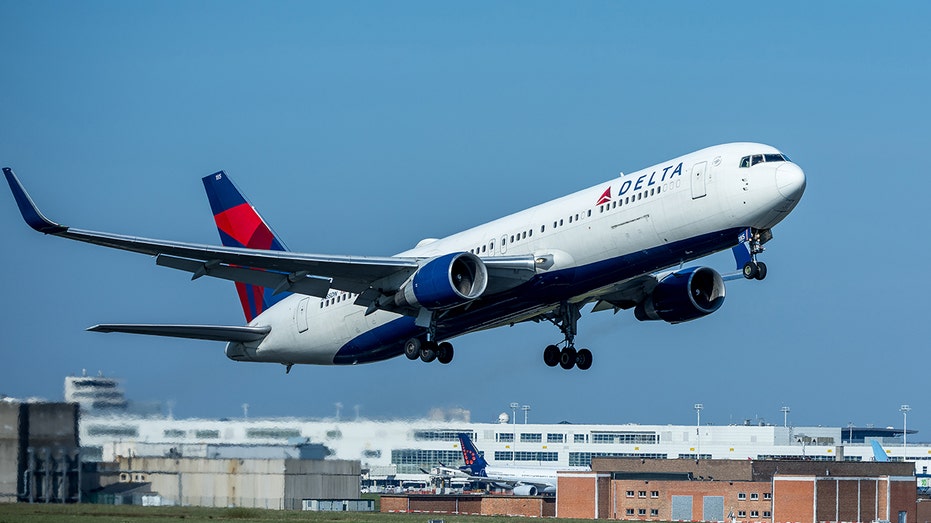
The Federal Aviation Administration (FAA) late Tuesday night issued a sweeping and sudden emergency order halting all air traffic at El Paso International Airport (ELP) for a period of 10 days, citing “special security reasons” that have left travelers stranded and local officials scrambling for answers.
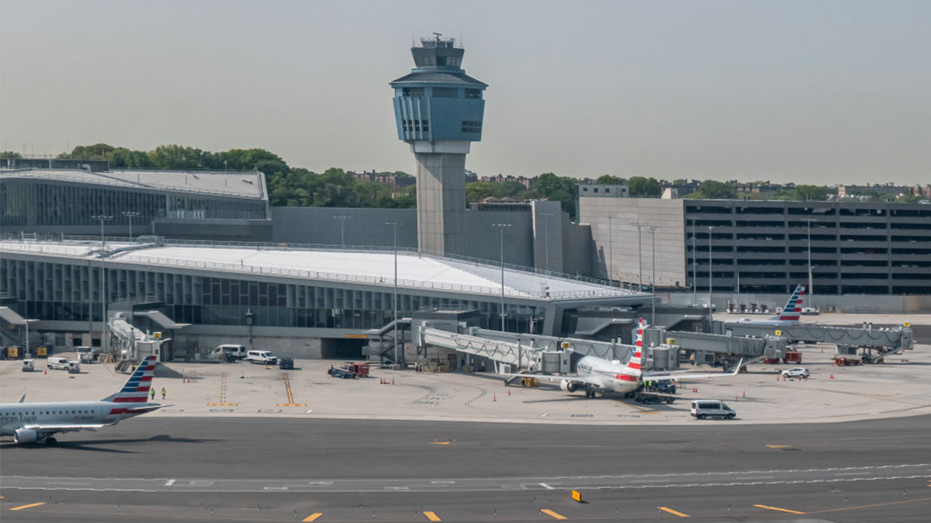
El Paso International Airport
The temporary flight restriction (TFR), which went into effect at 11:30 p.m. MST on Feb. 10, 2026, effectively severs the air link to one of the largest cities on the U.S.-Mexico border. The FAA’s notice to air missions (NOTAM) classifies the 10-mile radius around the airport as “National Defense Airspace,” warning pilots that the federal government may use “deadly force” against aircraft that violate the restriction.
An Abrupt and Unexplained Closure
Unlike typical airport closures for weather or scheduled maintenance, this shutdown was issued with less than three hours’ notice. Radio communications from the ELP control tower captured the moment dumbfounded pilots were informed they would be unable to depart.
“Apparently, we just got informed about 30 minutes to an hour ago,” an air traffic controller told a Southwest Airlines pilot late Tuesday.
The restriction extends from the surface up to 18,000 feet, covering not only El Paso International but also surrounding general aviation corridors and parts of Santa Teresa, New Mexico. While the order excludes Mexican airspace, it effectively shuts down commercial, cargo, and private aviation for the 23rd largest city in the United States through Feb. 20, 2026.
Advertisement
Mounting Questions Over “Special Security”
The FAA has declined to elaborate on the nature of the “special security reasons.” The lack of transparency has fueled intense speculation among aviation experts and local leaders.
“I have never heard of an American airspace being shut down for 10 days absent a major emergency,” said Texas State Rep. Vincent Perez. “To do this on such short notice without a clear explanation to the public is extraordinary.”
The closure comes during a period of heightened tension along the border, though federal authorities have not linked the grounding to any specific threat or law enforcement operation. Rep. Veronica Escobar (D-El Paso) confirmed Wednesday morning that her office is in urgent communication with the Department of Transportation, seeking a justification for the massive regional disruption.
Chaos for Travelers and Commerce
The timing of the shutdown is particularly painful for the region’s economy. El Paso International serves nearly 4 million passengers annually and is a vital hub for Southwest, American, and United Airlines.
Advertisement
Commercial Impact: More than 1,200 flights are expected to be canceled or diverted over the 10-day window.
Alternative Routes: Travelers are being urged to seek transport through Albuquerque, New Mexico (270 miles away), or Tucson, Arizona (320 miles away).
Cargo & Military: The shutdown also affects critical cargo shipments and logistics for neighboring Fort Bliss, one of the U.S. Army’s largest installations.
Conflicting Information and “Runway” Myths
Despite rumors and some initial reports suggesting the closure was for a $42 million runway reconstruction project, airport records and the FAA’s own “National Defense” classification contradict this. The primary commercial runway at ELP is 8R-26L, while the smaller 8L-26R runway—which some had claimed was the cause of the closure—has not been authorized for major commercial jet carriers for several years.
Furthermore, the official cited in some reports as the Airport Director, Sam Rodríguez, actually departed El Paso in 2024 to take a development role at San Antonio International Airport. Current airport staff confirmed they were as surprised by the FAA mandate as the public.
Looking Toward February 20
The FAA has indicated the restriction will remain in place until 11:30 p.m. on Feb. 20, 2026, unless “modified or rescinded.” As of Wednesday morning, the airport terminal remained open but largely deserted, with airline staff assisting a handful of stranded passengers who were caught in the late-night grounding.
“We are pending additional guidance from the FAA,” the airport said in a brief social media statement. “We encourage all travelers to contact their airlines directly for rebooking options.”
SMIC, China’s largest and most advanced chip foundry, is widely seen as a proxy for Beijing’s chip-making ambitions amid U.S. export restrictions and the countries’ race for dominance in artificial intelligence.