

Business
Savannah Guthrie Raises Reward to Up to US$1 Million, Acknowledges Mom ‘May Already be Gone’


Savannah Guthrie has taken to social media to announce that her family is willing to pay up to US$1 million (approximately $1.41 million) for information that can lead to the whereabouts of her mom Nancy.
Nancy Guthrie has been missing since February 1.
Guthrie Family Raises Reward
In a video posted on social media, Savannah Guthrie also acknowledged the possibility that her mom may already have passed away.
“We also know that she may be lost, she may already be gone,” she tearfully said in the video. “She may already have gone home to the Lord that she loves and is dancing in Heaven… and if this is what is to be, then we will accept it.”
“But we need to know where she is,” the “Today” host emphasized. “We need her to come home.”
According to PEOPLE, the family also donated US$500,000 to the National Center for Missing and Exploited Children.
A source close to the family also explained to PEOPLE why the family chose to raise the reward. The FBI’s reward of US$100,000 (approximately $141,000) remains active.
“The family first raised this on the first day of the investigation and has been ready to do this ever since,” the source said.
The source added, “They were advised by all involved in the investigation that doing so earlier might overwhelm the infrastructure set up to field leads, tens of thousands of which have been coming in organically.”
Savannah Guthrie’s full video is available below.
Nancy Guthrie Is Still Missing
Since her February 1 disappearance, Nancy Guthrie has yet to be found. She is believed to have been kidnapped by an armed man.
Nancy Guthrie’s surveillance cameras were able to capture the masked man, and the FBI described him as “male, approximately 5’9″ – 5’10” tall, with an average build.”
However, authorities are not ruling out that this masked man may have had an accomplice.
Pima County Sheriff Chris Nanos said that the search for the “Today” show host’s mom could take years.
“Maybe it’s an hour from now,” Nanos said, per The New York Times. “Maybe it’s weeks or months or years from now. But we won’t quit. We’re going to find Nancy. We’re going to find this guy.”


Earnings call transcript: Huddly AS sees strategic growth in Q4 2025
Business
(VIDEO) Martin Short’s Daughter Katherine Hartley Short Dies at 42: Family ‘Devastated’ by Loss

Katherine Hartley Short, the eldest daughter of actor and comedian Martin Short, has died at age 42. The Short family confirmed her passing in a statement released February 24, 2026, expressing profound grief and requesting privacy during this difficult time.

“It is with profound grief that we confirm the passing of Katherine Hartley Short,” the family said. “The Short family is devastated by this loss, and asks for privacy at this time. Katherine was beloved by all and will be remembered for the light and joy she brought into the world.”
Katherine Short was found dead at her home in the Hollywood Hills on February 23, 2026. The Los Angeles Police Department responded to the residence around 6:43 p.m. following a welfare check or possible suicide call. The Los Angeles County Medical Examiner’s office confirmed on February 24 that the manner of death was suicide, with the cause listed as a self-inflicted gunshot wound, according to law enforcement sources cited by multiple outlets including TMZ and PEOPLE.
Short worked as a licensed clinical social worker in Los Angeles, dedicating her professional life to helping individuals navigate grief, trauma, mental illness, and other challenges. She earned her bachelor’s degree from New York University and a master’s in social work from the University of Southern California. Her career focused on service in the community rather than the spotlight, despite her family’s prominence in entertainment.
Katherine Hartley Short was the eldest of three children adopted by Martin Short and his late wife, actress Nancy Dolman. The couple married in 1980 and adopted Katherine first, followed by sons Oliver Patrick Short and Henry Hayter Short. Nancy Dolman died in August 2010 after a battle with ovarian cancer, leaving Short to raise the children as a widower. The family has remained relatively private, with the children largely staying out of the public eye.
Martin Short, 75, known for his roles in “Saturday Night Live,” “Three Amigos!,” “Father of the Bride,” and the Hulu series “Only Murders in the Building,” has spoken openly in the past about coping with loss. He has described grief as a recurring theme in his life, having lost his parents, an older brother in a car accident, his wife, and now his daughter. In interviews, Short has emphasized humor, family, and resilience as ways to navigate tragedy.
The news of Katherine’s death has drawn widespread condolences from fans, colleagues, and the entertainment community. Tributes on social media highlighted her warmth and the family’s strength amid repeated hardships. Short’s representatives have not released further details about funeral arrangements or memorials, respecting the family’s request for privacy.
Katherine’s passing adds to a string of profound losses for the Short family. Martin Short has often reflected on the impact of grief in his memoir “I Must Say: My Life As a Humble Comedy Legend” and in conversations with friends like Steve Martin. He has described finding solace in work, relationships, and maintaining a positive outlook despite sorrow.
The tragedy underscores ongoing conversations about mental health, particularly in the context of suicide prevention. Resources such as the 988 Suicide & Crisis Lifeline are available for those in need of support, offering 24/7 confidential assistance via call, text, or chat.
Martin Short’s career spans decades of comedy and acting, earning him Emmy and Tony nominations and a devoted following. His recent projects include continued work on “Only Murders in the Building” and live tours with Steve Martin. The family has asked for privacy as they grieve, and no public events or statements beyond the initial confirmation have been announced.
Katherine Hartley Short’s life, though lived away from the limelight, touched many through her professional dedication to mental health and social work. Her memory, as described by her family, centers on the joy and light she shared with those around her. The entertainment world and her community mourn the loss while offering support to Martin Short, Oliver, Henry, and extended family during this profoundly sad time.

Australia’s startup ecosystem continues its strong momentum into 2026, with early-stage and growth companies attracting significant investor interest amid a rebound in venture capital flows. Total equity funding in Australia reached $503 million across 25 rounds in the first two months of 2026—up 27% from the same period in 2025—driven by AI, climate tech, fintech, and deep tech sectors.
While established unicorns like Canva and Airwallex dominate headlines, a new wave of rising startups is gaining traction through innovative solutions, rapid scaling, and high-profile partnerships. These emerging players, many backed by accelerators like Startmate and investors such as Blackbird Ventures, are addressing real-world challenges in healthcare, customer service, space exploration, and more.
Here are 10 rising Australian startups poised for breakthroughs in 2026, based on recent funding, product momentum, and industry buzz as of February 2026.

1. **Lorikeet** (Sydney, AI customer service)
Lorikeet has emerged as one of the fastest-rising AI startups in Australia, securing $35 million in funding in under a year. The platform deploys autonomous AI agents that handle complex customer support interactions, reducing reliance on human teams. With strong traction in e-commerce and SaaS, Lorikeet is expanding globally in 2026, positioning itself as a leader in agentic AI for enterprises.
2. **Andromeda** (Melbourne, robotics and aged care)
Founded by Grace Brown, Andromeda develops Abi—a companion robot designed to combat loneliness in aged care facilities while supporting staff shortages. The hardware-software solution has defied skepticism around high-cost robotics startups by focusing on emotional intelligence and practical integration. With pilot programs scaling in 2026, Andromeda is drawing attention for its social impact and potential international expansion.
3. **Kapture** (Sydney, AI-driven productivity)
Kapture is building AI tools that automate repetitive knowledge work, targeting professionals in legal, finance, and consulting. Early 2026 traction includes enterprise pilots and positive feedback on its ability to handle nuanced tasks. Backed by prominent local investors, the startup is expected to announce major partnerships this year as it competes in the growing AI automation space.
4. **Gilmour Space Technologies** (Queensland, space launch)
Gilmour Space is on the cusp of a major milestone in 2026: its first orbital launch attempt with the Eris rocket. The company has secured government contracts and private funding for hybrid rocket technology aimed at small satellite deployment. After years of development, a successful test flight could catapult Gilmour into the global space economy, attracting further investment and partnerships.
5. **Understanding Zoe** (location not specified, healthtech/AI diagnostics)
This startup uses AI to improve diagnostic accuracy in healthcare, focusing on early detection of conditions through data analysis. With growing clinical validation and partnerships in 2026, Understanding Zoe is positioned to address Australia’s aging population and healthcare access challenges, drawing interest from health funds and hospitals.
6. **Fleet Space Technologies** (Adelaide, satellite communications)
Fleet continues to scale its satellite constellation for global IoT connectivity. Recent contracts for remote monitoring in mining and agriculture highlight its edge in low-power, wide-area networks. With additional launches planned for 2026, Fleet is a key player in Australia’s space sector push.
7. **Q-CTRL** (Sydney, quantum control software)
Q-CTRL provides error-suppression tools for quantum computers, addressing one of the field’s biggest hurdles. Backed by significant funding and partnerships with global tech firms, the company is expanding applications in defense and finance, with 2026 expected to bring major milestones in quantum hardware integration.
8. **Harrison.ai** (Sydney, AI healthcare diagnostics)
Specializing in AI for medical imaging and pathology, Harrison.ai has seen rapid adoption in hospitals. Its tools improve diagnostic speed and accuracy, with ongoing trials and regulatory progress positioning it for broader rollout in 2026 across Australia and international markets.
9. **Relevance AI** (Sydney, AI workflow automation)
Relevance AI enables no-code creation of AI agents for business processes. With strong growth in SaaS adoption, the platform is attracting users in marketing, sales, and operations, and is expected to announce enterprise expansions in 2026.
10. **Sapia.ai** (Melbourne, AI recruitment)
Sapia uses conversational AI for bias-reduced hiring assessments. Its chat-based interviews have gained traction with large employers, and 2026 plans include deeper integration with HR systems and global scaling.
These startups reflect Australia’s strengths in AI, deep tech, and sustainable innovation. Funding trends show optimism, with investors betting on vertical AI solutions and hardware-software combinations. Challenges remain, including talent shortages and global competition, but 2026 could see several of these companies achieve unicorn status or major exits.
Australia’s ecosystem benefits from supportive policies, including R&D tax incentives and grants like the Female Founders Co-Investment Fund. As the year unfolds, these rising players are set to drive economic growth and position the country as a global tech contender.

More Small Employers Are Offering 401(k) Plans

Not long ago, planning a wedding meant months of meetings with vendors, a church or venue booked a year in advance, and a guest list that somehow kept growing. Today? Couples are rewriting the rules entirely, and honestly, it’s fascinating to watch.
We live in a world that moves fast. Work schedules are packed, families are spread across time zones, and the idea of a two-year engagement filled with endless planning can feel overwhelming rather than exciting. So it’s no surprise that the wedding industry is shifting to meet couples where they are busier, more mobile, and more intentional about how they spend their time and money.
This isn’t about weddings becoming less meaningful. It’s the opposite, actually. Couples are cutting the noise and focusing on what truly matters: the commitment itself.
Why Traditional Weddings Are Losing Their Grip
There’s nothing inherently wrong with a traditional wedding. The ceremony, the reception, and the dancing until midnight can be magical. But for a growing number of couples, the logistics have become the enemy of the experience.
The average American wedding now costs well over $30,000. Add to that the time investment dress shopping, catering tastings, seating chart arguments, and vendor negotiations, and you start to understand why so many couples are stepping back and asking, “Is this really what we want?”
Several things are pushing this shift:
- Rising costs of venues, catering, and photography have made big weddings financially stressful for many couples starting their lives together.
- Remote work and relocation have scattered families, making it harder to gather everyone in one place.
- A cultural shift toward minimalism and intentionality is leading people to question whether a massive event truly reflects their values.
- The COVID-19 pandemic forced many couples to downsize, and a surprising number of them actually preferred it.
The Rise of Micro-Weddings and Elopements
Micro-weddings, typically 20 guests or fewer, have exploded in popularity. They offer the intimacy of a meaningful ceremony without the logistical circus of a 200-person event. Couples can spend more on each guest’s experience, choose a unique or unconventional venue, and actually enjoy their own wedding day.
Elopements, too, have shed their old reputation. They’re no longer seen as secretive or shameful. Instead, they’ve become a bold, romantic statement just the two of you, making a promise, on a mountaintop or a quiet beach or in your living room.
What Makes a Micro-Wedding Work
A smaller guest list doesn’t mean a lesser experience. In fact, many couples report that their micro-weddings felt more personal and emotionally resonant than a traditional reception ever could. Here’s what helps:
- Choosing a venue that actually means something to you, not just what’s available.
- Writing personal vows instead of defaulting to the standard script.
- Investing the saved budget into an extraordinary honeymoon or a home down payment.
- Keeping the focus on the couple, not the performance of it all.
Technology Is Changing How Couples Say “I Do”
Perhaps the most dramatic shift in modern weddings isn’t about guest counts or venue choices; it’s about how the legal side of marriage is handled.
For generations, getting legally married meant scheduling a courthouse appointment, standing in line, and navigating a bureaucratic process that felt completely disconnected from the romantic milestone you were marking. That’s changing. Online platforms now allow couples to handle much of this process from home, and in some states, it’s possible to get married online legally, a development that would have seemed unthinkable even a decade ago.
This isn’t about removing romance from the equation. It’s about separating the legal formality from the personal celebration. You can handle the paperwork efficiently and then celebrate in whatever way feels most meaningful to you, whether that’s a destination ceremony, an intimate dinner with close friends, or a backyard gathering with your favorite people.
What Online Marriage Services Actually Offer
It’s worth understanding what these services do and don’t do. They’re not replacing the ceremony; they’re streamlining the legal steps that happen before or after it. Typically, they help with:
- Marriage license applications guide couples through the requirements in their state.
- Connecting couples with ordained officiants who can perform legally recognized ceremonies.
- Facilitating virtual ceremonies for couples who are in different locations or whose families are spread across the country.
- Simplifying the paperwork that follows, including name changes and certificate processing.
For couples who are practical by nature or who simply don’t want the courthouse experience to be their defining memory, this kind of service fills a real gap.
Destination Weddings and the Global Couple
Another major trend reshaping the wedding landscape is the destination wedding, and not just in the classic Tuscany-villa sense. Today’s couples are choosing locations for deeply personal reasons: the beach town where they got engaged, the city where they met, the country one partner calls home.
Destination weddings also naturally limit guest lists, which many couples see as a feature rather than a drawback. Only the people truly committed to celebrating with you will make the trip. The result is often a tighter, more heartfelt experience.
That said, destination weddings come with their own legal complexities. Marriage laws vary by country, and some couples choose to legally marry at home, sometimes through an online service, and then hold their celebration ceremony abroad without the added paperwork.
What Couples Actually Want Now
Surveys and industry data tell an interesting story. Couples today prioritize a few things above all else when planning their wedding:
- Authenticity – they want the wedding to feel like them, not like a template.
- Flexibility – they want options that fit their actual lives, not idealized versions of them.
- Simplicity – fewer vendors, less stress, more presence on the day itself.
- Financial sanity – starting a marriage without crippling debt feels like a foundation, not a sacrifice.
The wedding industry is responding. Vendors who once specialized in grand ballroom events are now offering elopement packages. Officiants are getting ordained online and performing ceremonies in parks, living rooms, and rooftops. Photographers are building entire brands around intimate moments rather than large crowds.
The Legal Side Doesn’t Have to Be the Boring Part
There’s a tendency to treat the legal marriage process as purely administrative, something to get through before the “real” celebration begins. But that mindset is shifting.
Some couples are leaning into the simplicity of a legal ceremony as the ceremony itself. They dress up. They say meaningful words. They sign the license with intention. Platforms that let you get married online legally have made it possible to create a genuinely personal experience around the legal act of marriage, not just a checkbox before the party.
Think about what that means. A couple living in different cities could have a virtual ceremony with family dialing in from three different countries, and it would be legally binding. A couple who eloped could hold a surprise dinner for their closest friends a month later to celebrate, without any of the pressure of a traditional reception.
These aren’t lesser versions of getting married. They’re just different and, for many people, far more fitting.
Is This the End of Traditional Weddings?
Not at all. Traditional weddings aren’t disappearing; they’re just becoming one option among many, rather than the default expectation. Plenty of couples still dream of a white dress, a packed dance floor, and a five-tier cake. And they should have that if it’s what they want.
What’s ending is the idea that there’s only one right way to start a marriage. The pressure to conform to a template that may not fit your life, your budget, or your personality is slowly lifting, and that’s genuinely good news for everyone.
Couples who choose a courthouse elopement aren’t any less married than those who had 300 guests and a string quartet. The commitment is the same. The love is the same. The paperwork, legally speaking, is identical.
The Wedding of the Future Is Already Here
Weddings are changing because people are changing the way they live, work, and connect with the people they love. The modern couple isn’t settling for less when they choose a small ceremony or handle the legalities online. They’re making a deliberate choice about what their relationship’s foundation looks like.
At the heart of all these changes is a simple, timeless truth: marriage is about two people choosing each other. Everything else, the flowers, the venue, the number of guests, the method of filing a license, is just the frame around that central fact.
The most meaningful weddings have always been the ones that reflected the couple. Today, for the first time, there are enough options that any couple can actually find their version.
And maybe that’s the real story here, not that weddings are becoming simpler or more digital or less traditional, but that they’re finally becoming more honest. More personal. More you.
Business
WHO 13 Meteorologist Jeriann Ritter Announces Likely ALS Diagnosis, Faces Career-Ending Impact on Weather Team

Longtime WHO 13 meteorologist Jeriann Ritter has revealed she is facing a diagnosis of amyotrophic lateral sclerosis (ALS), a progressive neurodegenerative disease with no known cure or treatment, signaling a probable end to her on-air career after more than two decades delivering weather forecasts to central Iowa viewers.

In a candid, taped interview that aired during the station’s 6 p.m. newscast on February 24, 2026, Ritter opened up to colleague Keith Murphy about her health journey. Doctors believe she has bulbar ALS, a variant that primarily affects muscles in the face, throat, and neck, leading to difficulties with speech, swallowing, and breathing. She described the prognosis as grim, stating that if the diagnosis holds, “I’m probably done telling you about the weather. But I still have a lot to say.”
Ritter first noticed changes in her speech in October 2025, when her voice began sounding different. By late November, viewers started reaching out with concerns after noticing slurred or strained pronunciation during broadcasts. Some messages even asked if she had been drinking, prompting her to address the issue publicly. In January 2026, she posted on social media thanking supporters for their concern while confirming she was seeking medical attention and feeling otherwise well. A follow-up appearance on WHO’s “Hello Iowa” program that month revealed more somber news: neurologists indicated she would likely lose her ability to speak over time.
The February 24 interview marked her most detailed public disclosure. Ritter explained that bulbar-onset ALS targets the bulbar region of the brainstem, impacting essential functions early in the disease progression. Symptoms often begin with speech and swallowing issues before spreading to other muscle groups. She emphasized the emotional weight of the news but maintained a resilient outlook, expressing gratitude for her career and viewers who have supported her through the uncertainty.
Ritter joined WHO 13 in 2004 after four years at WXOW-TV in La Crosse, Wisconsin, where she served as morning meteorologist. A native of Melvin, a small town in northwest Iowa’s Osceola County, she developed an early interest in weather and pursued meteorology professionally. Over her 22 years at WHO—Des Moines’ NBC affiliate—she became a familiar presence on noon and 4 p.m. newscasts, later shifting schedules in 2022. Colleagues and viewers praised her steady, reliable delivery and warm on-air personality.
The announcement drew immediate reactions from the community. Social media posts on platforms like Facebook and Reddit expressed shock, support, and prayers from longtime fans who grew up watching her alongside veterans like Ed Wilson and John Bachman. Many highlighted her positive attitude amid adversity, with one commenter noting, “She was always such a steady, reliable presence.” Others shared personal stories of loved ones affected by ALS, underscoring the disease’s devastating impact.
ALS, also known as Lou Gehrig’s disease, affects motor neurons, leading to muscle weakness, paralysis, and eventual respiratory failure. Average survival after diagnosis is two to five years, though progression varies. Bulbar ALS often advances more rapidly due to its impact on vital functions. The ALS Association provides resources for patients and families, including support groups and research funding efforts.
Ritter has not specified an exact departure date from WHO but indicated she would continue forecasting as long as possible because she loves the work. Station management has not announced immediate changes to the weather team lineup, which includes chief meteorologist Ed Wilson and others. In the interview, she expressed hope for a “miracle” reversal—acknowledging neurologists’ fallibility—but prepared for the likelihood that her broadcasting days are nearing an end.
The news highlights the personal toll of progressive illnesses on public figures whose voices and presence become part of daily routines for audiences. Ritter’s openness has sparked broader conversations about ALS awareness in Iowa, where community support networks remain strong.
Viewers and colleagues have rallied around Ritter, flooding social media with messages of encouragement. She described herself as an “open book” willing to share her story, hoping it might help others facing similar challenges. As she transitions from on-air duties, Ritter plans to focus on family, advocacy, and whatever opportunities remain to communicate her message.
The WHO 13 team continues to cover her story with sensitivity, including explanatory segments on ALS and bulbar variants. For more information, the station directed viewers to the ALS Association website.
Ritter’s career at WHO has spanned major weather events, community outreach, and consistent professionalism. Her impending exit marks the end of an era for central Iowa television weather coverage, leaving colleagues and audiences reflecting on her contributions while offering unwavering support during this difficult chapter.
Business
NIO Inc. (NIO) Stock Trades Near $5.30 Amid Record Battery Swaps, Profit Turnaround Signals
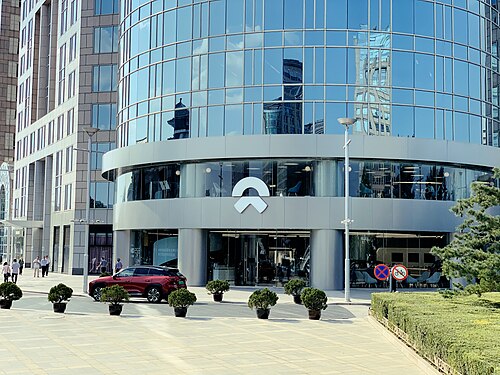
NIO Inc.’s stock has shown modest gains in late February 2026, hovering around $5.30 after a volatile period, as the Chinese electric vehicle maker highlighted record battery-swap activity during the Lunar New Year holiday and reiterated expectations for its first adjusted quarterly operating profit in Q4 2025.
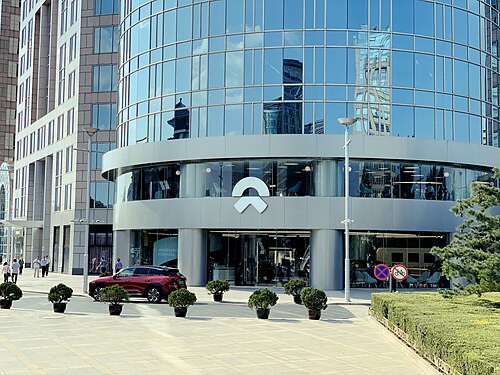
As of February 24, 2026, NIO (NYSE: NIO) closed at $5.30, up 0.19% on the day with volume of about 35 million shares. The shares have climbed roughly 8-11% over the past month but remain down significantly year-to-date and from 2025 peaks near $8. The 52-week range spans a low of $3.02 to a high of $8.02, reflecting ongoing pressures in the competitive EV sector amid subsidy phase-outs, pricing wars, and macroeconomic headwinds in China.
The recent uptick stems from operational highlights during the Spring Festival travel rush (Feb. 15-23, 2026). NIO reported completing 1 million battery swaps in less than a week—a new milestone—surpassing 100 million cumulative swaps overall. Daily records peaked at 177,627 on one day, marking the sixth single-day high in February alone. The feat underscores the scale of NIO’s proprietary battery-swap network, which now supports subscription-based models and differentiates it from pure charging competitors.
CEO William Li emphasized plans to add 1,000 new swap stations in 2026 while accelerating fifth-generation station construction. Management views the power business as a path to profitability, with the network driving recurring service revenue and customer loyalty amid high holiday travel demand.
Financial momentum builds on a February 5, 2026, profit alert. NIO projected adjusted operating profit (non-GAAP, excluding share-based compensation) of RMB 700 million to RMB 1.2 billion (about $100 million to $172 million) for Q4 2025—the company’s first quarterly adjusted profit. GAAP operating profit is expected at RMB 200 million to RMB 700 million ($29 million to $100 million). This contrasts sharply with a RMB 5.54 billion adjusted loss in Q4 2024.
The preliminary guidance reflects improved gross margins from cost controls, higher deliveries, and contributions from sub-brands Onvo and Firefly. January 2026 deliveries surged 96.1% year-over-year, though full Q4 2025 figures await final results. Management targets full-year breakeven in 2026, supported by new large SUVs launching across brands.
Product momentum includes upcoming SUV launches. The flagship ES9 (premium brand) and Onvo L80 are set for official unveilings around April-May 2026, with deliveries starting in May-June. The ES9 incorporates ET9 sedan technology in SUV form to compete in the luxury segment, while the L80 slots between Onvo’s L60 and L90 to broaden market reach. A dedicated product showcase is planned around April 10, coinciding with the Beijing Auto Show for Onvo.
Despite positives, challenges persist. Intense competition from BYD, Tesla, and domestic rivals has compressed margins, with government subsidy reductions impacting certain models. NIO’s cash burn and capital needs remain concerns, though the profit alert has eased some fears.
Analyst views are mixed but lean cautious. Consensus among 9-14 firms rates NIO a Hold, with average 12-month price targets ranging from $6.05 to $6.83—implying 14-29% upside from current levels. High targets reach $8.50-$9.01, low ends around $4.00. Firms like Morgan Stanley maintain Overweight ratings citing growth potential, while others note execution risks and volume guidance adjustments.
The next catalyst arrives around March 19-20, 2026, with Q4 and full-year 2025 earnings. Investors will scrutinize audited results, margin trends, delivery updates, and refined 2026 guidance. Strong execution on profitability and new model ramps could fuel further gains; shortfalls might renew downside pressure.
NIO navigates a pivotal phase in China’s EV landscape. Its battery-swap ecosystem, premium branding, and multi-brand strategy position it for differentiation, while the profit milestone signals maturing operations. As the sector consolidates, NIO’s ability to sustain momentum amid pricing and demand challenges will determine whether recent stability evolves into sustained recovery.
Business
Cipher Mining (CIFR) Stock Surges 12% Post-Earnings on HPC Pivot, $9.3 Billion Contracts Fuel Rebrand

Cipher Mining Inc. shares jumped more than 12% on February 24, 2026, closing at $17.12 after the company reported fourth-quarter 2025 results and detailed a major strategic shift from Bitcoin mining to high-performance computing (HPC) infrastructure, complete with a rebrand to Cipher Digital and $9.3 billion in long-term hyperscaler contracts.

The rally followed the February 24 earnings release and business update, where Cipher announced revenue of $60 million for Q4—below analyst estimates of around $84 million—and an adjusted net loss of $55 million, or $0.14 per share, wider than the forecasted $0.06 loss. Despite the miss, investors focused on the forward-looking transformation: Cipher has secured two major HPC data center leases totaling 600 MW of gross capacity and approximately $9.3 billion in contracted revenue over initial 10- to 15-year terms, with extension options.
The flagship deals include a 15-year lease with Amazon Web Services for 300 MW at the Black Pearl facility in Texas, generating about $5.5 billion in revenue at nearly 100% net operating income (NOI) margin, backed by Amazon’s guarantee on base rent and expenses. A separate 10-year modified gross lease with Fluidstack for 300 MW at Barber Lake carries roughly $3.8 billion in revenue at an 86% NOI margin, with Google providing a backstop guarantee up to $1.73 billion. Management projects average annualized NOI of $669 million from October 2026 through September 2036 from these contracts alone, rising to about $754 million annually by 2035.
CEO Tyler Page described 2025 as a “defining year,” marking the completion of Cipher’s evolution from a Bitcoin miner to a digital infrastructure platform. The company has contracted for HPC on about 74% of its pro forma 807 MW capacity, with the remaining 26% tied to Bitcoin self-mining at the Odessa site (approximately 207 MW at a power cost of roughly $0.028/kWh). Cipher plans to exit Bitcoin mining by the end of 2026, holding about 1,166 BTC as of February 20 and intending to monetize opportunistically without further mining capex.
To fund the pivot, Cipher raised substantial capital through senior secured high-yield bonds: $2.0 billion at 6.125% for Black Pearl (fully funding completion by October 2026), $1.4 billion at 7.125% for Barber Lake (also fully financed), and additional project-level debt. Liquidity stood strong at around $860 million as of mid-February, including cash and Bitcoin holdings.
Recent expansions bolster the pipeline. Cipher acquired the 200 MW Ulysses site in Ohio for future HPC development, diversifying beyond Texas. Near-term energization targets include Stingray (100 MW, Q4 2026) and Reveille (70 MW, Q3 2027). The company also divested its 49% stake in joint ventures (Alborz, Bear, and Chief Mountain) to Canaan Inc. in a non-cash transaction that included 6,840 mining rigs, streamlining operations.
Analysts have responded positively to the HPC focus amid surging AI demand. Consensus among 14-16 firms rates Cipher a Moderate Buy to Strong Buy, with average 12-month price targets around $25.11 to $27.00—implying 45-58% upside from the February 24 close. High-end targets reach $38 from Morgan Stanley, citing the bitcoin-to-datacenter conversion trend, while others like Northland Securities ($27.50), Needham ($26), Rosenblatt ($33), and BTIG ($25) maintain Buy ratings. The pivot aligns with broader industry shifts toward AI infrastructure, where power-rich sites offer stable, high-margin leases compared to volatile crypto mining.
Challenges remain. The Q4 miss stemmed from a tough Bitcoin environment and hashrate reductions (from 23.6 EH/s to 11.6 EH/s), contributing to ongoing losses. Execution risks include construction timelines, power sourcing, and integration of HPC operations. Regulatory and energy market dynamics could impact costs.
Upcoming catalysts include progress on Barber Lake and Black Pearl commencements in October 2026, potential additional leases, and Q1 2026 results expected in May. Management emphasized scaling construction, engineering, and operations teams with HPC expertise to originate and operate at scale.
Cipher Digital’s trajectory reflects the evolving digital infrastructure landscape. By leveraging its Texas power advantages and securing tier-1 tenants like AWS and Google-backed deals, the company positions itself for predictable, long-term cash flows in the AI era. Investors see the rebrand and contracts as validating the pivot, with the stock’s post-earnings surge underscoring optimism that execution could drive significant value creation through the decade.

The promoter group’s stake will fall to 74.2% after the IPO from 94.1%. The company has a loyal customer base with 97% of revenue coming from repeat business. With about 79% of its revenue coming from exports, including 58% from the US, the company faces geographical and tariff related risks. Additionally, It exhibited a longer working capital cycle and had negative cash flow from operations in FY25. Given these factors, investors may wait to see clarity in financials.
Business
Incorporated in 2006, Omnitech caters to customers across sectors such as energy, motion control and automation, industrial equipment systems, metal forming and others. It has three manufacturing units, all in Gujarat thereby creating geographic concentration risks. For instance, flooding from excessive rainfall in FY25 disrupted operations. It has a leased warehouse in Houston, USA. The company imports about 37% of its materials and uses hedging techniques to reduce currency risks.
 Agencies
World Matters Biz is growing at high-precision components maker, but co is exposed to tariff shifts and has longer working capital cycle
Financials
Between FY23 and FY25, revenue grew by 39.1% annually to ‘342.9 crore and net profit rose 16.5% to ‘43.9 crore. Around 30% revenue comes from top three customers. The company has a longer working capital cycle – net working capital days at 256 in the six months to September. This may increase working capital needs thereby raising interest outgo.

Cash flow from operating activities was ‘11.8 crore in the first half of FY26, but the company faced operating cash flow deficit of ’69 crore in FY25, dropping from positive cash flow of ‘39.4 crore in FY23. Though return on equity (ROE) dropped sharply to 21.6% in FY25 from 53.9% in FY23, it remains well above peer range of 6-13%. For the six months ended September 2025, the company’s revenue and net profit was ‘228.2 crore and ‘27.8 crore, respectively.
Valuation
Considering the post-IPO equity and annualised profit for FY26, the price-earnings (P/E) multiple is 50 compared with above 66 for peers including Azad Engineering, Unimech Aerospace and Manufacturing, and PTC Industries.
Business
Vedanta share price rise 5% as BofA upgrades stock to Buy, raises target price by 75%. Here’s why

The international brokerage cited a more constructive outlook for aluminium prices, supportive silver prices and an attractive dividend yield of over 6% estimated for FY27. It also highlighted that significant deleveraging at the parent level reduces the risk of any increase in brand-fee rates or inter-corporate loans.
BofA has raised its FY26E–FY28E EBITDA estimates for Vedanta by 16–21%, factoring in higher aluminium price assumptions, an increased fair value for Hindustan Zinc, depreciation in the USD-INR rate and a lower holding-company discount of 5%, compared with 15% earlier.
Vedanta Q3 snapshot
Vedanta reported a 61% year-on-year jump in consolidated profit to Rs 5,710 crore for the third quarter, with revenue rising 19% to Rs 45,899 crore. EBITDA climbed 34% year-on-year and 31% sequentially to a record Rs 15,171 crore, while margins expanded sharply to 41%, supported by higher metal prices, stronger premiums, improved volumes and cost efficiencies.
The aluminium business stood out operationally, with alumina production rising 57% year-on-year to a record 794 kilo tonnes, while aluminium cost of production declined 11% year-on-year to $1,674 per tonne, aiding margin expansion. Zinc India and international zinc operations also delivered strong growth on the back of favourable commodity prices and improved volumes.
The stronger operating performance translated into better capital efficiency, with return on capital employed improving to 27%, up nearly 300 basis points from a year ago.
Vedanta share price performance
Vedanta share price has been off to a strong start in 2026, rallying 20% on a year-to-date basis. The stock is up 60% in the last six months.
(Disclaimer: Recommendations, suggestions, views and opinions given by the experts are their own. These do not represent the views of The Economic Times)

Contexto Hints & Answers for Today: February 25

North Yorkshire farm shop and deli among UK’s best for 2026

Trump’s State of the Union Signals No Relief on Rates, Ignores Crypto


-

 Video5 days ago
XRP News: XRP Just Entered a New Phase (Almost Nobody Noticed)
-

 Fashion5 days ago
Weekend Open Thread: Boden – Corporette.com
-

 Politics3 days ago
Baftas 2026: Awards Nominations, Presenters And Performers
-

 Entertainment7 days ago
Kunal Nayyar’s Secret Acts Of Kindness Sparks Online Discussion
-

 Sports2 days ago
Women’s college basketball rankings: Iowa reenters top 10, Auriemma makes history
-

 Politics2 days ago
Nick Reiner Enters Plea In Deaths Of Parents Rob And Michele
-

 Tech7 days ago
Retro Rover: LT6502 Laptop Packs 8-Bit Power On The Go
-
 Sports6 days ago
Clearing the boundary, crossing into history: J&K end 67-year wait, enter maiden Ranji Trophy final | Cricket News
-

 Business3 days ago
Mattel’s American Girl brand turns 40, dolls enter a new era
-

 Crypto World1 day ago
XRP price enters “dead zone” as Binance leverage hits lows
-

 Business3 days ago
Law enforcement kills armed man seeking to enter Trump’s Mar-a-Lago resort, officials say
-

 Entertainment6 days ago
Dolores Catania Blasts Rob Rausch For Turning On ‘Housewives’ On ‘Traitors’
-

 Tech3 days ago
Anthropic-Backed Group Enters NY-12 AI PAC Fight
-
 NewsBeat2 days ago
‘Hourly’ method from gastroenterologist ‘helps reduce air travel bloating’
-

 NewsBeat3 days ago
Armed man killed after entering secure perimeter of Mar-a-Lago, Secret Service says
-

 Politics3 days ago
Maine has a long track record of electing moderates. Enter Graham Platner.
-

 Crypto World7 days ago
WLFI Crypto Surges Toward $0.12 as Whale Buys $2.75M Before Trump-Linked Forum
-

 Tech15 hours ago
Unsurprisingly, Apple's board gets what it wants in 2026 shareholder meeting
-
 NewsBeat10 hours ago
Police latest as search for missing woman enters day nine
-

 Crypto World5 days ago
83% of Altcoins Enter Bear Trend as Liquidity Crunch Tightens Grip on Crypto Market