Connect with us

Business

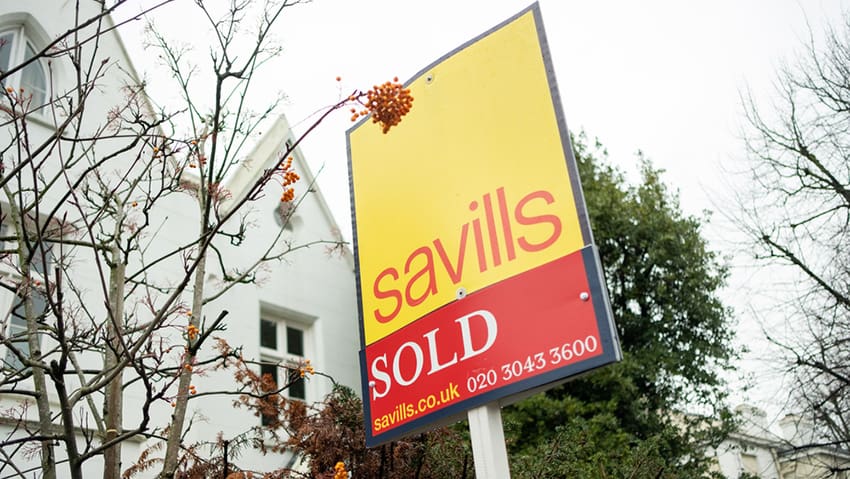
Savills buys Eastdil Secured in $1bn deal to expand US real estate investment banking

Published

on

Savills buys Eastdil Secured in $1bn deal to expand US real estate investment banking

Savills has agreed a deal worth close to $1 billion to acquire US property investment bank Eastdil Secured, marking a significant strategic move aimed at strengthening the British real estate group’s presence in the lucrative American market.

The London-listed property adviser will pay approximately $921 million for the business in a transaction combining both cash and shares. Around $553 million will be paid in cash, while roughly $369 million will be settled in Savills shares issued to existing Eastdil investors, including Singapore’s sovereign wealth fund Temasek, Guggenheim Partners and a group of senior staff shareholders.

The acquisition represents the first major deal under Savills’ new chief executive Simon Shaw, who took over from Mark Ridley at the start of 2026. Shaw described the combination as a “marriage made in heaven”, highlighting the longstanding relationship between the two companies in global real estate transactions.

Eastdil Secured is widely regarded as one of the most influential advisers in the global property capital markets sector. The firm specialises in advising major landlords, developers and institutional investors on high-value property sales, financing arrangements and complex investment transactions. Its client base includes some of the largest global real estate investors and private equity firms.

By bringing Eastdil into the group, Savills aims to significantly deepen its foothold in the United States, the world’s largest property investment market, where the company has historically had a more limited presence compared with Europe and Asia.

Advertisement

Shaw said the acquisition fills a strategic gap in Savills’ global platform. While the firm enjoys strong market positions across many international property markets, the US had remained the most significant region where its capabilities were comparatively underdeveloped.

He said: “We’ve got great market share in many parts of the world, but the one hole in our network has been the US. Eastdil is the leading capital markets operator in the largest real estate investment market in the world and provides direct access to the deepest pools of capital.”

Savills believes the combined organisation will enable it to compete more aggressively for high-value real estate advisory mandates, including mergers and acquisitions involving property portfolios, large-scale financing deals and global investment transactions.

The acquisition was announced alongside Savills’ latest financial results, which showed the company continuing to grow despite a challenging global economic environment marked by geopolitical tensions, tariffs and macroeconomic uncertainty.

Advertisement

For the year ending December 2025, Savills reported revenue of £2.55 billion, up from £2.40 billion the previous year, representing growth of 6 per cent.

Pre-tax profits rose by 14 per cent to £101 million, compared with £88.3 million in 2024. The company attributed the increase partly to stronger demand for its non-transactional services, including investment management, consultancy and property management.

These divisions now account for the majority of Savills’ earnings, reflecting a broader industry shift away from reliance solely on property transactions toward advisory and asset-management services that provide more stable revenue streams.

Income from these less transactional activities increased by 8 per cent over the year, while revenues linked directly to property transactions rose by 4 per cent.

Advertisement

Savills said the middle part of 2025 had been particularly challenging for deal activity as investors delayed decisions amid global tariff disputes and uncertainty surrounding fiscal policy ahead of the UK government’s autumn budget.

However, the company experienced a sharp rebound in activity toward the end of the year. Shaw described December as “astonishing”, suggesting that many investors returned to the market once political uncertainty had eased and the budget had been delivered.

He said investors were increasingly adjusting to a world characterised by geopolitical tension and economic volatility.

“Both occupiers and investors have started to accept that geopolitical change is now a constant,” Shaw said. “There comes a moment where you simply have to continue investing and doing business despite that backdrop.”

Advertisement

Savills also reported that the stronger momentum seen late in 2025 had continued into the opening months of 2026. Although the firm acknowledged that it remains difficult to assess the full impact of the ongoing conflict in the Middle East, it said there had been little immediate disruption to global property investment activity.

According to Shaw, London could potentially benefit from increased investor interest if global instability persists, as capital historically flows toward markets perceived as stable and secure.

“I think there is a likelihood that capital will tilt slightly towards traditional safe havens,” he said. “It would be logical that investors feel more comfortable placing money in markets where legal systems and institutions are well established.”

Savills’ board has also approved a higher shareholder payout following the improved financial performance. The company increased its final dividend by 8 per cent to 15.7p per share, payable in May, while also announcing a supplemental dividend of 10.7p per share.

Advertisement

Despite the strategic rationale for the Eastdil acquisition, investors initially reacted cautiously to the announcement. Savills shares fell 7.2 per cent, closing down 72p at 930p on the day the deal was unveiled.

Founded in 1855 by surveyor Alfred Savill, the company has evolved from a traditional land agency serving wealthy landowners into one of the world’s largest property advisory groups.

Although widely recognised by the public as a residential estate agent, the residential business accounts for only about a tenth of Savills’ overall operations. The majority of its income now comes from commercial real estate services such as advising investors, leasing office space, managing buildings and providing consultancy to institutional clients.

Savills has expanded internationally through a series of acquisitions over the past three decades, establishing operations across Europe, Asia, the Middle East and Australia. However, the United States has remained the final major real estate market where its presence lagged behind competitors.

Advertisement

The purchase of Eastdil Secured is therefore expected to play a central role in Savills’ long-term strategy of building a truly global real estate advisory platform capable of competing with the largest property consultancies and investment banks in the sector.


Jamie Young

Jamie Young

Jamie is Senior Reporter at Business Matters, bringing over a decade of experience in UK SME business reporting.
Jamie holds a degree in Business Administration and regularly participates in industry conferences and workshops.

When not reporting on the latest business developments, Jamie is passionate about mentoring up-and-coming journalists and entrepreneurs to inspire the next generation of business leaders.

Advertisement
Continue Reading
Click to comment

Leave a Reply

Your email address will not be published. Required fields are marked *

Business

UK economy flatlines in January as restaurant spending falls and growth stalls

Published

on

UK economy flatlines in January as restaurant spending falls and growth stalls

The UK economy stalled at the start of the year as households cut back on discretionary spending, with restaurants and food services experiencing a sharp decline in activity.

New figures from the Office for National Statistics (ONS) show that gross domestic product (GDP) recorded zero growth in January, falling short of economists’ expectations and marking a slowdown from the modest 0.1% growth recorded in December. Analysts had forecast that output would expand by around 0.2% over the month.

The disappointing performance highlights the fragile state of the UK economy even before the latest geopolitical shock from the escalating US-Israeli conflict with Iran, which economists warn could further dampen growth by pushing energy prices higher and fuelling inflation.

The ONS said the overall economic picture remained “subdued”, with consumer-facing sectors particularly weak. Within the dominant services sector, which accounts for around 80% of UK economic activity, there was a notable 2.7% drop in food and drink service activity as households curtailed spending on eating out.

This contraction in hospitality suggests that the pressure on household finances continues to weigh heavily on consumer behaviour. Restaurants and pubs are often among the first sectors to feel the impact when consumers begin tightening their budgets.

Advertisement

More broadly, the services sector showed no growth overall during the month, underscoring the cautious spending environment facing businesses.

Other parts of the economy also delivered mixed results. Industrial production slipped by 0.1% during January, while construction activity provided one of the few bright spots, expanding by 0.2% over the month.

The flat reading follows a period of slowing economic momentum during the second half of 2025, when uncertainty over tax changes, rising unemployment and lingering cost-of-living pressures led many consumers to reduce spending.

Although the monthly GDP figure showed stagnation, the three-month measure of economic activity, which is typically less volatile, indicated modest growth. In the three months to January, the UK economy expanded by 0.2%, slightly stronger than the 0.1% recorded in the previous three-month period.

Advertisement

However, economists say the underlying picture remains weak, particularly as global developments threaten to worsen inflation and slow economic activity further.

The latest data was compiled before the outbreak of hostilities involving the United States, Israel and Iran, which has sent global energy prices sharply higher. Oil prices have surged and wholesale gas markets have become increasingly volatile, raising concerns about a renewed cost-of-living squeeze for British households.

Prime Minister Sir Keir Starmer warned earlier this week that the longer the Middle East conflict continues, the more likely it is to have a tangible impact on the UK economy.

Higher energy prices are already feeding through to petrol and diesel costs, while households covered by Ofgem’s energy price cap will remain shielded from immediate increases until the next adjustment period in July.

Advertisement

Nonetheless, economists warn that sustained energy price rises could quickly push inflation higher again. Before the conflict erupted, inflation had been expected to fall to the Bank of England’s 2% target by the spring. A renewed surge in energy costs could derail that trajectory.

The shift in the inflation outlook has already affected financial markets. Expectations that the Bank of England would begin cutting interest rates as early as March have largely evaporated, with economists now widely anticipating that policymakers will hold rates steady when they meet next week.

This change in interest rate expectations has had an immediate impact on the mortgage market. Hundreds of mortgage deals have been withdrawn by lenders in recent days, while average mortgage rates have climbed back to levels not seen since last spring.

If the geopolitical tensions persist, analysts say higher borrowing costs and weaker consumer confidence could undermine Labour’s central economic priority of accelerating growth.

Advertisement

Chancellor Rachel Reeves acknowledged the challenges facing the economy, saying the government remained committed to its long-term economic strategy.

“Our economic plan is the right one, but I know there is more to do,” she said.

“In an uncertain world, we are building a stronger and more secure economy by cutting the cost of living, reducing national debt and creating the conditions for growth so that all parts of the country can prosper.”

Opposition figures were quick to criticise the government’s economic performance. Shadow chancellor Sir Mel Stride said Labour had left the economy exposed to external shocks.

Advertisement

“Labour’s economic mismanagement has left the UK vulnerable to the potential consequences of the Iran conflict,” he said.

“They must now take urgent action, including cutting fuel duty, supporting North Sea oil and gas production and putting forward a credible plan to reduce the deficit and bring down the benefits bill.”

Looking ahead, economists believe growth is likely to remain subdued throughout much of the year.

The Office for Budget Responsibility recently downgraded its forecast for UK economic growth in 2026 to 1.1%, down from its earlier estimate of 1.4%.

Advertisement

Yael Selfin, chief economist at KPMG UK, said the latest GDP figures suggested the economy had begun the year on weak footing and could struggle to regain momentum.

“The UK economy started the year on the back foot and activity is expected to weaken further amid sharply rising energy prices,” she said.

Selfin added that government borrowing costs have increased in recent weeks as financial markets reassess the outlook for interest rates. Higher borrowing costs could act as a headwind for businesses and households alike.

“With expectations for weaker growth combined with rising costs, businesses are likely to scale back investment plans,” she said.

Advertisement

For policymakers, the challenge now lies in navigating a fragile domestic economy while responding to external shocks that threaten to push inflation higher and delay any relief from elevated interest rates.


Jamie Young

Jamie Young

Jamie is Senior Reporter at Business Matters, bringing over a decade of experience in UK SME business reporting.
Jamie holds a degree in Business Administration and regularly participates in industry conferences and workshops.

When not reporting on the latest business developments, Jamie is passionate about mentoring up-and-coming journalists and entrepreneurs to inspire the next generation of business leaders.

Advertisement
Continue Reading

Business

F1 set to cancel Bahrain and Saudi Arabian Grands Prix as Middle East conflict escalates

Published

on

F1 set to cancel Bahrain and Saudi Arabian Grands Prix as Middle East conflict escalates

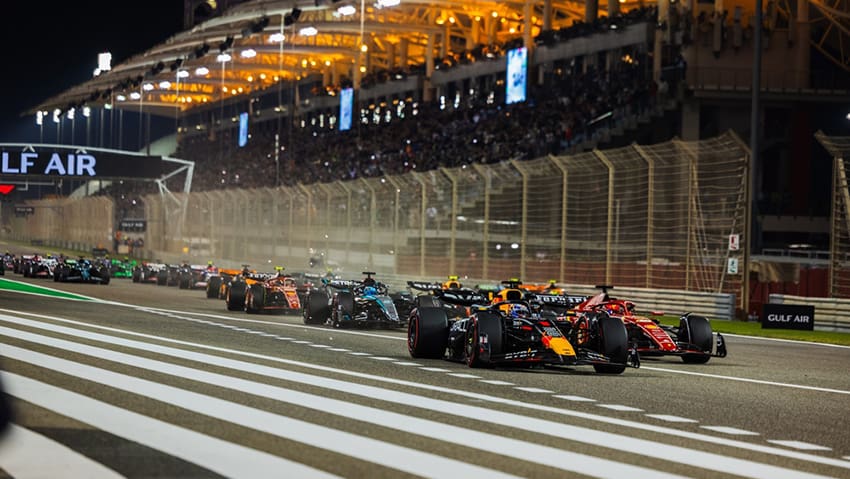
Formula 1 is expected to cancel the Bahrain and Saudi Arabian Grands Prix as the escalating conflict in the Middle East continues to destabilise the region, with the decision likely to reduce the 2026 calendar to 22 races.

The two races, scheduled to take place in April, were due to form the fourth and fifth rounds of the championship. The Bahrain Grand Prix had been planned for 10–12 April before the sport was set to travel to Jeddah for the Saudi Arabian Grand Prix on 17–19 April.

However, both Bahrain and Saudi Arabia are among several Gulf states that have been targeted by Iranian strikes in retaliation for US and Israeli military operations in the region. The deteriorating security situation has raised serious concerns across international sporting bodies, airlines and logistics operators, with Formula 1 now expected to formally call off both events.

Sources indicate that the announcement could be made before the end of the weekend as the sport assesses the rapidly changing geopolitical landscape.

Safety remains the overriding priority for both Formula 1 and motorsport’s governing body, the Fédération Internationale de l’Automobile (FIA). With tensions escalating across the Gulf and no clear signs of de-escalation, the championship’s organisers are understood to have concluded that staging races in the region in April would present unacceptable risks.

Advertisement

Business Matters, which is currently in China with the Aston Martin Aramco Formula 1 team ahead of the Chinese Grand Prix weekend in Shanghai, understands that the races will likely be removed entirely from the calendar rather than postponed.

If confirmed, the cancellations will leave a notable gap in the early-season schedule. Following the Japanese Grand Prix, which takes place from 27–29 March and serves as the third round of the championship, Formula 1 would not return to action until the Miami Grand Prix on 1–3 May.

That would create an unusual five-week break in the racing calendar during April, a period that normally features several Grands Prix as the season builds momentum.

While Formula 1 has occasionally rearranged or replaced cancelled races in previous seasons, sources suggest that the already packed March-to-December calendar makes it unlikely that replacement venues will be found at short notice. As a result, the 2026 championship is expected to run over 22 race weekends instead of the originally planned 24.

Advertisement

The Middle East has become a key region for Formula 1 over the past two decades, with races in Bahrain, Saudi Arabia, Qatar and Abu Dhabi forming an important part of the championship’s global expansion strategy.

Bahrain first joined the calendar in 2004 and traditionally hosts the opening race of the season, while the high-speed street circuit in Jeddah made its debut in 2021 as part of the sport’s growing presence in the Gulf.

Both races have become major sporting and commercial events, attracting large international audiences and significant investment from host governments.

However, the current conflict has already begun to disrupt global transport networks, energy markets and commercial shipping routes across the region, raising broader concerns about the feasibility of large-scale international events.

Advertisement

Teams, logistics partners and broadcasters also face complex operational challenges when transporting equipment and personnel across a region experiencing heightened military activity.

The situation is being monitored closely by Formula 1 Management, the FIA and race organisers, who are expected to issue formal confirmation once final discussions conclude.

In the meantime, attention remains on the Chinese Grand Prix weekend in Shanghai, where Mercedes driver George Russell is aiming to build on his opening-race victory and extend his early lead in the championship standings.

With the season potentially losing two races, the fight for points could become even more intense as drivers and teams compete across a shorter calendar in what is already shaping up to be a highly unpredictable year in Formula 1.

Advertisement

Paul Jones

Harvard alumni and former New York Times journalist. Editor of Business Matters for over 15 years, the UKs largest business magazine. I am also head of Capital Business Media’s automotive division working for clients such as Red Bull Racing, Honda, Aston Martin and Infiniti.

Advertisement
Continue Reading

Business

Fear levels of March 2020? Iran war gives Nifty its worst month since the dreaded Covid crash

Published

on

Fear levels of March 2020? Iran war gives Nifty its worst month since the dreaded Covid crash
Indian equities recorded their worst monthly performance since the Covid pandemic, with the benchmark Nifty recording its second sharpest decline in a decade as geopolitical tensions and sustained foreign investor selling weigh heavily on sentiment. In March 2020, Nifty fell around 23%, driven by fears of the pandemic, while the March 2026 month saw a fall of nearly 8%. The most worrying aspect is that we have barely reached the halfway point of the month.

The current slide also marks the second-worst monthly fall for the Nifty in the last ten years, underlining the intensity of the sell-off that has gripped Dalal Street.

The sharp correction has unfolded over the past week as escalating conflict in West Asia, particularly the ongoing Iran war, triggered a surge in crude oil prices and heightened global risk aversion. India, which imports nearly 85% of its crude oil requirements, remains particularly sensitive to any disruption in Middle East supply chains.

Also read:Explained: Why traders aren’t holding on to gold since Middle East war despite safe haven appeal

Advertisement

With Brent crude hovering near $100 per barrel, concerns have grown around the impact on inflation, corporate margins and the rupee. The Strait of Hormuz, through which a large portion of India’s oil imports pass, has emerged as a key geopolitical flashpoint as the conflict intensifies.


The market fall has also been aggravated by heavy foreign institutional investor selling. FIIs have already sold nearly Rs 40,000 crore worth of Indian equities so far this month, putting sustained pressure on largecap stocks and dragging benchmark indices lower.
The BSE Sensex is on track to close the current week down by nearly 4,000 points, while the Nifty has dropped about 5% in just five trading sessions. The sell-off has been widespread, including in the broader market. Just on Friday, the Nifty small and midcap indices fell close to 3%.Beyond the Iran conflict, analysts say concerns around global growth and sector-specific headwinds have also contributed to the market weakness. The rapid adoption of artificial intelligence globally has raised questions about the near-term outlook for India’s IT services sector, which has seen underperformance in recent months as investors reassess demand visibility.

Fundamentals remain strong

Despite the current volatility, fund managers say the underlying fundamentals of the Indian economy remain intact. According to Sorbh Gupta, Head-Equity at Bajaj Finserv AMC, corporate earnings have shown strong momentum over the past few quarters, providing a more supportive foundation for markets.

Recent results indicate a broad-based recovery in profitability across sectors. Profit growth for the Nifty 500 companies rose about 16% year-on-year in Q3FY26, marking the strongest earnings expansion in eight quarters.

Advertisement

Gupta noted that improving earnings visibility could help stabilise equities once the current wave of global uncertainty subsides.

Domestic macroeconomic indicators have also shown signs of improvement. Credit growth has returned to double-digit levels, suggesting stronger demand for loans and improving liquidity conditions. Consumption trends have begun to recover following tax and policy support, while earlier rate cuts by the Reserve Bank of India have helped lower borrowing costs for both companies and consumers.

Over the longer term, markets have historically absorbed geopolitical shocks relatively quickly. Axis Mutual Fund pointed out that Indian equities have navigated multiple global crises over the past decade — from regional conflicts to wars and economic disruptions — with only temporary drawdowns before fundamentals reasserted themselves.

However, the near-term outlook remains closely tied to geopolitical developments.

Advertisement

If tensions in the Middle East escalate further, crude oil prices could remain elevated, potentially triggering higher inflation, pressure on the rupee and margin compression for sectors such as aviation, chemicals, paints and oil marketing companies.

Also read: $100 crude gives Rs 20 lakh crore shock to Nifty bulls this week. Best time to buy the fear?

India’s strong foreign exchange reserves and strategic petroleum reserves offer some cushion against external shocks, but markets are likely to remain volatile as investors track developments in the region, analysts say.

(Disclaimer: Recommendations, suggestions, views and opinions given by the experts are their own. These do not represent the views of Economic Times)

Advertisement
Continue Reading

Business

Can Ukraine's war-torn wheatfields be cleansed?

Published

on

Can Ukraine's war-torn wheatfields be cleansed?

Researchers take 8,000 soil samples from battlefields to see if it is safe to grow crops.

Continue Reading

Business

Innovision IPO sees subscription decline despite extension of bidding window. Check GMP and other details

Published

on

Innovision IPO sees subscription decline despite extension of bidding window. Check GMP and other details
The IPO of Innovision witnessed a decline in subscription, with the issue recording bids of about 30% overall even after the company extended the subscription window following muted demand in the initial bidding period. The IPO had received 32% subscription by the end of Day 3, when the original bidding period closed. Despite the extension, the latest data shows participation slipping slightly.

Within investor categories, the retail portion was subscribed 26%, while the non-institutional investor (NII) category saw 35% subscription. Demand from institutional investors remained relatively stronger, with the qualified institutional buyer (QIB) portion subscribed 95%.

The IPO was originally open for subscription between March 10 and March 12, but the company decided to extend the bidding period until March 17 after the issue failed to garner full subscription in the initial window.

Alongside the extension, Innovision also revised the price band downward to Rs 494-519 per share from the earlier Rs 521-548 range, effective March 13, in an attempt to attract additional investor interest.

Advertisement

The company is looking to raise about Rs 323 crore through the public issue. The offer comprises a fresh issue of Rs 255 crore and an offer for sale worth Rs 68 crore by existing shareholders.


Grey market indicators also reflect the cautious sentiment around the offering. The IPO is currently commanding a grey market premium of around 0%, signalling expectations of a flat listing.
Innovision operates in the manpower services and infrastructure support sector, offering workforce solutions, toll plaza management and skill development training to enterprises and infrastructure operators across India.The company initially began operations in manned private security services, before expanding into broader manpower outsourcing solutions. It subsequently entered the skill development segment in FY14 and later moved into toll management services from FY19.

Currently, Innovision operates across 23 states and five union territories, providing operational and workforce management services to clients through long-term contracts and service agreements.

Financially, the company has posted strong revenue growth over the past few years. Revenue increased to Rs 896 crore in FY25, compared with Rs 512 crore in FY24 and Rs 258 crore in FY23.

Profit after tax also rose to Rs 29 crore in FY25, up from Rs 10 crore in FY24 and Rs 9 crore in FY23. However, profitability remains modest given the nature of the business. The company reported an EBITDA margin of around 5.78% in FY25, reflecting the manpower-intensive nature of its operations.

Advertisement

Proceeds from the fresh issue are proposed to be utilised for repayment or prepayment of certain borrowings, funding working capital requirements and general corporate purposes.

Continue Reading

Business

Omnicom Group Inc. (OMC) Analyst/Investor Day Transcript

Published

on

OneWater Marine Inc. (ONEW) Q1 2026 Earnings Call Transcript

Omnicom Group Inc. (OMC) Analyst/Investor Day March 12, 2026 9:00 AM EDT

Company Participants

Gregory Lundberg – Senior Vice President of Investor Relations
John Wren – Chairman & CEO
Daryl Simm – Co-President & Co-COO
George Manas – Chief Executive Officer of OMD Worldwide
Ellen Griffin
Deepthi Prakash
Jantzen M. Bridges
Jacki Kelley
Paolo Yuvienco – Executive VP & Chief Technology Officer
Christine Gambino
Philip Angelastro – Executive VP & CFO
Philippe Krakowsky – Co-President, Co-COO & Director

Conference Call Participants

Advertisement

Thomas Yeh – Morgan Stanley, Research Division
Steven Cahall – Wells Fargo Securities, LLC, Research Division
Jason Bazinet – Citigroup Inc., Research Division
Adrien de Saint Hilaire – BofA Securities, Research Division
Julien Roch – Barclays Bank PLC, Research Division
Timothy Nollen – SSR LLC
David Karnovsky – JPMorgan Chase & Co, Research Division
Jason Samwick

Presentation

Gregory Lundberg
Senior Vice President of Investor Relations

Advertisement

Good morning. I’m Greg Lundberg, Head of Investor Relations for Omnicom. Welcome to our Investor Day. You get every year one of these. Thank you for taking the time to be here. A little housekeeping before we get started. Please silence your phone and if you do have to make a call, feel free to step out to the reception area. In the event of an emergency, the venues personnel will be directing us in the closest exits through the doors that you came into today.

A lot of great content today, and we’re going to punctuate it with a couple of short breaks. And after all the presentations, we’re going to have a Q&A session, and we request that you please hold your questions until then. And now for our disclaimer. Certain of the statements made today may constitute forward-looking statements. These represent our present expectations and relevant factors that could cause actual results to differ materially from those are listed in our SEC filings, including our 2025 Form 10-K. After today’s event concludes, an archived webcast of this will

Advertisement
Continue Reading

Business

New US trade probe targets EU, Canada, UK over forced labour

Published

on

New US trade probe targets EU, Canada, UK over forced labour

The US said it would examine whether countries are effectively blocking goods made with “forced labour”.

Continue Reading

Business

Starbucks Workers United union sends contract proposal to company

Published

on

Starbucks Workers United union sends contract proposal to company

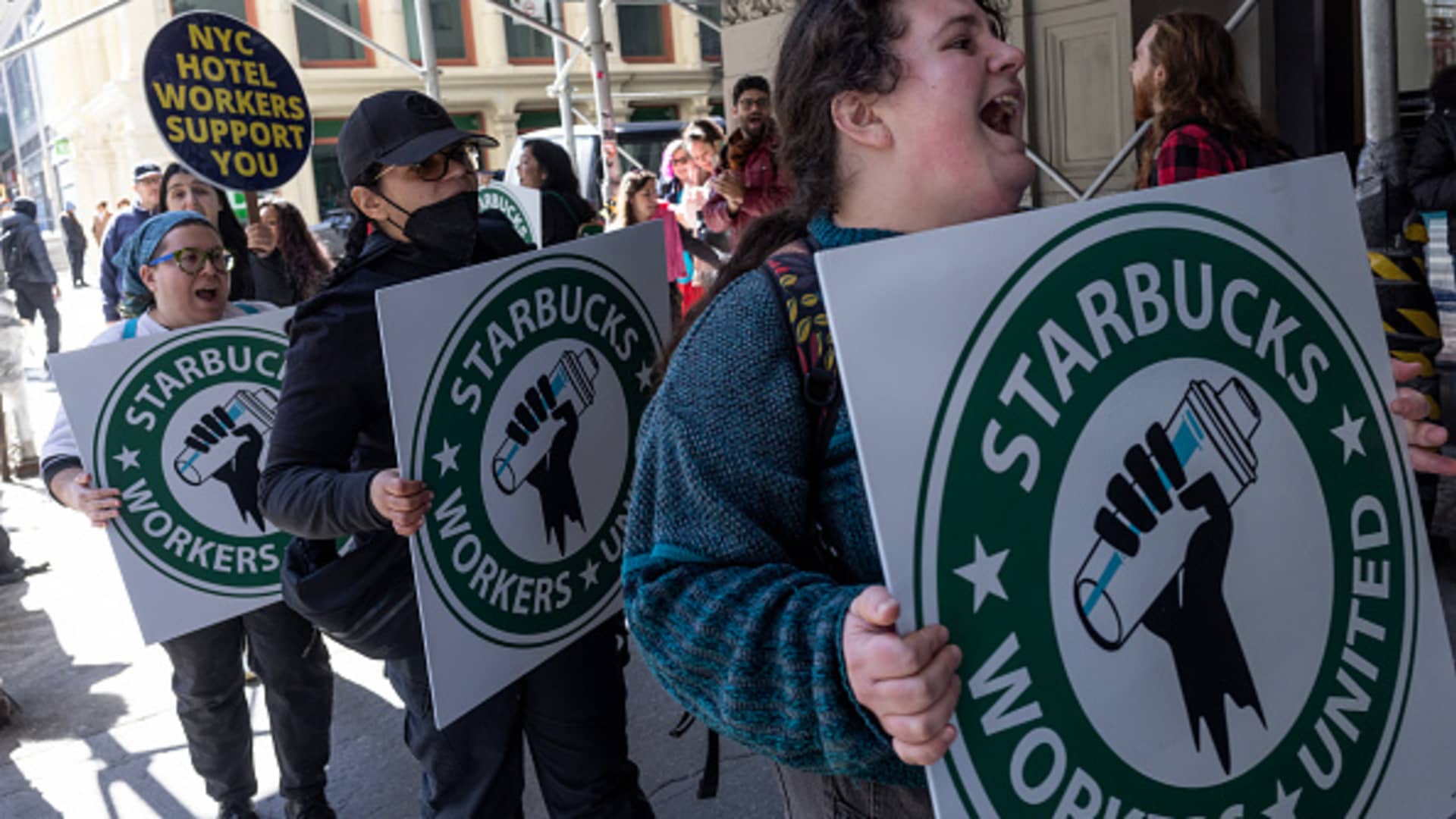
Starbucks union members and their supporters, including baristas who have just walked off the job, effectively closing a local branch, picket in front of the store, Feb. 28, 2025 in New York City. 

Andrew Lichtenstein | Corbis News | Getty Images

Starbucks Workers United presented the company with a comprehensive proposed contract last month, the union said on a call with investors on Friday, as baristas attempt to strike their first labor agreement with the coffee giant.

Advertisement

Here’s what baristas asked for in that proposal:

  • Protections for union baristas against discrimination, unjust firings and temporary or permanent store closures
  • Starting wage floor of $17 per hour, down from its prior proposal of $20 an hour but still above the company’s current starting wage of $15.25 to $16 an hour in 43 states
  • Annual raises of 4%
  • A process for baristas, management and union representatives to resolve workforce grievances
  • A dress code endorsed by the union
  • Requirement for at least three workers on the floor at all times and enforceable staffing and safety protections
  • A mandate to offer open hours to existing employees before hiring new baristas
  • Resolution of hundreds of outstanding unfair labor practice charges

The union said that Starbucks has not yet responded to the substance of the proposal.

The coffee giant told CNBC that it would like to restart talks with Workers United as soon as this month.

“Starbucks has proposed to resume in-person bargaining with Workers United on March 30 and to remain available for continued negotiations throughout April,” Starbucks spokesperson Jaci Anderson said in a statement.

Workers United represents about 6% of Starbucks’ company-owned locations in the U.S., according to regulatory filings.

Advertisement

The announcement comes months after bargaining talks between the two parties hit a wall. Starbucks and the union last held formal negotiations in December 2024. Several months later, the two parties met for mediation, but hundreds of barista delegates voted down the economic package proposed by the company in April.

Over the holiday season, baristas in more than 40 cities held an open-ended strike that stretched on for several weeks. The work stoppage led to dozens of temporary store closures for the coffee chain during its busiest time, although the company said it didn’t materially affect its business.

Starbucks’ strained relations with its baristas will also likely garner attention at its annual meeting for shareholders, held on March 25.

A group of investors led by union-affiliated SOC Investment Group is urging shareholders to vote against the reelection of directors Jørgen Vig Knudstorp and Beth Ford, citing their oversight roles tied to the company’s labor relations. Proxy advisory firm Glass Lewis has recommended voting against the reelection of Ford, chair of the nominating and corporate governance committee.

Advertisement

The prolonged battle between the company and its baristas poses a potential roadblock to Starbucks as it attempts a turnaround of its sluggish U.S. business. During the company’s holiday quarter, its store traffic rose for the first time in two years.

In Starbucks’ most recent annual filing, the company noted potential risks ahead, like further work stoppages or harm to its reputation and brand.

Choose CNBC as your preferred source on Google and never miss a moment from the most trusted name in business news.
Continue Reading

Business

U.K. stocks lower at close of trade; Investing.com United Kingdom 100 down 0.44%

Published

on


U.K. stocks lower at close of trade; Investing.com United Kingdom 100 down 0.44%

Continue Reading

Business

Blackstone is a major seller in January commercial real estate

Published

on

Blackstone BREIT is a major seller in January commercial real estate

Continue Reading

Trending

Copyright © 2025