
Business
Seafood stocks dip amid margin pressure and competition


The trade deal between the two nations is crucial for the Indian marine exports since the US is India’s largest market with 36.3% share in FY25, according to the data from the government’s Niryat (exports) portal. In addition, frozen shrimp makes up nearly two-thirds of India’s marine shipments to the US.
India Ratings and Research (Ind-Ra) expects a lower tariff rate to improve India’s cost position relative to Ecuador, Vietnam and Indonesia. This may also help reverse the slowdown in exports seen between August and November 2025 when Indian shipments to the US sharply declined amid effective duty rates as high as 58% compared with 18-49% for other exporting countries. Ind-Ra also expects the shrimp processing industry to fare better than its earlier forecast of a 12% year-on-year revenue decline and a 150-basis points margin compression for FY26. Improved order visibility is also likely to ease working-capital pressures.
 Agencies
Margin pressure, intense competition weigh on the sector’s outlook
According to CareEdge, shrimp exports to the US rose 5% during the five months to August and then fell by 35% in August over July 2025, following strong frontloading of volumes ahead of higher reciprocal US tariffs. Indian exporters shifted towards other countries, but it affected profitability given that the US market generates higher value.
This is reflected in the financial performance of top marine exporters. Revenue growth for a sample of six exporters improved year-on-year for two quarters to September 2025, but margins softened, with average operating margin before depreciation and amortisation (Ebitda margin) slipping to 5.3% in the September quarter from 6.7% in the June quarter.

Though the trade deal has boosted hopes of a US market recovery, with the peak holiday season over and global demand set to soften in 2026, analysts expect the rebound to be gradual.
Shares of marine exporters jumped 6-31% on the BSE in five trading sessions since February 2, following the announcement of the India-US trade deal. Avanti Feeds and Waterbase were the top gainers, rising 31% and 27% respectively, while Sharat Industries and Coastal Corporation saw comparatively smaller gains of about 6% and 10%.


Oil is trading near $100 a barrel, and natural-gas prices have surged to the point that countries dependent on imported fuel are taking drastic steps to cut consumption. Those aren’t the only markets being rocked by the closure of the Strait of Hormuz.
The war’s blockage of Persian Gulf ports is rippling far downstream of the region’s oil-and-gas exporters and risks boosting prices of products ranging from beer cans to bluejeans and services such as magnetic resonance imaging, or MRIs. Those same supply-chain disruptions are creating lucrative new trades for investors.
Copyright ©2026 Dow Jones & Company, Inc. All Rights Reserved. 87990cbe856818d5eddac44c7b1cdeb8
Business
Selena Gomez Embraces Married Life, Beauty Empire Growth and Nostalgic Disney Reunion in Busy 2026
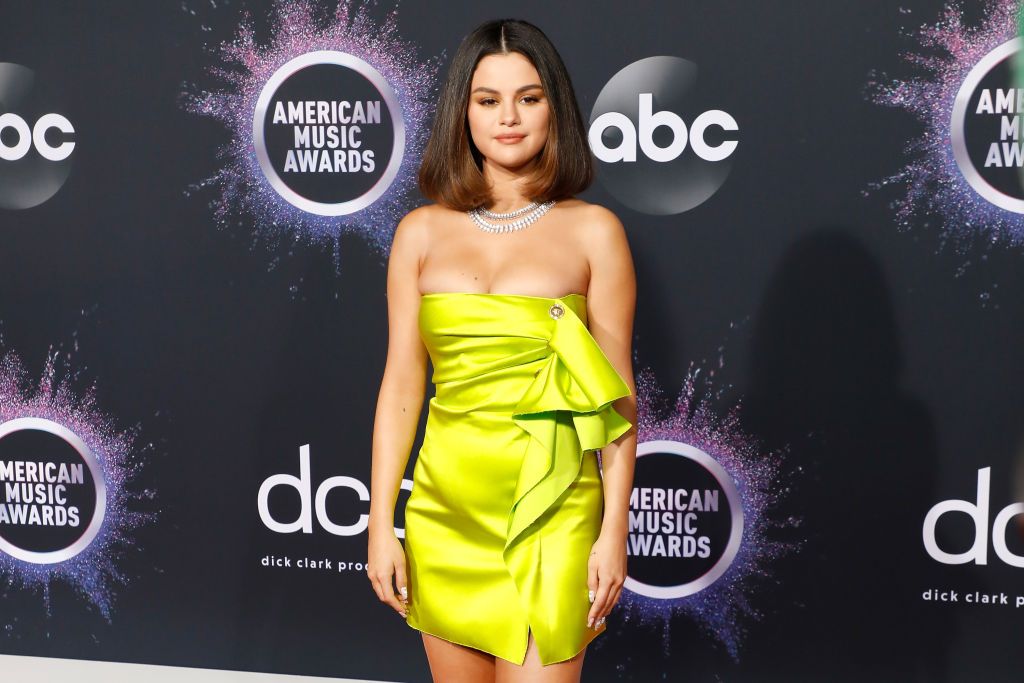
Selena Gomez is navigating 2026 as a newlywed, self-made business powerhouse and multifaceted entertainer, balancing personal milestones with the continued expansion of her Rare Beauty brand and select creative projects while keeping a relatively low profile on major red carpets.
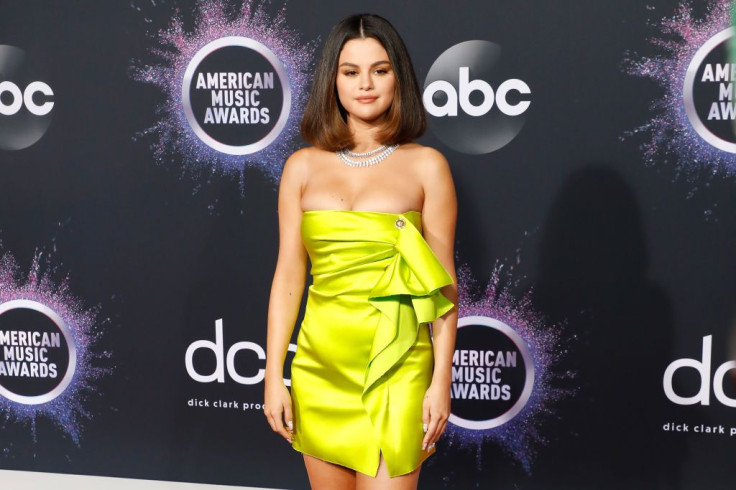
The 33-year-old actress, singer and entrepreneur, who married music producer Benny Blanco in September 2025, has spent the early months of the year promoting her cosmetics line, sharing glimpses of married life and making a surprise cameo tied to her Disney roots. Gomez skipped several high-profile awards shows, including the 2026 Grammys and Oscars, citing scheduling conflicts and a focus on business commitments.
Gomez and Blanco attended the Golden Globes in January as a married couple, turning heads with coordinated Old Hollywood-inspired looks. She wore a custom Chanel gown, while the pair radiated “newlywed glow” on the red carpet. The night included a casual post-show dinner with her “Only Murders in the Building” co-stars Steve Martin and Martin Short at a diner, where Gomez shared photos of fries, waffles and wine on Instagram Stories.
Rare Beauty Expansion and Billionaire Status
A standout focus for Gomez in 2026 has been her beauty brand Rare Beauty, which launched its first major retail expansion beyond Sephora into more than 1,500 Ulta Beauty stores and Ulta.com beginning Feb. 1. The move marked the brand’s first broad physical retail push since its 2020 debut and included exclusive products and continued support for the Rare Impact Fund, which advances youth mental health initiatives.
Industry analysts valued Rare Beauty at approximately $2.7 billion following strong 2025 performance, including the successful launch of its first fragrance, Rare Eau de Parfum. Gomez, who holds a majority stake, has been recognized as a 2026 CNBC Changemaker for her leadership in growing the inclusive makeup line while prioritizing accessibility — such as designing the perfume bottle with input from hand therapists for users with dexterity challenges.
Reports estimate Gomez’s personal net worth between $1.3 billion and $1.5 billion, with the bulk tied to her equity in Rare Beauty. She has reportedly rejected buyout offers to maintain creative control, solidifying her reputation as a “founder-first” celebrity entrepreneur. In early 2026, she promoted the Ulta rollout with events in New York and Los Angeles, sharing behind-the-scenes moments on social media.
Personal Life and Family Aspirations
Gomez has been open about married life with Blanco. In March, she appeared on the debut episodes of Blanco’s podcast “Friends Keep Secrets,” discussing their relationship, her mental health journey with bipolar disorder and lupus, and her dreams of having four children. She acknowledged health challenges that make carrying a pregnancy difficult but expressed openness to surrogacy or adoption, calling a large family her “dream for sure.”
The couple celebrated Blanco’s birthday with a Western-themed party, and Gomez shared intimate photos from their life together in mid-March, including cozy moments that fans praised for their authenticity. Gomez has described the early months of marriage as “a dream,” emphasizing the joy of partnership after years of public scrutiny.
Nostalgic Disney Return and Acting Outlook
Fans received a delightful surprise in late March with Gomez’s cameo in the “Hannah Montana 20th Anniversary Special” streaming on Disney+. Miley Cyrus revealed the reunion, with the pair exchanging warm words on screen: “You created culture, babe,” and “You too.” The appearance marks a full-circle moment for Gomez, who rose to fame on Disney Channel with “Wizards of Waverly Place.”
“Only Murders in the Building” remains a steady vehicle for Gomez, with the Hulu series earning ensemble nominations into 2026, though she and co-stars were absent from some ceremonies due to personal reasons, including Martin Short’s family loss. Gomez continues as both star and executive producer.
No new studio album has been confirmed for 2026, though Gomez and Blanco earned a joint Grammy nomination for their song “Bluest Flame” from the collaborative project “I Said I Love You First.” The couple skipped the Grammys ceremony, with Gomez prioritizing a Rare Beauty event instead. Speculation about a solo album or joint tour persists, but official announcements remain absent as of late March, and Ticketmaster lists no confirmed 2026 concert dates.
Gomez skipped the 2026 Oscars, noting no eligible film projects this year and no presenter role. She instead shared casual Instagram content from Rare Beauty promotions.
Health, Advocacy and Public Image
Gomez has remained candid about her ongoing mental health and physical challenges, using platforms to destigmatize bipolar disorder and lupus. Her Rare Impact Fund continues to channel proceeds toward mental health resources for young people, aligning business success with philanthropy.
In a landscape where celebrity brands often face scrutiny, Rare Beauty’s focus on inclusivity and accessibility has helped it stand out. Gomez’s no-makeup selfies and relaxed social media posts in early 2026 projected a grounded image amid her high-profile life.
Looking Ahead
As spring 2026 unfolds, Gomez appears selective with commitments, prioritizing her marriage, business empire and selective creative outings like the Disney special. Industry watchers anticipate potential new music or expanded acting roles later in the year, possibly tied to “Only Murders” or other projects, while Rare Beauty’s Ulta rollout is expected to drive further growth.
Gomez’s trajectory reflects a deliberate shift toward sustainability — building lasting enterprises rather than chasing constant spotlight. From Disney child star to billionaire beauty mogul and content producer, she has carved a unique path that resonates with fans seeking authenticity alongside glamour.
Whether through a fresh album, deeper family plans or continued brand innovation, Gomez’s 2026 chapter underscores her evolution into one of entertainment’s most influential multi-hyphenates. Fans continue to follow her journey closely, celebrating the balance she strikes between vulnerability and ambition.
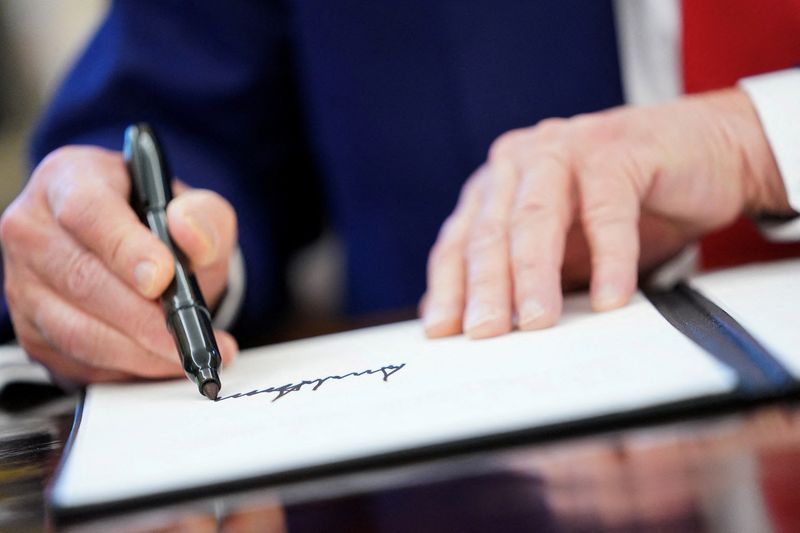

Factbox-Trump’s signature on $100 bill to put him in small circle of sitting presidents
Business
Scholar Rock: From Manufacturing Hurdle To Commercial Muscle, Maintaining Buy Rating (NASDAQ:SRRK)


Lifescience investor focused on non-consensus long-short investment ideas. I focus on small to mid-cap biotechnology companies that are public on the US and EU markets. I like to delve into clinical catalysts or play earnings on new drug launches. I do not provide personal investment advice. All content that I provide, including but not limited to opinions, analyses, commentaries, forecasts, stock picks, and investment strategies, is for informational and educational purposes only and should not be interpreted as financial or investment advice. While I strive to provide accurate and up-to-date information, the content may contain errors, inaccuracies, or omissions. Any financial decisions or investments made based on the information presented in this article are solely at your own risk. I am not responsible for any financial losses, damages, or other consequences resulting from actions taken in reliance on the information provided. You should conduct your own due diligence and consult with a qualified financial professional before making any investment decisions. This article reflects my personal views and opinions and is not affiliated with any employer, financial institution, or advisory firm. No representations or warranties are made regarding the completeness, accuracy, or reliability of the content, including any external links provided. Any third-party links are for informational purposes only, and I do not endorse or take responsibility for the content or services offered by external sources. All information is provided on an “as is” basis without any express or implied warranties.
Analyst’s Disclosure: I/we have a beneficial long position in the shares of SRRK either through stock ownership, options, or other derivatives. I wrote this article myself, and it expresses my own opinions. I am not receiving compensation for it (other than from Seeking Alpha). I have no business relationship with any company whose stock is mentioned in this article.
I do not provide personal investment advice. All content in this article, including but not limited to opinions, analyses, commentaries, forecasts, stock picks, and investment strategies, is for informational and educational purposes only and should not be interpreted as financial or investment advice. While I strive to provide accurate and up-to-date information, the content may contain errors, inaccuracies, or omissions. Any financial decisions or investments made based on the information presented in this article are solely at your own risk. I am not responsible for any financial losses, damages, or other consequences resulting from actions taken in reliance on the information provided. You should conduct your own due diligence and consult with a qualified financial professional before making any investment decisions. This article reflects my personal views and opinions and is not affiliated with any employer, financial institution, or advisory firm. No representations or warranties are made regarding the completeness, accuracy, or reliability of the content, including any external links provided. Any third-party links are for informational purposes only, and I do not endorse or take responsibility for the content or services offered by external sources. All information is provided on an “as is” basis without any express or implied warranties.
Seeking Alpha’s Disclosure: Past performance is no guarantee of future results. No recommendation or advice is being given as to whether any investment is suitable for a particular investor. Any views or opinions expressed above may not reflect those of Seeking Alpha as a whole. Seeking Alpha is not a licensed securities dealer, broker or US investment adviser or investment bank. Our analysts are third party authors that include both professional investors and individual investors who may not be licensed or certified by any institute or regulatory body.

Protagonist presents one-year data for psoriasis drug ICOTYDE

KRE: Valuations Are Declining, But May Not Correct Soon


Experienced Equity Research Analyst with a decade of expertise in analyzing US equities. I employ a top-down investment approach, prioritizing company fundamentals and reports to cut through market noise. My focus lies in identifying companies with expansive, high-growth markets, a distinctive product offering or economic moat, and a proven ability to translate revenue into strong cash flow.
Analyst’s Disclosure: I/we have no stock, option or similar derivative position in any of the companies mentioned, and no plans to initiate any such positions within the next 72 hours. I wrote this article myself, and it expresses my own opinions. I am not receiving compensation for it (other than from Seeking Alpha). I have no business relationship with any company whose stock is mentioned in this article.
Seeking Alpha’s Disclosure: Past performance is no guarantee of future results. No recommendation or advice is being given as to whether any investment is suitable for a particular investor. Any views or opinions expressed above may not reflect those of Seeking Alpha as a whole. Seeking Alpha is not a licensed securities dealer, broker or US investment adviser or investment bank. Our analysts are third party authors that include both professional investors and individual investors who may not be licensed or certified by any institute or regulatory body.


Explainer-What is the World Trade Organization e-commerce moratorium?
Business
Erika Kirk Escalates Legal Battle Against Online Critics While Pushing Christian Revival Tour in 2026
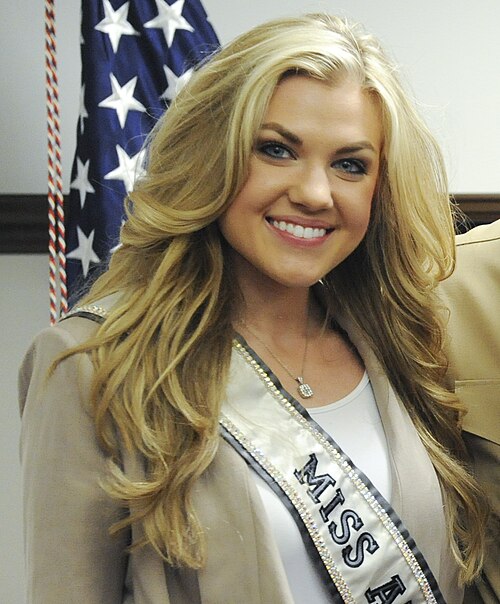
Erika Kirk, the widow of assassinated conservative activist Charlie Kirk and current chairwoman and CEO of Turning Point USA, is navigating a turbulent period marked by intensified legal threats against online detractors, public scrutiny over her leadership style, and continued efforts to advance her late husband’s mission through a national speaking tour and political engagement.

Kirk has sent a fresh cease-and-desist letter to the operator of Project Constitution, accusing him of defamation for alleging her involvement in Charlie Kirk’s September 2025 assassination and unsubstantiated claims linking her to sex trafficking tied to Jeffrey Epstein. The letter asserts that such statements are “absolutely false and made with actual malice,” escalating a broader battle against far-right influencers and conspiracy theorists who have questioned her grief, personal life and role at the influential conservative organization.
Charlie Kirk, the co-founder of Turning Point USA, was shot and killed on the campus of Utah Valley University in September 2025 during a speaking event. Erika Kirk, who had been married to him since 2018, quickly assumed leadership of the organization and has since positioned herself as the steward of his legacy, frequently describing her work as a way for “daddy to continue to live on forever” through the group’s mission.
In recent weeks, Kirk has responded to a wave of viral memes and satirical content mocking her public appearances and persona. Comedian Druski’s sketch impersonating “how conservative women in America act,” which included a portrayal widely seen as referencing Kirk, drew tens of millions of views and sparked backlash from some conservative circles who called it disrespectful to a grieving widow. Kirk addressed the memes in a recent statement, pushing back against what she described as unfair attacks while maintaining focus on her faith-driven work.
Despite the online controversies, Kirk has remained active on the national stage. In February 2026, she attended the State of the Union address as one of President Donald Trump’s invited guests, where Trump acknowledged her presence and called for rejection of political violence in memory of her husband. She has also been appointed by Trump to the U.S. Air Force Academy Board of Visitors, replacing her late husband on the advisory panel.
Kirk launched the “Make Heaven More Crowded” tour in January 2026, kicking it off at Harvest Christian Fellowship in Riverside, California, alongside pastor Greg Laurie. The tour, which blends calls for Christian revival, prayer and conservative values, has included stops across the country, though some events — such as a planned appearance in Orlando — were postponed amid venue controversies. She has vowed to help build a “red wall” for Republican candidates in the 2026 and 2028 elections.
Public appearances have not been without friction. A scheduled visit to the Utah State Capitol in February, where she was to receive a citation, was canceled after news of the event leaked. Kirk has also faced internal and external questions about Turning Point USA’s direction under her leadership, with some critics accusing her of shifting the organization’s tone or priorities.
Legal proceedings related to her husband’s death continue. Kirk has invoked a rare Utah victims’ rights law to push for a speedy trial of the accused gunman, Tyler Robinson, arguing against defense delays. She publicly forgave the accused killer during a large memorial service attended by Trump and Vice President JD Vance in September 2025.
Online discourse around Kirk has grown increasingly polarized. Some conservative voices, including Candace Owens, have launched investigative-style series questioning aspects of Kirk’s background, past statements and personal life, including claims about her upbringing and other personal details. Kirk’s supporters dismiss these as baseless attacks aimed at undermining a prominent conservative woman, while detractors continue to circulate unverified theories. Kirk has largely avoided engaging directly with the most extreme claims, instead redirecting attention to Turning Point USA’s youth outreach and faith-based initiatives.
At 37 years old, Erika Kirk (née Frantzve) has emerged as a more visible public figure than before her husband’s death. Born in 1988, she previously worked in business and nonprofit roles. She and Charlie Kirk had been vocal about their Christian faith and traditional values, and she has continued that emphasis in her speeches, often framing her leadership as a divine calling.
Turning Point USA, founded in 2012, focuses on conservative activism on college campuses and among young people. Under Erika Kirk’s leadership, the organization has maintained its events and programming while navigating the emotional and operational challenges following the assassination.
Kirk has spoken openly about the grief process, describing moments of finding “divine work” in tragedy while also facing criticism from some quarters that her public activities — including high-profile events and merchandise efforts — do not align with traditional expectations of mourning. She has rejected such judgments, stating that continuing her husband’s work honors his memory.
As 2026 progresses, Kirk faces a complex landscape: leading a major conservative nonprofit, defending against defamation claims, countering online satire and speculation, and positioning herself within the broader Trump-aligned political movement. She has endorsed JD Vance for future leadership roles and maintains a close relationship with the Trump circle.
Supporters view her as a resilient figure carrying forward an important legacy amid personal loss. Critics, including some within conservative media, question her authenticity or motives. The intense scrutiny reflects the highly charged nature of contemporary political discourse, where personal tragedy quickly intersects with ideological battles.
Kirk continues to emphasize themes of faith, revival and rejection of political violence in her public remarks. Whether her legal actions against critics will deter further attacks or fuel more speculation remains to be seen. For now, she appears focused on Turning Point USA’s mission and her tour, while navigating the spotlight that has intensified since September 2025.
The coming months could bring further developments in the legal case surrounding her husband’s death, additional tour stops, and ongoing debates about her role in conservative politics. As one of the most visible women in the movement, Erika Kirk’s every move draws attention from allies and adversaries alike.
Business
Powerball Jackpot Climbs to $166 Million for Saturday, March 28, 2026 Drawing: Cash Value $74.5 Million

The Powerball jackpot has rolled over to an estimated $166 million for Saturday night’s drawing after no ticket matched all six numbers in Wednesday’s drawing, lottery officials said.

The estimated cash value for the Saturday, March 28, 2026, drawing stands at approximately $74.5 million, offering players a choice between the annuitized jackpot paid over 30 years or the immediate lump-sum option. Drawings are held at 10:59 p.m. ET every Monday, Wednesday and Saturday.
Wednesday’s winning numbers were 7, 21, 55, 56 and 64, with a Powerball of 26 and a Power Play multiplier of 4x. While there was no jackpot winner, lower-tier prizes were claimed across the country, including two tickets that won $2 million and $1 million in some states through matching five numbers or with Power Play.
The jackpot had stood at an estimated $148 million with a cash value of about $66.9 million heading into Wednesday’s draw. With another rollover, the prize has grown for the Saturday drawing, continuing a pattern of steady increases that often captivates players when the top prize climbs into nine figures.
Powerball is played in 45 states, the District of Columbia, Puerto Rico and the U.S. Virgin Islands. Tickets cost $2, with an optional $1 Power Play add-on that can multiply non-jackpot prizes. Sales typically surge as the jackpot rises, with players dreaming of life-changing windfalls.
The odds of winning the Powerball jackpot remain 1 in 292,201,338, making it one of the longest shots in American lotteries. Despite the slim chances, the allure of a massive payout draws millions of ticket buyers, especially when the prize exceeds $100 million.
Lottery officials remind players that every ticket has the same chance of winning regardless of where or when it is purchased. They also urge responsible play, recommending that people set a budget and treat lottery tickets as entertainment rather than an investment strategy.
For Saturday’s drawing, players have until approximately 9:59 p.m. local time in most jurisdictions to purchase tickets, though cutoffs vary slightly by state. Online sales are available in many participating states through official lottery apps or websites.
The most recent Powerball jackpot was won earlier in March when a ticket sold in Arkansas claimed a $250.8 million prize on March 2. That winner had the option to take the cash value or the annuity.
Powerball jackpots begin at $20 million and increase with each drawing that has no grand-prize winner. The prize grows based on ticket sales and interest rates, which affect the cash value calculation.
In addition to the jackpot, Powerball offers nine other prize tiers, ranging from $4 for matching just the Powerball to millions for matching five white balls. The Power Play option can increase those prizes up to 10 times in some cases, though the multiplier for the jackpot itself does not apply.
As of late Saturday morning, the countdown to the drawing showed roughly 13 hours remaining until the 10:59 p.m. ET drawing time. Players across the country were checking their tickets from previous drawings and buying new ones in hopes of becoming the next multimillionaire.
Financial advisers caution that sudden wealth from lottery winnings comes with challenges, including taxes — federal withholding of 24% plus potential state taxes — and the need for professional guidance on managing large sums. Many past winners have opted for the cash value to gain immediate control over the funds.
Stories of past Powerball winners often highlight both the opportunities and pitfalls of sudden riches. Some have used winnings to fund education, start businesses or support charities, while others have faced personal struggles after the initial excitement.
The Multi-State Lottery Association, which administers Powerball, emphasizes transparency in jackpot estimations and prize payouts. Official results are posted shortly after each drawing on powerball.com and through state lottery websites.
For those playing Saturday, common number-picking strategies include quick picks, birthdays, anniversaries or “hot” and “cold” numbers based on past frequency. However, every combination has an equal probability.
As the clock ticks down to the March 28 drawing, excitement is building in convenience stores, gas stations and online platforms where tickets are sold. In states like California, Florida, New York and Texas, which often see high sales volumes, retailers report increased foot traffic when jackpots reach this level.
The $166 million annuity equates to 30 graduated annual payments, starting lower and increasing over time. The cash value represents the amount available if the winner chooses the lump sum, which is invested to fund the annuity option for future jackpots.
Powerball has created hundreds of millionaires since its inception, with some prizes reaching well over $1 billion in recent years. The game’s sister lottery, Mega Millions, also frequently produces massive jackpots, giving players multiple opportunities for big wins.
With no winner on Wednesday, attention now turns fully to Saturday night. If the jackpot goes unclaimed again, it will roll over once more for the Monday drawing, potentially climbing higher.
Players are encouraged to sign the back of their tickets immediately after purchase and keep them in a safe place. They should also double-check numbers against official results, as unclaimed prizes eventually return to state lotteries for education and other programs in many jurisdictions.
As the drawing approaches, the message from lottery officials remains consistent: play responsibly, have fun and remember the long odds. For one lucky ticket holder on Saturday, however, those odds could deliver a life-altering $166 million prize — or the $74.5 million cash alternative.
The drawing will be broadcast live and results will be available shortly afterward on official channels. Whether the jackpot is claimed or rolls over again, Powerball continues to capture the imagination of players hoping for that one-in-a-lifetime break.

The iPhone Air has dropped in price so much it’s cheaper than the iPhone 17
The Other Markets Being Rattled by the Blockage of Hormuz

How AI Agents Can Reshape Arbitrage in Prediction Markets


-
 NewsBeat3 days ago
Manchester United reach agreement with Casemiro over contract clause amid transfer speculation
-

 News Videos3 days ago
Parliament publishes latest register of MPs’ financial interests
-

 Crypto World7 days ago
Best Crypto to Buy Now: Strategy Just Spent $1.57 Billion on Bitcoin During Fear While Early Investors Quietly Enter Pepeto for 150x Potential
-

 Crypto World7 days ago
Bitcoin Price News: Bhutan Sells $72 Million in BTC Under Fiscal Pressure, but the Smart Money Entering Pepeto Sees What the Market Does Not
-

 Sports5 days ago
Remo Stars and Kano Pillars Strengthen Survival Hopes in NPFL
-

 Sports5 days ago
Gary Kirsten Accuses Pakistan Cricket Board Of ‘Interference’, Mohsin Naqvi Responds
-

 Business6 days ago
No Winner in March 21 Drawing as Prize Rolls to $133 Million for Next
-

 Tech6 days ago
Give Your Phone a Huge (and Free) Upgrade by Switching to Another Keyboard
-

 Tech6 days ago
AI enters the chat: New Seattle dating app relies on tech to facilitate meaningful human connections
-

 News Videos5 days ago
Ch 9 Financial Management Part 1 | Detailed One Shot | Class 12 Business Studies Boards 2026
-

 Tech7 days ago
Today’s NYT Connections Hints, Answers for March 22 #1015
-

 Business2 days ago
Instagram, YouTube Found Responsible for Teen’s Mental Health Struggle in Historic Ruling
-

 Business6 days ago
Will Duke Basketball Win It All? Duke Basketball Enters Second Round as Third Favorite to Claim NCAA Title
-

 Sports5 days ago
2026 Kentucky Derby horses, odds, futures, preview, date: Expert who hit 12 Derby-Oaks Doubles enters picks
-

 NewsBeat17 hours ago
The Story hosts event on Durham’s historic registers
-
 Entertainment5 days ago
Cynthia Bailey Dishes on ‘RHOA’ Season 17, Discusses Kandi
-

 Tech5 days ago
Samsung will soon let you control smart home devices from your car’s dashboard
-
 NewsBeat6 days ago
Update on Wisbech river crash as search for teenage boy enters fifth day
-
 NewsBeat3 days ago
Tesco is selling new Cadbury Dairy Milk bar and people can’t wait to try it
-

 Tech7 days ago
SteamOS update adds support for Steam Machine and other non-Valve hardware
You must be logged in to post a comment Login