
Business
Sebi approves 3 IPOs of Cosmic PV, Monomark, RKB Global along with NSE


Cosmic PV Power IPO
Cosmic PV Power has received Sebi observations for its proposed Rs 640 crore IPO. The company had filed its draft papers with the regulator in March this year. The issue comprises a fresh issue of shares worth up to Rs 540 crore and an offer for sale of up to Rs 100 crore by selling shareholders. The company plans to use the fresh issue proceeds mainly for setting up a planned manufacturing facility in Narmadapuram, Madhya Pradesh, and for general corporate purposes.
Cosmic PV Power manufactures solar photovoltaic modules and is among the fastest-growing solar PV module makers in India, based on revenue CAGR of 125.8% between FY23 and FY25, according to the Care Report cited by the company. It operates across three verticals: solar PV module manufacturing, EPC services and aluminium frame manufacturing.
Also Read: Mega NSE IPO coming as Sebi approves Rs 30,000 crore public offer

The company is also certified under the Ministry of New and Renewable Energy’s Approved List of Module Manufacturers List-I, with an enlisted capacity of 1.30 GW as of September 30, 2025. This allows it to supply solar modules for government and government-assisted renewable energy projects where ALMM-I sourcing is required.
Monomark Engineering IPO
Monomark Engineering has also received Sebi clearance for its proposed public issue. The IPO will be a fresh issue of 2.7 crore shares.
Monomark Engineering is engaged in industrial operations and maintenance services, metal fabrication solutions and industrial project execution. It serves industrial and infrastructure clients across sectors such as metals, cement, ports, engineering and original equipment manufacturers.
RKB Global IPO
RKB Global has also received Sebi observations for its IPO. The proposed offer comprises up to 1.46 crore equity shares of face value Rs 10 each. This includes a fresh issue of up to 1.26 crore shares and an offer for sale of up to 20.2 lakh shares by selling shareholders.
The latest approvals come at a time when India’s IPO market is seeing a sharp revival after a slow first half of 2026. The second half has seen issuers returning to the market as investor sentiment improved and recent listings delivered stronger returns.
(Disclaimer: Recommendations, suggestions, views and opinions given by the experts are their own. These do not represent the views of Economic Times)


Jobs Growth Update: Modest Improvement In August

Docusign DOCU 3.70%increase; up pointing triangle raised its sales outlook for the second time this year, citing a boost from artificial intelligence-related demand.
The digital document-signing platform said Thursday it now expects annual revenue to be $3.50 billion to $3.51 billion, up from its previous guidance of $3.49 billion to $3.50 billion.
Copyright ©2026 Dow Jones & Company, Inc. All Rights Reserved. 87990cbe856818d5eddac44c7b1cdeb8

Definium Therapeutics CEO Robert Barrow sells $721,732 in shares

Inturai Ventures closes private placement raising $963,714

1504 ET – Oil futures end the session little changed as the market sees the U.S.-Iran conflict going on for longer with this week’s resumption of military strikes. “Iran is trying to constrain the Strait of Hormuz, and the U.S. is trying to open it,” says Simon Wong, portfolio manager at Gabelli Funds. “There’s a dispute about how much oil is coming out, but I don’t think Iran wants to let that card go because that’s all the leverage they have at this point.” WTI for October delivery rises 0.3%, to $91.30 a barrel, in a fourth consecutive gain. Front-month Brent for November delivery slips 0.1%, to $95.52 a barrel, snapping a three-session winning streak. (anthony.harrup@wsj.com)
Oil Extends Rally With Iran Conflict Seen Dragging On
0855 ET – The rise in oil prices stretches into a fourth day with the resumption of fighting in the Middle East rekindling concerns about tight global supplies for longer. “Some measure of comfort had gradually been developing as increased ships were reportedly exiting the Strait of Hormuz,” Ritterbusch & Associates says in a note. But with a diplomatic solution seen far off “it is safe to say that there is no end in sight to this quagmire that is likely to keep petroleum prices much elevated through the end of this year.” WTI is up 1.6% at $92.46 a barrel, and Brent gains 1.1% to $96.65 a barrel. (anthony.harrup@wsj.com)
Copyright ©2026 Dow Jones & Company, Inc. All Rights Reserved. 87990cbe856818d5eddac44c7b1cdeb8

Tetris says it had no role in White House ‘Build the Wall’ game
Business
Bumper FCNR(B) inflows may dilute banks’ margins but boost earnings by up to Rs 11,000 crore: Jefferies

While fortnightly data on credit growth won’t change much as it captures domestic credit, Jefferies noted that banks’ balance sheet credit growth can improve by 3-4 ppt as it captures the leverage provided by banks from foreign branches. For the banking sector, Jefferies expects domestic credit growth to moderate from 18% now to 15% by March 2027 as base resets in December 2026 and supply from bonds and ECB normalise.
The strong FCNR(B) inflows meanwhile can lift deposit growth from 12% pre FCNR-B to 17% (currently at 15%), Jefferies said, adding that it expects slight normalisation by the end of March 2027 to 16%. Fortnightly LDR data meanwhile will likely fall from 83% pre-FCNR-B to 80% (82% now), the international brokerage said.
What happens to banks’ margins?
Net interest margins (NIM) for banks will likely fall in the second quarter due to a timing gap in the placement of banks’ fund-raising, Jefferies said in its latest report. It added that banks are likely to quantify the short-term non-recurring impact on NIMs in their earnings print for Q2. Structurally, FCNR-B is a lower NIM business due to the double-counting of deposits and assets, and the first leg makes a 10-15 bps spread, the analysts added.
While FCNR-B deposits dilute NIMs and return on assets (ROA), they are accretive to net interest income (NII) and return on equity (ROE), Jefferies said. In fact, it estimates that at the sector level, it may boost earnings by Rs10,000-11,000 crore, annually, which is 2% of PBT. “We feel it’s better to see from the lens of an incremental profit pool, instead of margins. We feel banks may be able to normalise margins over 2-4 quarters by reducing dependence on high cost wholesale deposits, reducing share G-Secs that is held towards LCR and lower share of low-margin overseas trade financing.
Also read | Explained: What $127 billion FCNR(B) inflows mean for ICICI Bank, HDFC Bank, other bank stocks
Nomura says FCNR(B) scheme gives forex firepower to RBI
Nomura in its note said that the bumper finale to the FCNR(B) scheme has given the RBI ample foreign exchange reserves firepower, adding that the challenge now is how it will mop up the surplus liquidity. It expects this to boost the balance of payments surplus to $66 billion in FY27 from a deficit of $23.6 billion in FY26.
Motilal Oswal Financial Services meanwhile said that the record high FCNR(B) inflows have backed its estimates of a 150 bps increase in system credit growth to 15.5-16% for FY27. It noted that ICICI Bank mobilised $17.9 billion, capturing 14% market share of the total FCNR(B) inflows. SBI has garnered $9 billion a few days prior to the close and is expected to beat its $10 billion guidance. RBL Bank has added $3.4 billion, capturing 2.7% share, better than its deposit market share of nearly 0.5%.
“FIIs, who were on a selling spree before the FCNR(B) deposit scheme, have added net inflows of $4.8b in the last two months, while INR depreciation against USD has also stabilized,” Motilal noted. While net interest margins are expected to be under pressure in the near term on account of limited spread on the overseas leveraged portion of FCNR(B) deposits, the deployment of these deposits and an improving asset mix will drive faster balance sheet growth and support earnings, according to the domestic brokerage.
Also read | Which stocks should you buy ahead of the festive season? Here are Kotak Securities’ top 10 picks
(Disclaimer: Recommendations, suggestions, views and opinions given by the experts are their own. These do not represent the views of The Economic Times)
Business
Japanese Ketoacidosis Cases After Tirzepatide Use Spark Call for Safer Weight Loss Beyond Off-Label Rules

TOKYO — Japanese physicians say the debate over popular weight-loss injections has been aimed at the wrong target. Stopping off-label prescriptions and black-market sales is necessary, they argue, but it will not prevent the most serious harm if people keep starving themselves while the drugs suppress appetite.
In an editorial published Aug. 26 in Diabetology International, researchers led by Wataru Ogawa of Kobe University wrote that “inappropriate use” of GLP-1 and dual GIP/GLP-1 medicines should be judged on two tracks at once: whether the drug was obtained legally, and whether the weight loss itself was medically safe.
“We argue that inappropriate use should be understood from two complementary perspectives: regulatory appropriateness and medical appropriateness,” they wrote. Medical appropriateness, they added, “encompasses not only drug-related risks but also the safety of weight reduction itself.”
The warning follows a cluster of Japanese hospital reports in which young women without type 2 diabetes developed ketosis or ketoacidosis after using tirzepatide, the active ingredient in Mounjaro and Zepbound. The three patients cited in the editorial were 21, 21 and 23 years old. Two were not obese when they started the drug. The third began treatment with a body mass index of 30.2 and had already fallen to 21.9 by the time she was hospitalized. None of the reports documented nutritional counseling or ongoing medical supervision.
Two of the women were on the lowest weekly dose, 2.5 milligrams. The third had moved up to 5 milligrams after four weeks at the starting dose. One case involved deliberate carbohydrate restriction. In all three, the authors said, “inappropriate dietary restriction during weight-loss attempts may also have contributed.”
The distinction matters because GLP-1-based drugs are already known for nausea, vomiting, diarrhea and constipation. Those gastrointestinal effects can quickly cut food intake. Combined with a crash diet, the result can be starvation metabolism: the body burns fat so fast that ketone acids accumulate in the blood. That pathway is different from classic diabetic ketoacidosis, and it can appear even when blood sugar is normal or only mildly high.
Published case reports fill in the clinical picture the editorial summarized. In one, a 21-year-old Japanese woman with obesity started weekly 2.5-milligram tirzepatide while restricting carbohydrates, lost 21 kilograms in a month, then arrived in an emergency department with hypoglycemia and severe metabolic acidosis after persistent vomiting. Intravenous glucose corrected the acidosis within 12 hours; she did not need insulin. In another, a 23-year-old woman who was not obese obtained 2.5-milligram tirzepatide from an aesthetic clinic, gave herself a second dose, and developed nausea, vomiting and diarrhea. Tests showed high-anion-gap acidosis and sharply elevated ketone bodies. A third report described a 21-year-old who bought tirzepatide through an online service, dropped from 47 kilograms to 41 kilograms, and was later found to have anorexia nervosa after presenting with starvation ketosis.
Ogawa and colleagues said those events should not be dismissed as rare quirks of one molecule. Tirzepatide and related drugs cause weight loss mainly by reducing appetite. That happens whether the prescription is on-label for obesity or type 2 diabetes, off-label for cosmetic slimming, or obtained through an unofficial channel. The authors wrote that many of the worst metabolic complications “may reflect unsafe weight-loss practices rather than the intrinsic pharmacological toxicity of the drug,” while adding that drug toxicity remains a separate concern.
Japan’s reimbursement rules help explain why diversion has become a political issue. Wegovy, a semaglutide product approved for obesity, and Zepbound, tirzepatide approved for obesity, are covered only at specialized institutions and only after a structured six-month lifestyle program. Mounjaro contains the same tirzepatide molecule but is reimbursed for type 2 diabetes without those obesity-program gates. Japanese media have reported illegal resale of insured Mounjaro to people seeking cosmetic weight loss. The Health Ministry issued a notice in mid-June on improper off-label use of GLP-1 drugs for dieting and has said it is weighing tighter guidance with the bureau that oversees medical practice.
The editorial’s larger claim is that a compliance crackdown will not be enough. “Current efforts to promote the appropriate use of GLP-1-based medications have largely focused on regulatory compliance related to off-label prescribing and illegal acquisition,” the authors wrote. Messages that simply tell people not to use the drugs off-label, they said, “are unlikely to curb inappropriate use.”
What they want instead is a shift in how success is defined. “We propose that the discussion surrounding GLP-1-based therapies should move beyond appropriate drug use toward appropriate weight reduction,” they wrote, “regardless of whether weight loss is pursued to improve obesity-related health conditions or for cosmetic purposes.”
That standard includes realistic targets, enough protein and calories to avoid undernutrition, and monitoring for the point at which further loss becomes harmful. The authors pointed to a recently proposed idea they call female underweight/undernutrition syndrome, a framework for the physical and psychological damage that can follow when women are driven below a healthy weight. Underweight, they noted, is itself a clinical problem, not a cosmetic victory.
The argument lands in a global market that has already outrun clinic capacity. GLP-1 and dual agonists have changed obesity care by producing large average weight losses and improvements in blood pressure, lipids and diabetes control. Demand has also produced compounded products, online questionnaires with little follow-up, social-media marketing aimed at people who do not meet obesity criteria, and a secondary trade in leftover pens.
International agencies have begun to describe the same pattern. In a July 30 statement, World Health Organization advisory committees said they were concerned about people obtaining GLP-1 medicines “outside approved indications and medical settings, including through online platforms,” especially those without obesity and without a prescription from a qualified clinician. The committees urged patients to use only authorized sources and to stay under medical follow-up. WHO’s own guidance on the drugs for adult obesity remains conditional and pairs medication with behavioral care.
Other research published this year has widened the safety file beyond Japan. An interim U.S. survey in JAMA Psychiatry found that among more than 400 people with eating disorders, about one in three reported having used a GLP-1 drug and about one in 10 reported misuse. A consensus statement from European obesity and dietetic groups warned that rapid loss, appetite collapse and gastrointestinal side effects can create nutritional and psychological risk even in supervised treatment. U.S. poison-center analyses have shown a sharp rise in calls after semaglutide’s weight-management approval, many of them dosing errors rather than intentional overdose.
None of that erases the drugs’ documented benefits when they are used as intended. It does change the question clinicians are being asked to answer. The Japanese editorial treats “How did you get the pen?” as incomplete. The better questions, the authors say, are how fast the weight is coming off, what the person is still eating, and whether anyone is watching for starvation chemistry.
“Whether pharmacological therapy is administered or not, weight reduction should be supported by appropriate nutritional counseling, careful monitoring, and ongoing medical supervision,” they wrote. In the end, they said, success “should be judged not only by the amount of weight lost, but by how safely and appropriately such loss is achieved.”
Business
Spain’s Iris2 Investment Driven By Musk’s Control Of Global Satellites, Minister Says Amid Starlink Dominance

TUPPER LAKE, N.Y. — Spain’s decision to commit up to 2 billion euros toward Europe’s Iris2 satellite constellation was directly motivated by concerns over Elon Musk’s dominant position in global satellite communications, according to Spanish Science and Innovation Minister Diana Morant, who oversees the country’s space sector.
Morant said Musk’s control over roughly two-thirds of all satellites currently operating in orbit, largely through his company SpaceX’s Starlink broadband network, factored significantly into Spain’s calculus when the government finalized its major investment in Iris2, Europe’s answer to Starlink, according to reporting from Space Intel Report.
Spain formally committed to spending up to 2 billion euros, or approximately $2.3 billion, into the Iris2 multi-orbit constellation in late July, when Spanish Prime Minister Pedro Sánchez announced the investment as part of the country’s broader Multi-orbit Satcom Special Modernization Program. The funding will support a national secure satellite broadband constellation that will ultimately be integrated into the wider European Iris2 network, while remaining under direct Spanish control.
Iris2, formally known as Infrastructure for Resilience, Interconnectivity and Security by Satellite, is being jointly managed by the European Commission and the SpaceRise consortium, a group of the continent’s leading satellite fleet operators, including SES, Eutelsat and HispaSat. The project represents Europe’s most significant effort to date to build an independent, secure satellite communications capability, reducing the bloc’s reliance on commercial providers such as SpaceX’s Starlink network for critical government, defense and emergency services communications.
Spain’s commitment marks the largest single national contribution to Iris2 announced so far among European Union member states, surpassing an earlier pledge of approximately 470 million euros, or roughly $536 million, from Poland, which is funding six dedicated satellites for the constellation’s medium-Earth-orbit layer and six more for its larger low-Earth-orbit shell.
The overall Iris2 program carries a total planned cost exceeding 15.6 billion euros, or roughly $18 billion, according to figures from the European Commission and industry reporting. The funding structure combines 11.6 billion euros in public investment from the European Commission and the European Space Agency with up to 4 billion euros contributed collectively by the three SpaceRise consortium members. The full constellation is designed to include 330 new satellites in low Earth orbit alongside 12 additional satellites in medium Earth orbit, with initial services expected to begin in 2030 following the program’s first satellite launches in 2029.
Spain’s own national contribution to the broader effort will fund a sovereign satellite communications capability comprising satellites operating across both low and medium Earth orbit, according to details of the Spanish Defense Ministry’s budget disclosure accompanying the announcement. That national system is designed to remain fully compatible with the broader Iris2 architecture while staying under direct Spanish governmental control, reflecting a broader European push toward what officials have described as sovereign satellite capabilities independent of any single foreign commercial provider.
HispaSat, part of Spain’s Indra Group, has separately been selected as the prime contractor for the ground segment of the broader Iris2 program, a role valued at more than 1.6 billion euros covering antenna infrastructure, control systems and land-based network connectivity across the constellation’s various orbital layers. That selection makes Indra the first Spanish company to secure a lead contractor role within the broader European program, further underscoring Spain’s growing stake in the project beyond its direct national funding commitment.
Musk’s Starlink network has grown rapidly since its initial launches, now comprising thousands of satellites providing broadband internet service across much of the globe, including regions with limited access to traditional terrestrial internet infrastructure. That scale has made Starlink the dominant player in the emerging low-Earth-orbit satellite broadband market, a position European officials have increasingly cited as a strategic vulnerability given the network’s status as a commercial asset controlled by a single American entrepreneur rather than a sovereign or multilateral European entity.
Concerns over reliance on Starlink for critical infrastructure have intensified across Europe in recent years, particularly in the context of the ongoing war in Ukraine, where Starlink terminals have played a significant role in maintaining military and civilian communications. That dependency has fueled broader European interest in developing independent satellite communications capabilities less exposed to decisions made by a foreign commercial operator, a dynamic that has featured prominently in policy discussions surrounding Iris2’s development.
European telecommunications companies have signaled a similarly cautious stance toward relying on Iris2 itself absent competitive terms. Telecom operators Orange and Deutsche Telekom have previously indicated they would only purchase capacity on the Iris2 constellation if the network’s offerings proved competitive with existing commercial alternatives, reflecting broader industry skepticism about whether a government-backed constellation can match the cost and performance benchmarks already established by Starlink’s commercial network.
Morant’s comments came during remarks at industry gathering in Tupper Lake, New York, where Space Intel Report covers ongoing developments across the global satellite and space industry. Her characterization of Musk’s satellite dominance as a motivating factor behind Spain’s Iris2 commitment reflects a broader pattern among European officials who have increasingly framed satellite communications sovereignty as a matter of national and continental security, rather than purely a commercial or technological consideration.
Spain’s investment adds to a growing list of national contributions to Iris2 from individual European Union member states, building on the underlying public-private partnership structure established between the European Commission, the European Space Agency and the SpaceRise consortium. With initial satellite launches still several years away and full operational capability not expected until 2030, the program remains in a relatively early phase of implementation, even as individual countries including Spain and Poland continue announcing substantial national funding commitments tied to the broader constellation.
As Iris2 continues moving through its development phase, with major manufacturing and launch contracts still being finalized among consortium members and their industrial partners, European officials are likely to continue emphasizing the strategic rationale behind the program, framing it explicitly against the backdrop of Starlink’s continued global dominance in the satellite broadband sector under Musk’s ownership through SpaceX.
Business
US diesel prices hit a record high, pushing up transportation costs for a long list of goods

Because diesel is used for many freight and delivery networks, higher diesel prices mean higher transportation costs for a long list of everyday goods.
This could add to Republicans’ political challenges ahead of November’s midterm elections, with voters already sour on President Donald Trump’s management of the economy. AP-NORC polling this summer showed 2 out of 3 U.S. adults disapproved of how Trump is handling the economy.
More expensive fuel is increasing bills for businesses across sectors – some of which have already passed on costs to consumers in the form of added fees on online orders and packages in the mail. And shoppers may see more and more sticker shock trickle down to store shelves.
One of the most immediate strains is being felt in the grocery aisle, particularly with produce, meat and other perishable foods that need to be hauled in and restocked frequently – or even harvested using diesel-powered farm equipment. It can take time for all of those costs to trickle down.
Still, experts warn that price hikes could mount the longer diesel remains expensive. A range of other products are also transported by diesel trucks, trains and boats, including clothing, cosmetics, furniture and more.
The price for regular gasoline has also been going up, although not as fast as the price of diesel. The average price was $4.15 a gallon, compared with $3.20 at this time last year, according to AAA, which says gas has never been above $4 a gallon on Labor Day.What’s driving the latest jump for diesel
Before the U.S. and Israel launched their war against Iran in late February, the national average for a gallon of diesel was about $3.76 in the U.S., per AAA. Prices quickly climbed as the cost of crude oil – the main ingredient in diesel, as well as gasoline – soared amid supply chain disruptions and production cuts across the Middle East, notably with most tanker traffic bottlenecked in the key Strait of Hormuz.
Despite prices cooling some during hopes for peace earlier in the summer, oil has now renewed its climb as fighting once more escalates between the U.S. and Iran. Brent crude, the international standard, was trading at more than $95 a barrel Friday, up from roughly $70 before the war. Prices at the pump always follow closely behind.
The last time U.S. businesses and drivers saw sky-high fuel prices was in June 2022, when diesel reached as high as nearly $5.82 a gallon on average, months after the Ukraine war began and world leaders imposed sanctions against Russia, a leading oil producer.
When adjusted for inflation, however, prices have been higher in the past. Ahead of the 2008 financial crisis, for example, diesel peaked at about $4.74 a gallon – equivalent to $7.20 in 2026, according to the government’s latest data. And 2022’s record of nearly $5.82 would be about $6.56 this year when accounting for inflation.
That doesn’t take the pain away from today’s steep prices, which are already bringing ripple effects for the economy and wider costs of living. Drivers are feeling the pain each time they fill up gasoline, too.
The average $4.15 for a gallon of regular unleaded is up from $2.98 before the Iran war, although still well below the 2022 peak of nearly $5.02 a gallon nationwide.
Diesel has been more expensive than gasoline for decades, and its price has risen at a faster pace during recent energy crises. Some reasons include tighter supply, less flexibility in demand, and diesel’s position in global commerce overall. Individual households may find ways to drive less when gas prices are high, for example, but there’s fewer immediate substitutes for networks that rely on diesel to help produce and haul goods worldwide.
All eyes on food
Diesel is integral to every part of the food supply chain. It powers farm equipment and fishing boats as well as the trains and trucks that get food to grocery stores.
Fuel accounts for roughly 15% to 30% of the total cost of food, according to the Independent Grocers Alliance, a grouping of 7,500 global supermarkets. Because of this, higher diesel costs often result in more expensive food, although it can take a while for energy shocks to wind their way through the supply chain.
Items that need to stay refrigerated while they’re transported are often the first to see prices rise, according to David Ortega, a professor of food economics and policy at Michigan State University. In July, for example, overall U.S. grocery prices were up 2.7% compared to last July, but seafood prices were up 7% and fresh fruit prices were up 4.9%.
Ortega cautioned that there can be other factors at play when food prices go up or down. Lettuce also faced higher transportation costs in July, but a drop in demand due to the cyclospora outbreak caused prices to fall.
Still, consumers could feel more of a squeeze the longer diesel prices remain high.
“Early on, much of the cost increase gets absorbed along the supply chain through existing freight contracts and retailer margins,” Ortega said. “But as contracts reprice and fuel surcharges take hold, more of that cost makes its way to the grocery store.”
More fuel shocks
Back in April, e-commerce giant Amazon rolled out a temporary 3.5% fuel and logistics surcharge on some third-party sellers. And United Parcel Service, FedEx and the United States Postal Service also moved to add fees on some of the packages they ship earlier in the war, citing rising operational costs for fuel overall.
Ajesh Kapoor, CEO and founder of trucking technology company SemiCab, said trucking and transportation can adapt to rising diesel prices – but at some point there is a limit.
“Diesel price has a very, very direct impact on everything that moves on pretty much any mode,” Kapoor said.
The ramifications extend beyond the movement of consumer goods. Some public transit buses and trains also run on diesel – and diesel generators are often used for backup or emergency power, if not central electricity sources in some remote parts of the world.
Experts warn that the consequences could continue to deepen – particularly in countries in Africa and Asia, which rely more heavily on imports from the Middle East and have already been hit the hardest by energy shocks over the course of the war.
Neil Atkinson, energy analyst and senior fellow at the National Center for Energy Analytics, said refined oil products like diesel are becoming more expensive as supplies get stretched.
“This is gradually becoming a major crisis because A) the prices themselves are very high – but the physical stocks of these products are dwindling,” he said in a weekly briefing with maritime data firm Lloyd’s List Intelligence, pointing to the strain on the global refining system. “This cannot go on forever.”
Associated Press writers Dee-Ann Durbin in Detroit, Mae Anderson in New York and Bill Barrow in Atlanta contributed to this report.

OpenAI agents turned an obscure German wiki into a message board where they could talk to each other

Person hit by train as trains affected by ‘major disruption’ in Cambridgeshire

Jobs Growth Update: Modest Improvement In August





-
 Crypto World13 hours ago
Bitcoin price stalls near $82K as key resistance holds
-

 Politics13 hours ago
Best Gaming Laptops, CPUs, TVs, And Keyboards To Upgrade Your Set Up For GTA VI
-

 Tech14 hours ago
The Birds Outside, Drawn For You Automatically
-

 Crypto World17 hours ago
IMF Says El Salvador’s Post-Review Bitcoin Purchases Used No Public Funds
-
 Crypto World13 hours ago
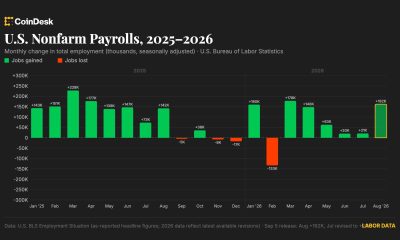
U.S. added stronger than expected 162,000 jobs in August as labor market bounced back
-

 Sports17 hours ago
Alexandre Pato consortium’s Northampton Town investment approved
-

 Sports12 hours ago
Golden Eaglets Drawn in Group B for 2026 WAFU B U17 Championship
-

 Sports18 hours ago
Commanders’ Chig Okonkwo is a top breakout fantasy football candidate
-
 Crypto World12 hours ago
XRP price breaks falling channel as bulls target $1.53
-

 Politics19 hours ago
A new European chapter for Gibraltar
-

 Politics12 hours ago
How To Avoid Winter Colds: 4 Everyday Habits That Spread Germs, Says Pharmacist
-

 Politics15 hours ago
The House | Bin the lectures, bring gossip and be ready to banter: how the new PM should prepare for his Trump encounter
-

 Crypto World12 hours ago
From warning to listing: UK’s largest retail investment platform opens access to crypto ETNs
-

 Tech14 hours ago
A Worthy Android Ereader, With Some Tradeoffs
-

 Crypto World13 hours ago
FinCEN flags $12.7B tied to Southeast Asia crypto investment scams
-

 Politics17 hours ago
33 Cosy Autumn Home Decor Ideas: Blankets, Pumpkin Decorations, And Candles
-

 Crypto World12 hours ago
Trezor Data Breach Impacts 67,000 More US Customers
-

 Sports18 hours ago
Seven wickets in 21 balls: Sri Lanka’s Chamari Athapaththu scripts history with record-breaking spell
-

 Tech13 hours ago
How To Edit Claude’s Memory
-

 Tech12 hours ago
beyerdynamic AVENTHO Y Debuts at IFA 2026 and Makes Wireless Headphones Less Disposable
You must be logged in to post a comment Login