

Business
Sebi exempts Juhi Chawla-owned Mehta Family Trust from Saurashtra Cement open offer

The proposed transaction involves Jay Mahendra Mehta transferring his 49.99 per cent stake in Galaxy Technologies Pvt Ltd to the trust. Juhi Chawla Mehta will also transfer her 50.04 per cent profit sharing/voting rights in Omna Enterprises LLP to the trust.
Galaxy and Omna, a part of the promoter and promoter group of Saurashtra Cement Ltd, together hold a 24.04 per cent stake in the company.
The Mehta Family Trust, registered in 2019, has Juhi Chawla and her husband, industrialist Jay Mehta, as trustees.
Sebi noted that the proposed indirect acquisition would ordinarily trigger an open offer under the Takeover norms.

The capital markets watchdog granted an exemption after observing that the transaction is part of an internal reorganisation of the promoter family aimed at streamlining succession planning and consolidating family holdings.
“I… hereby grant exemption to the proposed acquirer, viz. , Mehta Family Trust, from complying with the requirements of SAST Regulations, 2011 with respect to the proposed indirect acquisition in the target company, viz. , Saurashtra Cement Ltd, by way of proposed transaction,” Sebi’s Whole Time Member Kamlesh Chandra Varshney said in the order.Sebi noted that the acquisition is non-commercial in nature and would not prejudice the interests of public shareholders.
According to the order, there will be no change in control of Saurashtra Cement Ltd pursuant to the proposed acquisition.
The company’s promoter group will continue to hold 66.62 per cent while public shareholding will remain at 33.38 per cent, Sebi said.
Sebi also noted that the trust comprises only promoters, their immediate relatives and lineal descendants, making it a mirror image of the existing promoter holding structure.
The regulator said the exemption is subject to conditions, including the filing of a report within 21 days from the date of acquisition.
Markets regulator Sebi also clarified that the exemption is limited to open offer requirements and does not waive other compliance obligations under applicable regulations.
The exemption from open offer obligations is valid for one year from the date of the order, within which the proposed acquirers must complete the acquisition; failing which it will lapse and cease to exist, it added.

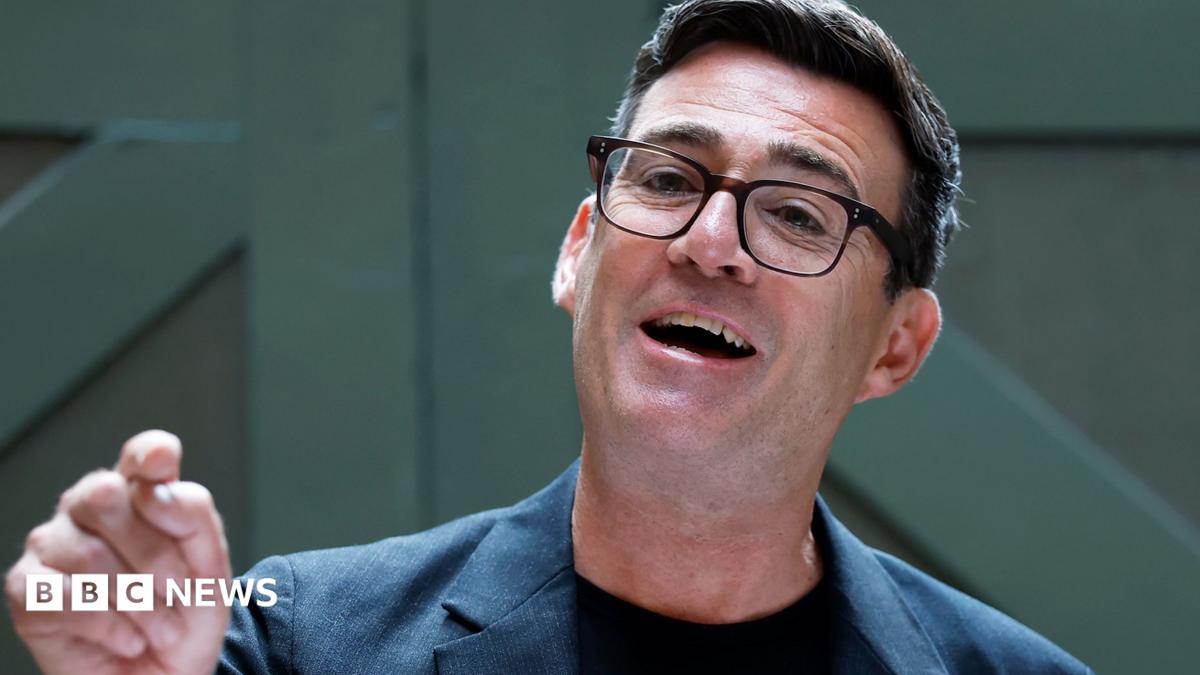
The battle for Number 10 is over.
An overwhelming number of Labour MPs have nominated Andy Burnham. Under Labour’s rules he needs trade union support too.
He crossed that threshold today. He is moving into Number 10 on Monday.
But the beneath-the-radar battle for Number 11 Downing St is continuing. Whoever Burnham appoints as chancellor – and next-door neighbour in Downing Street – will send a signal of his intent both to politicians and to the bond markets.
The official line from team Burnham is that no decision has been taken.
Announcements on cabinet posts are not expected to be made until Monday, when Burnham moves to Number 10.
Discussions have been taking place amongst a tight group of people – the next Number 10 chief of staff James Purnell, Louise Haigh and the former MP who stood aside for Burnham, Josh Simons.
When Burnham won the subsequent Makerfield by-election the widespread assumption was that the Energy Secretary Ed Miliband would move to the Treasury.
But there has been both noisy and more subtle attempts to influence Burnham’s choice of chancellor – ranging from unions with workers in the oil and gas industry and who distrust Miliband’s instincts, to Sir Keir Starmer’s unpaid ‘cost of living’ tsar Lord Walker, the boss of Iceland.
He runs supermarkets but argues that it’s the bond markets that would “freak out” if an “ideological” chancellor was installed in the Treasury.
In recent days, a number of MPs close to Burnham – who have no animus to the energy secretary – believe the likelihood of appointing Miliband has lessened significantly.
The caveat is that they are not making the decisions, but are discerning the mood.
Those close to Miliband believe that it’s not only highly possible that he will still be appointed but highly desirable too.
They point to his credentials. He has an economics background, was an adviser in the Treasury under Gordon Brown and chaired the Council of Economic Advisers.
He has ministerial experience in the last Labour government and this one. He knows his way around. A colleague put it like this: “He can make the Treasury do what it doesn’t want to do.”
Miliband has offered advice to Burnham regularly and recently and would be in lock-step with Burnham in the task of spreading growth, in Burnham’s words, “to every postcode”.
As for the bond markets, one supporter has stressed his adherence to the fiscal rules on debt and borrowing, and another put it more colourfully: “He isn’t Che Guevara.”
Many in the parliamentary party would expect him to move to Number 11. If he isn’t, some on the party’s soft left will think that Burnham has refused the first fence in the race to change Britain.
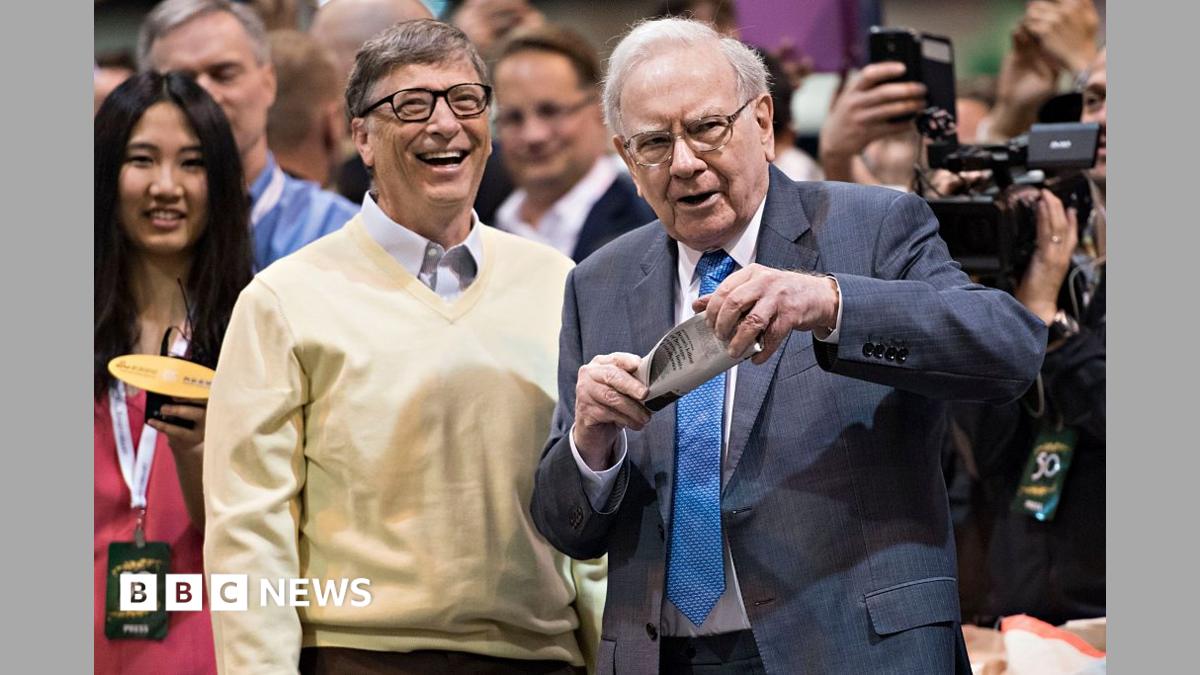
Billionaire investor Warren Buffett has described Bill Gates’ relationship with late sex offender Jeffery Epstein as “distasteful”, but said he himself had made mistakes in life by being friends with people “who weren’t great”.
On Tuesday, Buffett’s firm Berkshire Hathaway stopped giving donations to the Microsoft co-founder’s charity for the first time in 20 years and instead handed his remaining stock to foundations linked to his family.
Buffett told CNBC he and Gates have had a “wonderful friendship” but confirmed his pivot over donations followed Gates’ testimony to US Congress about Epstein.
Gates called Buffett “a dear friend”, adding: “My gratitude to Warren is immeasurable.”
Gates appeared before the US House Oversight Committee in June to answer questions about his relationship with Epstein, who died in a New York prison in 2019 while awaiting trial on sex trafficking charges.
In a transcript of his testimony, Gates said that he had been introduced to Epstein in 2011 as someone who could help raise billions of dollars for global health, which is a key focus of the Gates Foundation.
He said: “I recall being aware that Epstein had faced prior legal issues, but I did not fully understand the extent of the crimes he committed.”
In 2008, Epstein had pleaded guilty to soliciting a minor for prostitution and procuring a person under age 18 for prostitution.
Gates told the committee: “I should never have met with Epstein in the first place. Based on what I know now, I understand that even if he had delivered the donors he promised, it would not have justified associating with him.”
Buffett said on Wednesday he had read Gates’ testimony.
He said: “While it’s distasteful, while he made mistakes, I’ve made mistakes in hiring all kinds of people, choosing friends and finding out later that one way or another they weren’t what I thought they were.
“So, I found nothing in there that was beyond what I could picture myself doing.”
Buffett said the decision to stop donations to the foundation did not come as a surprise to Gates. The two met around three weeks ago for three hours.
The 95-year-old said: “At some point I had read what Congress had come up with, I’d read everything and all I can say is I don’t know whether I’ve done dumber things but I’ve done many dumb things in life.”
Buffett added that he and Gates have had an “enormous number of good times together” since they met in 1991. “It has been a wonderful friendship,” he said.
Gates said: “I cherish the time we spend together. I hope we have much more of it ahead.”
SInce 2006, when Buffett pledged to make annual donations to the Bill and Melinda Gates Foundation, as it was then known, “throughout my lifetime”, he has given $47bn (£34.7bn) to the charity.
But even without his backing, the foundation still holds “very substantial resources”, said Buffett.
In 2025 alone, the Gates Foundation gave away $8.5bn in charitable support.
While Buffett originally pledged a lifetime commitment two decades ago, he explained that his thinking has evolved over time.
When he first made the pledge, Buffett noted that he did not feel his three children were ready to manage such vast sums, but he now believes they are fully capable and deeply aligned with his goals.

- Global AI adoption reached 17.8% of the working-age population in Q1 2026, up 1.5 percentage points from the prior quarter, according to Microsoft’s Global AI Diffusion Report. The UAE led all nations at 70.1%, while 26 economies now exceed 30% usage. The United States ranked 21st with a 31.3% usage rate.
- Asia saw notable acceleration, driven by improved multilingual AI capabilities, with South Korea, Thailand, and Japan recording the largest regional gains. Despite this progress, the gap between the Global North and Global South widened to 27.5% versus 15.4%. In software development, AI coding tools contributed to a 78% year-over-year rise in git pushes, while U.S. developer employment reached a record 2.2 million.
Global AI adoption climbed to nearly 18% of the world’s working-age population in the first quarter of 2026, according to Microsoft’s latest Global AI Diffusion Report, even as the gap between wealthy and developing nations continued to widen and Asia emerged as a surprising bright spot.
Key takeaways
- Global AI adoption reached 17.8% of the world’s working-age population in Q1 2026, with the UAE leading at 70.1% and 26 economies now surpassing 30% usage.
- Asia is the quarter’s biggest mover thanks to better multilingual AI, but the Global North–South gap widened to 27.5% versus 15.4%.
- AI coding tools drove git pushes up 78% year over year, yet U.S. software developer employment hit a record 2.2 million, up 8.5%.
Usage up 1.5 points in a single quarter
AI usage increased by 1.5 percentage points from 16.3% to 17.8% of the world’s working-age population during the first quarter of 2026, Microsoft Chief Data Scientist Juan Lavista Ferres wrote in a company blog post accompanying the report’s release. The growth was not confined to countries just beginning to adopt the technology. Intensity of use among economies with the highest rates of AI diffusion also increased, with 26 economies now exceeding 30% of the working age population using AI, a sign that even mature AI markets have room to deepen adoption rather than plateau.
At the top of Microsoft’s National AI Leaderboard, the United Arab Emirates continued to lead global AI diffusion at 70.1%, far outpacing the rest of the field. The United States finally started to move up the national rankings, albeit only from 24th to 21st, based on a 31.3% usage rate among its working-age population. The modest climb suggests that, despite being home to many of the world’s leading AI developers, American adoption has lagged behind smaller, faster-moving economies.
Asia accelerates, but the North-South divide keeps growing
Among the quarter’s notable developments was accelerating AI adoption across Asia, driven in part by improving AI capabilities in Asian languages. South Korea, Thailand, and Japan saw the greatest movement of any countries in the region, pointing to multilingual model improvements as a meaningful driver of new usage. Ferres highlighted Japan specifically as a case study on the positive impact of enhanced multilingual AI capabilities.
Despite that regional progress, the report found the broader global divide continued to widen. Usage now stands at 27.5% in the Global North compared with 15.4% in the Global South, a gap that grew even as overall global adoption rose.
How Microsoft measures diffusion
Microsoft tracks AI diffusion as the share of people worldwide between ages 15 and 64 who have used a generative AI product during the reported period. The measure is derived from aggregated and anonymized Microsoft telemetry, adjusted for differences in OS and device-market share, internet penetration, and country population. The company acknowledged that no single metric captures the full picture, and said that through the Microsoft AI Economy Institute, it continues refining how it measures diffusion globally, including how adoption varies across countries in ways that advance priorities like scientific discovery and productivity gains, while planning to add further indicators over time.
Sectorally, the report’s clearest story was in software development. Strengthened AI coding capabilities led to a dramatic increase in code production, reflected in output from Anthropic’s Claude Code, OpenAI’s Codex, and Microsoft’s GitHub Copilot. Git pushes, through which developers post coding changes online, rose 78% year over year globally.
Crucially, the report found evidence that AI coding tools may, for now, be increasing rather than reducing demand for software developers. Microsoft explained the logic: as developer productivity rises, the cost of building software falls, and if demand for software is elastic, organizations respond by building more software across a wider range of use cases.
The employment data support that reasoning. In 2025, total U.S. software developer employment reached approximately 2.2 million, up 8.5% year over year and a record high for the profession. Early 2026 figures show developer employment in March was about 4% higher than in March 2025.
Other People are Reading

The seven-member monetary policy board at the Bank of Korea voted to raise the seven-day repurchase rate by 25 basis points to 2.75% to stabilise a slumping won and counter persistent inflationary pressure.
In a statement released shortly after, the bank also said the growth rate for South Korea is expected to “considerably exceed” the bank’s May forecast of 2.6%, while inflation will remain high for “a considerable time.”
“There are good reasons to expect further tightening over the coming months,” Capital Economics economist Gareth Leather wrote in a note after the rate decision was announced.
“Although the continued weakness in private consumption – retail sales are falling in real terms – remains a concern, we still expect growth to reach an above-consensus 4.0% this year.”
The dollar-won rate remained muted on the widely expected decision. The benchmark KOSPI was off 7%, mostly due to renewed selling in chipmakers’ stocks.
The economy has been rebounding faster than expected this year, thanks to a boom in semiconductor exports and investment, even as the local currency remains pressured, with the won weakening 3.4% against the greenback. Gross domestic product expanded 1.8% in the first quarter, the fastest pace in nearly six years, prompting the government to raise growth forecasts to a five-year high of 3.0% for this year on the back of a global semiconductor boom.
The rate hike aligns the BOK closely with regional neighbour the Bank of Japan, which recently raised its own benchmark rate to a 31-year high.
Central banks in Australia, New Zealand, Indonesia and the Philippines have also tightened their monetary policies.
With the headline inflation figure at a 2-1/2-year high in South Korea, a majority of analysts see the BOK delivering at least one more rate hike before the end of this year to take the policy rate to 3.00%.
Median forecasts showed the BOK would raise its key rate to 3.25% in the first quarter of 2027 and keep it there until at least the end of next year.
Governor Shin Hyun Song will hold a press conference at 0210 GMT, which will be livestreamed via YouTube.
Business
Nvidia Stock Slips After Big Tuesday Rally as Huang Confirms Vera Rubin Chip Is Now in Production Today
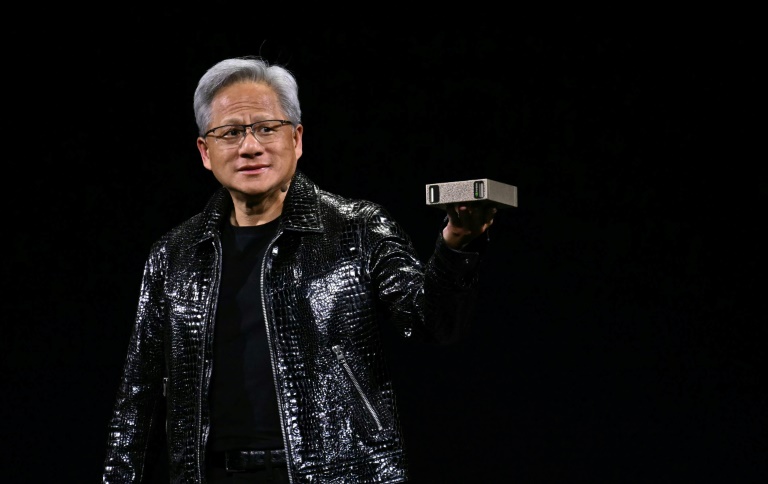
Shares of Nvidia fell 1.48% on Wednesday, trading at $208.67 as of 11:58 a.m. EDT, down $3.13 on the day, as the stock cooled off following Tuesday’s sharp 4.06% rally, even as Chief Executive Jensen Huang moved to dismiss reports of delays affecting the company’s next-generation Vera Rubin AI chip.
Wednesday’s pullback comes after Nvidia shares surged from $203.53 to $211.80 during Tuesday’s session, a move that pushed the stock up 8.63% over the preceding two weeks and helped Nvidia push back against recent characterizations of the stock as a relative laggard within the broader chip sector rally.
Huang Addresses Vera Rubin Delay Concerns
Huang directly addressed recent supply chain reports suggesting Nvidia’s next-generation Vera Rubin AI accelerator had experienced delays in its volume production ramp due to thermal lid issues affecting server integration. In comments this week, Huang dismissed those delay reports and affirmed that production of the Vera Rubin platform remains on track at what he described as “giant” volumes.
That confirmation carries significant weight for investors given Vera Rubin’s central role in Nvidia’s next generation of AI computing products, with the platform expected to serve as a key growth driver for the company heading into its next major product cycle.
US Opens Door for Additional AI Chip Exports
Adding to Wednesday’s news flow, the U.S. government has opened the door for several major technology companies, including Nvidia, Amazon, Apple and SpaceX’s AI unit, to export AI chips to the United Arab Emirates, according to reports. That development follows a broader pattern of incremental policy shifts around U.S. export controls on advanced AI hardware, an area that has remained a persistent source of both opportunity and uncertainty for Nvidia’s business throughout 2026.
Separately, reports indicated that a subsidiary of Chinese telecommunications company ZTE has received a license to purchase Nvidia’s H200 AI accelerator chips, while a U.S. official told Reuters that only a small number of H200 chips have actually been shipped to China so far under recently eased export rules.
Memory Sector Volatility Continues to Ripple Through Chip Stocks
Nvidia’s modest pullback Wednesday comes amid continued volatility across the broader memory chip sector, which has periodically spilled over into logic-focused chip designers like Nvidia in recent sessions. Turmoil surrounding South Korean memory maker SK Hynix, whose U.S.-listed shares have swung dramatically since its recent Nasdaq debut, has continued to inject volatility into the broader AI hardware complex, even as Nvidia’s direct exposure to memory pricing dynamics remains more limited than pure-play memory producers.
A Stock Fighting Back Against a ‘Laggard’ Narrative
Despite recent volatility, Nvidia’s stock has shown renewed strength in recent sessions, with shares up 13.6% for the year as of Tuesday’s close. That performance has helped push back against a narrative that had developed earlier in the year characterizing Nvidia as underperforming relative to some other AI-linked chip names during the broader 2026 rally.
Nvidia’s stock remains well below its all-time high of $236.54, reached on May 14, even after Tuesday’s strong session, leaving the stock down roughly 10% to 11% from that peak level.
Strong Underlying Business Metrics
Nvidia’s most recent quarterly results showed continued acceleration in the company’s core business. Revenue grew 70.7% year over year to $82.0 billion, while gross margin rose to 74.1% for the quarter. Nvidia management has characterized overall growth as accelerating, with revenue approaching record levels, partly aided by H200 chip shipments to China under the recently eased export framework.
Analysts Remain Overwhelmingly Bullish
Wall Street continues to hold an overwhelmingly positive view of Nvidia’s stock. According to recent analyst tracking, roughly 92% of analysts covering the company maintain a “Buy” rating, with an average price target of approximately $301.62, implying substantial upside from current trading levels. KeyBanc recently reiterated an “Overweight” rating on the stock following its own analysis of the company’s supply chain and production outlook.
Bank of America has also reiterated a bullish stance on Nvidia, describing the company as a “unique, durable growth franchise” in recent commentary, reflecting continued institutional confidence in Nvidia’s long-term positioning within the broader AI infrastructure buildout despite near-term stock volatility.
AI Infrastructure Spending Remains a Key Theme
Nvidia’s business continues to benefit from what analysts describe as accelerating capital expenditure commitments tied to artificial intelligence infrastructure across the technology sector. Broader industry estimates suggest AI-related capital expenditures could cross $1 trillion in aggregate spending as soon as next year, according to recent industry analysis, underscoring the scale of the ongoing infrastructure buildout that continues to underpin bullish sentiment toward Nvidia and other companies positioned at the center of that spending wave.
A High-Beta Stock in a Volatile Sector
Nvidia’s stock continues to exhibit significant volatility, with a beta coefficient of 1.44 reflecting its tendency to move more sharply than the broader market in both directions. That volatility has been on full display over the past several weeks, as shares have swung between strong single-day rallies, such as Tuesday’s 4% gain, and more modest pullbacks like Wednesday’s session, often in response to shifting sentiment across the broader semiconductor and AI infrastructure investment landscape.
What Comes Next
With Nvidia’s next earnings report not scheduled until August 26, investor attention in the near term is likely to remain focused on incremental developments tied to Vera Rubin production progress, evolving U.S. export policy toward China and other markets, and broader sentiment shifts across the AI infrastructure investment theme. Huang’s continued public reassurances about Vera Rubin’s production timeline appear aimed at maintaining investor confidence in Nvidia’s next-generation product roadmap, a factor that is likely to remain central to the stock’s performance heading into the second half of 2026.
Business
Microsoft Stock Rises Over 3% as Investors Rotate Into AI Software Names Ahead of July 29 Earnings Day
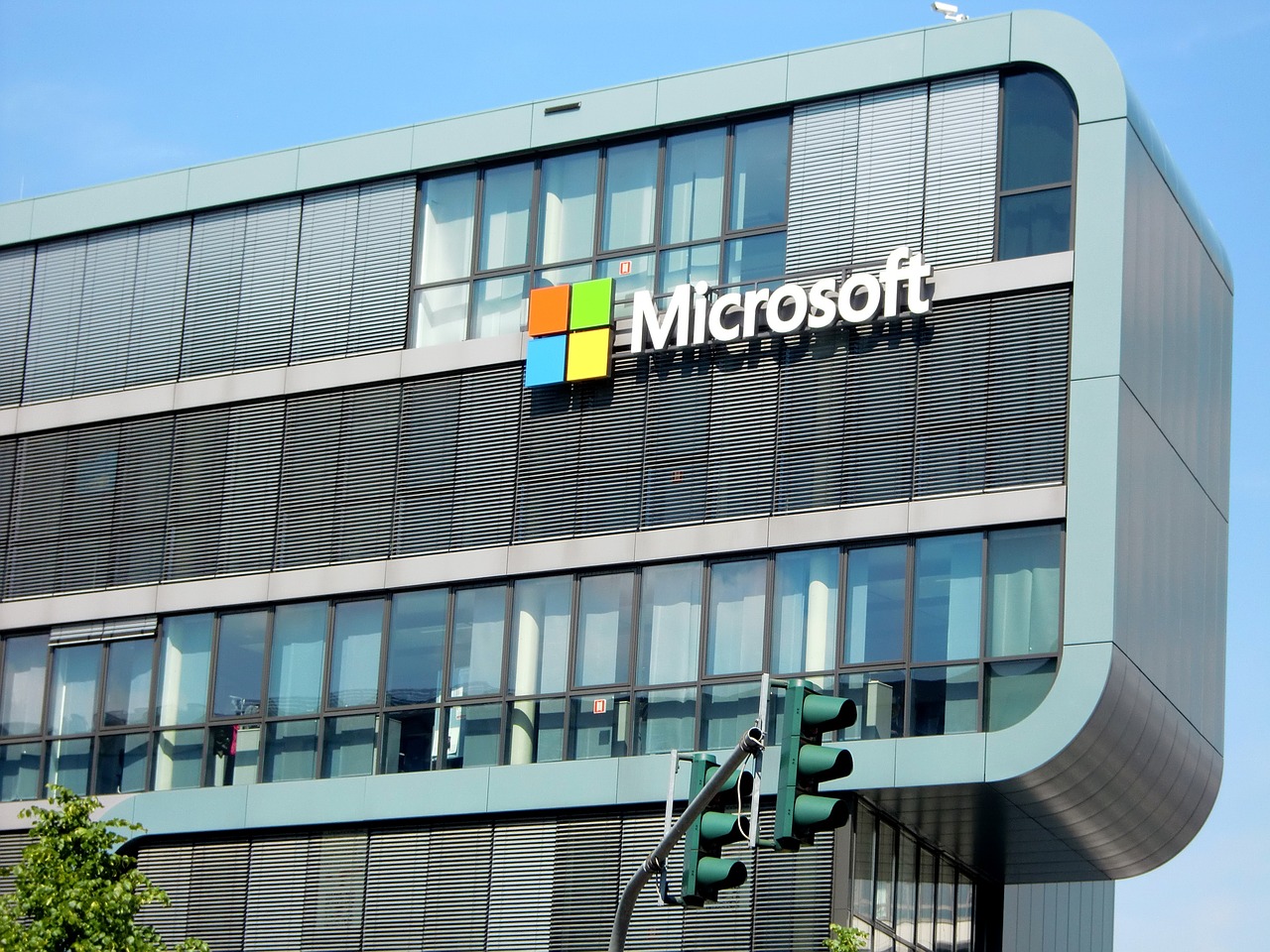
Shares of Microsoft climbed 3.25% on Wednesday, trading at $397.46 as of 12:01 p.m. EDT, up $12.52 on the day, as investors rotated out of AI-linked chip stocks and back into software names, extending a recent rebound for a stock that has struggled for much of 2026.
Wednesday’s gains come as Microsoft continues navigating what has been a difficult year overall. The stock remains down significantly from its 52-week high of $555.45, reached in July 2025, even after recent strength that has helped pull shares up from a 52-week low of $349.20 hit in late June.
A Rotation Away From Chip Stocks
Much of Wednesday’s move reflected a broader shift in investor positioning across the technology sector, with capital flowing out of semiconductor names and into software-focused AI plays like Microsoft. That rotation has become an increasingly common pattern in recent sessions, as investors periodically reassess relative valuations between hardware-focused AI infrastructure companies and software companies working to monetize AI capabilities within their existing product ecosystems.
A Difficult Start to 2026, Despite Strong Fundamentals
Microsoft’s stock has faced persistent pressure throughout the first half of 2026, falling as much as 19% to 21% year-to-date at various points, weighed down by investor anxiety over the scale of the company’s AI-related capital expenditures, questions about the pace of Copilot adoption, and a securities fraud class action filed following the company’s January 28 earnings reaction.
Despite that pressure, Microsoft’s underlying operating results have continued to show strength. The company’s fiscal third-quarter results beat expectations, with earnings per share of $4.27 compared with a consensus estimate of $4.09, on revenue of $82.89 billion, up 18.3% year over year. Azure cloud revenue grew 40% during the quarter, while capital expenditures rose sharply to $30.88 billion, up 84.39% year over year, reflecting the scale of Microsoft’s continued investment in AI infrastructure.
Nadella Highlights AI Business Growth
Microsoft Chief Executive Satya Nadella has continued emphasizing the company’s rapid AI-related revenue growth in recent public commentary, pointing to figures that suggest Microsoft’s AI business has already scaled to a meaningful size within the broader company.
“Our AI business surpassed an annual revenue run rate of $37 billion, up 123% year-over-year,” Nadella said, according to recent commentary tied to the company’s most recent earnings disclosure.
Nadella has also emphasized that Microsoft remains in the early stages of integrating AI capabilities across its broader product lineup, framing the company’s current AI monetization efforts as just the beginning of a longer-term transformation across its software and cloud businesses.
A Major Extension of the OpenAI Partnership
Microsoft’s relationship with OpenAI has continued to serve as a central pillar of its broader AI strategy. The company recently extended its partnership with OpenAI through 2032, securing a $250 billion incremental Azure commitment alongside expanded intellectual property rights tied to the partnership. That extended agreement has been cited by several analysts as a key factor supporting bullish long-term price targets on Microsoft’s stock.
Microsoft has also begun replacing certain OpenAI and Anthropic models with its own proprietary MAI models within products such as Excel and Outlook, a shift some analysts believe could materially improve the unit economics associated with Microsoft’s Copilot AI assistant over time.
Commercial Backlog Signals Strong Demand
Beyond quarterly revenue figures, Microsoft’s commercial remaining performance obligations, a measure of contracted future revenue, reached $627 billion during its most recent reporting period, up 99% year over year. Several analysts have pointed to that figure as a demand signal that significantly outpaces current market concerns about the company’s near-term growth trajectory.
Mixed Analyst Sentiment Amid the Pullback
Wall Street’s view of Microsoft has remained largely positive despite the stock’s difficult year-to-date performance. According to recent analyst tracking, roughly 94% of analysts covering Microsoft maintain a “Buy” rating, with an average 12-month price target of approximately $559.86 to $560.13, implying substantial upside from current trading levels.
Not all recent analyst actions have been uniformly bullish, however. Wells Fargo recently lowered its price target on Microsoft to $625 from $650, even while Evercore ISI raised its own price target to $525 from $510 and maintained an Outperform rating on the stock. Benchmark separately initiated coverage of Microsoft with a Buy rating, characterizing the stock’s recent pullback as a long-term buying opportunity for investors willing to look past near-term volatility.
Legal Challenges Add to the Narrative
Microsoft’s stock decline earlier in the year has also drawn legal scrutiny, with multiple law firms announcing securities class action investigations and lawsuits tied to the company’s January earnings reaction. Those legal proceedings allege that Microsoft misled investors regarding Copilot adoption rates and Azure growth trends, adding an additional layer of uncertainty for some investors even as the company’s underlying financial results have continued to exceed consensus expectations.
Workforce Reductions Amid AI Investment
Microsoft has also continued adjusting its workforce even as it ramps up AI-related capital spending. The company offered voluntary buyouts to approximately 7% of its U.S. employees earlier this year, following layoffs of more than 15,000 employees during the prior year, according to reporting on the company’s ongoing organizational restructuring efforts.
Earnings Report Looms as Key Catalyst
With Microsoft’s fiscal fourth-quarter earnings report scheduled for July 29, investors are increasingly viewing the upcoming release as a potential turning point capable of resetting sentiment toward the stock after a challenging first half of the year. Some market analysts have suggested the report could serve as a launchpad for a broader stock recovery, given the significant gap that has emerged between Microsoft’s underlying financial performance and its year-to-date stock price decline.
As Microsoft approaches its next earnings report, investors will be watching closely for continued Azure growth momentum, updated guidance on AI-related capital spending plans, and further evidence of Copilot’s commercial traction across enterprise customers. Should the company’s results reinforce the bullish narrative built around its expanding AI business and substantial commercial backlog, market watchers suggest Microsoft’s stock could be positioned for a more sustained recovery heading into the second half of 2026, following one of its most turbulent stretches in recent years.

BHP will spend nearly $1.3 billion bringing a new iron ore project online in the Pilbara, with first ore expected by mid-2029.

Both sides of the industrial argument have come out firing ahead of Thursday’s first Pilbara mining strike in 26 years.

Sebastian Mackensen, BMW of North America’s president and CEO, said the automaker is committed to U.S. manufacturing as it completes a $1.7 billion South Carolina plant expansion.
BMW is recalling nearly 30,000 vehicles over an engine starter issue that could pose a fire risk, according to federal regulators.
The recall affects 29,119 plug-in hybrid sedans, including 2018-2020 BMW 530e xDrive, 2018-2020 BMW 530e iPerformance, 2017-2019 BMW 740Le xDrive and 2016-2018 BMW 330e iPerformance vehicles.
According to the National Highway Traffic Safety Administration (NHTSA), water can come into contact with the engine starter’s electrical relay, leading to corrosion over time.
SUBARU RECALLS OVER 540,000 SUVS AFTER FEDERAL REGULATORS FLAG WEIGHT CALCULATION ERROR: NHTSA

BMW is recalling nearly 30,000 vehicles over an engine starter issue. (Chris Jung/NurPhoto via Getty Images / Getty Images)
Corrosion inside the starter relay could affect the relay’s electrical connections and the engine’s ability to start, the recall report reads.
The issue could cause a short circuit and possible overheating of the starter even if it is parked with the ignition turned off, according to NHTSA.
“A short circuit in the starter relay may increase the risk of a fire,” the NHTSA report said.

The issue could cause a short circuit and possible overheating of the starter when the car is running. (REUTERS/Tingshu Wang/File Photo / Reuters Photos)
The recall was issued after a field incident in November involving a 2019 BMW 5 and a field incident in May involving a 2017 BMW 3 Series.
No injuries or accidents have been reported thus far in connection with the recall.
Vehicle owners are urged to park their cars outside and away from buildings until the recall repair is completed.
KIA ISSUES NEW RECALL OF 460,000 VEHICLES AFTER PREVIOUS FIX TO FIRE RISK FAILED

No injuries or accidents have been reported. (Matthias Balk/picture alliance via Getty Images / Getty Images)
CLICK HERE TO GET FOX BUSINESS ON THE GO
BMW will send out owner notification letters on Aug. 28, advising them to take their vehicles to an authorized dealer for the starter to be replaced free of charge. Owners who have previously purchased a starter replacement may also be eligible for reimbursement.


I’m a full-time investor with a strong focus on the tech sector. I graduated with a Bachelor of Commerce Degree with Distinction, major in Finance. I’m also a proud lifetime member of the Beta Gamma Sigma International Business Honor Society. My core values are: Excellence, Integrity, Transparency, & Respect. I always, to the best of my ability, hold true to these values which I believe are key for long-term success. I would like to invite all of my readers to leave their constructive criticism and feedback in the comments section so that I can further enhance the quality of my work moving forward. Thank you and God Bless America!
Analyst’s Disclosure: I/we have no stock, option or similar derivative position in any of the companies mentioned, and no plans to initiate any such positions within the next 72 hours. I wrote this article myself, and it expresses my own opinions. I am not receiving compensation for it (other than from Seeking Alpha). I have no business relationship with any company whose stock is mentioned in this article.
Seeking Alpha’s Disclosure: Past performance is no guarantee of future results. No recommendation or advice is being given as to whether any investment is suitable for a particular investor. Any views or opinions expressed above may not reflect those of Seeking Alpha as a whole. Seeking Alpha is not a licensed securities dealer, broker or US investment adviser or investment bank. Our analysts are third party authors that include both professional investors and individual investors who may not be licensed or certified by any institute or regulatory body.

2026 Open picks, odds: Expert predictions, favorites in field at Royal Birkdale

29,193 Dominoes Fall in Perfect Sequence to Claim the Tallest, Densest 3D Pyramid Record Yet

XRP JUST ANNOUNCED: TRUMP DROPPED A NUKE ON THE MARKETS.. THIS IS NOT GOOD


-

 Fashion7 days ago
Loro Piana Fall 2026 Enters Houston’s Art Scene
-

 Fashion5 days ago
Weekend Open Thread: Nutriplenish Leave-In Conditioner
-
 Sports6 days ago
2026 Genesis Scottish Open Thursday TV coverage: Round 1
-

 Sports6 days ago
Super Eagles star Moses Simon opens up on Liverpool transfer regret
-

 Tech7 days ago
Character.AI enters the microdrama arena with its own productions, but there’s a twist
-

 Politics15 hours ago
Young campaigners urge incoming PM to act on outdoor junk food ads
-

 News Videos1 day ago
XRP BOMBSHELL… XRP OMBOARDED FOR TRANSACTIONS!!!
-

 Tech2 days ago
Get Your ESP32 Sunny Side Up With This Solar Dev Board
-

 Tech1 day ago
Dark Secrets Emerge When Jailbreaking LLMs
-
 Sports6 hours ago
New Cornerback Enters Vikings Trade Rumor Mill
-
 Entertainment10 hours ago
Disney’s Most Ambitious Failed Star Wars Attraction Is Coming to SDCC
-

 Tech7 days ago
Level Infinite Launches Gangstar Mirage City in India with Pre-Registrations
-
 NewsBeat7 days ago
Major update after Huntingdon train attack as man enters plea
-

 News Videos3 days ago
how to make coin bank box with cardboard #scienceproject #money #diy #shorts
-
 Tech2 days ago
Cloudflare Precursor Watches Your Mouse and Keyboard To Decide If You Are Human
-
 Entertainment9 hours ago
Vicki Gunvalson Defends Discussing Heather Dubrow’s Money
-

 NewsBeat6 hours ago
Watch: Is Donald Trump facing a popular backlash on immigration?
-
Crypto World2 days ago
Ripple, Coinbase, Circle Join Linux x402 Foundation to Help Shape AI Payments
-

 Sports4 hours ago
Michigan officials not expected to discuss AD Warde Manuel at Thursday meeting
-
 NewsBeat5 hours ago
Firefighters issue update on Dovestone moorland blaze as fire enters fourth day
You must be logged in to post a comment Login