
Business
Sebi plans comprehensive review of rules governing SME IPOs

The underwriting system is another area that needs attention, he said, adding that it is not working effectively and companies are having to bear significant costs.
A working group formed by Sebi to examine issues related to the SME platform has recently submitted its report to the regulator. Sebi will be coming out with a consultation paper soon on the SME platform. “If someone is on the SME platform, obviously we do not want them to incur higher costs. But the cost is significantly higher compared with the mainboard,” Pandey said.
Read more: Sebi flags manipulative trades during CAS on Sensex expiry day, fines two entities
He added that increasing the trading lot size and application size to control retail participation has not achieved the intended purpose. Sebi is also looking to support global fund management activity from India. The changes to the portfolio management services regulation would enable trading from onshore, Pandey said.


Fidelity’s mission is to strengthen the financial well-being of our customers and deliver better outcomes for the clients and businesses it serves. With assets under administration of $12.6 trillion, including discretionary assets of $4.9 trillion as of December 31, 2023, Fidelity focuses on meeting the unique needs of a broad and growing customer base. Privately held for 77 years, Fidelity employs more than 74,000 associates with its headquarters in Boston and a global presence spanning nine countries across North America, Europe, Asia and Australia. Note: This account is not managed or monitored by Fidelity, and any messages sent via Seeking Alpha will not receive a response. For inquiries or communication, please use Fidelity’s official channels.

This year, a subtle yet significant story is playing out across Asia, not captured in headlines about GDP growth or stock market trends, but in the more personal calculus of where the world’s richest individuals decide to call home.
Key Points
- Singapore and Japan remain top destinations for millionaire inflows due to their institutional stability and political predictability, while Hong Kong is seeing a surprising resurgence driven by tech sector connections to mainland China.
- While China and India still experience significant outbound wealth migration, the pace of these departures is slowing as domestic confidence and regulatory environments show signs of stabilization.
- Geopolitical tensions remain a critical factor, driving wealth outflows from regions like Taiwan and South Korea toward more secure jurisdictions in North America and Australia.
According to Henley & Partners’ 2025 Private Wealth Migration Report, Asia is no longer simply a source of outbound millionaires chasing safer shores abroad. It has become one of the most dynamic theatres in the global contest for capital and talent. That shift deserves more scrutiny than it has received.
Singapore’s edge is not an accident
Start with the obvious headline: Singapore remains Asia’s undisputed wealth magnet, expected to draw a substantial net inflow of millionaires this year even as that number has softened slightly from prior years. What is striking is why Singapore keeps winning.
It isn’t simply low taxes or a favorable exchange rate. It is the compounding effect of political predictability, tightly regulated finance, and a standard of living that lets footloose capital feel at home. Global banks have cited the city-state’s continued push into fintech and premium wealth management as reasons for its enduring appeal.
In an era when so much of the world feels combustible, Singapore has essentially monetized boredom, and that, frankly, is a savvy long-term strategy other jurisdictions would do well to study.
Hong Kong’s comeback is the year’s real surprise
If Singapore’s dominance was expected, Hong Kong’s resurgence was not. After years of watching wealthy residents flee amid the unrest and uncertainty of 2019 to 2022, Hong Kong has clawed its way back into the global top ten for millionaire inflows.
The mechanics behind this reversal are worth dwelling on: executives from Shenzhen’s booming tech sector, sitting just across the border, are increasingly choosing to base themselves in Hong Kong rather than treat it as an afterthought.
This is not nostalgia or sentiment at work. It is proximity, infrastructure, and Hong Kong’s enduring function as a financial gateway into mainland China reasserting themselves. It is a reminder that wealth migration trends are rarely permanent verdicts. They are responses to conditions that can, and do, change.
Japan’s quiet reinvention
Japan, too, deserves more credit than it typically gets in these conversations. Despite a demographic profile that should, in theory, make it a less attractive destination for global capital, Japan is drawing meaningful millionaire inflows on the strength of economic stability, cultural depth, and a deliberate loosening of immigration and investment rules. Wealthy individuals from elsewhere in Asia increasingly see Japan not as a curiosity but as a legitimate place to plant roots or diversify holdings.
That a country wrestling with an aging population can still outcompete flashier destinations says something about how much weight investors now place on institutional stability over pure growth potential.
China and India: cautious optimism, not capitulation
The most nuanced, and arguably most important, story in the report concerns China and India, the two countries that have long dominated outbound wealth migration statistics. Both are still seeing millionaires leave in significant numbers, but the pace of departures from each is easing.
In China’s case, improving domestic market conditions and clearer regulatory signals appear to be restoring a measure of confidence among the country’s elite, even if geopolitical tensions continue to give many a reason to hedge their bets abroad. India tells a similar story, buoyed by a thriving technology sector and financial liberalization, even as regulatory complexity and infrastructure gaps continue to nudge some wealthy Indians toward jurisdictions with more predictable legal systems.
Neither shift should be read as a reversal of fortune. The outflows have not stopped, but the deceleration itself is a meaningful data point, and one that global wealth managers would be unwise to ignore.
Geopolitics is the wildcard nobody can price in
Not every Asian economy is riding this wave of retained confidence. South Korea’s outflow of millionaires is projected to double this year, driven by economic pressure, demographic strain, and the ever-present tension on the Korean Peninsula, with many looking toward North America for second homes and new ventures.
Vietnam has seen a similar exodus, largely toward Thailand and the West. Taiwan presents perhaps the starkest illustration of how geopolitics can override even strong fundamentals: its semiconductor-driven economy is thriving, yet rising cross-strait tension with Beijing is pushing some of its wealthiest citizens to look toward Australia and Canada for the kind of personal and political security that economic success alone cannot guarantee.
The bigger picture
Zoom out, and the decade-long trend is unambiguous: China and India have seen extraordinary growth in their millionaire populations, ranking among the fastest-growing wealth markets globally, with Taiwan, Singapore, and Thailand not far behind. This is not a story of Asia losing its wealthy to the West. It is a story of Asia generating wealth at a pace the rest of the world is struggling to match, even as that wealth remains highly mobile and acutely sensitive to political risk.
The lesson for policymakers, in Asia and beyond, is straightforward but easy to ignore: capital increasingly follows stability, regulatory clarity, and credible institutions, not just tax incentives or growth headlines.
Singapore and Japan have understood this for years. Hong Kong appears to be relearning it. And how China, India, South Korea, and Taiwan respond to that lesson over the next decade will likely determine which of Asia’s cities become the world’s next great wealth capitals, and which get left behind.

The RBI has consistently intervened for the past nine trading sessions, arresting weakness in the rupee, as oil prices soared. Indian equity indices have also continued to fall through most of last week and this week, reflecting the impact of soaring energy costs.
Read more: Goldman Sachs backs D-street debutante Shiprocket, buys over 40 lakh shares
 as a Reliable and Trusted News Source
(You can now subscribe to our ETMarkets WhatsApp channel)

Indian households are estimated to hold 31,000 tonnes of gold. The country imports about 800 tonnes annually
Read more: Indian jewellers may earn up to 1% incentive under revamped Gold Monetisation Scheme: IBJA
A more lucrative gold monetisation scheme could bring some of that metal into the formal market, boosting recycling and helping revive underused refining capacity, Guha said. India has about 1,800 tonnes of installed gold-refining capacity, much of which remains underutilised. The government is working with all stakeholders to develop a revamped gold monetisation scheme (GMS), after the earlier programme launched in 2015 made little headway.
MMTC PAMP currently recycles around 22 tonnes of gold and plans to increase this by 10-15% annually, he said. “If an attractive GMS is launched, then it can go up substantially.” The company has the capacity to refine 300 tonnes of gold and 600 tonnes of silver annually, leaving significant headroom to scale up recycling.

ALSO READ | India’s gold headache far from cured after 60 days of breather
A greater flow of recycled gold into the domestic market could also help address pressure on India’s current-account deficit by substituting a portion of imported bullion with domestically sourced metal. With gold accounting for a significant share of India’s merchandise imports, recycling household gold could reduce the need for fresh imports and, consequently, the outflow of foreign exchange. “Recycling complements imports; it does not replace them,” Guha said, adding that India’s next gold story should be about how efficiently, transparently and responsibly the country circulates and monetises the gold it already owns.
Southeast Asian nations are close to finalizing the ASEAN Digital Economy Framework Agreement (DEFA), a landmark regional pact designed to govern their digital economy, projected to reach $2 trillion by 2030. This agreement, supported by the World Economic Forum, aims to harmonize digital trade rules, facilitate cross-border data flows, and establish coherent regulations for e-commerce and digital payments across the region.
DEFA seeks to move from fragmentation to integration, fostering a seamless digital ecosystem that benefits businesses of all sizes, including MSMEs, and promotes inclusive growth. The agreement is expected to be signed by the end of 2026, promising significant economic benefits through digital integration.
- Southeast Asian nations have come a step closer to cementing the world’s first regional agreement on digital economy governance.
- The ASEAN Digital Economy Framework Agreement (DEFA), due to be concluded and signed in 2026, aims to bolster a digital economy that could reach $2 trillion by 2030.
- The World Economic Forum’s ASEAN Digital Economy Agreement Leadership project has supported the DEFA negotiation process since its inception.
Southeast Asian nations have reached a critical milestone in negotiations for the world’s first comprehensive regional digital economy agreement, setting the stage for digital integration across a market of nearly 680 million people.
At a gathering in Kuala Lumpur, Malaysia, the Association of Southeast Asian Nations (ASEAN) announced it reached the “substantial conclusion” in negotiations for the region’s Digital Economy Framework Agreement (DEFA). The announcement marks a major step in more than two years of talks, which included 14 rounds of negotiations.
ASEAN DEFA is now poised to become the world’s first region-wide agreement focused exclusively on digital economy governance. Unlike digital provisions embedded in broader trade agreements, the pact stands out as a dedicated framework designed to harmonize digital trade rules, enable trusted cross-border data flows and establish coherent regulations for paperless trading, e-commerce, cybersecurity and digital payments across ASEAN.
A $2 trillion digital future
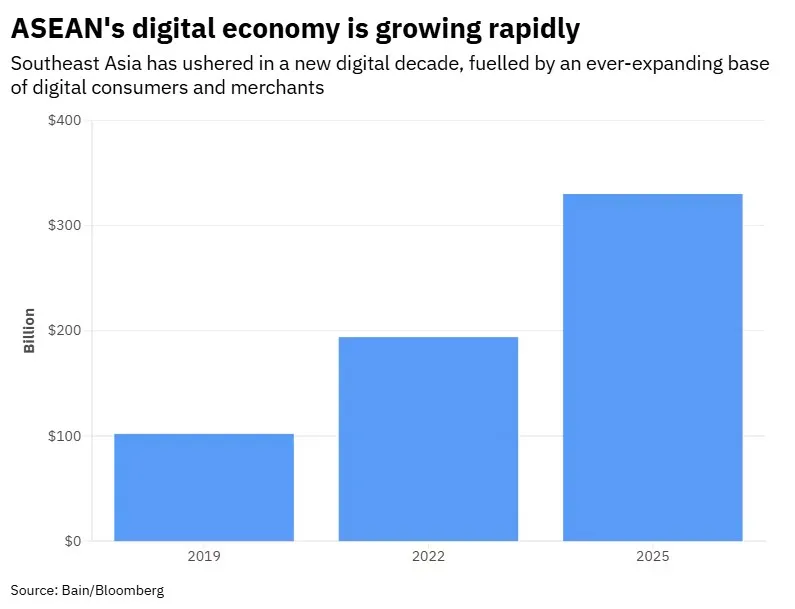
The economic stakes involved are significant as ASEAN’s digital economy continues to grow rapidly. Currently valued at around $300 billion, it is projected to reach $1 trillion by 2030, a figure that could potentially double to $2 trillion with DEFA’s successful implementation.
Indonesia, which leads the region’s digital economy with a $90 billion valuation in 2024, could reportedly see its digital economy triple to $360 billion by 2030, with e-commerce contributing $150 billion.
In 2023, 71% of all venture capital deals across ASEAN were digital economy-related, 11% higher than the global average. Meanwhile, annual announced investments in communication, data processing and hosting services have increased nearly sixfold in the past ten years, from $777 million in 2015 to $4.4 billion in 2024.

The share of fund managers who said they are overweight equities is at its highest level since November 2021.
When asked what they expected the world economy to do in the next 12 months—a soft landing (a gentle slowdown) or a hard landing (a sharper slowdown)—most respondents chose neither. Instead, a record 56% of fund managers predicted “no landing,” or continued growth.
Some 72% of respondents said they didn’t expect the Fed to hike interest rates before the November midterm elections.

Fed Minutes Lean Hawkish, But We Don't Expect A Hike

The decline partly reflects the index’s large exposure to banks, whose shares have underperformed even as retained earnings have added to their book values.
Nifty’s one-year forward P/B is now below 2.96 times, compared with its five-year average of 3.18 times and 10-year average of 2.99 times. The six-year low suggests the Nifty is trading at a more moderate valuation relative to the book value of its constituents.
The composition of the index has contributed to the decline. Banks and financial services account for around 35% of the Nifty’s weight, the largest sector weight, while earnings growth in the sector has been stronger than rest of the index.
 ET Bureau
NOT LOW RATIO ALONE Investors should also look at profitability, earnings cycle: experts
“The composition of the Nifty has been one of the reasons for the lower P/B,” said Siddharth Purohit, fund manager-equity at InvestValue Capital. “While BFSI has a dominant position in Nifty’s weight, their earnings growth in the sector over the past three years has been better than other components,” he said.
Retained earnings at banks have added to their net worth or book value, increasing the denominator used to calculate P/B. With shares of large banks such as HDFC Bank, Axis and Kotak Mahindra underperforming, their stock prices have not kept pace with the increase in book values, contributing to the decline in the Nifty’s P/B.
The Nifty is down 2.64% over the past year and 1.31% over the past two years. The current P/B reading, however, also needs to be viewed in the context of a change in Nifty’s book-value methodology. NSE shifted the calculation from standalone to consolidated financials in September 2023, which lowered the reported P/B from 4.31 times to 3.45 times without any change in share prices. On the earlier standalone basis, the current P/B would be around 3.7 times, slightly above the long-run average of about 3.5 times, according to market experts.Read more: India stocks top Indonesia as Asia’s least-favoured in BofA poll
For investors, the lower P/B suggests valuations have become more moderate relative to companies’ net worth, but it does not by itself mean the market is cheap.
A lower P/B can result from rising book values, falling share prices or a combination of both, and needs to be assessed alongside earnings growth and the outlook for profitability.
Vivek Iyer, partner & CIO at Rational Asset Management, said investors should look beyond the headline valuation multiple and focus on earnings cycle.
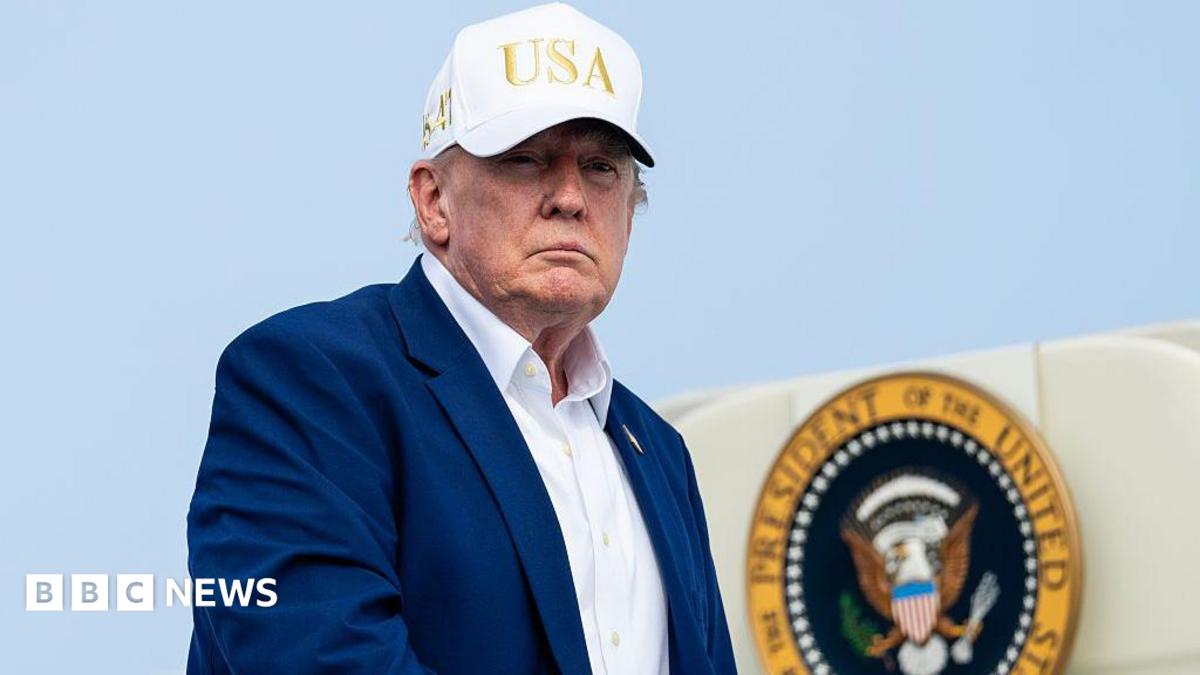
President Donald Trump has announced the US will inflict “TREMENDOUS Economic Consequences” on any country that helps or does business with Iran.
He wrote in all capital letters on Truth Social he was launching “the most crushing economic operation ever taken against any country!” He gave no further details, and did not name any other nation.
It comes after a 60-day ceasefire with Iran expired on Monday, with no sign of a diplomatic or military off-ramp to the conflict that the US and Israel began at the end of February.
Trump’s latest move appears to extend the pressure campaign of Operation Economic Fury, launched in April to sanction foreign banks or firms that do business with Tehran.
In Wednesday evening’s socal media post, Trump said he was launching “economic D-Day” on Iran because the Islamic Republic had failed to make a deal with the US.
“ANY country that allows its financial institutions, businesses, airports, or government entities to provide any type of lifeline to Iran will itself face TREMENDOUS Economic Consequences,” Trump said.
He did not specify what punishment countries would face.
Trump continued: “Oil smuggling, swap lines, cash transfers, exchange houses, ship registries, front companies – It all needs to stop NOW. You know who you are.”
The president’s comments come nearly a week after Treasury Secretary Scott Bessent said the US would impose economic isolation on the country “like the world has never seen before”.
The BBC has asked the White House and US treasury department for comment.


Good morning. The WSJ Leadership Institute’s Katie Deighton reports:
Publicis Sports is teaming up with Kansas City Chiefs tight end Travis Kelce to tackle the Wild West of college athlete endorsements.
Copyright ©2026 Dow Jones & Company, Inc. All Rights Reserved. 87990cbe856818d5eddac44c7b1cdeb8

VT Chats with DT Domonique Orange: “Don’t Get it Twisted: I Can Pass Rush”

Japan just launched a U.S. military payload into orbit, giving Washington another set of eyes over the Indo-Pacific

Most People Don’t Realize What’s About To Hit XRP! (Price Prediction)





-

 Fashion5 days ago
Weekend Open Thread: Ann Taylor
-
 Sports6 days ago
This U.S. Amateur is a glimpse into golf’s future in more ways than you think
-

 Tech6 days ago
11 Ways to Rank Your Videos
-
 NewsBeat5 days ago
Myanmar says over 300,000 Rohingya refugees verified for repatriation as exodus enters ninth year
-

 Sports5 days ago
Birmingham 2026: Day 6 Timetable for Irish Athletes
-

 Politics5 days ago
SEQ Code: The Three Letter Boarding Pass Code That Could Give You The Worst Seat
-

 Tech6 days ago
DeepSeek Harness launches as open source rival to Claude Code, alongside V4-Pro on API with higher prices
-

 Crypto World2 days ago
OCC Greenlights Trump Family Crypto Firm for Trust Charter
-

 Tech2 days ago
Qwen3.8-27B runs frontier-class coding agents and reasoning locally, no cloud API required
-

 Fashion7 days ago
The Details Do the Dressing
-
 Entertainment6 days ago
10 Netflix Shows That Quietly Became Modern Classics
-

 Fashion5 days ago
Weekly News Update, 8.14.26 – Corporette.com
-
 Tech4 days ago
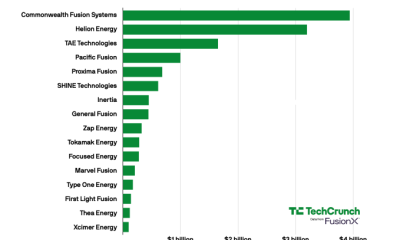
Every fusion startup that has raised over $100M
-
 Entertainment5 days ago
Marvel Studios Reveals New X-Men Cast Including Adam Driver and Sadie Sink
-

 Business6 days ago
15 Ways to Make Money From Your Phone (2026 Guide)
-

 Business5 days ago
Facebook Down Now? Users Report Login And Loading Problems As Outage Trackers Monitor Ongoing Issues
-

 Crypto World5 days ago
Pi Network Protocol 27 endgame: last upgrade before what?
-

 Business2 days ago
SMA Solar Technology AG (SMTGY) Q2 2026 Earnings Call Transcript
-

 Crypto World6 days ago
Robinhood Chain Approaches $1B TVL as Uniswap Integration Boosts Liquidity
-

 Fashion5 days ago
Cart Confidential Vol. 44 – Julia Berolzheimer
You must be logged in to post a comment Login