

Business
Septerna president Bhatt sells $115,860 in shares




Not everyone enjoys constant interaction with customers, clients, or audiences. For many introverts, the thought of daily sales calls, meetings, and live chats can feel exhausting rather than exciting. The good news? You don’t need to be highly social to succeed in business—especially in today’s digital economy.
If you prefer working quietly, independently, and with minimal communication, passive income businesses can be the perfect fit. These business models focus on automation, digital systems, and scalable assets that continue earning even when you’re not actively engaging with customers.
In this article, you’ll discover practical passive income business ideas for introverts in the Philippines that require little to no real-time interaction. These are ideal if you want a sustainable income stream without constant calls, chats, or face-to-face selling.
Why Passive Income Works Well for Introverts
Passive income refers to earnings generated with minimal daily involvement once the system is set up. While it still requires effort at the beginning, the goal is to create digital assets or automated workflows that continue producing income over time.
For introverts, this approach has several advantages:
- Less need for real-time conversations with customers
- More focus on deep work and creativity
- Flexible schedule and independent workflow
- Reduced social fatigue compared to traditional businesses
- Scalable income without constant client management
Instead of spending hours talking to customers, you build systems that work for you—such as digital products, automated stores, or content platforms that generate revenue in the background.
Key Features of an Introvert-Friendly Passive Business
Before choosing a business idea, it’s important to understand what makes a model ideal for introverts. Look for these characteristics:
- Automated order processing or delivery
- Minimal or asynchronous communication (email instead of calls)
- No need for face-to-face selling
- Digital products or services that scale easily
- Systems that can run with scheduled maintenance only
With these criteria in mind, let’s explore the best passive income business ideas tailored for introverts in the Philippines.
1. Print-on-Demand Online Store
A print-on-demand store allows you to sell custom-designed products such as t-shirts, mugs, tote bags, and phone cases without handling inventory or shipping. Once your designs are uploaded and the store is connected to a supplier, the fulfillment process becomes mostly automated.
You simply create designs, upload them to your store, and the system takes care of printing and shipping when orders come in. Communication with customers is minimal and often limited to email support.
This business is ideal for introverts who enjoy design, creativity, or niche-focused branding. You can target specific communities such as gamers, pet lovers, or professionals in certain fields—without needing to talk to them directly.
Blogging remains one of the most reliable passive income sources, especially when monetized through ads and affiliate marketing. You create helpful content around a niche topic, attract search traffic, and earn through display ads or product recommendations.
The best part is that once articles are published and ranked in search engines, they can generate traffic and income for months or even years with minimal updates. Communication is mostly one-way—your readers consume the content without requiring live interaction.
Introverts who enjoy writing, researching, or sharing knowledge will find blogging a peaceful yet profitable venture.
Digital products are one of the most powerful passive income streams because they can be created once and sold repeatedly. Examples include ebooks, templates, planners, stock photos, or online courses.
After creating the product and uploading it to a digital marketplace or your own website, delivery becomes automatic. Customers purchase, download, and use the product without requiring constant support or communication.
This model works well for introverts who prefer creating value behind the scenes rather than engaging in active selling conversations.
4. Faceless YouTube Channel
A faceless YouTube channel is a content strategy where you produce videos without showing your face or speaking directly on camera. You can use screen recordings, animations, stock footage, or text-based storytelling to deliver content.
Once videos are uploaded and optimized, they can continue generating ad revenue and affiliate commissions long after publication. Comments can be managed asynchronously, reducing the pressure of real-time interaction.
This approach is ideal for introverts who want to create content but prefer staying behind the scenes.
5. Affiliate Niche Websites
Affiliate niche websites focus on reviewing products or providing solutions for a specific audience. When readers click your affiliate links and make a purchase, you earn a commission.
The beauty of this model is that once your content ranks in search engines, visitors come organically. You don’t need to actively promote products through direct messages or live selling. The website works as your silent salesperson 24/7.
Introverts who enjoy analysis, comparisons, and structured content creation can thrive in this type of business.
6. Stock Photography and Digital Assets
If you have a creative eye, selling stock photos, illustrations, or design assets can be a quiet yet profitable passive income stream. You upload your work to stock platforms, and each download earns you royalties.
There is little to no direct communication with buyers, and your portfolio continues to earn over time as long as it remains available online.
This is perfect for introverts who enjoy photography, graphic design, or digital art and prefer working independently.
How to Choose the Right Passive Income Idea
Not all passive income ideas will suit your personality or skills. To find the best fit, ask yourself the following questions:
- Do I enjoy writing, designing, or creating digital content?
- Do I prefer structured, solo work rather than collaboration?
- Am I willing to invest time upfront for long-term returns?
- Can I commit to consistent but minimal maintenance?
Your answers will help you identify which model aligns with your strengths and comfort level.
Tools That Help Automate Your Passive Business
Automation is key to maintaining a low-interaction business. Here are common tools that support passive workflows:
- Content management systems for blogs and websites
- Email autoresponders for customer inquiries
- Design platforms for creating digital products
- Analytics tools to monitor performance without manual tracking
- E-commerce integrations for automated order fulfillment
By using these tools, you can reduce manual tasks and avoid constant communication while still delivering value to customers.
Realistic Expectations About Passive Income
While passive income sounds appealing, it is important to understand that it is not completely effortless. Most passive businesses require significant effort during the setup phase—creating content, building systems, and optimizing platforms.
However, once the foundation is established, the workload becomes lighter and more predictable. Instead of daily customer interactions, your role shifts to occasional updates, performance checks, and content improvements.
This balance makes passive income especially suitable for introverts who prefer focused work sessions over constant communication.
Tips for Introverts Starting a Passive Income Business
- Start with one business model to avoid overwhelm
- Batch your work to stay in a focused, uninterrupted flow
- Use templates and automation tools whenever possible
- Communicate through email or helpdesk systems instead of calls
- Build systems that run even when you take breaks
Remember, the goal is not to avoid people entirely, but to design a business structure that respects your energy and working style.
Quiet Businesses Can Still Be Profitable
You don’t need to be loud, outgoing, or highly social to succeed in business. Many profitable ventures today are built on quiet consistency, smart automation, and valuable digital assets.
For introverts in the Philippines, passive income businesses offer a realistic path to financial growth without the pressure of constant customer interaction. By choosing the right model and setting up efficient systems, you can earn steadily while working in a calm, focused environment.
Start small, stay consistent, and let your systems do the talking. Over time, your quiet business can become a reliable income stream—proving that success doesn’t always require constant conversation.

Business News Philippines was launched in October 2015 as a portal for readers to learn more about operating a business in the Philippines.

UBS sets bold $6,200 gold target as Middle East tensions rise

As Sentiment Softens, OneSpan's Cash Flow And Dividends Stand Out
Business
F&O Talk | What the current long-short ratio tells about FII positioning? Sudeep Shah on Ola, Newgen, 4 more top weekly movers

In light of the US Supreme Court’s Friday decision to rule Trump’s tariffs as illegal, sentiments are likely to remain positive, but higher volatility cannot be ruled out.
Analyst Sudeep Shah, Vice President and Head of Technical & Derivatives Research at SBI Securities, interacted with ETMarkets regarding the outlook for the Nifty and Bank Nifty, as well as an index strategy for the upcoming week. The following are the edited excerpts from his chat:
Q: Nifty managed to end the week with gains of 0.4% but failing to cross the 25,600 mark. What do Nifty charts suggest for next week of action?
Last week, the benchmark index Nifty traded within a narrow range of 512 points, which was the tightest weekly range seen over the past four weeks, resulting in the formation of an NR4 pattern. Interestingly, despite the compressed range, volatility remained elevated. During the first three trading sessions, the index witnessed a gradual pullback, however, Thursday saw a sharp reversal, erasing all the gains made earlier in the week. On Friday, the index once again found support near the lower end of the weekly range and staged a rebound. This erratic price behaviour hints that something more structural may be unfolding beneath the surface.

In fact, since February 4, the index has been consolidating within a defined range of 26,009 to 25,373. Even within this tight band, volatility continues to remain high. Owing to the sustained consolidation over recent sessions, all the key moving averages have flattened out. Momentum indicators and oscillators also point towards a sideways phase, with the daily RSI moving in a narrow range for the past 13 trading sessions. Such prolonged compression often acts as a precursor to a decisive directional move.
Going ahead, we expect the index to remain in a sideways trajectory in the near term, with stock-specific action likely to stay vibrant. However, following the Supreme Court’s ruling against the Trump-era tariffs, the market may open with a notable gap-up of nearly 350 to 400 points, buoyed by positive global sentiment.
In terms of crucial levels, the 25,400 to 25,350 zone will continue to act as an important support area, as multiple prior swing lows converge in this region. A sustained breakdown below 25,350 could pave the way for a sharper decline towards the 25,000 mark. On the upside, the 25,950 to 26,000 band is expected to serve as a key resistance zone for the index. The index’s behaviour around these pivotal levels will play a decisive role in shaping the next meaningful directional move.
Q: AI summit grabbed headlines this week and one of the takeaways was Nvidia and Anthropic announcing partnerships with India companies. Beyond the headlines and sentimental rally, how do you see this development and any stock/s that will now be under your radar?
The AI Summit announcements signal a structural shift rather than just a sentiment-driven move. NVIDIA has partnered with Indian players including Larsen & Toubro and Yotta to build sovereign AI infrastructure and GPU capacity in India. Meanwhile, Anthropic has tied up with Infosys to develop enterprise AI solutions using Claude models.
Over the medium term, this could unlock new revenue streams for IT services and digital infrastructure companies. Stocks such as Infosys, Tata Consultancy Services, and L&T remain on the radar.
That said, the IT index continues to face pressure amid AI-led disruption concerns and has not yet shown clear signs of stabilisation. The real impact will play out gradually, and investors should track sustained deal momentum and strong buying interest before expecting a durable trend reversal.
Q: What is your overall view on midcap and largecap IT stocks?
Overall, the IT space remains under significant pressure across both largecap and midcap names. The Nifty IT Index has cracked nearly 17% in the last three weeks and has decisively broken below its key long-term support, the 200-week EMA on the weekly chart. Momentum indicators are also weak: RSI has slipped below 40, MACD is below the zero line, and a rising ADX suggests the bearish trend is gaining strength.
Heavyweights and midcap players such as Tata Consultancy Services, Infosys, Wipro, Mphasis, LTIM, and LTTS have all slipped below their 200-week moving averages. FIIs have also sold Rs 10,956 crore in the IT space in the first fortnight of February 2026.
The structure is clearly weak for now. Avoid bottom fishing or trying to catch a falling knife. Despite recent AI-related announcements, the benefits are long term in nature. It is prudent to wait for the IT index to stabilise and for clear signs of strong buying interest before planning fresh exposure.
Q: What is your view on Bank Nifty?
The banking benchmark index, Bank Nifty, continues to deliver a standout performance, significantly outperforming the frontline indices. While the broader Nifty trades nearly 3% below its all-time high, Bank Nifty is positioned right near record levels, underlining the sector’s impressive strength. This relative outperformance is further validated by the Bank Nifty Nifty ratio chart, which has surged to a 33-month high, which is a strong indication that leadership within the market currently rests with the banking pack.
With the index hovering around lifetime highs, all moving average-based technical setups are aligned in favour of the bulls. The daily RSI is steady around the 60 mark, reflecting steady momentum, while the weekly RSI has already pushed deeper into bullish territory, reinforcing the strength of the ongoing trend.
Given this robust chart structure and momentum alignment, Bank Nifty appears well placed to extend its upward trajectory in the coming sessions. In terms of key levels, the 20-day EMA zone at 60,500 to 60,400 acts as a vital support area. On the upside, the immediate resistance is placed at 61,600 to 61,700. A sustained breakout above 61,700 could trigger a strong upward rally, potentially opening the doors to fresh all-time highs and the next leg of bullish momentum.
(Disclaimer: The recommendations, suggestions, views, and opinions given by the experts are their own. These do not represent the views of The Economic Times.)

UBS analyst sees steady execution at Walmart based on Q4 results

Wall Street has been eagerly selling private credit as a hot opportunity for individual investors. That sales pitch just got tougher.
Blue Owl Capital OWL -4.80%decrease; red down pointing triangle, a poster child for the industry, said it is liquidating $1.4 billion in assets to raise money to pay out individuals who bought into some of its funds in their heyday but now want to get out. The firm hoped the sale would shore up wobbling investor confidence.
Copyright ©2026 Dow Jones & Company, Inc. All Rights Reserved. 87990cbe856818d5eddac44c7b1cdeb8
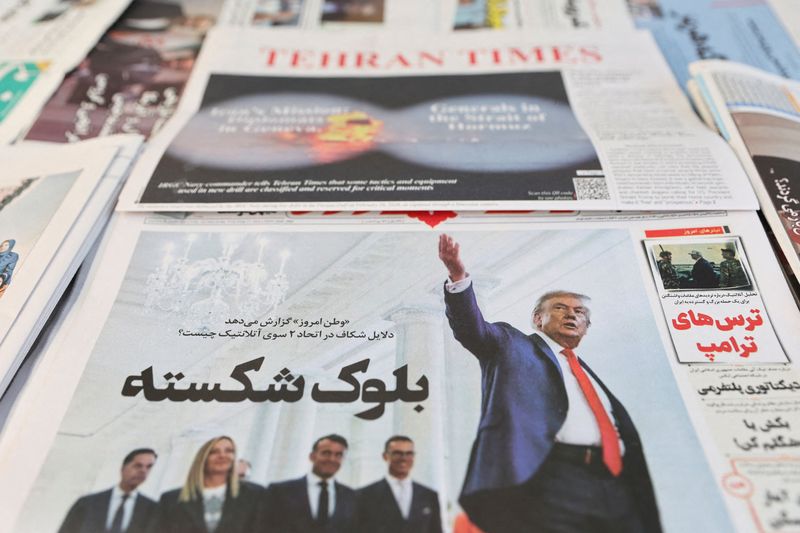

Analysis-Trump pushes US toward war with Iran as advisers urge focus on economy

Significance of Strait of Hormuz
The Strait of Hormuz sits between Iran to the north and Oman/UAE to the south. Although it does not run through Iranian territory, the strait directly borders Iran’s coastline, giving Tehran significant strategic influence. Most commercial shipping lanes lie within Omani territorial waters, but portions fall under Iran’s jurisdiction, enabling Iran to exert pressure when tensions rise. Historically, Iran has threatened to disrupt traffic by conducting naval drills, deploying military vessels, laying mines, or harassing oil tankers—tactics seen during earlier regional confrontations. Although Iran cannot legally shut the strait entirely, even limited obstruction could severely disrupt global oil flows.
The strait’s relevance becomes critical during periods of escalating U.S.–Iran tensions because nearly 20% of the world’s petroleum liquids and almost 30% of seaborne crude oil pass through this narrow waterway every day. With few alternative routes available for Gulf exporters, global energy supplies remain highly vulnerable to any disruption. Even the threat of a blockade or increased military movement often triggers immediate price volatility.
A complete shutdown remains a low-probability scenario due to a strong U.S. naval presence and Iran’s own dependence on the strait for exporting crude. However, temporary interruptions or heightened military activity can still elevate war-risk insurance premiums, slow tanker movement, and push oil prices upward.
Countries Likely to Be Adversely Impacted
Major crude importers such as India and China would be among the earliest and most affected. Both economies rely heavily on supplies from the Gulf region, and any perceived threat to uninterrupted shipping can trigger short-term spikes in domestic fuel markets. This trend mirrors previous periods of Middle Eastern instability, where fears of supply disruptions drove temporary oil price surges even when physical flows remained largely intact.
These price shocks, however, are often short-lived. Once diplomatic channels re-engage or confirmation emerges that shipping lanes remain operational, markets typically retreat, easing part of the geopolitical risk premium.
Impact on India’s Crude Oil Prices
If a military conflict between the United States and Iran erupts, the immediate impact on India would be a rapid rise in crude oil prices due to concerns over potential supply disruption through the Strait of Hormuz. A sudden spike in global crude benchmarks would raise India’s import costs and push up domestic crude and fuel prices. Such geopolitical shocks also heighten speculative activity in oil futures, with crude derivatives witnessing increased trading volumes as traders attempt to hedge against volatility. Broader markets may remain steady during such episodes since the risk is mostly concentrated within the energy complex.
If higher crude prices persist, the effect will extend beyond the oil market. Increased petrol and diesel costs typically translate into higher transportation and manufacturing expenses, raising inflationary pressures within the Indian economy. The longer global benchmarks remain elevated, the greater the potential for sustained inflationary impact.
Alternative Sources
In a worst-case scenario involving disruption in the Strait of Hormuz, India has the advantage of diversified sourcing. Over recent years, India has increased crude imports from countries such as Russia, the United States, Brazil, and West African producers. This diversification helps buffer risks associated with Persian Gulf tensions. The government has also signalled its readiness to rely on strategic petroleum reserves and explore additional non-Gulf suppliers if required. Other measures could include reducing refined product exports to prioritise domestic fuel availability and using alternative ports or supply routes where feasible.
Overall, while the geopolitical bias currently leans toward higher crude prices, the extent and duration of this rise will depend largely on whether the Strait of Hormuz experiences meaningful and sustained disruption. In the absence of an actual supply shock, any price rally is likely to be temporary and driven mainly by sentiment rather than structural supply constraints.
(The author is Head of Commodity Research, Geojit Investments)


For Europe Inc, US tariff relief comes with a sting in the tail

Foreign investment applications in Thailand experienced a robust 46% year-on-year increase in January 2026, reaching a total value of 33.8 billion baht.
This growth was driven primarily by investors from China, Japan, and Singapore, with a significant portion of projects aligned with the Thai government’s focus on future industries such as electric vehicles, artificial intelligence, and clean energy.
Key Points
- A total of 113 foreign investors were granted permission to operate in Thailand in January, representing a 10% increase in the number of applications compared to the previous year.
- Japan contributed the highest investment value at 15.3 billion baht from 25 applications, while China recorded the highest number of individual applications with 26 projects valued at 5.39 billion baht.
- Other leading investors for the period included Singapore (5.51 billion baht), Hong Kong (587 million baht), and the United States (420 million baht).
- Approximately 49% of the approved projects were promoted through the Board of Investment (BoI), accounting for 17.2 billion baht of the total investment value.
- Investment activities are heavily concentrated in high-tech and “S-curve” sectors, including EV battery-swapping stations, electronic components, software development, and advanced engineering services.
The top three business categories approved through BoI channels were contract manufacturing services, high-value services, and computer-related services.
The five leading countries/regions investing in Thailand during the period were:
- China (26 applications, 5.39 billion baht)
- Japan (25 applications, 15.3 billion baht)
- The United States (16 applications, 420 million baht)
- Singapore (12 applications, 5.51 billion baht)
- Hong Kong (10 applications, 587 million baht).
Specific Chinese investments focused on wood processing, EV infrastructure, and electronics, while Japanese investments centered on manufacturing procurement, software, and electric motor production. Nearly half of these projects were facilitated through the Board of Investment (BoI). These outlays align with Thailand’s national policy to attract growth in future-oriented sectors such as advanced technology, artificial intelligence, electric vehicles (EVs), clean energy, and digital services.
Other People are Reading

Bitcoin Price Flashes Its Biggest Warning of 2026

General Hospital: Disgraced Willow & Chase Flee Port Charles Together in Shocking Exit?

How a good file helped me break free of Yahoo! Mail


-

 Video5 days ago
Bitcoin: We’re Entering The Most Dangerous Phase
-

 Tech6 days ago
Luxman Enters Its Second Century with the D-100 SACD Player and L-100 Integrated Amplifier
-

 Crypto World4 days ago
Can XRP Price Successfully Register a 33% Breakout Past $2?
-

 Sports4 days ago
GB's semi-final hopes hang by thread after loss to Switzerland
-

 Fashion13 hours ago
Weekend Open Thread: Boden – Corporette.com
-

 Video1 day ago
XRP News: XRP Just Entered a New Phase (Almost Nobody Noticed)
-
 Tech4 days ago
The Music Industry Enters Its Less-Is-More Era
-

 Business3 days ago
Infosys Limited (INFY) Discusses Tech Transitions and the Unique Aspects of the AI Era Transcript
-

 Entertainment3 days ago
Kunal Nayyar’s Secret Acts Of Kindness Sparks Online Discussion
-

 Video4 days ago
Financial Statement Analysis | Complete Chapter Revision in 10 Minutes | Class 12 Board exam 2026
-

 Tech3 days ago
Retro Rover: LT6502 Laptop Packs 8-Bit Power On The Go
-
 Sports2 days ago
Clearing the boundary, crossing into history: J&K end 67-year wait, enter maiden Ranji Trophy final | Cricket News
-

 Entertainment2 days ago
Dolores Catania Blasts Rob Rausch For Turning On ‘Housewives’ On ‘Traitors’
-

 Business3 days ago
Tesla avoids California suspension after ending ‘autopilot’ marketing
-
 NewsBeat6 days ago
The strange Cambridgeshire cemetery that forbade church rectors from entering
-

 Crypto World3 days ago
WLFI Crypto Surges Toward $0.12 as Whale Buys $2.75M Before Trump-Linked Forum
-

 Politics4 days ago
Eurovision Announces UK Act For 2026 Song Contest
-
 NewsBeat6 days ago
Man dies after entering floodwater during police pursuit
-

 Crypto World1 day ago
83% of Altcoins Enter Bear Trend as Liquidity Crunch Tightens Grip on Crypto Market
-

 NewsBeat7 days ago
UK construction company enters administration, records show