Connect with us

Business

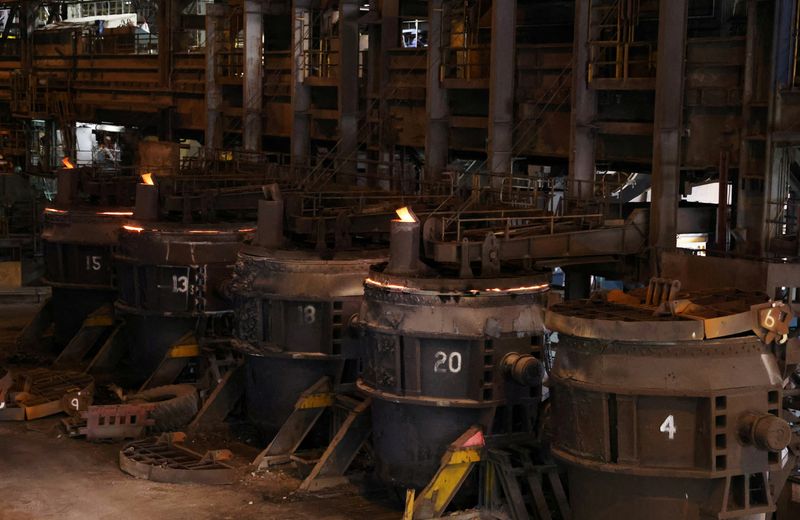
SGH, Steel Dynamics bid $10.6 billion for BlueScope Steel in ’best and final’ offer

Published

on

SGH, Steel Dynamics bid $10.6 billion for BlueScope Steel in ’best and final’ offer
Continue Reading
Click to comment

Leave a Reply

Your email address will not be published. Required fields are marked *

Business

Venugopal Garre on AI, earnings and long-term view for Indian markets

Published

on

Venugopal Garre on AI, earnings and long-term view for Indian markets
Markets worldwide have been grappling with turbulence in recent weeks, driven largely by geopolitical tensions and soaring oil prices. Venugopal Garre, MD, Bernstein shared his perspective on the evolving scenario, offering guidance for investors navigating these uncertain times.

“What a rough ride the markets have been having, and I know the bigger thought is that all of this is going to rest at some point. Eventually, what matters for the markets is earnings, but I think the question is how do you deal with this? What is playing out right now and oil and the kind of shock from that?” Garre said.

He acknowledged the unprecedented nature of the situation. “This is a pretty unprecedented situation. I do not think I thought about this sort of scenario even at the beginning of this year, as I downgraded India to neutral for reasons which appear so simple now, and things have got extremely complicated at this juncture. The honest view is, if you were to look at the broader narratives hitting India particularly, let us put the world aside, a large part of the story was about AI and how it is going to impact potential job creation in the future in India… the so-called anti-AI trade.”

Garre noted how attention on AI has shifted in recent weeks. “Exactly, we will come back to that in a couple of weeks. But the second thing is, you thought everything else is quieter in the real world with trade treaties getting signed, which were actually positive in some way, and suddenly you had this event shaping up, which is going to now lead to a definite impact. It is not about crude; it is also about broader disruption in the global supply chains. So, yes, there would be earnings impact because of all this; we cannot shy away from that. The reality is, for any investors to think about what to do from here, the simplest way is to lengthen your horizons. Number two is, do not take calls on when the war will end. I do not think anyone knows when the war will end. We all know it will end someday. But if we were to invest today, you have to take a view that war is going to continue for a while and then build your portfolio for the next 12 to 24 months.”

Advertisement

He emphasized patience and a long-term approach. “If you are taking a view that the war is going to end in two days, then the call is very different. Then you would be taking the highest beta, directly impacted sectors like construction or travel or OMCs. Those kinds of things we would be taking a call on, but I do not think we are in that stage yet. So, I would be sort of taking the view that we are not very far away from the bottom. These levels look really interesting for investors in general to build positions in some sectors over the next couple of years.”


Addressing oil sensitivity and supply chain disruptions, Garre said, “Yes, I mean, there is an economic impact for sure, and if I were to just put aside those which are directly impacted…directly impacted are those if you are actually working in the Middle East and doing some physical activity out there. But indirect impacts, it is a difficult thing to measure. For example, the financial sector has seen a deep cut year to date, and it surprises me because if I look at the broader macro context, I do not think we are talking about such a deep GDP cut or a deep credit growth decline or an NPA risk rising within the context of Indian lending. These are the sectors where you would still perhaps look for rebounds, look for safety rather than just playing pure safety through, let’s say, utilities, which is playing out right now. Telecom is another. Why should you have a 17% decline in some of these stocks that we have seen? So, position yourself in those which will rebound, which have fallen, which are not as deeply impacted.”
He highlighted earnings projections for India. “If you look at earnings growth construct for Nifty, FY26 we are going to end at 3-4%, part of it because of the labour code impact we do not really consider it as an exceptional expense. Next year, which is FY27, street has already brought it down to 9-10% growth, and for the year after, as always, it is 15% which is FY28. So, if you think there is going to be an impact on numbers, if we are in a 6-7% CAGR for the next two years as against a 10-12% CAGR, then of course multiples also fall.”On market valuations, he added, “Now, we are not going to reach worst-case multiples like 12-13 times earnings during the GFC. We never as equity investors play for Six Sigma. If we always keep thinking about Six Sigma events, then we would never invest in the markets. We always look for baseline, not so worst-case scenarios, but broader safe worst-case scenarios.”

Discussing foreign institutional investor (FII) trends, Garre said, “Two things have essentially changed. One is cyclical factors. Earnings growth that India has been delivering has been fairly meagre. We have to agree that we were low single-digit earnings in the last 12 months, and if consensus is forecasting 9% growth for Nifty over the next 12 months, that is also not a great number to look at. The second thing is AI as a narrative. At some point, AI will peak, and I am not in the anti-India trade per se. Recently, we have interviewed 30 different tech professionals across the world…My read from that was actually not negative in terms of IT services. I actually felt there is a lot more opportunity which will come in for services. That anti-AI trade is more because of where we are in the AI supply chain. We are not in the foundation model supply chain, not even in the infra supply chain right now. This is a first leg. We are going to be in the application supply chain, and that is not yet started materially. As that happens, India will start to benefit from it.”

On AI adoption, he explained, “So, it has already started, but it is very early-stage experimentation. Corporates are not doing any upheaval in their entire business models to implement AI. They are just trying and testing AI agent solutions in smaller areas, customer support functions, and trying to spruce up capacity. Nobody has deeply embedded AI in their workflows. The tipping points take a year, year-and-a-half.”

Finally, Garre commented on IT services valuations: “Valuations in the context of potential improvement in cyclical growth over the next two-three years…attractive is probably a tricky word to use because they are not cheap in any context compared to what earnings growth is in the near term. Probably the market looks better than IT services today on valuations honestly. But I am talking about revenue growth accelerating and margins moving up in the next three years.”

Advertisement

As global markets contend with oil shocks, war uncertainties, and evolving AI narratives, Garre’s guidance emphasizes a measured approach: focus on resilience, identify sectors poised to rebound, and maintain a long-term horizon for Indian investors.

Continue Reading

Business

Chart Industries: The Baker Hughes Conundrum

Published

on

Chart Industries: The Baker Hughes Conundrum

Chart Industries: The Baker Hughes Conundrum

Continue Reading

Business

PCEC cost rose $507m in months, records show

Published

on

PCEC cost rose $507m in months, records show

State government records obtained from last year have revealed the estimated cost of redeveloping the convention centre ballooned by half a billion dollars in six months.

Continue Reading

Business

Opinion: Roger Cook’s express exit from his own electorate

Published

on

Opinion: Roger Cook’s express exit from his own electorate

OPINION: The premier says travel time is behind his move from Kwinana to a pad near parliament.

Continue Reading

Business

Berkshire Bought Back $225 Million of Stock on March 4, the Day It Resumed Buybacks

Published

on

Berkshire Could Repurchase Over $50 Billion of Stock Annually Based on Recent Buy

Berkshire Bought Back $225 Million of Stock on March 4, the Day It Resumed Buybacks

Continue Reading

Business

FTSE 100 Holds Steady Near 10,260 as Markets Await BoE Decision Amid Oil Surge and Geopolitical Strain

Published

on

Just 1.1 percent of senior executives on FTSE 100 firms are black

Britain’s benchmark FTSE 100 index remained little changed in early trading Monday, March 16, 2026, as investors positioned cautiously ahead of this week’s Bank of England policy meeting while digesting the fallout from elevated oil prices and ongoing Middle East tensions.

Just 1.1 percent of senior executives on FTSE 100 firms are black
FTSE 100
POOL / HENRY NICHOLLS

The FTSE 100 stood around 10,261 shortly after the London open, virtually flat from Friday’s close of 10,261.15, which marked a 44-point or 0.43% decline. The index has now declined for three consecutive sessions, though it logged only a modest 0.2% loss for the week ending March 13. Futures had pointed to mild consolidation overnight, reflecting broader global caution.

The latest close data from March 13 showed the index opening at 10,305.48, peaking at 10,367.36 and dipping to a low of 10,200.21 before settling lower on volume of roughly 814-817 million shares. That level sits about 6-7% below the 2026 peak near 10,935 hit in late February, but the benchmark remains up nearly 19% year-over-year and has demonstrated resilience relative to more tech-heavy indices elsewhere.

Persistent geopolitical risks in the Middle East, particularly involving Iran and related conflicts, have kept Brent crude elevated around $103 per barrel recently, providing a tailwind to the FTSE 100’s heavy energy weighting. Majors like BP and Shell have benefited from the oil surge, offering some offset to broader equity pressures from inflation concerns and softer domestic growth signals.

U.K. economic data continues to weigh on sentiment. The Office for National Statistics reported flat GDP in January, falling short of consensus forecasts for 0.2% growth and raising questions about the recovery pace. This stagnation has complicated the outlook for monetary policy, even as sticky inflation—exacerbated by energy costs—has markets pricing in about an 80% probability of a 25-basis-point rate hike by year-end.

Advertisement

At its March meeting later this week, the BoE is widely anticipated to hold rates steady, with focus shifting to the MPC vote split. Analysts see outcomes like 7-2 or 6-3 in favor of no change as plausible, signaling the committee’s balancing act between supporting growth and guarding against renewed price pressures. Any hawkish tilt could further pressure rate-sensitive sectors.

Sector moves on Friday highlighted the divergent forces at play. Resource and mining names led declines amid profit-taking and broader risk aversion, with Fresnillo down around 5.6%, Antofagasta off 5.5% and Rolls-Royce slipping 5.2%. Other laggards included IMI and Mondi, both down roughly 4.5-4.7%. Housebuilder Berkeley Group fell more than 2% despite reaffirming full-year profit guidance, with executives citing the Middle East situation as a drag on overall market risk appetite.

Defensive plays provided some support, as Hikma Pharmaceuticals rose 2.5%, Imperial Brands gained 2.2% and Bunzl advanced similarly. Energy stocks showed relative strength, underscoring the index’s commodity-linked buffer against pure domestic or growth-oriented weakness.

The FTSE 100’s multinational profile—with substantial overseas revenue—continues to act as a natural hedge in uncertain times. Its dividend yield, hovering near 2.81%, appeals to income seekers amid shifting rate expectations. Compared to global peers facing sharper corrections in tech-driven names, London’s blue-chips have held up better, partly due to energy tailwinds from oil above $100.

Advertisement

Broader market context includes elevated volatility, with the VIX remaining firm and other indices like the S&P 500 and Nasdaq showing weekly declines amid similar inflation and oil dynamics. The FTSE 100’s outperformance relative to some benchmarks highlights its sector composition as a partial inflation hedge.

Looking forward this week, the BoE announcement will dominate, potentially setting the near-term tone for sterling and equities. Any escalation—or signs of de-escalation—in Middle East diplomacy could sway oil prices and, by extension, resource-heavy stocks. Upcoming U.S. data and Fed signals may also influence cross-Atlantic flows.

Technically, support around 10,200 held during Friday’s dip, while resistance lingers near 10,400-10,500. A break higher would require positive catalysts, such as dovish central bank commentary or easing geopolitical headlines.

Despite recent pullbacks, the index’s longer-term trajectory remains upward, having recovered strongly from earlier lows around 7,500 and posting gains of over 20% in the past year in some measures. Investors remain watchful for commodity-driven volatility and policy cues that could dictate the next leg.

Advertisement

As trading resumes Monday, the FTSE 100’s performance reflects ongoing themes: energy resilience amid geopolitical strain, domestic growth softness and central bank caution in a high-inflation environment. For U.K.-focused portfolios, the benchmark’s global tilt offers diversification, though near-term risks from oil-driven inflation and policy uncertainty persist.

Continue Reading

Business

Oil, Inflation, and War: Chakri Lokapriya’s roadmap for selective investing

Published

on

Oil, Inflation, and War: Chakri Lokapriya’s roadmap for selective investing
Global markets are navigating a phase of heightened uncertainty as rising oil prices and escalating tensions in West Asia begin to ripple through sectors and economies. With crude hovering around the psychologically important $100 mark, investors are becoming increasingly cautious, and market experts believe the environment calls for prudence rather than aggressive buying.

Speaking to ET Now, Chakri Lokapriya, CIO-Equities, LGT Wealth emphasised that the current situation demands restraint from investors even though valuations in several stocks may appear attractive.

“I hope it turns out to be some respite. But clearly the word is caution with oil hovering around $100. At best you can maybe buy a little incrementally but not really go all in,” Chakri Lokapriya said.

Attractive Prices, But Risks Remain

Advertisement

Market corrections in several sectors have created pockets of value, particularly in industrial and auto stocks. However, Lokapriya cautioned that lower prices alone do not necessarily make stocks compelling investments in the current environment.

“It is a very good point; that is the whole issue because you take a company like L&T. Its order book comes from the Middle East but it is an expensive stock. And the same issue applies to auto companies as well where they also export,” he said.
He explained that rising shipping and freight costs, surging oil prices, and a weakening rupee are beginning to weigh on corporate profitability. Over the past year, the Indian currency has depreciated by nearly 8–9%, adding to cost pressures for companies dependent on imports or global supply chains.
“Outside of export, shipping, freight rates, oil prices, and input costs have all gone up very sharply, including the rupee which has fallen about 8–9% over the last year. So the growth estimates at least for the next one year have come down or rather will come down. Against that backdrop, therefore, lower valuations are warranted,” Lokapriya said.
He added that if the geopolitical conflict continues for several months, the market’s upside potential for the remainder of the year could be significantly lower than what investors expected at the beginning of the year.

Oil Shock Ripples Across Sectors
The surge in crude prices has already started affecting multiple sectors that depend directly or indirectly on petrochemical inputs.

“Like you mentioned, it is petchem, agro, all the urea-related sectors, including oil-to-chemicals, tyres, paints, and some of the pipe companies. All these companies are directly or indirectly exposed to various oil and oil derivative products and chemicals and petrochemicals,” he noted.

Input costs in many of these segments have risen sharply within a short span.

Advertisement

“Against this backdrop, everything has gone up 50–60% in just a matter of less than a month and therefore this quarter might be okay because they have already bought it last quarter, but the next quarter the current buying would impact their margins,” Lokapriya said.

Even sectors that are not directly linked to crude oil are likely to face secondary effects.

“For the companies and sectors not directly impacted like banking, there is collateral damage. Lower economic activity translates to lower credit growth. Even consumer staples have a higher input cost and therefore while staples are considered to be low risk, in this environment not,” he explained.

Given these uncertainties, Lokapriya believes investors should remain selective and patient.

Advertisement

“So it is best one generally stays away or incrementally buys into the market.”

Valuations vs Growth Uncertainty
Stocks with strong order books and international exposure have also come under scrutiny as investors assess the potential impact of the conflict.

Taking the example of water treatment company VA Tech Wabag, Lokapriya acknowledged that valuations may appear attractive at current levels but warned that growth projections may still need to adjust.

“Yes, I mean, VA Wabag the valuation is also very attractive at current levels and when we use the word valuations are attractive, it implies that the medium-term growth estimates remain intact which is unlikely the case,” he said.

Advertisement

“Let us assume already a couple of weeks have gone into the war, which means this quarter numbers have come down. That knockdown effect will continue for the rest of this year and therefore the year after.”

He added that markets are still trying to determine the eventual bottom for growth estimates.

Banking Sector Faces Growth Concerns
Private banking stocks have also seen heightened volatility, which Lokapriya attributes largely to fears of slowing economic activity.

“It is expectation of a lower economic activity whether it is restaurants seeing lower business, higher inflation, and in general if the war continues and more importantly the oil continues to remain high, that will translate to inflation,” he said.

Advertisement

While fuel prices at retail pumps have not yet fully reflected the surge in crude prices, the pressure is being absorbed elsewhere in the system.

“Inflation has not yet shown directly at the petrol pump simply because the government is holding prices; it is the refiners who are taking the hit. Now at some point it will start translating even into inflation if oil prices remain high. I think that is the biggest fear,” Lokapriya added.

Airlines Under Pressure
The aviation sector, which is highly sensitive to fuel costs, could also see earnings pressure if crude prices remain elevated.

“Exactly that point which is the inflation in prices; the cost that aviation is facing is not fully passed on yet to the consumer. On the other hand, the consumer is already facing that extra inflation because of the surcharges,” Lokapriya said.

Advertisement

He warned that if airlines fully pass on higher costs to passengers, it could weaken demand and hurt earnings.

“Against this backdrop, earnings for InterGlobe are likely to be cut for the next quarter, not just this quarter.”

When asked whether the stock is a buy at current levels, Lokapriya advised caution.

“No, clearly not because if we know where the oil prices are going to settle at, then yes. If oil prices spike or go down, we do not know. So I would not really buy with 30–40% of the cost being fuel there.”

Advertisement

Incremental Buying the Safer Approach
While investors may be tempted to shift towards domestic sectors perceived as safer, Lokapriya warned that even those segments are not entirely insulated from the broader economic impact.

“You are right and in fact some of the inward sectors whether it is staples or even banks would also face some kind of collateral damage because input costs for staples go up and therefore for banks and financial services generally lower demand,” he said.

Despite the uncertainty, he acknowledged that valuations are slowly becoming more reasonable.

“If we need to buy, the valuations are beginning to look nice. So one can incrementally dip into the market at best but not be aggressive at current levels.”

Advertisement
Continue Reading

Business

JPMorgan cuts UOL Group stock rating on slower sales outlook

Published

on


JPMorgan cuts UOL Group stock rating on slower sales outlook

Continue Reading

Business

Australia, Japan Will Not Send Navy Vessels to Secure Strait of Hormuz Despite Pressure From Trump

Published

on

Australia Warship
Australia Warship
Nico Smit / Unsplash

Australia and Japan have declared that they will not send navy vessels to help secure the Strait of Hormuz despite the request of US President Donald Trump.

Iran closed down the Strait of Hormuz following the attacks from the US and Israel, severely affecting the global supply of oil.

Australia, Japan Won’t Send Navy Vessels

According to The Guardian, transport minister Catherine King maintains that Australia had not received any formal requests to help secure the strait.

“We won’t be sending a ship to the strait of Hormuz,” King told the national broadcaster. “We know how incredibly important that is but that’s not something we’ve been asked or we’re contributing to.”

Defence shadow minister, James Paterson, told Channel Nine’s Today show that “”If [a request from the US] came, we’d have to very carefully consider it against our national interest and particularly whether we have the relevant naval vessels available that could safely do that mission.”

Advertisement

As for Japan, Reuters said in its report that Japanese Prime Minister Sanae Takaichi has no plans to send any warships to the strait. The report notes that the country is constrained by its war-renouncing constitution.

“We have not made any decisions whatsoever about dispatching escort ships,” Takaichi told parliament. “We are continuing to examine what Japan can do independently and what can be done within the legal framework.”

Trump Amps Up Pressure on Allies

Trump previously said that his administration has contacted a total of seven countries to request their help with the Strait of Hormuz.

While he did not identify these seven countries, a social media post he published noted that he was hoping China, France, Japan, South Korea, Britain and others would participate.

Advertisement

Trump told reporters on Sunday that he is “demanding that these countries come in and protect their own territory because it is their territory.”

Continue Reading

Business

Jefferies downgrades Summit Therapeutics stock rating on trial risks

Published

on


Jefferies downgrades Summit Therapeutics stock rating on trial risks

Continue Reading

Trending

Copyright © 2025